From an administrative point of view, Seville is divided into 11 districts, each of which contains a number of neighbourhoods, barrios in Spanish. Here we look at the four, out of the eleven districts, that are home to the most beautiful neighbourhoods to visit and where the main points of interest in the Andalusian capital are located.
Contents
District of the Casco Antiguo
Among the Seville districts, the most varied is undoubtedly Casco Antiguo, which is the heart of Seville’s historic centre. Within it we find several neighbourhoods, 12 to be exact, each with its own distinctive features. Below we look at the most relevant ones for anyone preparing to visit the city.
Barrio de Santa Cruz
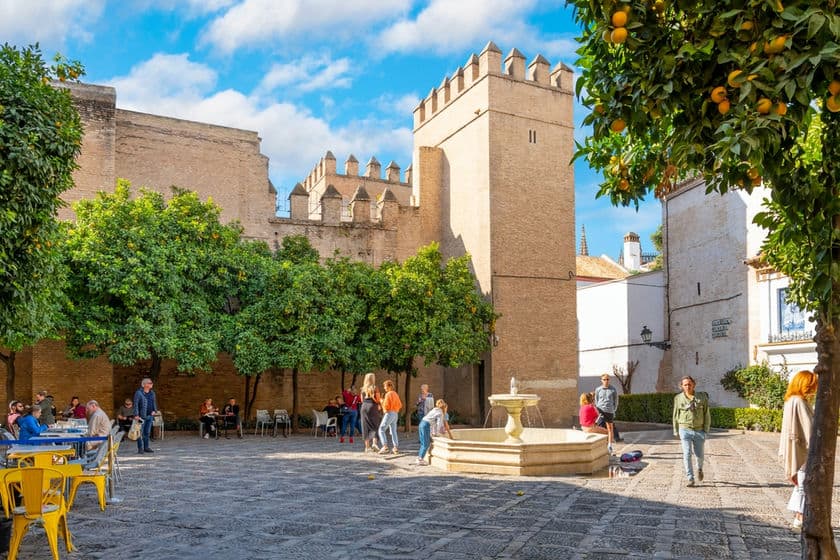
We can confidently call it the city’s most picturesque neighbourhood, as well as the perfect starting point for a visit to Seville. I’m talking about Barrio de Santa Cruz, which forms the southernmost section of the Casco Antiguo. What was once the city’s Jewish quarter is today the treasure chest that holds many of the city’s main attractions, from the Real Alcazar to Seville Cathedral with its Giralda, passing by the Hospital de los Venerables, the Archivo General de Indias and many other places of great interest. Barrio de Santa Cruz is the soul of Seville, where, in addition to visiting churches and museums, you can lose yourself in its little streets, among white houses and colourful little shops, perhaps stopping for a drink in one of the typical bars.
Barrio de Santa Cruz: our guide
Barrio El Arenal

The city stretches along the banks of the Guadalquivir River, and several districts look out onto the river. Among these is El Arenal, so called precisely because it stands where there once was an enormous expanse of sand. This was where the shipyards of the Spanish Empire were located, and today we can visit iconic places such as the Torre del Oro or the Plaza de Toros, as well as the Teatro de la Maestranza and the Hospital de la Caridad, along with numerous other attractions. It is also one of the best places for a lovely stroll along the river.
Barrio San Bartolomé
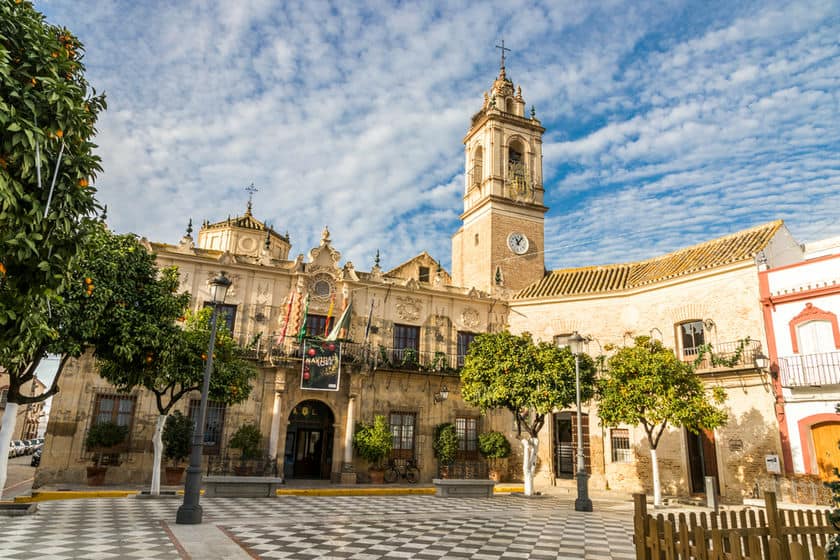
As El Arenal is Santa Cruz’s extension to the north-west, San Bartolomé is its extension to the north-east, and so inland rather than towards the river. In effect, though, it is another of Seville’s historic areas, where there is no shortage of things to see and do. A few examples? The palace that houses Seville’s city hall, which is a splendid historic building, or the Casa de Pilatos, one of the visitable residences that offers the finest mix of Gothic, Moorish and Renaissance architecture. Then there are the Baroque churches of San Bartolomé and Santa Maria la Blanca, the historic buildings such as Palacio de Mañara and Palacio Altamira, and many other places to discover.
Barrio de la Macarena (San Gil)

The Macarena District extends north of the Casco Antiguo and is Seville’s working-class neighbourhood. It takes its name from the Puerta de la Macarena and starts right from the city walls, opening out towards the north. Within the walls, however, lies the Barrio de San Gil, which is the area known (at least from a tourist point of view) as the Barrio Macarena, since this is where the Basilica de la Macarena stands, home to the Virgen de la Macarena: one of the most venerated statues in Spain. In truth, the term Barrio Macarena is often used in a broader sense, including both San Gil and parts of the neighbouring Alfalfa and Feria areas. Without doubt, this barrio, rich in churches and with a distinctly working-class character, is perfect for anyone who wants to immerse themselves in an authentic Seville, far from mass tourism, while still remaining within the city walls.
Alfalfa and other central districts
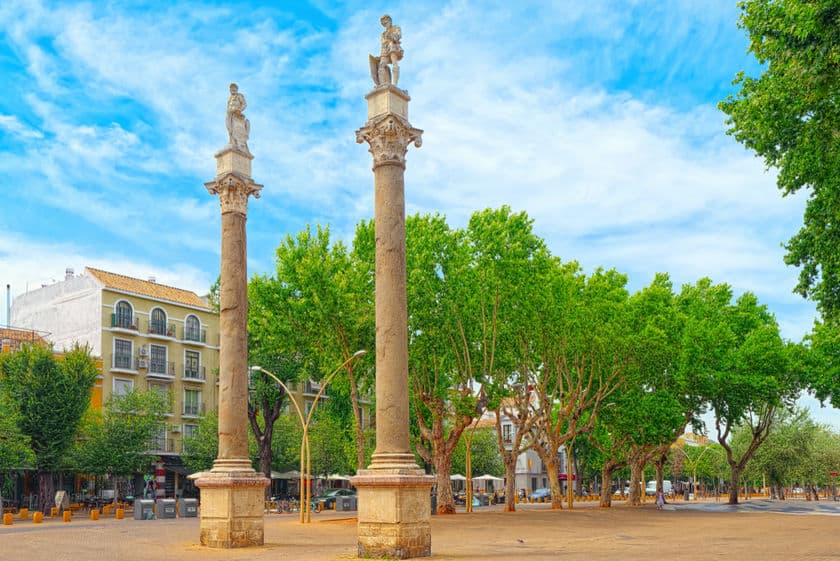
The four barrios mentioned above are those that contain the main tourist attractions of the historic centre, but the Casco Antiguo comprises 12 districts and in each of them it is lovely to lose oneself among the streets and discover hidden sides of this multifaceted city. Among the remaining districts, five deserve a mention because they each contain at least one place of interest.
- Alfalfa: this is the oldest part of the centre, where the Romans founded the city by erecting the forum and setting in motion what would go on to become one of Europe’s most prosperous cities in the centuries that followed. Indeed, this is where the cardo and decumanus crossed, the two streets around which the urban area developed, and looking at the map you can clearly see how it is the exact centre of Seville, located just north of the three most famous districts I spoke about in the previous paragraphs. Among the things to see, in addition to Plaza de la Alfalfa, we find the Iglesia del Divino Salvador (the second largest church in Spain) and the beautiful Palacio de Lebrija.
- Encarnación-Regina: north of Alfalfa this neighbourhood develops, best known above all for the Metropol Parasol. The world’s largest wooden structure, which is at once a square, a market, an archaeological museum and a panoramic terrace, is undoubtedly a place not to be missed when visiting Seville.
- Feria: moving further north still, the Feria district, famous both for the market in Calle Feria and for the nightlife, which is concentrated mainly around the Alameda de Hércules, the street par excellence for bars and restaurants.
- San Lorenzo: lastly, in the north-west of the centre it may be worth taking a trip to the San Lorenzo district, which centres around the square of the same name. Among the main sights, there are two churches: the Iglesia de San Lorenzo and the Basilica of Jesús del Gran Poder.
- Museum: this district is perhaps less interesting than others, but it cannot be omitted because of the presence of the Museum of Fine Arts of Seville, which is among the largest and most important art galleries in Spain.
Triana District
The Triana district includes a large part of the Isla de la Cartuja and a small section to the west of the river (or rather the canal, although it is the river’s current main course). It comprises five neighbourhoods: Barrio León, El Tardón-El Carmen, Triana Casco Antiguo, Triana Este, Triana Oeste. Of these, the most significant are Triana Casco Antiguo and Triana Este, which make up the most historic area overlooking the river and facing the old town: in our article about Barrio de Triana, we are in fact referring to this area, as is customary when referring to the most touristy part of the wider district.
Barrio León and El Tardón-El Carmen are instead immediately to the west of Triana Este. The largest part of the district, however, is Triana Oeste, which covers both the western and the northern section, stretching as far as Parque del Alamillo. Within this large barrio we find, as the area of greatest interest, the one known as Cartuja 93.
Triana district

As I mentioned, when people talk about the Barrio de Triana they are usually referring to what, from an administrative point of view, are Triana Casco Antiguo and Triana Este. The first is the riverside stretch overlooking the historic centre on the far side of the Guadalquivir, running roughly from Puente del Cachorro to Puente de San Telmo. The second is the area that extends behind it. To access this area, you have to cross the river, using one of the aforementioned bridges or the one situated halfway between the two, Puente Isabel II. One of the reasons to visit Triana is its famous market, where you can lose yourself among colours, scents and flavours, but all around there is a maze of narrow streets, little squares and houses decorated with the famous ceramics that have made this district renowned.
Cartuja 93 area (Triana Oeste)
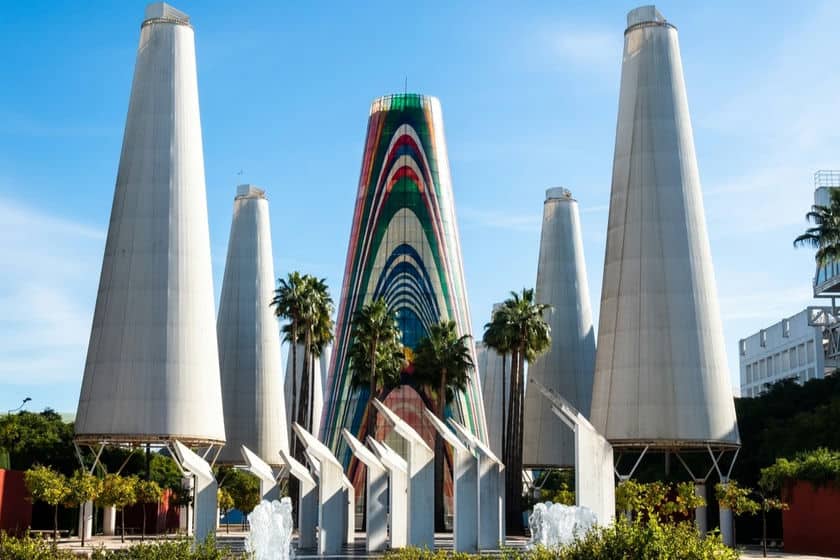
In the vast barrio of Triana Oeste, there is one area in particular worth bearing in mind, that of Cartuja 93. This is a technology complex opened following Expo Seville ’92, specifically to make use of the buildings inherited from the great world fair. Of the 102 pavilions from that event, 32 are still standing and have served different purposes. Among others, the Italian pavilion (which was the largest after Spain’s) became the headquarters of the Cartuja 93 project and houses major technology companies. Alongside the modern buildings of the Universal Exhibition, there is also the former Monasterio de Santa Marìa de las Cuevas, which houses the Andalusian Centre of Contemporary Art.
Nervión District
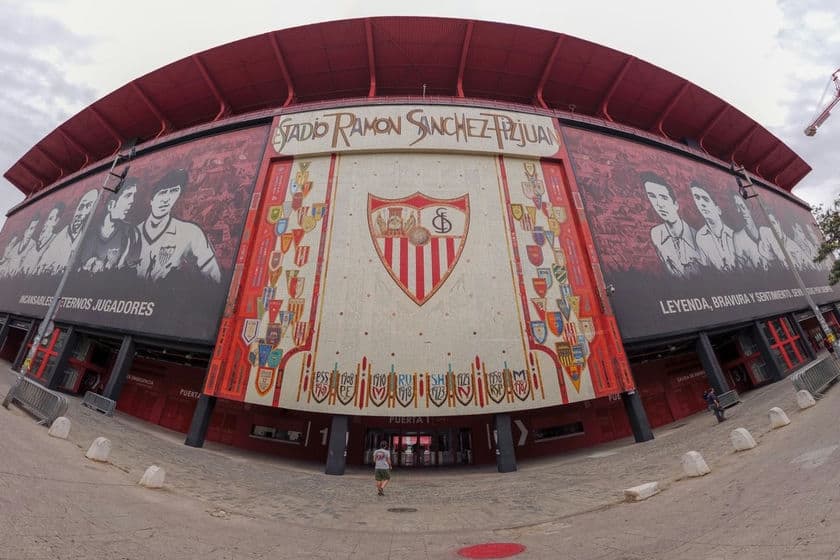
The Nervión district lies to the east of the Casco Antiguo and, in itself, is not an area of great tourist interest. However, if you are a sports enthusiast, you will be interested to know that the Ramón Sánchez Pizjuán stadium, home to Sevilla Fútbol Club and one of the main football stadiums in Spain, is located here. Not to be confused with the Benito Villamarín stadium, which is instead in the southern part of the city centre (where the other local team is based: Real Betis Balompié), or with the Olympic stadium of La Cartuja, located on the island of La Cartuja. These two have a larger capacity than the Pizjuán, but Sevilla’s ground is undoubtedly the one most worth visiting, or even better, watching a match there.
