The Barrio Macarena (or more simply La Macarena) is the northern neighbourhood of Seville, within the city walls and to the east of the Guadalquivir. Unlike the Barrio Santa Cruz and the Barrio Triana, this is a less touristy neighbourhood but no less charming.
Along its narrow streets you can sense an authentic city life; moreover the very high concentration of churches somehow helps to rehabilitate a neighbourhood that, before the works for Expo ’92, certainly did not have an excellent reputation: in the area of the Alameda de Hércules and by the river bohemians, penniless artists, prostitutes and criminals lived undisturbed. With Expo ’92 a complete regeneration of the area began and today it is clean, orderly and safe.
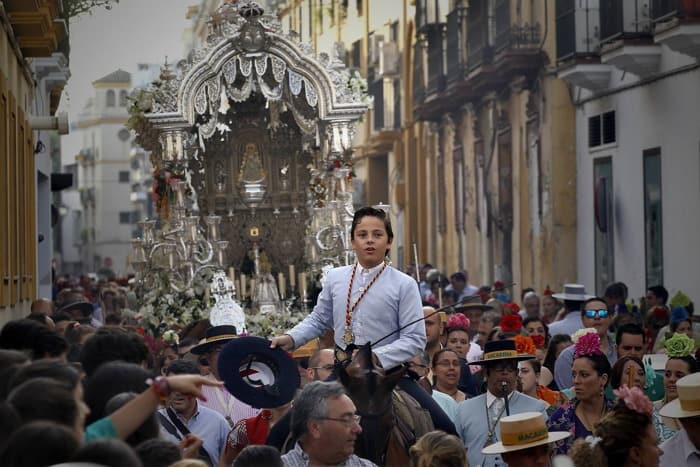
In this neighbourhood ancient traditions harmoniously coexist, such as the veneration of the splendid statue of the Virgen de la Macarena or the chaotic life in its markets, the Mercado de Feria and the antiques market of El Jueves on Calle Feria, with modern artistic structures such as the Metropol Parasol and, across the river, the Centro Andaluz de Arte Contemporáneo.
Contents
Itinerary in the Barrio Macarena
Il Metropol Parasol, or Setas de Sevilla, is the gateway to the La Macarena neighbourhood. It stands in Plaza de la Encarnación and is the largest contemporary wooden artwork in the world. Built between 2006 and 2011 following Jürgen Mayer’s futuristic design, the work includes on several levels a museum, a square, a market and a splendid walkway reaching 28.5 metres high from which you can admire the whole of Seville.
I suggest you go in and see the Museo Antiquarium; it costs just €2 and you will have the chance to view archaeological finds dating from AD 30 to 1300 in a 5,000 square metre exhibition space with paths winding among the streets and ancient houses themselves. After seeing Seville as it was 2,000 years ago, climb to the top level of the Metropol Parasol and see Seville today with your own eyes from the panoramic walkway called the Mirador. Further information at the link given at the start of the paragraph.
Churches and convents to visit
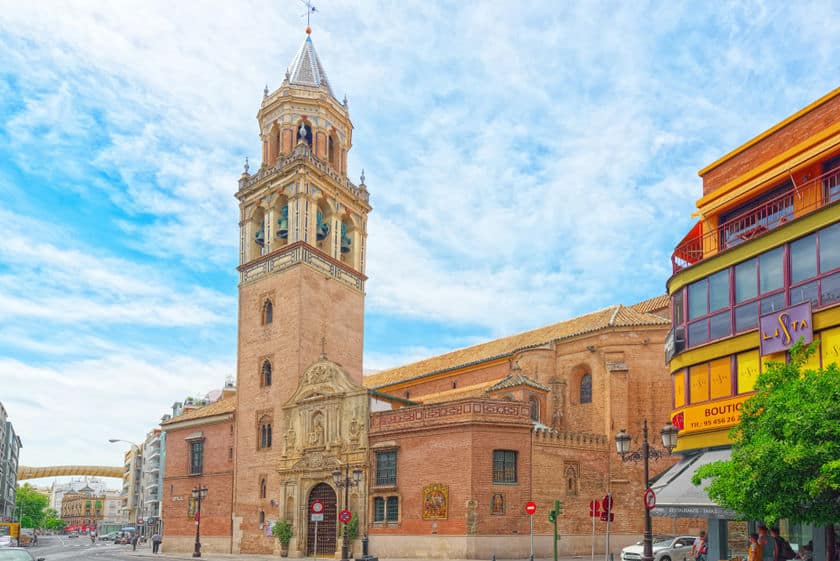
La Macarena will surprise you with the sheer number of churches found in the district. A few metres from the Metropol Parasol you’ll find the first church I recommend you visit, the Iglesia de San Pedro. The Mudéjar style of the bell tower and west door is complemented by the Baroque style of the magnificent 17th-century portal and the chapel decorations.
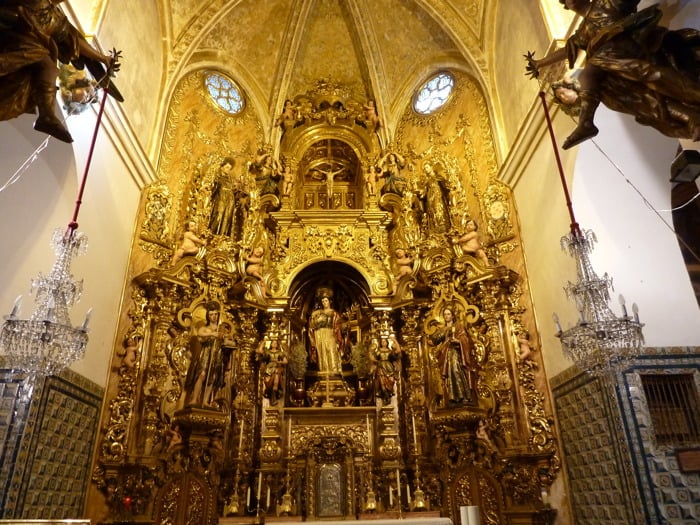
On Calle Doña María Coronel, behind the church, there is a wall with the wheel of the Convent of Santa Inés through which the nuns of the convent sell sweets and biscuits, a typical custom in Andalusian towns. The name of the street derives from the woman who founded the convent in the 14th century: her embalmed remains are kept and venerated in the convent church.
Near Plaza de los Terceros stands the Iglesia de Santa Catalina with its beautiful Mudéjar-style bell tower similar to the Giralda and a magnificent Gothic-style portal. Inside is a famous statue of Saint Lucy by Roldán. After leaving the church a stop at El Rinconcillo (calle Gerona 40) is a must: in this establishment founded in 1670, according to tradition, tapas were invented.
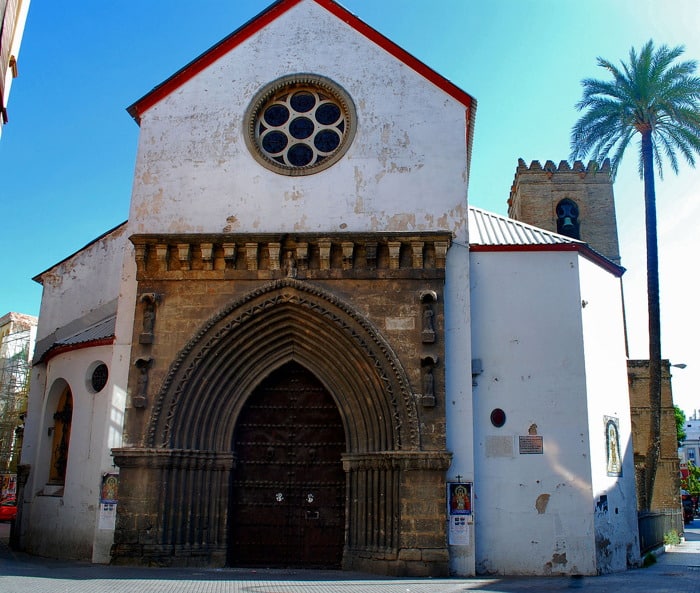
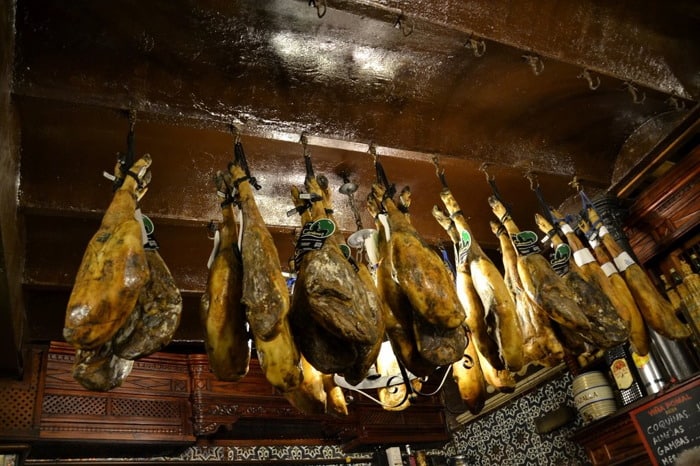
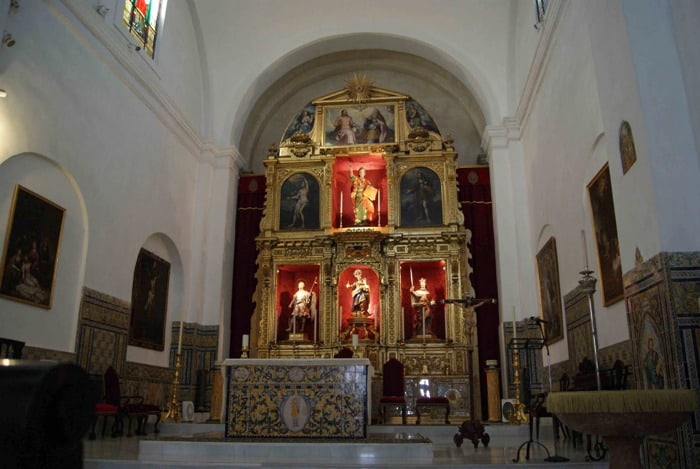
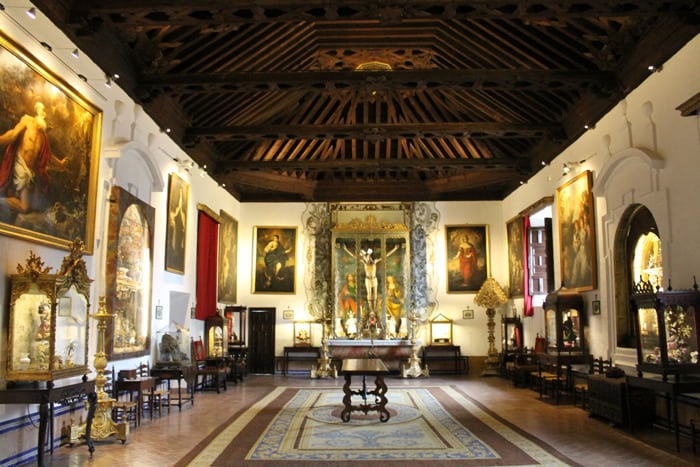
After this well-deserved break, make your way to the Iglesia de San Román: built in the Mudejar-Gothic style, this church displays a splendid coffered ceiling. Continue on to the Convento de Santa Paula, which, too, will astonish you with a marvellous combination of styles: Gothic, Mudejar and Renaissance.
In the Church of the convent there are works by Montañes and even ceramics made by our Tuscan artist Nicola Pisano, which today adorn the church’s portal with his arches and medallions. Here too the nuns sell jams they make themselves and other genuine products: the convent is open to visitors and is accessed via a brown door at number 11.
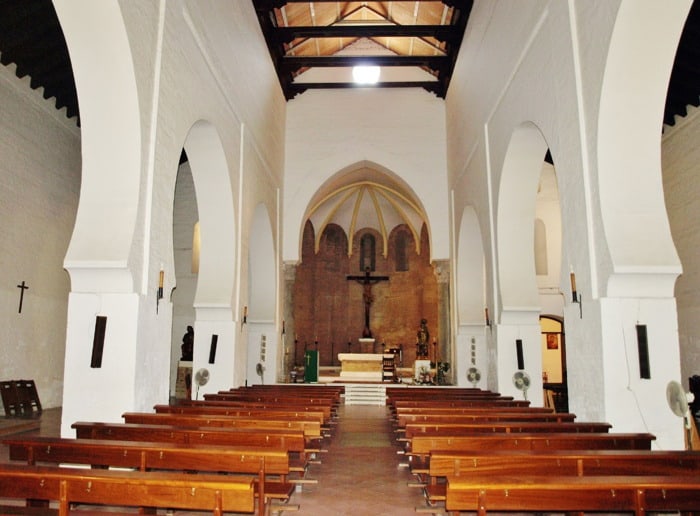
Not far away another church is worth a visit, the Iglesia de San Marcos, dating back to the 4th century and built on an ancient mosque: as a reminder of these Arab origins, visitors can see the horseshoe arches, the bell tower and the portico in a Gothic-Mudéjar style.
The Basilica of Our Lady of La Macarena
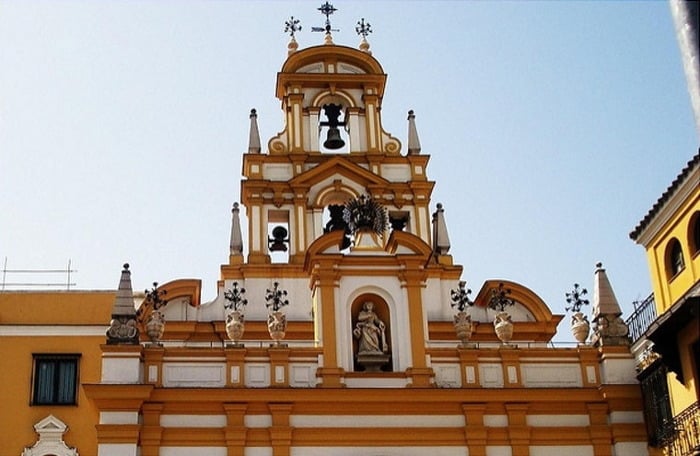
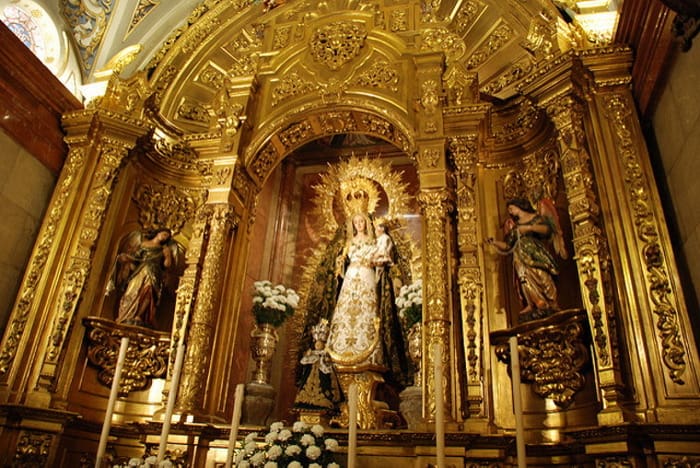
Take Calle San Luis and walk until you reach the neighbourhood’s most famous church, the Basilica de La Macarena, built in 1949 in neobaroque style by the architect Gómez Millán. Inside is the venerated statue of the Virgen de la Esperanza Macarena, a 17th-century work splendidly dressed and adorned with gold, silver and precious stones: a marvel for the eyes and a cause of incredulous wonder for the mind of anyone who approaches it. There is also a museum here that celebrates and bears witness to the vestments used in the processions of the Semana Santa.
Other places of interest in the neighbourhood
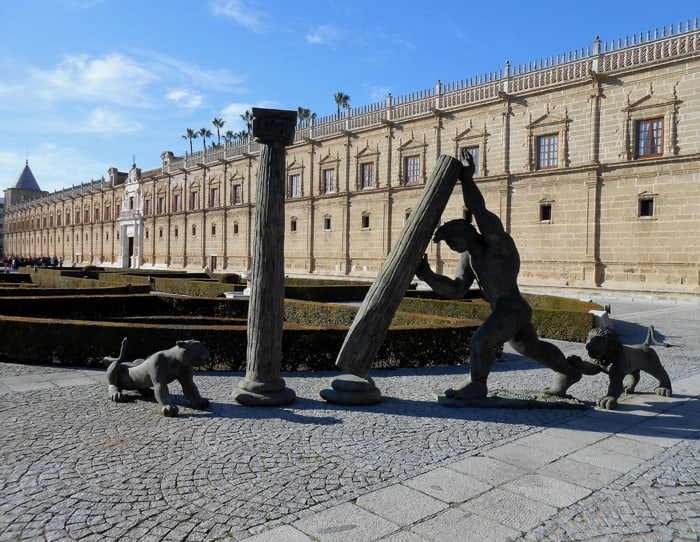
After admiring the ancient walls of Seville that stand on Calle Muñoz Leon, continue on to the Parliament of Andalucía, housed in a Renaissance palace known as the Hospital de las Cinco Llagas.
On Calle Resolana you’ll find the Torre di Perdigones, within which is a famous Cámara Oscura that, by means of mirrors and lenses mounted on a periscope, projects moving images of what is happening outside in real time.
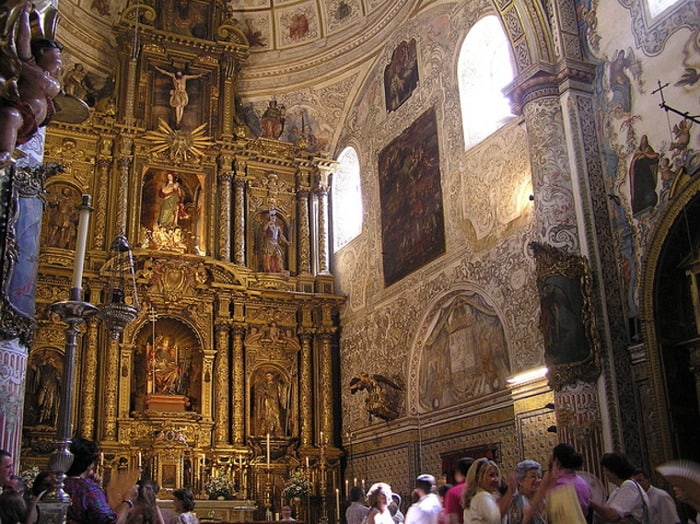
Heading towards the river, at calle Reposo 9 you will find the Monasterio de San Clemente, a historic religious building with a lovely cloister planted with palms and a church with a Mudéjar ceiling and 17th-century azulejos. Be sure to look out for the Baroque altarpiece and the frescoes by Luca Valdés, dating from the 18th century.
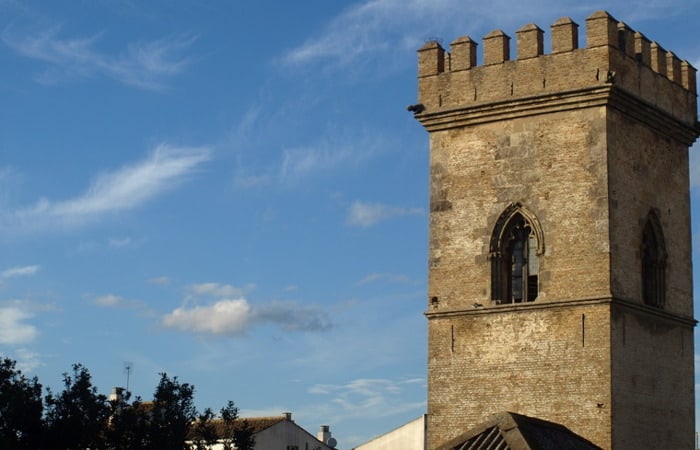
Take Calle Santa Clara and at number 40 you’ll find a splendid tower dating from 1252, hidden in the courtyard of the Convento de Santa Clara. You are standing before the Torre de Don Fadrique. To reach the upper level of the tower there are 80 steps: the exertion of the climb is rewarded by the views of the Giralda and the Puente de la Barqueta.
Finally, here are two further attractions that deserve particular attention:
- Palacio de los Marqueses de la Algaba: in Plaza Calderón de la Barca si trova un antico (e sottovalutato) palazzo in stile andaluso con un bel patio e fini decorazioni con azulejos. L’ingresso è gratuito.
- Negli immediati dintorni del palazzo, su Calle Feria, si trova la Parroquia de Omnium Sanctorum, che vanta uno splendido campanile in stile moresco.
Alameda de Hércules: the youth scene!
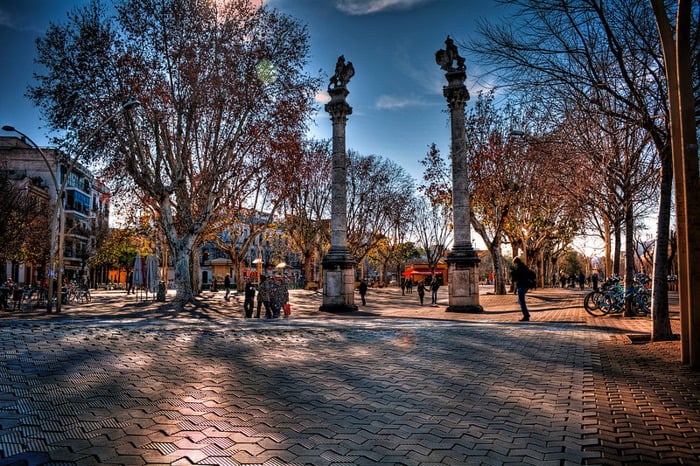
Our itinerary ends in the eclectic area of the Alameda de Hércules, today full of shops, bars and restaurants with a bohemian charm: the area is one of the main hubs of the Seville’s nightlife, especially for local and international students. Here you can find interesting venues and affordable accommodation. The avenue was created in 1574: the statues of Hercules and Julius Caesar watch from atop their columns over Sevillians and tourists who stroll happily through the neighbourhood’s streets.
