One of the most thrilling experiences on a trip to Andalusia is wandering aimlessly through the Casco Antiguo di Siviglia: letting yourself be guided by the majestic profile of its Moorish monuments, keeping the Giralda, the bell tower of the magnificent Cathedral, as a point of reference, and then losing yourself in the maze of narrow lanes of the old Arab quarter, among intimate little squares, flower-filled patios glimpsed behind half-open gates and elegant aristocratic houses with incredible stories to tell.
In the historic centre the many Sevillas of history coexist in a varied and surprising urban space: the Moorish city, the Christian city, the mercantile city and the Baroque city alternate across different neighbourhoods, changing rhythm, perspective and atmosphere within the space of just a few streets.
In this article I want to suggest what to see in Seville’s historic centre, how the Casco Antiguo is divided and which neighbourhoods truly deserve to be included in an itinerary.
Contents
- Map of Seville’s Historic Centre Neighbourhoods
- Things to do in Seville’s Historic Centre
- Cathedral and Giralda
- Alcázar of Seville
- Santa Cruz neighbourhood
- Casa de Pilatos
- Metropol Parasol
- Iglesia del Salvador
- Maestranza Bullringa
- Hospital of the Venerables
- General Archive of the Indies
- Palace of the Countess of Lebrija
- Casa de Salinas
- Palace of the Dueñas
- Tower of Gold
- Flamenco Dance Museum
- Museum of Fine Arts
- Old Town Seville Attractions Map
- Recommended Activities
- Best Place to Stay in Seville Old Town
- Best Restaurants in Seville Old Town
Map of Seville’s Historic Centre Neighbourhoods
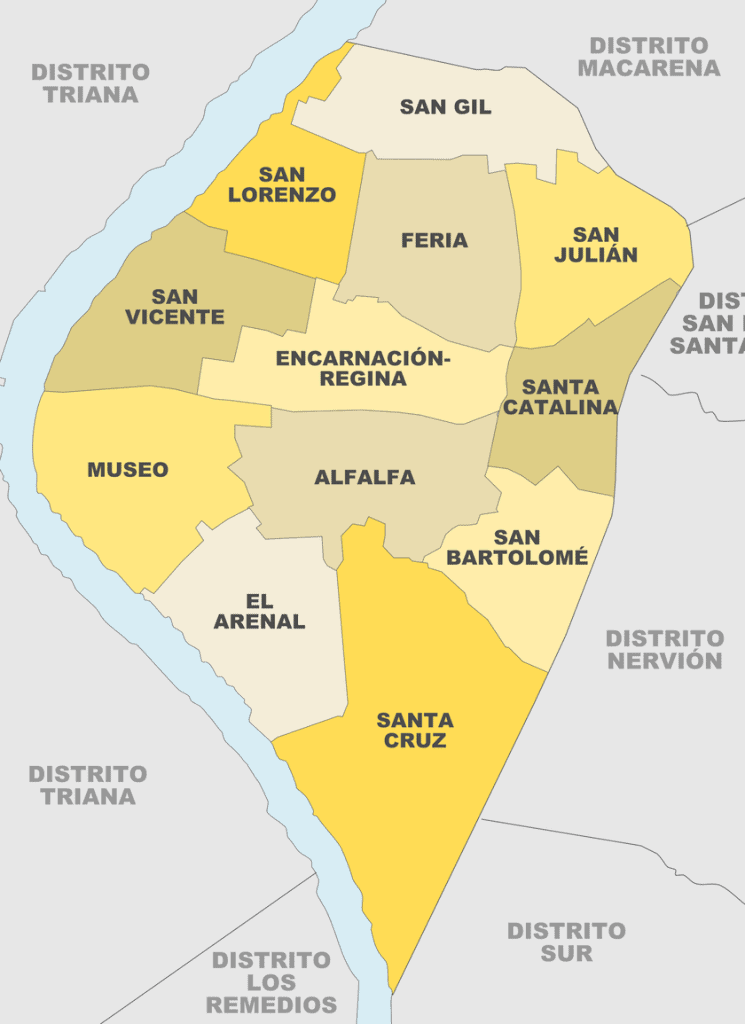
Below are the neighbourhoods (barrios) into which the historic centre of Seville is divided, with a brief, concise description of the most important:
- Santa Cruz: the old Judería, a labyrinth of narrow streets and one of the most atmospheric areas of the city, very close to the Alcázar, Cathedral and Giralda.
- El Arenal: the area between the monumental centre and the Guadalquivir, known for the Plaza de Toros de la Maestranza.
- Alfalfa: a very central and lively area, with squares, bars, churches and historic streets.
- Encarnación-Regina: a central shopping area between La Campana, Calle Cuna, Regina and Encarnación, where the Setas de Sevilla are located.
- Museo: the district of the Museo de Bellas Artes and noble houses.
- San Bartolomé: an elegant and intimate area, close to Santa Cruz, with several historic palaces nearby, including Casa de Pilatos.
- Feria: a popular, youthful and alternative district, centred around Calle Feria and close to Alameda de Hércules.
Also part of the Casco Antiguo are Santa Catalina, San Lorenzo, San Vicente, San Gil and San Julián, more peripheral and therefore less visited on typical tourist routes, but no less important for understanding the historic fabric of Seville’s city centre.
Things to do in Seville’s Historic Centre
In our article on the best things to do in Seville you can already find all the unmissable wonders of the city, but in this article I want to narrow the focus to the most important attractions to see within the confined area of Seville’s Casco Antiguo. Don’t think that’s obvious! An example? Geographically, two iconic places such as the Barrio Triana and the Plaza de España, although by no means far apart, are located outside the boundaries of Seville’s Casco Antiguo.
Cathedral and Giralda
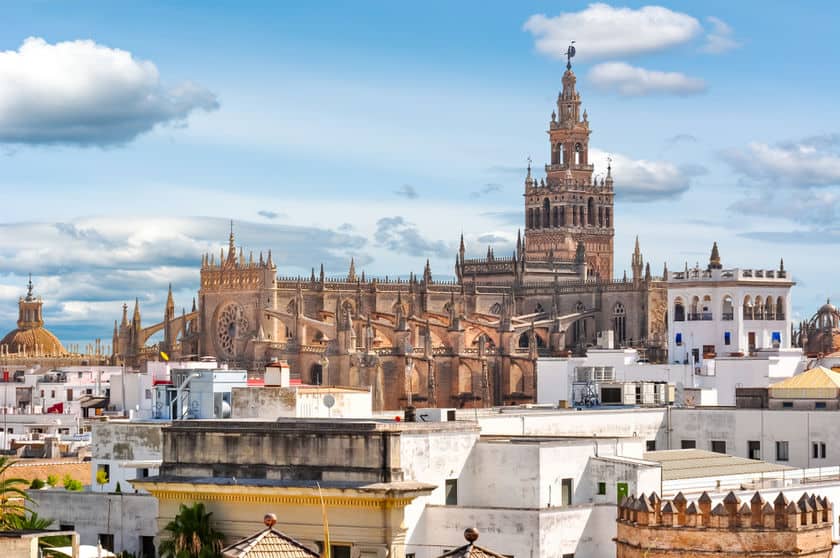
The Seville Cathedral is the city’s great monumental symbol and the largest Gothic cathedral in the world. Its beauty and grandeur make it one of the must-see sights in the historic centre. It stands on the site of the former Almohad mosque, of which it preserves the Giralda, today the bell tower and an extraordinary viewpoint. Inside, besides the magnificent high altarpiece, attention is drawn to the tomb attributed to Christopher Columbus. After your visit, it’s worth pausing in the Patio de los Naranjos, the ancient orange-tree courtyard.
Alcázar of Seville
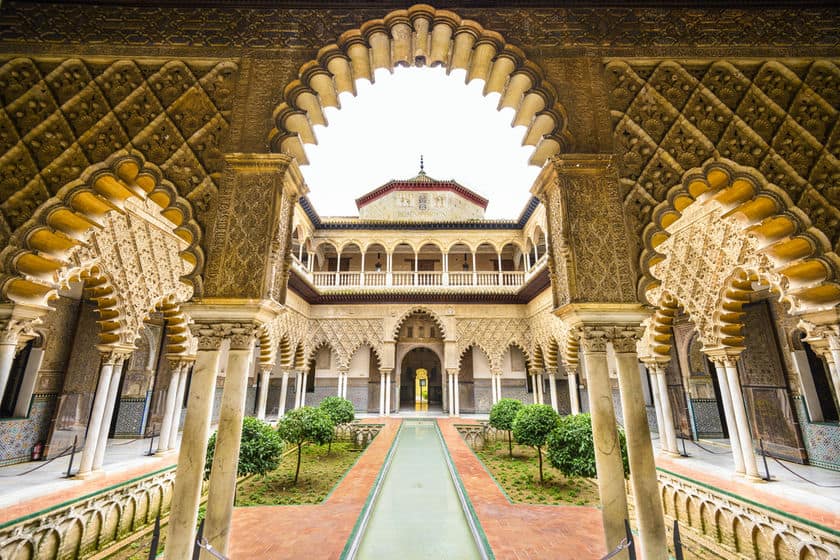
The Alcázar of Seville — more correctly, the Reales Alcázares — is one of Seville’s most fascinating and historically significant sites. It is a monumental complex built atop earlier Islamic structures and transformed over the centuries by Christian monarchs, who preserved and reworked its architectural style.
Its most spectacular core is the Palacio de Pedro I, a masterpiece of Mudéjar art, where exquisitely refined decorations and harmonious courtyards convey the full richness of medieval Seville. The visit then continues into the gardens, considered among the most beautiful in Spain, which make the Alcázar an essential stop when visiting the Casco Antiguo.
Santa Cruz neighbourhood

Santa Cruz is the most visited barrio of Seville’s historic centre. What was once the city’s ancient Judería is now an area to be discovered at leisure, getting lost — literally! — among narrow lanes, white houses with flower-filled balconies and quiet little squares that open up onto sudden monumental vistas. Its atmosphere is very touristy today, but it remains one of the most charming parts of the Casco Antiguo, not least because of its proximity to the Cathedral, the Giralda and the Alcázar.
Among the most characteristic spots are Plaza de Doña Elvira, Plaza de Santa Cruz and the Callejón del Agua, perfect for catching the most picturesque face of historic Seville.
Our article on Barrio Santa Cruz
Casa de Pilatos
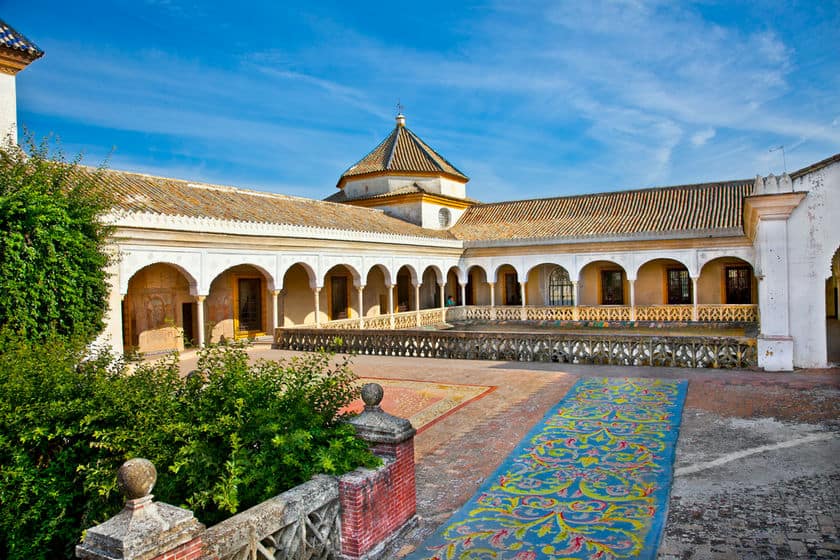
After the Alcázar, the Casa de Pilatos in the San Bartolomé barrio is, for me, the most beautiful historic palace in Seville’s centre, perfect for discovering the city’s aristocratic and refined side. The name comes from the pilgrimage to the Holy Land undertaken in 1519 by Fadrique Enríquez de Ribera: on his return, the Sevillian Via Crucis to the Cruz del Campo began from his residence, symbolically evoking the route between Pontius Pilate’s praetorium and Calvary.
Built between the late fifteenth and the sixteenth centuries, the residence is organised around courtyards, gardens and rooms spread over two storeys, combining Gothic, Renaissance and Mudéjar elements with a rare sense of balance. The heart of the visit is the large central patio, decorated with azulejos, columns, statues and ornamental details of great elegance.
Our article on Casa de Pilatos
Metropol Parasol
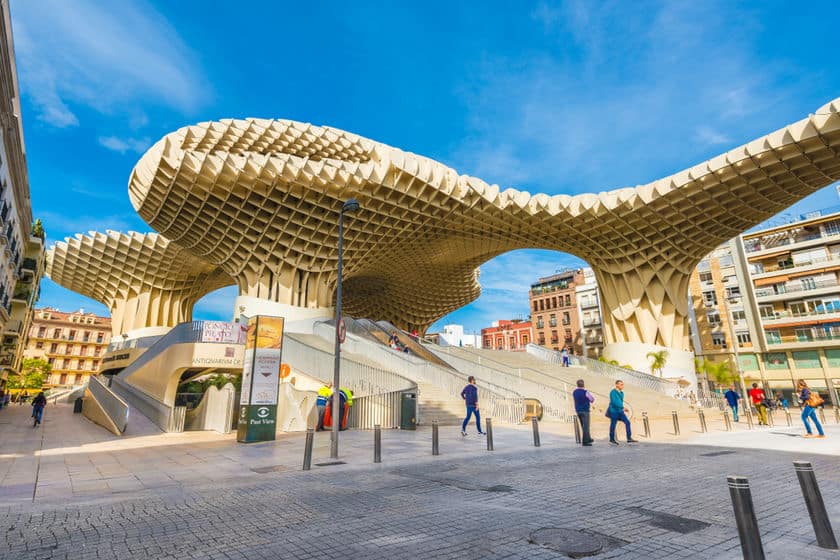
The Metropol Parasol, better known as the Setas de Sevilla, is the most striking contemporary addition in the historic centre. The large wooden structure dominates Plaza de la Encarnación and provides a strong contrast with the ancient fabric of the Casco Antiguo. Designed by the German architect Jürgen Mayer, its lower level houses a market and archaeological spaces, but most people come to climb the famous panoramic walkway to view Seville from above. It is especially atmospheric at sunset, when the light highlights the structure’s undulating forms and the roofs of the historic city.
Our article on Metropol Parasol
Iglesia del Salvador
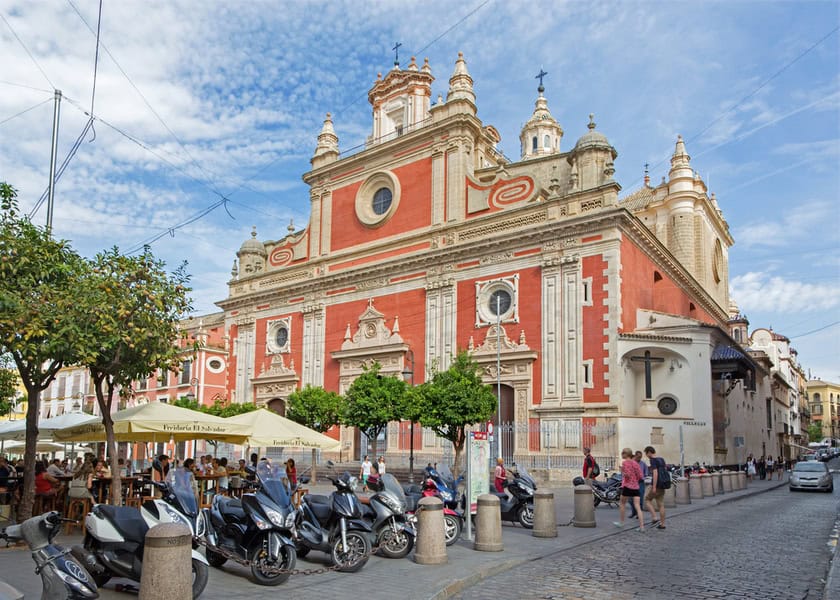
Overlooking one of the liveliest squares in the city centre’s Alfalfa district, the Iglesia del Salvador bears witness to Seville’s exceptional historical layering. The present building is a Baroque collegiate church, but it preserves traces of its Islamic past, including the Ablutions Courtyard of the former mosque, dated 829–830.
Inside, the decorative scheme and the gilded altarpieces are striking, making the visit particularly spectacular. It is often visited together with the Cathedral — not least because there is a combined ticket — and fits easily into an itinerary linking Plaza del Salvador, Alfalfa and the city centre’s shopping streets.
Our article on the Iglesia del Salvador
Maestranza Bullringa
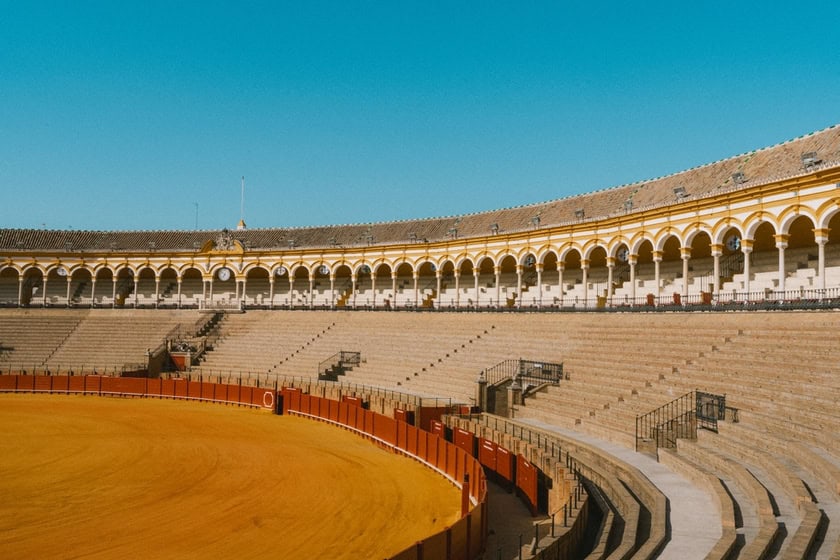
In the El Arenal district, a short walk from the Guadalquivir, the Plaza de Toros de la Maestranza occupies a central place in Spanish history and in Seville’s identity. Its white-and-ochre façade leads into a historic arena, still linked to the tradition of the corrida. A tourist visit allows you to enter the ring and visit the bullfighting museum, thereby gaining a clearer sense of the cultural weight bullfighting has had in the city. Even for those who, understandably, do not like bullfighting, it remains an important place for understanding a controversial but deeply rooted side of the people of Seville.
Our article on the Plaza de Toros
Hospital of the Venerables
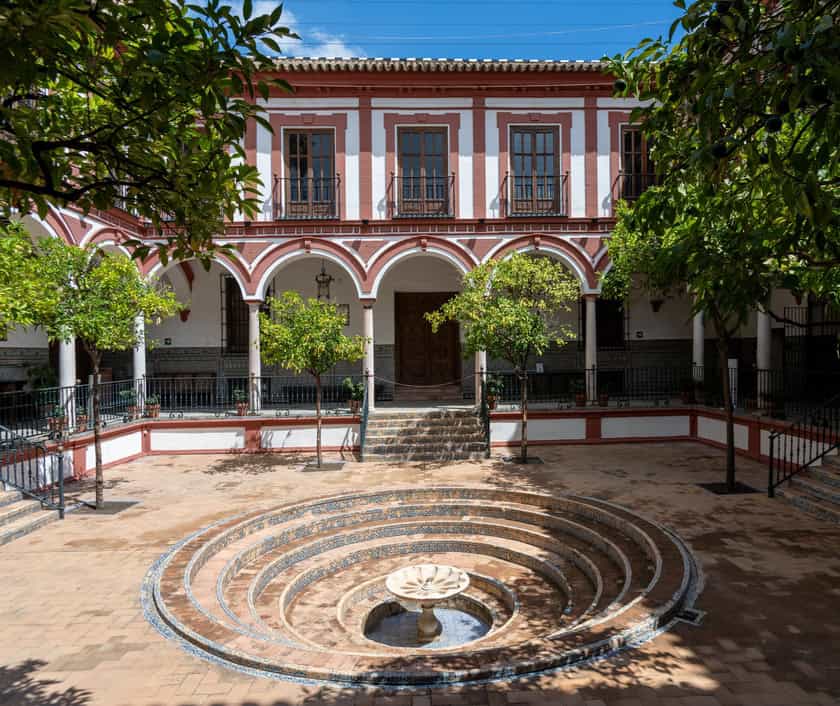
Hidden among the alleys of the Barrio Santa Cruz, the Hospital de los Venerables is one of the most refined attractions in the historic centre. Founded in the seventeenth century as a residence for elderly and poor priests, it now preserves an elegant patio, a richly decorated baroque church and restored historic interiors. The visit is brief but intense, particularly suited to those who love art, architecture and less crowded places. Its location, a few minutes from the Cathedral and the Alcázar, makes it easy to include in an itinerary in the Casco Antiguo.
Our article on the Hospital de los Venerables
General Archive of the Indies
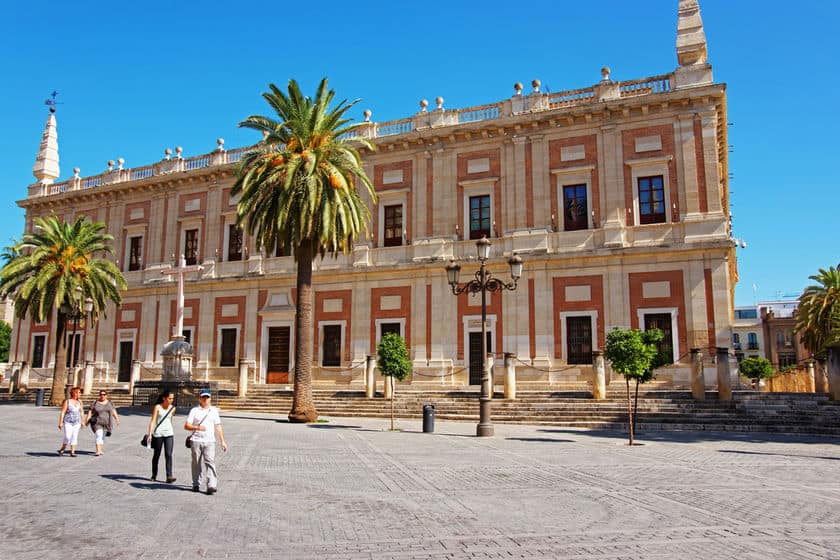
Beside the Cathedral and the Alcázar, the Archivo General de Indias occupies the former Casa Lonja, the building constructed in the sixteenth century to host the activities of Seville’s merchants. Today it preserves a documentary heritage of immense value linked to the Spanish colonial empire and to relations with the Americas, crucial for understanding the city’s role after the discovery of the New World. Together with the Cathedral and the Reales Alcázares, it is part of the UNESCO World Heritage site of Seville’s monumental centre.
Our article on the Archivo General de Indias
Palace of the Countess of Lebrija
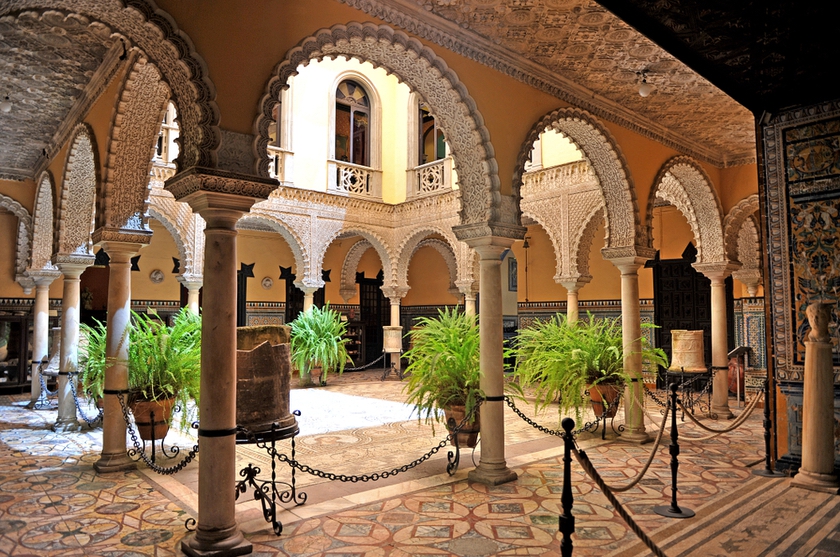
On Calle Cuna, in the Encarnación-Regina district, stands the Palacio de la Condesa de Lebrija, an expression of the collecting taste of Regla Manjón, Countess of Lebrija, who transformed the residence into a most refined house‑museum. The palace is especially renowned for the large Roman mosaic in the main courtyard, around which are arranged rooms decorated with archaeological finds, azulejos, wooden ceilings and works of art.
Our article on the Palacio de la Condesa de Lebrija
Casa de Salinas
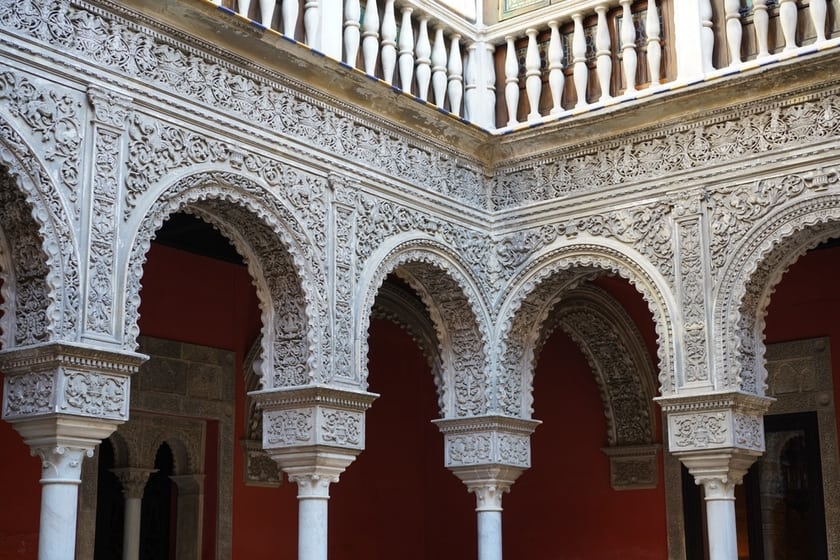
In Calle Mateos Gago, in the heart of Barrio Santa Cruz, the Casa de Salinas hides behind an unassuming façade, as is often the case with Sevillian town‑palaces. Built in its present form from 1577, it preserves rooms arranged around a central patio, with arches, marble columns, 17th‑century Triana azulejos and a precious 2nd‑century AD Roman mosaic from Itálica. The house is still lived in by the Salinas family and is only partly open to visitors, a detail that gives it a more lived‑in character compared with other historic residences in the city centre.
Our article on the Casa de Salinas
Palace of the Dueñas
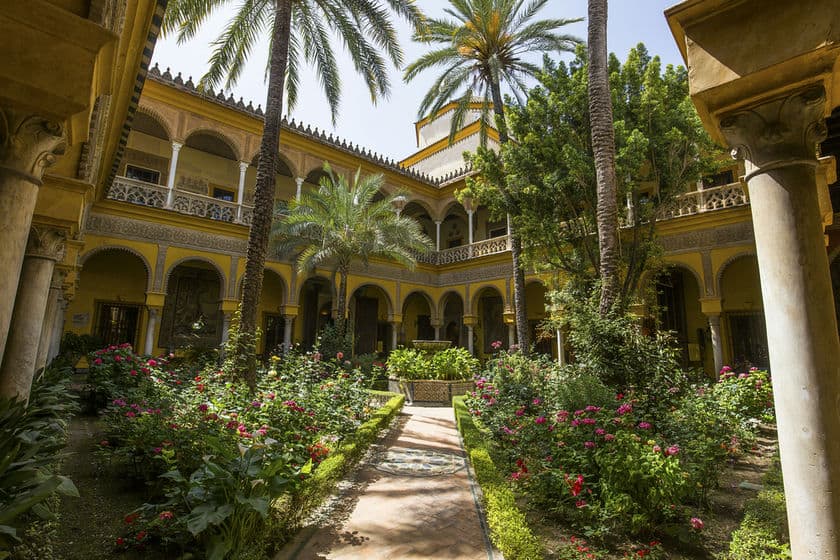
Situated in the Feria neighbourhood, the Palacio de las Dueñas embodies the most aristocratic side of Seville. Once belonging to the Casa de Alba, it has a more intimate, residential character than the great monuments in the centre: it preserves patios, gardens, salons decorated with azulejos, family mementos and art collections that recreate the atmosphere of a noble residence deeply linked to the city’s history. Antonio Machado, one of the great Spanish poets of the twentieth century, was also born here.
Tower of Gold
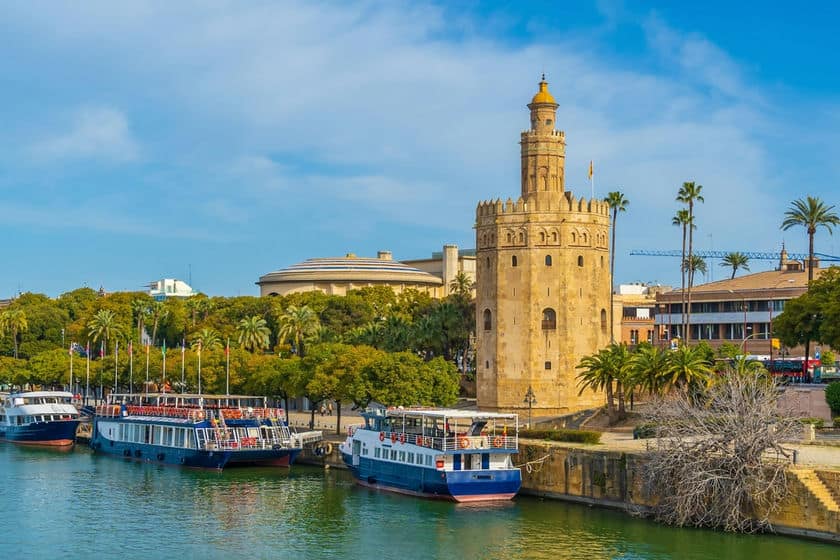
On the Paseo de Cristóbal Colón, along the river in the El Arenal district, stands the Torre del Oro, built by the Almohads in the 13th century as a defensive tower, when control of the Guadalquivir was decisive for the city’s defence. The name is likely linked to the golden reflections once produced by its outer cladding. Today it houses a small naval museum and from the terrace offers a lovely view over the river, Triana and the historic city centre.
Our article on the Torre del Oro
Flamenco Dance Museum
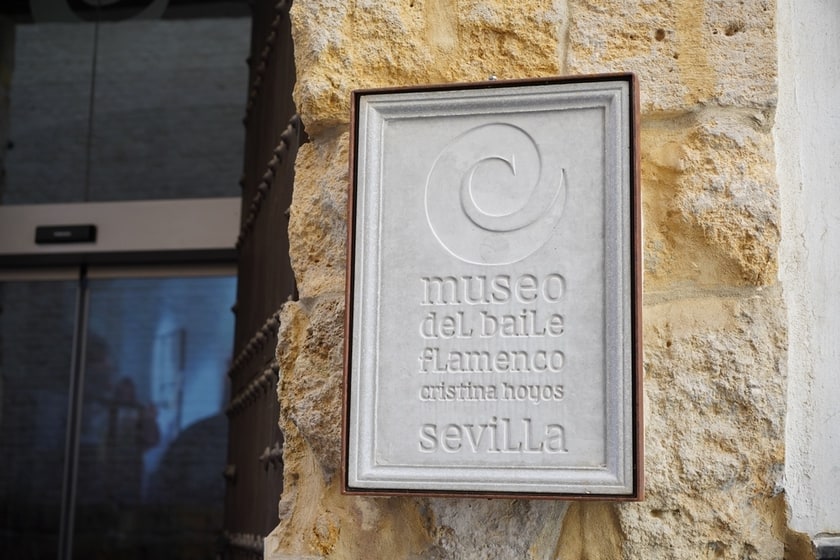
Could a reference to flamenco be missing? In Calle Manuel Rojas Marcos, in the Casco Antiguo, the Museo del Baile Flamenco offers an introduction to one of Andalusia’s most defining expressions, not limited to the evening performance. Founded as an initiative linked to Cristina Hoyos and opened in 2006, the museum features exhibition rooms and multimedia displays that explain the history and significance of flamenco. The visit is especially worthwhile when paired with a live show, which remains the most immediate way to grasp the power of this art.
Our article on the Museo del Baile Flamenco
Museum of Fine Arts
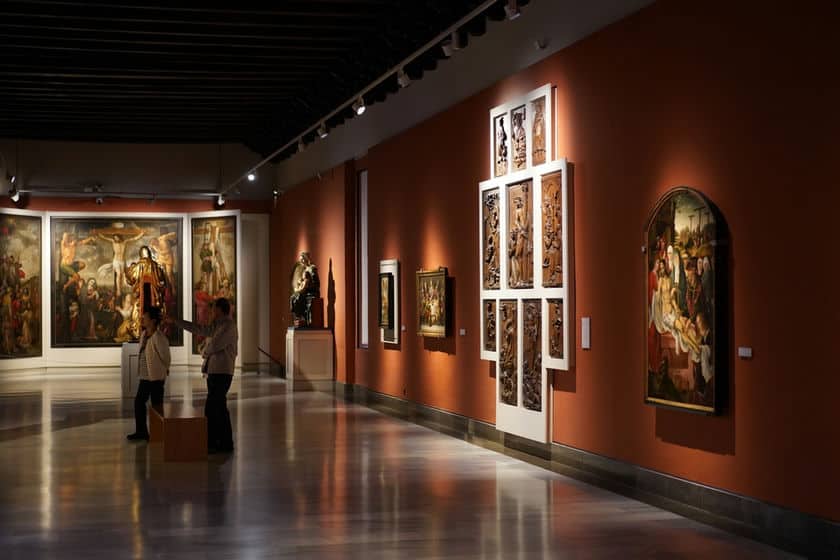
In Plaza del Museo, in the eponymous barrio, the Museo de Bellas Artes occupies the former convent of the Merced Calzada, converted in the nineteenth century to its current use. It is the principal point of reference for Sevillian painting, especially Baroque, with works by Murillo, Zurbarán, Valdés Leal and other artists associated with the Andalusian school. In addition to the exhibition rooms, its cloisters and conventual spaces can be admired, so it is not just an art gallery but also an opportunity to enter a fine historic building of the Casco Antiguo.
Our article on the Museo de Bellas Artes
Old Town Seville Attractions Map
Recommended Activities
Most of these attractions can be visited independently on payment of an entrance fee. However, monuments steeped in history such as the Alcázar, the Cathedral and the noble houses really deserve a guided tour to better understand their symbols, architectural details, historical curiosities and subtleties which, on their own, are all too easily missed.
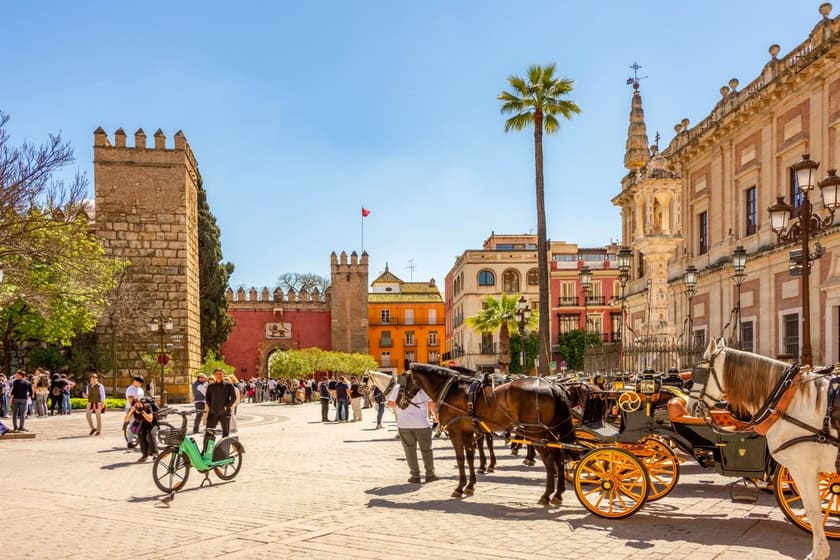
Besides cultural visits, Seville also offers several typical experiences that can enrich your trip: a flamenco show, a carriage ride, a cruise on the Guadalquivir, or an evening or food tour of the historic centre. These are experiences different from the traditional monument visit, but they help you soak up the city’s atmosphere and might be just the thing if you want to alternate museums and palaces with livelier, more informal moments.
- Guided tour of the Alcázar, Cathedral and Giralda
- Guided tour of the Alcázar
- Show at the Museo del Baile Flamenco
- River cruise on the Guadalquivir
- Horse-drawn carriage ride through the historic centre
- Guided tour of Casa de Pilatos
Best Place to Stay in Seville Old Town
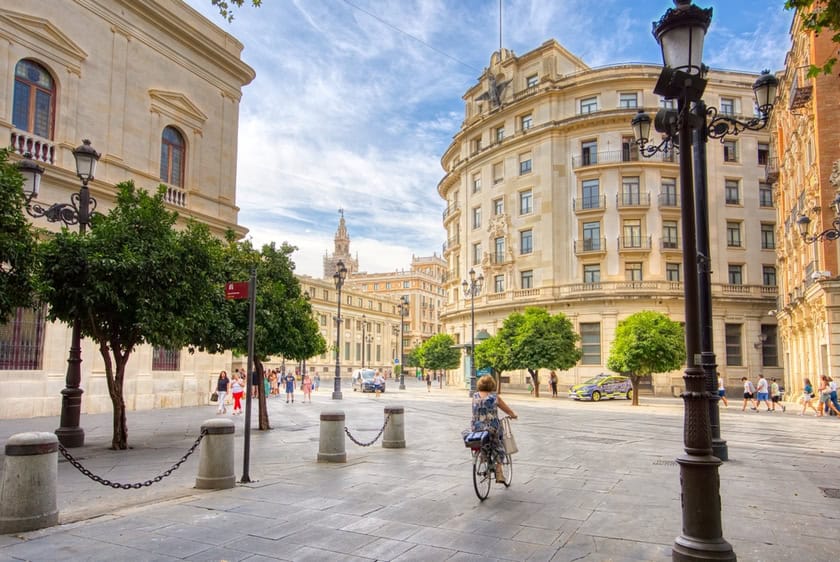
As you may have noticed from the map and the article, the Casco Antiguo of Seville is fairly extensive, and each barrio has its own points of interest, as well as different pros and cons. The good news is that, even if you choose one of the neighbourhoods furthest from the Cathedral area, almost all the attractions mentioned in this article will still be reachable in around a 20-minute walk. Of course, especially in summer the heat can make getting around more tiring, but wandering through the centre of Seville is pleasant, safe and rarely monotonous.
For this reason, my advice is to look for accommodation within the Casco Antiguo, choosing the neighbourhood based on the type of trip and your budget. The areas closest to the Cathedral, Santa Cruz and El Arenal are generally the most convenient and atmospheric, but also the most sought-after and expensive. Areas such as Encarnación-Regina, Alfalfa and Museo offer an excellent balance of location, amenities and city atmosphere, while neighbourhoods like Feria, San Lorenzo and San Vicente can be an interesting choice for those seeking a less touristy setting and, often, more reasonable prices.
Generally, staying in the historic centre means having Seville truly on your doorstep: monuments, restaurants, bars, markets, squares and shopping streets can almost always be reached without the need for public transport. If you want a deeper look at the individual neighbourhoods, I recommend reading our article on where to stay in Seville: as well as a guide to the best central areas to stay in, you’ll also find tips on more peripheral areas, useful for saving money or avoiding the busiest parts.
Tips for choosing accommodation in Seville
Best Restaurants in Seville Old Town
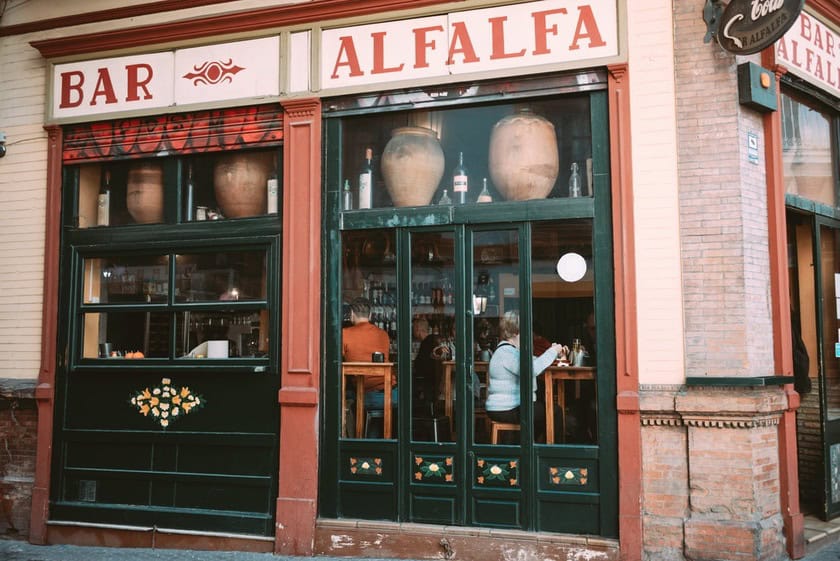
In the centre of Seville the choice of restaurants, tapas bars, bodegas and historic venues is almost endless: just wander through Santa Cruz, Arenal, Alfalfa, Encarnación or Calle Feria and you’ll find places on every corner. Precisely because of this, however, the risk is twofold: you might end up in an overly touristy place — perhaps attractive from the outside but disappointing on the plate — or miss some genuinely excellent spots tucked away down a side street.
To help you decide, we’ve written an article dedicated to what we consider some of the best places to eat in Seville, from the most traditional tapas to more contemporary offerings. Most are located in the neighbourhoods of the Casco Antiguo, so take note, check which area you’re in and choose the venue that appeals to you most.
