When a wealthy collector and lover of archaeology and art becomes the owner of one of Seville’s most beautiful historic palaces, she can only turn the property into a work of art itself. Visiting Seville you’ll have the opportunity to admire a palace whose interior—its mosaic floors, the patio with arches in Moorish style and its Renaissance architectural elements—harmoniously combines Greco‑Roman archaeological finds, collections from far‑flung lands and paintings from the seventeenth century of high artistic value.
Along with the Casa de Pilatos, the Palace of the Countess of Lebrija (Palacio de la Condesa de Lebrija) is today one of Seville’s most beautiful properties and was declared by the Director General of Fine Arts, the Marquis de Lozolla, the “best‑floored palazzo in Europe”. He may have slightly exaggerated, but one thing is certain: by visiting the sumptuous palace you can admire, within a few square metres, the succession of centuries of history, art and architecture spanning geographical areas that are often very far apart.
Contents
The history of the Palacio de Lebrija
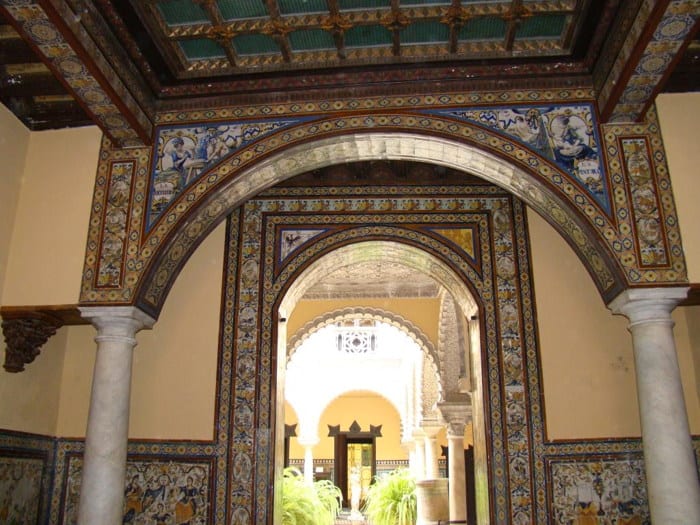
The construction of the palace dates back to the 16th century and, as was often the case with Andalusian palaces, it was designed to provide a winter residence on the upper storey and a summer one on the ground floor. The façade you will see dates from the sixteenth century.
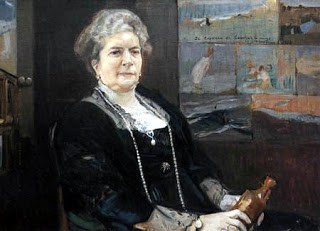
Doña Regla Manjón Mergelina, Countess of Lebrija, acquired this beautiful sixteenth-century building at Calle Cuna 8 in 1901, and it is thanks to her that the palace became the magnificent building we can visit today.
The restoration of the property lasted 13 years. The ground floor was enriched with genuine artistic treasures, including the magnificent Roman-era mosaic floor purchased by the Countess herself, and colourful Sevillian azulejos recovered from the ruins of a convent. The first floor was the family’s private residence and was adorned with period furniture and objects from various parts of the world. The Countess, in fact, was an avid collector, passionate about travelling to distant lands and an expert in works of art.
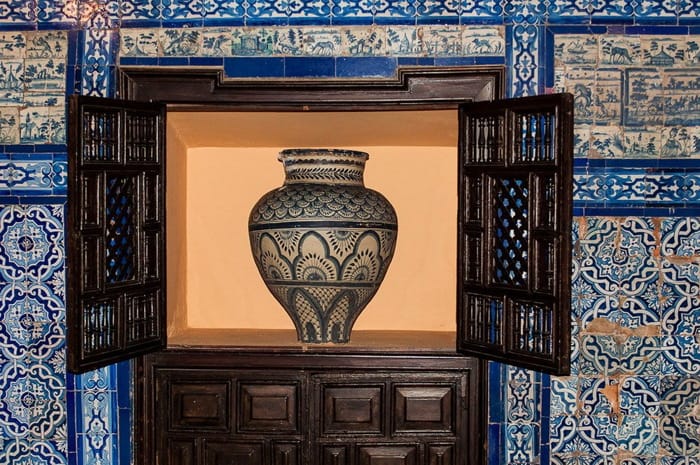
Since 1901 the palace has remained the property of the same Sevillian noble family, who have cared for it and preserved the artistic treasures left by the countess. In 1999 the Palacio de Lebrija became a museum open to the public and is now available for hire for social events.
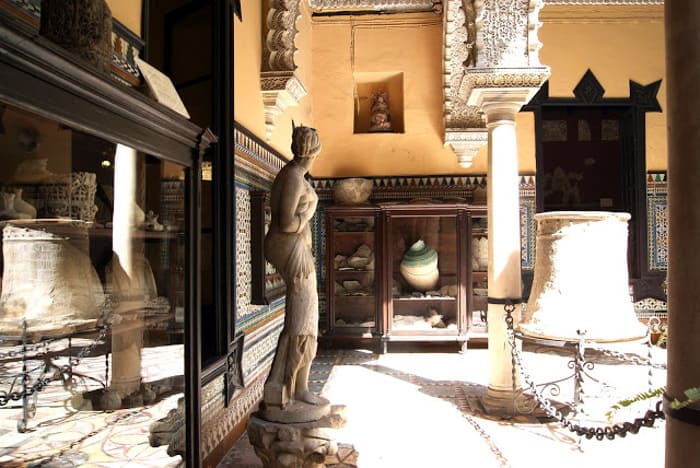
Tips for visiting the palace
Among the things to see in Seville, the Lebrija Palace is one of the most overlooked: that’s why I’ve put together a few tips for your visit.
The ground floor
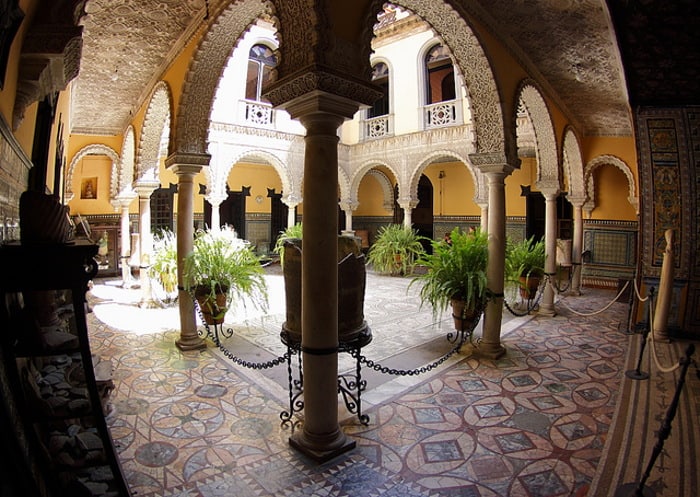
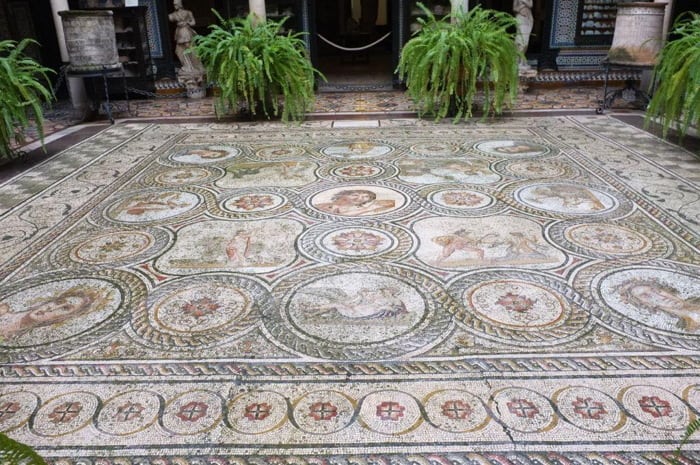
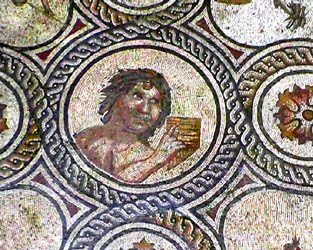
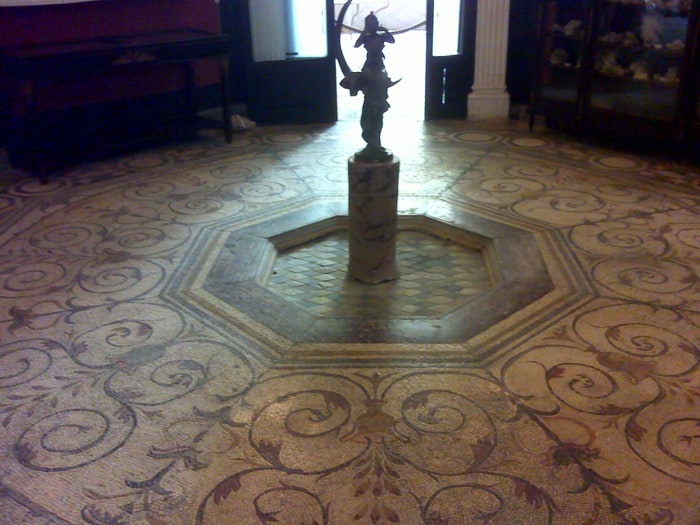
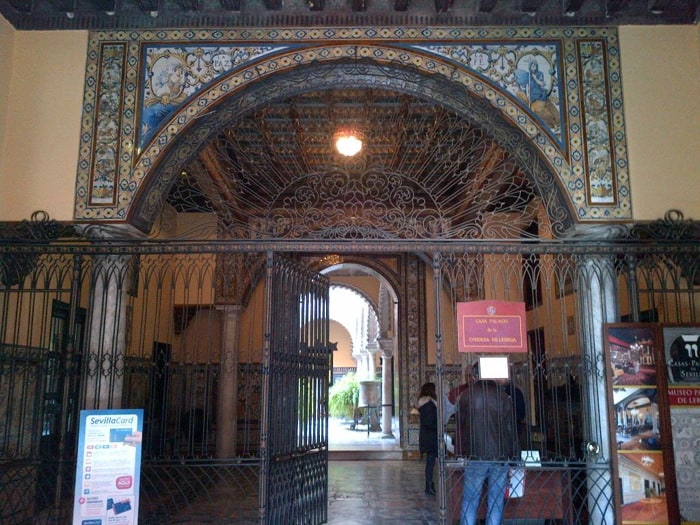
The palace has two splendid gardens: the Patio Central and the Patio de las Palmeras. Before the majesty of the Patio Central you will certainly be left speechless: marble columns, Moorish-style arches with mudéjar decoration, gallery floors of rare and precious marbles and, at the centre of the patio, the ancient mosaic of inestimable beauty measuring no less than 6.82 metres x 6.85 metres. The latter is known as the Mosaic of the God Pan and originally came from the ancient Roman city of Italica (Seville). Although unthinkable today, the Countess of Lebrija purchased it in 1914 and had it brought piece by piece to her palace.
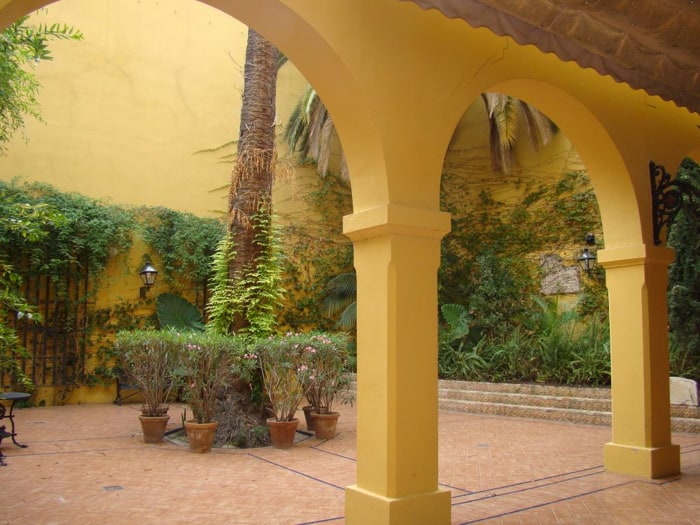
The Patio de las Palmeras has a different style but is no less impressive: with ochre-coloured columns and arches, azulejos and Roman mosaics finely matched to the finishes, palms and other green plants contrasting with the terracotta floor, this is the typical example of a Sevillian patio.
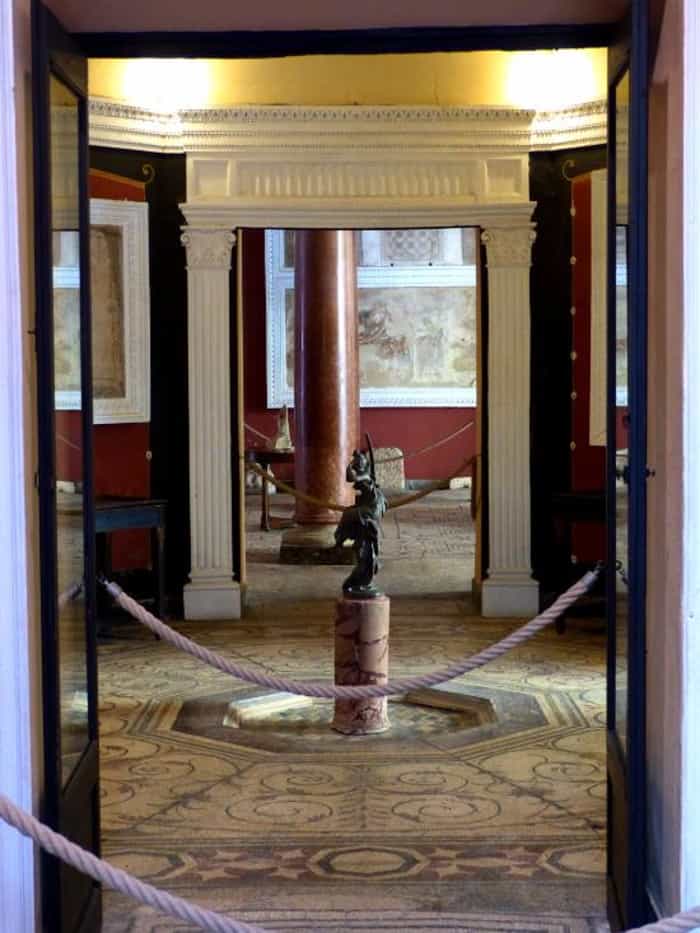
The ground-floor rooms are a succession of works of art and, in most of them, the mosaic flooring is one of the most important features. In the Sala Ochavada, for example, is the first Roman-period floor purchased by the Countess of Lebrija. Among the oldest pieces, besides musical instruments and ivory utensils, are Greco-Roman busts and statues; at the entrance to the Salon de Hermes you can admire a bust, now headless and armless, depicting Apollo or Hermes.
The first floor
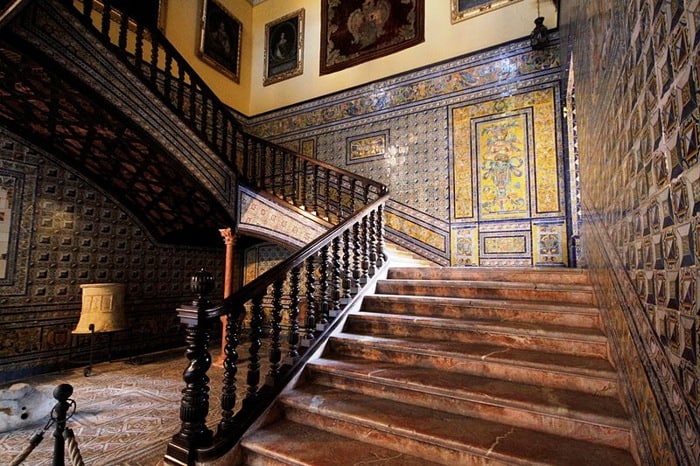
An imposing staircase of three unequal sections, a magnificent example of Andalusian Spanish art, leads up to the palace’s first floor. The ceiling above the stairs, finely decorated, comes from a hall of the Palacio Ducal de Marchena. The walls are adorned with azulejos and, in keeping with the Spanish style, you can admire a sixteenth-century tapestry depicting David playing the harp before the Ark of the Covenant.
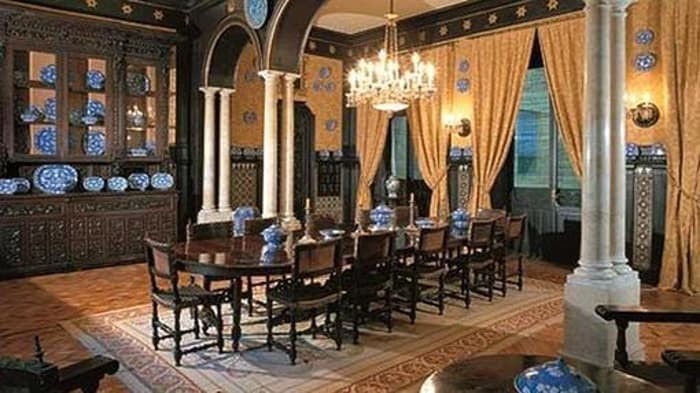
Silk, porcelain, marble, wood and azulejos harmoniously coexist in the elegant Salon Comedor on the first floor. The Salon del Cantón houses an important painting by the artist Van Dyck together with works from the school of Murillo, the famous Sevillian painter who has a room dedicated to him in the Museo de Bellas Artes.
On this floor you can also admire antique writing desks from different periods, exquisite porcelain, Baroque works and, in the Oratorio, a magnificent altarpiece featuring an 18th-century Christ carved in Philippine ivory. Moreover, on this floor of the palace Europe meets the East: the Salon Árabe, with canvases woven with gold thread, finely worked sofas and poufs, large chests and cushions, welcomes the visitor into an oriental world.
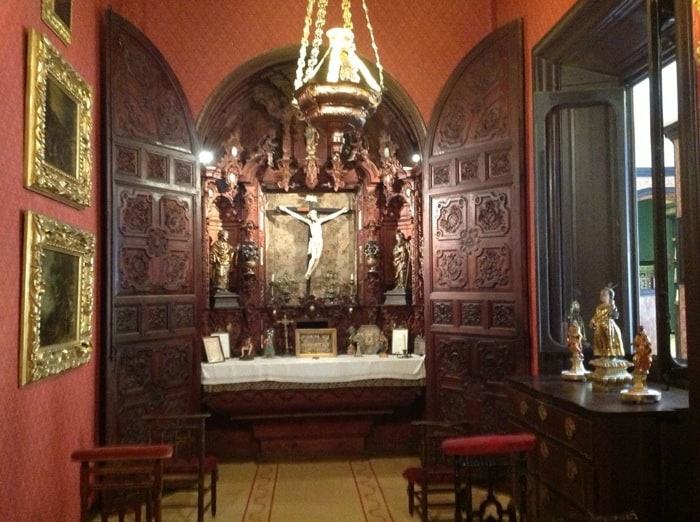
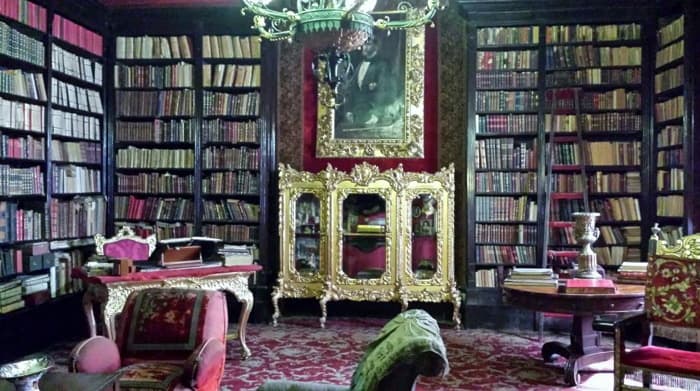
Finally, I suggest you admire the Library with its 4,000 volumes and, if you want to learn more about the family who created and cared for this palace, take a moment to study their portraits in the Salon de los Retratos.
Useful information about the Palacio de Lebrija
How to get there
The Palacio de Lebrija is located at Calle Cuna, 8 in the El Centro neighbourhood, just a short walk from the famous Calle Sierpes. The nearest bus stop is Laraña (Plaza Encarnación) for lines 27, 32 and A7.
Ticket prices
The ticket to visit the palace costs €12 and also includes a guided tour of the first floor. Reduced tickets are available for children aged 6 to 12 (€6) and for groups of at least 15 people (€10). On Fridays, at 10:00, it is possible to enter free of charge and access the ground floor. Buy tickets on the official website.
Opening times
The opening hours are:
- From September to June: every day from 10 am to 6 pm.
- July and August: every day from 10 am to 3 pm.
Where to stay
We are in the El Centro neighbourhood, which is an excellent strategic base for visiting all the attractions of Seville. Here are our recommendations for accommodation: where to stay in Seville.
