If you love visiting museums, and you never leave a city without seeing its best museums, rest assured that Seville will satisfy you: while in the city you’ll have the opportunity to visit the most important museum in Andalusia and one of the leading museums in Spain, second only to Madrid’s Prado in importance and artistic value: the Museo de Bellas Artes (Museum of Fine Arts).
After all, the city is full of museums worth visiting, from the Museo Arqueológico to the Museo de Artes y Costumbres Populares, to the Centro Andaluz de Arte Contemporáneo, but if you have little time and can only visit one, without doubt choose the Museo de Bellas Artes, an ancient building characterised by patios and splendid rooms where you can admire the works of the greatest Andalusian artists spanning seven centuries.
Contents
How to get there
The Museum of Fine Arts in Seville is located at Plaza del Museo, 9: you can reach it on foot or by bus.
- The nearest stop is Miguel de Carvajal for the C5 line. Alternatively, Plaza de Armas is home to the intercity bus terminal and the 3, 6, A2 and A7 bus lines.
- If you are travelling by car, the nearest car parks are Plaza de Armas and Plaza de la Concordia.
Ticket prices and opening times
Admission is free for all citizens of the European Union. It costs € 1.50 for non-EU citizens. If you have large rucksacks or bags you will probably be asked to leave them at the entrance.
The opening hours of the museum are:
- From September to July: Tuesday to Saturday from 9 am to 9 pm; Sundays and public holidays from 9 am to 3 pm.
- August: every day from 9 am to 3 pm.
The museum is closed every Monday, as well as on 1 and 6 January, and on 24, 25 and 31 December.
From convent to museum: eight centuries of history
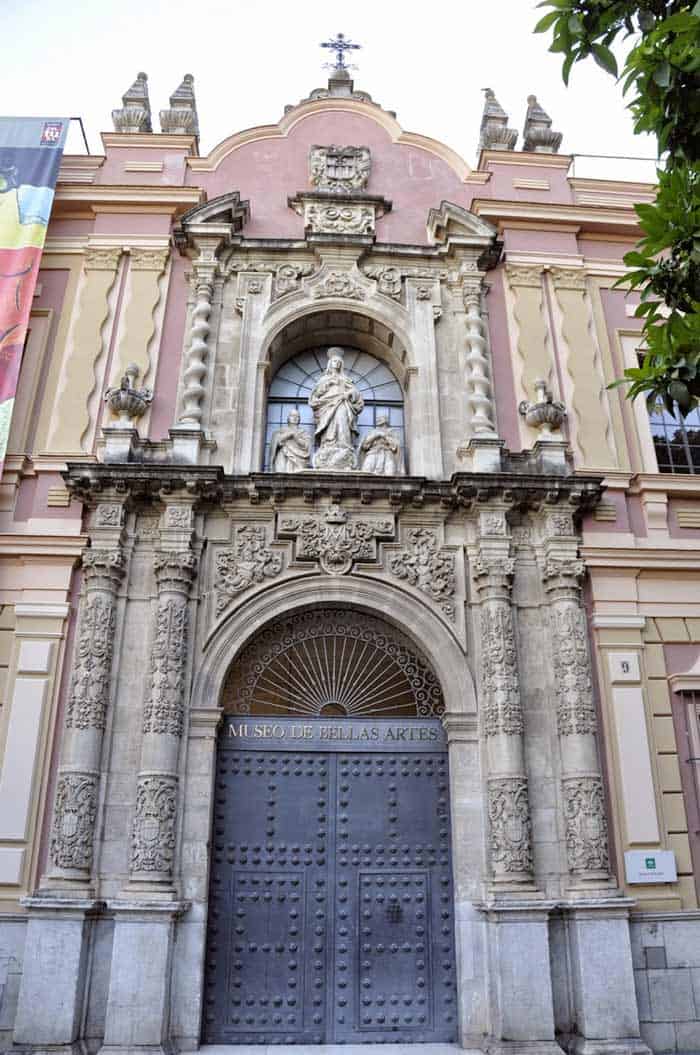
The building that today houses the Museo de Bellas Artes occupies the site of the former Convento de la Merced Calzada (1248). The architect and sculptor Juan de Oviedo completed the construction of the religious building in 1612, following the guidance of Friar Alonso de Monroy, who had been head of the convent since 1602. Unfortunately part of the old mudéjar building was destroyed; in its place, however, stands one of the most important examples of Andalusian Mannerism.
The museum was founded on 16 September 1835 by royal decree and its inauguration took place in 1841. Between 1868 and 1898 significant restoration work was carried out on the arcades and the walls of the first floor, on the cloisters’ flooring and to enhance the azulejos originating from other disused convents. Between 1942 and 1945 the Patio de las Conchas was opened and the old Baroque portal from the main façade on Calle Bailén was relocated. In the 1990s further restoration and maintenance work made the building even more beautiful and welcoming.
Visiting the Museo de Bellas Artes de Sevilla
The museum extends over two storeys and to welcome visitors there are four magnificent cloisters: the Patio del Aljibe, the Patio de las Conchas, the Claustro de los Bojes and the Claustro Mayor. Entering the Claustro de los Bojes you will notice that it is surrounded by Tuscan-style arches. The Claustro Mayor is the largest courtyard and was restored in 1724 by the architect Leonardo de Figueroa.
The ground-floor rooms
On the ground floor there are five galleries with themed collections, as well as the gallery dedicated to temporary exhibitions. Following the recommended route you can admire works arranged chronologically from the 14th century to the Baroque.
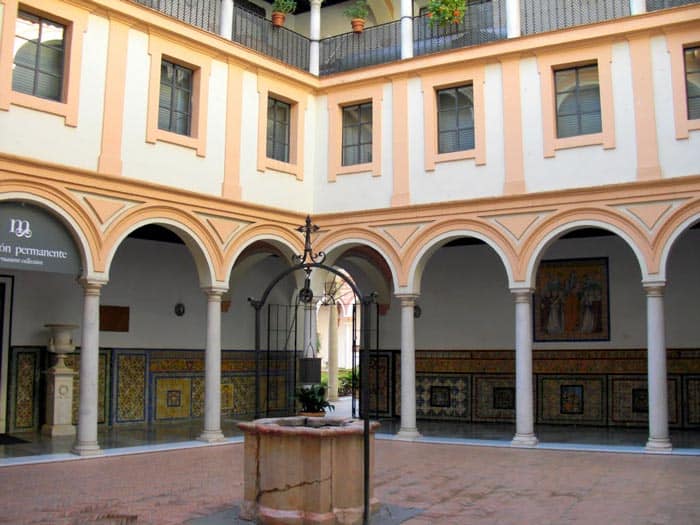
The entrance to the museum is magnificent: each doorway is adorned with splendid portals of yellow and blue azulejos. To reach the Patio del Aljibe from the museum entrance you pass beneath an enchanting arch of azulejos built in 1600 by Hernando de Valladares. The patio has an irregular trapezoidal shape with two rows of arches and a well at its centre, the walls being embellished by the ceramic panel depicting the Virgen del Rosario, a work dated 1577 by Cristóbal de Augusta. On one side of the patio you enter a second open area, the Patio de las Conchas, which features a large fountain at its centre; on the other side you can instead access either the first room or the Claustro de los Bojes.
The first room is dedicated to Spanish medieval art. You can admire paintings and sculptures of the 15th century from the Seville School. Among these are the Cristo Varón de dolores and the Llanto sobre Cristo muerto by Pedro Millán.
The second room displays works of the Renaissance. Standing out are the sculpture San Jerónimo by the Florentine Torrigiano and works by El Greco and Lucas Cranach.
The third room is devoted to Mannerism and houses two splendid retablos from the Seville school. Francisco Pacheco, Alonso Vázquez and Vasco Pereira are the principal exponents of this late-sixteenth-century artistic movement, examples of which you will find in magnificent paintings created especially for the Convento de la Merced (a Saint Peter by Pacheco) or for the monastery of La Cartuja (an Last Supper by Vázquez, see image).

In the fourth room you will admire works that follow Sevillian Naturalism. In particular, you will find works by Francisco Pacheco and his pupils Diego Velázquez and Alonso Cano.
The fifth room is the former chapel of the Convento de la Merced Calzada. The ceilings along what was the nave and the central dome are a Baroque marvel painted by Domingo Martínez. A notable use of colour can be seen in Zurbarán’s oil on canvas entitled Apoteósis de Santo Tomás de Aquino. The room displays works of the Spanish Baroque, particularly by Murillo, who was born in Seville; here is preserved his splendid Virgen de la Sevilleta.


The rooms on the first floor
On the first floor the exhibition of Spanish and Sevillian Baroque art continues: in the sixth room we find a cycle depicting martyred saints painted by Zurbarán and the cycle of Spring, Summer (see image), Winter and Autumn by Francisco Barrera.
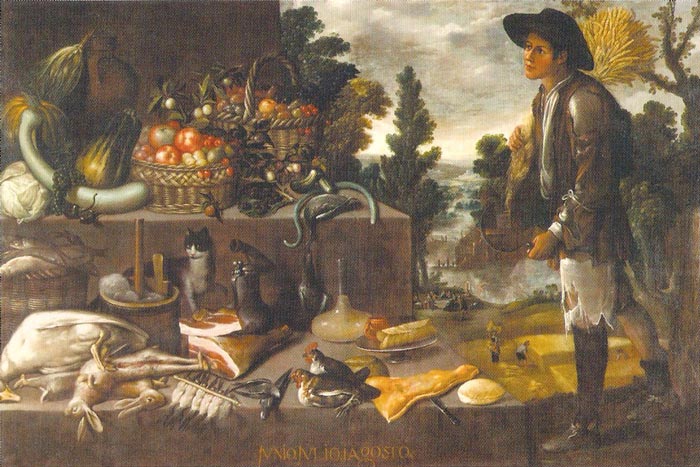
The seventh room displays works by Murillo and by some artists of his school, such as Juan Simón Gutiérrez. The works of the artist Juan de Valdés Leal are on show in the eighth room. The ninth room exhibits paintings of the European Baroque, particularly the Italian and Flemish traditions. The tenth room is dedicated to the works of Francisco de Zurbarán and to sculptures by Juan Martínez Montañes and Juan de Mesa.
The eleventh room displays paintings by Sevillian artists of the 18th century. The Retrato del canónigo Don José Duaso y Latre that you can admire in this part of the museum was painted by Francisco José de Goya y Lucientes, better known simply as Francisco Goya, one of the most important Spanish painters of all time. In the twelfth room the Sevillian painting from the 19th century is on display.
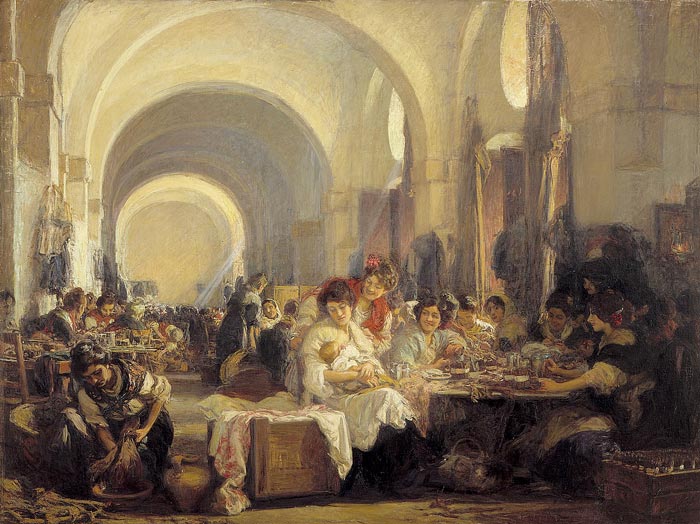
Realism begins and you will find works by García Ramos, José Villegas and the famous work Las Cigarreras by Gonzalo Bilbao (see image). In the thirteenth and fourteenth rooms you can admire the best of 20th-century Andalusian painting. Among the artists on show you will find Vázquez Díaz, Sorolla, Zuloaga, Gonzalo Bilbao and Gustavo Bacarisas.
Where to stay in the area?
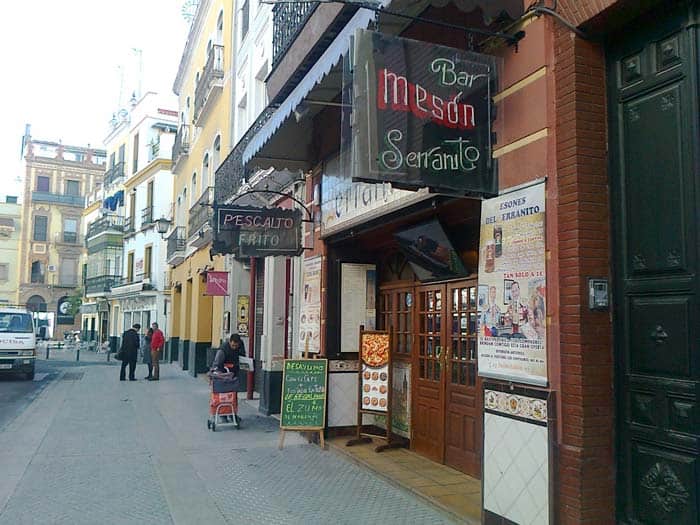
The Museo de Bellas Artes in Seville is just a little more out of the way than the other places of interest in Seville: it is located in a very characteristic neighbourhood, El Arenal, not far from the Plaza de toros de la Maestranza and the River Guadalquivir. Below you’ll find our tips on where to stay in the area.
