During your stay in Seville, as well as visiting unmissable sights such as the Cathedral, Plaza de España and the Alcazar, I suggest setting aside part of a day for the Casa de Pilatos. You will discover the splendour of a private 15th-century palace where elements of Moorish and Gothic architecture blend with Italian Renaissance art. Even seasoned travellers will be struck by the vivid colours of the azulejos, beautifully contrasted with white marble adorned with intricate arabesque details. A must-see spectacle, which for some is second only to the magnificence of the Alcazar.
Book your ticket for Casa de Pilatos (ground floor)
Situated in Seville’s historic centre, Casa de Pilatos has been a national monument since 1931. Moreover, from the 15th and 16th centuries onwards, the purchase of the surrounding land allowed the addition of further elegant rooms, gardens and courtyards, making it the largest private property in the city.
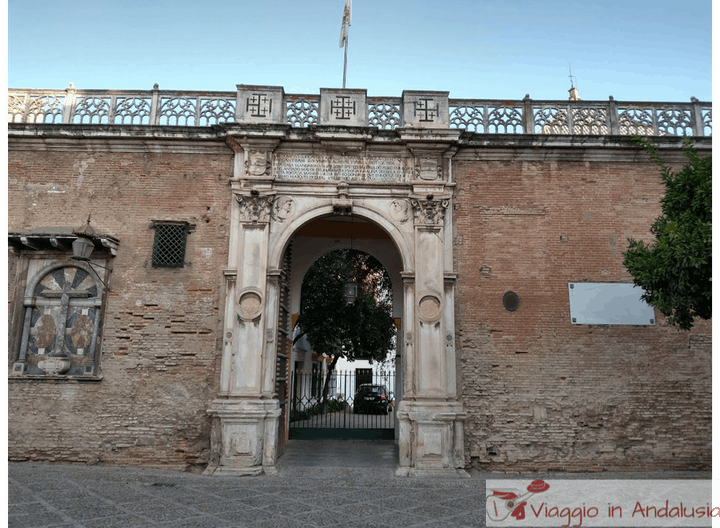
According to tradition, it was the owner Fadrique Enrique de Ribera who gave the palace its name: he discovered that the distance between his house and the church Cruz Campo (Cross of the Field) was equal to the distance between the remains of the house of Pontius Pilate and Calvary. Besides renaming it Casa de Pilatos, he also created a Stations of the Cross route for the city with the house as the first station (see photo): the period of Easter in Seville is deeply felt, especially Holy Week.
Contents
The history of the Casa de Pilatos
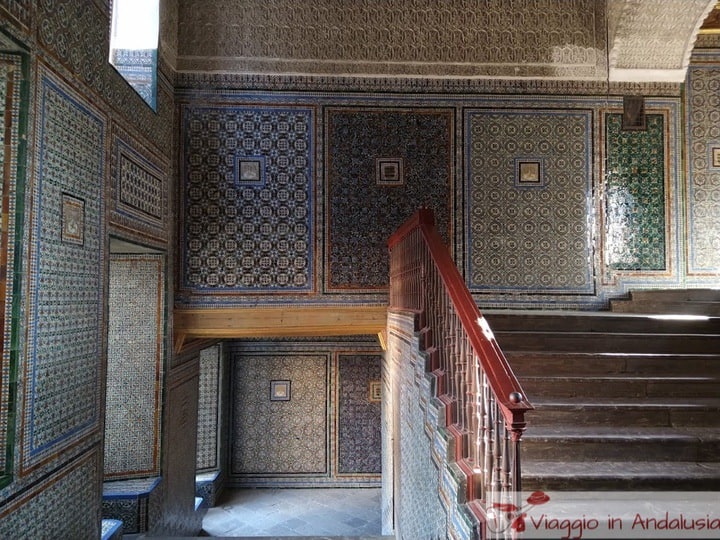
The construction of the Casa de Pilatos dates back to the 15th century, thanks to the noble couple Catalina de Ribera and Pedro Enriquez. The connection with Italy at that time was strong: the Enriquez family, in fact, ruled over Castile, Aragon, Navarre and Naples.
Pedro Enriquez died in 1492 and in 1520 Fadrique Enriquez de Ribera, on his return from travels to Jerusalem and the principal Italian cities of the time, gave the palace a new lease of life, enriching it with Italian marbles and precious metals from the New World, previously unknown in Europe. He added the sumptuous staircase to link the upper floor – used in winter – with the ground floor, used mainly in summer.
As Seville prospered, the Enriquez de Ribera family grew more powerful: in 1514 they acquired the title of Marquesses of Tarifa, in 1558 that of Dukes of Alcalá de Gazules, and two members of the family were appointed viceroys of Naples.
The bond between Casa de Pilatos and the city of Seville has always been strong. At the height of its splendour, the house was regarded as one of Seville’s most beautiful noble houses and used as a model for the construction of other stately homes in the city. From the 17th century onwards, however, Seville declined in importance and the Enriquez de Ribera family, owing to succession problems, was forced to transfer its titles and properties to the Medinaceli family.
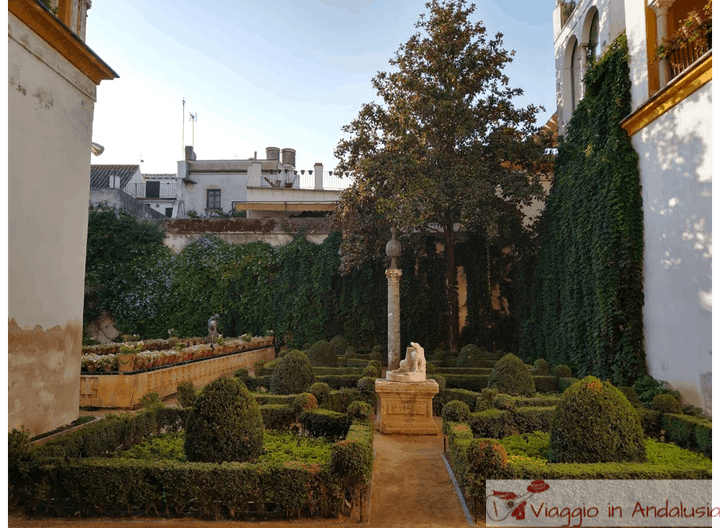
The Medinaceli abandoned the palace in the 18th century, focusing on the properties they owned in Madrid. It was not until the twentieth century that the restoration work on Casa de Pilatos was carried out, chiefly on the parts in the mudéjar style. Since 1978 the palace has been protected by the Medinaceli Foundation.
Films shot at Casa de Pilatos
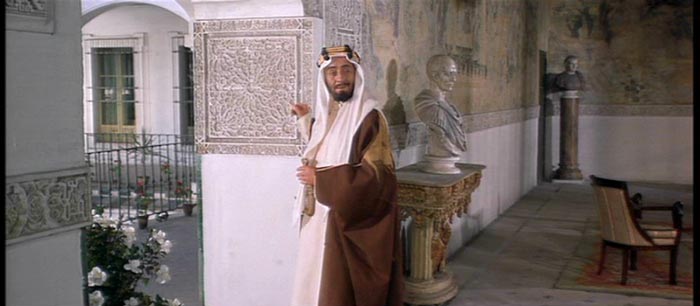
This palace with an Arabesque soul is so beautiful and distinctive that it has been chosen aslocation for several films. It appears in Lawrence of Arabia (1962), in Harem (1986) and in Knight and Day (2005), starring Tom Cruise and Cameron Diaz. Ridley Scott used it to shoot some scenes for two of his films: 1492: Conquest of Paradise (1992), with Gérard Depardieu, and Kingdom of Heaven (2005).
Guide to visiting the Casa de Pilatos
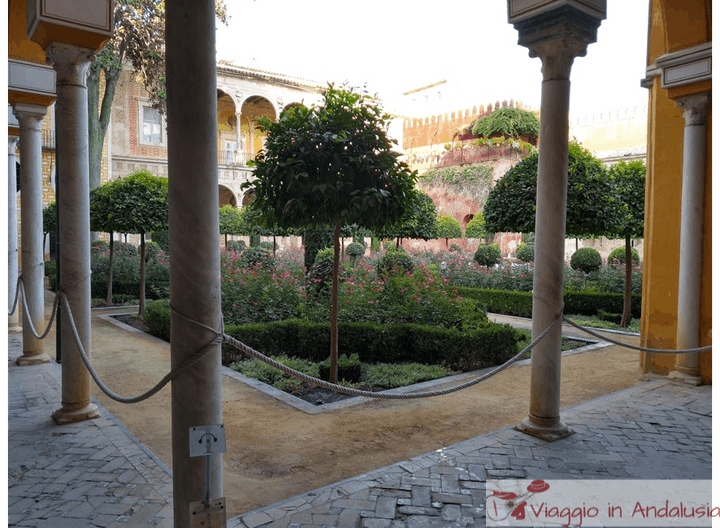
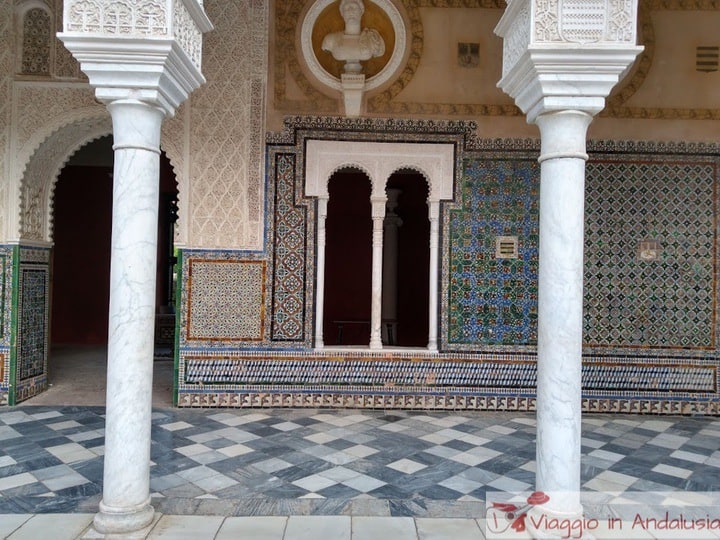
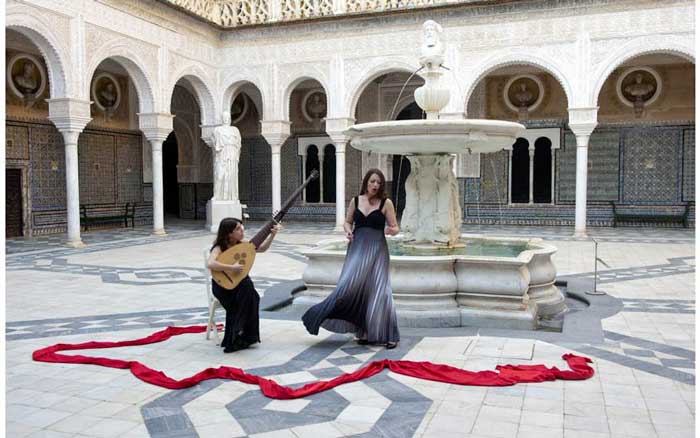
The spectacular patio of the Casa de Pilatos in Seville is a marvellous example of Andalusian architectural art, greeting the visitor with its blend of Gothic, mudéjar, Renaissance and neo‑Romantic styles. Built in the 1400s by Pedro Enriquez and Catalina de Rivera, it had a chapel at its centre and side exits. Fadrique, following the typical architecture of the Renaissance, enlarged the space devoted to the patio by changing its shape from rectangular to square, opened balconies on all four sides, added a marble fountain commissioned from Genoa and changed the columns from brick to marble. The four statues at the corners and the busts in the gallery were added by Fadrique’s nephew, Per Afan.
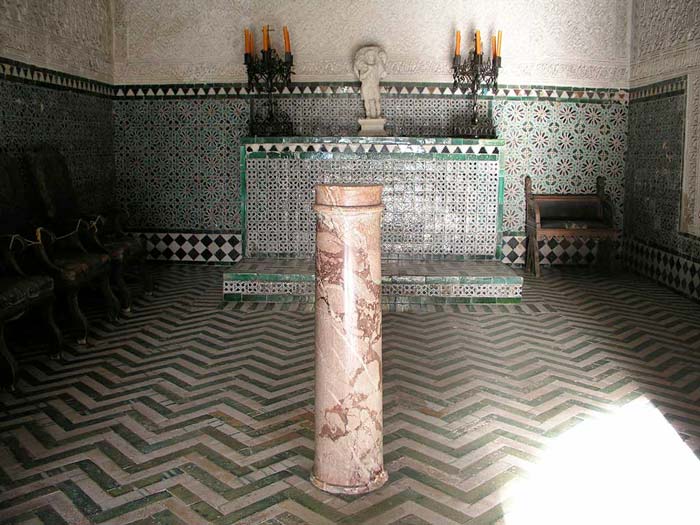
The Capilla de la Flagelación (Cappella della Flagellazione) takes its name from a column that you can see located at the centre of the chapel. Tradition holds that it is the column of Christ’s flagellation. The chapel is the oldest part of the palace. On the altar you will also see a circular fragment that belonged to a 4th-century statue from Rome.
The Salón del Pretorio was built in 1530 in the Renaissance style. The multi‑coloured inlaid wooden sections in the mudéjar style are magnificent. In addition, the azulejos cuenca that cover the palace walls are wonderful: with 150 different designs, here you will find the largest collection of azulejos in existence. Between the main patio and the Jardín Chico (Small Garden) you will find a wide and well‑preserved collection of Renaissance works.
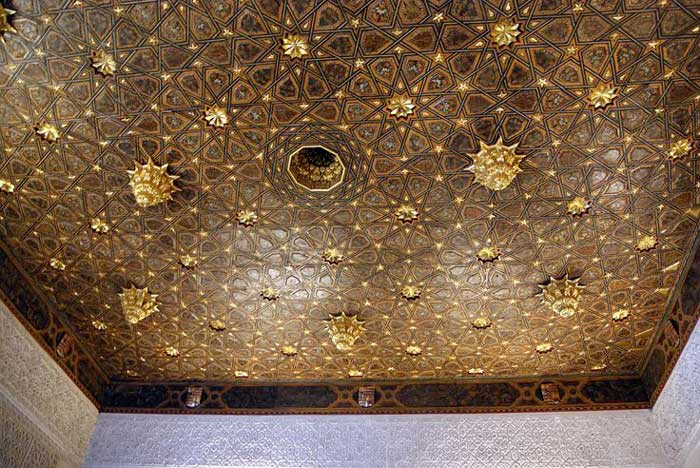
The Gabinete de Pilatos (Pilate’s Cabinet Room) is located beneath the Tower and overlooks the patio thanks to an open gallery. Square in shape, it evokes the ceremonial rooms typical of the Aula Regia or Qubba of Hispano-Islamic architecture. The wooden ceiling is finely decorated: its vault, bearing a ten-pointed star, represents the celestial firmament.
The upper floor of the Casa de Pilatos houses mural paintings added in 1539, frescoed ceilings by Francisco Pacheco, furniture and tapestries from the Medinaceli collection, works by Goya, Vanvitelli, Giuseppe Recco and other prominent artists of the period.
Casa de Pilatos: prices, opening times and how to get there
The Casa de Pilatos is located at Plaza de Pilatos, 1 in Seville. If you’re already in the city centre, the best way to reach it is on foot: the distance from Seville Cathedral to the Casa de Pilatos is around 1 km, a walk of approximately 12 minutes.
How to get there by public transport?
If you’re at Santa Justa railway station you can reach the Casa de Pilatos in a 16‑minute walk. It will take more or less the same time by public transport, but if you prefer to take the bus you can get off at the nearest stop, the Menéndez Pelayo (Puerta Carmona): from there you’ll have to walk for about 4 minutes. The electric minibus on line C5 instead takes you to Plaza de Pilatos (stop Águilas), right behind the house.
It is not possible to reach Casa de Pilatos by metro or tram. The nearest Seville metro station to Casa de Pilatos, in fact, is Puerta Jerez, but it is about a 20-minute walk away. The nearest tram stop is Plaza Nueva on line T1 and is about a 15-minute walk away.
Opening times
The opening hours in winter (from November to March) are from 09:00 to 18:00. In summer, you can visit the palace from 09:00 to 19:00.
Ticket prices
The admission price to the Casa de Pilatos is €12 for the main floor and €6 for the upper floor. Children up to 11 years and people with a disability of over 65% enter free (visitors with a disability of over 50% pay half price). On Mondays from 3pm to 7pm admission to the Casa de Pilatos is free for everyone.
The ticket includes the audio guide in English, as well as Spanish, French, English, Portuguese, German and Japanese.
Book the ticket for the ground floor
Where to stay?
The best neighbourhoods to stay in around the Casa de Pilatos are undoubtedly El Centro and the Barrio Santa Cruz. The latter, in particular, rich in Andalusian-style hotels, offers the chance to fully immerse yourself in the arabesque atmosphere you have already experienced in the Casa’s regal rooms.
