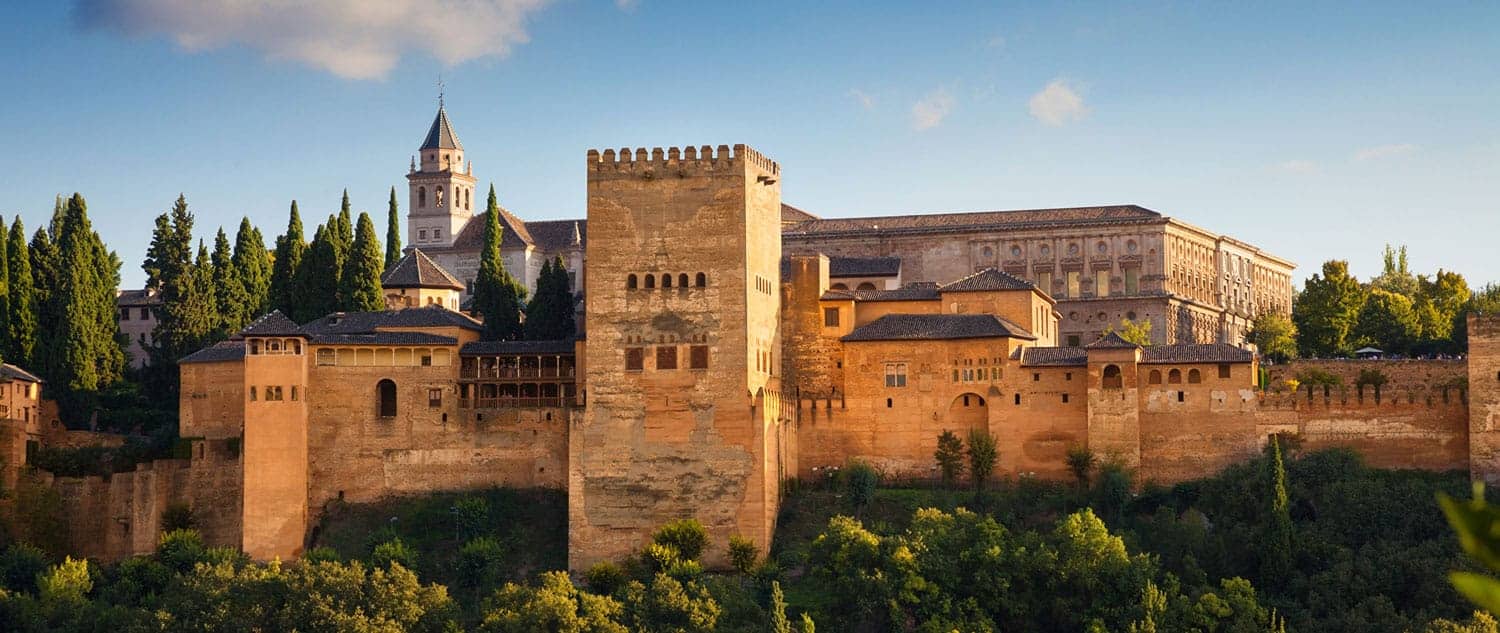
Granada is the Andalusian city that has best managed to preserve its cultural heritage from the Arab world: just think of the wonderful Alhambra complex, which attracts thousands of visitors every year keen to take an authentic journey into the past. But the magic of this mysterious city does not end there: in this guide you will discover that Granada has a great deal to offer!
Contents
Geographical information
Where is Granada?
Granada is located in the autonomous community of Andalusia, which forms the southernmost area of Spain. Andalusia is also the largest Spanish region, and other important cities are found there such as Seville (which is the capital), Málaga, Córdoba and Cádiz, as well as lovely towns and enchanting beaches.
How big is it?
The city covers an area of around 34 square miles, while the province of Granada covers an area of over 4,830 square miles.
What is its altitude?
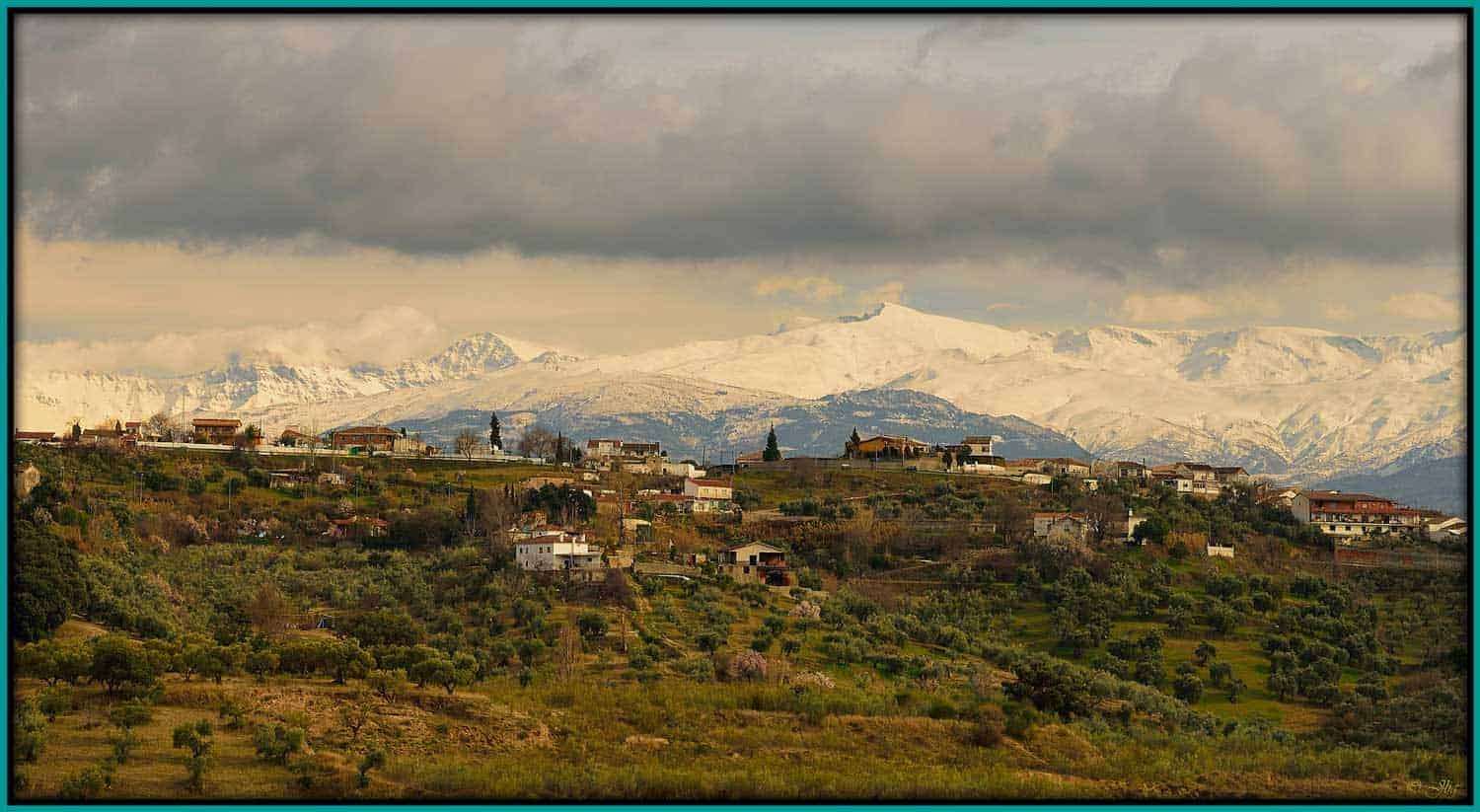
It stands at 684 metres above sea level, at the foot of the peaks of the Sierra Nevada.
How many inhabitants does it have and what are they called?
Granada has around 234,000 inhabitants, known as granadinos in Spanish. Since the period of Arab rule, it has been one of the most populous and important cities in southern Spain.
How far is Granada from the coast?
Granada is not on the coast; the sea is approximately 28 miles away as the crow flies. The nearest seaside resort is Motril, with Playa Granada and Playa Poniente, around 44 miles and 50 minutes’ drive from Granada.
Which river runs through Granada?
Granada is crossed by the river Darro, which flows into the Genil, the most important river in the province. The Genil in turn is a tributary of the Guadalquivir, the largest river in Andalusia, which passes through Seville before flowing into the Atlantic Ocean.
Granada Climate and Temperatures
Granada has a continental-Mediterranean climate, with marked seasonal temperature swings. Winters are cold and bring frequent frosts, while summers are hot and dry. The coldest month of the year is January, with temperatures generally ranging between 2° and 13°. In July, the hottest month, temperatures usually vary between 17° and 34°. Autumn is the wettest season: in particular, November and December see the heaviest rainfall.
Tourist information
How to get there
Granada is located in the south of Spain, but in the central-eastern part of Andalusia. It is not possible to reach it by plane directly from the UK because it has a small airport, served only by local flights. Therefore, to get there it is necessary to make a stopover at another Spanish airport. Alternatively, it can be reached overland. Referring to the capital Madrid, the two cities are well connected by train and bus: high-speed rail takes 3 and a half hours, while by bus it takes 4 and a half hours.
Granada is also well connected to all the Andalusian cities. Looking at the region’s two main airports (Seville and Malaga), you should allow 3 hours by bus or 2 and a half hours by train from Seville, while from Malaga it takes only 1 and a half hours by bus. In Andalusia, it is generally more convenient to use long-distance buses rather than trains, as they are cheaper and often quicker too, especially on routes where high-speed rail is not available.
If you are following an on-the-road itinerary through Andalusia, Granada is 75 miles and about 1 hour 30 minutes from Malaga, 124 miles and about 2 hours 15 minutes from Cordoba, and 155 miles and about 2 hours 45 minutes from Seville.
Airport and Where to Fly From
Granada has an airport, but it is not served by direct flights from the UK. All flights involve a stopover, usually in Madrid or Barcelona.
From the airport it is possible to get to the city centre by direct bus, which takes just 20 minutes. Alternatively, you can take a taxi or hire a car.
How to get around
If you are planning a road trip in Andalusia, you can hire a car in Seville or Malaga (the cities with the main airports), but it is also possible to hire one in Granada if you fly here or arrive by public transport (for example from Madrid). In either case, the car will be useful for travelling between the various Andalusian towns, but it is not advisable to use the car to get around the centre of Granada. Some areas can only be visited on foot and the whole city is very walkable, so if you are staying in the historic centre you will not even need to use public transport.
Where to park
If you are travelling by car and your hotel does not include garage parking in the rate, or if you need to use it anyway to get from one part of the city to another, below you will find some car parks in Granada which, in our experience, are very convenient:
Public transport
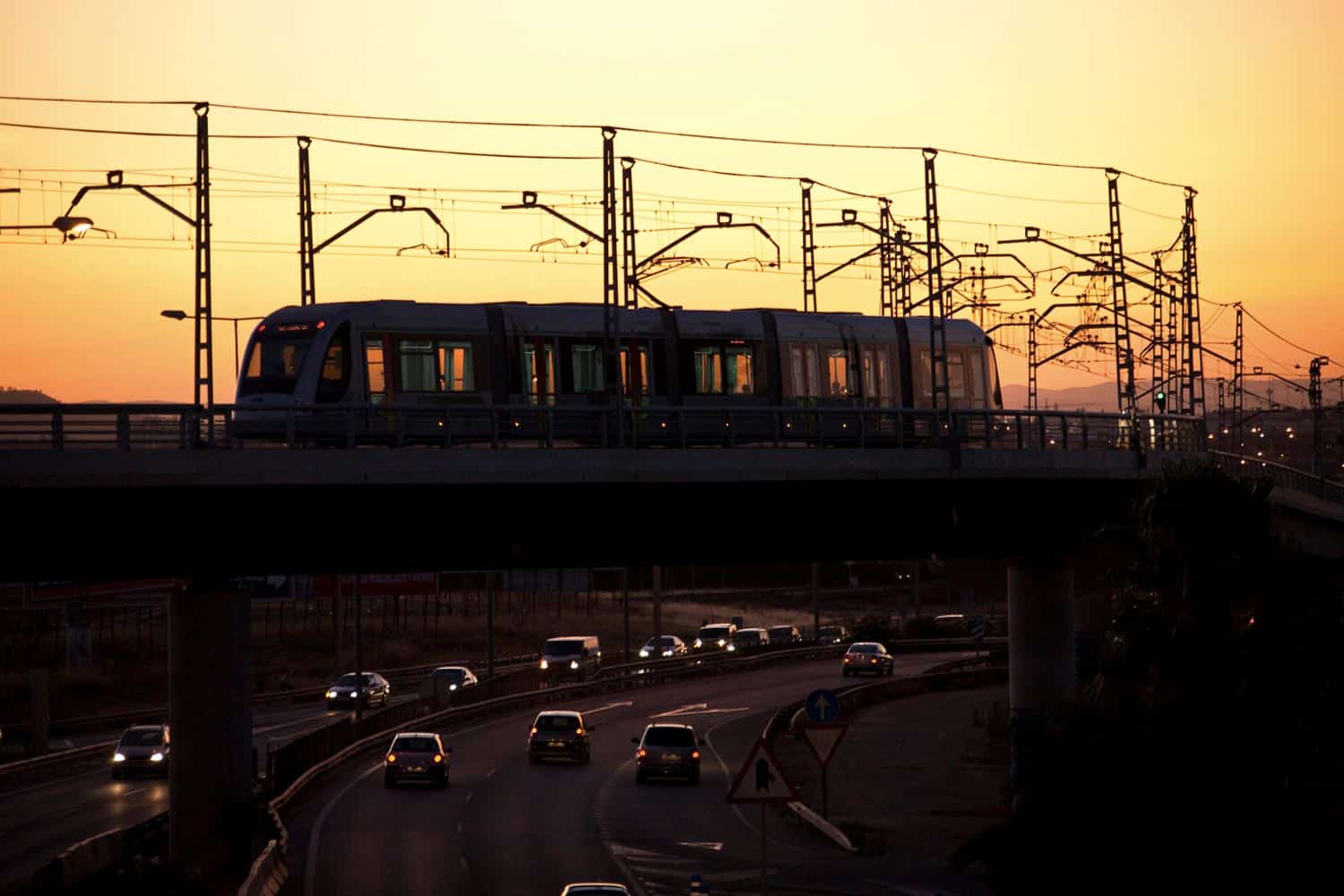
Although Granada is easy to explore on foot, there is a good bus service that makes it possible to reach every part of the city. There is also a tram line (known locally as the Granada Metro, although it is not a proper metro) with 26 stations, which crosses the entire city from north to south.
What is it famous for?
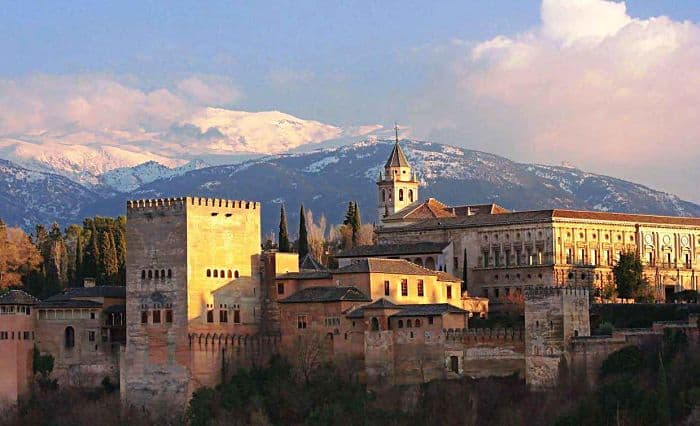
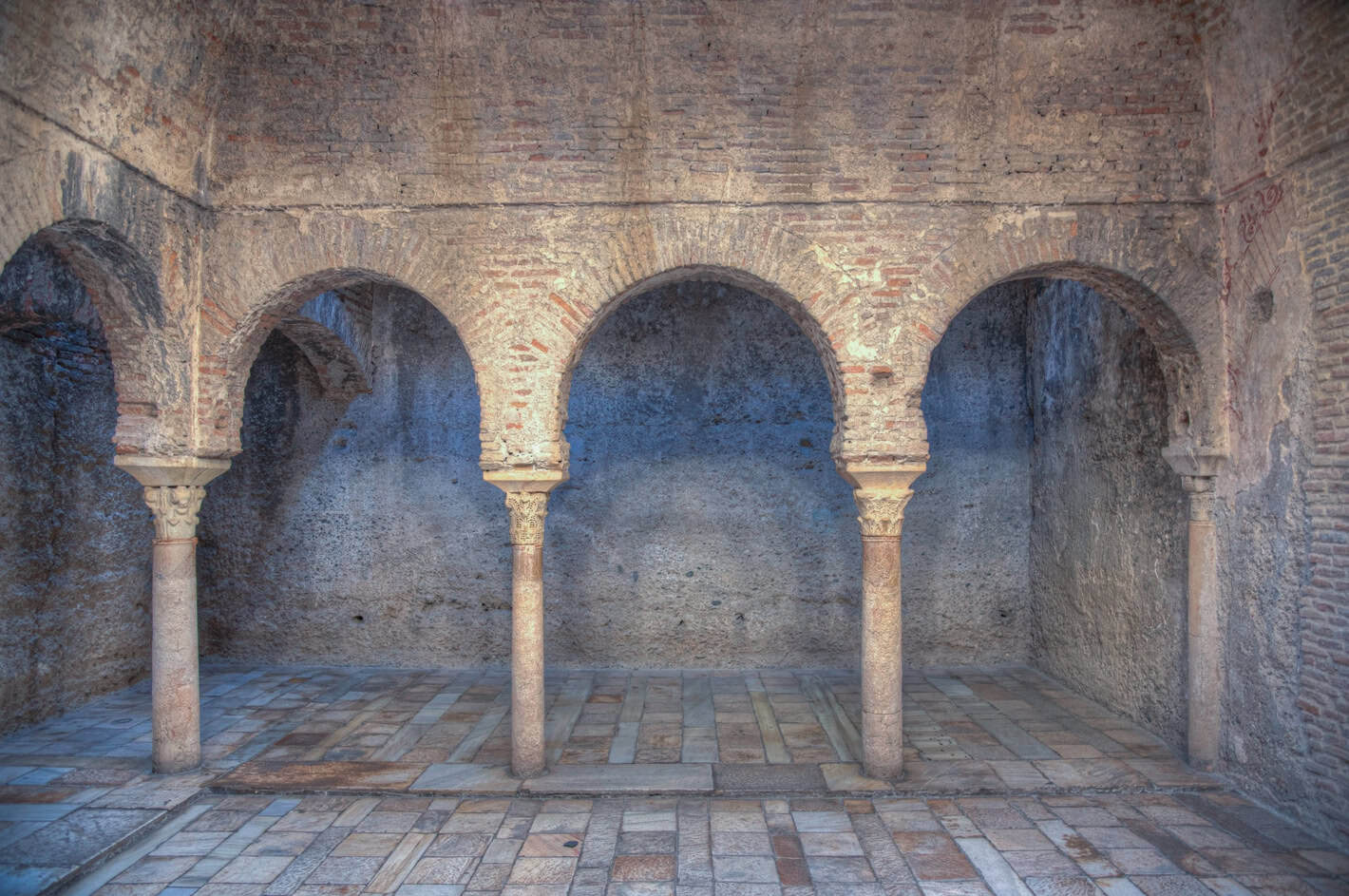
Granada is best known for the Alhambra, which is the most visited historic monument in all of Spain and the principal symbol of Arab rule over this region. In addition to the Alhambra palaces and the gardens of the Generalife, the legacy of this historical period can still be seen in the architecture of some of its districts, first and foremost the Albayzín. Here, among the ancient Arab baths and the courtyards overlooked by palaces, every little street recalls the Moorish period, which is also reflected in the food, the music and many local traditions.
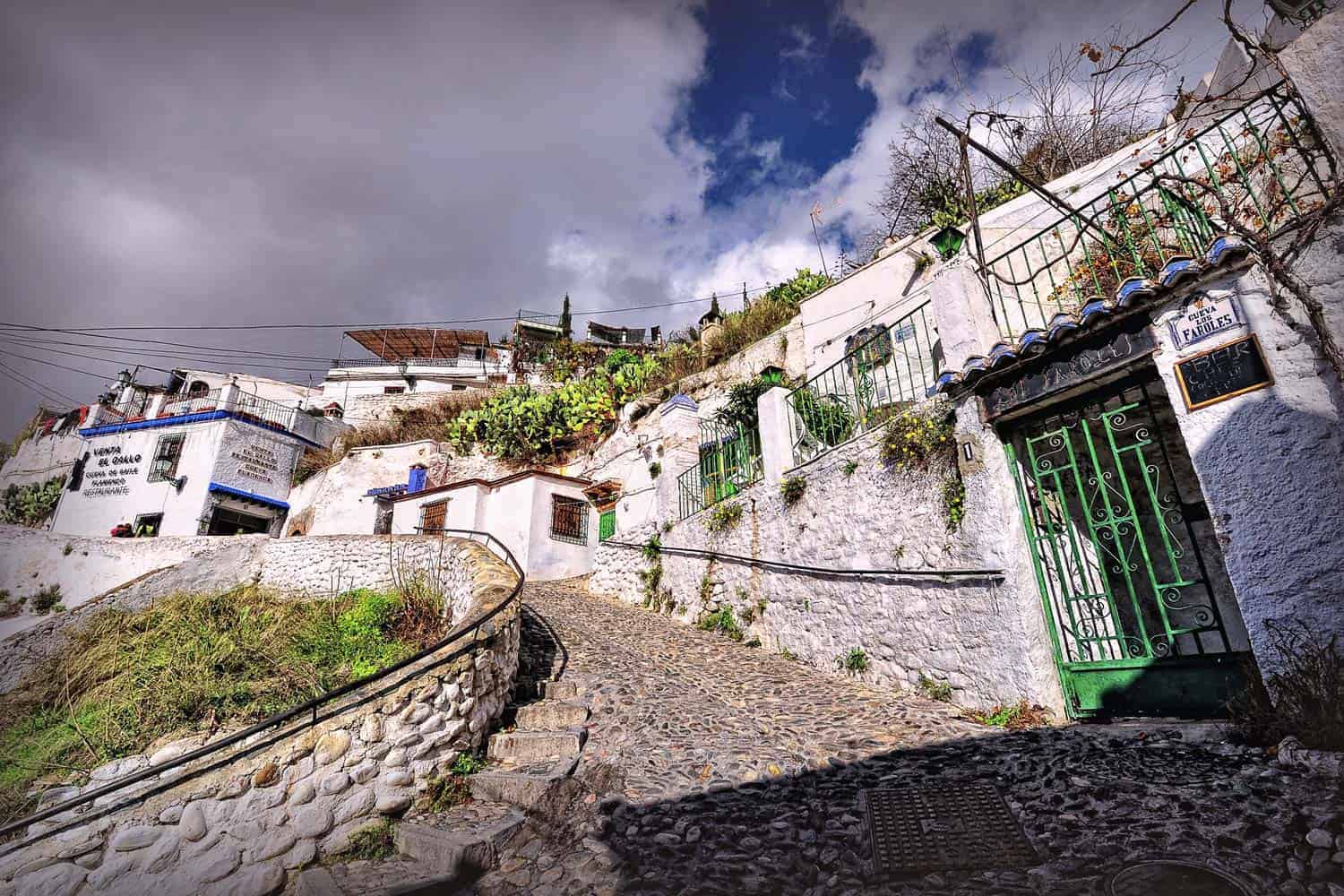
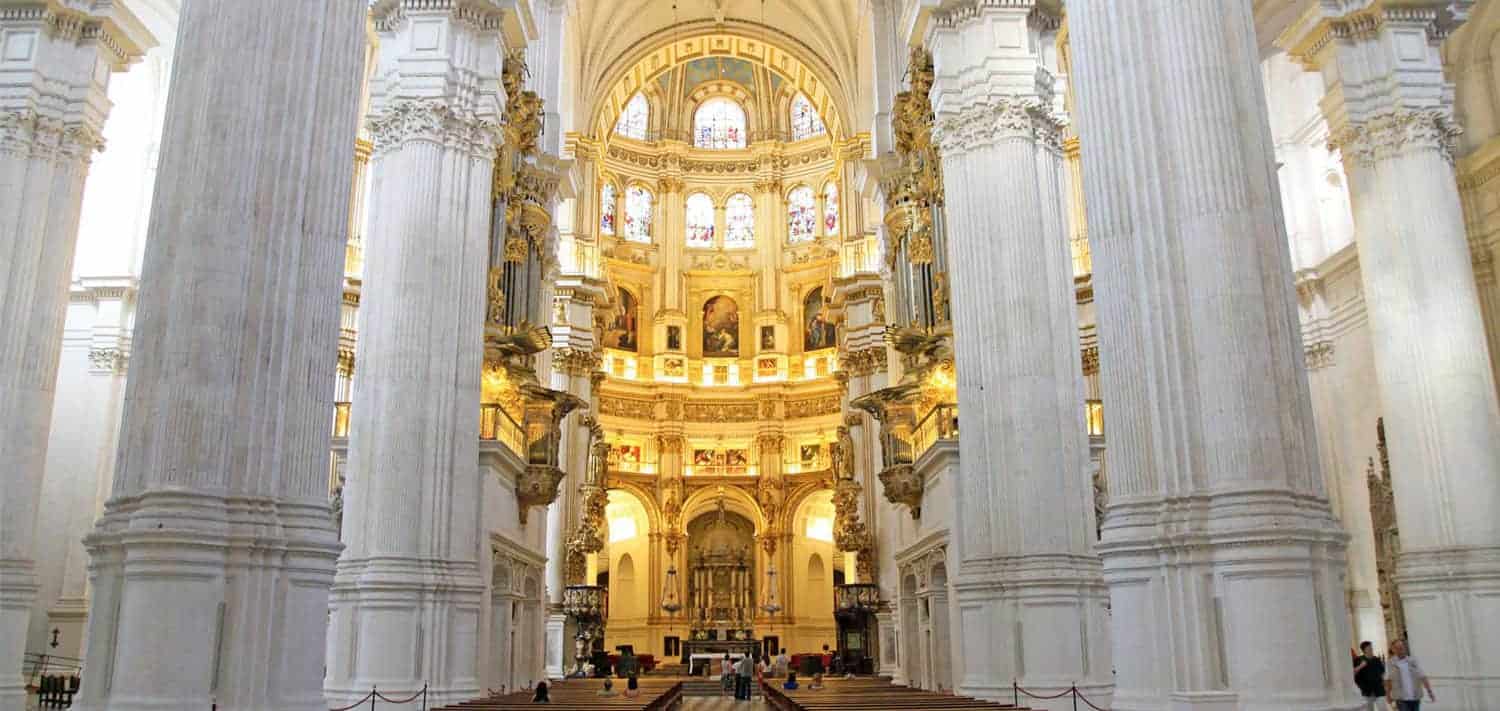
But Granada is also a blend of cultures, and each area of the city presents itself differently from the others: if the centre is a symbol of the Reconquista by the Catholic monarchs, the Sacromonte with its cuevas is the land of the Andalusian Gypsies. On one side we find the cathedral with the chapel where the sovereigns rest, on the other the caves turned into taverns where flamenco is danced.
Important festivals and other events
In Granada, Easter celebrations are very atmospheric and well worth attending, so one of the best times from a folk-tradition point of view is without doubt Holy Week. Other events worth bearing in mind are the Día de la Cruz (3 May) – when the streets fill with crosses decorated with flowers – and the Romería de San Cecilio, which is the feast of the city’s patron saint. It is held on the first Sunday in February and takes place on the Sacromonte, with a popular pilgrimage full of music and dancing.
Flamenco
Since 2010, Flamenco has been declared an Intangible Cultural Heritage of Humanity. Although it is often associated solely with dance, what we are talking about is a much broader art form that permeates Andalusian culture. There is flamenco performed only through singing, flamenco accompanied by guitar and flamenco in which music blends with dance. In Granada, there are numerous opportunities to see a flamenco show, and the main district where you should look for them is Sacromonte, where gypsy culture intersects with Moorish culture.
Neighbourhoods
Every district of Granada is different from the others, and that is not just a cliché. The great mix of peoples and cultures that has passed through this city has meant that its architecture has varied considerably, leaving behind an exceptionally diverse city. The oldest and most iconic district is the Albayzín: walking through its narrow lanes and stairways, among white houses and panoramic views, it feels like being in a Middle Eastern city. The Centro district was once also strongly Arab-influenced, but after the Reconquista it was largely rebuilt by the Spanish and today it is the heart of the city’s commercial life: alongside churches and monuments there are shops, restaurants and bars where you can try all kinds of tapas. Then there is Sacromonte, the district of the gypsies and flamenco, famous for its cuevas (houses carved into the rock) and for its rustic charm. Realejo is the old Jewish quarter: despite the imprint of the Jewish tradition, today it has become a lively and alternative district, known for its murals, trendy venues and student life.
Where to stay
Granada is quite small, so you could say that any neighbourhood is good for looking for accommodation, because it is easy enough to get around on foot or by bus to visit the rest of the city. But aside from the logistics, there are other aspects to consider when choosing where to stay in Granada. The city centre is best for its strategic location, but among the worst for parking; Albayzín and Sacromonte are the ones with the most magical atmosphere, where the Arab influences on the one hand and the Gypsy culture on the other will make you feel as though you are in another world. Realejo is the most youthful district, the one to choose if you are looking for nightlife, whilst the area around Calle Acera del Darro is ideal for those who want to stay in the more modern Granada.
Areas to avoid
Granada is a quiet city, where you can feel fairly safe. The main risks to safety are those linked to petty theft: as in any tourist city, it is worth watching out for pickpockets who take advantage of tourists’ naïvety and distraction, especially in the busiest areas.
Towns and attractions nearby
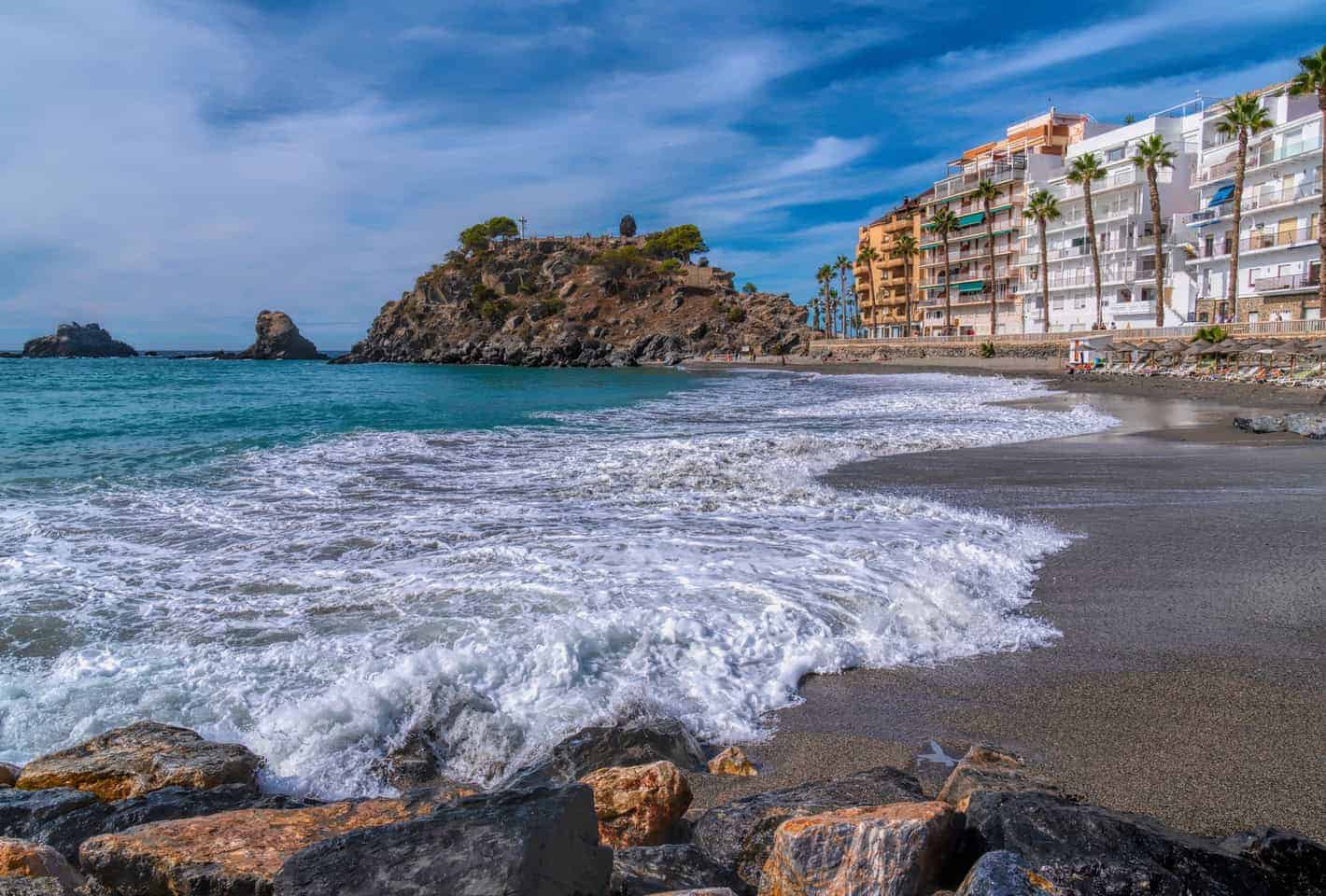
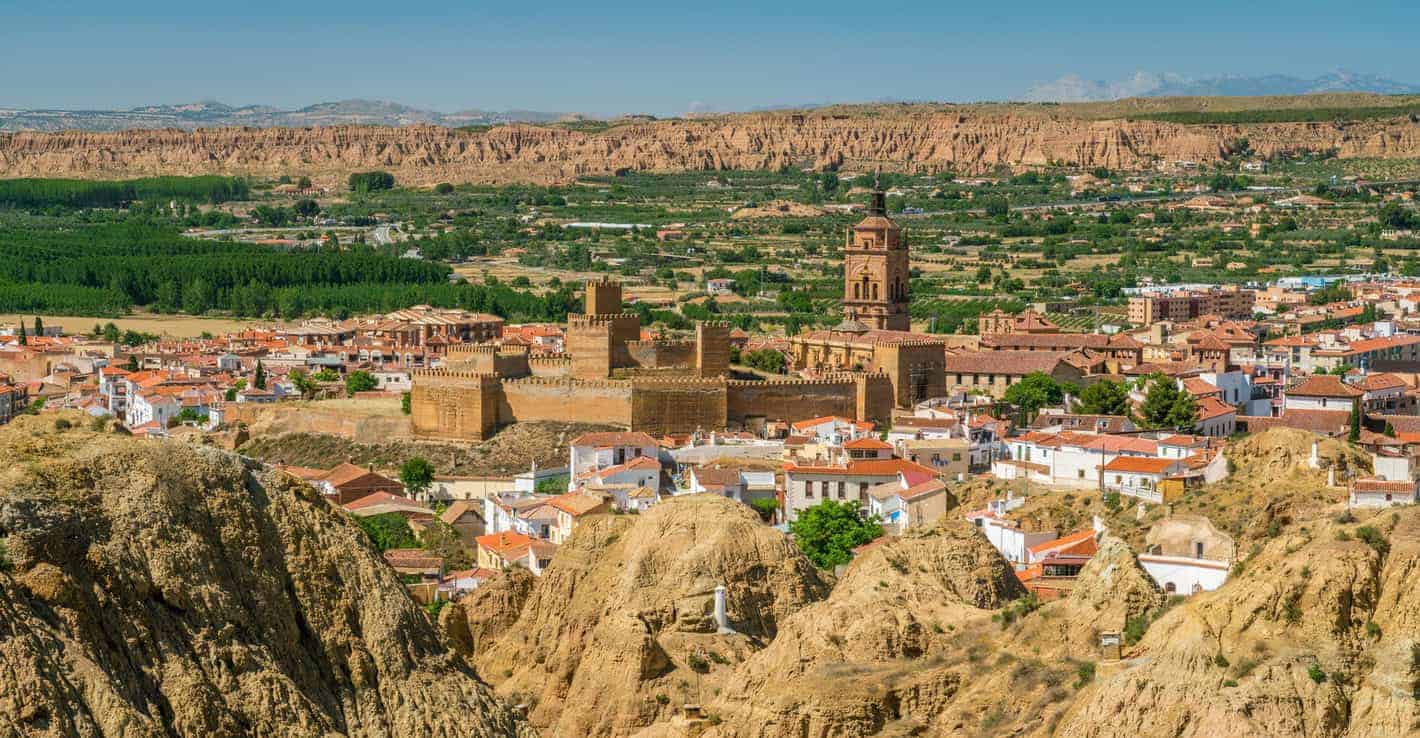
Compared with other provincial capitals in Andalusia, Granada is perhaps less straightforward from which to organise day trips using public transport, because of its geographical position, which makes journeys to the best-known tourist destinations a little longer. Among the provincial capitals, the nearest and easiest to reach is Jaén, which is 1 hour away by car and 1 hour 20 minutes by bus. If you have a car, the easiest places of interest to reach in the surroundings of Granada are the Sierra Nevada National Park, the distinctive town of Guadix, the coastal resorts of the Costa Tropical, and the villages of the La Alpujarra region.
Traditional Food in Granada
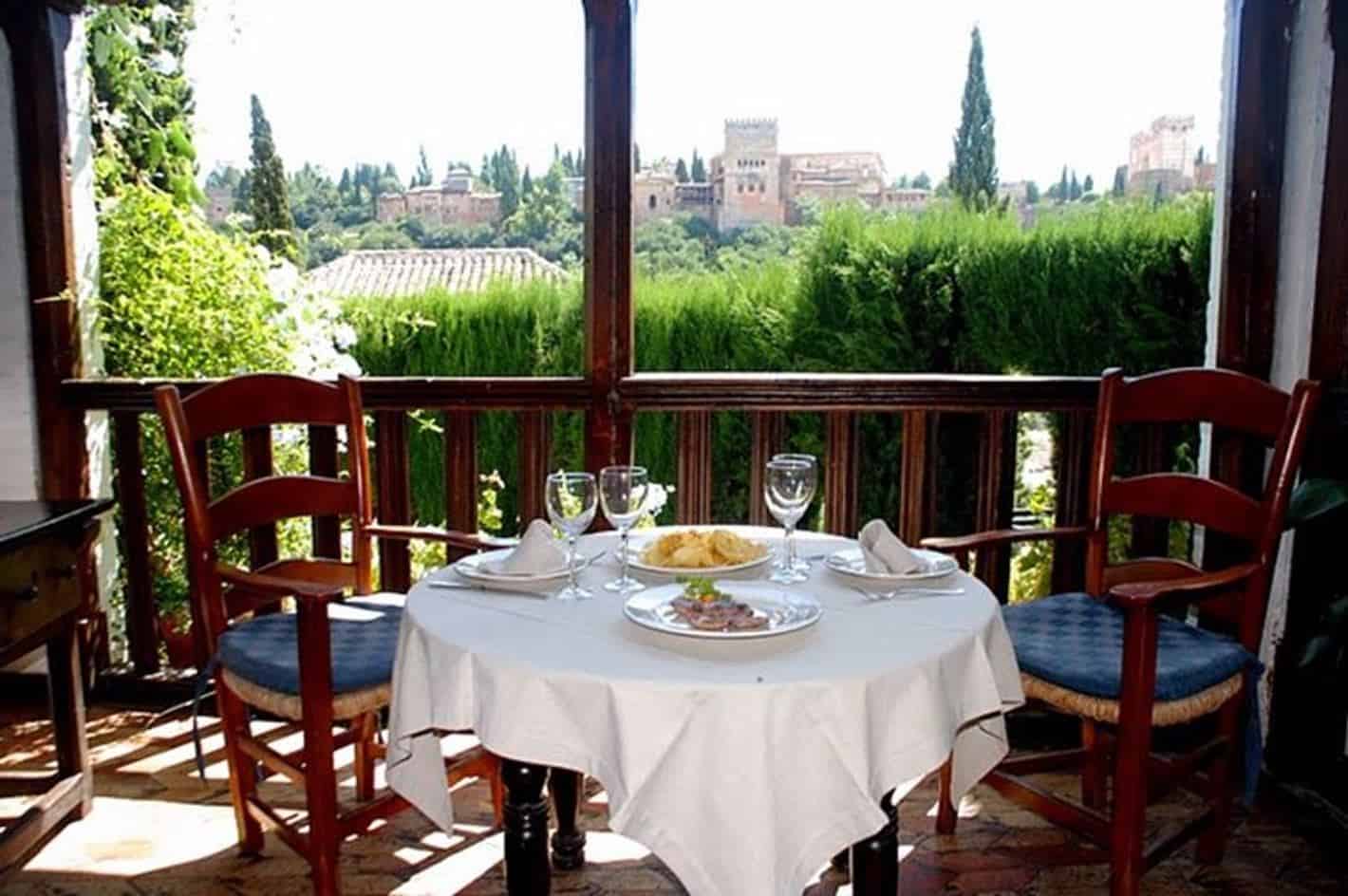
Granada is among the Spanish cities most famous for tapas, which come in every shape and to suit every taste, from meatballs to fried fish, from potatoes to croquettes. But the local cuisine does not stop there: there are typical dishes to try that are certainly worth a taste. Among the dishes that are hard to sample elsewhere is the Tortilla del Sacromonte: a traditional omelette from this Gypsy quarter, made with various animal offal, in particular lamb’s or pork’s brains and testicles, to which peas, potatoes, walnuts and other ingredients that may vary are added.
Less unusual are dishes such as the Olla de San Antón (a stew of rice, pulses and pork), the Plato Alpujarreño (which comes from the outskirts of the city, in the Alpujarra area, and is made with potatoes, fried eggs and various cured meats) or the Remojón Granadino (a sort of salad with oranges, onions, olives, eggs and salt cod).
What tapas are
Tapas are small dishes which in Spain, but particularly in Granada and Seville, accompany a cold beer or other drinks. Granada is full of bars, breweries and restaurants where you can enjoy some of these delicacies. Unlike in other cities (where it is very rare), in Granada you can order a pint of beer and have a dish with a random item of food brought to you alongside it, without having chosen it, because originally tapas were exactly that: a snack to go with a drink, just as we might offer nuts and crisps in a bar.
Where to eat
It is difficult to draw up a list of the best places to eat in Granada, there is such a wide choice available. In our article dedicated to where to eat in Granada, however, we have put together a list of bars and restaurants where you can try both the best tapas and the various typical Andalusian dishes. We therefore recommend both tapas bars and good-quality restaurants, grouped area by area.
Tourist Passes
Compared with Seville, where there are several passes that include museums, attractions and public transport, Granada does not have a great variety of tourist passes. In fact, there is only one, the Granada Card, which can be useful for saving on the total cost of tickets if you intend to visit most of the city’s paid attractions.
Car hire
Most tourists who hire a car to discover Andalusia do so at the airports of Seville and Malaga, the region’s hubs where most flights land. But if your tour begins in Granada – whether you arrive by plane or come by train or bus – you should know that there are several car hire companies, both at the airport and in the city. The advice, however, is to hire the car when you are about to set off on your road trip, since in a city like this the car risks being nothing but a hindrance.
Where to go Shopping
The whole Albayzín district is perfect for anyone looking for a souvenir from Granada: it is full of characterful little shops where you can find something typical to take home. The Alcaicería, near the cathedral, is also comparable to a Moroccan souk and is full of local products. The shopping street par excellence is Calle Reyes Católicos, full of shops of every kind. Other streets worth bearing in mind for shopping are Calle Mesones and Gran Vía de Colón.
Where to go out in the evening (nightlife)
There are lots of things to do in Granada in the evening, from going out for a beer and tapas, or having a good wine or a cocktail in a bar de copas after dinner, to staying out late dancing in a nightclub. Being a university city, there are plenty of opportunities for young people (and not-so-young people too) who want to go out in the evening and have fun. Among the most famous areas for a night out are Calle Elvira (the so-called hippy area, full of tapas bars and live music venues), Calle Pedro Antonio de Alarcón (where students gather and which is full of bars and nightclubs), and the Realejo district (rich in bars and venues of various kinds).
Opening Hours and Mealtimes
In Spain, daily routines tend to run a little later than in the UK, especially in Andalusia. In Granada, it is perfectly normal to have breakfast between 9:00 and 11:00, lunch between 14:00 and 16:00, and dinner between 21:00 and 23:00. These later mealtimes also affect the opening hours of shops, restaurants and other businesses. In the more touristy areas, however, opening hours tend to be more flexible than in less visited parts of the region.
How many days to visit it
We usually recommend a minimum of 2 days for a visit to Granada, especially because the Alhambra alone takes up almost a full day, and if you want to discover the richness of Granada’s other districts, you’ll need at least another full day devoted to the city. Needless to say, if you have more days available, that’s even better: you can also see less touristy, more characterful places, get to know the soul of the city more deeply, and perhaps explore the immediate surroundings as well.
Time zone, currency, language
Mainland Spain is one hour ahead of the UK, so remember to adjust your watch when you arrive. The currency is the euro; cards are widely accepted, although it is useful to carry some cash for smaller purchases. The official language is Spanish, but English is widely spoken in the main tourist areas.
History, culture and sport
History in brief
The origins of Granada date back to antiquity: Iberian settlements existed in the area and, in Roman times, the city of Iliberis. After the decline of the Roman Empire, Granada came under the control of the Visigoths and Byzantines, until the arrival of the Arabs in the 8th century. With the Islamic conquest of 711, Granada became part of Al-Andalus and began to develop as an important urban centre. After the fall of the Caliphate of Córdoba, the Taifa kingdom of Granada was established in the 11th century, and in the 13th century it became the last major Muslim state on the peninsula: the Nasrid Kingdom. During this period the city reached its greatest splendour, with the construction of the famous Alhambra, a symbol of power and Islamic artistic refinement.
In 1492 Granada was conquered by the Catholic Monarchs, marking the end of the Reconquista and Muslim rule in Spain. The last Nasrid ruler, Boabdil, handed the city over to the Christians, bringing to an end almost eight centuries of Islamic presence. In the centuries that followed, Granada was progressively Christianised: mosques were turned into churches and new Renaissance buildings altered the cityscape. However, religious and social tensions led to the Moorish revolt in the 16th century and their subsequent expulsion.
During the modern age, Granada experienced a period of decline compared with other Spanish cities, but it retained an enormous historical and cultural heritage. In the 20th century, the city began to promote its own past, becoming one of Spain’s leading tourist destinations, thanks above all to its Arab and monumental legacy.
Origin of the name
The origin of the name Granada is not entirely certain. According to the most widely accepted hypothesis, it derives from the Latin term granatum (pomegranate), a fruit that became the city’s symbol. Another theory links it to the Arabic name Gharnāṭa, used during the Islamic period and later adapted into its current form.
Coat of arms
Granada’s coat of arms is made up of three central sections. The upper one represents the Catholic Monarchs, whilst the two lower sections depict the Torre de la Vela of the Alhambra and a pomegranate respectively, the city’s symbol. Around it are the symbols of Castile and León and a banner bearing Granada’s honorary titles: “Most Noble, Most Loyal, Famous, Great, Celebrated and Heroic City of Granada”. The whole shield is then surmounted by the royal crown.
Football teams and stadiums
The city’s main team is Granada CF, which plays at the Estadio Nuevo Los Cármenes, which has a capacity of 19,300 spectators. At a lower level there are also clubs such as Recreativo Granada, which represent the youth academy and local football.
University
The University of Granada is one of Spain’s oldest and most prestigious, founded in 1531 by Emperor Charles V. Today it has tens of thousands of students, including many international ones thanks to Erasmus programmes. It is spread across various campuses, including Cartuja and Fuentenueva, and is deeply integrated into the life of the city. The university is particularly renowned for research, innovation and the quality of its teaching, which makes it especially attractive: Granada is in fact considered a lively university city, with a young and dynamic atmosphere all year round.
Famous theatres
Granada offers a lively theatre scene, with historic and modern venues devoted to performances and culture. Among the most important is the Teatro Isabel la Católica, in the city centre, which hosts plays, dance and concerts. Another landmark is the Teatro Alhambra, known for a contemporary and experimental programme. Alongside these are smaller, independent venues that enliven the local cultural life.
Famous figures (writers, actors)
Granada has given birth to, or been associated with, several famous figures, especially in the cultural sphere. The most celebrated is the poet and playwright Federico García Lorca, one of the most important figures in twentieth-century Spanish literature, deeply connected to Andalusian culture.
Another notable name is the composer and pianist Manuel de Falla, who, although born in Cadiz, spent a key part of his creative life in Granada. In contemporary terms, one can also mention actors and musicians linked to the local cultural scene, but Lorca remains without doubt the city’s ultimate symbol.