A complete guide to the Alhambra in Granada: information on opening times, tickets and bookings, tips for visiting the palaces, gardens and the oldest areas of the sultans’ complex: the Nasrid Palaces, the Palace of Charles V, the Alcazaba, El Partal, the museums, the Generalife’s summer residences and more…
Contents
What is the Alhambra? An introduction to Spain’s wonder
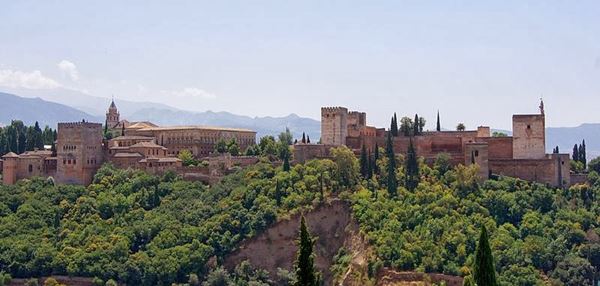
The Alhambra of Granada, built from 1238 and completed by the Nasrid sultan Muhammad V over the course of the following century, is the most emblematic monument in Andalusia, and one of the most significant in all of Spain, but above all it is without a shadow of a doubt the mirror of the fragile and magnificent soul of Granada.
The Alhambra is a spectacle for all the senses, and has the gift of projecting the imagination of those who visit it into another dimension, that of romantic and adventurous, warlike and amorous Arabesque dream: you will realise this as you make your way into the finely decorated rooms of the Palacios Nazaríes – the royal residences of the Nasrids – or as you climb up to the miradores of the defensive towers, rising above the red, imperious walls of the Alcazaba, which dominates the panorama of Granada and the Sierra Nevada.
Buy skip-the-line tickets for the Alhambra on Headout
Buy skip-the-line tickets for the Alhambra on Civitatis
Buy skip-the-line tickets for the Alhambra on Tiqets
Buy skip-the-line tickets for the Alhambra on GetYourGuide
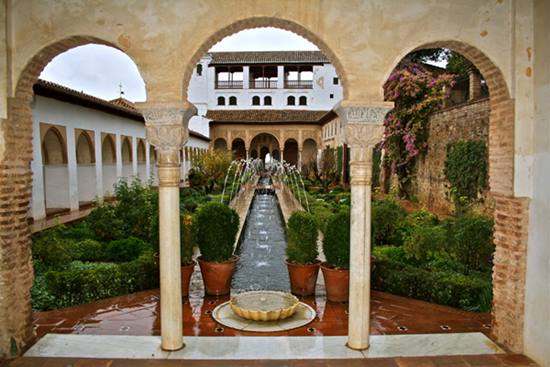
You will experience the timeless beauty of the Alhambra as you stroll along the flower-lined paths of the Generalife gardens; you will be captivated by the water features that sprout in the pools and flow along the channels, mesmerised by the sophisticated finishes of the arches reflected in the pools, by the lush orchards, the hedge mazes, and the patios rich in priceless details.
Never more so than in this case, however, are words useless: who would be able to describe the flow of images and thoughts that pass through the eyes and mind of anyone entering the Moorish heart of Granada? New York writer Washington Irving tried, and during his stay in Granada in the 1840s he wrote the Tales of the Alhambra, inspired by the literary aura that pervades the palace’s mysterious rooms.
Brief history of the Alhambra
The first records concerning the settlements on the hill of the Alhambra date back to the 9th century, although it is believed that the oldest buildings are from Roman times or earlier. After the civil war that followed the Caliphate of Córdoba (1031), the Zirid dynasty came to power in Granada and established its residence in the ancient Alcazaba in the Albaicín district. The first restorations of the old settlements on the hill of the Alhambra are thanks to the prime minister Samuel ibn Nagrella, who established the first residence there.
During the twelfth century, the fortification of the Alhambra served mainly as a refuge for the locals during the battles with the Almoravids and Almohads. The court was moved from the Albayzín to the Alhambra only in 1238, during the reign of Muhammad ibn Nasr (Muhammad I), founder of the Nasrid dynasty of the Sultanate of Granada, and known as “the Red One” because of the colour of his beard. From then on, the Alhambra was conceived as a royal palace, fortified citadel, residence of the Nasrid sultans and high officials, court servants and elite soldiers. The construction of the various buildings was resumed and continued by his son Muhammad II, who ruled until 1302 and was responsible for fortifying the citadel, which, however, experienced its moments of splendour under the sultanates of Yusuf I (1333-1354) and Muhammad V (1362-1391). Each of the rulers made their own changes to the residences, according to their own taste and needs.
The last sultan to rule in Granada was Muhammad XII, who surrendered in 1492 to Ferdinand the Catholic. The Catholic Monarchs established their court in the same buildings, without making any changes to the ancient Arab architecture, but merely commissioning the Arab craftsmen to carry out the necessary repairs. In 1526, the emperor Charles V built the palace bearing his name in Renaissance style, which can now be visited, like all the other buildings that have remained intact.
Alhambra in Granada: Things to See
I’ve already told you what the wonders of the Alhambra of Granada are in the article on what to do in Granada, but it is useful to remember how the main attractions are divided up:
Alcazaba and Palacio de Carlos V
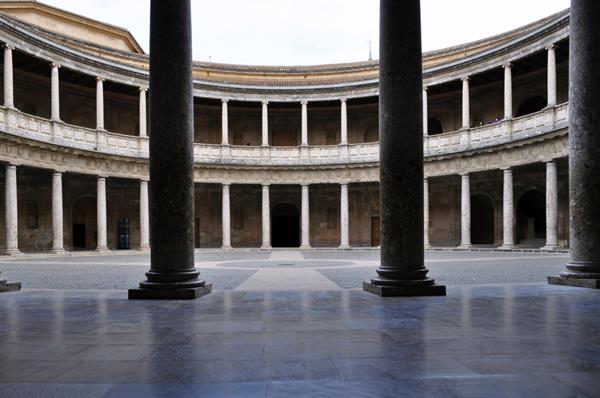
The Alcazaba is the Alhambra’s ancient military area, the defensive stronghold from which the ramparts and a number of towers have survived, while the Palacio de Carlos V (which also houses the Museo de la Alhambra) is a Renaissance palace commissioned by the Catholic king in 1526. A full visit to these sections includes:
- Torre de la Vela
- Jardines de los Adarves
- Plaza de los Aljibes
- Terraza de la Torre de las Armas
- Palacio de Carlos V
Here are our articles dedicated entirely to the Alcazaba and the Palace of Charles V.
Palacios Nazaríes and Partal
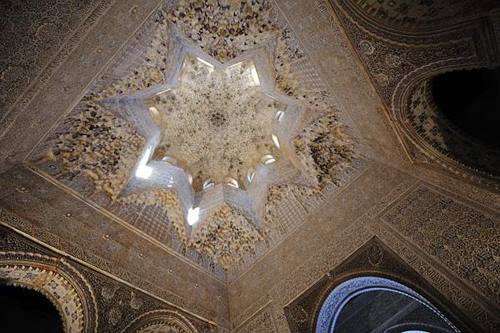
The refined Arabesque rooms of the Palacios Nazaríes (Nasrid Palaces) are undoubtedly the main reason for visiting the Alhambra. Entry to the palaces is restricted, as mentioned, to the time slot shown on the ticket. Here’s what to see during the tour of these spectacular spaces:
- Mexuar: Sala del Mexuar, Oratorio, Cuarto Dorado, Patio del Cuarto Dorado;
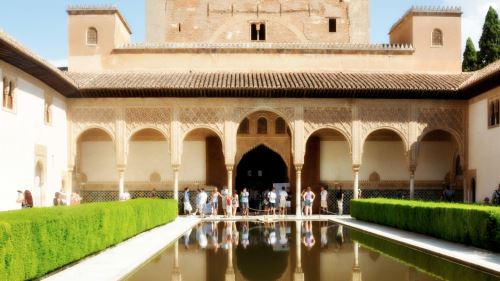
- Palacio de Comares: Patio de los Arrayanes, Sala de la Barca, Salón de los Embajadores;
- Palacio de los Leones: Sala de los Mocárabes, Patio de los Leones, Sala de los Abencerrajes, Sala de los Reyes, Sala de Dos Hermanas, Habitaciones del Emperador, Mirador de Lindaraja, Patio de la Reja, Jardín de Lindaraja;
- El Partal: Pórtico del Palacio, Jardines del Partal, Rauda, Palacio de Yusuf III, Paseo de las Torres.
As you can see above, each of these areas deserved its own in-depth article: I invite you to read them to find out more!
Generalife
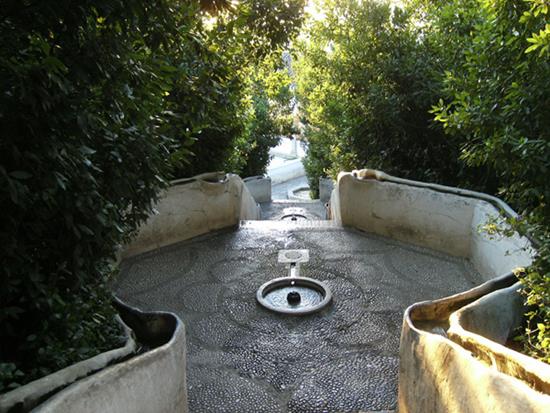
The Alhambra gardens (Generalife) offer some unforgettable views, which give us an idea of what the leisurely life of the Nasrid rulers must have been like. In this area of the Alhambra, visitors also have the chance to recover from the exertions of touring the palaces.
Here’s what to see:
- Jardines Bajos;
- Jardines Altos;
- Escalera del Agua;
- Patio del Descabalgamiento;
- Patio de Acceso;
- Patio de la Acequia;
- Patio del Ciprés de la Sultana;
- Paseo de las Adelfas;
- Calle Real.
Don’t miss our in-depth guide to the Generalife in Granada!
Opening times and useful information for visiting the Alhambra
First of all, it should be remembered that visiting the Alhambra is not something to be taken lightly, from any point of view. Here are the opening hours during the day:
- From 1 April to 14 October: every day from 8.30 am to 8.00 pm
- From 15 October to 31 March: every day from 8.30 am to 6.00 pm.
- Closed on 25 December and 1 January.
Below are some useful information and tips for organising your visit:
- the Alhambra complex is very large and takes around 3 hours to visit; given the number and importance of the sights, however, you may want to allow considerably longer;
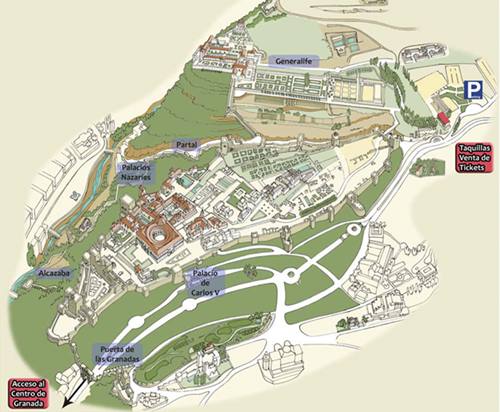
- walking to the Alhambra from the city centre can be tiring: Cuesta de Gomérez, which starts from Plaza Nueva and leads up through the Puerta de las Granadas, is quite steep. Combined with the heat and the long route through the palaces and gardens, the climb can make the visit particularly tiring. On the other hand, I recommend walking down it towards Plaza Nueva after your visit: what is a demanding climb on the way up becomes a pleasant stroll on the way back;
- if you already have your ticket, you can enter the complex via the Puerta de la Justicia, without having to go to the ticket office. Remember to bring the original identity document associated with your ticket;
- if you don’t feel like walking, take the C30 or C32 bus, which connects the city centre with the Alhambra. There are several stops around the complex, including stops convenient for the Puerta de la Justicia and the main access pavilion;
- especially during peak season, demand for tickets to the Alhambra is extremely high and visitor numbers are limited. It is therefore strongly advisable to book in advance. Same-day tickets are sold at the ticket office only subject to availability, so arriving without a ticket may mean being unable to visit the monument;
- separate night visits are available for the Nasrid Palaces and, during certain periods of the year, the Generalife gardens. Night visits to the Nasrid Palaces run from 22:00 to 23:30 from 1 April to 14 October and from 20:00 to 21:30 from 15 October to 31 March, on the scheduled opening days.
- the visit to the Palacios Nazaríes is tied to the time shown on your ticket. If you are not at the entrance to the Palacios Nazaríes at the assigned time, you will lose the right to visit them, which would mean missing one of the highlights of the Alhambra. Admission is limited to 300 people every half an hour, so during busy periods make sure you reach the entrance in good time for your assigned slot. The Generalife and Alcazaba can be visited before or after the Palacios Nazaríes, during the monument’s normal opening hours;
- if you are visiting the Alhambra with small children, bear in mind that pushchairs are not permitted inside the Palacios Nazaríes, the Generalife Palace or the Alcazaba. They must be left in the designated cloakroom areas. Baby carriers are available for visitors at the cloakrooms;
- if you only want to visit the Alcazaba, Generalife and gardens without entering the Palacios Nazaríes, a cheaper ticket is available;
- here are some tips on where to stay in Granada. Pay particular attention to hotels near the Alhambra!
Our recommendations for staying near the Alhambra
What order should you visit the Alhambra attractions in?
The recommended order of visit depends on the time at which your entry to the Palacios Nazaríes is scheduled: before and after the time slot in which you will visit them, you need to spread out the tour of the other areas. If you enter from the ticket office, unless your time limit for visiting the Palaces is about to expire, use this criterion:
- Generalife – Alcazaba – Nasrid Palaces
If, on the other hand, you enter via the Puerta de la Justicia, visit the attractions of the Alhambra in Granada in this order:
- Alcazaba – Nasrid Palaces – Generalife
If your visit time to the Palaces is close to your entry into the Alhambra complex, make your way to the palaces entrance as early as possible: it takes 17 minutes on foot from the ticket office and, on public holidays, the queue could jeopardise your plans. The Puerta de la Justicia, on the other hand, is very close to the Mexuar of the Palaces, but you can find out everything you need to know about this and other gates of the Alhambra in our dedicated article on the “minor” buildings of the Alhambra.
Alhambra Tickets: where to buy them?
As you will have realised, there is a real risk of spending a good deal of time queuing at the ticket office – or even coming away empty-handed! – and this could seriously compromise your visit to the Alhambra. There is a great deal to see and, if you are not properly prepared, the visit can easily turn into a race against time. Not to mention the worst-case scenario, which has happened to some of my friends: leaving Granada without having visited the Alhambra!
The very best solution, and the one recommended by the organisation, is to book Alhambra tickets well in advance (this can be done up to three months beforehand), so as not to risk ending up empty-handed and to be able to choose the most convenient time for visiting the Palacios. Bear in mind that Alhambra tickets are nominative: for entry, you will therefore need to present an identity document. You can buy skip-the-line Alhambra tickets in advance on various reliable websites by clicking the buttons below.
Buy skip-the-line tickets for the Alhambra on Headout
Buy skip-the-line tickets for the Alhambra on Civitatis
Buy skip-the-line tickets for the Alhambra on Tiqets
Buy skip-the-line tickets for the Alhambra on GetYourGuide
Alhambra card: is it worth it?
If you cannot find tickets for general admission, you can buy this combo ticket, which guarantees entry to the complex at the last minute even if availability has sold out elsewhere, especially in the high season months such as March and April. The interesting thing about this product is that it includes admission to many other paid monuments in Granada. Here they are in detail:
- Audioguide tour in the selected language
- City Pass Card which includes the following:
- 9 journeys on Granada city buses
- 1 ride on the Granada City Tour tourist train
- Admission to Granada Cathedral
- Admission to the Royal Chapel
- Admission to the Monastery of San Jerónimo
- Admission to the Monastery of La Cartuja
- Admission to Casa de Zafra
- Admission to Cuarto Real
- Admission to the Casa de los Tiros Museum
- Admission to the Sacromonte Abbey
- Admission to the Science Park
Cumulative pass “The best card of Andalusia”
If your holiday is not limited to Granada, but you are going on a road trip itinerary of Andalusia, then it may be worth buying The Best of Andalusia card. This pass includes entry to the most important attraction in Granada, Seville and Cordoba: the Alhambra, the Alcazar and the Mezquita. It also includes an interactive guide, with audio and images, to open via an app on your smartphone, for exploring both Seville and Granada on foot.
Buy the Best of Andalusia Card
Tours, packages and guided visits to the Alhambra
Below, I’m also highlighting some interesting tours and packages which, in addition to the entry ticket, include other useful services in the price, and can make your visit considerably easier:
3-hour private Alhambra tour with Nasrid Palaces
Include:
- Alhambra ticket, with access to the Nasrid Palaces, the Alcazaba, the Generalife and the Partal.
- Guide
- Private and exclusive tour, with no people outside your group.
More information about the tour
… and after the Alhambra?
- tips on how to organise an tour of Andalusia
- advice on what to do in Granada
- tips on where to stay in Granada
- advice on where to eat in Granada
- advice on the beaches of Granada
All Our Articles on the Alhambra
Where is the Alhambra?
The Alhambra complex occupies much of al-Sabika, a hill overlooking the centre of Granada. From the windows of the Nasrid Palaces and the walls of the Alcazaba, you can look out towards Sacromonte and the Albaicín, the historic districts located on the hill directly opposite, on the other side of the Darro River, which effectively separates the two elevations. The Generalife gardens, meanwhile, occupy part of the natural area known as Parque Periurbano Dehesa del Generalife, where you can follow walking trails with views of the Sierra Nevada.
To reach the Alhambra ticket office and the Pabellón de Acceso, enter Plaza del Generalife, 1F into your sat nav. If, on the other hand, you want to enter through the Puerta de la Justicia, use C. Real de la Alhambra, 18.
