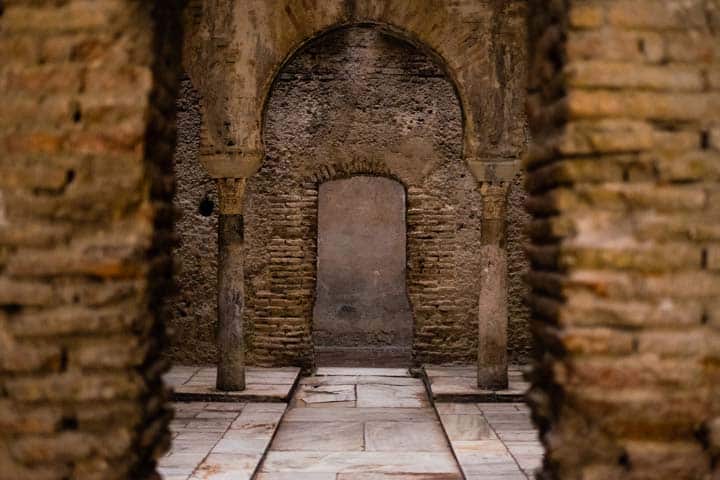
Restored a century ago, the Bañuelo of Granada was declared a national monument in 1918. Finding remains of Arab baths in Andalusia is hardly difficult; what’s harder is locating one as well preserved as the example you can visit on Carrera del Darro in Granada.
Contents
What is a Hammam? Arab Baths Explained
Given Granada’s history, it’s no surprise that here, as in Ronda, Cordoba and elsewhere in Andalusia, there are historical‑cultural remnants from the Moorish era. Among these, the Arab baths have reached us in the form of places for relaxation, where, amid warm pools and clouds of steam, people try to banish the stresses of modern life. But what was the original function of these places?
The Hammam is the thermal complex where Muslims perform the Ghusl and the Wudu – respectively the major and minor ablutions – to attain Tahara, spiritual purity. In the Islamic tradition this is necessary in order to carry out the daily prayer, which every Muslim must perform five times a day. As was already the case for the ancient Romans, the baths acquired an ever-growing social function. Caring for the body and relaxing thus became the setting for meeting, talking and doing business. Water and its use fascinated the Arab peoples who discovered what the Byzantines had left in North Africa, and, being accustomed to arid regions, they adopted it and made it an integral part of their culture.
When we talk about an Arab bath we should not imagine natural thermal springs of sulphurous hot water, which are not found in Arab countries nor in this part of Spain. The water, therefore, had to be heated and the boilers were the heart of the hammam, where water was fed boiling hot into pipework that carried it to the different rooms. One room was usually devoted to body massage, one to hair removal – indeed, it was a very widespread practice among both women and men, and was carried out using a special paste called nura – and one to the relaxation and refreshment of guests. Access to the bathing rooms has always been segregated between men and women. However, separate areas were not always available and this almost invariably led to the allocation of time slots for separate entry by sex.
Visiting the Bañuelo in Granada
If you come to Granada, you will almost certainly visit the Alhambra, within which the remains of some Arab baths are preserved. Unfortunately, however, they are all incomplete. With a short stop during your tour of the Albayzin, though, you can visit the most important and best-preserved Arab baths in Spain. The reason why the great majority of Arab baths were destroyed by the Catholic Monarchs is that these places had a reputation comparable to brothels. In this case, however, a house had been built over the baths, so much so that even now they are accessed from the same dwelling.
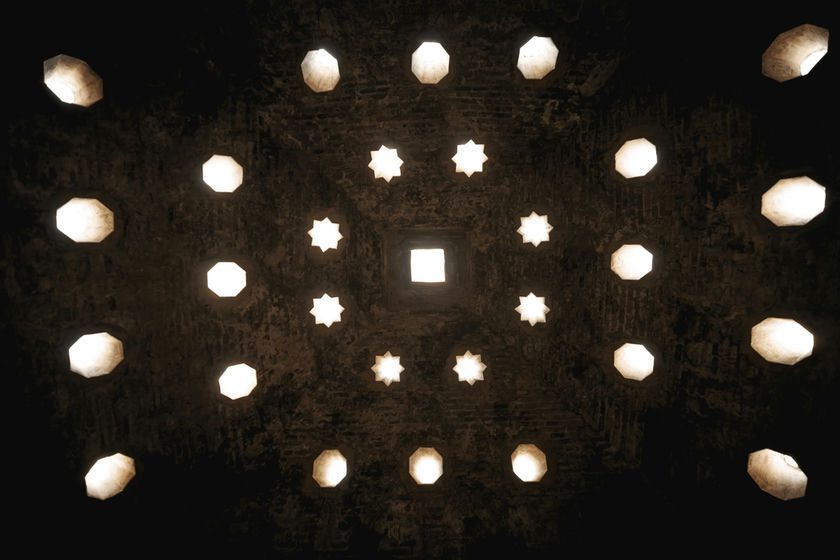
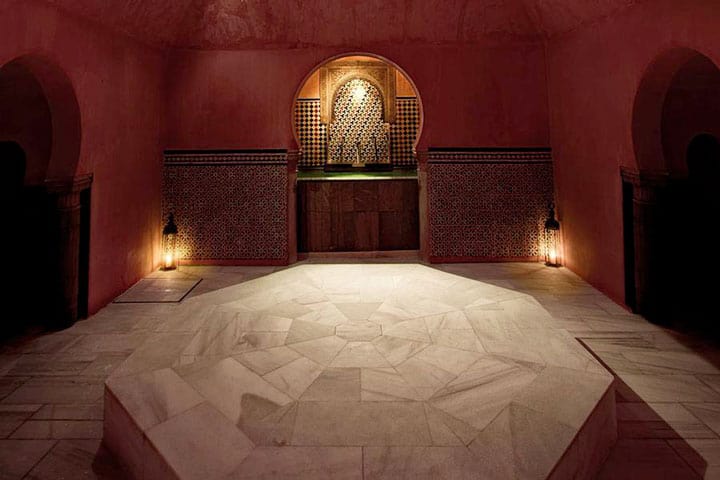
Known since the late 19th century as Bañuelo, its proper name would be Hammam al-Yawza or Baño del Nogal, and it owes the diminutive to comparison with the royal baths of the Alhambra, originally larger and more sumptuous. Upon entering the building, you immediately come to the Cold Room, followed by the Warm Room, larger and decorated with arches, until you reach the Hot Room: the latter is the main chamber in all Arab baths. Arches and pillars, marble decorations and star-shaped openings in the ceiling marry beauty and elegance with the practical functions of the bathing establishment. The holes in the ceiling, so characteristic, had two very important functions: to light the room and to ventilate it, allowing the scalding vapours to escape. This implied a continuous need to feed the boilers and pump hot water, but the constant renewal of vapour ensured greater hygiene.
Directions, opening times and prices
The Bañuelo is located at Carrera del Darro 31, and is easily reached on foot from Plaza Nueva, one of the city’s main squares. Alternatively, you can get there by bus on lines C1 and C2, which stop at Bañuelo.
Entry to the Bañuelo costs £11 from Monday to Saturday, while it is free for everyone on Sundays. With the same ticket you can also visit the Casa Horno de Oro and the Palacio Dar al-Horra and more (see here). The opening hours are as follows:
- From 15 September to 30 April: every day from 10:00 to 17:00
- From 1 May to 14 September: every day from 9:00 to 14:30 and from 17:00 to 20:30
Granada Hammams Still in Operation
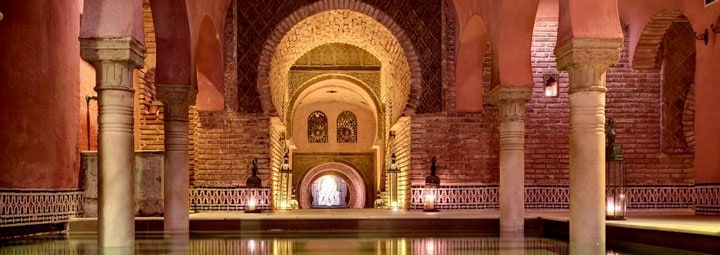
If the Bañuelo is now a relic of the past, the tradition of the hammam in Granada and elsewhere in Spain has continued to the present day, naturally evolving in structure as well as in function, which today are exclusively relaxation and wellbeing. So you can still try the experience of an Arab bath: I recommend you live this experience at the Hammam Al Andalus, the main thermal centre still operating in the city, a sort of spa in Granada, but set in a splendid Moorish context! The Arab bath is situated in Calle Santa Ana 16, not far from Carrera del Darro: just cross the puente de Cabrera and you’re there!
Experiences available: baths and massages
The modern hammam offers a variety of services and experiences, with prices to suit both modest and more generous budgets. Here are the offerings from Hammam Al Andalus:
- Access to the Hammam: includes access to the hot and cold baths and the Turkish bath. The session lasts 90 minutes and the price includes all essentials (towels, shampoo, hair gel, hairdryer and moisturiser). Water and mint tea will also be offered.
- Access to the Hammam with massage: includes access to the hot and cold baths and the Turkish bath for 90 minutes and a 15 or 30-minute massage using essential oils on the back and/or legs. Also included are mint tea, unlimited water and the necessary items for the baths.
Other useful links
If you’re planning your visit to Granada, don’t miss the chance to read our tailored tips:
