The image of the Patio de los Leones is one of the most famous and iconic of the entire Alhambra, and you will hardly forget the first moment you see this timeless courtyard. However, not everyone knows that the Patio de los Leones is part of the eponymous Palacio de los Leones, divided into four halls, each more beautiful than the last: two of these were ceremonial/reception spaces, while the remaining two served as the sultans’ private apartments (the summer residence was hidden among the gardens of the Generalife). You will encounter this palace within the Palacios Nazaries, after admiring the Mexuar and the rooms of the Palacio de Comares.
Here are the rooms in detail:
Contents
Map of the palace
Sala de los Mocàrabes
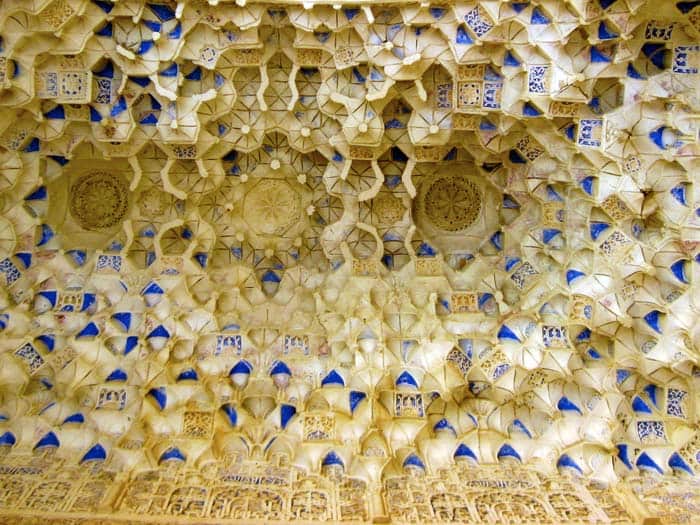
The first representative space we come to is this room, which we might describe as something of a reception for the palace. It is entered through three large decorated arches, which not only bring decoration and light into the interior, but also, from within, afford a beautiful view of the patio.
From the Arabic Muqarbas, the room’s name derives from the ceiling decorations, unfortunately now lost. These decorations, like small stalactites usually set in arches or domes, are, however, still visible in other rooms of the palace.
Court of the Lions (Patio de Los Leones)
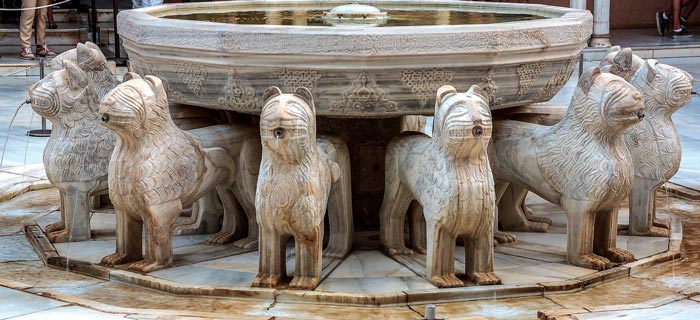
If you were impressed by the previous patios, you’ll literally be left speechless when you enter the Patio de Los Leones (Court of the lions), where you’ll be undecided whether to linger over the 124 finely decorated marble columns, the complex system of water channels or the fountain supported by the 12 lions at the centre of the courtyard. One thing is certain: it will immediately become clear to you why, over the centuries, there was a need to defend this magical place with the impregnable ramparts of the Alcazaba.
Like the previous palace, everything in the Palacio de los Leones also revolves around the courtyard. From the portico you reach the side rooms, set over two storeys. It can be said that the Fountain of the Lions and the courtyard that surrounds it are, on a reduced scale, representative of the entire technical conception that made the creation of the Alhambra possible: an inheritance of traditions and experiences expanded over the centuries with fertile creativity. On the lions and their meaning, numerous legends have developed over the centuries. The most likely theory is that they represent the 12 tribes of Israel.
Sala de Los Abencerrajes
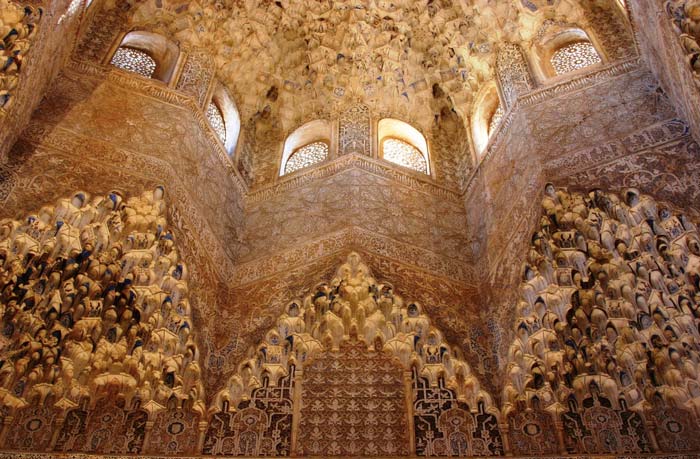
Divided into two rooms, the living room and the bedroom, this chamber takes its name from the Arab Ben-Serragh family and is one of the places where we can truly enjoy the spectacle of the mocàrabes. If the dodecagonal fountain and the side arches are already beautiful, raising your eyes to the dome will leave you wide-eyed. Shaped like an eight-pointed star and decorated with those small stalactites, it rests on eight projections, themselves decorated in the same way, so much so that they seem suspended in mid-air, giving the impression that the dome supports itself without any points of contact.
Sala de los Reyes
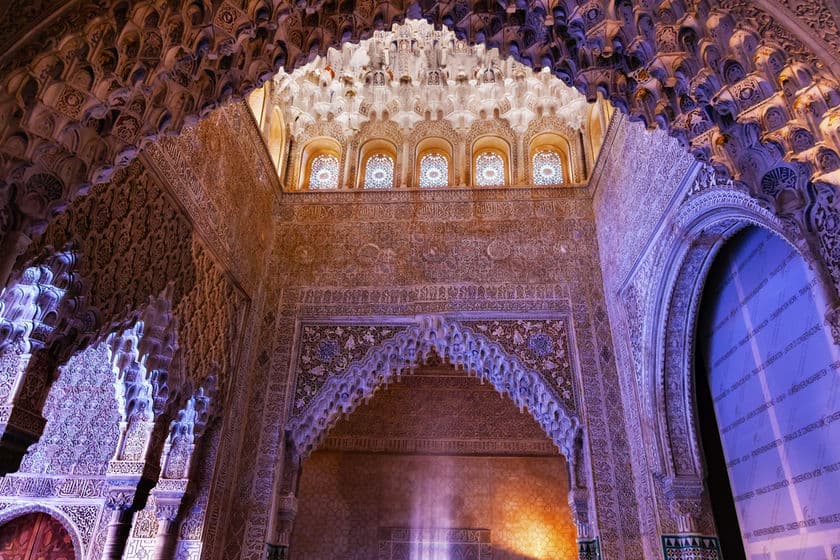
The Sala de los Reyes (Hall of the Kings) is a place of repose, arranged around a large vestibule more than 98.4 ft (30 mt) long. The space is divided into three alcoves covered by cupolas and separated from one another by arches still decorated with the technique of mocàrabes.
The three false vaults house paintings on leather in a style very different from that of the surrounding rooms. A painting that recalls the Gothic in its use of lines and gold, but also the 14th-century style, both in the features of the figures and in the Florentine dress. This mixture is due to Christian artists familiar with the Muslim world, capable of combining Italian and Islamic aesthetics.
In the side vaults, a medieval chivalric romance is probably depicted, in which Christian and Muslim knights take part in various trials to win the favours of a lady. The central vault is the one from which the room takes its name: here ten enigmatic figures are depicted, long thought to be sultans. Now, however, it seems more likely that the scene represents a gathering of notables.
Sala de las dos Hermanas
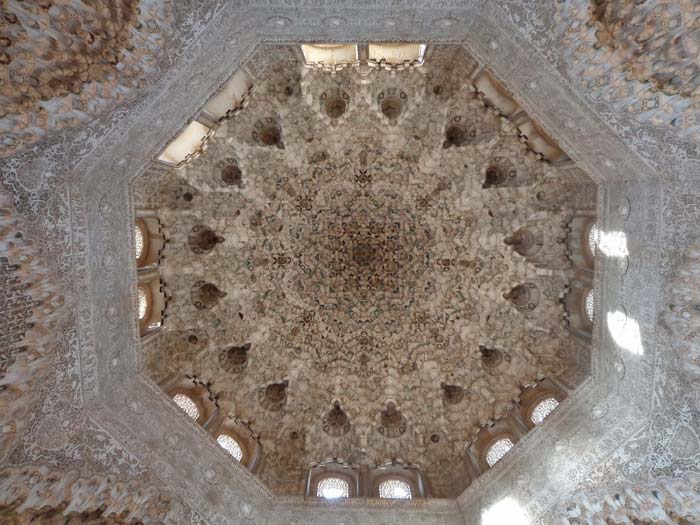
The Hall of the Two Sisters is the main room of the second residence of the Palace of the Lions. The layout is very similar to that of the Sala de Abencerraje, topped by a grand dome once again worthy of several minutes’ admiration. As soon as you enter through the single door (it’s worth pausing to admire the inlay work of this entrance), corridors run to the right and left leading to the rooms on the upper floor and to the bathroom. The Two Sisters are not women, but pieces of marble: the two slabs you will see beside the central fountain, identical in size, colour and weight.
As soon as you step out of the palace, you might think it’s the end of a dream. Well, El Partal will make you change your mind!
Where to stay?
Don’t forget to read our tips on where to stay in Granada, whether you’ve decided to find accommodation in the prestigious Alhambra hotels or to stay in one of the other neighbourhoods near the hill.
Other useful links
- Tips on what to do in Granada
- Tips on where to eat in Granada
- How to book tickets for the Alhambra + information on opening times and tours
