Best things to do and see in Seville: my tips for your visit
Visiting Seville doesn’t just mean exploring what is perhaps the Andalusian city richest in architectural and artistic wonders; it also means immersing yourself in one of the most recognisable Andalusian atmospheres. Yes, because during your tour of Andalusia you will realise it as soon as you set foot in the city: Seville is the undisputed queen of the whole region, and not only because it is its largest provincial capital.
Let’s get straight to it: what to see and what to do in Seville? Which neighbourhoods, squares, palaces and churches can no traveller miss on their adventure exploring the city on the banks of the Guadalquivir? And what about the typical activities and experiences — cultural and culinary — to enjoy in the city? And how many days do you need? Which guided tours and excursions to take nearby?
There are many questions, and I will try to answer all those that may come to mind. From the majestic Cathedral with its Giralda to the popular heart of the Barrio Triana that beats to the thrilling rhythms of the flamenco, here is a Seville guide where we tell you about the places of interest and the unmissable attractions to see in this splendid city.
Contents
How many days in seville? Possible itineraries
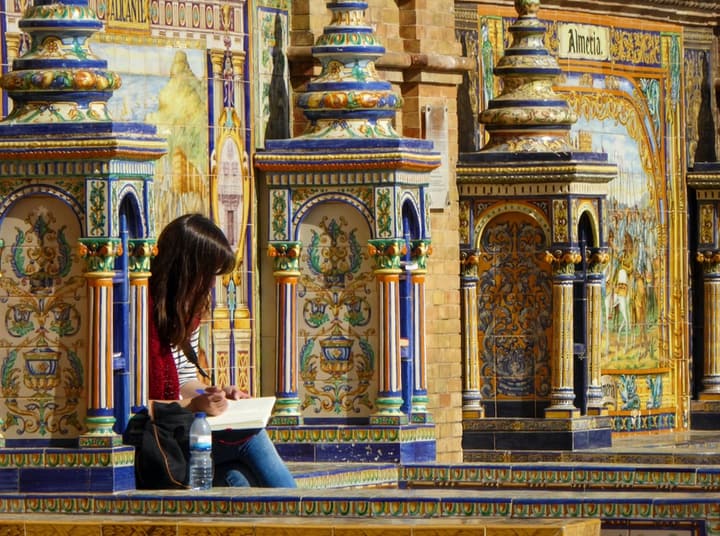
Before giving you an overview of all the things to see and do in Seville, it is necessary to offer some advice on how to set your travel programme according to the time available. How many days are needed to visit Seville? What is the minimum amount of time required to have a satisfying, unhurried experience?
As you can read in the article on how to organise a trip to Andalusia, depending on the tourist offering it’s possible to allocate a number of days to each major city, and Seville is, in my opinion, the one that requires the most time: 3 days is the ideal period, but 4 would truly be the maximum. Obviously the city can also be visited in 1 or 2 days, but you will have to move at a hectic pace if you want to see as much as possible in the short time available, even having to forgo some things.
Below you will find some concise tips on how to visit Seville and its surroundings depending on the number of days available. If you don’t know the city at all and therefore have no idea what the attractions listed are, don’t worry! Later in the article you will find a brief description of each monument mentioned, with links to the relevant in-depth articles.
Is One Day Enough for Seville?
Having only one day available for Seville is no small handicap for anyone who wants to explore it thoroughly, but sometimes you may simply have very little time.
While waiting to return a second time at a more leisurely pace, you absolutely must visit the magnificent Seville Cathedral and the Alcazar, both overlooking the same square. Afterwards you can wander into the tangle of narrow, mysterious streets of the Barrio Santa Cruz among palaces, churches and flower-filled patios, before reaching on foot the majestic Plaza de España, a symbol of Seville. After a dinner of tapas, the evening is given over to a stroll along Calle Sierpes, the bustling main street of the Centro district, heading towards Metropol Parasol (Las Setas de Sevilla), a futuristic panoramic monument with a contemporary concept.
- Morning: Cathedral and Alcázar
- Afternoon: Barrio Santa Cruz and Plaza de España
- Evening: Centro district and Metropol Parasol
If you want to see the Cathedral and the Alcazar, you can book a tour at the link below:
Cathedral, Giralda and Alcazar tour
2 days in Seville
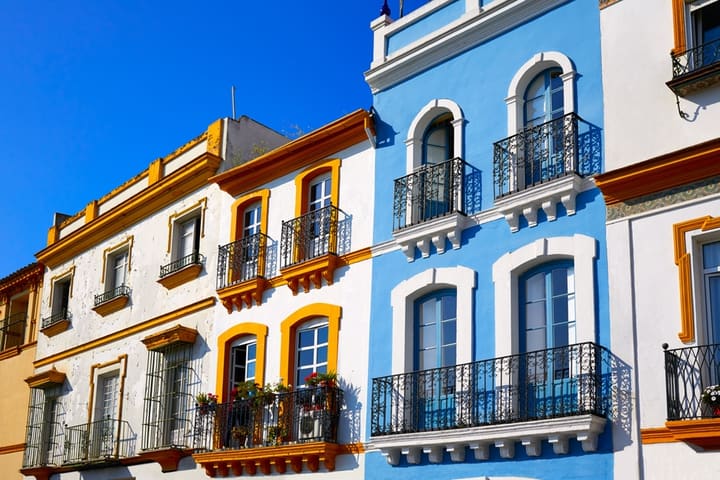
Have 2 days in Seville? All the better! In that case you can choose to spread the stops listed in the one‑day itinerary more evenly over the time available, taking everything at a more leisurely pace. You can visit a couple of the city’s richly adorned Moorish palaces (for example Casa de Salinas, the Hospital de los Venerables or the Palacio Lebrija among others) or wander a little through the large Parque de Maria Luisa after visiting Plaza de España.
Below is an alternative itinerary with a wider selection of things to do: keeping the first day unchanged, the next day you can discover the splendid Casa de Pilatos and the Museo del Baile Flamenco in the Barrio San Bartolomé, then take a walk along the riverside to see the Plaza de Toros, the Torre del Oro and the Puente de Triana. The Triana neighbourhood lies on the other side of the river and is well worth a visit to discover the Romani folk traditions of Seville. In keeping with this, in the evening you can attend a flamenco show.
- Day 1: Cathedral and Alcázar (morning) – Barrio Santa Cruz and Plaza de España (afternoon) – Centro district and Metropol Parasol (evening)
- Day 2: Barrio San Bartolomé and Casa de Pilatos (morning) – El Arenal, Guadalquivir riverside and Barrio Triana (afternoon) – flamenco show (evening)
3 days in Seville
As mentioned, 3 days is the ideal length, the time most commonly spent for a thoroughly satisfying visit to the city. As you will have gathered, Seville is brimming with beauty and secrets, and its seductive Andalusian atmosphere invites you to explore lesser‑known places and to experience the city’s cultural and culinary life in depth.
In our article on Seville in 3 days, we wanted to provide you with a ready-to-use itinerary that you can study and easily put into practice when you arrive in the city. The sequence of visits is different from the ones I gave previously, because three days allow for a more manageable division into stages and the addition of other stops (Barrio Macarena, Museo de Bellas Artes). Below is a quick summary:
- Day 1: Cathedral and Hospital de los Venerables (morning), Museum of Fine Arts and El Arenal district (afternoon), Barrio Triana (evening)
- Day 2: Barrio Santa Cruz and Casa de Pilatos (morning), Archivo de Indias and Alcázar (afternoon), flamenco show (evening)
- Day 3: Barrio Macarena and Centro district (morning), Plaza de España and María Luisa Park (afternoon), Metropol Parasol (evening)
4 days in Seville
Have you got four full days available? If you’re seasoned travellers you can optimise your days by visiting all the places I’ve mentioned in the preceding paragraphs and, why not, adding a few more. The city’s palaces, churches and museums are far from exhausted: from the Centro Andaluz de Arte Contemporaneo de la Cartuja to the Palacio de las Dueñas, via the Antigua Fabrica de Tabacos, the Iglesia del Salvador and the Alameda de Hercules, a meeting place for the younger crowd. And if you’re a fan of Spanish football, the city has no fewer than two stadiums to visit: that of Sevilla and that of Real Betis. Finally, you could do one of the classic tourist activities in the city: a cruise on the Guadalquivir, a horse-drawn carriage ride around the centre…
Alternatively, you could also consider taking an excursion into the surroundings of Seville: among others, I would recommend the archaeological site of Italica, the little Moorish gem Carmona and Jerez, home of the Andalusian horse and sherry. These destinations are within easy reach and their size means you can easily devote just half a day or a few hours to them. If, on the other hand, you want to visit (obviously only superficially) the larger nearby cities (Cordoba and Cadiz), you will need to plan your travel carefully and visit only the main sights.
- Day 1: Cathedral and Hospital de los Venerables (morning), Museum of Fine Arts and El Arenal district (afternoon), Barrio Triana (evening)
- Day 2: Barrio Santa Cruz and Casa de Pilatos (morning), Archivo de Indias and Alcázar (afternoon), flamenco show (evening)
- Day 3: Barrio Macarena and Centro district (morning), Plaza de España and María Luisa Park (afternoon), Metropol Parasol (evening)
- Day 4: day trip in the surrounding area — Carmona, Itálica, Jerez, Córdoba or Cádiz — or visit any remaining attractions of your choice, followed by an evening at Alameda de Hércules.
What to see in Seville?
Below, I want to give a little more information about all the attractions I mentioned above, both the unmissable ones and those that are a little less well-known. I will do this by dividing the places of interest in Seville into categories that can help you understand the type of attraction: neighbourhoods and squares, museums and palaces, churches, parks, stadiums and all the other attractions that for one reason or another do not fit into the previous categories.
Neighbourhoods and squares
Every alleyway, every corner, every square or little plaza in Seville can quite literally leave you open-mouthed. Below you will find some of the city’s main hubs: the labyrinthine Barrio Santa Cruz, the popular neighbourhoods of Triana and Macarena, the genteel atmosphere of El Arenal, the vitality of the Centro, the monumental Plaza de España, the irresistible nightlife of Alameda de Hercules… here is the best of Seville’s neighbourhoods and squares.
Plaza de España
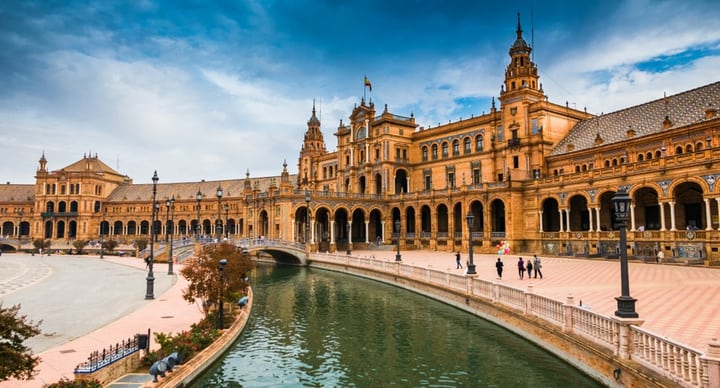
Immense, extravagant, monumental, sumptuously rich: this semicircular plaza is absolutely worth a visit and a stroll beneath the arcades or in the shade of the towers, along the artificial canal traversed by tranquil little boats and crossed by four gently arched bridges. The elegant, ostentatious regality displayed by this splendid square even persuaded George Lucas, director of Star Wars, to use this fairytale location to represent the sumptuous palace of a city on the planet Naboo, and it is not the only film in which the Plaza de España in Seville appears, as you can read in the linked article.
Santa Cruz Neighbourhood
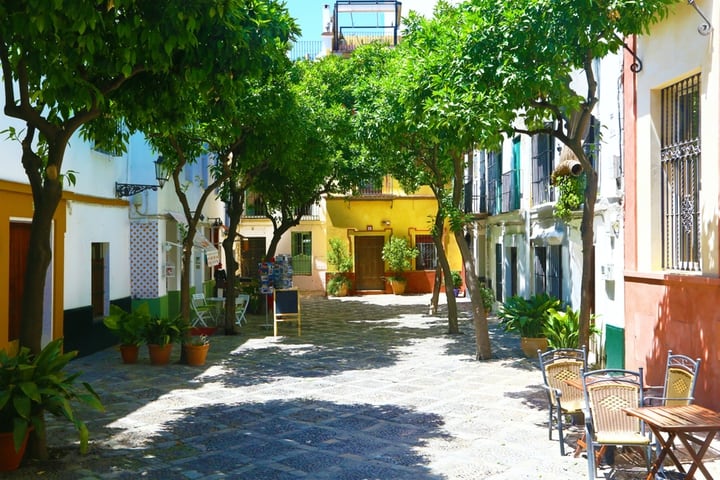
Priceless is the experience of leaving the Cathedral with its imposing Giralda behind and beginning to pick your way up the narrow maze of lanes of Barrio de Santa Cruz, one of the best-known and most picturesque neighbourhoods in all of Seville. This beguiling tangle of streets – the old Jewish quarter – is perfect for anyone who wants to lose themselves in the intoxicating Andalusian atmosphere, wandering along narrow, snaking alleys, in search of glimpses and corners of startling beauty: small squares, churches, convents, patios, restaurants incredibly converted from ancient Arab baths…
Accommodation tips for the neighbourhood
Triana neighbourhood
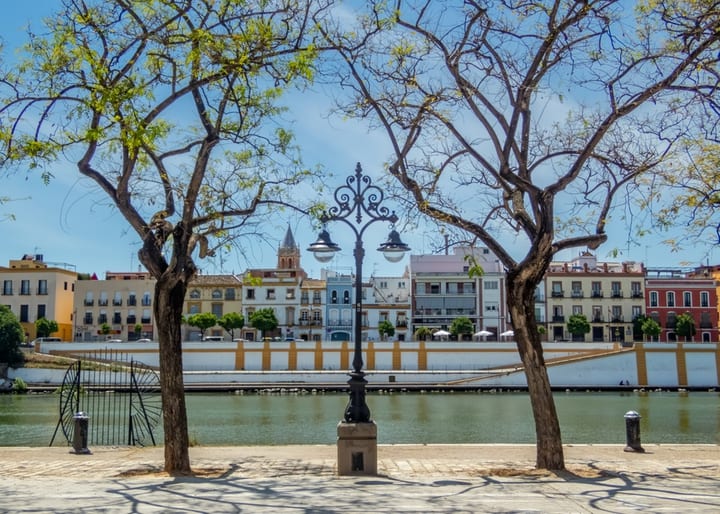
If you want to see a typical Seville neighbourhood, be sure to cross the Puente de Triana and take a stroll along the characteristic little streets of the Barrio Triana, an old Gypsy quarter, to visit the Mercado de Triana (which contains the remains of an ancient castle) and the Church of Santa Ana. The charm of the atmosphere that pervades this neighbourhood perhaps outweighs the actual “tourist” interest it may inspire in the visitor, but it is absolutely worth it, so much so that we decided to publish an itinerary in Barrio Triana.
Accommodation tips for the neighbourhood
Macarena neighbourhood
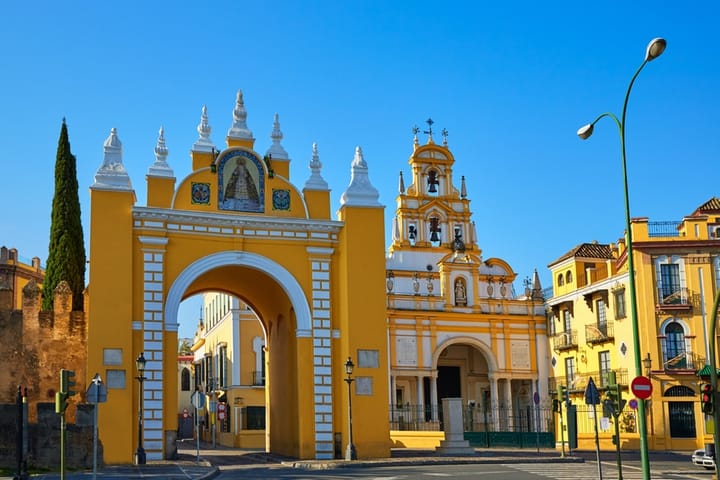
There are two reasons to visit the Barrio Macarena of Seville: here a stretch of the ancient defensive walls that once protected Seville still survives, together with two gates. The other reason is the popular veneration of the Virgen de la Esperanza, known as La Macarena. The image is housed in the Basilica de la Macarena and attracts many Sevillians devoted to the Madonna.
El Arenal and the Guadalquivir riverside
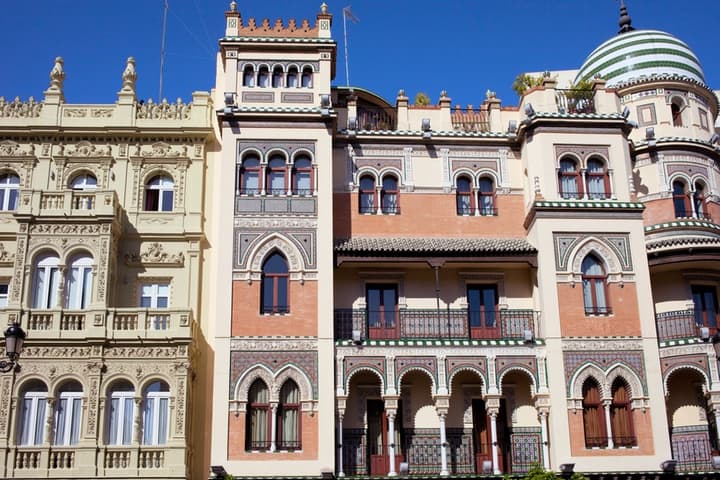
Seville is washed by the Canal de Alfonso XIII, a meander of Andalusia’s most important river: the Guadalquivir. We are clearly living in a time of peace, but the Torre del Oro – symbol of El Arenal and of the whole of Seville – stands there, massive and imposing on the riverside promenade, reminding us of a past of battles and defensive strategies dating back to the time of the Reconquista.
The central neighbourhood called El Arenal is notable for its distinguished, stately appearance: here you can stroll along the river watching the houses and restaurants of the Barrio Triana on the opposite bank, and take in the Plaza de Toros de la Maestranza, the Plaza del Cabildo or the Baroque Hospital de la Caridad, as far as the Puente de Triana.
Accommodation tips for the area
El Centro neighbourhood
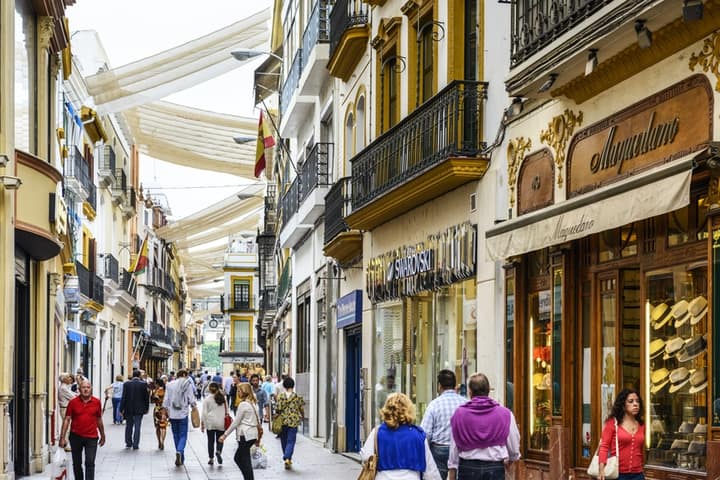
Although the El Centro district has no shortage of cultural and architectural attractions (the Barrio San Bartolomé with the Casa de Pilatos, the Palacio Lebrija, the Metropol Parasol among others), the reason many people know it is the very central Calle Sierpes, a street much loved by Sevillans where you can stroll at leisure, go shopping and tuck into treats at the historic patisserie La Campana.
Accommodation tips for the neighbourhood
Plaza del Cabildo
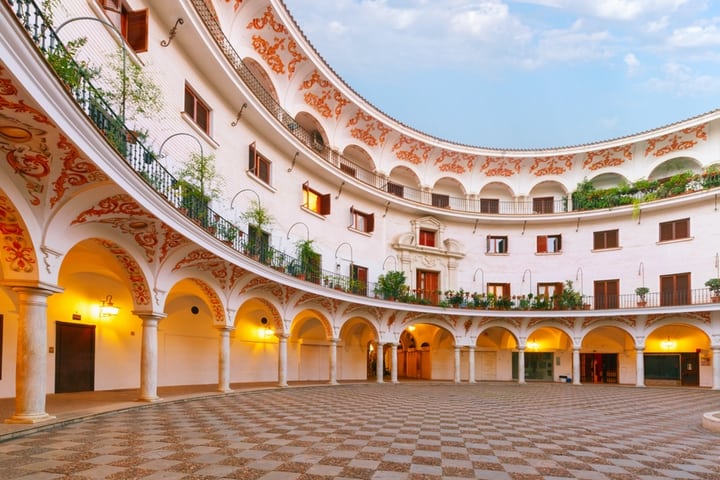
A still fairly secret spot in El Arenal is Plaza del Cabildo, a semicircular square with arcades and arches finely decorated by José Palomar. The quiet, tucked-away square is close to the Cathedral and is reached via a few passageways accessible from three streets: Avenida de la Constitución, calle Almirantazgo and calle Arfe.
Patio de Banderas
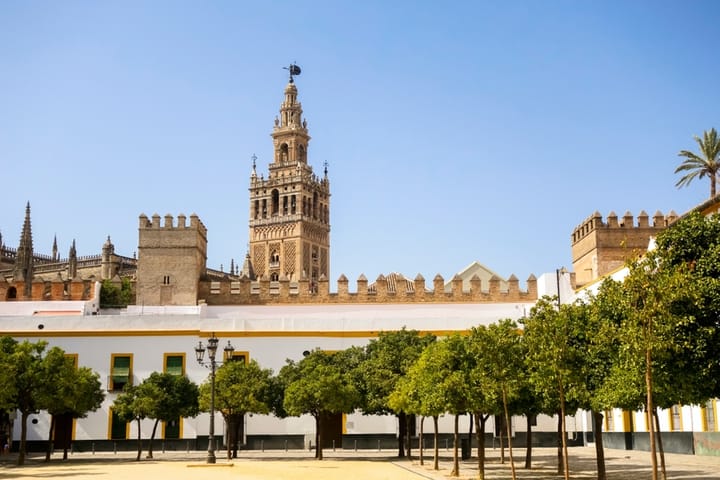
This charming rectangular open space was once used for public ceremonies. You will walk through it on exiting the Alcazar towards the Juderia, as the square is the main access to the Barrio Santa Cruz. Lined with orange trees and surrounded by Andalusian-style buildings, the square offers an incredible view of the Giralda.
Alameda de Hercules
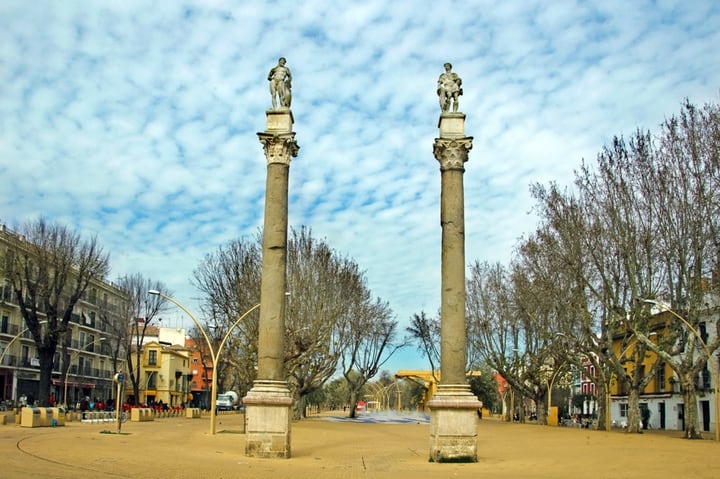
More than a square or a neighbourhood, the Alameda de Hercules is a handsome tree-lined avenue on the edge of the Centro district, taking its name from a temple dedicated to Hercules of which only two columns remain today. The reason it’s worth visiting this area is the bustling vitality of its bars and restaurants, much frequented in the evenings by young and not‑so‑young, Sevillians and visitors alike. You can skip it by day, but the nightlife at the Alameda de Hercules is a must!
Accommodation recommendations for the area
Other squares in Seville
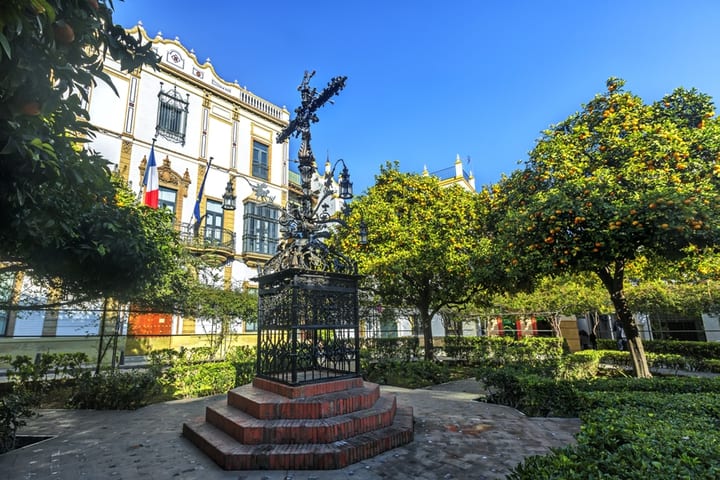
Here are some more squares you might fall in love with:
- Plaza de América: at the southern end of María Luisa Park, home to two museums: the Museo de Artes y Costumbres Populares and the Archaeological Museum.
- Plaza Doña Elvira: one of the prettiest squares in Barrio Santa Cruz, suddenly appearing among the narrow streets of the district.
- Plaza Santa Cruz: also in Barrio Santa Cruz, at the end of Calle Agua. It has a beautiful iron cross set within a garden.
- Plaza de la Alfalfa: a small, lively square in El Centro, popular in the evening with young students and during the day with families and children.
- Plaza del Museo: a charming little square in front of the Museo de Bellas Artes, home to a Sunday market.
- Plaza de la Encarnación: an important meeting point for Sevillians. Its appearance has changed considerably in recent years thanks to the presence of Metropol Parasol.
- Plaza San Lorenzo: slightly off the tourist trail, Plaza San Lorenzo stands out for the bright colours of the church of the same name. If you are heading to Alameda de Hércules, it is worth stopping by, as it is nearby.
- Plaza Nueva: Seville’s large, tree-lined central square is located behind the City Hall. There is always plenty of coming and going here.
- Plaza del Altozano: the largest and busiest square in Triana is located just on the other side of the bridge of the same name.
Museums and palaces
A week wouldn’t be enough to see all the palaces, private residences, museums and public buildings in Seville. Below I list those that I consider most noteworthy:
Alcázar
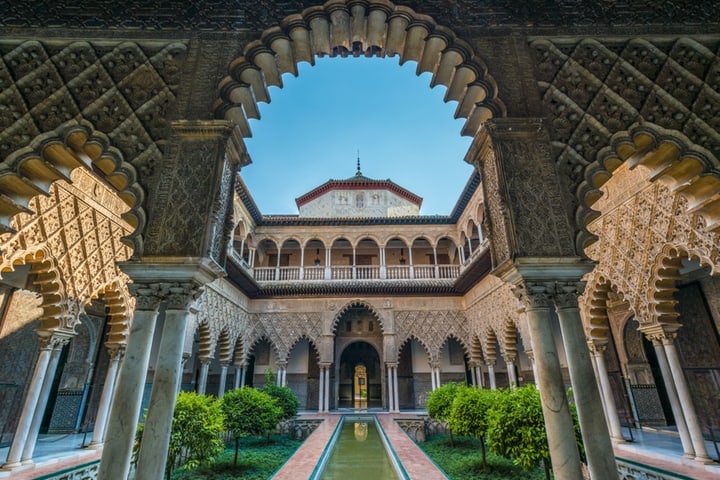
The Royal Alcázares of Seville (known as the Alcázar of Seville) are just a stone’s throw from the Cathedral and, albeit in a different way, rival it in charm. Since Roman times this sumptuous palace has housed the kings of Seville, who gradually expanded and embellished it to suit their personal tastes.
Today we can enjoy a marvellous building, rich in historical and artistic layers accumulated over time. Visiting Seville without entering the Alcázar means missing some of the city’s most captivating examples of Mudejar art and architecture. The palace’s elegant gardens are noteworthy too.
- Address: Patio de Banderas, s/n.
- Prices, opening times and tips for visiting: our guide to the Alcázar of Seville
Fast Track ticket for the Alcázar
Casa de Pilatos
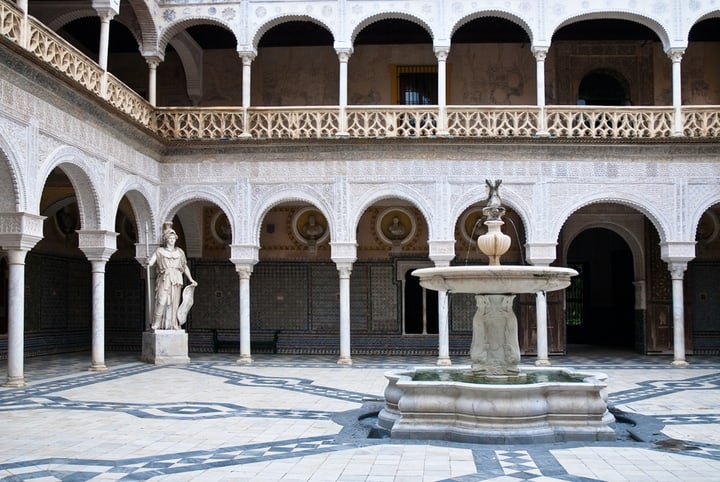
The cities of Andalusia — and Seville is certainly no exception — boast a cultural and artistic heritage envied the world over, also thanks to their private homes: wandering the streets of the Barrio Santa Cruz (and not only there!), you’ll enjoy tracking down the most beautiful patios of private houses, visible beyond gates and doorways left ajar. One of Seville’s most sumptuous palaces is without doubt the Casa de Pilatos, which is said to have been rebuilt on the site of Pontius Pilate’s palace. Here some of the city’s most captivating examples of Mudéjar art are concentrated.
- Address: Plaza de Pilatos, 1
- Prices, opening times and tips for visiting: our guide to Casa de Pilatos
Lebrija Palace
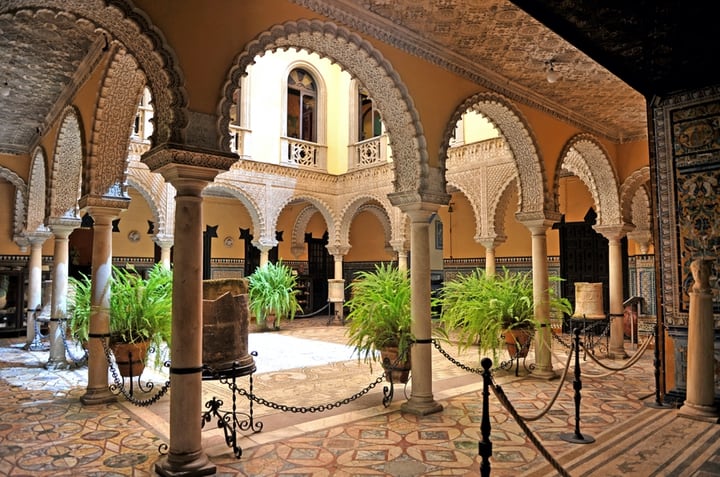
Seville is full of buildings and opulent private residences open to the public: besides the aforementioned Casa de Pilatos, it is worth mentioning the Palacio de Lebrija, the magnificent palatial house that the Countess of Lebrija furnished with paintings and collections of artistic treasures from every part of the world. One of the strengths of this fine palace is the marvellous flooring.
- Address: Calle Cuna, 8
- Prices, opening times and tips for visiting: our guide to Palacio de Lebrija
Town Hall
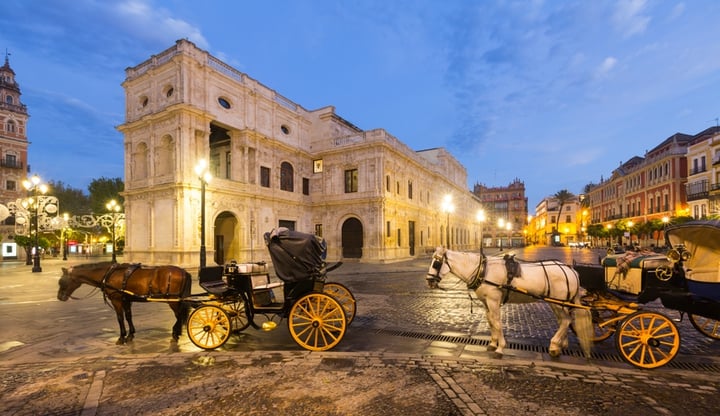
Leaving Calle Sierpes towards the Cathedral, it is practically impossible to miss Seville’s sumptuous Town Hall, the Ayuntamiento, or Casa Consistorial. Dating from the 16th century, the building displays the typical architectural features of the ornamental Plateresque style, a Spanish variant of the Baroque. Entry is by guided tour: you can visit several reception rooms with elaborately decorated ceilings and works of art by major Sevillian painters. More information on the official website.
- Address: Plaza Nueva, 1
- Prices: €4 from Monday to Thursday (€2 for pensioners and free for children under 16); free for everyone on Saturdays.
- Opening times: Monday to Thursday at 5:00 pm and 7:30 pm; Saturday at 10:00 am.
Museum of Fine Arts
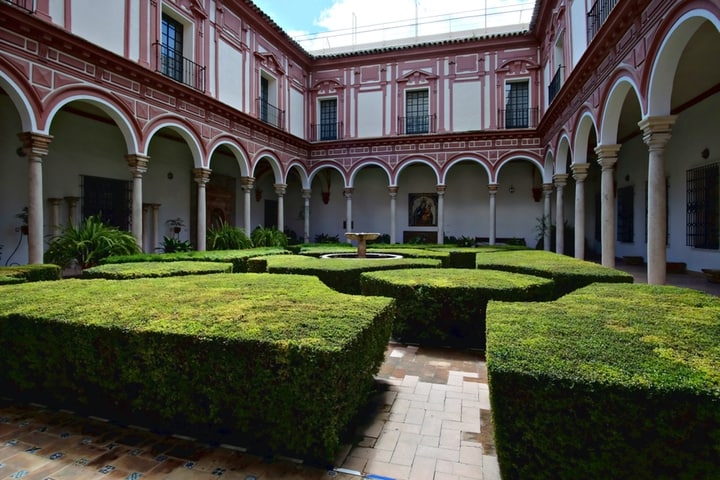
When visiting Seville, it’s worth stopping at the Museo de Bellas Artes, the most famous in all Andalusia, which houses works by Murillo, Velasquez, Leal and other important Spanish painters and sculptors. A remarkable art collection that greatly enriches Seville’s cultural heritage. Oh, there are also beautiful courtyards here to admire.
- Address: Plaza del Museo, 9
- Prices, opening times and tips for visiting: our guide to the Museo de Bellas Artes
General Archive of the Indies
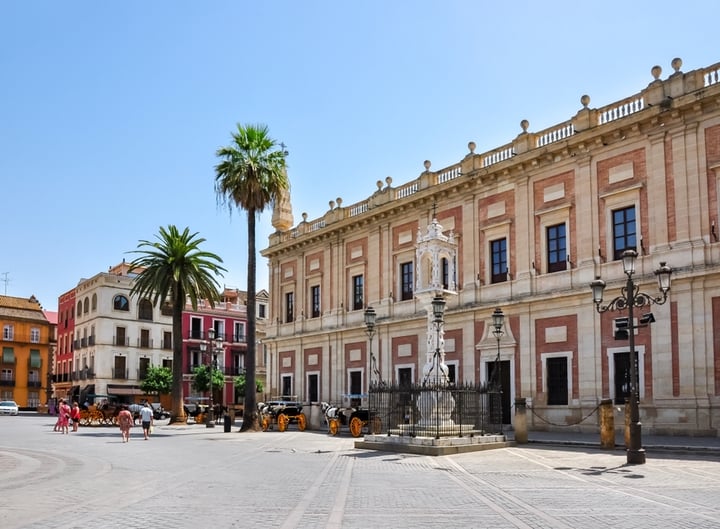
Overlooking Plaza del Triunfo, just like the Alcázar and the Cathedral, the Archivo General de las Indias is housed in the building that once served as the stock exchange: the Casa Lonja de Mercaderes. Inside is a collection of documents, volumes, maps and materials of inestimable historical value relating to the Spanish Empire in the Americas.
Christopher Columbus’s ship’s log is only one of the treasures concealed within this austere and exceedingly rich building, constructed around a central courtyard by Juan de Herrera, the same architect who designed the Escorial in Madrid. Admission is free.
- Address: Avenida de la Constitución, s.n.
- Prices: free
- Opening times: Tuesday to Saturday from 9:30 am to 5:00 pm; Sundays and public holidays from 10:00 am to 2:00 pm.
- Prices, opening times and tips for visiting: our guide to the Archivo General de Indias
Casa de Salinas
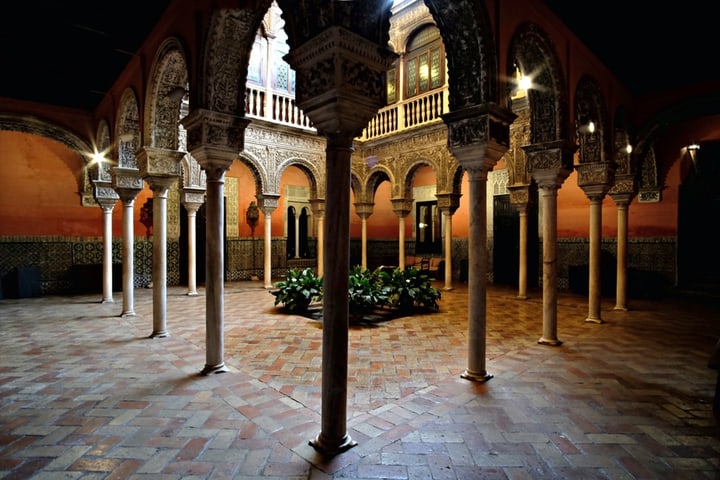
Small hidden gem in the Barrio Santa Cruz, the Casa de Salinas from the 16th century is a townhouse still inhabited by the Salinas family, who welcome visitors and allow access to a small portion of the residence. In about 30 minutes you can see many Mudéjar refinements of this richly decorated home: in one of the patios you may even be fortunate enough to see a fine mosaic originating from Italica.
- Address: Calle Mateos Gago, 39
- Prices: €10
- Prices, opening times and tips for visiting: our article dedicated to Casa de Salinas.
Ticket for Casa de Salinas (APP-guide included)
Palacio de las Dueñas
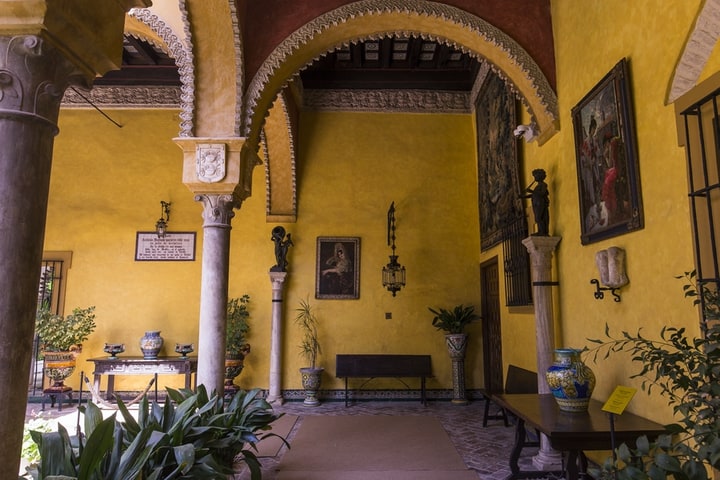
It’s not hard to fall in love with Seville’s palaces, so much so that when you visit one you want to see them all. The Palacio de las Dueñas – Casa de Alba is no exception: this handsome noble palace in Renaissance style with Moorish influences, built in the 15th century, conceals in its rooms works of art, paintings, furnishings, sculptures and valuable tapestries that make it a veritable house-museum.
The rest is provided by the courtyards and the lush, colourful gardens that surround the residence. The house of the Dukes of Alba has the sole drawback of being a little outside the centre; otherwise, in terms of tourist interest it could almost rival Casa de Pilatos, Palacio de Lebrija or Casa Salinas.
- Address: Calle Dueñas, 5
- Prices: €14 / reduced ticket €12.
- Opening Times
- April to September: daily from 10:00 am to 8:00 pm
- October to March: daily from 10:00 am to 6:00 pm
Ticket for the Palacio de las Dueñas (APP-guide included)
San Telmo Palace
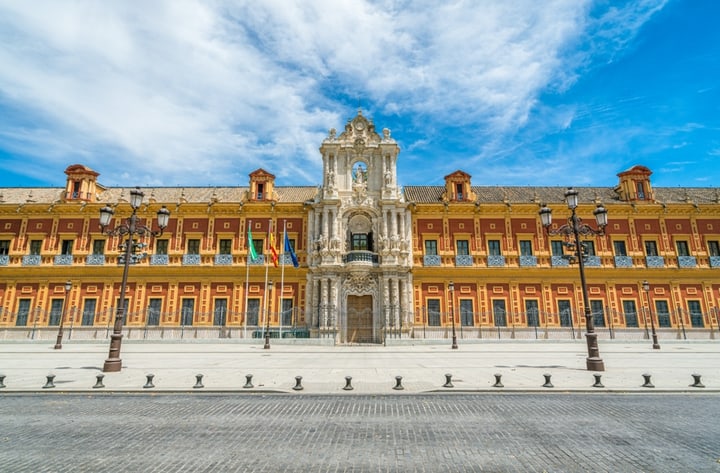
Not far from María Luisa Park stands the Palacio de San Telmo, an imposing rectangular Baroque building whose bright colours dominate a wide square by the riverfront, to the south of the Torre del Oro. The palace now houses the Parliament of Andalusia, but it was once a seminary and later the residence of the Dukes of Montpensier.
It is worth a quick stop even just for the magnificent façade with its white marble portal, but if you have a little time to spare you can also see (free of charge) the lavish Chapel of San Telmo, several courtyards and richly frescoed saloons. Guided tourist visits to some parts of the palace may be suspended in the event of official government functions.
- Address: Calle Palos de la Frontera, s.n.
- Prices: free with prior booking.
- Opening times: Thursday and Saturday; available entry slots are listed on the official website.
Andalusian Centre for Contemporary Art
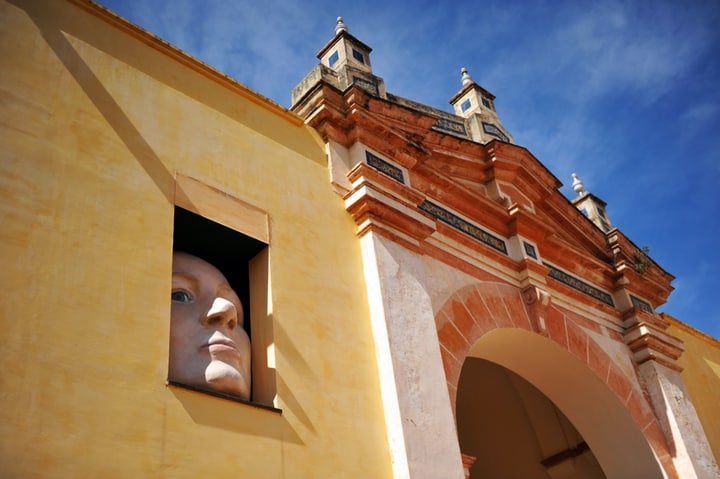
This cultural centre is located on the Isla de la Cartuja, a peripheral area of Seville on the west bank of the river, in a building annexed to the Cartuja de Santa María de Las Cuevas, a former Carthusian monastery used as military headquarters during the Napoleonic occupation and later restored for Expo 92 after having been converted into a factory in the nineteenth century. The Centro Andaluz de Arte Contemporáneo houses works by Andalusian artists from the second half of the twentieth century, but also explores the artistic trends of the new millennium.
- Address: Calle Américo Vespucio, 2
- Prices: €1.80–€3
- Opening times: Tuesday to Saturday: 11:00 am–9:00 pm; Sundays and public holidays: 10:00 am–3:00 pm.
Churches
With its iconic Giralda, the Seville Cathedral is one of the largest and most important churches in Europe, and for this reason it tops the list of things to see in Seville. Below is a short list of other religious buildings to visit in the city, with particular attention to the parish churches in the popular neighbourhoods, where devotion is tangible.
Seville Cathedral
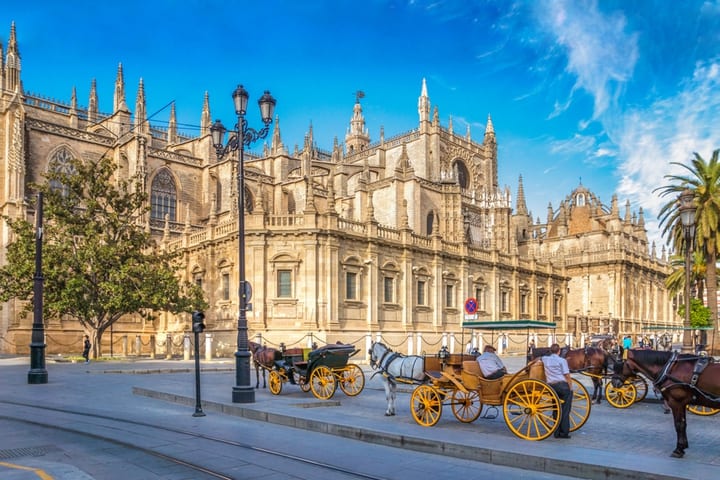
Innumerable are the reasons that draw travellers to enter the Seville Cathedral, a marvellous example of a Gothic church built in just over a century (1402-1506) on the rectangular plan of a large mosque dating from the Almohad period. One cannot forgo visiting the tomb of Christopher Columbus, or resist being captivated by the grandeur of the Gothic retablo of the Capilla Mayor, not to mention the treasury rooms, the Patio de los Naranjos and, above all, the Giralda, which deserves a discussion of its own.
- Address: Avenida de la Constitución, s.n.
- Prices, opening times and tips for visiting: our guide to Seville Cathedral.
Entrance ticket to the Cathedral and the Giralda
Giralda
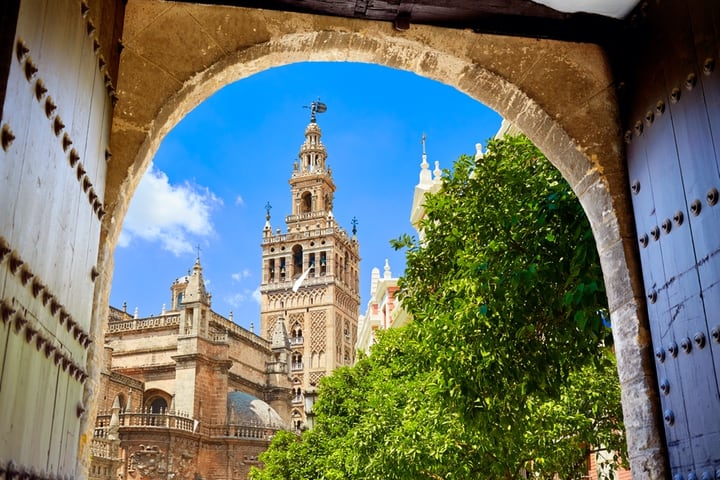
Among the things to see in Seville, the Giralda is truly one of the unmissable must-sees. Considered the emblematic monument of the entire city, the Giralda rises into Seville with undeniable majesty. Although it now serves as the Cathedral’s bell tower, it is not hard to recognise the features of the minaret, whose original and magnificent Islamic architecture remains, apart from, of course, the later additions to the belfry. From the Giralda’s 70 metres of height you can enjoy a wonderful panorama of the cathedral and the whole city.
- Address: Avenida de la Constitución, s.n.
- Prices, opening times and tips for visiting: our guide to the Giralda of Seville.
Entrance ticket to the Cathedral and Giralda
Hospital of the Venerables
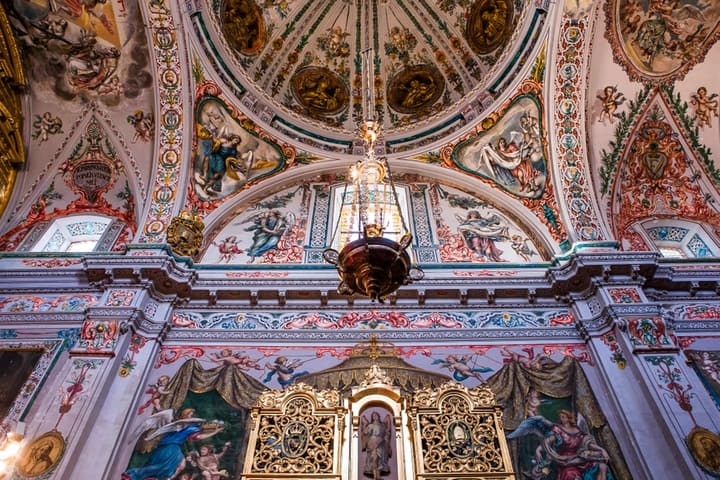
The Hospital de los Venerables is an ancient hospital for infirm priests built around one of the most beautiful and harmonious patios in the Barrio. A visit to the baroque church and the art gallery, which houses works by Velasquez in the centre dedicated to him within the same buildings, is also recommended. WARNING: the monument is currently closed (October 2025).
- Address: Plaza Venerables, 8
- Prices, opening times and tips for visiting: our guide to the Hospital de los Venerables.
Iglesia del Salvador
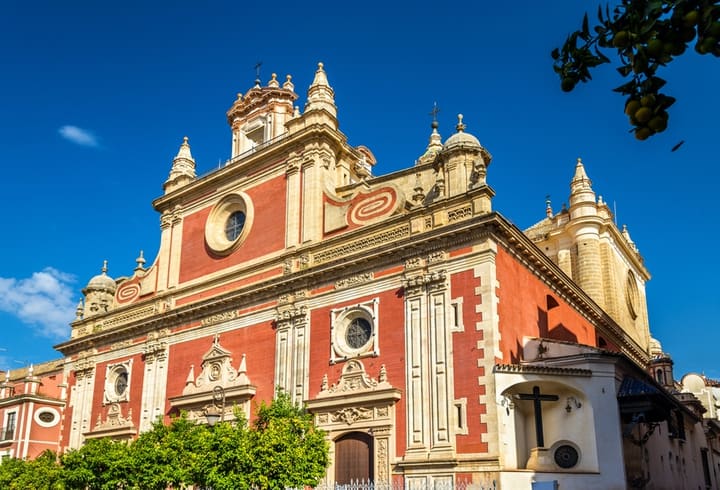
The baroque collegiate church of El Salvador, rich in traces of its Arab past, is often visited together with the Cathedral because the ticket covers both. Beyond the church’s lavish interiors, be sure to see the Ablutions Courtyard of the ancient mosque, dated 829–830 AD. By the way: if you haven’t already bought your Cathedral ticket in advance (which I strongly recommend), you can purchase it here at the Iglesia del Divino Salvador, thus avoiding long queues.
- Address: Plaza del Salvador, 3
- Prices: €7, or free if you have a ticket for the Cathedral.
- Opening times:
- September to June: Monday to Saturday from 11:00 am to 6:00 pm; Sundays from 2:30 pm to 7:00 pm
- July and August: Monday to Saturday from 10:00 am to 6:00 pm; Sundays from 2:30 pm to 7:00 pm
Combined ticket Cathedral + Giralda + Iglesia del Salvador
Hospital de la Caridad
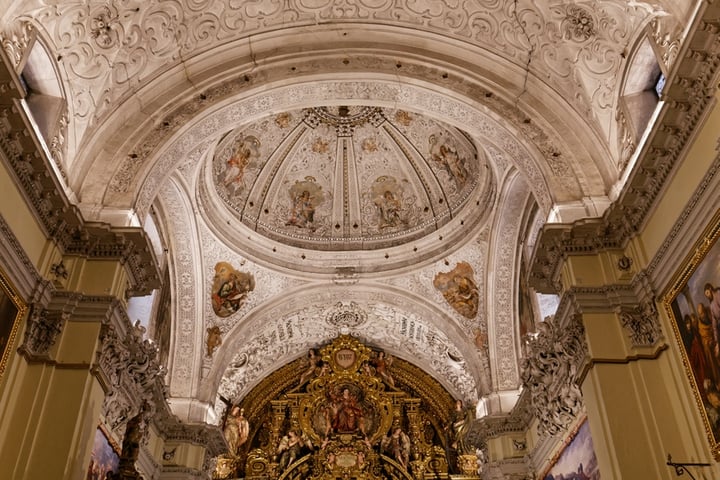
On the riverfront, in the El Arenal district we find the Hospital de la Caridad, a hospice for elderly infirm people founded by Don Miguel Mañara in 1676. If you are unfamiliar with the story of this Spanish libertine who converted and devoted himself to charity after a life of excess, I recommend reading the play “Miguel Mañara” by Oscal Milosz. Inside the Hospital you can visit a chapel with paintings – some of which are truly macabre – by Murillo, Valdés Leal and Roldán.
ATTENTION: the monument is closed for refurbishment until 2027.
- Address: Calle Temprado, 3
- Prices: €2.50–€8.
- Opening times: Monday to Friday from 10:30 am to 7:00 pm; Saturday and Sunday from 2:00 pm to 7:00 pm.
Ticket for the Hospital de la Caridad
Real Parroquia de Señora Santa Ana
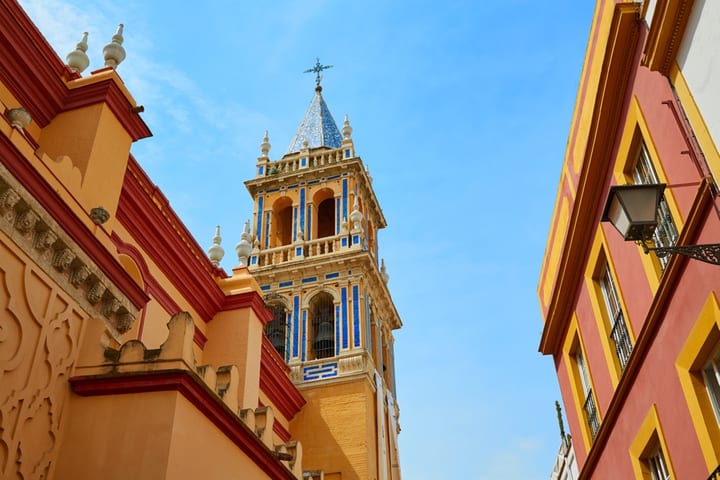
This small parish is noteworthy not only because it was the cathedral of Triana, but also because it is the oldest church in the entire city of Seville. Built at the behest of King Alfonso X in the 13th century, the Church of Santa Ana has a bell tower that reveals its Moorish origins and – in addition to a 16th-century retablo with a statue of the Virgen de la Rosa – houses the Pila de los Gitanos, a baptismal font that was traditionally said to guarantee musical talent for flamenco to anyone immersed in it for the sacramental rite.
- Address: Parroco Don Eugenio, 1
- Prices: €3 donation for the guided tourist visit.
- Visiting times: Monday to Friday, 10:30 am–7:00 pm; closed in August and on public holidays, except for worship.
Basílica de la Macarena
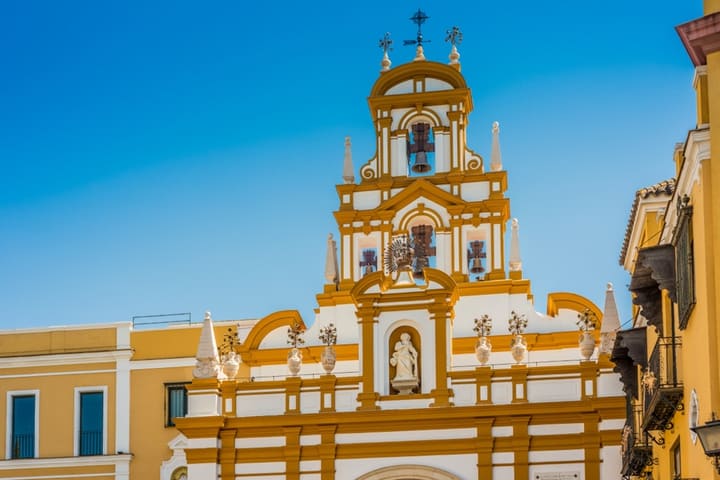
If the Church of Santa Ana is the main place of devotion in the Barrio Triana, this Basilica, by contrast, is the religious hub of the working-class neighbourhood of La Macarena, once known as the poorest in Seville. The retablo of the Basilica de la Macarena houses the statue depicting the venerated Virgen de la Esperanza Macarena, carried in procession during Semana Santa with the enormous following of the faithful.
- Address: Plaza de la Esperanza Macarena, 1/2
- Prices: free. The adjoining Brotherhood Museum has a separate entrance fee (€3–€5).
- Opening times: Monday to Saturday: 9:00 am–2:00 pm and 5:00 pm–9:00 pm; Sundays and public holidays: 9:30 am–2:00 pm and 5:00 pm–9:00 pm.
Other attractions
Below I would like to list all the attractions that do not fall into the previous categories, but which — each for its own peculiarities — deserve a thorough visit, or even just a passing visit.
Metropol Parasol – Las Setas de Sevilla
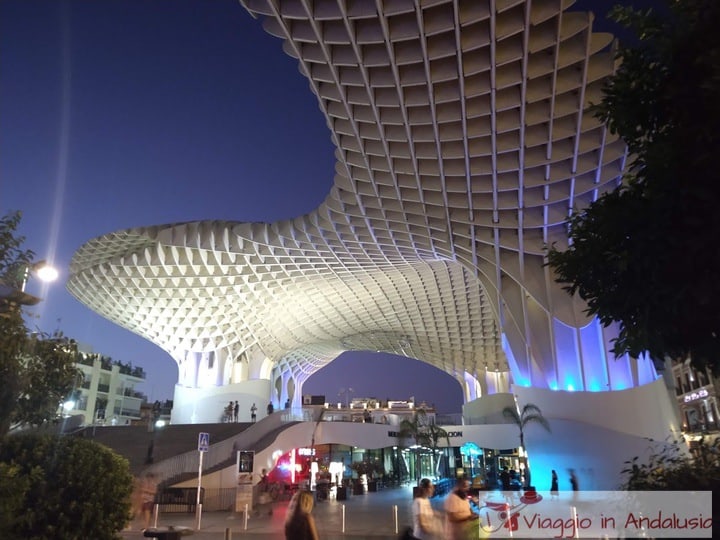
Among so many historic monuments, stumbling upon the impressive contemporary architectural work of Jürgen Mayer in the city centre is a decidedly disorienting experience. Metropol Parasol, also known as Setas de Sevilla, is one of the most famous examples of sustainable architecture in the world and is absolutely worth a visit: from its mirador you can enjoy an unrivalled 360° view over Seville!
- Address: Pl. de la Encarnación, s/n
- Prices, opening times and tips for visiting: our guide to Metropol Parasol.
Tickets for the Metropol – Setas de Sevilla
Torre del Oro
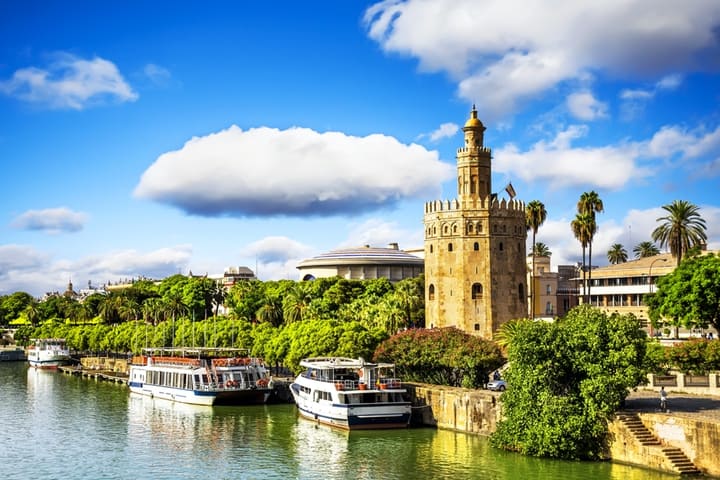
Among the things to see in Seville is this tower, built in the 13th century: it is a precious testimony to the city’s maritime vocation. Inside there is a naval museum, which houses some documents that shed light on the original design of the port. You will find the tower by walking along the river, not far from the Puente de San Telmo. Below are some tips to prepare for your visit to this ancient riverside military outpost.
- Address: Paseo de Cristóbal Colón, s.n.
- Prices, opening times and tips for visiting: our guide to the Torre del Oro.
Isabel II Bridge (Puente de Triana)
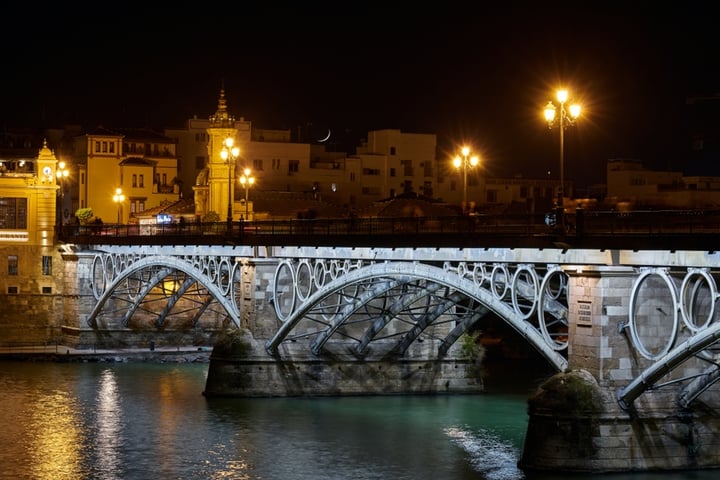
It is commonly, though incorrectly, believed that this famous bridge in Seville was designed by Eiffel: in fact it was completed by two engineers, Gustavo Steinacher and Ferdinand Bennetot, between 1845 and 1852 (Eiffel was only 13 at the time — genius or not, come on!). That does not detract from the fact that its shape makes it a highly attractive monument. The bridge is also called Puente de Triana, because it links the centre of Seville with the well‑known neighbourhood of the same name.
- Address: Puente de Isabel II, 30
Plaza de Toros de la Maestranza Bullring
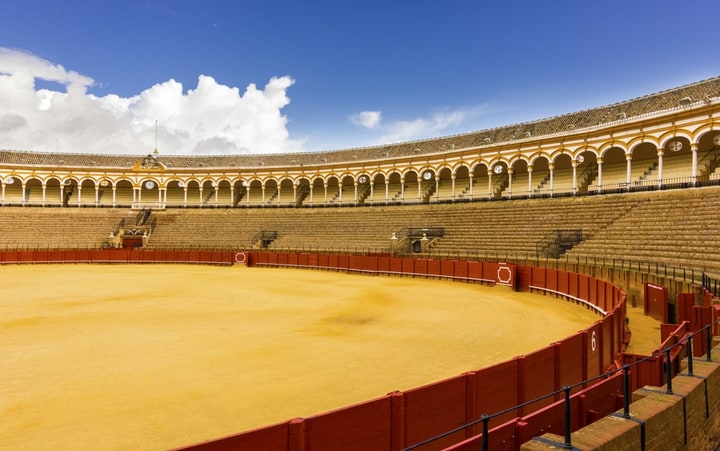
An attraction to visit in Seville is without doubt the Maestranza bullring, which deserves more than a passing mention: many indeed consider it the most beautiful in all of Spain. Standing on the sand, imagine the fourth act of Bizet’s Carmen, because it is here that it takes place, in Seville’s celebrated bullring.
- Address: Paseo de Cristóbal Colón, 12
- Prices: €8–€25
- Opening times:
- November to late March: 9:30 am–7:00 pm
- April to late October: 9:30 am–9:00 pm
Guided tour of the Plaza de Toros
Real Fábrica de Tabacos
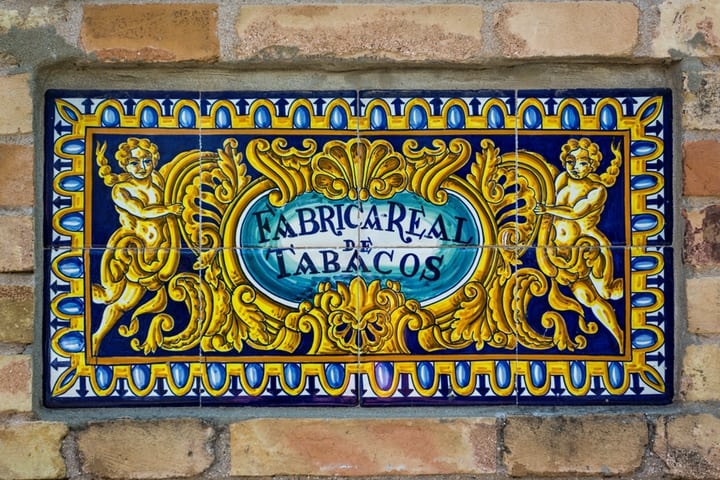
Today it is frequented by university students attending lectures, but when it was built in 1750 this huge building was a tobacco factory, where thousands of female cigarette-makers worked. The most famous of them is undoubtedly Bizet’s Carmen, the beautiful gypsy who won the favour of Corporal Don José. Step inside and have a look to seek out the clues that recall its former function.
- Address: Calle San Fernando, 4
- Prices: free
- Opening times: free guided tours at the times listed on the official website.
Isla Magica
I can understand that a Seville theme park might not be your first thought when you’re in the city, but if you have a few days to spare and children to let off steam/have fun, or if you understandably want to cool off a little on the water rides, know that Isla Magica is an oasis of fun to consider. One of Spain’s largest and most popular theme parks, Isla Magica Sevilla contains many Andalusian-themed attractions that can spark the imagination of the little ones and, why not, their parents too.
- Address: Pabellón de España, s.n.
- Prices, opening times and tips for visiting: our guide to Isla Mágica.
Seville Aquarium
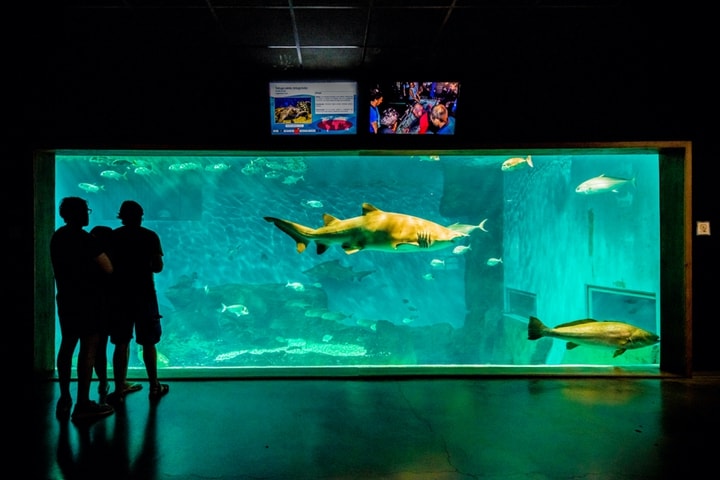
Another family-oriented attraction, the Acuario de Sevilla is relatively new (2014) and competes with Spain’s other major aquariums in concept, the variety of marine species (there are over 400) and its eye-catching architectural design. The Acuario de Sevilla is located on the Muelle Delicias, right on the Guadalquivir River, not far from Maria Luisa Park.
- Address: Muelle de las Delicias, s.n.
- Prices: €18, with reduced rates for children and families.
- Opening times:
- September to June: Monday to Friday from 10:00 am to 6:00 pm; Saturday and Sunday from 10:00 am to 7:00 pm
- July and August: Monday to Thursday from 10:00 am to 7:00 pm; Friday to Sunday from 10:00 am to 8:00 pm
Ticket for the Seville Aquarium
Torre Sevilla
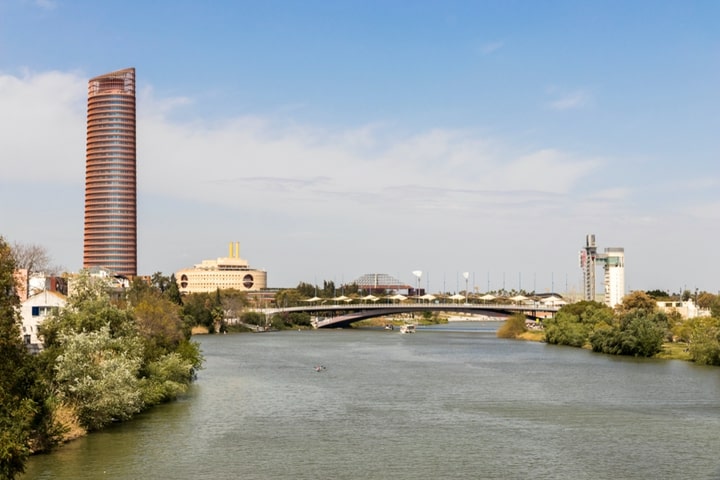
If you enjoy panoramic views and the towers, bell towers and futuristic walkways of the Setas de Sevilla weren’t enough, you can head a little way out of the centre and reach the Torre Sevilla, a shopping centre housed in the tallest building in the city and in Andalusia (180.5 m). On the 37th floor of the skyscraper there is a terraza mirador (Atalaya Torre Sevilla) that offers a unique panorama over the city.
- Address: Calle Gonzalo Jimenez de Quesada, 2
- Prices: €8 (€6 for children aged 5 to 11)
- Opening Times:
- Winter: Friday and Saturday from 11:00 am to 1:00 am; all other days from 11:00 am to 7:00 pm
- Summer: Thursday to Saturday from 12:00 noon to 1:00 am; all other days from 12:00 noon to 9:00 pm
Parks and gardens
If there’s one thing that lingers in the heart in Seville and, more generally, in the great cities of Andalusia, it’s the gardens and parks. The lush vegetation, the endless palette of colours in which the flowers gleam, the meticulous care of ornamental details, the water features, the Moorish courtyards, the hedges sculpted to perfection: you can immerse yourself in these fairytale places by visiting private palaces or strolling through the city’s public parks.
Maria Luisa Park
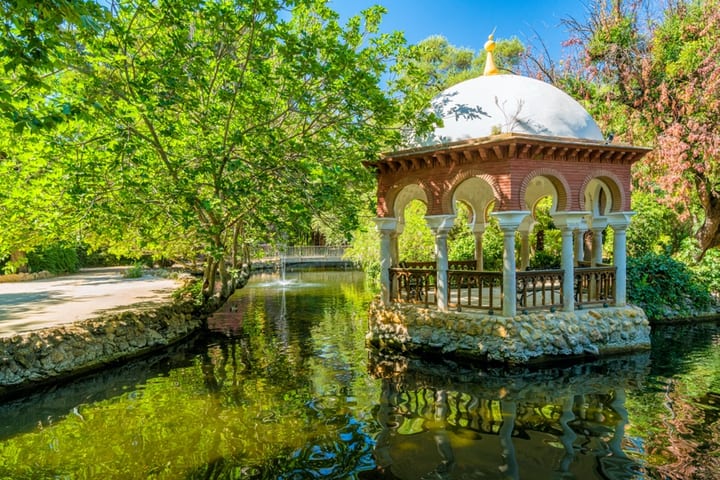
Adjacent to the Plaza de España lies the Parque de Maria Luisa, a beautiful, peaceful green space full of museums, palaces, flower-filled roundabouts, small ponds, fountains, artificial mounds and tree-lined avenues. What was once the garden of the Palacio San Telmo, where Princess María Luisa of Orléans used to stroll, is today a shady place to relax between one Sevillian monument and another. We’ve devoted an article with a recommended itinerary.
- Address: Paseo de las Delicias, s.n.
- Prices: free
- Opening times: 8:00 am–10:00 pm.
Murillo Gardens
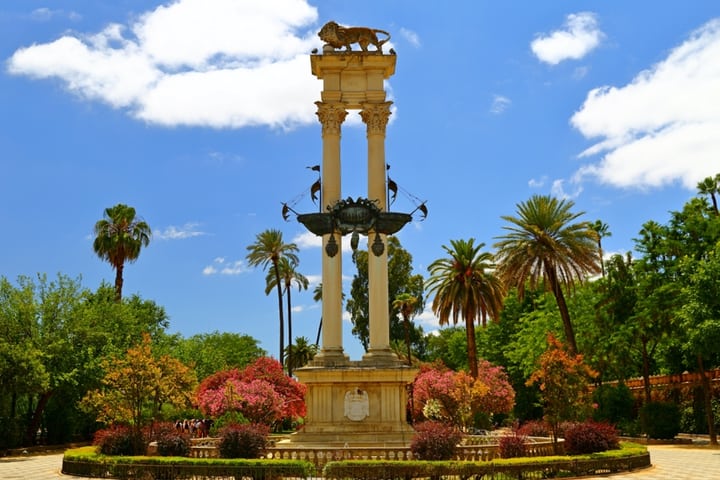
Only a wall separates the romantic Jardines de Murillo from the lavish gardens of the Alcazar. Once the two green spaces were one, which perhaps explains why a public park can appear so elegant, rich in centuries-old trees and flowers of exuberant beauty. If you’re tired of walking, you can rest on one of the benches decorated with azulejos, overlooking the fountain that gently bubbles at the foot of the great monument to Christopher Columbus.
- Address: Av. de Menéndez Pelayo
- Prices: free
Jardines de las Delicias
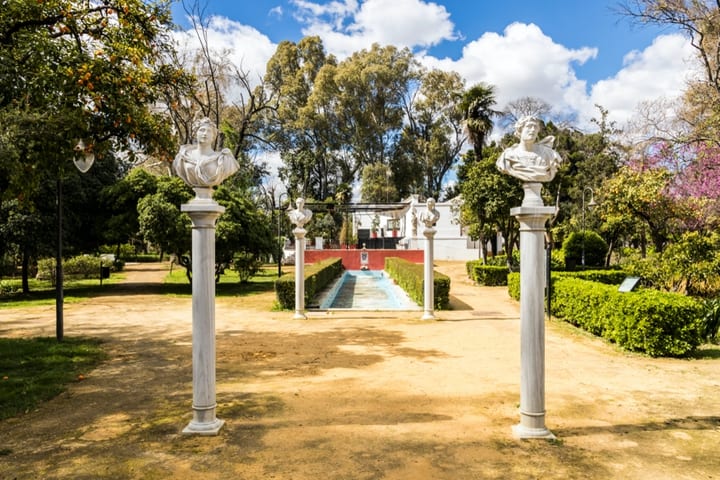
The wide road called Paseo de las Delicias separates the south‑eastern side of the Parque de María Luisa from the riverfront Muelle de las Delicias, where the Seville Aquarium is also located. If you enjoy Seville’s gardens, treat yourself to a walk through the small green space of the Jardines de las Delicias: hidden among refined botanical specimens and pretty fountains, you will encounter some beautiful classical statues and stern‑faced busts.
- Address: Av. de la Palmera s.n.
- Prices: free
Football stadiums in Seville
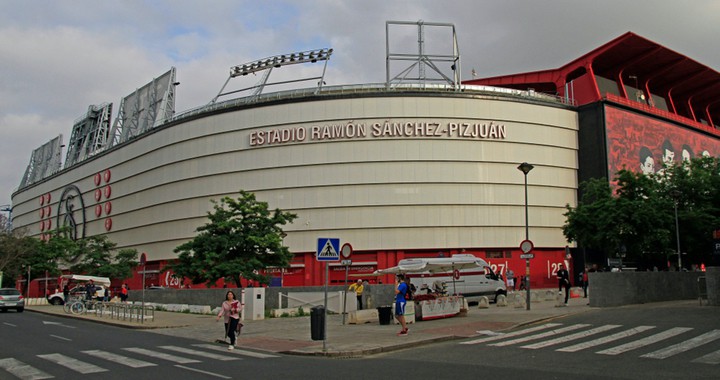
They have won no fewer than seven Europa Leagues between 2005 and 2023. Yes, you heard correctly as to which of Seville’s two teams I’m talking about: the oldest and most decorated is precisely the Sevilla Fútbol Club, which any Italian football fan knows as “Siviglia”. The white-and-red club, founded in 1890 and active in La Liga since 1905, play at the Ramón Sánchez Pizjuán, a stadium holding almost 43,000 spectators located in the modern Nervión district.
- Address: Calle Sevilla Fútbol Club, s.n.
Accommodation in the neighbourhood
Tickets for Sevilla FC matches
€10 off with the discount code VIAGGIUSA
The other historic team of Seville is Real Betis Balompié, a club founded in 1907. It should be noted that Betis have spent several seasons in the Segunda División and have never matched their rivals’ European achievements, although they are level with them in national championships won (as of 2020 that stands at 1). The green-and-whites do not play at the Pizjuán but at the Benito Villamarín, a much larger 1929 stadium (it can hold 60,720 spectators) in the Heliopolis neighbourhood, in the southern suburbs of Seville.
- Address: Av de Heliópolis, s.n.
Tickets for Real Betis Seville matches
€10 off with the discount code VIAGGIUSA
What to do in Seville?
What to do in Seville after you’ve explored its fairy-tale neighbourhoods from top to bottom? What are the must-do tourist activities in the city beyond visiting the monuments and squares? From flamenco to a cruise on the Guadalquivir, via gastronomic tours in search of tapas and horse-drawn carriage rides… there’s no shortage of choice! Below I’d like to offer a few interesting suggestions to consider when organising your trip, depending on your needs and wishes.
Seville Nightlife: What to Do in the Evening
The night in Seville is long! It’s not just a matter of schedules – notoriously a bit out of sync in Spain – but also of atmosphere: when evening falls Seville opens up to a host of exciting possibilities. In addition to the activities I recommend below, don’t forget to take a look at our article on the Seville’s nightlife, where you’ll find a selection of recommended venues (theatres, tablaos, bars, nightclubs, live music venues).
Best places to eat in seville
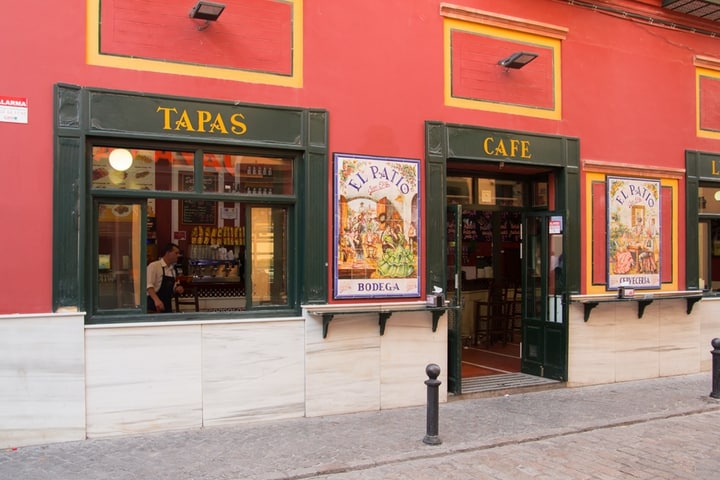
My favourite pastime when I’m in Seville and, in general, in Andalusia, is going for tapas. If you’ve been to Spain before you might know what that means… in other words, it’s the act of going round the city’s bars and restaurants to sample the most typical culinary delights, accompanied by one or more drinks. In Seville the gastronomic offer is of the highest quality and the choice is practically endless, so all that’s left is to set off in search of the best tapas. Use my article for tips on where to eat in Seville.
Flamenco show in Seville
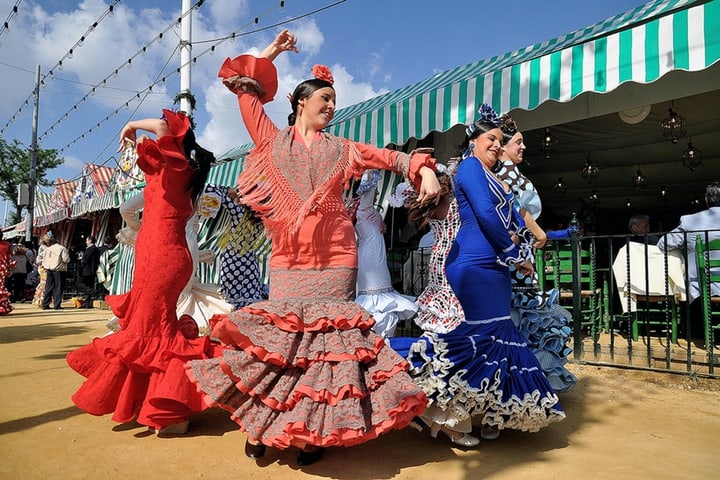
Do you know the story of the gypsies of Triana? Does Bizet’s Carmen ring any bells? The glorious tradition of flamenco is at home in Seville: leaving without having seen a flamenco show would be a crime. There are many venues (tablaos) that offer this experience, so read our article on flamenco in Seville and make a note of the places where you could see it, accompanied by a meal or a drink.
Venues to see flamenco in Seville
Seville by night from above
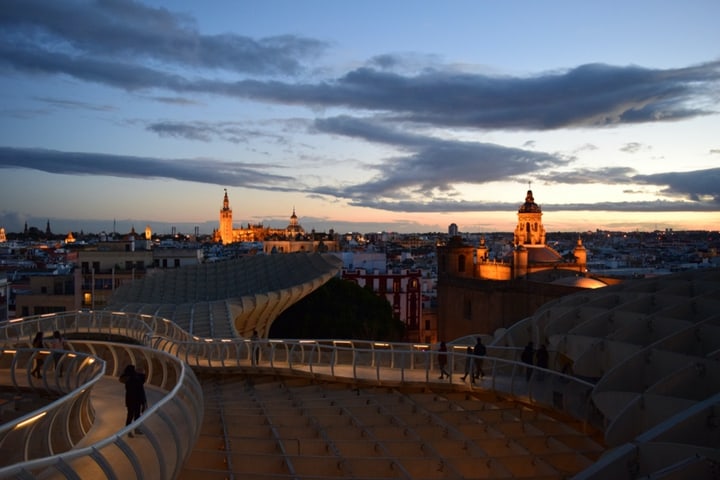
As you will have gathered from my descriptions, there are several ways of seeing Seville from above (the Giralda, the terrace of the Torre del Oro, the cathedral roofs known as cubiertas), but if you want an unforgettable night-time panorama of the city of Seville, you should go to Metropol Parasol.
Buy a ticket and climb to the top of this incredible wooden structure: you’ll be able to see the city lit up from various perspectives, each more thrilling than the last. Of course, seeing Seville from above isn’t just a nighttime privilege: besides the places mentioned, the Torre Sevilla also offers this opportunity until 7 pm. The view from its panoramic terrace is unique throughout Andalusia.
Romantic things to do in Seville
If Seville is the city you’ve chosen for a romantic getaway, here are a few tips on how to enjoy some romantic moments in the city.
Visit Seville by carriage
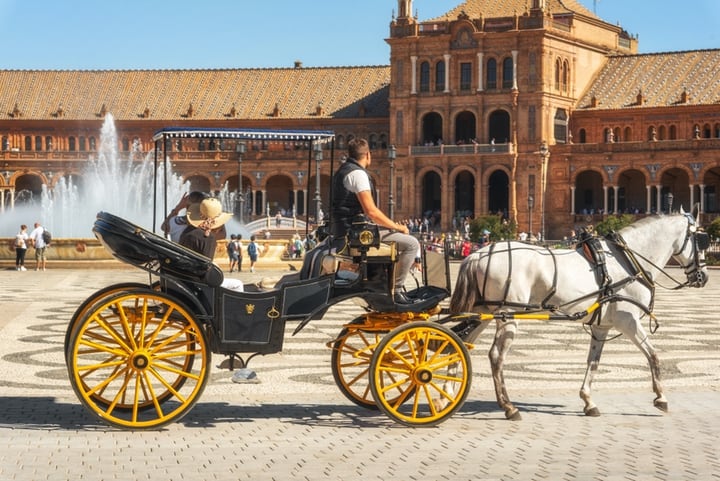
As soon as you arrive in Seville’s central streets, in the shadow of the Giralda you’ll see them straight away: they are the characteristic horse‑drawn carriages, with their unmistakably elegant style and yellow trim. One of the most romantic things to do as a couple in Seville is precisely this: let the coachman show you the city’s beauties while he drives a carriage of yesteryear. Yes, exactly what we’d call an “aristocratic tour” of the city.
Horse-drawn carriage tour in Seville
Take a boat ride in the Plaza de España
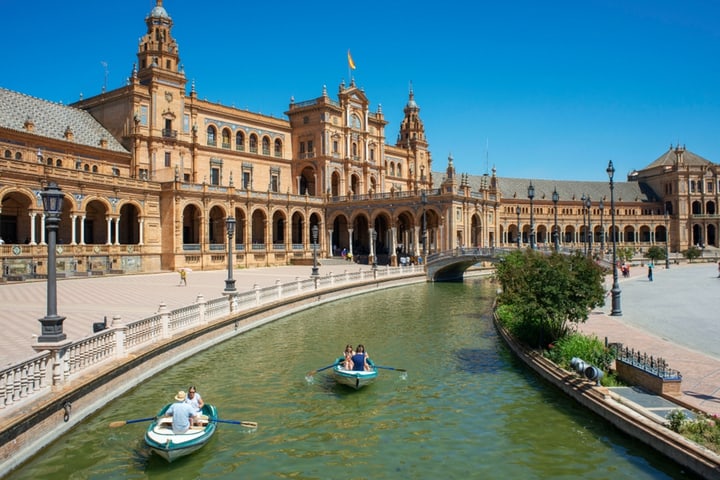
Thanks to the fairy-tale, monumental appearance of its buildings, a stroll in Plaza de España feels more like a film scene than reality. The semicircular colonnade that outlines the square’s enchanting shape is graced by an artificial canal spanned by 4 finely ornamented bridges. The canal is navigable: you can hire a small boat on site at a very reasonable price and row along in a delightfully atmospheric setting.
A tip? If you’re not particularly fit but still want to make a good impression, don’t try to row the entire canal, because when you reach the far end you’ll have to return to the starting point along the same route!
Relax in a hammam in Seville
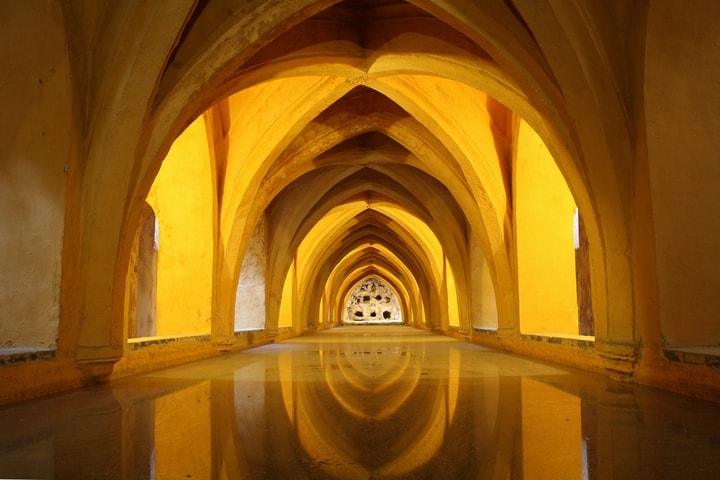
Enjoying a thermal spa ritual in an Hammam in Andalusia is an experience that goes beyond mere wellbeing and relaxation: the very atmosphere that the spa establishments we’re used to try to recreate originates here, where the Arab culture of bathing had a spiritual, ritual significance.
If you’d like to try the Hammam in Seville, be aware that, unfortunately, you won’t be able to do so in the splendid surroundings of the Alcazar (see photo above). However, you can immerse yourself in the lovely Arab-Andalusian setting of the Aire de Sevilla, on Calle Aire, 15. Below you’ll find the link to purchase a package that includes a city tour and admission to the Arab baths.
Experience at Seville’s Hammam
Savour a dinner with a view in Triana
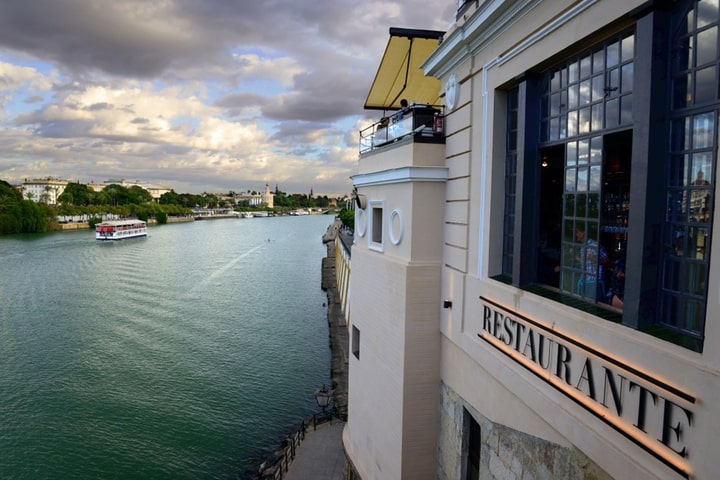
Se for one evening you don’t want to go from venue to venue to tapear, but would prefer to dine in a relaxed setting with a lovely view of the city, I recommend choosing one of the restaurants that may be a little touristy but are in an exceptional location, on the Triana riverfront, Calle Betis. The most famous are Abades Triana Restaurante and Mariatrifulca.
Non-touristy things to do in Seville
For me it’s always difficult to recommend non‑touristy things to do in Seville or elsewhere, because the criteria are always a bit personal. There are certainly ways to have a local experience, by following the traditions, customs and habits most deeply rooted in everyday life. For events and festivals, see the dedicated paragraph in this same article.
Below are three activities to consider:
Attend a bullfight in Seville
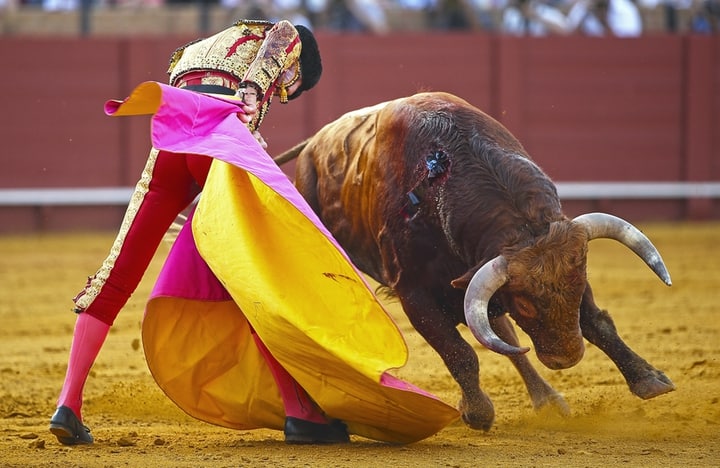
Like it or not, one of the first things that comes to mind when we think of Spain, and specifically Andalusia, is the corrida. When you get there, it is very likely that — during your tours exploring bars and restaurants — you will come across one or more corrida-themed venues, with walls covered in photos, posters, memorabilia, matador costumes and the like.
In short, although it remains a highly controversial event, the corrida is adeeply rooted tradition in Andalusia, and particularly in Seville where the Real Maestranza de Caballería de Sevilla is a glorious institution known throughout Spain. If you want more information about the Plaza de Toros in Seville and the bullfight schedule, read our dedicated article.
Watch a Sevilla or Real Betis match

The Spanish La Liga is one of the most captivating leagues in Europe and, although the Madrid and Barcelona sides tend to dominate, Sevilla FC and Real Betis still put on an unmissable spectacle for fans of Spanish football. Andalusian support is famous for being extremely passionate, which greatly heightens the appeal of the occasion!
If you want to buy tickets in advance for the matches of Seville’s two teams, use the links below and be careful to select home matches only!
Real Betis Seville match tickets
€10 off with code VIAGGIUSA
Exploring Seville’s neighbourhood markets and street markets
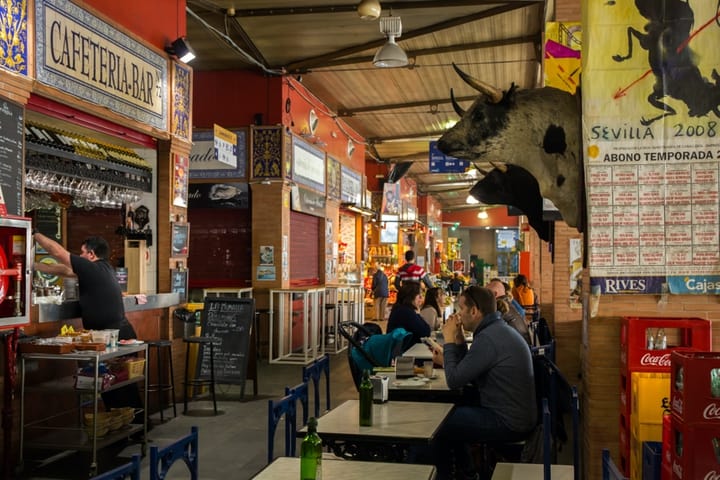
Whenever I go to a city in Andalusia, I’m always on the lookout for the local and neighbourhood markets, even without buying anything or sampling any local delicacies (perhaps that’s a lie, now that I think about it…). Why do I do it? For the lively, chaotic atmosphere, for the colours, flavours and aromas of the food displayed on the stalls, for the old signs and little chalkboards, to hear the traders shouting or the flow of Spanish in the exchanges between sellers and customers.
The market in Seville that has remained closest to my heart is the Mercado de Triana, just across the Puente de Triana at Calle San Jorge, 6, but there are others on the other bank of the river:
- Lonja de Feria (Plaza Calderón de la Barca, s.n.): A traditional market slightly outside the city centre, housed in a classic rustic Andalusian-style building. Ideal for a tasty and authentic experience.
- Lonja del Barranco (Calle Arjona, s.n.): Originally, it was the fish market, designed by Eiffel and built in iron in 1883. Today it has been restored and turned into a gourmet food market, perhaps a little too touristy.
- Mercado de la Encarnación (Plaza de la Encarnación): Seville’s oldest market is now located beneath Metropol Parasol, from which it has inherited a new contemporary architectural look.
If, however, you like the idea of pottering around the Seville markets, I recommend trying at least a couple of the most famous: the Mercadillo Historico del Jueves on Calle Feria (Thursdays) and the Mercadillo de Arte on Triana’s riverfront (Paseo de la O), which usually takes place at the weekends. On Sundays there’s also an art market in Plaza del Museo, right in front of the Museo de Bellas Artes.
Most popular tourist activities in Seville
Below you can find the 3 most common and affordable tourist activities in Seville: the open-top hop-on hop-off bus tour, a guided bicycle tour of the city and a scenic cruise on the Guadalquivir River. In addition to these, read the page where we have gathered all the other organised activities to do in Seville.
Visiting Seville by Hop-On Hop-Off Bus
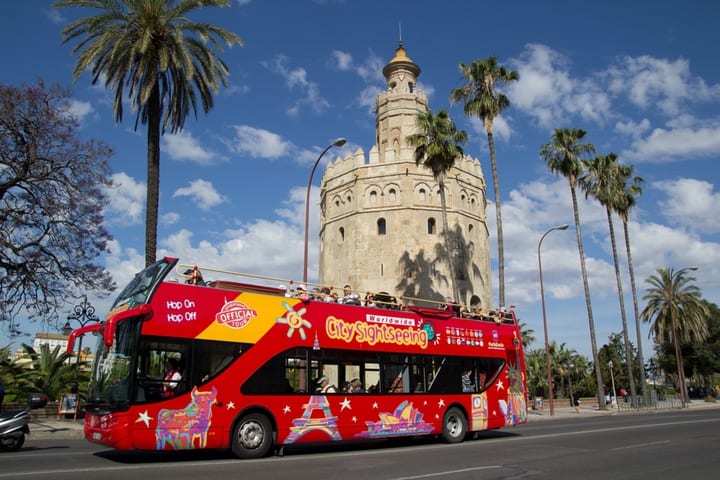
For those who have little time and don’t fancy walking much and want to get around Seville extensively during their stay in a comfortable and scenic way, the hop-on hop-off sightseeing bus is a timeless classic and also quite affordable. At the link below you can buy a ticket for the Seville sightseeing bus valid for 24 or 48 hours with an audio guide in Italian.
Hop-on hop-off bus tickets in Seville
In the product description you can also see the list of 14 stops that will take you close to the city’s main attractions. Furthermore, the ticket price also includes 4 guided tours, tastings and admissions to churches and monuments in the city (among others, Hospital de la Caridad, Church of Santa Ana, Flamenco Museum), which make the offer very enticing.
Exploring Seville by bicycle
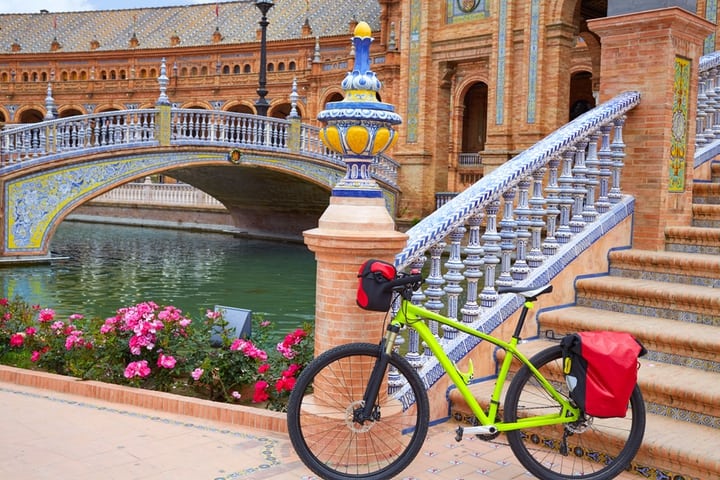
Being essentially a compact, human-scale city, it can be said that many neighbourhoods of Seville are truly ideal for those who enjoy cycling, thanks also to the large number of cycle lanes in the centre and along the riverfront. In addition to the option of bike hire in Seville, if you like the idea you can join a bike tour lasting 2.5 hours. Take a look at the link below.
Alternatively, if you’d rather make as little effort as possible but the idea of two wheels appeals to you, you can join a guided electric bike tour of Seville. Same duration as the previous one, but much less effort!
Take a cruise on the Guadalquivir
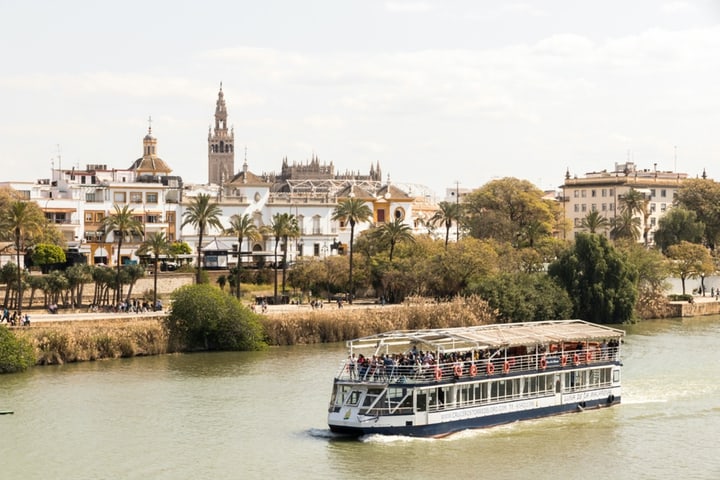
Perhaps you didn’t know, but in Seville the Guadalquivir is navigable! Every day from the Estación Marítima Torre del Oro, right opposite the famous tower, one-hour boat tours depart which, with guided commentary, allow you to see parts of the city from a slightly different perspective than usual. If you like the idea of viewing from the boat the palaces and monuments of El Arenal, the Palacio de San Telmo, the bridge and the riverside houses of Triana, the pavilions from Expo 92 and other sights, take a look at the link below.
Tickets for the Guadalquivir cruise
Things to do in Seville with children
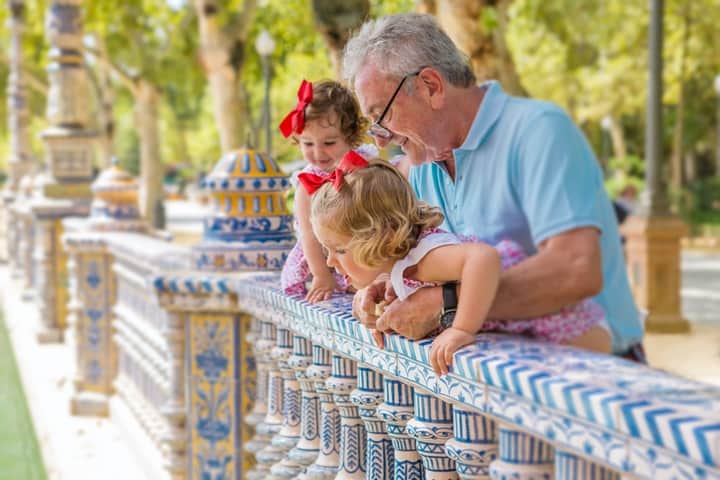
In my view, a city like Seville is ideal for visiting with children. Of course, if — as is only natural — your kids don’t have the patience for museums, houses and palaces you may have to forego a few things, but usually the wonderful furnishings and Moorish architecture of Seville’s monuments have a magnetic, fairytale charm even for the little ones, not to mention the ever-present patios and gardens, with their maze-like paths, flower-adorned arcades and water features.
Take the little ones for a walk in the María Luisa Park, or go exploring the Barrio Santa Cruz, which with its tangle of narrow, winding streets can be great fun if you play a bit with your imagination. Besides the boat trip along the canal in Plaza de España, the climb to the top of the Giralda via the ramps can be a nice adventure, as can a cruise on the Guadalquivir and a visit to Metropol Parasol, which may delight the more curious children.
If, on the other hand, you want to give the little ones some proper fun, as mentioned there’s the Isla Magica theme park and the Seville Aquarium, both very family-friendly. Finally, if your children are budding scientists, take them to the Museo de la Ciencia (Av. de María Luisa).
Free things to do in Seville
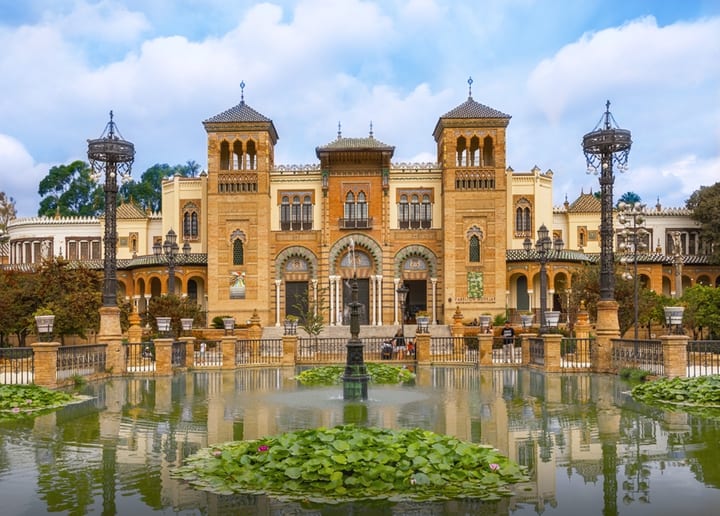
By consulting the individual monument pages you can already get an idea of which places of interest do not require an admission ticket. As you would expect, the list of free things to do in Seville includes the visits to the neighbourhoods, public parks and squares, but it’s worth remembering that, among other free monuments in Seville, are the Museo de Bellas Artes, the Antigua Fabrica de Tabacos, the Archivo de las Indias, the Museo de Artes y Costumbres Populares, the Archaeological Museum and some churches.
Many of the main monuments have some days or certain times when admission is free. It is almost always on Mondays. Below you’ll find a short list, but bear in mind that in these cases you need to book or you will usually have to queue a little longer than during the normal opening hours:
- Cathedral: Monday to Friday from 2:00 pm to 3:00 pm
- Alcázar: Mondays from 6:00 pm to 7:00 pm from April to September; Mondays from 4:00 pm to 5:00 pm from October to March
- Casa de Pilatos: Mondays from 3:00 pm to 7:00 pm
- Hospital de los Venerables: Mondays from 4:00 pm to 8:00 pm
- Palacio de las Dueñas: Mondays from 4:00 pm to 6:00 pm
- Palacio de Lebrija: Fridays at 10:00 am
- Plaza de Toros: Mondays from 3:00 pm to 7:00 pm
- Hospital de la Caridad: Sundays from 4:30 pm to 6:30 pm
What to do in Seville when it rains
Rain in Seville isn’t that common, but it can happen. If bad weather is forecast for one or more days during your stay in the city, I recommend focusing on the museums (not only the Museo de Bellas Artes, but also the Archaeological Museum and the Naval Museum in the Torre del Oro) and the churches that are open at those times. You can also plan a visit to the Alcazar and the other Moorish townhouses, but bear in mind that you might be depriving yourself of the chance to see their patios and gardens, and it’s not worth it.
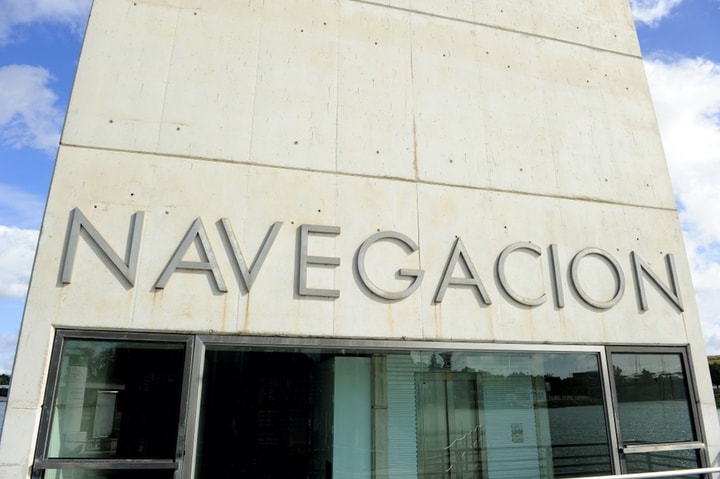
Finally, many of Seville’s cultural centres offer interesting temporary and permanent exhibitions. Not only the aforementioned Centro Andaluso di Arte Contemporánea, but also the Caixa Forum Sevilla and the Pabellón de la Navegación: all three buildings are located on the Isla de la Cartuja, where Expo ’92 was held.
Seville tourist cards and passes: are they worth buying?
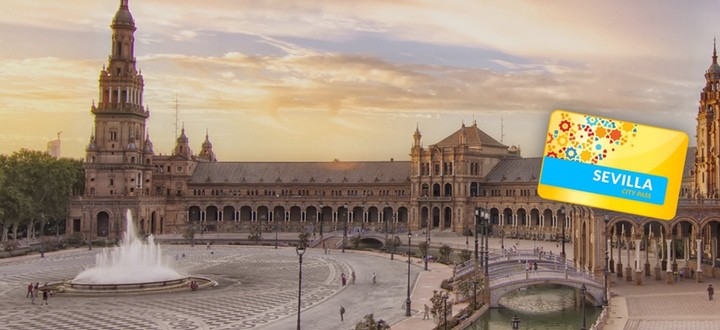
Like any other city in the world rich in cultural attractions and leisure activities, Seville also has its own tourist passes, which allow you to save money on admission to the main monuments and skip the queues at the entrance. My article on the Seville Card will help you to orient yourself better, but in the meantime below you’ll find a brief description with the purchase link for those that I consider the most interesting and good value:
Seville Super Combo
The Seville Super Combo is a product very popular with tourists, because as a single package it offers the best of the city (Alcazar and Cathedral), including skip-the-line access. It also includes an app with an audio guide covering over 100 points of interest in the city. Finally, buying this pass gives you a 10% discount on any Seville-related attraction or activity purchased on the site.
Here’s what’s included:
- Fast-track ticket to the Alcázar with audio guide
- Fast-track ticket to Seville Cathedral and the Giralda with audio guide
- City audio guide app
- 10% discount on another attraction
For more information and to purchase the Super Seville Combi, click the button below
The Seville Pass
Another excellent product I recommend is The Seville Pass: a 100% mobile card (there’s no need to print it or collect tickets on site) offered, like the previous pass, by the reliable Tiqets website. It’s very similar to the Seville Super Combi and includes everything the previous pass grants access to, but it also adds the ticket for the Alsa Seville hop-on hop-off tourist bus.
Here’s what it includes:
- Fast-track ticket to the Alcázar with audio guide
- Fast-track ticket to Seville Cathedral and the Giralda with audio guide
- 48-hour hop-on hop-off bus ticket
- 10% discount code for another attraction
Seville Pass
The agency Viator also offers a tourist card, the Sevilla Pass. It costs more than the two previous passes, but in addition to entry to the main attractions it also includes a flamenco show, making your visit to the Andalusian capital even more beautiful and unforgettable.
Here’s what’s included:
- Fast-track ticket to the Alcázar with audio guide
- Fast-track ticket to Seville Cathedral and the Giralda with audio guide
- Flamenco show at the Museo del Baile Flamenco
Best places near Seville
If you have browsed the site a little, you will have realised that, for me, the best way to discover Andalusia is to take a road trip through all the region’s main cities, without neglecting its smaller towns, areas of natural interest, beaches and hidden gems in this wonderful corner of Spain.
Clearly, not everyone has the time or resources to do this, and it may therefore happen that you limit your trip to the city of Seville, which is Andalusia’s best-known and best-connected destination.
In any case, it’s not uncommon to take day trips to the surrounding area from Seville, either by public transport, by hire car or with organised tours. We’ve covered this in our article on day trips from Seville, but below I summarise the most common destinations around Seville:
Carmona
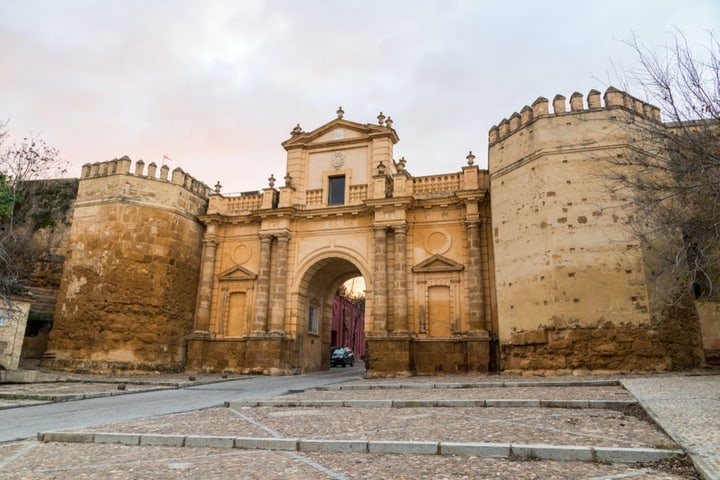
The historical and cultural value of the small town of Carmona is invaluable. The so‑called “Morning Star of Europe” (El Lucero de Europa) is regarded as one of the oldest towns on our continent, and visiting its historic centre and the area’s archaeological remains you will soon understand why. Its proximity to Seville makes it easy to visit on a day trip, but to find out how to get there, what to see and how to organise your visit I recommend reading my dedicated article on Carmona.
Italica
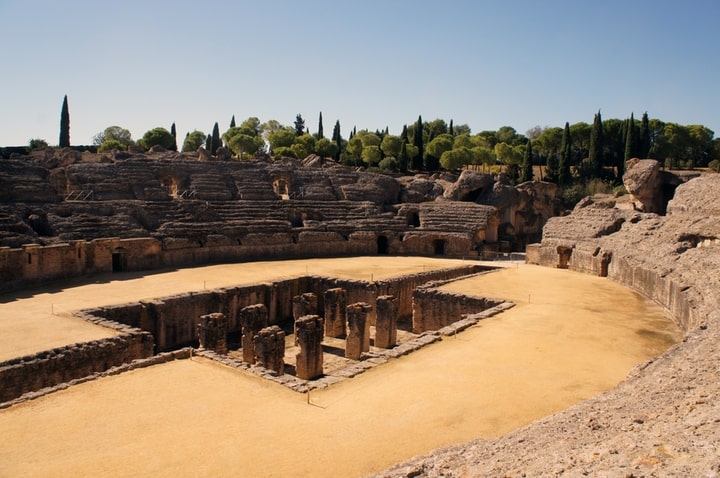
Near the small town of Santiponce, around twenty minutes from Seville, lie the remains of the ancient Roman city of Italica. Since it is easily reached by bus from Seville, Italica is one of the best excursions to take even if you have only half a day available. What to see? Game of Thrones fans already know, while everyone else can read our dedicated article to Italica.
Jerez de la Frontera
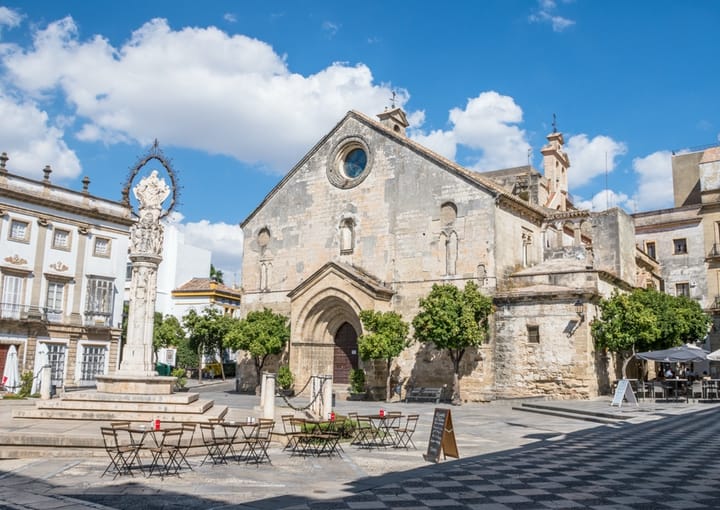
Although located in the province of Cádiz, Jerez de la Frontera is just 60 minutes from Seville, making it an easy day trip. There are plenty of attractions in this ancient city: not only its numerous town-centre churches, the Moorish quarter and the Alcázar, but also the famous Sherry bodegas, the renowned local wine. For more information, read my dedicated article on Jerez de la Frontera.
Córdoba
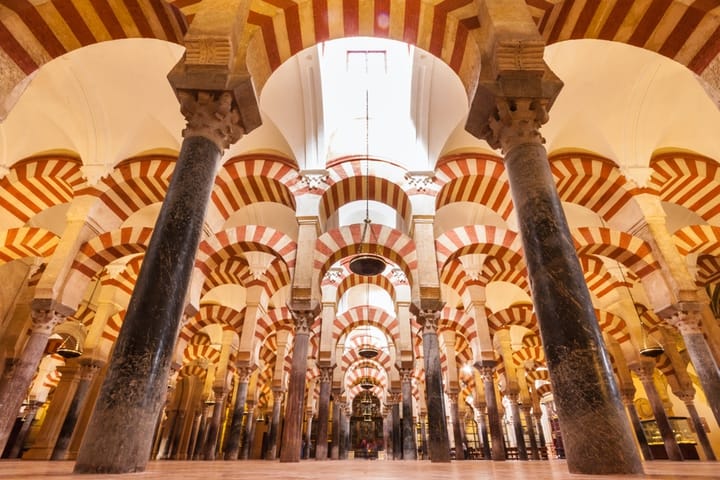
Visiting Cordoba on a day trip from Seville is possible, although I tend to advise against it. Why? Is it perhaps because Cordoba isn’t worth it? No, for the opposite reason! Cordoba is beautiful and underrated, and it deserves at least one overnight stay to be seen properly.
But if that isn’t possible, it’s worth planning carefully and getting there by train or car, limiting yourself to the main sights, above all the Mezquita, spectacular monument that ranks among Andalusia’s top five. To learn more about Cordoba, read the section we’ve dedicated to it. Another option to make the most of your time is to join an organised tour. Below is a link for more information.
Day trip from Seville to Córdoba with an English-speaking guide
Cadiz
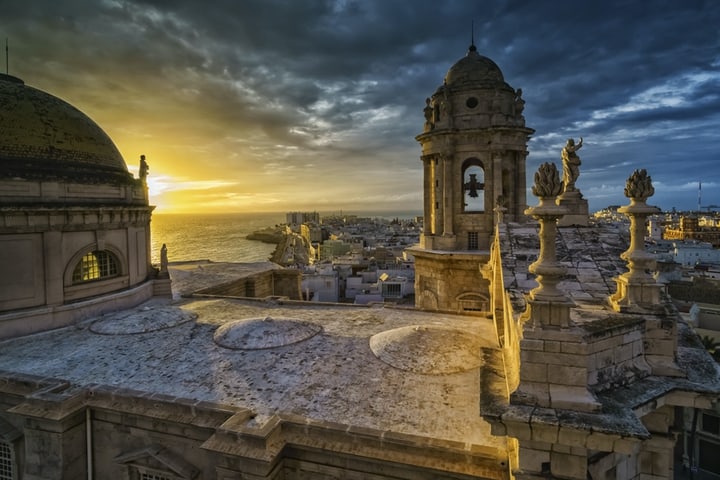
Same goes for Córdoba: Cadiz is not a minor city or a small pueblo for a whistle‑stop visit, but a destination of exceptional historical, artistic, cultural and architectural interest. However, since the distance from Seville is not great, if you have a day or so to spare you can also choose to visit it rather superficially. Here is our section dedicated to Cadiz.
Guided tours Seville
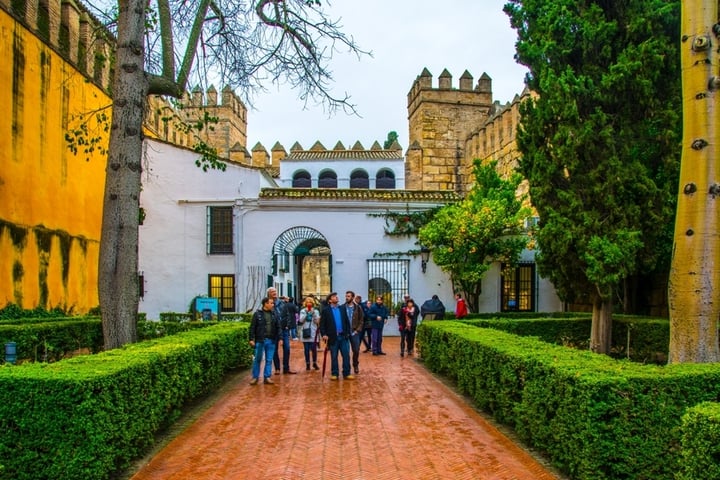
With such a detailed guide, you should have no trouble organising a visit to Seville on your own. However, if you prefer to rely on an organised tour, below you will find one of GetYourGuide’s most popular and best-value guided tours of Seville. The price includes the guided tour as well as entrance tickets to the Alcázar and the Cathedral, including the Giralda.
Where to stay in Seville
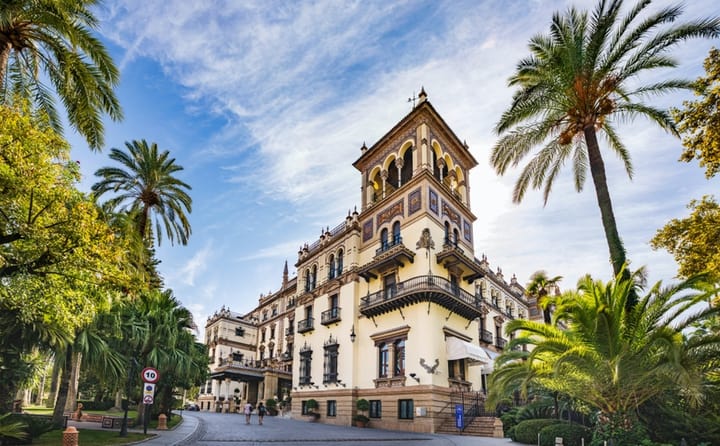
One very important decision is undoubtedly the best neighbourhood to stay in Seville. As you’ve seen, many points of interest lie in the city centre — the Centro neighbourhood itself, El Arenal and the Barrio Santa Cruz — where traditional Andalusian‑style hotels, apartments and hostales are plentiful. Of course, you shouldn’t overlook the option to stay in the local neighbourhoods, where you can also find accommodation at somewhat more affordable prices.
At the link below you’ll find all my tips for accommodation in Seville, with a description of the neighbourhoods and suggestions for the most beautiful, charming and good-value places to stay.
Tips on where to stay in Seville
Events in Seville
There are many traditional festivals in Seville, but those I have listed below are certainly the most popular with both tourists and locals.
Semana Santa and Feria de Abril in Seville
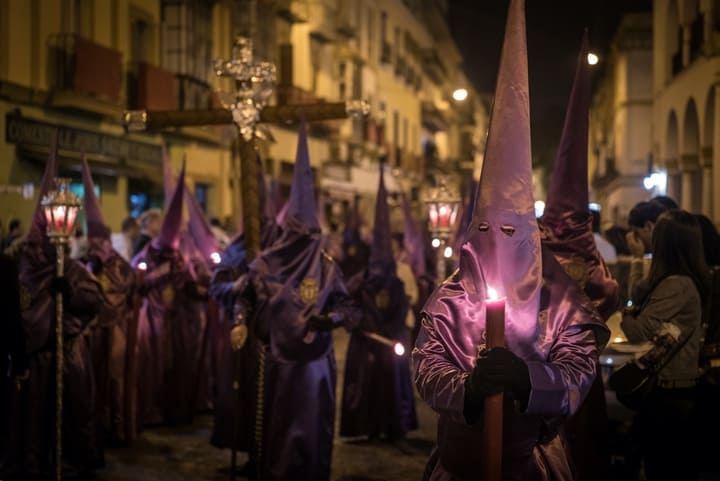
I spring months are a period of great activity in Seville, both for the city’s inhabitants and for travellers. Not only here, but in many towns across Andalusia the central moment of the liturgical year is precisely the Semana Santa. During this period hotels charge their highest rates, because the celebrations of Easter in Seville are famous throughout Spain and beyond for their devotional intensity, the spectacular nature of the processions and the expressions of faith of Sevillians.
Just as the Easter celebrations come to an end, Sevillians prepare for the most important secular festival of the year: the Feria de Abril. If you want an unforgettable experience, I recommend spending at least one day in Seville during the Feria, because you’ll have the chance to see with your own eyes the wild, infectious enthusiasm of the Andalusians who, when it comes to partying, are second to none. Here is our article dedicated to the Seville’s Feria de Abril.
Seville at Christmas and New Year
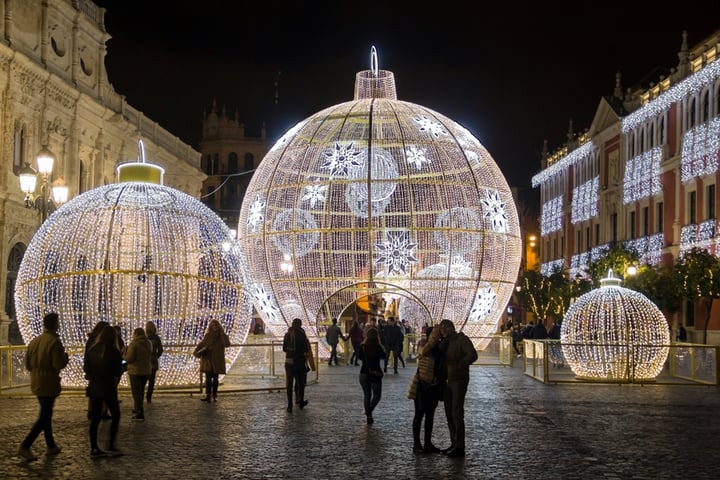
Although this city isn’t exactly the most Christmassy in Europe, there are a few things you shouldn’t miss if you find yourself in Seville for Christmas and New Year:
- Admire Calle Sierpes and the other illuminated streets of the city centre.
- Visit the Cathedral’s nativity scene.
- Browse the stalls at the various Christmas markets: you will find some on Avenida de la Constitución and Plaza del Triunfo, in Plaza de la Encarnación and at Alameda de Hércules.
- Eat grapes and watch the campanada — the 12 chimes of the bells — in the square at midnight on New Year’s Eve. In Seville, people usually gather in Plaza Nueva.
- Take part in the Cabalgata de Reyes Magos on 5 January, the eve of Epiphany.
Seville public transport
The best way to get around Seville is on foot. The beauty of visiting Seville lies precisely in exploring the city-centre neighbourhoods and beyond: it’s worth reaching the various attractions with short walks, as the distances are never too great and the city’s atmosphere always has a surprise in store, even when you least expect it.
Using a car is strictly forbidden. Use it only when it’s time to leave the city and head elsewhere (here’s our article on car hire in Seville). If you want to visit the city centre and the popular neighbourhoods of Triana and Macarena it will be of no use: you’ll have problems with parking and restricted traffic zones and will probably get lost in the maze of narrow, arabesque streets.
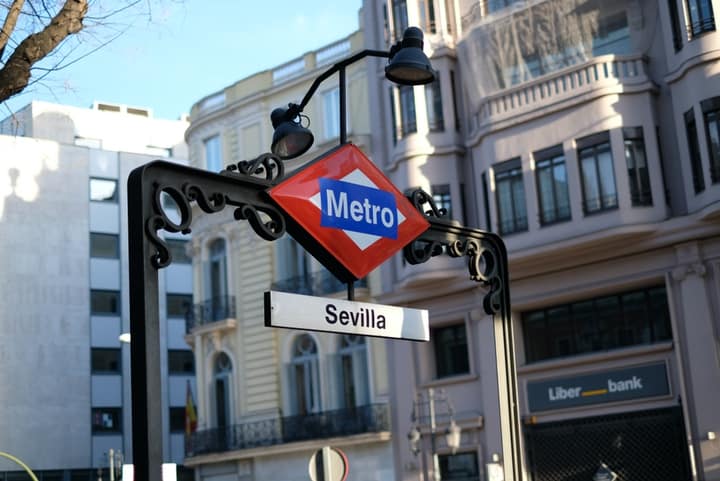
There is the Seville Metro, to which we have devoted an entire article. However, this means of transport is not very useful for tourist purposes, unless you have booked accommodation outside the centre. In this paragraph I have listed the reasons why the metro can be useful.
Using the bus in Seville is, however, a good option, especially for reaching the neighbourhoods and areas of interest farther from the centre: Barrio Triana, Barrio Macarena, Alameda de Hercules, Nervión (there’s the stadium!), Isla de la Cartuja and Italica are just a few examples. At the link below you can find information and buy the Tarjeta Turistica for Seville transport, valid for 3 days on all buses, trams and the metro. Very useful if you plan to use them extensively!
To travel from the airport to the centre or for any other requirement, in addition to other transport options, for greater convenience you can also use a transfer service. More info below.
Best time to visit Seville
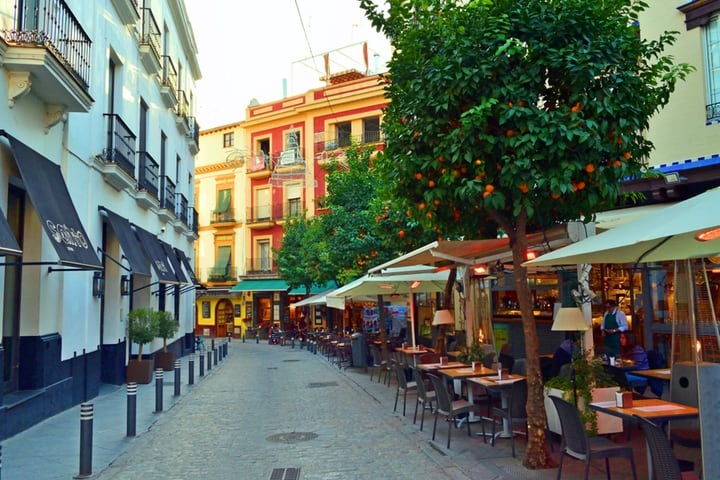
Seville is beautiful and fairly easy to visit, but for your experience to be truly enjoyable you need to know what the best time of year is. Although it is the most common season for holidays, I must tell you that in theory summer is not the most advisable, because the heat in Seville can be really intense; that said, with a few precautions and appropriate organisation of your visits, it can be done.
Winter, on the other hand, is by no means harsh and is worth considering if you want to visit a lovely Spanish city without freezing. The shoulder seasons remain ideal, but to find out more, read our article on when to go to Seville.
