Jaén is known as the world capital of olive oil: it is surrounded by endless-looking olive groves, and it is the north-easternmost province of Andalusia. Among the provincial capitals of Andalusia, it is probably the least visited by those making their first trip to this Spanish region. And yet, it is a city capable of surprising.
In addition to its excellent olive oil and the culinary specialities associated with it, Jaén has a long history behind it, which has left behind several traces just waiting to be discovered. From a centre for Arab caravans and a border stronghold between Muslim and Castilian territories, it is now a lively university town, peaceful but by no means dull. Let’s find out together why you should include it in your next Andalusian itinerary.
Contents
Jaén: what to see? The best attractions in the city
There are plenty of things to see in Jaén, but some are truly unmissable. Below, let’s look at the monuments and attractions you absolutely must not miss when visiting the city, which you can also find on this map.
Castillo de Santa Catalina and Mirador de la Cruz
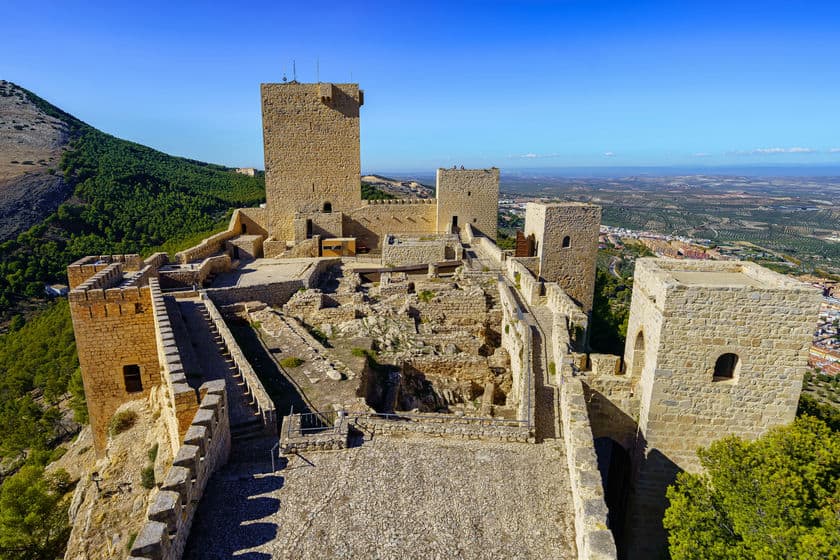
Before delving into the city tour, let’s pause to look at the castle that towers above it and is also one of its best-known attractions. I’m talking about the Castillo de Santa Catalina, an 8th-century Moorish fortress that was later enlarged and improved by Abdallah ibn al-Ahmar (the ruler of Granada who, incidentally, ordered the construction of the Alhambra!). At that time in history, Jaén (then called Jayyan) was a crucial stopping point for caravans travelling between Granada and Madrid: travellers were probably housed in this castle.
After the city was conquered by King Ferdinand III of Castile, but especially under the reigns of Alfonso X and Ferdinand IV (therefore in the second half of the 13th century), the castle was substantially remodelled. Many changes were also made during the 17th century, as well as in the 19th century, when the Napoleonic forces used the castle for gunpowder stores, stables, a hospital and other facilities for the army.
Today the fortress has five towers and a keep, which is among the newer parts of the structure. The oldest part is at the western end of the hill, but very little remains of it: a substantial section disappeared for good when the parador was built (the large luxury accommodation complex). In one of the towers there is the Chapel of Saint Catherine of Alexandria, to whom the castle is dedicated.
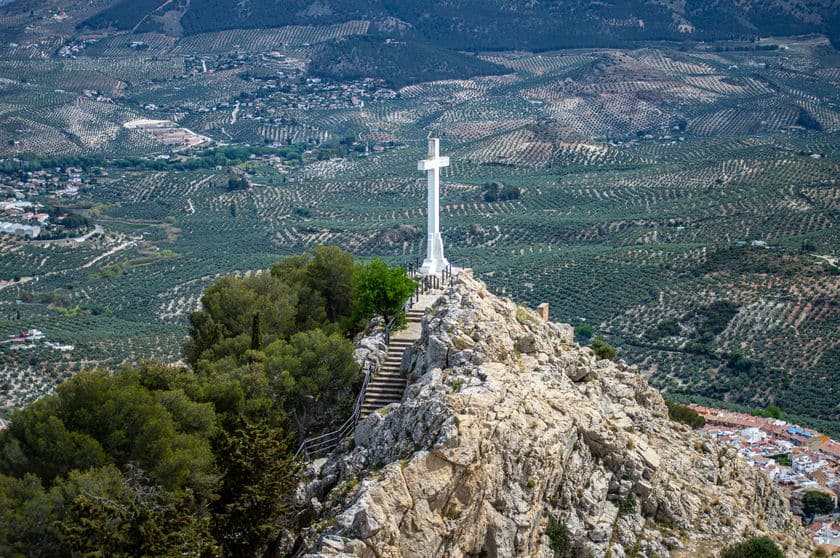
At the eastern end of the castle complex, right overlooking the city, there is a large cross rising above a rocky knoll. It can be reached on foot in just a few minutes from the castle, and beneath it there is a panoramic terrace — the Mirador de la Cruz, of course — which is absolutely worth lingering at.
Cathedral of the Assumption of the Virgin of Jaén
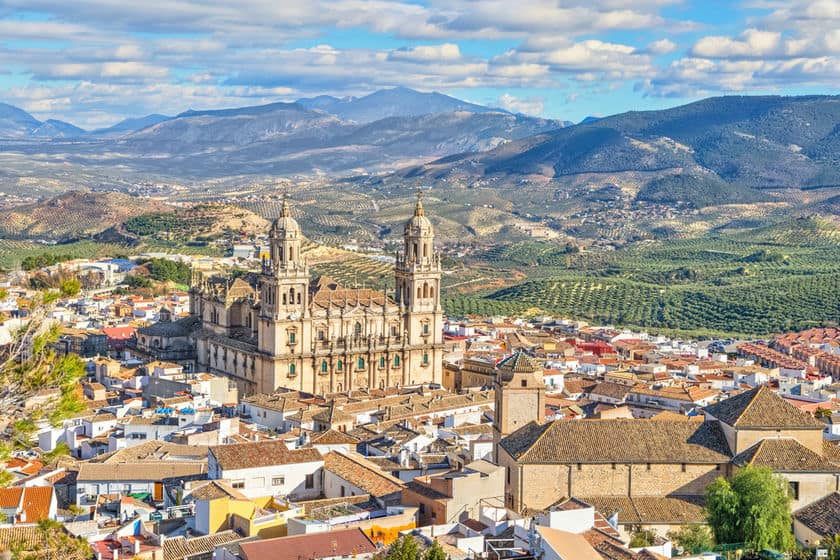
The cathedral of Jaén, specifically Catedral de la Asunción de la Virgen, is a church you simply cannot miss. And I don’t just mean that it is absolutely worth visiting, but also that it is so vast and imposing that it is impossible not to notice it as soon as you arrive in the city. It is one of the most beautiful churches in all Andalusia and impresses with its size in relation to the city where it stands. 100 metres long and 70 metres wide, with its two tall towers rising above the city centre and its richly decorated Baroque façade, it was built in several phases between 1249 and 1724.
Among the most important parts are the late Gothic choir (one of the largest in Spain!) and especially the chapter house and the sacristy, designed by Andrés de Vandelvira and regarded as a true masterpiece of the Spanish Renaissance. Vandelvira’s designs were also used as a model for various Latin American cathedrals, including those in Lima and Cuzco in Peru, Bogotá in Colombia, Sucre in Bolivia, Guatemala City in Guatemala, Panama City in Panama, Havana in Cuba and various cathedrals in Mexico (Mexico City, Mérida, Puebla, Oaxaca, Morelia and Guadalajara).
From a religious point of view, it is known for preserving the relic of the Holy Face, or the Veil of Veronica. It is said that the cloth used by Veronica to wipe Jesus’ face during the Passion, and on which Christ’s image was left imprinted, has survived to the present day and is kept precisely here. To be more exact, there are also other places where the same relic is said to be preserved – St Peter’s in the Vatican, the Hofburg Palace in Vienna, the Santa Faz monastery in Alicante, the church of San Bartolomeo degli Armeni in Genoa and the Basilica of the Holy Face in Manoppello (Pescara) – so it is difficult to say which is the authentic one and whether any of them really is. In any case, the veil displayed in Jaén, visible every Friday to the faithful who go to the cathedral, is particularly venerated.
The cathedral is open to visitors at the following times:
- From Monday to Friday: from 10 am to 1:30 pm and from 4:30 pm to 6:30 pm
- Saturday: from 10 am to 6:30 pm
- Sunday: from 2 pm to 6:30 pm
The entrance ticket costs €10 (reduced to €8 for young people aged 13 to 25 and for people with disabilities; €9 for those over 65; free for children up to 12 years old). It is also possible to take a guided tour; here are the main options available:
Minor Basilica of Saint Ildefonsus
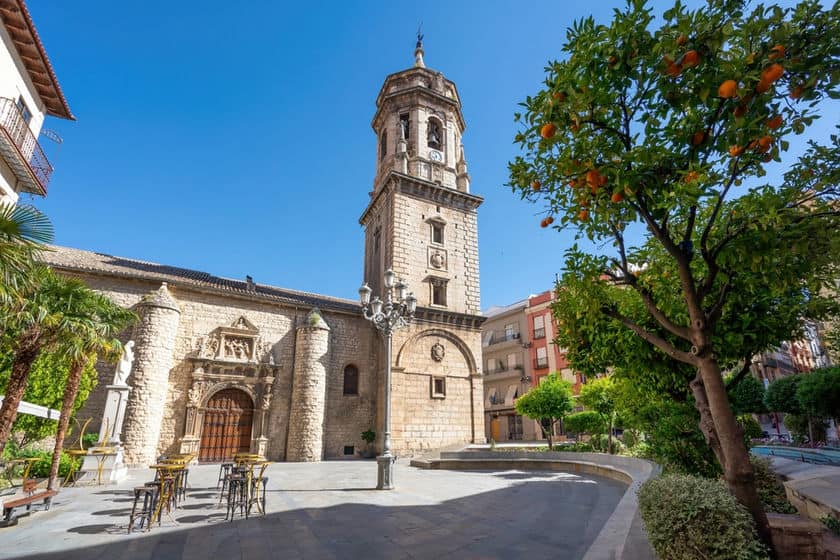
The Minor Basilica of the Sacred Parish Church of San Ildefonso, or more simply San Ildefonso Basilica, is another historic church in Jaén, erected in 1248 (a year before work on the cathedral began) as a small chapel, in what was then a suburb outside the walls of the Arab city. During the 15th century it became an important Marian sanctuary and, from that period onwards, the small chapel was gradually enlarged until it became a large and majestic church. In 2010 Pope Benedict XVI elevated it to the rank of Minor Basilica (a papal title reserved for only around 1,500 churches worldwide: that may sound like a lot, but considering that many of them are cathedrals, it is not easy for a non-cathedral church to have this title).
From the outside it looks more like a fortress than a church, with various buttresses in the shape of round turrets, as well as the two square towers on either side of the façade, which are markedly different in size. Inside, however, it has elegant late Gothic architecture, while the altarpiece of the main altar is in eighteenth-century Baroque style. The most important place inside the church is, of course, the chapel where the statue of the Virgin of the Chapel is kept, venerated for centuries and co-patron of the city together with Saint Catherine of Alexandria.
Admission is free and the church is open to visitors at the following times:
- Monday to Saturday: 8:30 am to 12 noon and 5:30 pm to 8:45 pm
- NOTE: On Fridays, the morning opening period ends earlier, at 11:00 am.
- Sunday: from 8:30 to 13:45 and from 18:30 to 20:45
Church of La Magdalena
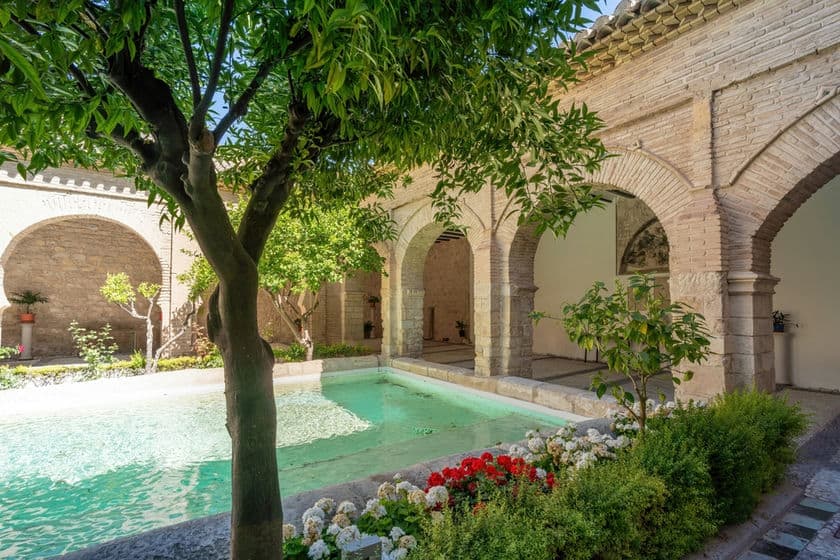
A third church not to miss when visiting Jaén is Iglesia de Santa María Magdalena, or more simply the church of the Magdalene, which is also the oldest church in the city. It dates all the way back to the year 825, when it was commissioned by Abderramán III as a mosque, then converted into a Catholic church and remodelled in Gothic style during the 1500s. The bell tower was in fact the old minaret, later renovated.
Among the architectural features that do not go unnoticed is the main entrance: a double door commissioned in 1555 by Bishop Diego Tavera Ponce de León, framed by two columns and a series of stone decorations, which stand out sharply from the bare wall surrounding it. But the most fascinating part is actually hidden within the walls of the complex. I’m referring to the mosque’s ablution courtyard, which features a large rectangular basin surrounded by a colonnade.
The Malena Lizard
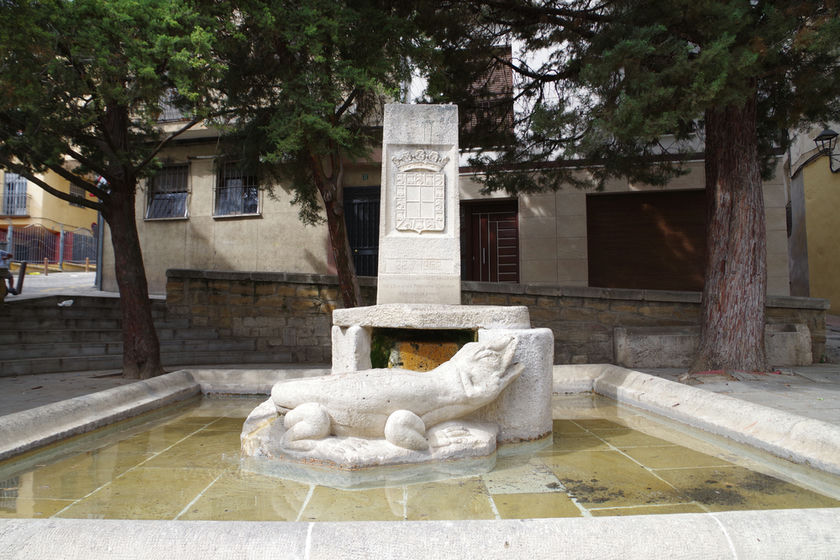
A few steps from the aforementioned church is the Raudal de la Magdalena: a water source of Roman origin, easily recognisable thanks to the stone statue of a large lizard. This monument is linked to a famous local legend, according to which the spring waters were infested by a huge and fierce lizard, hence the name Lagarto de la Malena (or de la Magdalena). The beast terrorised the inhabitants of Jaén and devoured anyone who approached the spring. A myth that certainly echoes the dragon myth found in many countries in different forms.
The most widely accepted ending of the legend tells that a prisoner condemned to death offered to fight the lizard in exchange for his freedom, asking to be allowed to use a horse, a sack of warm bread and a sack of gunpowder. He left a trail of bread near the beast’s lair to lure it out, with it following him as he fled on horseback: in Plaza de San Ildefonso he threw the sack of gunpowder in place of the last loaf, blowing up the animal.
Jaén’s lizard is now a symbol of the city and has also influenced local traditions. For example, every summer the festividad del Lagarto de la Magdalena is held, with various activities and cultural initiatives. Among the curiosities, a drink called “lizard’s blood” is also prepared, which is a kind of special mulled wine.
Arab baths of the Palacio de Villardompardo
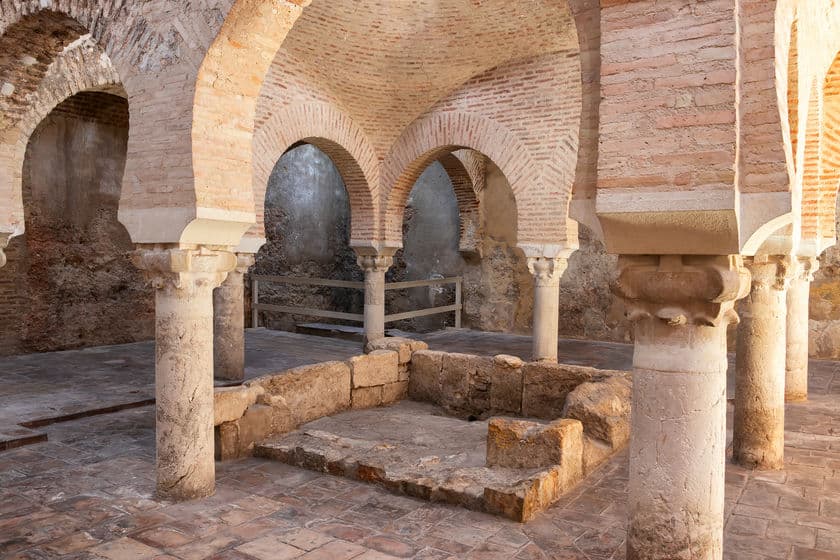
Among the city’s most historic and famous buildings is the Palacio de Villardompardo, which houses the Arab baths of Jaén, known as the Baño del Niño. Although they are hidden away in the palace cellars and are perhaps less famous than those in other cities, they are the largest Arab baths in Europe! Measuring a full 450 sq m, they date back to the year 1002 and were then renovated in the 12th century. Unlike other baños arabes, after the conquest by the Catholic King Ferdinand III, they continued to be used for years in their original thermal-baths function.
Only between the 14th and 15th centuries were they decommissioned as thermal baths, to be converted into tanneries for leather. Then, at the end of the 16th century, they were filled with rubble to become the foundations of the palace built above them. They thus remained hidden until the early 20th century. In 1913 the ancient thermal baths were rediscovered by the painter Enrique Romero de Torres, while he was working on the creation of the Monumental Catalogue of Jaén. In 1931 the building was declared a National Monument and five years later restoration work began, which was not completed until 1984 because it was interrupted by the Spanish Civil War.
Admission is free and these are the opening hours (entry is permitted up to one hour before closing):
- Monday: closed
- From Tuesday to Saturday: from 9 am to 9 pm
- Sunday: 9 am to 3 pm
- Closed on: 1 and 6 January; 11 June; 15 August; 25 November; 24, 25 and 31 December
It is also possible to take part in a Jaén tour that includes a visit to the Arab baths.
Museo Íbero and Museo de Jaén
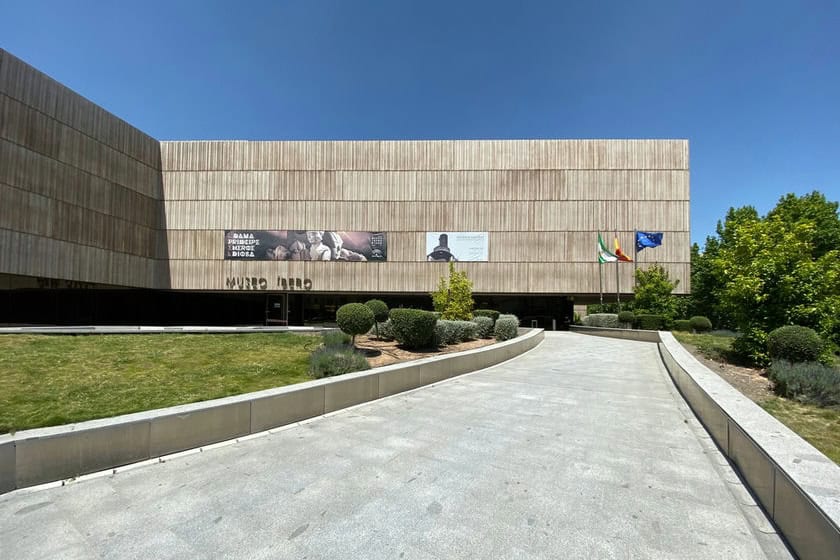
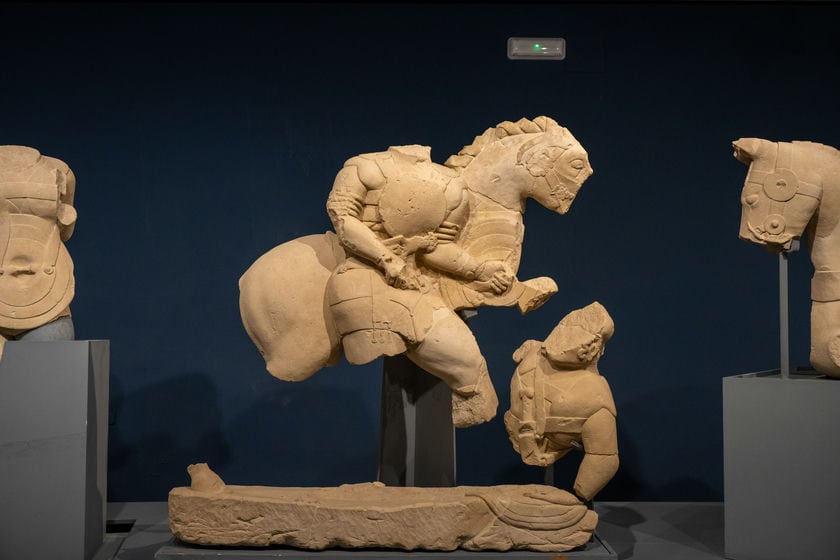
The city’s two most important museums are the Museo Íbero and the Museo de Jaén. The latter was created from the earlier Museo de Pintura of 1846, which became the Museo Provincial de Bellas Artes in 1914 and joined the Museo Arqueológico in 1969. So today it is, in effect, made up of two separate sections: one devoted to fine art and the other to archaeology.
In the archaeology section, you can discover the history of this territory from prehistoric times onwards, with numerous artefacts from various periods, including the early Christian sarcophagus of Martos and an evocative 1:1-scale reproduction of the funerary chamber of Toya, a 4th-century BC hypogeum. In the fine art section, meanwhile, there are works from the 13th to the 20th century by numerous painters, mainly Spanish.
The Iberian Museum, on the other hand, was inaugurated in 2017 and houses various art collections, mainly from the Museo de Jaén. It has a permanent exhibition called “The Lady, the Prince, the Hero and the Goddess”, which treats these four figures as symbolic characters. Various temporary exhibitions are then organised there.
Both museums are free for citizens of the European Union (€1.50 for others), and these are the opening hours for both:
- From 16 June to 15 September:
- Monday: closed (open on Mondays preceding a public holiday)
- Tuesday to Sunday and public holidays: 9:00 am–3:00 pm
- From 16 September to 15 June:
- Monday: closed (open on Mondays preceding a public holiday, following public holiday opening hours)
- Tuesday to Saturday: 9:00 am–9:00 pm
- Sunday and public holidays: 9:00 am–3:00 pm
If you wish, you can take a paid guided tour of both museums.
Air-raid shelter
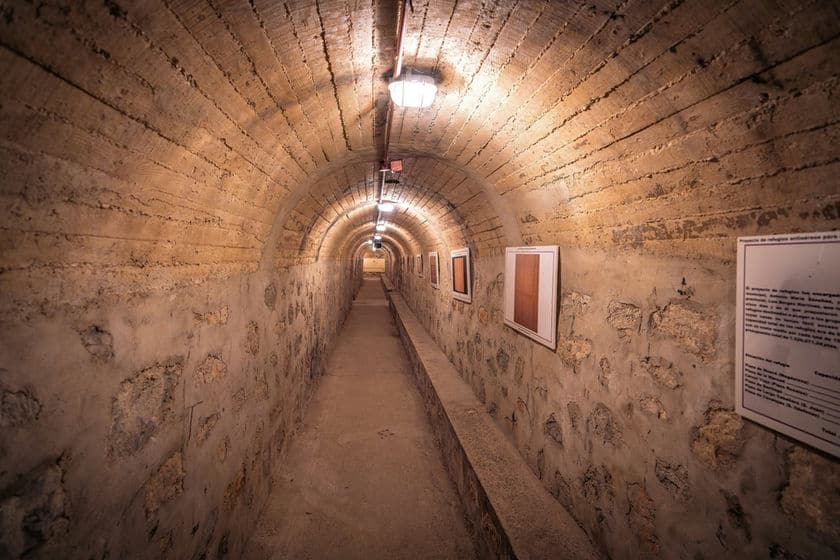
Jaén also holds underground surprises. This is the case of the Refugio Antiaéreo de Santiago, the shelter built beneath Plaza de Santiago to protect people from bombing during the Spanish Civil War. Admission is free, and visiting the air raid shelter can be a way to understand a little more about this sad chapter in history experienced by Spain in the 1930s. There is also a guided tour that includes the air raid shelter along with other iconic places in the city.
Where to stay in Jaén
Although it is not as touristy as other Andalusian cities, in Jaén you can find every type of accommodation: from luxury hotels to more basic lodgings. On this map you can get an idea of the hotels available, but below I recommend a few of them.
- Parador de Jaén: let’s start with the city’s most famous hotel, this 4-star property built within the Castillo de Santa Catalina complex, where you can stay and take a journey back in time. It is worth it above all for its location, but it also has facilities that make it an excellent hotel, including a swimming pool, an in-house restaurant and free parking.
- Hotel Condestable Iranzo: un altro 4 stelle, situato però in centro città, molto bello e dotato di una piscina coperta.
- Hostal Restaurante EstaciÓN: among the more economical options, this is a very basic 2-star property, but perfect for anyone needing a night without spending too much. It has free parking and is just a stone’s throw from the station.
- Albergue Inturjoven Jaén: here, finally, is a hostel for young travellers looking for a bed in a dormitory room (though there are also double rooms). An ideal solution for those wanting to save money, but also for those who want to meet other travellers during their stay.
Where to eat in Jaén
Jaén is full of places to eat, and you’ll be spoilt for choice. But if you want to play it safe, here are a few suggestions for good restaurants.
- Casa Domingo (location): classic Andalusian tavern, with mid-low prices and generous portions. Perfect for those looking for a simple setting, a peaceful atmosphere and good traditional dishes.
- Mesón El “Treinta” (location): a typical Andalusian place in a somewhat out-of-the-way location, with really good dishes and excellent value for money.
- Panaceite Centro (location): as the name of the place, “Paneolio”, suggests, olive oil-based dishes are the speciality. It is a budget-friendly spot that offers generous tapas at low prices.
Things to do near Jaén
Depending on the itinerary you plan to follow, it may also be convenient to stop off in some of the villages near Jaén during your trip, before or after visiting the city. There are a few that are really worth a stop.
La Guardia de Jaén
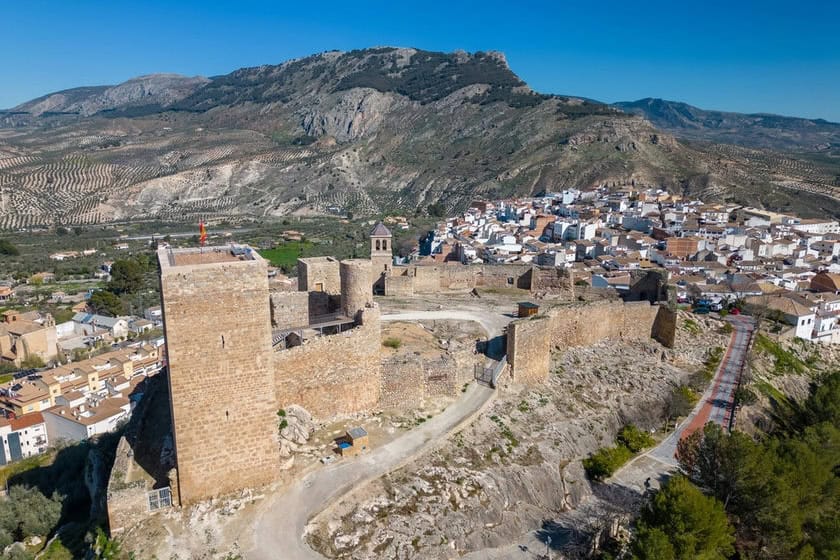
La Guardia de Jaén is located to the south-east of the city, along the road leading towards Granada, and the name of this town also hints at its historical significance. It is in fact in a strategic position atop a hill, which made it an excellent observation point. What is especially worth a visit is its Islamic-era castle, later converted into a defensive bastion facing the border with the territory of Granada. It was then partly destroyed by Napoleon’s troops in 1812, but today it has been restored and opened to visitors. Regardless of an interior visit, it is very picturesque because of the position in which it stands.
Torredonjimeno
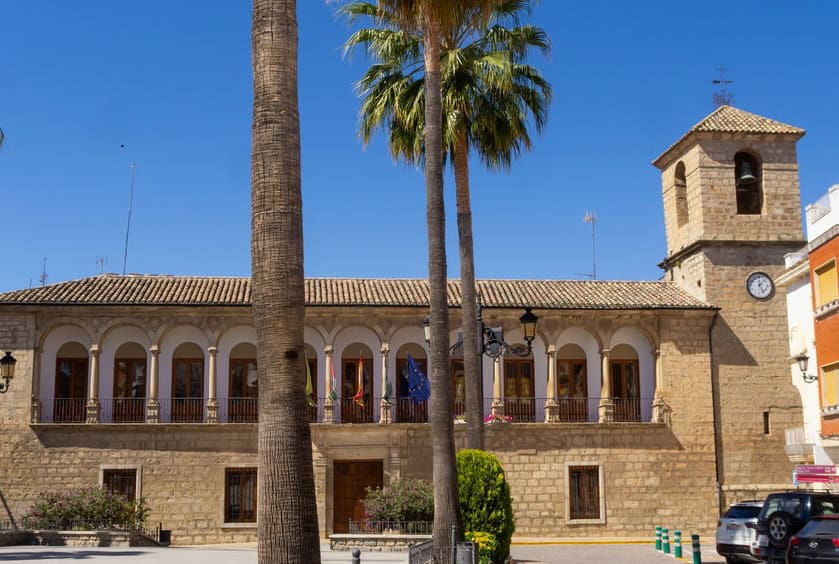
Another town that deserves a stop in the vicinity of Jaén is Torredonjimeno. It lies along the road between Jaén and Córdoba, and if you are travelling between these two cities I strongly recommend making a stop there. Among the must-see places are the historic town hall palace, dating back to the 1600s, and the castle, built between the end of the 11th and the beginning of the 12th century by the Arabs, as a fortress to protect the farmers and livestock breeders of the area, who were at risk from both internal conflicts and the advance of the Christian armies. The Castillo de Torredonjimeno underwent major architectural changes in the mid-13th century, becoming rectangular in plan and gaining circular towers; the outer defensive wall came a little later.
A part of the fortress was demolished under Charles V, who in 1526 authorised the use of the stones from the walls to build the church of Santa Maria. Once it was no longer used for military purposes, the castle was transformed into a noble residence by the Guzmán family, who also added two courtyards and a series of embellishments and decorations in Mudéjar style. Further demolitions were carried out during the 18th century and only in the second half of the 20th century was it transferred to the municipality and restored to become public property. Today the castle houses the Visigoth treasure interpretation centre, which was discovered by chance in the early 1900s and is considered the second most important Visigothic heritage site on the Iberian Peninsula after that of Guarrazar (near Toledo).
Green olive route
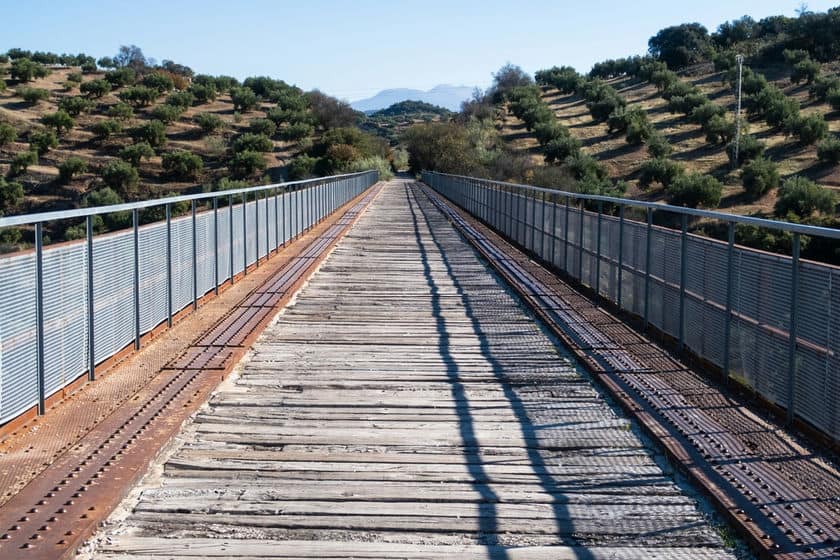
The Via verde del aceite (Green Olive Route) is a 128 km (79,5 miles) cycling route that connects Jaén to Puente Genil, built on one of the old railway lines once used to transport olive oil from this region to other parts of Spain. The railway service closed in 1985 and in the years that followed its conversion into a tourist route was considered. Today it is almost entirely unpaved, punctuated by 13 iron viaducts dating back to the 1800s. Travelling along it, in whole or in part, by bike, you are immersed in a fascinating landscape and pass through several small, characterful villages. In Jaén there are several bike hire places, so if you have the time and inclination, you can devote a day or two to this iconic route.
Úbeda and Baeza
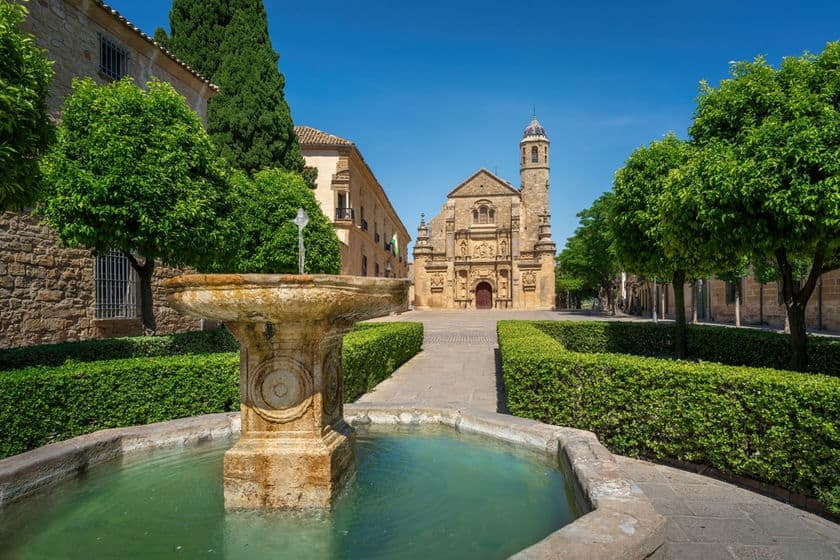
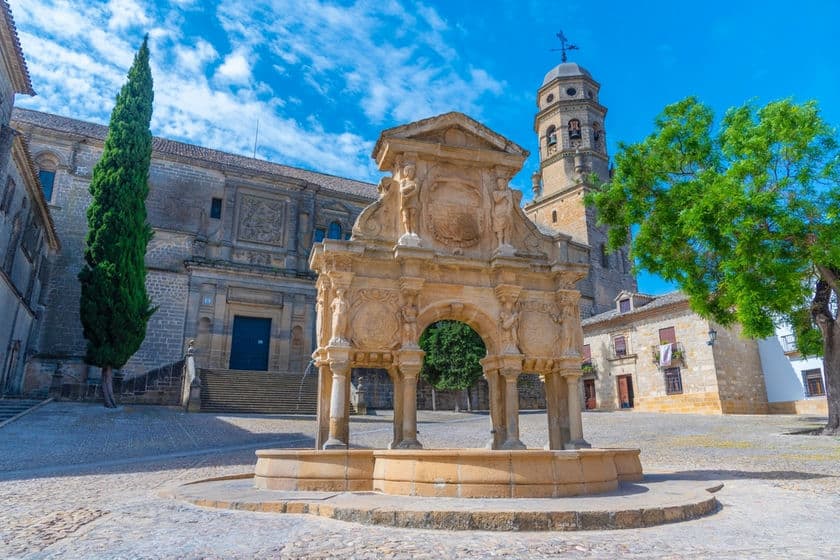
About 50 kilometres (31 miles) from Jaén there are two towns that have together been declared a UNESCO World Heritage Site for their historic centres, which excellently preserve the architecture of the Spanish Renaissance. I’m talking about Úbeda and Baeza, which can easily be visited in a day as they are a short distance from one another, yet both are truly rich in things to see. If you wish, it is also possible to join a guided tour from Jaén to visit both.
