Úbeda is among the prettiest small towns in north-eastern Andalusia and, together with nearby Baeza, forms a Renaissance monumental complex that has been recognised as a UNESCO World Heritage Site since 2003. Both towns in fact preserve Renaissance monuments in excellent condition and perhaps represent the best examples of the development of small urban centres after the Reconquista (the expulsion of the Arabs by the Catholic Kings of Castile). In this article, we look in particular at why visit Úbeda.
Contents
Where it is and how to get there
Úbeda is located in the north-east of Andalusia, about 60 km (37,2 miles) from Jaén, the provincial capital in which it lies. This is the location and it takes about 45 minutes from Jaén driving on the A-32 motorway. It takes instead an hour and a half from Granada and about 2 hours from Cordoba (the other two nearest major cities). From Jaén and Granada there are also guided day tours.
If you are travelling by public transport, the best option is to set off from Jaén, from where you can reach Úbeda by bus in an hour.
What to see in Úbeda
This small town is very lovely to visit and even just going for a walk there, admiring its historic buildings, is certainly well worth it. However, there are places that deserve to be explored in more depth and visited properly, so here are the main ones.
Plaza de Andalucía and Torre del Reloj
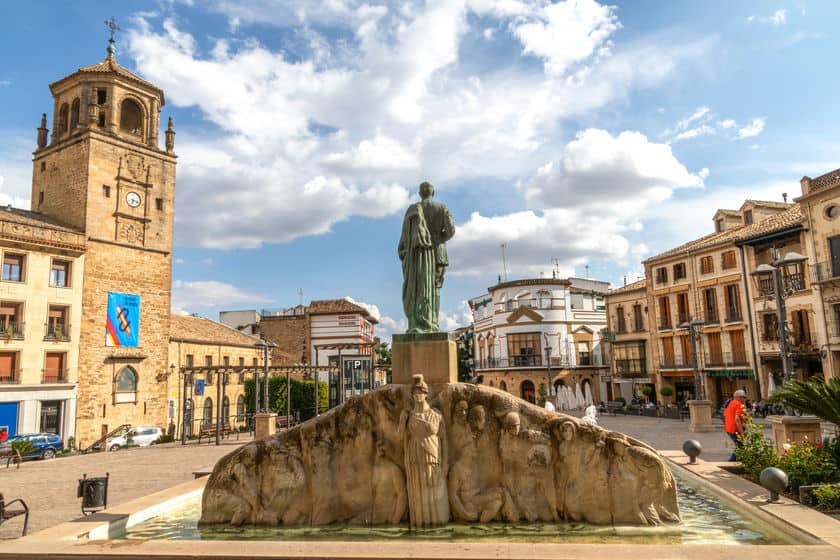
In my view, the perfect place to begin a visit to Úbeda is Plaza de Andalucía (also called Plaza del Reloj because the clock tower rises above the square). Although the most important historic buildings are around Plaza Vázquez de Molina, which I’ll talk about shortly, this square has an underground car park and is therefore an ideal starting point for anyone arriving by car who wants to explore the city from the very centre.
As soon as you leave the car park, you will find yourself facing the statue of General Leopoldo Saro Marin and, before leaving the square to go and explore the city, I recommend you pause for a moment at the Torre del Reloj. Built on the old Moorish walls, it was once the defensive tower of the Puerta de Toledo (the city’s north entrance, which no longer exists). Inside are the oldest bells in the city, and you can also climb the tower to admire the town from above. The ticket costs €2.50 for adults and €1.50 for children (free up to 8 years old).
Sacred Chapel of the Saviour
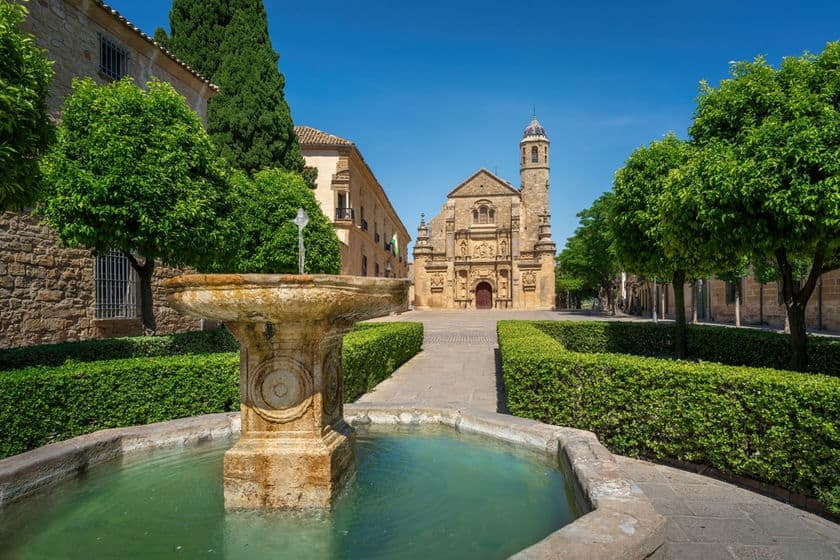
The Sacred Chapel of the Saviour of the World, or more simply the Sacred Chapel of the Saviour, is one of the religious buildings not to be missed on a visit to Úbeda. This is no ordinary church, but one of the most ambitious architectural projects of the Spanish Renaissance. In fact, it is a funerary temple, full of symbolism referring to the function of the crypt, around which the whole building revolves. It was commissioned by Francisco de los Cobos in 1536, but he died before the work was completed, which was finished in 1555 at the wish of his wife, María Hurtado de Mendoza.
Outside, the first thing you see is the Plateresque-style façade (a proto-Renaissance architectural style), where the decorations abound on the portal, conceived as a triumphal arch to celebrate the Cobos and Mendoza families and on which several classical deities are carved. On the frieze, meanwhile, there are some biblical scenes taken from the Exodus. In the other sections of the façade there is still a mix of classical scenes – for example some of the labours of Hercules – and biblical ones – such as the transfiguration of Jesus on Mount Tabor – as a parallel between the figures of Hercules and Jesus.
The interior features a large round hall, which is entered from a nave. Unfortunately, the large and sumptuous wooden altarpiece depicting the Transfiguration no longer exists, as it was burned during the Civil War: only the central part showing Jesus remains. There were also numerous sculptures, paintings and highly valuable pieces, but the main ones are no longer here. For example, the painting Pietà di Úbeda by Sebastiano del Piombo was taken to the Casa de Pilatos in Seville and the statue of Saint John the Baptist, made by none other than Michelangelo, was damaged in 1936 and the surviving pieces were restored in Florence and have been at the Museo del Prado in Madrid since 2015.
When visiting the church, you absolutely must not miss the sacristy, considered an outstanding example of the Spanish Renaissance, where the wooden sculpture representing the vices and virtues stands out. There are also various other decorations rich in allegorical figures, and valuable liturgical vestments are kept here.
The chapel is located in Plaza Vázquez de Molina and is open at the following times:
- From Monday to Thursday: from 9:30 am to 2:30 pm and from 4 pm to 7 pm
- Friday and Saturday: from 9:30 am to 7 pm
- Sunday: from 12:00 to 14:30 and from 16:00 to 19:00
The ticket costs €7 (reduced to €4 for children aged 8 to 15 and free up to age 7).
- Entrance ticket to the Chapel of the Saviour
- Guided tour of Úbeda, including a visit to the Chapel of the Saviour
Basilica of Santa María de los Reales Alcázares
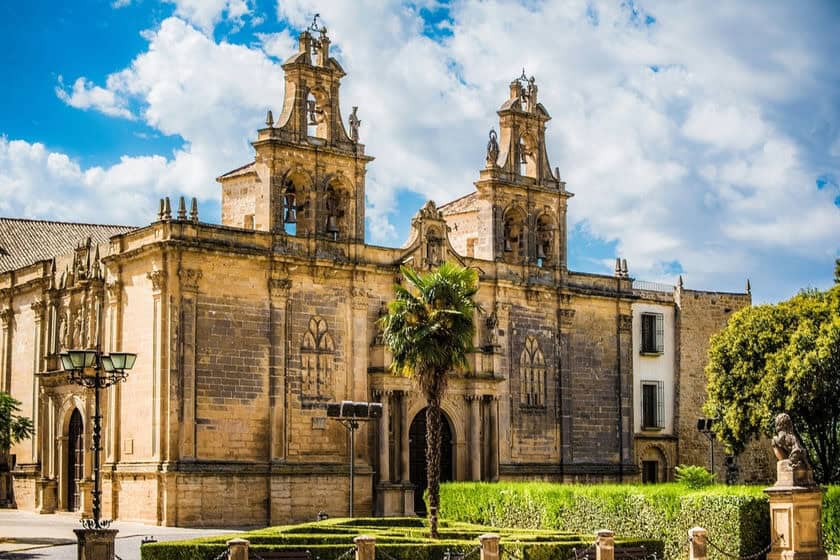
The Basilica of Santa María de los Reales Alcázares is one of the most important churches in Úbeda and stands out for the many architectural styles that adorn it, the result of successive historical periods during which it underwent transformations. From the outside it presents its Renaissance elegance, as the façade dates from the early 17th century.
But simply crossing the threshold takes you into a Gothic cloister from the 15th century, which in turn replaced the former courtyard of the mosque that was converted into a Catholic church. All around the cloister there are no fewer than 16 funerary chapels, each of which is the resting place of bishops and nobles. Inside the church, on the other hand, you move from Gothic arches to Baroque altars, right through to remains from the Mudéjar period.
It is located in Plaza Vázquez de Molina, the same square where the aforementioned Chapel of the Saviour stands. Opening times vary depending on the time of year and you can check them on this page of the official website, but they are usually as follows:
- From 1 April to 4 May:
- Monday: 5:00 pm–8:00 pm
- Tuesday to Saturday: 11:00 am–2:00 pm and 5:00 pm–8:00 pm
- Sunday: 9:30 am–2:00 pm
- From 5 May to 8 September:
- Monday to Saturday: 10:00 am–2:00 pm and 5:00 pm–10:00 pm
- Sunday: 9:30 am–2:00 pm and 5:00 pm–10:00 pm
- From 9 September to 31 March:
- Monday: 4:00 pm–8:00 pm
- Tuesday to Saturday: 11:00 am–2:00 pm and 4:00 pm–8:00 pm
- Sunday: 9:30 am–2:00 pm
Tickets cost €4 and include the audio guide. Children pay €1.50.
Igreja de São Paulo
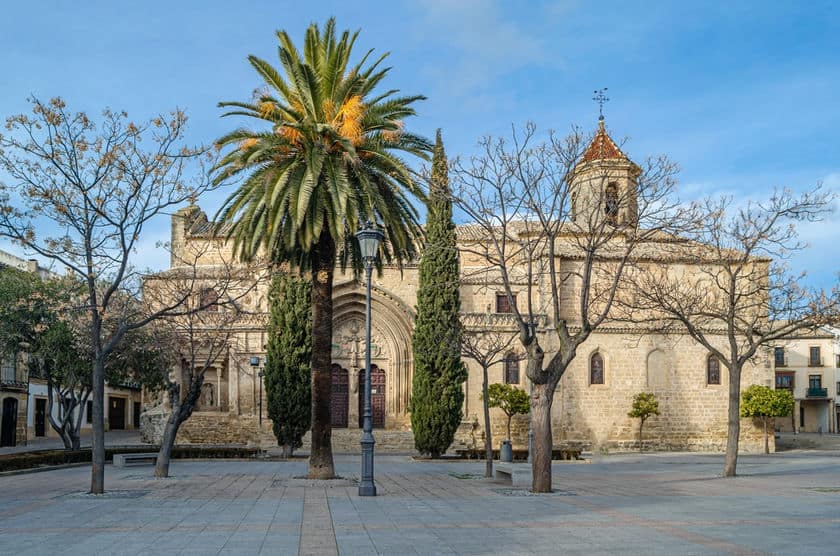
Another church you absolutely must see in Úbeda is the Iglesia de San Pablo, which is among the oldest in the city and whose foundation even dates back to the Visigothic era, although its current appearance is due mainly to the medieval period (the 13th century, to be precise) and later renovations.
For example, between 1400 and 1500 several funeral chapels were added, on both the north and south sides, and the large portal overlooking the market square was opened: the Porta dei Carpentieri. Alongside its religious function, it was also a place for social and political gatherings: for a long time the city council met there.
It is located in Plaza de San Pablo and to visit it admission costs €1. The opening hours are as follows:
- Monday: closed
- From Tuesday to Saturday: 11 am to 1 pm and 6 pm to 8 pm
- Sunday and public holidays: from 11 am to 1 pm
Palace of the Vázquez de Molina
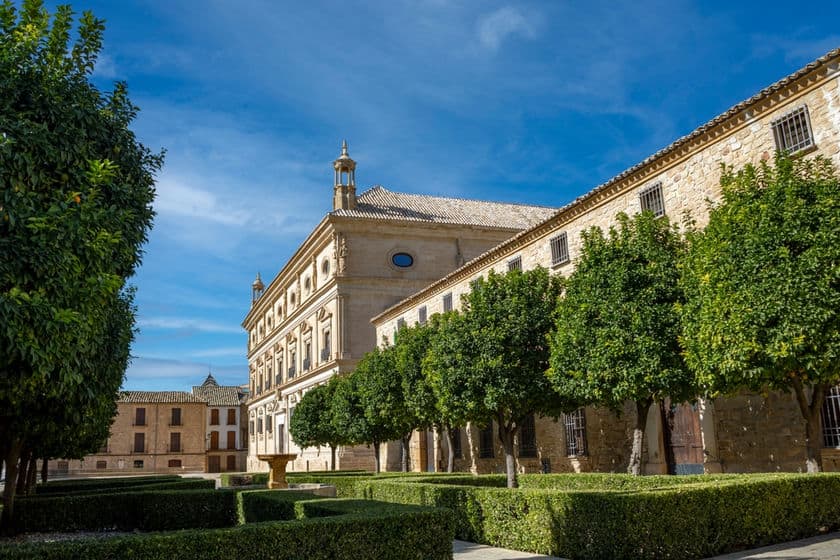
Plaza Vázquez de Molina is the city’s main square and, in addition to the religious buildings I have already mentioned, it is also home to the Palacio Vázquez de Molina – also known as the Palace of the Chains – which is among the most important examples of Renaissance architecture in all Spain. Commissioned by Juan Vázquez de Molina in the mid-1500s, it was later converted into a convent of Dominican nuns after its owner’s death. From the mid-1800s it changed use again and became the town hall.
Even today this is the town hall, which is why it cannot be freely visited inside, but you can go in to admire the courtyard at least. In any case, it is worth seeing from the outside too: its handsome three-storey façade, with columns and windows that change shape depending on the floor, is topped by two curious circular turrets.
Palace of Vela de los Cobos
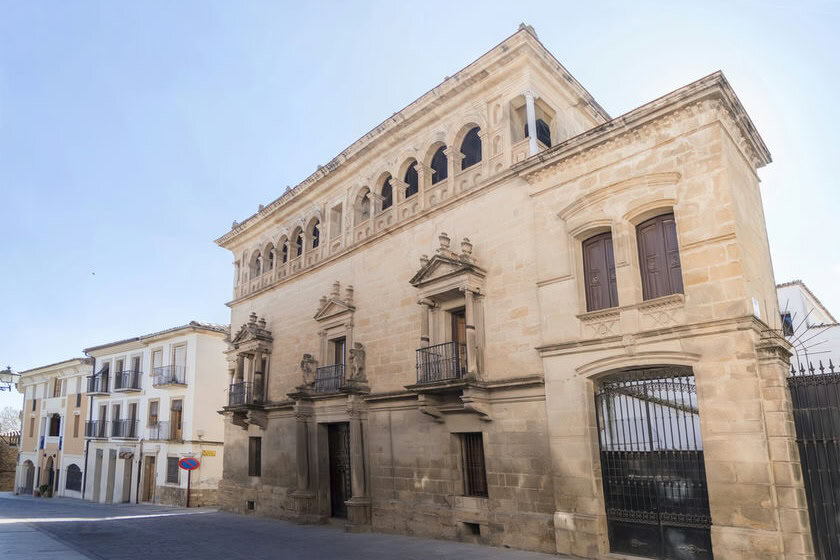
Among the historic buildings of Úbeda is the Palacio Vela de los Cobos, located on Calle Juan Montilla, also in Renaissance style and perfectly preserved. As well as being beautiful from the outside, it is full of interesting things inside: sculptures, paintings and fine furnishings, as well as porcelain, ancient coins, historical clothing and so on.
Of great value are the library and historical archive, as well as the French-style salon and the dining room. The wealthy owner was Francisco Vela de los Cobos, who held the post of state secretary to King Charles V and was one of the richest men in Spain. He amassed his wealth here and today you can admire the splendour of the era by taking a guided tour of the historic centre and the Palacio Vela de los Cobos.
Other places not to miss
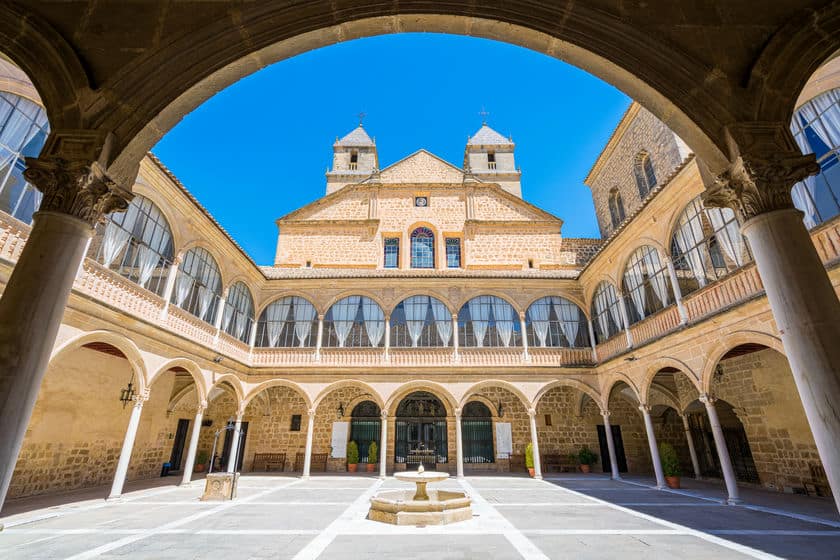
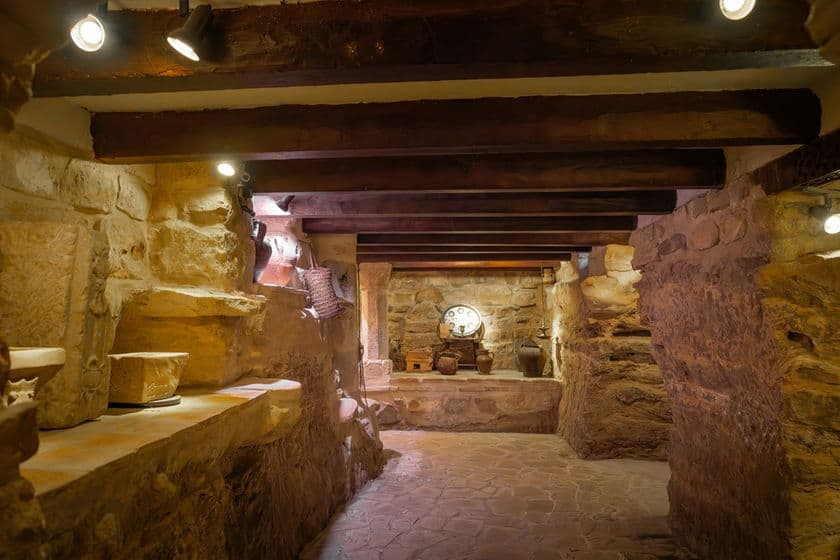
The town of Úbeda is small, but it really has a great deal to see. In addition to the places I have already covered in more depth, there are other sites you may wish to add to your list of things to see during your trip. Here are the most important ones:
- Sinagoga del Agua: a truly distinctive synagogue, where water is the crucial element in Jewish rites. Inside there are in fact rooms dedicated to ritual and purification baths.
- Casa Museo Sinagoga de Salomón: this is now a house converted into a small museum, but it stands where there was once a synagogue, as a parchment made from lambskin bears witness. Inside are preserved several artefacts dating from before the Jews were exiled by the 1492 Edict of Granada.
- Museo de Arqueología: the archaeological museum is also well worth a visit. It is housed in a very beautiful Mudéjar-style building and contains a rich collection of artefacts from this area, from prehistory to the Middle Ages.
- Palacio del Deán Ortega: this Renaissance palace is now a Parador Nacional de Turismo (a hotel created in a historic building) and you can enter the elegant inner courtyard, surrounded by a portico, freely.
- Hospital de Santiago: built in the second half of the 1500s and used as a hospital for the poor, it later served as a church, a pantheon and a private palace. Today it is used as a cultural centre and can be visited free of charge. Particularly beautiful is the courtyard surrounded by a Carrara marble colonnade.
- Church of San Lorenzo: a historic deconsecrated church that had fallen into disrepair and has been restored thanks to the Huerta de San Antonio Foundation. Today it can be visited freely with a donation of €2.
- Museo della Ceramica Pablo Tito: ceramics are also a local tradition, and to better understand the value of this art you can visit this small museum with free admission.
Guided tours of Úbeda
If you want to take advantage of a guided tour, to discover the city better with an in-depth account, there are various tours you can join, depending on your needs and the time you have available.
There are also tours that include nearby Baeza and can also be taken from Jaén or Granada:
- 5-hour guided tour of Úbeda and Baeza
- Day trip to Úbeda and Baeza from Jaén
- Day trip to Úbeda and Baeza from Granada
Where to stay in Úbeda
On this map you can see the accommodation available in Úbeda and the surrounding area, but if you want to stay overnight in this lovely town, here are some recommendations for good hotels:
- Hotel Don Juan Boutique: we begin with this splendid 4-star hotel, housed in a beautiful historic building and in an excellent location, and it also has a swimming pool for guests.
- Parador di Úbeda: questo 4 stelle fa parte della catena dei Paradores de Turismo e si trova in un palazzo del XVI secolo ancora arredato come un tempo, il Palacio Dean Ortega di cui ho parlato prima.
- Hotel María de Molina: as a 3-star hotel, I recommend this hotel in a perfect location, right in the town square, a stone’s throw from all the city’s most famous attractions.
- Hotel Ordóñez Sandoval: this hotel is also very lovely and is set in a historic palace, although it is a 2-star and therefore offers more basic accommodation. Excellent value for money.
- Palacio de la Rambla: this is also a 2-star hotel, but as with the previous one, don’t pay any attention to the number of stars. The historic building it is housed in will give you the impression of spending the night in a museum.
Where to eat in Úbeda
It is easy to spend a few hours in the town visiting its many attractions, so at least one meal is almost a must. But where to eat in Úbeda? I suggest Taberna El Mercao, a typical tavern right in the centre, serving really good local dishes. Also right in the centre, Taberna Calle Melancolía is also good. For a restaurant with a truly distinctive atmosphere, you can opt for La Bodega de Úbeda: in part of the venue it feels like eating in a cellar.
