Seville is among the Spanish cities richest in history, and much of this heritage is preserved in its museums, which range from art to archaeology, through historical records and even dance, which is an integral part of the cultural heritage here. But when time is short, it is not easy to choose which museums to see and which to skip: here then are some suggestions to help you work out which ones to visit.
Contents
Museum of Fine Arts
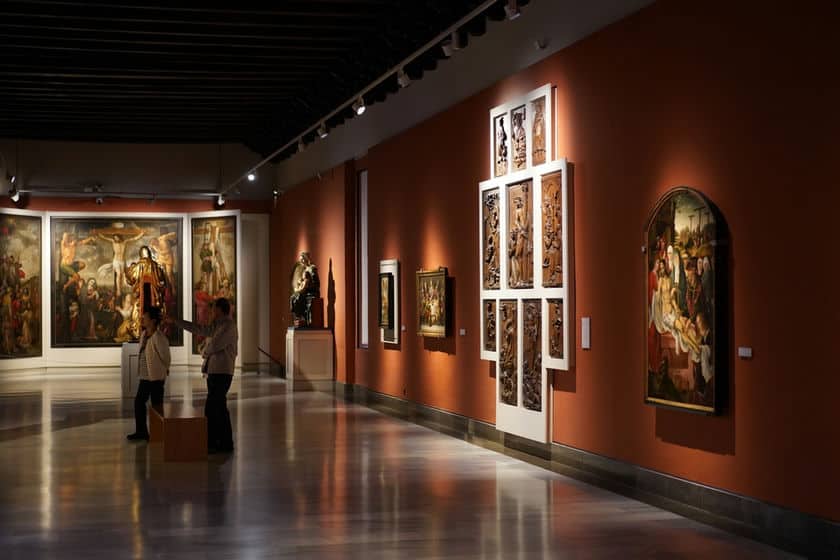
The Museum of Fine Arts in Seville is the city’s main art gallery and, if you are a lover of paintings and sculptures, you simply have to include it in your list of places to see during your stay. Inside, you will find sections devoted to Spanish medieval art, the Renaissance, Mannerism and Naturalism. There are also rooms on Spanish Baroque art and European Baroque, as well as examples of twentieth-century Andalusian painting.
Among the artists whose works are displayed here, we can mention Francisco Goya, Bartolomé Esteban Murillo, Diego Velázques and Alonso Cano, but these are just some of the famous names that could be mentioned. Lastly, let us not forget that the building itself housing the museum is a historic palace, with fine rooms and beautiful courtyards: it is in fact the former Convento de la Merced Calzada, dating back to the middle of the 1200s.
Museum of Fine Arts: our guide
Archivo General de Indias
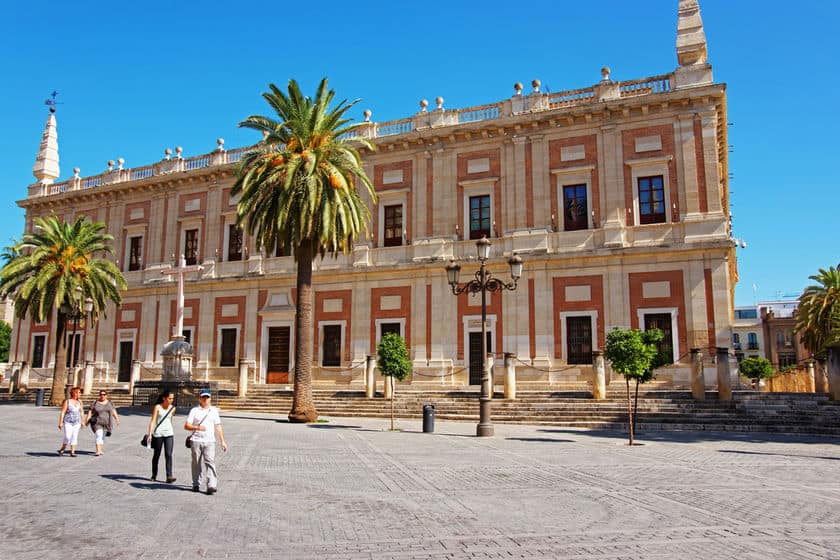
Among the most sumptuous palaces in Seville, the Archivo General de Indias stands out, right opposite the cathedral and the Real Alcázar. It is not simply a beautiful building to look at: its true value lies in the documents it preserves inside. There are in fact 43,000 volumes, whose 80 million pages document three centuries of history from the Spanish colonial period. The Spanish Empire stretched from the Americas to the Philippines, and among these documents are texts linked to the discovery and exploration of those territories, together with all the consequent exchanges with native peoples.
Having become a UNESCO World Heritage Site, this incredible archive is a treasure for scholars of those chapters of history, but it is also a place you can visit during a stay in Seville. Admission is free and it can really be worth it, both for the beauty of the building and for the interesting facts you can learn on a guided tour.
Archivo General de Indias: our guide
Flamenco Dance Museum
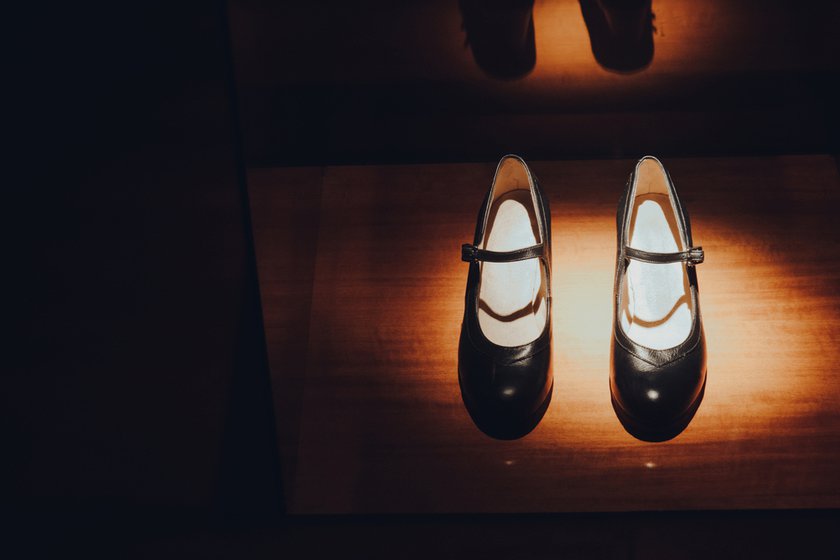
The Flamenco is a dance that is part of Andalusian culture and is intrinsically linked to the history of this region. Not only in Seville, but also in the other cities of the region, it is possible to see performances where the sound of the guitar blends with the tapping of a dancer’s heels on the floor. In Seville, however, there is also the chance to visit the Flamenco Dance Museum.
Historical artefacts and interactive exhibits help to explain what lies behind this dance, which is much more than just a form of dancing. As well as the visit, you can also attend a flamenco show, which takes place inside the ancient crypt, in the museum’s basement.
Flamenco Dance Museum: our guide
Seville Archaeological Museum
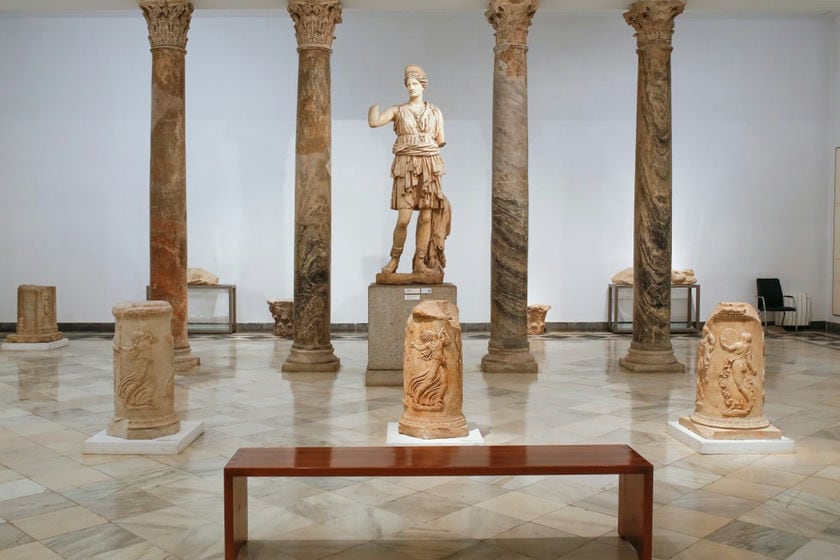
Andalusia is a region rich in archaeological sites, linked to different historical periods. In Parque de Maria Luisa you will find the Archaeological Museum of Seville, opened in 1867 inside the former Pavilion of Fine Arts of the 1929 Ibero-American Exposition, to preserve the finds from Italica which had previously been housed inside the Royal Alcázar.
In its halls, we find around 60,000 sculptures, objects and artefacts of various kinds. To the initial collection of finds from Italica, archaeological artefacts from other periods have been added, including some very much earlier than the Roman era, from the Phoenicians to the Bronze Age, and even as far back as prehistory.
Museo de Artes y Costumbres Populares
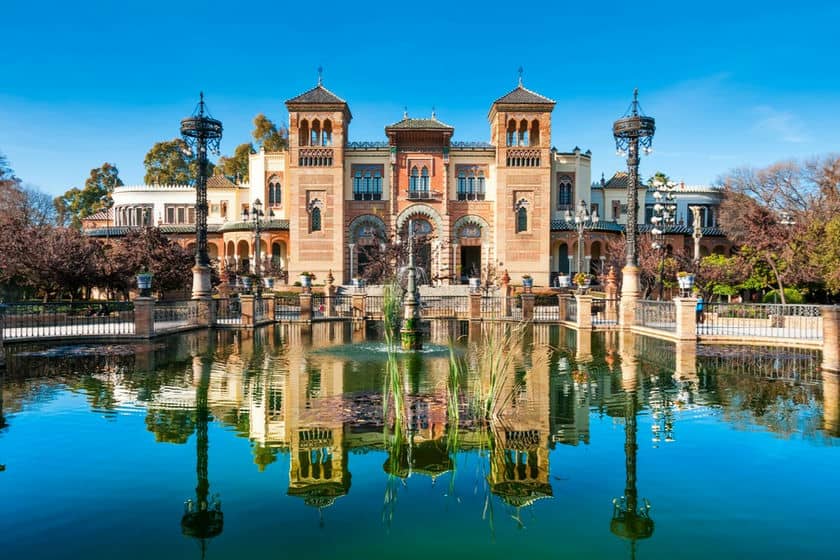
In the Parque de Maria Luisa, we also find a splendid neo-Mudéjar-style building, again a legacy of the 1929 Ibero-American Exposition. On that occasion, this was the Pavilion of Ancient Arts and Artistic Industries, but since 1972 it has housed the Seville Museum of Popular Arts and Traditions. In its rooms, you can see tools and objects that tell the story of various aspects of the popular culture of Seville and Andalusia.
Among the most interesting collections is the Loty photographic archive: over 2,000 plates depicting life in Seville (and in the surrounding areas) during the 1800s and the first thirty years of the 1900s. Part of the museum is also dedicated to temporary exhibitions, which change from year to year.
Hospital de la Caridad
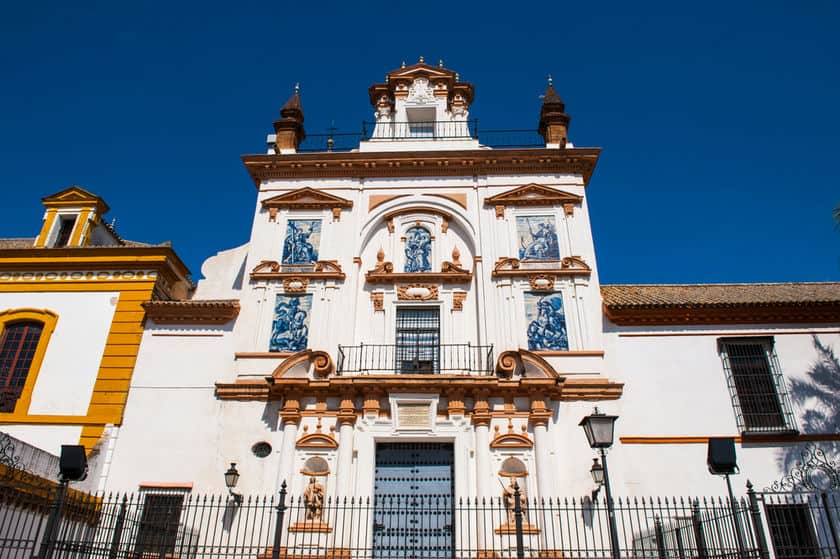
The Hospital de la Caridad is not like other hospitals. Located in a 17th-century building, it is a charitable institution founded in 1674 by Miguel de Mañara, a philanthropist who cared for the needy sick in the historic Brotherhood of the Holy Charity. This brotherhood was founded in the sixteenth century and was responsible for taking patients to the hospital, attending to those condemned to death in a spiritual sense and burying them.
Besides the hospital itself, which consists of three large wards, the complex also includes the church, in full Seville Baroque style, whose decorations are the work of the leading artists of the era. Rising on its façade are the three theological virtues (Faith, Hope and Charity), together with the patrons Saint George and Saint James. The two sculptures on either side of the portal are two rulers who became saints: Saint Louis (King of France) and Saint Ferdinand (King of Castile).
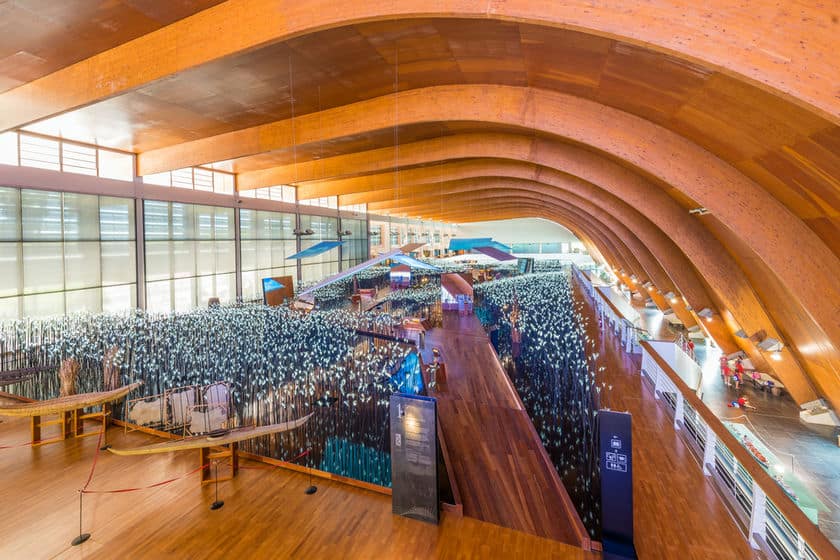
Il Pabellón de la Navegación is a large pavilion situated on the banks of the Guadalquivir River, built for the Seville Universal Exposition of 1992. On that occasion it hosted exhibitions dedicated to scientific expeditions and advances in shipbuilding technology, with reconstructions of the interiors of the ships used in the time of Christopher Columbus. Twenty years after its construction, in 2012 it was converted into a permanent museum, which tells the history and evolution of navigation, in particular across the Atlantic Ocean.
The museum is divided into three main sections. The first is the largest hall, where the visitor is immersed in a setting of sounds and lights to discover the stories of the greatest navigators, whose lives are recounted in the Archivo de Indias. The middle hall is decorated with a large mural telling the history of navigation and features some of the models from the 1992 World Exposition. Finally, in the last section, visitors can experience, through playful activities, the different roles of sailors aboard ships.
Andalusian Centre for Contemporary Art
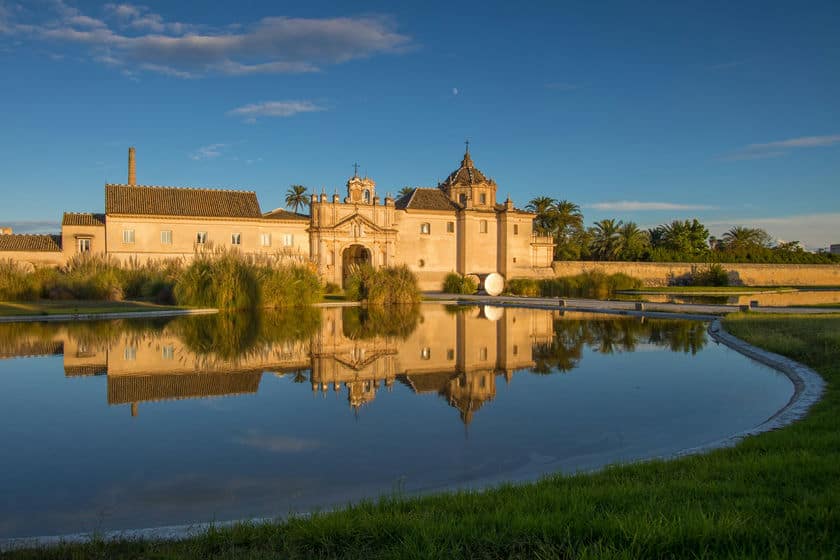
Founded in 1990, the CAAC (Centro Andaluz de Arte Contemporáneo) is an institution created to preserve, promote and disseminate contemporary art in Andalusia. A few years after its foundation, work began on building up a permanent collection, and in 1997 the Centre’s headquarters were moved to the evocative setting of the Monasterio de la Cartuja. This ancient Carthusian convent is an extension of an even older Franciscan hermitage erected in 1399 and dedicated to the Virgin of the Caves. It is located on Isla de la Cartuja, the island formed by the course of the Guadalquivir river and the canal dug to divert it: the same island on which the Barrio Triana stands.
As well as lovers of contemporary art, who will undoubtedly find something to their taste within these walls, we can say that the setting itself is already a reason to visit. The monastery is not only beautiful, but also has an interesting history behind it. It housed Christopher Columbus’s remains for thirty years, but famous figures such as King Philip II and Saint Thérèse of Lisieux also stayed there. In addition, in 1810 it was temporarily converted into barracks for the troops defending the city from the Napoleonic invasion.
Triana Ceramics Centre
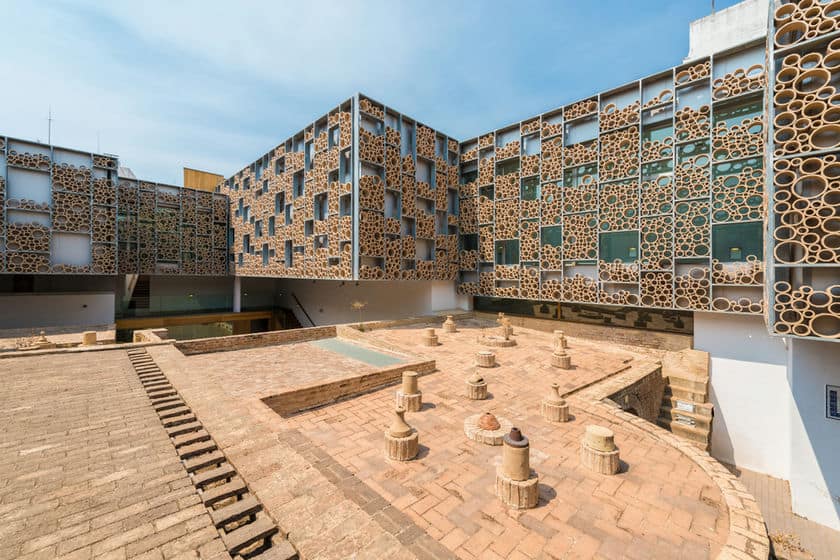
The Centro de la Cerámica de Triana is not just a ceramics museum. It preserves the memory of the old Santa Ana ceramics factory, one of the last still active in Seville, which for a long time was a city with an extremely important ceramics industry. When visiting Seville, but also other Andalusian cities, the multicoloured ceramics decorating the buildings are striking: from the most sumptuous palaces to the walls of the simplest houses down some little alley. Well, these works were made in factories like this one.
In the museum-factory you can still see many of the original installations and the historic kilns dating back to the 16th century, but above all admire a fine permanent collection of precious pieces. There are also the clay stores, the mills used to turn the different minerals into colour pigments, the potter’s wheel and so on.
Seville Aquarium
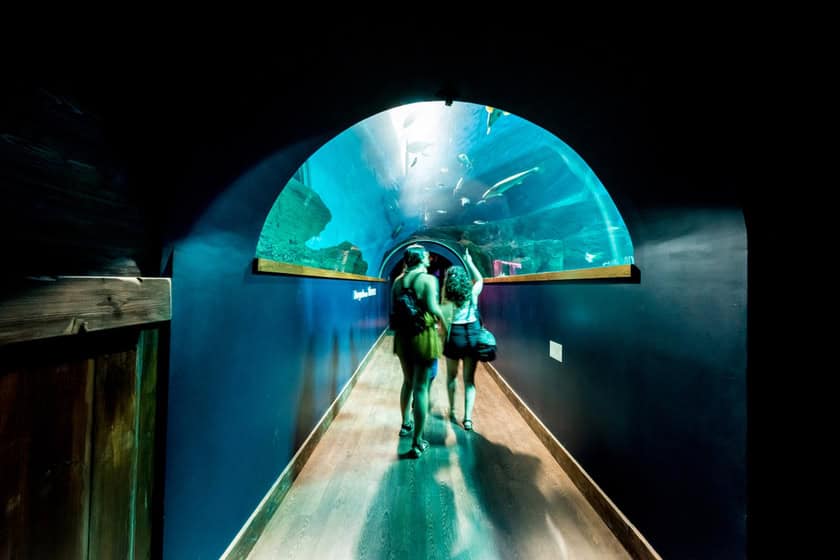
L’Seville Aquarium may not be the largest aquarium in the world, but it is well laid out and can be a good way to spend a few hours, especially if you are travelling with children. Its creation is inspired by Magellan’s voyage, who set off in 1519 from Seville itself on the first circumnavigation of the world. Although he was killed in the Philippines, 18 men from his crew succeeded in completing the feat, returning home three years after setting out. Visiting the aquarium, you retrace the stages of that epic journey from half a millennium ago, discovering the different marine species found in each part of the globe.
Museum of Illusions
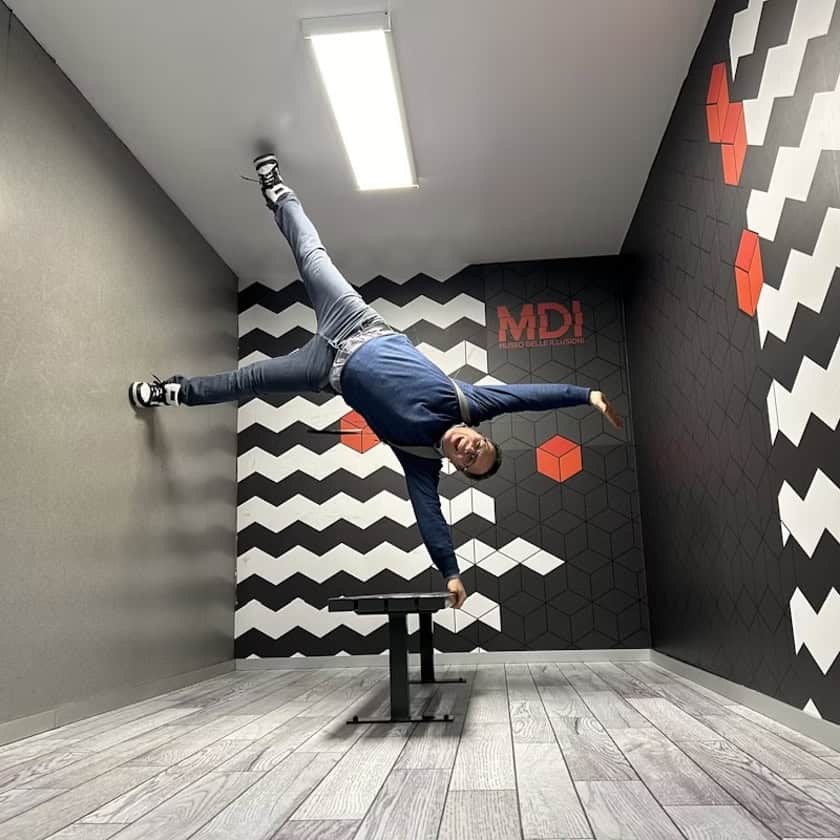
In various cities around the world, places like this have become popular, and Seville has its own Museum of Illusions. If you’ve never seen one, this could be the perfect opportunity to snap a few fun photos and enjoy an entertaining break during your visit to the Andalusian capital. Optical illusions of every kind, as well as light and colour tricks, await you in this interactive museum, where you can interact with the installations to create unique and bizarre perspectives.
Museum of Illusions: our guide
