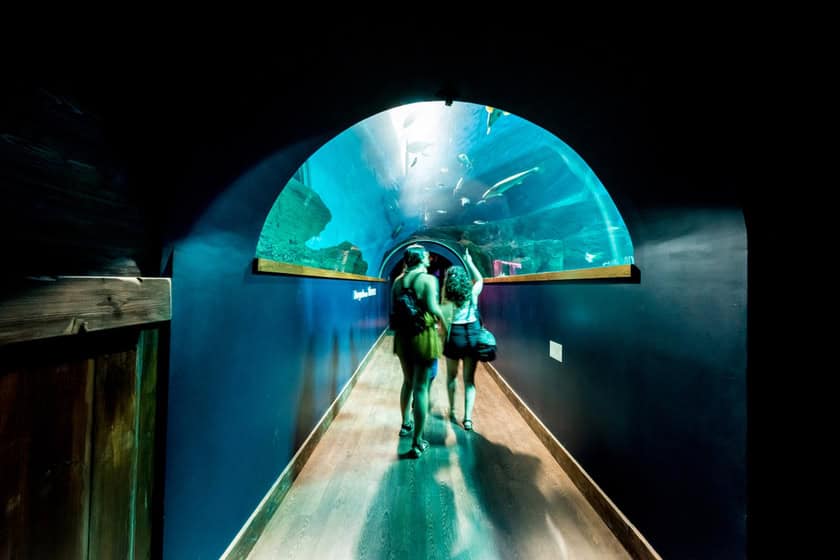
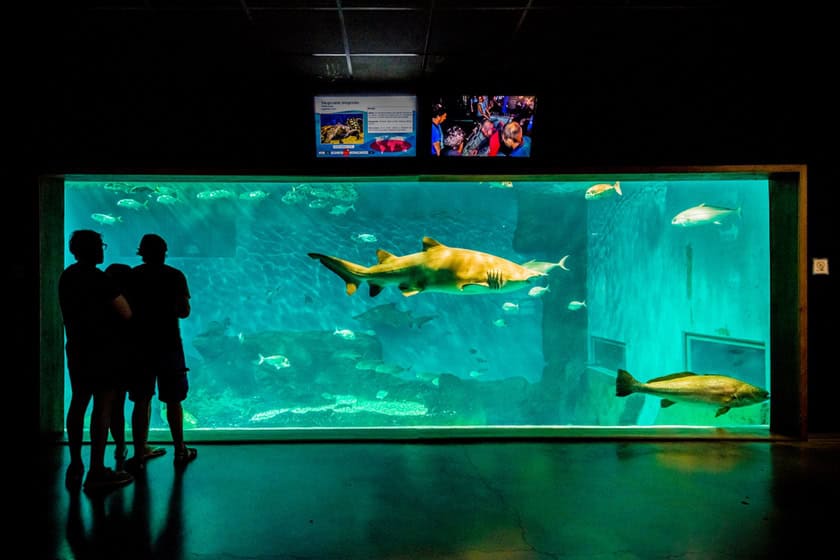
If you’re in Seville with children or simply love aquatic animals, even here, right in the heart of Andalusia, you’ll be in your element: the state-of-the-art Acuario de Sevilla is located on the Muelle de las Delicias and has no fewer than 35 tanks housing more than 7,000 specimens of 400 different species. The main tank, the Oceanario, holds two million litres and has a water column almost 9 metres high (29,5 feet): you might not have known, but it’s one of the deepest in Europe.
The aquarium opened to the public in 2014, and part of its route traces the journey Magellan and Elcano made when they first circumnavigated the globe between 1519 and 1522. The expedition departed from Seville. A tribute to these explorers that will inspire young and old alike to discover the aquarium’s themed areas and the many species that inhabit it.
Where to find it and how to get there
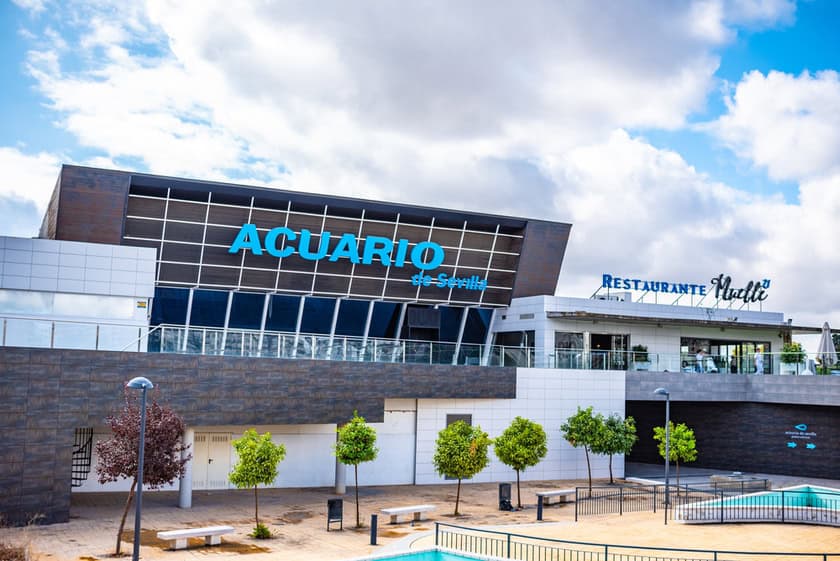
The Acuario de Sevilla is located on the banks of the Guadalquivir at the Muelle de las Delicias in the port of Seville.
You can reach the aquarium by:
- Bus lines 3, 6 and 34, getting off at the La Palmera stop.
- The metro, getting off at Puerta Jerez, about a 15-minute walk from the aquarium.
- By bike, using the cycle lane and leaving it in the designated spaces in front of the entrance.
If, to get around Seville, you’ve decided to drive, there’s a public car park next to the aquarium accessible from Avenida Molini.
Magellan’s Voyage
The Acuario is inspired by Magellan’s voyage which in 1519 began what would become the first circumnavigation of the globe. They set sail from Seville with a fleet of ships commanded by Magellan himself and, after three years at sea, in 1522 only 18 of the 239 who had set out managed to return to Seville, completing a mission that would go down in history.
The voyage crossed the Guadalquivir to Sanlucar de Barrameda, continued out into the open Atlantic Ocean to the coasts of South America where Magellan discovered a passage, today known as the Strait of Magellan, to proceed into the Pacific Ocean. Magellan managed to reach the Philippines and the Moluccas, rich in precious spices, but here he lost his life in a clash with some local tribes. The voyage continued with Juan Sebastian Elcano as captain, and it was his ship that succeeded in returning home to Spain.
The species you’ll see along the route laid out by the aquarium staff are the same ones these brave explorers likely encountered on their voyage 500 years ago.
What to see? Ecosystems and species
By following Magellan’s voyage you’ll be able to explore the biodiversity present in various habitats around the world. Let’s take a closer look at some of these ecosystems:
- Guadalquivir: the longest river in Andalusia, stretching for 657 kilometres (408 miles). It rises in the Sierra de Cazorla and flows into the sea at Sanlúcar de Barrameda, near Cádiz. Among the species you will see are carp and sturgeon.
- Atlantic: the second-largest ocean in the world. In the aquarium, you can admire species typical of the Spanish coast and the Canary Islands, as well as the eastern coasts of South America.
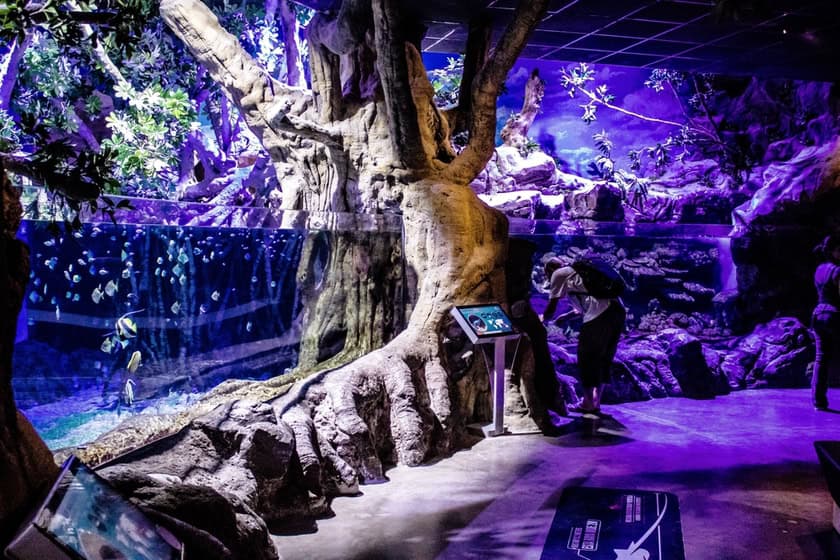
- Tropical Rainforest: in this area, you will find reptiles and amphibians from the tropical American coasts, one of the most biodiverse ecosystems on the planet.
- Oceanarium: in the deepest tank in Spain, the open-sea habitat is recreated, and you will find, among others, magnificent specimens of sharks and turtles.
- Indo-Pacific: the colours of the fish found in the tropical waters where the Pacific Ocean and the Indian Ocean meet are wonderful. From clownfish to lionfish, from seahorses to bright corals: all can be seen in this section of the aquarium.
- Other areas: here you will find jellyfish and African savannah ecosystems, with reptiles such as the Nile monitor and African tortoises.
Activities for young and old
Dine on the seabed, watch the sharks at midnight, discover everything about how to safeguard sea turtles… there are plenty of activities, free or paid-for, offered by the aquarium to make the experience even more interesting.
Dinner EntreMares
For €70 you can visit the aquarium and then be served a delicious gourmet dinner surrounded by rays, turtles and sharks… just as if you were 9 metres below the surface of the ocean!
Guided tour of the aquarium
Thanks to a specialised guide, you can discover in detail the hundreds of species that live in this aquarium by visiting the themed areas into which it is divided (Guadalquivir, Atlantic, Amazon, Pacific and Indo-Pacific). The staff will be on hand to answer any questions you have about these marine animals, always following in the footsteps of Magellan’s 1519 voyage. The cost is €80.
Jellyfish. The pulse of the sea
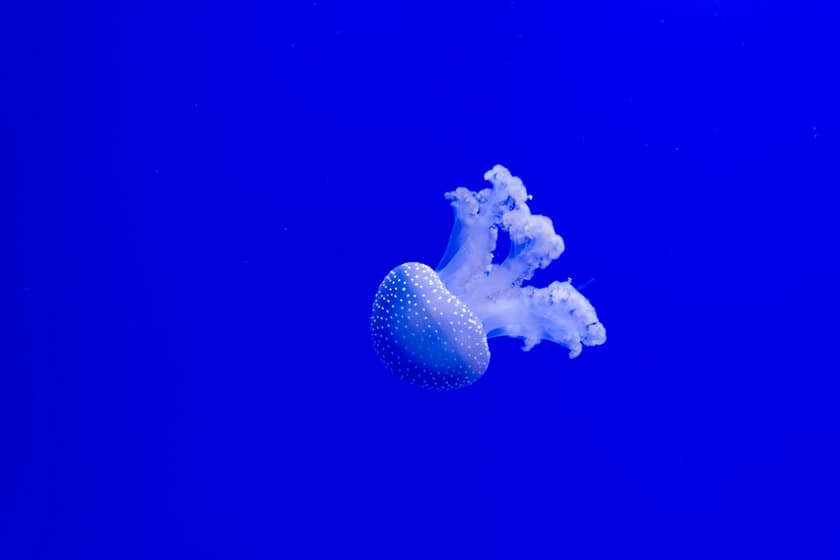
You can admire over ten different species of jellyfish up close. There are more than 15 tanks with detailed information panels to help you learn more about these hypnotic, enigmatic animals, which are 95% water.
Sharks at Midnight
An ideal activity for families, but not only. For €40 per person you’ll have the chance to visit the aquarium with a guide who will meet your group at 20:30 and take you through all the aquarium’s galleries — and at midnight… you’ll be in the company of sharks! Dinner is included in the price and consists of pizza, a soft drink and a dessert. This experience is suitable for anyone over 5 years old.
The dark side of the aquarium
With prior booking, you can spend a day experiencing the work of the biologists at this aquarium, discovering the technical equipment, machinery, clothing, quarantine tanks, laboratories and everything needed to run an aquarium like this, with the utmost respect for the animals that live here. You can also touch some invertebrates during the visit. The cost is €25 per person for the activity, or €30 for the activity plus a self-guided visit to the aquarium.
Feeding the fish
Every Monday and Friday at 13:30 I recommend you be in front of the main tank of the Oceanario to feed the marine species on display. The activity is free, included in the admission price, and no booking is required.
Protecting sea turtles
One of the Seville Aquarium’s main projects is the conservation of the loggerhead turtle, Caretta caretta, a species at risk that loves living along Spain’s coasts. At weekends the aquarium often organises free activities to help people learn more about these marine species. Chelo, one of the turtles you’ll see, is also the aquarium’s mascot.
Opening times and ticket prices
The Seville Aquarium follows these opening hours:
- September to June: Monday to Friday from 10:00 am to 6:00 pm, and Saturday and Sunday from 10:00 am to 7:00 pm.
- July and August: Monday to Friday from 10:00 am to 7:00 pm, and Saturday and Sunday from 10:00 am to 8:00 pm.
Remember that the ticket office closes one hour before closing time.
On 24 and 31 December and on 5 January the aquarium is open from 10:00 to 16:00. On 25 December, 1 and 6 January it is open from 12:00 to 18:00.
Ticket prices:
- €17 for adults
- €12 for children aged 4 to 14
You can purchase tickets on Tiqets via the link below (attractive discounts are often available).
Children aged under 4 enter free of charge. A family discount is available for two adults and two children aged up to 14, with a total admission price of €46. Every Thursday from 15:00 onwards, the ticket price drops to €12 for adults and €8 for children if you book the online ticket. The cost of the 90-minute guided tour is €80. The Sharks at Midnight activity costs €40.
Where to stay near the aquarium
The Seville Aquarium is located between the Guadalquivir and Plaza de España, not far from the Reales Alcázares, which can be reached in about 20 minutes on foot, and from the splendid Cathedral. If you decide to stay in this area, you will therefore be in the historic centre of this magnificent city, one of the best areas to stay in Seville.
