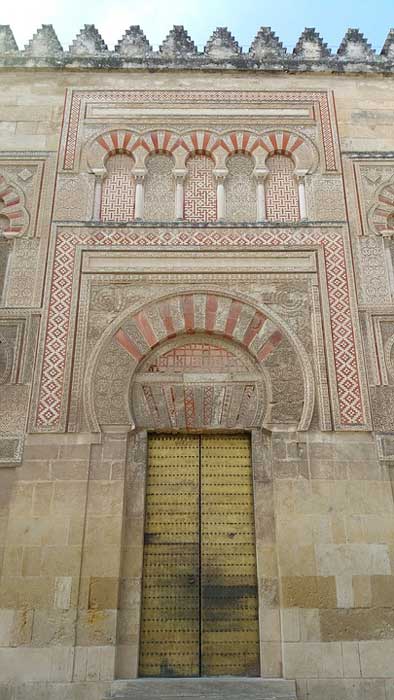
The Mezquita of Cordoba is without a shadow of a doubt one of the city’s most important attractions – if not the most important. It is the largest, most imposing and artistically rich mosque in Andalusia, and also the most significant in Western Europe. What makes it unique is its ability to physically reflect the history of the land that houses it, incorporating into its structure and architecture elements typical of the different rulers and historical periods it has experienced.
We are not talking about a mere tourist attraction, nor, still less, a museum like many others: the Mezquita di Cordoba is a sacred place open to the world, which bears witness to the ancient synergy between art and religion. Let’s explore together the richness of this place and discover everything there is to know about the Mezquita di Cordoba.
Contents
A brief history
The historical value of this place is immense. The changes it has undergone over the centuries, not only structural but also in terms of cultural and religious significance, meant that the Mezquita di Cordoba was declared UNESCO World Heritage Site in 1984. In 2014, moreover, it was officially recognised as a Place of Outstanding Universal Value (again according to UNESCO criteria) because, thanks to its continued use for religious purposes over time, it has survived to the present day. As if that were not enough, the Mezquita has been an National Monument since 1882.
The Muslim period
At the beginning of its history (we’re talking about the sixth century) the Mezquita of Cordoba was a complex of buildings that made up the Visigothic basilica of San Vicente, the city’s most important Christian sacred site. With the arrival of the Muslims, this area was divided and used by both religious communities. Over time, however, Cordoba’s Arab population grew considerably, so Abd al-Rahman I decided to convert it entirely into a mosque.
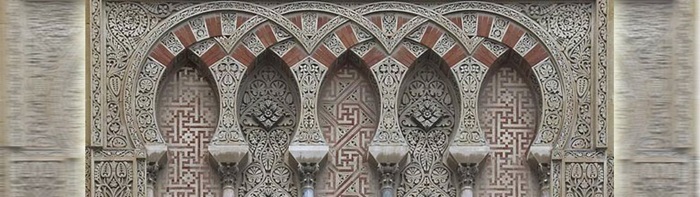
His successor completed the first enlargement of the mosque, expanding the prayer hall and adding aisles to the original plan. It was Abd al-Rahman III, however, much later, who began the construction of the new minaret, 40 metres high and a source of inspiration for the mosques of Seville and Marrakesh. The second enlargement of the complex took place in 962, when the Caliphate of Cordoba was enjoying a period of wealth and splendour, and was followed by a final alteration in 991.
The Spanish Reconquista
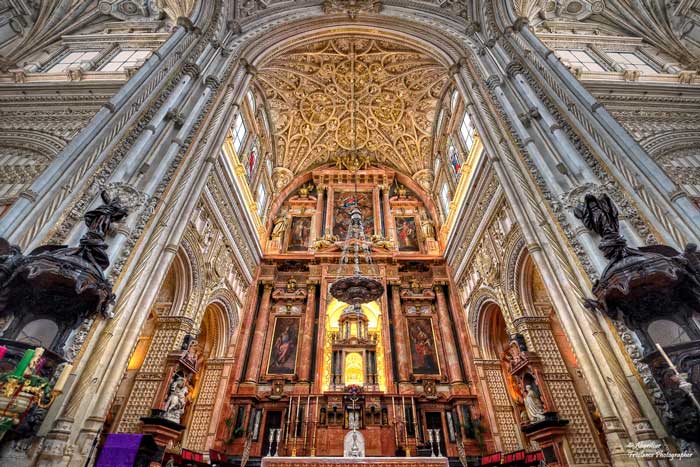
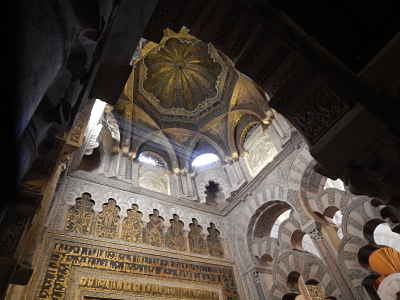
In 1236 the Spanish Reconquista returned Cordoba to the Catholic Monarchs, and the Mezquita was consecrated as a Catholic place of worship: the altar was installed in place of Al‑Hakam II’s skylight and, over time, significant alterations were made to adapt the building for Catholic worship. These included the construction of the main chapel, today known as the Capilla de Villaviciosa, and the transept, a transverse nave that crosses the main nave, giving the space a cruciform plan.
Today, the Mezquita of Córdoba shows the world the grandeur of its history, which began as a Visigothic basilica, was followed by the splendour of the caliphate and culminated in a fine example of Gothic, Renaissance and Baroque art.
What to see at the Mezquita?
The Mezquita’s Islamic architecture, with Hellenistic, Roman and Byzantine touches, sits alongside its Christian architecture, creating one of the finest examples of coexistence between different styles, which bear witness to the evolution and changes this place has undergone over time.
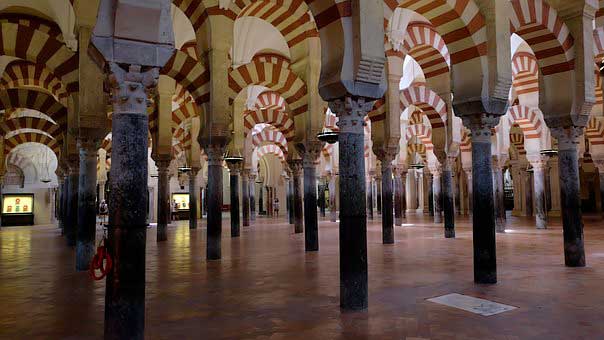
The entire complex of the Mezquita of Cordoba occupies 23,400 sq m: it is a vast quadrilateral divided into 19 aisles, and contains no fewer than 856 columns.
The doors and the columns
There are five entrances to the mosque: Puerta de las Palmas, Puerta de San Sebastian, Puerta del Sabat, Puerta de Santa Catalina and Puerta del Perdón. They are situated on different sides of the building and, while the first three provide direct access to the mosque, the others lead to the courtyard.
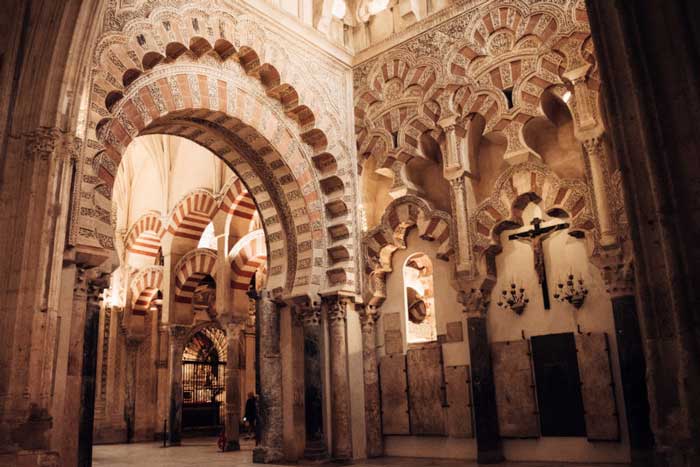
As mentioned, inside there are 856 columns, but before the dismantling carried out to make way for the construction of the Christian cathedral there were 1013. The columns form a double arcade with a raised arch and, together, create an enormous labyrinth with a very beautiful visual effect.
The Patio de los Naranjos
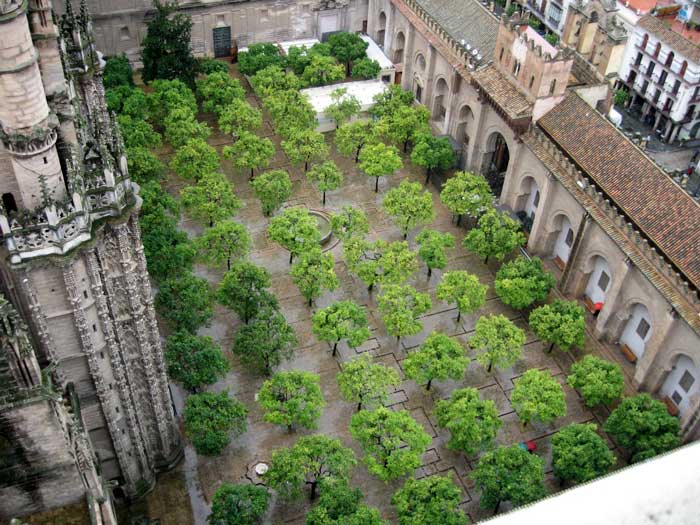
Il Patio de los Naranjos is the courtyard of the Mezquita, enriched with palms, cypresses and orange trees, in perfect Andalusian style. It was in this courtyard that worshippers would go to pray in private, but it was also a place of teaching and a meeting point for the city’s public or religious activities.
Initially, during Friday prayers, the mosque’s 19 aisles opened onto the courtyard, so that the rows of internal columns appeared as an extension of the trees, creating, among other things, a perfect balance between the exterior light and the half-light of the interior. Today, however, only one of the access doors remains open, and the optical effect of the colonnades can only be appreciated once inside the Mezquita.
The minaret and the mihrab
The minaret of the Mezquita is 48 metres tall and has undergone many changes over time, especially at its top. Today it is a bell tower, and the original form of the building is visible up to a height of 22 metres. Since 2014, moreover, it has been open to visitors: you can therefore climb to the top and admire the city and its principal attractions from above.
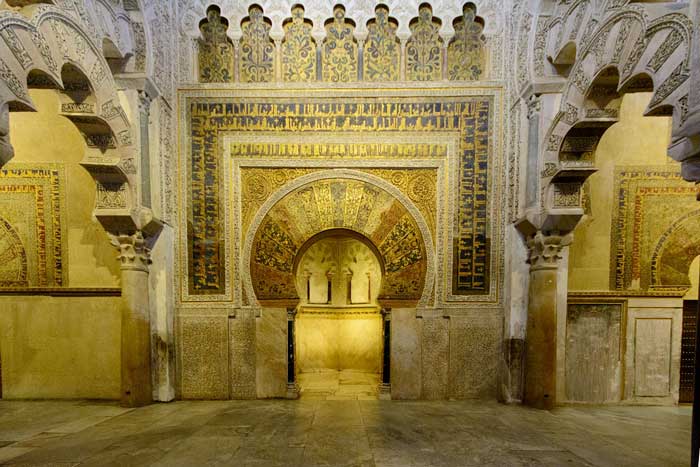
The miḥrāb of the Mezquita, that is the niche within a wall that indicates the direction of Mecca to which the faithful must turn during prayer, is oriented towards the south and not towards the south‑east (where Mecca, in fact, is). The legend indeed relates that ʿAbd al-Raḥmān, having been sent away from Damascus and nostalgic for his city, deliberately wished to orient the miḥrāb of the Mezquita of Cordoba in the same direction as that of the mosque of Damascus.
The Cathedral of Córdoba
In the heart of the magnificent mosque also stands the present Cathedral of Cordoba, built in 1523, with a Capilla Mayor and a Baroque choir. This is why the Mezquita of Cordoba is officially called a mosque-cathedral, a feature that makes it unique architecturally, artistically and even religiously. Nevertheless, the construction of the cathedral within the mosque has been interpreted by some historians as an artistic demonstration of Christianity’s triumph over Islam. It is said that even Charles V, on seeing the cathedral, was appalled and declared that a unique masterpiece had been destroyed to build something very ordinary.
Info on opening times and tickets for the Mezquita
If you’re in the middle of an Andalusia Road Trip and find yourself in the Cordoba area, you absolutely must not miss this masterpiece. Here’s what you need to know to organise your visit to the Mezquita.
Opening hours
From November to February, the Mezquita-Catedral usually observes the following opening hours:
- Monday to Saturday: 10:00–18:00
- Sundays and public holidays: 08:30–11:30 and 15:00–18:00
From March to October, the usual opening hours are:
- Monday to Saturday: 10:00–19:00
- Sundays and public holidays: 08:30–11:30 and 15:00–19:00
These opening hours are indicative and may change depending on the date, religious services or special events. Always check the official calendar before visiting.
Mezquita Cordoba: Tickets and tours
Mezquita-Catedral ticket: general admission costs €15. Over-65s, students aged 15 to 26 and European Youth Card holders pay €12. Children aged 10 to 14, people with disabilities up to 64% and adult members of large families pay €8. Children under 10 enter free of charge. The bell tower ticket costs €4.
A free visit is usually available from Monday to Saturday, 08:30–09:30, except on days with extraordinary celebrations. Group visits are not allowed during this time slot.
You can also choose to visit the Mezquita-Catedral at night with The Soul of Córdoba, a sound-and-light experience designed to show the monument in a different atmosphere. General admission costs €25, while reduced tickets cost €18 for eligible visitors with valid accreditation. Children under 7 enter free of charge, without an audio guide and accompanied by an adult with a valid ticket. Tickets can be purchased at the ticket office, online or through the official sales system.
As you may have realised, the Great Mosque is a monument rich in history and culture. If you want to visit it with the aid of a guide, here is a tour of the Mezquita that I recommend:
Guided tour of the Mezquita (includes tickets)
Andalusia Pass (Mezquita included!)
Many people visit Cordoba as part of a wider itinerary through Andalusia, during which they visit various towns in the region. If you’re one of them, you will probably find the Andalusia Pass convenient. This pass bundles entry to three attractions, each the most famous of the three main Andalusian cities: the Alcázar of Seville, the Alhambra of Granada and the Mezquita of Cordoba. It also includes an interactive guide, with audio and images, accessible via an app on your smartphone, to use when visiting both Seville and Granada on foot. If you plan to visit all three sites, you’ll almost certainly save on the total cost by buying this pass.
Other useful information
The Mezquita of Cordoba is located in the heart of the city’s historic centre, at Calle Cardenal Herrero, 1. You can reach it on foot from anywhere in the city centre, or by public transport. The Mezquita is also close to many other important attractions in Cordoba, such as the Puente Romano which crosses the Guadalquivir river, the Old Synagogue and also the Alcázar de los Reyes Cristianos, another must-see stop during your visit to Cordoba.
English guided tour of the Mezquita + Alcazar
Now that you know everything you need, all that’s left to do is go and see with your own eyes the splendour of this place, and let yourselves be amazed in person by the immense beauty and the historical, artistic and cultural value of the Mezquita di Cordoba.
Where to stay near the Mezquita?
If you’d like to wake up just a stone’s throw from the Great Mosque of Cordoba, you’ll need some information about the accommodation available in the area. Take a look at the article linked below: you’ll find useful tips on where to stay near the Mezquita. In particular, I recommend the Barrio Centro and the Judería.
