The allure of the Seville Cathedral and the Giralda is unrivalled, but I’m sure you’ll also be captivated by the city’s second-largest church, the Church of the Divine Saviour. This Baroque gem is within easy walking distance of the Cathedral. Admission is included in a combined ticket that covers the Cathedral and the Giralda, so it’s certainly a stop I recommend you don’t miss during your stay in Seville.
Buy the Cathedral + Giralda ticket (includes admission to the Church of the Divine Saviour)
If you’re interested in Seville’s history and appreciate Baroque and Rococo styles, the Iglesia del Divino Salvador, with its chapels and precious wooden altars lavishly decorated and boasting a wide palette of colour, will leave you speechless. Inside the church, too, there are fascinating features that reveal its past.
The church was in fact built on an ancient mosque which in turn had been erected on the remains of a Roman‑era basilica. There are many souls hidden within the walls of the Church of the Divine Saviour, and they deserve to be discovered.
Contents
Where it is and how to get there
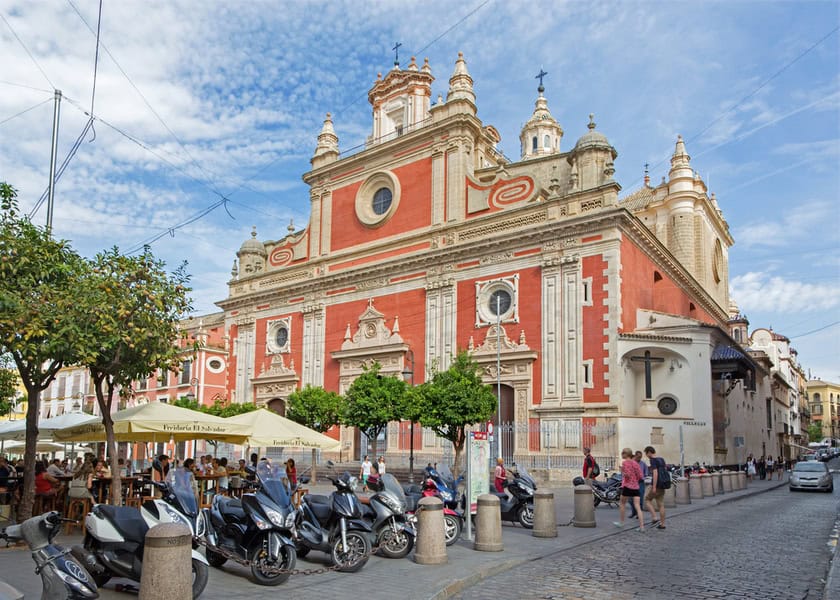
The Iglesia del Salvador is located at number 3 of Plaza del Salvador in Seville. You won’t have any difficulty recognising the large church, as it dominates the square with its imposing, colourful façade.
Situated in the Casco Antiguo, you can easily reach it on foot if you are in the historic centre. The church is often one of the stops on the various organised walking tours that reveal the hidden beauties of the city. From the cathedral it’s only a 6-minute walk to Plaza del Salvador, via Calle Alvarez Quintero, Calle Francos or Calle Hernando Colón.
If you’re coming from afar and need to use public transport, take the Tram number 1, get off at Plaza Nueva and then walk about 400 metres east along Calle Granada; in roughly 5 minutes you’ll reach the church.
Brief history of the church
Built in Baroque style, the Iglesia del Salvador was founded in Seville’s golden age, at the end of the 17th century. Like other city monuments, the church stands on the site of what was the city’s largest mosque: the Ibn Adabbas Mosque, built between 829 and 830. What makes its past even more layered is that the mosque had in turn been built on the remains of earlier Roman and later Visigothic buildings.
Although the exact date when the Roman basilica was built is not known, its existence can be presumed from archaeological finds such as a Roman inscription from the Augustan period discovered in the mosque’s minaret (today the church’s bell tower), coins dating to the reigns of Tiberius and Theodosius unearthed during the church’s construction, and Roman capitals in the Patio de los Naranjos.
The Ibn Adabbas Mosque is one of the oldest Muslim-period buildings in Spain, and it was the city’s main mosque before the Almohad Great Mosque was built on the site where the Cathedral now stands. The first 11 metres of the bell tower, which has a square base, were part of the former minaret, as was the structure of the outer courtyard, the Patio de los Naranjos, used for ablutions in the Muslim period and as a cemetery in the Christian period.
Iglesia del Divino Salvador: what to see?
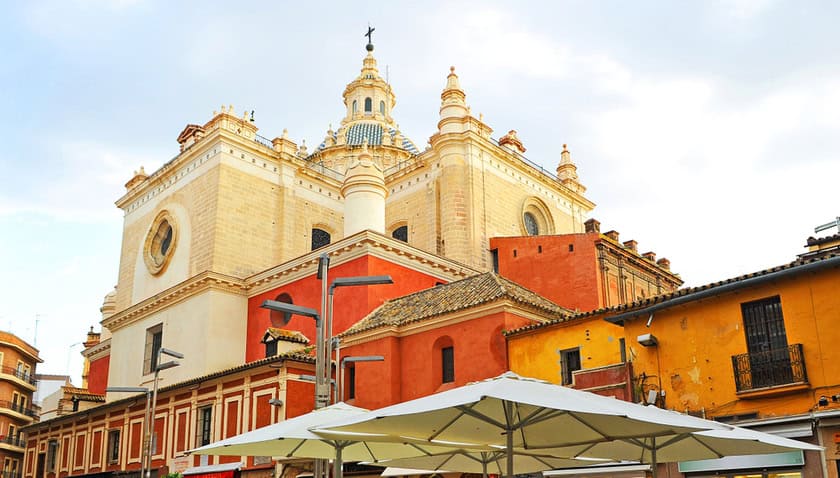
The Church of the Divine Saviour in Seville which you can admire today was built in 1674 on top of the collegiate church that, since 1248, had replaced the Ibn Adabbas Mosque.
The architect who oversaw the 17th-century restoration of the church was Francisco Gómez Septién, although the design of the façade is by José Granados de la Barrera. On Francisco Gómez Septién’s death, the works were entrusted to Leonardo de Figueroa, who completed the project in 1712, adding the large dome that characterises the Latin-cross church with its three naves.
In the centuries that followed, the church underwent numerous further embellishments and restorations and, thanks to these, today it is one of the city’s most important churches.
Works of art
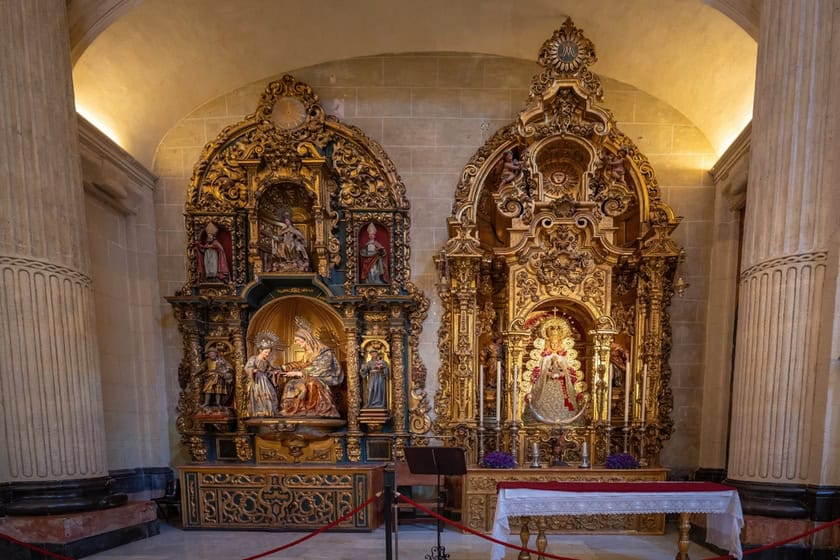
The Iglesia del Salvador in Seville is imposing on the outside, but what makes it famous is the wealth of ancient sacred works of art found inside. Here are the ones I recommend you admire:
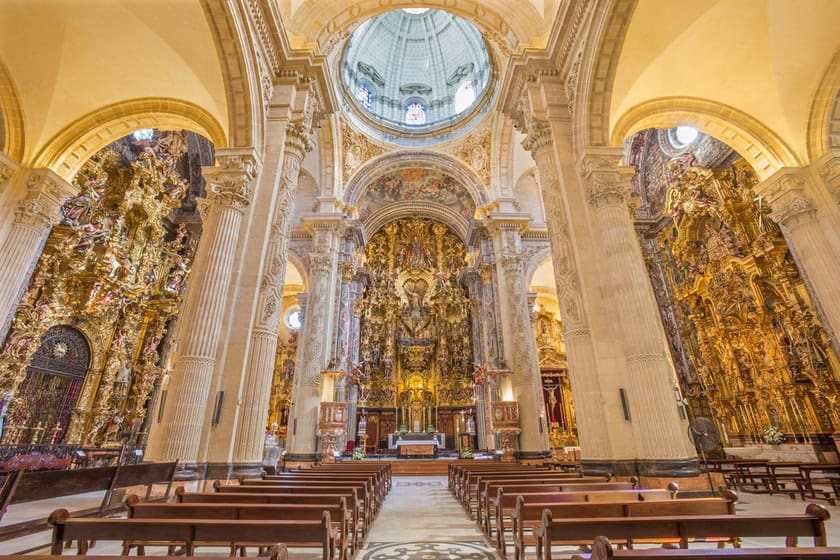
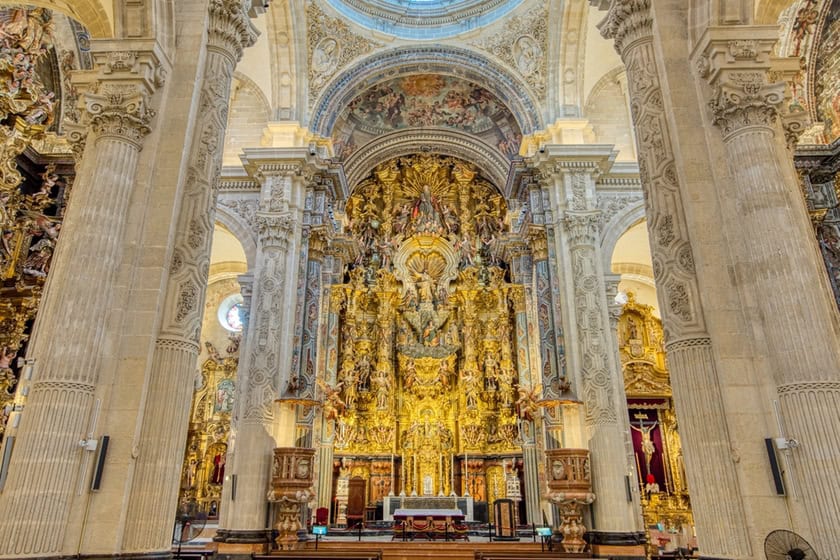
- The Main Altarpiece on the east side of the central nave: built between 1770 and 1779 by Cayetano de Acosta, it measures 21 metres in height and 10.50 metres in width, and is one of the largest altarpieces in the Christian world.
- The fresco by Juan de Espinal on the vault of the high altar: painted in 1775, it depicts the Holy Spirit in the form of a dove surrounded by angels. Juan de Espinal was one of the most famous artists of his time.
- The entrance altarpiece to the Chapel of the Blessed Sacrament: the work of Cayetano de Acosta, it was created between 1756 and 1764. It was so admired by the people of Seville that he was later commissioned to create the main altarpiece as well. This Rococo-style work is the actual entrance to the Chapel of the Blessed Sacrament.
- The Altarpiece of the Chapel of the Blessed Sacrament: the third work by Cayetano de Acosta, Baroque in style and large in size, also created between 1756 and 1764. This altarpiece celebrates the sacrament of the Eucharist.
- The Altar of Cristo del Amor, which contains a magnificent crucifix carved by the sculptor Juan de Mesa y Velasco between 1618 and 1620. Also worth admiring are the image of the Virgin of Socorro, also by the same artist; Saint John the Evangelist, by Antonio Castillo Lastrucci, created in 1935; and Saint Joseph with the Child Jesus, by Pedro Roldán.
- The Altar of Saint Anne, also Baroque in style, created in the 17th century, with Saint Anne and the Virgin Mary as a child.
- The Altar of the Virgin of Rocío, created between 1718 and 1731 by the artist Sebastián Santos Rojas.
- The Altar of Saints Justa and Rufina, two sisters who, according to tradition, were born in Seville in 268 and died as martyrs in 287.
- The splendid organ, built between 1792 and 1796 by the artists Juan de Bono and Manuel Barrera y Carmona. On both sides and at the top of the great organ are sculptures of angels by Cayetano de Acosta.
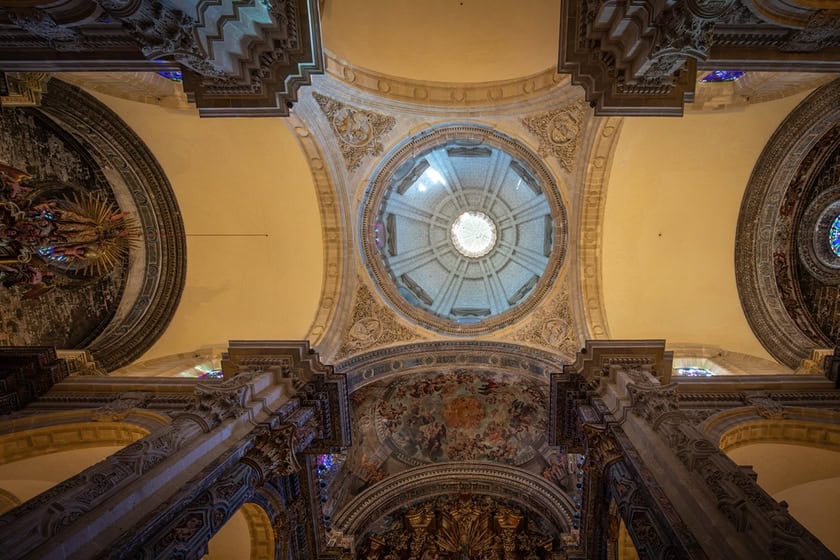
- The dome by Leonardo de Figueroa, built in brick rather than stone like the rest of the church because funds were running out, is nevertheless one of the most admired domes in Andalusia, thanks to its central play of light and the decorations in the four corners depicting the Four Evangelists.
- The stained-glass windows with floral motifs, dating from 1870 and commissioned by the Dukes of Montpensier.
Some of the statues you will see inside the church, despite their weight and value, are used during the processions of the Holy Week in Seville and carried through the streets of the city.
Opening hours
The opening hours of the Church of the Divine Saviour in Seville are:
- Monday to Saturday from 10:15 am to 6:00 pm
- Sundays from 2:30 pm to 6:00 pm or 7:00 pm, depending on the season.
The last admission is 30 minutes before closing. Masses are at 20:00 from Monday to Saturday, and on Sundays at 12:30 and 20:00.
On the following days the church is not open to tourists: 1 and 6 January, Holy Week, Corpus Christi, 15 August and 25 December.
Ticket prices
You can choose to simply visit the Iglesia Colegial del Divino Salvador or buy a combined ticket that allows you to see both this church and the Cathedral.
Il skip-the-queue combined ticket Cathedral + Giralda + Iglesia Colegial del Divino Salvador costs €17.50, but an audio guide can be requested for an additional fee. In any case, you will be able to enter the Cathedral directly without queuing. For this reason I recommend visiting the Iglesia del Salvador first and then the Cathedral and the Giralda, skipping the queue by showing the combined ticket on entry.
The single ticket for the Iglesia Collegial del Divino Salvador costs €6.00 online and €7.00 at the ticket office for those over 65 and for students under 25, while it is free for residents of Seville, children under 13 accompanied by an adult, and disabled visitors with a companion.
What to See Nearby
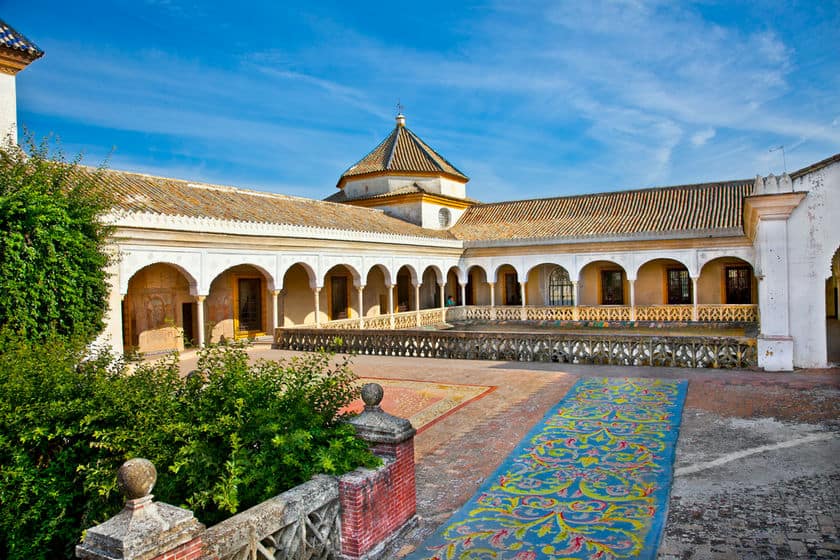
Iglesia del Divino Salvador is located in Seville’s historic centre, less than a 5-minute walk from the Museo del Baile Flamenco, from Calle Sierpes with its shops and from the Palace of the Countess of Lebrija. Less than a 10-minute walk will take you to Casa de Pilatos if you head east, to the Cathedral and the Archive of the Indies to the south, and to the Plaza de Toros to the south‑west. Whichever direction you choose, the city will surprise you with its historic buildings and its most beautiful attractions.
Where to stay nearby
The Iglesia del Salvador is located in the Barrio Santa Cruz in Seville, one of the city’s most popular areas with its narrow streets and numerous monuments to visit. The charm and historical value of this part of the city mean it is rich in accommodation options to choose from if you wish to stay in Seville close to the main attractions and reach them on foot in just a few minutes.
