I know, this province is not among the most touristy in the region, but perhaps you didn’t know that some of the beaches of Huelva rightly belong on the list of the most beautiful beaches in Andalusia: just think of the splendid Playa de la Bota in Punta Umbría, or the equally enchanting Playa Matalascañas or Playa Mazagón.
Contents
Huelva: enchanting beaches and fishing villages
The Huelva coastline coincides with the northern Costa de la Luz, stretches for over 62 miles and offers wonderful beaches of golden sand, picturesque fishing villages, shady pine woods and vast dunes to explore, as well as golf courses, water sports centres, quiet bars and seafront restaurants where you can sample the province’s gastronomic specialities, such as excellent fresh fish, Jabugo jamón iberico, white prawns, strawberries and excellent local DOC wines.
Why choose the beaches of Huelva?
Here are four good reasons:
- First of all because they are not too crowded: mass tourism is still not present in an intrusive way and, in general, these beaches tend to be frequented more by Spaniards. From this point of view, in some respects, some of Huelva’s beaches can be considered a good alternative to the beaches of Almeria / Cabo de Gata (even though the nature of the places is very different).
- Almost all of them are easily accessible by car and, in some cases, by public transport, and offer all the facilities you need for an enjoyable day at the beach.
- The sand is fine and golden, while the water, although a little cooler than in the Mediterranean, is a deep, inviting blue.
- Finally, the beauty of the beaches is proportionate to everything that surrounds them: delighting adults and children alike are enchanted landscapes, nature reserves, villages rich in history and tradition, and the places where Christopher Columbus lived for several years and sailed off to discover the Americas. To find out more, read our article on the things to do in Huelva.
Huelva beaches map
Let’s take a look together at the most famous beaches of the northern Costa de la Luz, using an interactive map:
Isla Canela and Isla del Moral
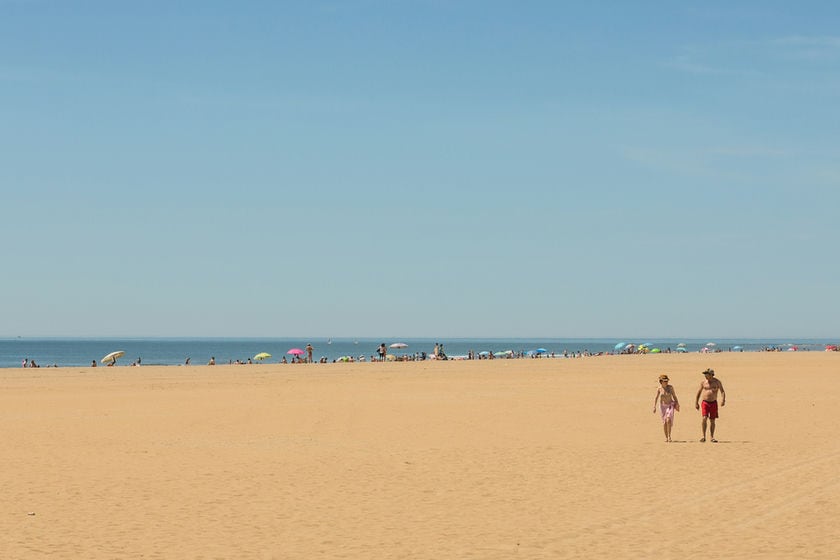
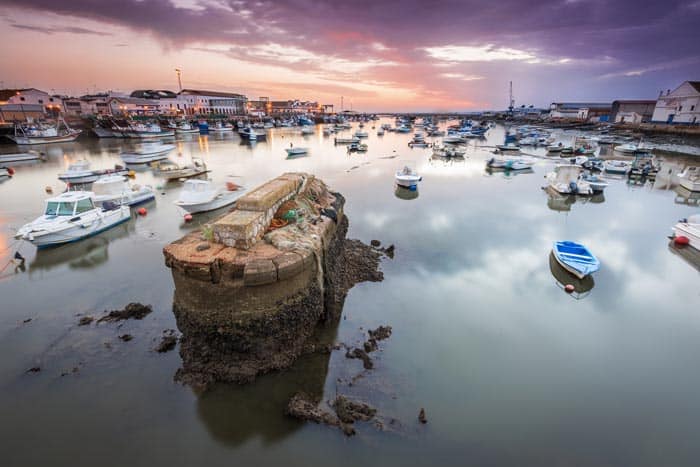
These are the two westernmost areas of the northern Costa de la Luz and lie just a few miles apart, near Ayamonte. Isla Canela is characterised by a long stretch of sandy beach, while the village of Isla del Moral is a charming fishing settlement with plenty of excellent restaurants: a fish dinner after a day at the beach is a classic choice around here. Facing it is the other large beach in the area: Punta del Moral.
- Distance from Huelva: about 1 hour
All available accommodation in Isla Canela
All available accommodation in Isla del Moral
Isla Cristina
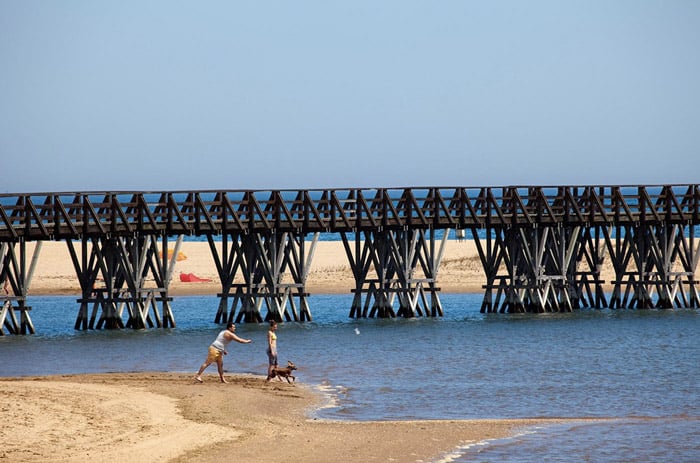
Founded by the Catalans, the town is located close to the marshy area of the Rio Guardíana estuary. The marina overlooks the estuary itself: it offers sports equipment for hire and is therefore ideal if you enjoy beach or sea sports. If you head a little away from Playa Central towards Punta del Caiman, you will find a very picturesque pier, and unspoilt landscapes that are at their best at sunset.
- Distance from Huelva: 45 minutes
All available accommodation in Isla Cristina
Playa de La Antilla /Islantilla
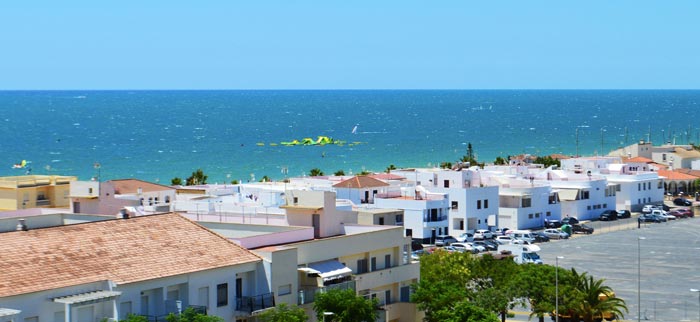
From Isla Cristina to La Antilla and Islantilla there are miles of golden beaches with very fine sand facing quiet towns. La Antilla’s little harbour has remained unchanged over time, with wooden boats, chiringuitos and small fishermen’s houses. Further away from the port, there are numerous villas and apartments for tourists or Spaniards who have chosen to buy their second home here.
- Distance from Huelva: 40–45 minutes
All available accommodation in the area
El Rompido, El Portil and Punta Umbria
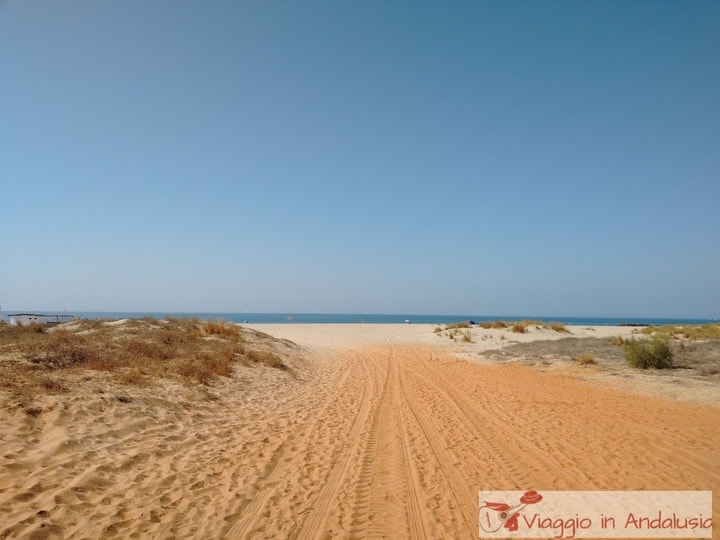
Approaching the small town of Huelva, we find El Terrón and, along the A-5052, El Rompido, El Portil and Punta Umbria, small villages by the sea protected by a sandbar and particularly popular with the Spanish. There are not many facilities, but especially in El Rompido there is no shortage of beach resorts.
The beach of Punta Umbria is called Playa de la Bota: it is the most popular and, according to many, wins the award for the most beautiful beach in Huelva. Surrounded by nature, it has exceptionally clean water and has been awarded the Blue Flag on several occasions. The beach is within walking distance, and there are nearby car parks where you can leave your car.
- Distance from Huelva: 20 to 30 minutes
All available accommodation in Punta Umbría
Playa Mazagón
East of Huelva, for many miles, stretches another of the most beautiful beaches in this stretch of the Costa de la Luz: Playa Mazagón. The sand dunes slope down towards the bright blue sea, while on the opposite side they are protected by pine woods. In addition to a large car park for Playa de las Dunas, Mazagón offers a large sports marina and is an excellent choice for anyone who loves water sports.
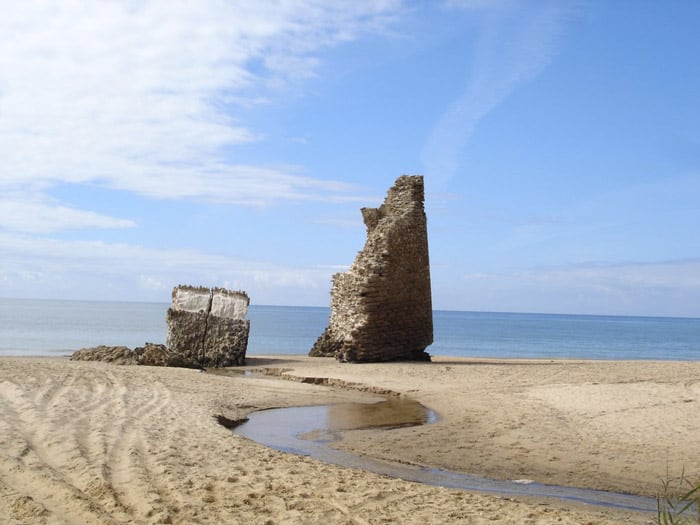
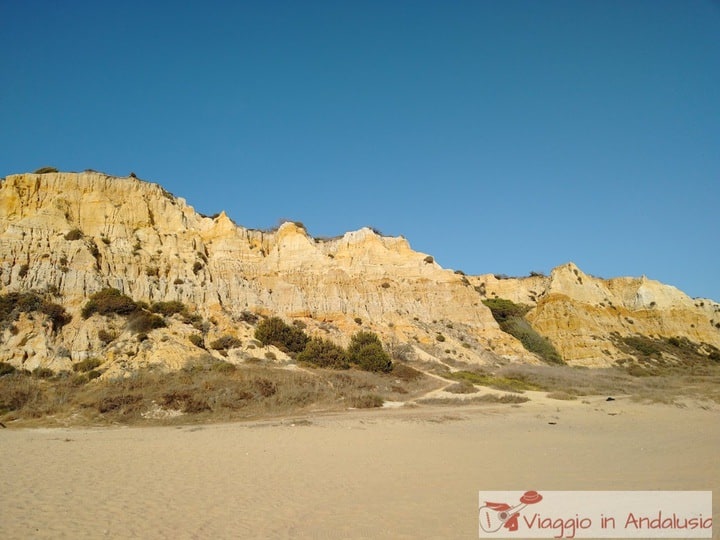
The beach I recommend, however, is Playa de Rompeculos: it is located near the Parador de Mazagón (Carretera San Juan del Puerto-Matalascañas, km. 31): splendidly unspoilt and framed by rock badlands of astonishing colours. Further south, near Camping Doñana Mazagón, you will find the beach remains of the Torre del Loro. Heading south from the town proper, take the A-494 after 6.2 miles, immediately after the campsite.
- Distance from Huelva: 25 minutes
All available accommodation in Mazagón
Playa Matalascañas
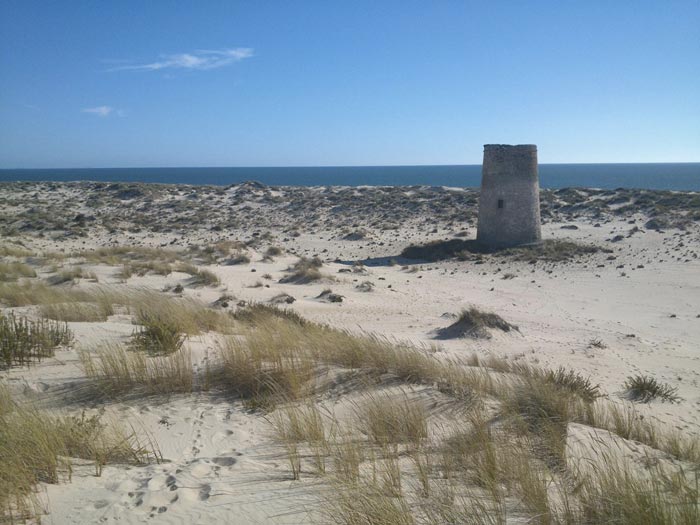
Between the Mazagón area and the Coto de Doñana Nature Reserve lies the wonderful Playa Matalascañas. An important tourist centre, this area is characterised by many restaurants and nightclubs for those looking for a lively social scene: it is practically one of the beaches closest to Seville, which makes it a very sought-after destination for Andalusians who live in the shadow of the Giralda.
If you decide to do a bit of beachgoing here, walk to the far end of the town (towards the north-west): you can’t fail to see a large monolith in the water, by far the distinctive feature of this beach. In reality it isn’t a rock, but the torre de la Higuera, an ancient, powerful inverted watchtower driven into the sea as a result of the famous Lisbon earthquake (1755).
On the opposite side of the town, as I was saying, there is the nature reserve: the dunes that characterise this stretch of coast are truly beautiful, as you can see in the photo. At the entrance to the park, right by the beach, there is a little kiosk where you can ask for information. They will point out the presence of a wooden boardwalk: even though it is partly buried in sand in some sections, it is not difficult to follow the route. It is a circular trail that takes around 20-30 minutes.
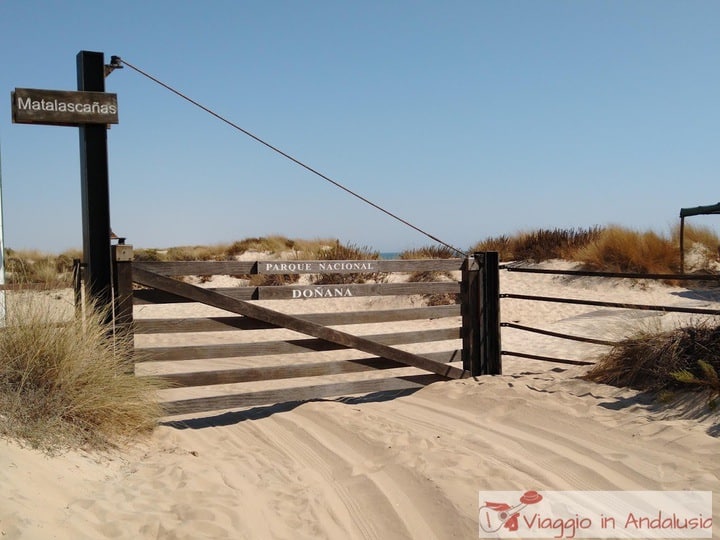
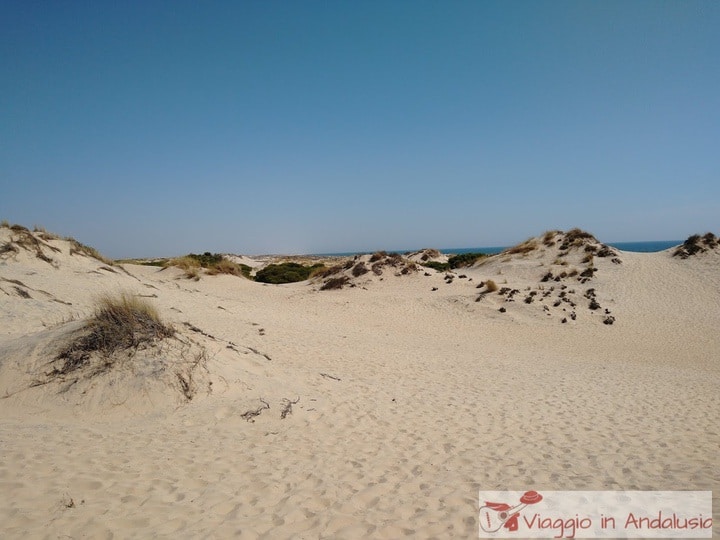
If, on the other hand, you want to see the fantastic lookout tower that appears in the photo below the title of this paragraph, know that it is called Torre Carbonero and that to reach it you’ll have to trudge a long way over the dunes (not recommended in summer): here are the directions on Google Maps.
- How to get there: Matalascañas can be easily reached by car or by bus. From Plaza de Armas in Seville, simply take the line for El Rocío-Matalascañas, while from Huelva there is a direct service to Matalascañas.
- Distance from Huelva is about 50 minutes.
All available accommodation in Matalascañas
A visit to the Doñana Natural Area is equally worthwhile. It is one of Spain’s most important protected natural areas and one of the largest in Europe, with four different ecosystems and an impressive variety of animal and plant species.
