Many trips to Andalusia end up revolving around the great art cities, between Seville, Cordoba and Granada. Yet, to truly understand a fundamental side of this region, you also need to look to the sea: not just the Mediterranean of the Costa del Sol, but also the open, bright and windy Atlantic of the Costa de la Luz.
Here Andalusia is a region apart: along the entire western coastline you come across immense beaches with very high dunes and majestic lighthouses, little harbours where bluefin tuna fishing is carried out, sherry bodegas, pueblos blancos with sea views, natural parks and spectacular sunsets over the ocean. In this article, then, we look at what to see along the Costa de la Luz, from the province of Cadiz to that of Huelva, with an initial top 10 and an itinerary designed to help you organise your trip as well as possible.
Contents
Where is the Costa de la Luz?
The Costa de la Luz stretches from Tarifa to Isla Canela and includes the entire coastline of the provinces of Cádiz and Huelva, facing the Atlantic Ocean, as far as the southern border with Portugal. This geographical position makes its beaches profoundly different from those of other stretches of the Andalusian coast, especially in comparison with the nearby Mediterranean Costa del Sol: not only in environmental and natural terms, but also in urban development, atmosphere and tourism model.
How to get to Costa de la Luz?
The most practical way to reach the Costa de la Luz is to fly into Seville Airport, especially if you want to visit the Cadiz and Huelva area, the Sherry Triangle and the beaches of Conil de la Frontera and the various seaside towns around Cadiz. Although it is not Andalusia’s main airport, a role held by Malaga, Seville is well connected to many European cities, with frequent and often fairly inexpensive flights.
Once you’ve landed, you can hire a car directly at the airport and head towards Cadiz or Huelva; alternatively, you can get to the city centre and from there catch a train or bus to the coast. That second option is workable, but I wouldn’t recommend it if you plan to make several stops, as it would considerably limit your mobility in the less central areas.
Another possibility is Málaga – Costa del Sol Airport, which often offers a wider choice of flights than Seville. In this case, however, it makes most sense if you want to reach Tarifa and begin the itinerary in the south, then work your way along the coast towards Cádiz. Here too, a hire car is almost essential: by public transport, getting around towards the Costa de la Luz becomes time-consuming and decidedly impractical.
For the westernmost part of the Costa de la Luz, that is to say the province of Huelva, Seville Airport is ideal, but you can also consider Faro Airport in Portugal, not far from the Spanish border. Here too, however, the car remains the most practical choice, both for crossing the border and for getting around among beaches, coastal towns and natural areas.
As you will have understood, public transport may be enough if you stick to well-connected towns such as Cadiz, Jerez, Sanlúcar de Barrameda or Huelva, but it becomes rather impractical if your aim is to really explore the Costa de la Luz on a road trip. In that case, the best solution is undoubtedly a road trip with a hire car.
Things to do in the Costa de la Luz: my top 10
In this article I’ll suggest an itinerary to discover the coast’s most beautiful destinations, dividing the route by province. But first, here’s a top 10 of things to do and see in the Costa de la Luz.
Duna de Bolonia
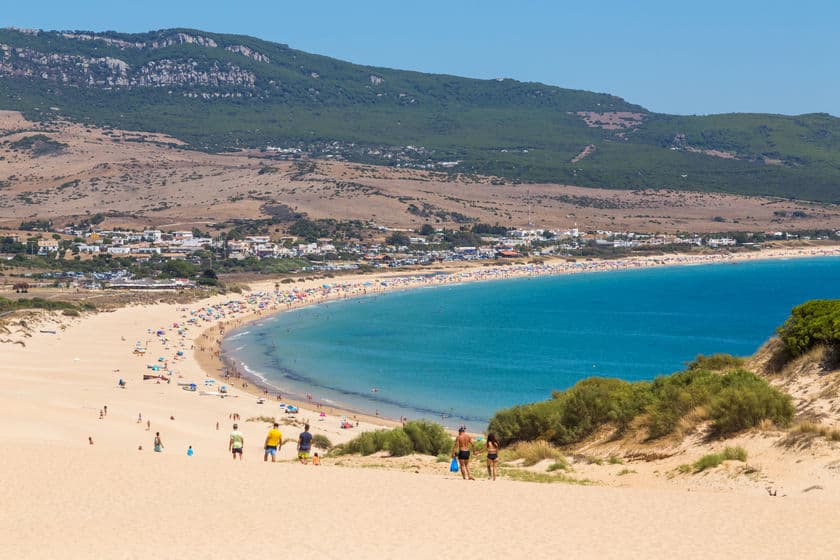
Not far from Tarifa lies one of the most spectacular and iconic landscapes of the Costa de la Luz: the Bolonia Dune, a vast sand formation overlooking Playa de Bolonia, with exceptional views over the Atlantic Ocean and, on particularly clear days, the African coast. The dune is in a fairly untouched protected area, but I assure you it is easily reached from the beach. My only advice: do not underestimate the climb to the top of the dune! The heat and the effort will be felt. Next to the dune are also the Roman ruins of Baelo Claudia, which make the visit more complete.
Doñana Park
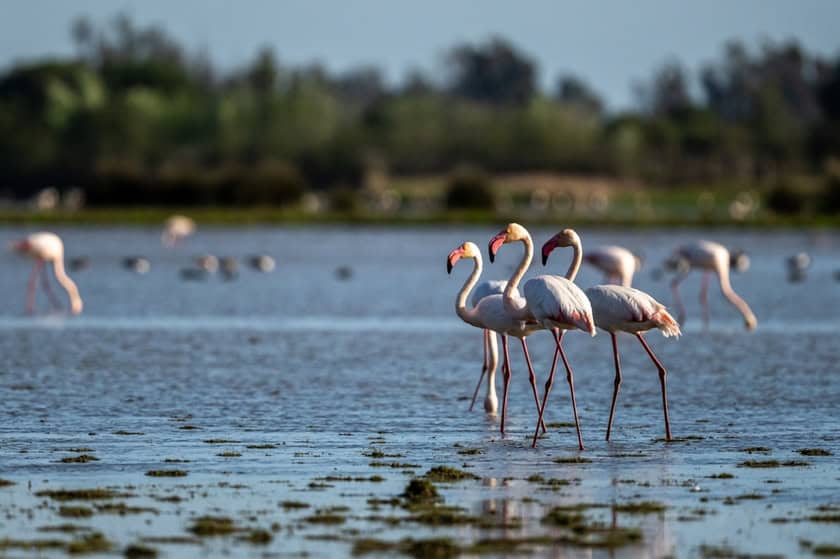
The Doñana National Park extends across the provinces of Huelva, Seville and Cádiz, near the mouth of the Guadalquivir, and is undoubtedly one of the great natural wonders of Andalusia. Along the coast and inland stretches a mosaic of marshes, shifting dunes, lagoons, pine forests and completely unspoilt beaches, where you can go hiking while observing the fauna and flora in the most unreal silence. Also not to be missed is El Rocío, a very unusual village reminiscent of the Wild West: it lies at the gates of the park, just a few minutes from the Matalascañas coast.
Parque Nacional de Doñana Visitor’s Guide
Catedral Nueva de Cadiz
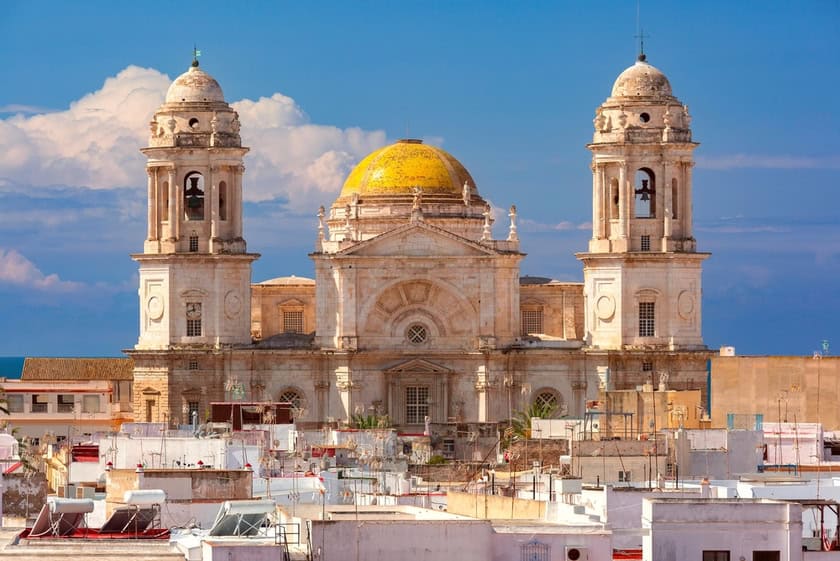
The Cathedral of Cadiz does not have the monumental Gothic profile of Seville Cathedral, nor the historical and religious layering of the Mezquita of Cordoba. When you see it, the impression is rather one of maritime brightness, almost of lightness. The cathedral stands in the centre, yet only a few steps from the ocean, and its great golden dome dominates the scene, especially when admired from the seafront. Yes, it is solemn, but in its own way: it is as if it were in open dialogue with the sea, the sun and the whiteness of Cadiz’s roofs.
Tarifa Old Town
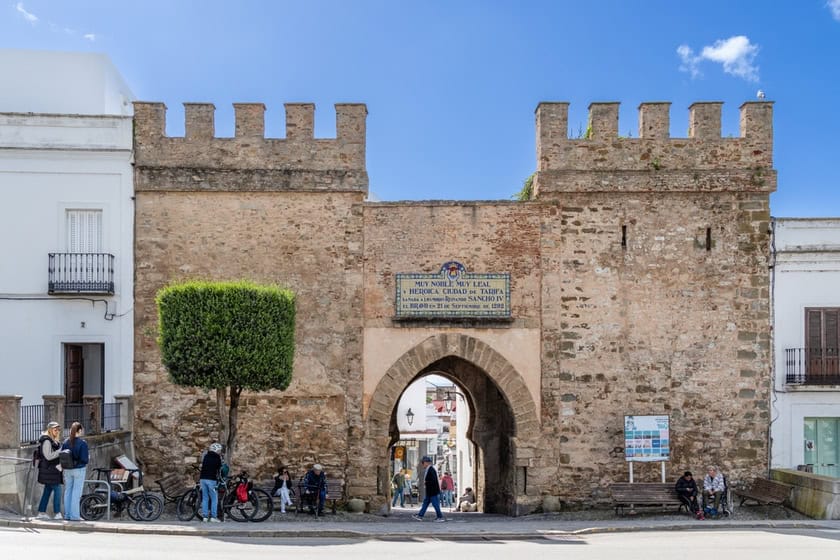
Visiting the historic centre of Tarifa is not like visiting the centre of just any other Andalusian town. Of course, this too is a small white labyrinth, gathered around the ancient medieval walls and dotted with little squares, flower-lined alleys, old fortresses and other traces of Moorish history. But there is a different atmosphere here: not only windier, but also more like a border town. After all, Tarifa looks out over the Strait of Gibraltar, facing Morocco, beyond the Pillars of Hercules. And it is here, among bars, restaurants and little places hidden along the narrow streets of the centre, that many of the sportspeople who have come from all over the world to challenge the wind meet up.
The bodegas of the Sherry triangle
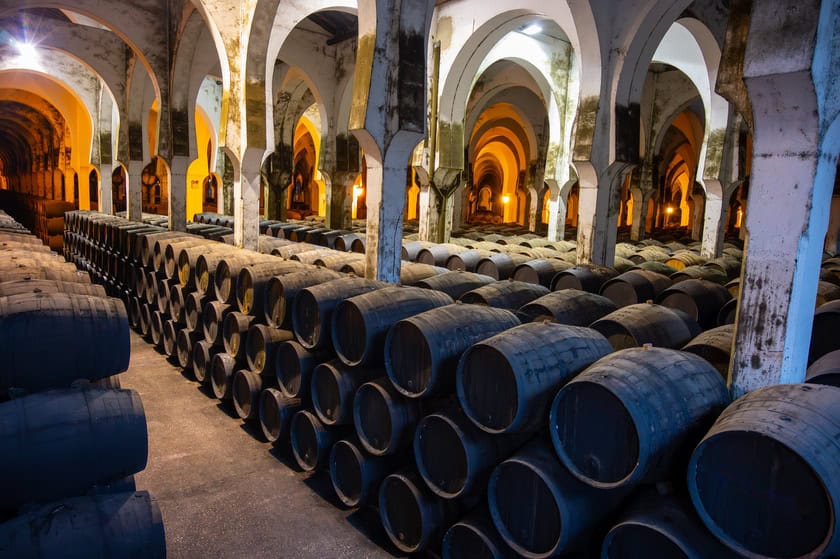
The Sherry Triangle links two coastal towns such as Sanlúcar de Barrameda and El Puerto de Santa María with Jerez de la Frontera, a little further inland: three rather different places, united by wine culture and, more specifically, by sherry. Fino, manzanilla, amontillado and Pedro Ximénez are names that will be familiar to lovers of fortified wine. Passing through the Costa de la Luz without visiting at least one bodega would be a mistake: a stroll in the cool of the cellars, among casks, ancient solera systems and tastings, knows how to engage all the senses.
Playa de los Lances
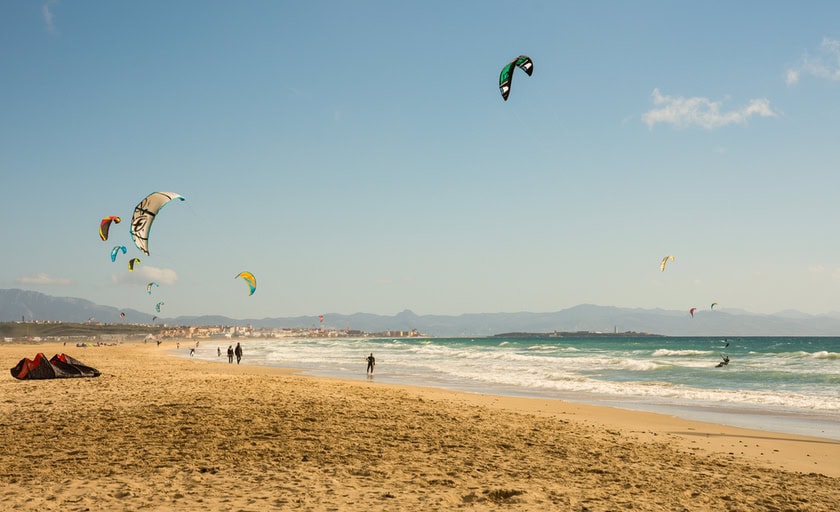
The ocean beaches of the Costa de la Luz may not be the most comfortable for swimming, but they have a truly unique photogenic charm and are well worth visiting for that alone. Playa de los Lances is one of the most popular in the province of Cádiz: a long, wide sandy beach on the outskirts of Tarifa, best known for the strong wind that makes it ideal for watersports such as kitesurfing and windsurfing. It is a perfect stop for understanding Tarifa’s maritime character and the force of the wind that can be felt here everywhere. And for those who love these sports, it is also a very useful clue as to where to choose your hotel.
Tasting red tuna in Zahara de los Atunes
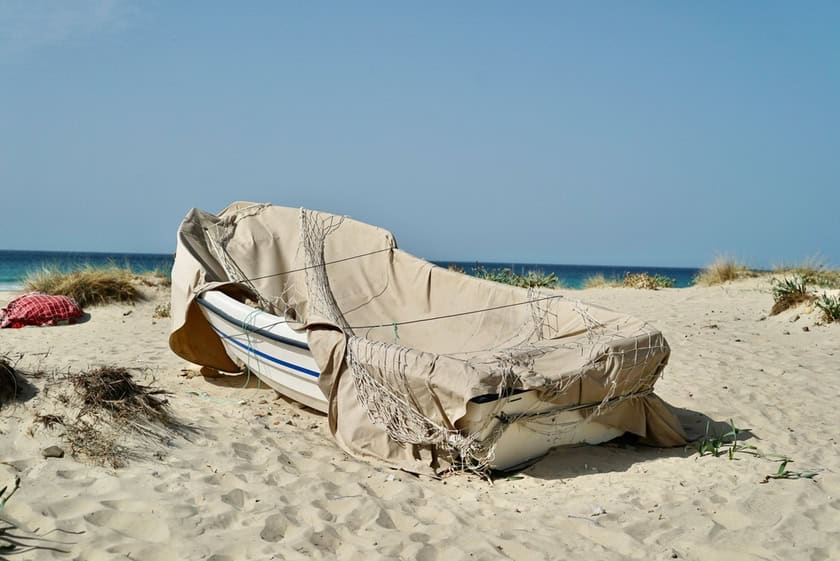
As the name suggests, the small seaside village of Zahara de los Atunes, in the municipality of Barbate, is one of the best places to taste almadraba bluefin tuna, an ancient fishing tradition linked to the Cadiz coast. The town’s restaurants and tapas bars, worlds away in atmosphere from the more touristy resorts of the Costa del Sol, celebrate it in many forms: from raw to grilled, right through to the more gourmet preparations. During the Ruta del Atún, usually in May, Zahara becomes a small capital of Atlantic gastronomy.
Playa de la Caleta
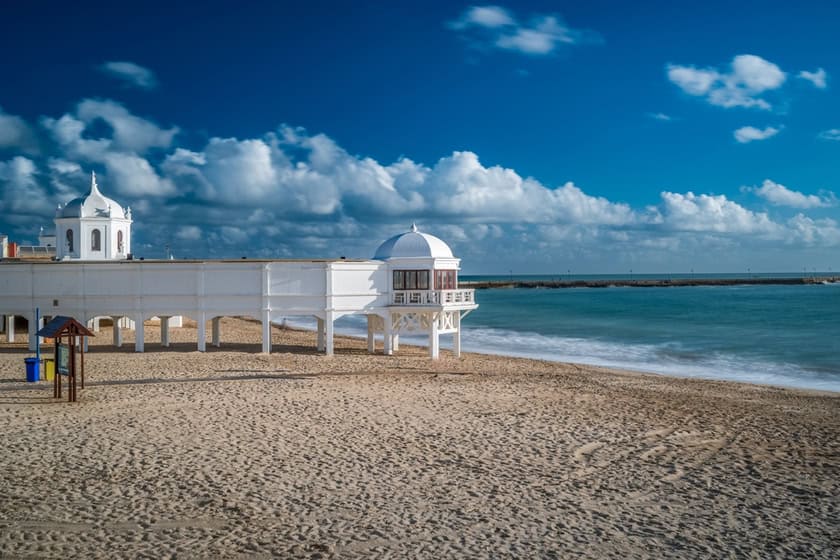
Playa de la Caleta is Cadiz’s most iconic beach, as well as its most distinctive: you’ve also seen it in 007 – Die Another Day. Adjacent to the historic centre and framed by the castles of San Sebastián and Santa Catalina, it is a small urban beach: precisely for this reason, it is often crowded, not only with tourists but also with gaditanos, who regard it as a place that embodies the city’s identity. At sunset it becomes one of the most photographed spots on the Costa de la Luz.
The places of Christopher Columbus
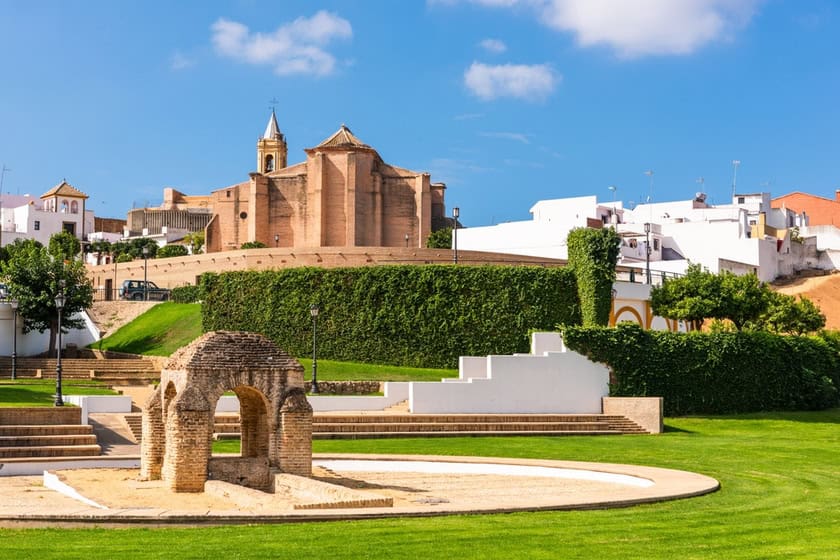
In the Huelva area you will find the so-called Lugares Colombinos, in other words the places where the preparations for, and departure of, Columbus’s first voyage to the Americas took place. Along the coast it is possible to follow a very interesting route, visiting Palos de la Frontera, Moguer and the Monastery of La Rábida. It is an itinerary that allows you to change pace from the beaches of the Costa de la Luz, retracing a history made up of maritime exploits and great Atlantic crossings.
Muelle del Tinto
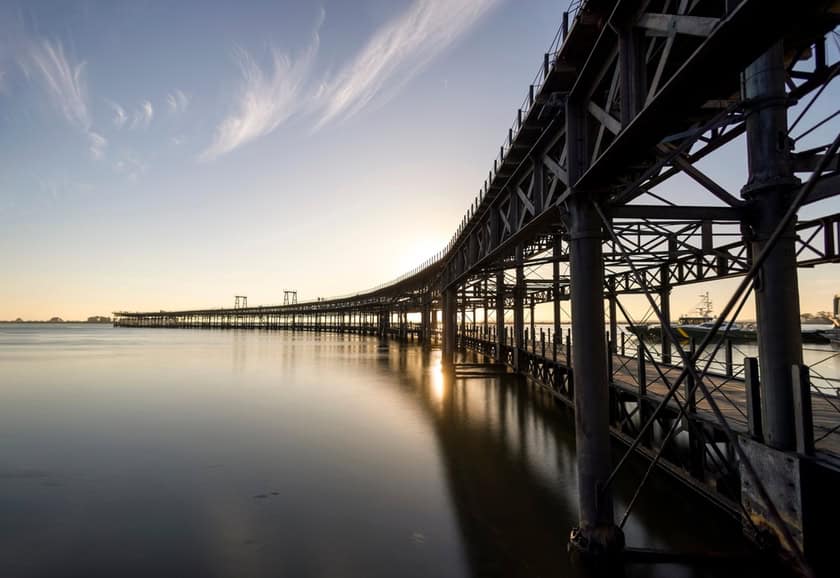
Huelva is a very different city from the other Andalusian provincial capitals: here, people are not looking for monumental grandeur, but for traces of the British industrial heritage that long shaped the city. The Muelle del Tinto is the old mining pier built to load minerals from the Riotinto mines, now converted into a scenic walkway over the river. Its iron structure is the symbol of Huelva and offers an unusual perspective on the Costa de la Luz, especially at sunset.
Map of the beaches of the Costa de la Luz
Itinerary along the Costa de la Luz
The Costa de la Luz covers practically the entire western coastline of Andalusia, so working out how to organise a coherent route may not be entirely straightforward. After the top 10, I therefore want to suggest an itinerary from south to north — from Tarifa to the westernmost beaches of the province of Huelva — with the most interesting stops among larger towns, small villages, beaches, natural parks and monuments of historical interest.
The thing you do need to pay attention to, however, is that you will not be able to travel the entire coast in a linear way: at the level of Sanlúcar de Barrameda, right at the mouth of the Guadalquivir and on the border of the province of Cadiz, the road effectively comes to an end. To reach Huelva, you have to skirt round the Doñana area by heading inland, in the direction of Seville: it is therefore best to organise the logistics and travel times carefully.
Of course, you can tailor this itinerary however you like: start in Cadiz and head south, focus solely on the Tarifa area with a few detours into the pueblos blancos, or visit the northernmost part of the coast, in the province of Huelva, right up to the border with Portugal. In short, think of it as a starting point to be adapted to your time, your interests and the kind of trip you have in mind.
The Costa de la Luz in the province of Cádiz
The itinerary proposed here starts from Tarifa and ends in Sanlúcar de Barrameda, where the “natural barrier” is formed by the mouth of the Guadalquivir and the Doñana park.
Tarifa and its beaches
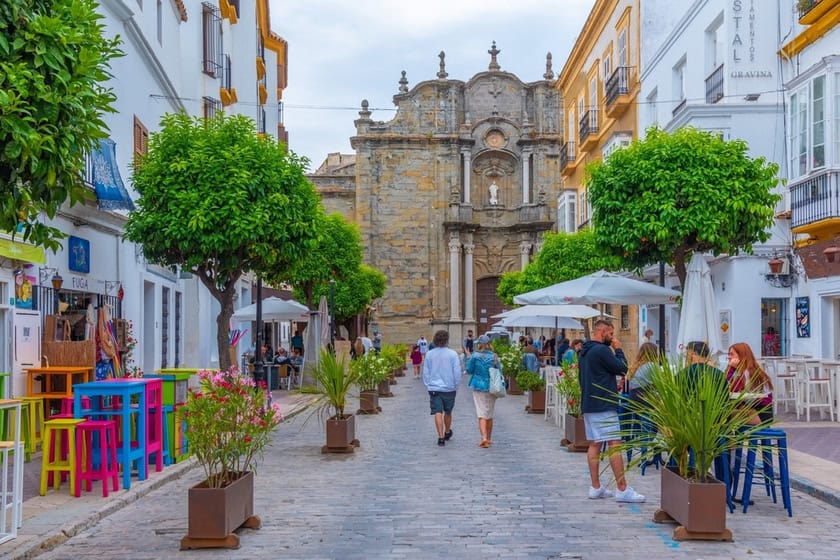
The little town from which we begin our itinerary along the Costa de la Luz is none other than Tarifa, the southernmost town in mainland Spain and one of the most “African” in Andalusia, often associated with the expression punta marroquí. But what does this stretch of Andalusian coast, so wild and so different from both Gibraltar and the developed beaches of the Costa del Sol, have to offer? The atmosphere here is unique, as if we were in a dimension suspended between the most authentic Spain, the allure of a frontier town overlooking Morocco and the sporting spirit of those who frequent the Atlantic beaches. We are, in fact, in the heart of the Parque Natural del Estrecho, a stone’s throw from Africa: you can admire it from the mirador del Estrecho, along the road from Algeciras, or from the Plazuela del Viento, in the centre of Tarifa.
A thousand-year-old city of ancient Carthaginian and Roman origins, Tarifa offers a few interesting attractions in its historic centre and along the seafront, starting with the Puerta de Jerez and the Castillo de Guzmán El Bueno. Above all, though, it boasts long, windswept beaches that have made it a benchmark for windsurfing and kitesurfing enthusiasts, as indeed much of the Costa de la Luz has.
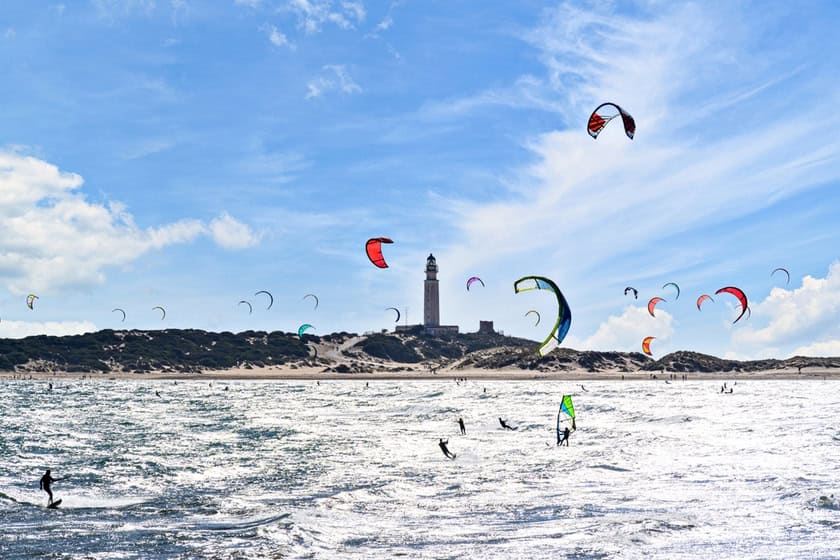
To find out more, you can read our article on the beaches in Tarifa, but here I simply have to mention the quintessential Tarifa beach: the vast Playa de los Lances, over 6 km long, which offers an incredible sight thanks to the hundreds of kitesurfing kites flying over the waters of the Atlantic.
There is also a small, more sheltered beach in town, Playa Chica, located practically at the meeting point of the Mediterranean and the Atlantic. More curious visitors will need to head out of the centre by car — or by public transport, at least in summer — to reach the dunes of Valdevaqueros and, above all, Bolonia, by far the most spectacular in the area. We have dedicated a full article to Bolonia, where you can also read about the archaeological remains of Baelo Claudia, an ancient Roman town overlooking the beach.
The municipality of Tarifa is also home to the beautiful Playa de los Alemanes, with only a handful of villas scattered across the surrounding hills. Access, however, is from Zahara de los Atunes, a tiny village we will come to shortly.
Zahara de los Atunes and its beaches
After Tarifa, heading north along the coast towards Cádiz, you can make a detour to Zahara de los Atunes, a tiny fishing village in the municipality of Barbate. It shares Tarifa’s windy conditions, but the atmosphere and character are rather different here: fewer water sports, more traditional seaside life — although the Atlantic can be cold and rough — and, above all, excellent food. As mentioned in the top 10, Zahara has been closely linked for centuries to the fishing of almadraba bluefin tuna, using a traditional technique that forms an important part of the identity of this stretch of coast.
It is therefore no surprise that local restaurant menus feature excellent fish dishes, especially tuna. If you want a recommendation, try the Mercado de Abastos: reasonable prices, short waiting times and extremely fresh produce. If you are visiting in spring, also keep an eye out for the Ruta del Atún, which usually takes place in May and turns Zahara into a small gastronomic capital of the Atlantic coast.
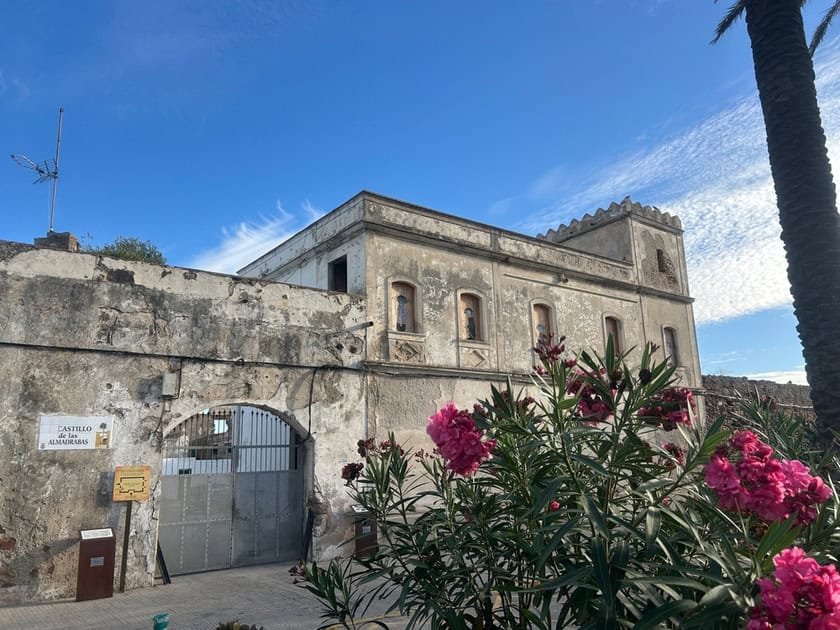
Zahara is certainly not rich in monuments. In the centre of the village you will find the rather neglected remains of the Castillo de las Almadrabas, also known as the Palacio de las Pilas, an old fortified complex closely linked to the processing and preservation of tuna. As for the beaches, you will have no trouble spotting the town’s one large beach: Playa de Zahara, which stretches for several miles well beyond the village itself.
Barbate and its beaches
Zahara de los Atunes is part of the municipality of Barbate, a small port town that lacks the neat charm of the pueblos blancos and the international atmosphere of Tarifa, but offers a more down-to-earth glimpse of the Costa de la Luz. Barbate has long been closely tied to tuna fishing, but it also welcomes visitors with its large urban beach, Playa del Carmen, which stretches between the harbour and the mouth of the Barbate River. Unlike some of the wilder beaches mentioned so far, this is a convenient, well-equipped option with the facilities you would expect from a small but organised seaside town.
The main reason to stop in this area, however, is the surrounding natural landscape. West of the town lies Playa de la Hierbabuena, a more natural and unspoilt beach at the foot of the cliffs of the Parque Natural de la Breña y Marismas del Barbate. From the beach itself, or from this car park, a trail runs through Mediterranean scrub along the clifftop to the Torre del Tajo, an old watchtower standing above the Acantilado de Barbate, with spectacular views over the Atlantic.
Beyond the Tajo cliffs you enter the area of Los Caños de Meca, a seaside resort known for its bohemian reputation, shaped by its history as a hippie retreat, its chiringuitos, small coves and several nudist beaches. The coastline changes character frequently here: alongside wide sandy beaches exposed to the wind, there are more sheltered stretches such as Playa del Pirata, one of the best known in the area, as well as rockier sections at the foot of the cliffs.
Continuing towards the Trafalgar Lighthouse, the landscape opens out into a broader, wilder stretch of coast, somewhat reminiscent of the area around Tarifa. It is not, however, a major water-sports destination: in favourable conditions, this stretch does attract surfers and longboarders, especially around the lighthouse and nearby Playa de Marisucia, but its main appeal lies in the scenery and in the historical associations with the Battle of Trafalgar. For generally calmer swimming conditions, it is better to head towards Playa de Zahora, north of the lighthouse: on the right days, it is one of the most pleasant spots in the area, with waters that are often easier to swim in than along the more exposed sections of the coast.
El Palmar de Vejer and its beaches
After Trafalgar, continuing north, you reach El Palmar, the only beach in the municipality of the white village of Vejer de la Frontera. Behind Playa de El Palmar — a long stretch of sand facing the Atlantic and one of the area’s main spots for surfing — you should not expect a proper town, but rather a small, scattered seaside settlement made up of low-rise houses along secondary roads, surf schools, informal restaurants and chiringuitos where you can stop for a drink at sunset.
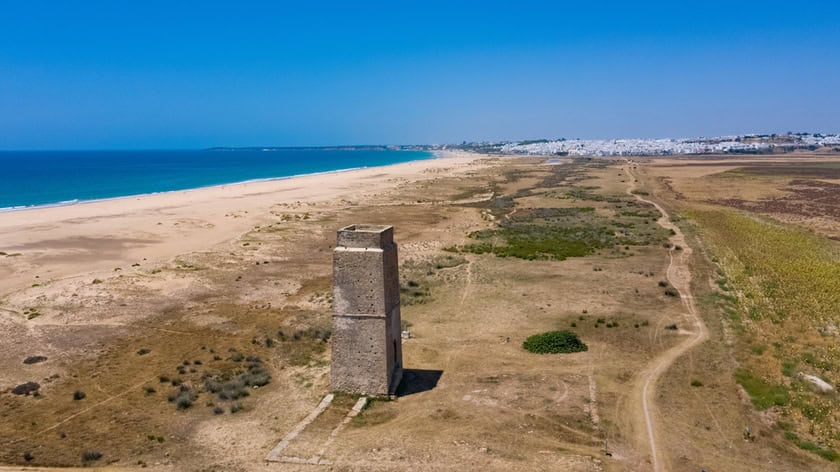
If you feel like taking a walk along the ocean, head north: here the beach changes name and becomes Playa de Castilnovo, with the white houses of Conil de la Frontera in the background. Around 0.6 miles from the northern end of El Palmar stands the Torre de Castilnovo, an old coastal watchtower that was also used to monitor the passage of tuna, and which is now one of the most recognisable landmarks along this stretch of beach. Nearby you will also find the curious Obelisco de Morenaizyr, an isolated and rather enigmatic feature in the landscape.
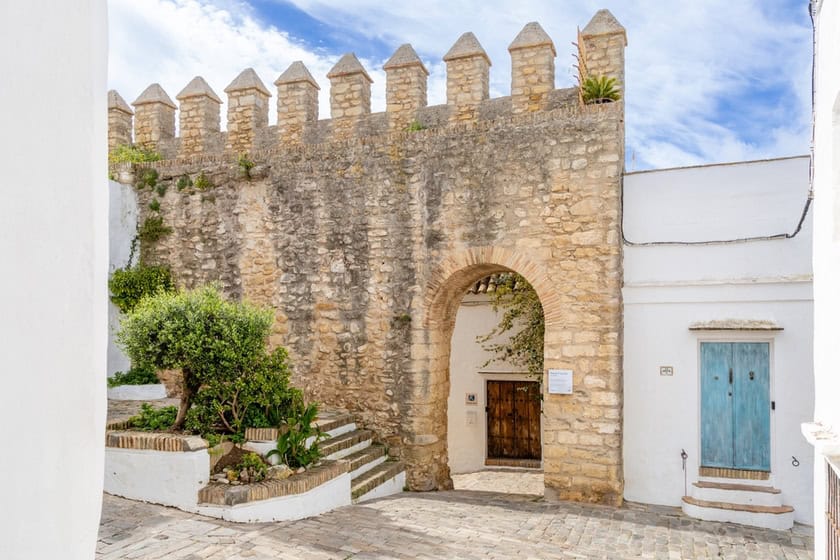
From El Palmar, it is definitely worth making a detour to Vejer de la Frontera, a white village perched on a hill just a few miles from the coast. I consider it one of the most beautiful in the province of Cádiz: expect the classic maze of narrow whitewashed streets winding between houses, covered passageways, arches and flower-filled balconies, small churches and the patios of old noble houses. Don’t miss the panoramic views from the castle walls, as well as the charming Plaza de España.
Conil de la Frontera and its beaches
Conil de la Frontera is one of the liveliest and most popular towns on the Costa de la Luz. Unlike El Palmar, here there is a pleasant historic centre to explore on foot before you head for the beach — wind permitting! Stop in the central Plaza de Santa Catalina, where you will find the Torre de Guzmán and the former Iglesia de Santa Catalina, once Conil’s main church. Medieval in origin, it still preserves Mudéjar elements, although it has been altered many times over the centuries and has now been converted into a cultural and exhibition space.
In the evening, the town comes alive and becomes one of the main nightlife hubs on this stretch of coast. For a taste of it, simply pass through the Arco de la Villa and head into the area around Plaza de España, where you will find pubs, cocktail bars and tapas bars popular with a mainly younger crowd.
The beaches of Conil de la Frontera are, of course, still the main attraction. Just below the town centre lies the large and easily accessible Playa de los Bateles, while further north you will find La Fontanilla and El Roqueo, both better suited to anyone looking to get a little further away from the built-up area. The part I would especially recommend, though, if only for its natural beauty, is Fuente del Gallo, a residential area of Conil developed around the cliffs that shape this section of coast. The beaches here are less developed, but more scenic and secluded. If you have had enough of the vast Atlantic beaches and would like to discover a few smaller coves, this is the right area: take the car to Cala del Aceite and the Calas de Roche, small inlets tucked beneath reddish cliffs dotted with vegetation.
Chiclana de la Frontera and Sancti Petri
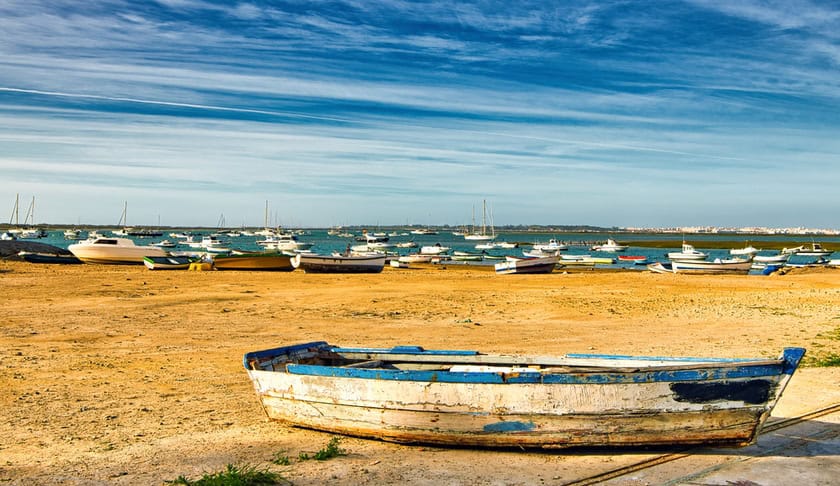
Between Roche and Cádiz lies Chiclana de la Frontera, perhaps a less atmospheric stop than some of the other destinations along the Costa de la Luz, but an excellent choice for anyone looking for easy access to the sea, plenty of facilities and wide sandy beaches. The main attraction is the vast Playa de la Barrosa, busy with holidaymakers during the day and an ideal spot for watching the sun set over the Atlantic in the evening.
The most distinctive place in the area, however, is Sancti Petri, a small fishing hamlet clustered around a little harbour, now also used as a base for boat trips, kayaking, sailing and excursions to the Castillo de Sancti Petri. The fortress, built between the 16th and 18th centuries to defend access to the bay, stands on a small island just off the coast. Its appeal lies not only in its military architecture: according to tradition, this area was also the site of the ancient temple of Melqart, the Phoenician deity later identified by the Greeks and Romans with Hercules.
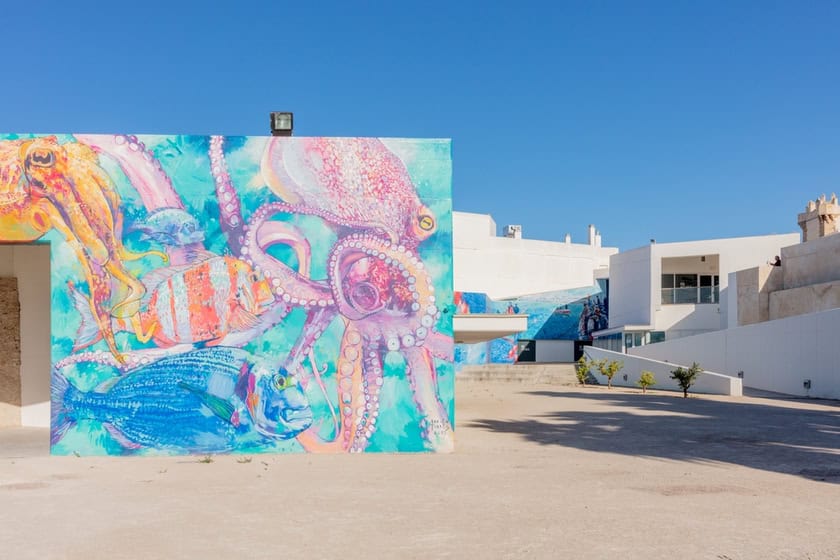
There is not a great deal to see in the hamlet in the conventional tourist sense, but it has a distinctive atmosphere: slightly ramshackle low-rise houses, a few maritime-themed murals, small restaurants and fishermen’s associations with nets on display. All around lies the landscape of the marismas of the Bahía de Cádiz, with tidal channels, salt pans and strips of land that make this area feel quite different from the beaches seen so far.
Cádiz and its beaches
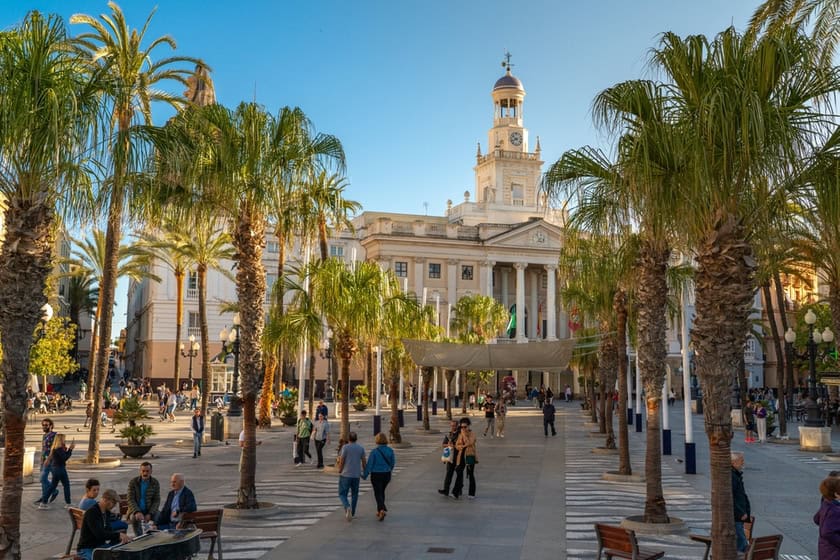
The route finally reaches Cádiz, the undisputed queen of the Costa de la Luz. If you have already explored this website, you may have seen that we have published a complete guide to Cádiz, with suggestions on what to see, where to eat, which neighbourhoods to stay in and which hotels to choose. Cádiz is well worth at least one overnight stay, giving you enough time to get a feel for the character of the gaditanos and explore the city’s different neighbourhoods at a more relaxed pace.
In short, pass through the monumental Puerta de Tierra and lose yourself in the historic centre, exploring the ancient Barrio del Pópulo until you reach the gleaming white Catedral Nueva. Then climb the Torre Tavira with its Camera Obscura, grab something to eat at the stalls of the lively Mercado Central, take in the broad, light-filled elegance of Plaza de San Juan de Dios, and then enjoy the views as you walk along the seafront towards the popular La Viña neighbourhood, where you will be spoilt for choice between tapas bars and small fish restaurants.
From there, it is only a short walk to the historic Playa de la Caleta, a small urban beach framed by the castles of Santa Catalina and San Sebastián. And there is still more to see: north of the historic centre are several squares worth visiting, including Plaza Mina and Plaza de San Antonio, as well as seafront parks such as Parque Genovés and the Jardines de Alameda Apodaca. If you want to find out more, read my article on what to do in Cádiz.
For a proper day at the beach, however, you need to move away from the heart of the historic centre and focus on the long stretch of sand running from the Puerta de Tierra along the Paseo Marítimo towards Cortadura and its namesake beach. In my view, the most convenient and scenic option is Playa de Santa María del Mar, with views towards the Cathedral and the historic centre; Playa de la Victoria is also a very practical choice, with plenty of hotels, restaurants and shops nearby.
The Sherry Triangle
I mentioned it in the top 10, and it is worth looking at in a little more detail here: the Sherry Triangle, formed by El Puerto de Santa María, Jerez de la Frontera and Sanlúcar de Barrameda, is an essential stop for anyone interested in Spanish wine. These three towns differ considerably in location, history and atmosphere, but are united by the production of Andalusia’s famous fortified wines, particularly well known and appreciated in the UK: fino, oloroso, amontillado, Pedro Ximénez and manzanilla. I strongly recommend visiting at least one bodega to get a sense of a fundamental part of the Costa de la Luz’s economic, commercial and gastronomic history.
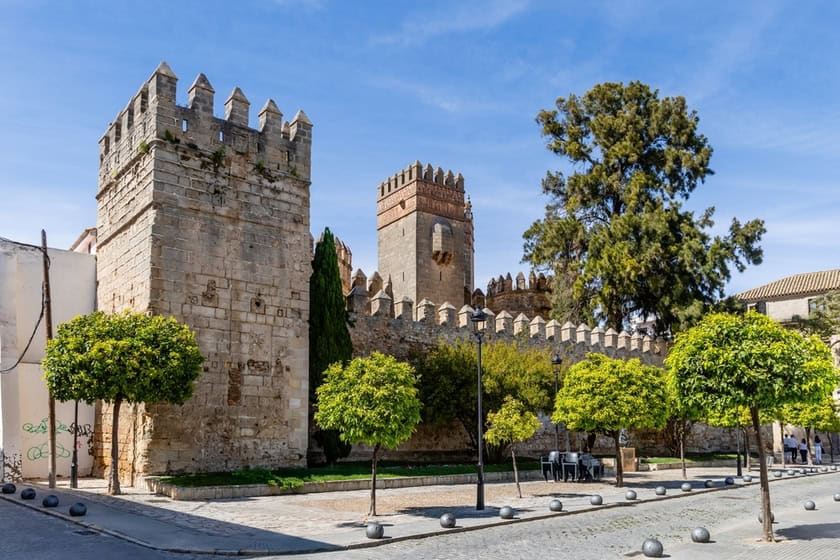
Following the coast, the first corner of the triangle you come to is El Puerto de Santa María, overlooking the Bay of Cádiz and crossed by the Guadalete River. It is not a particularly monumental city and has a more understated, relaxed feel than Cádiz itself, but it is pleasant to explore in a relatively short time. Worth seeing are the Castillo de San Marcos, the Iglesia Mayor Prioral and the old casas-palacio linked to the city’s mercantile past. El Puerto also has connections with Christopher Columbus, who stayed here while preparing for his second voyage to the Americas and came into contact with Juan de la Cosa, the cartographer and owner of the caravel Santa María.
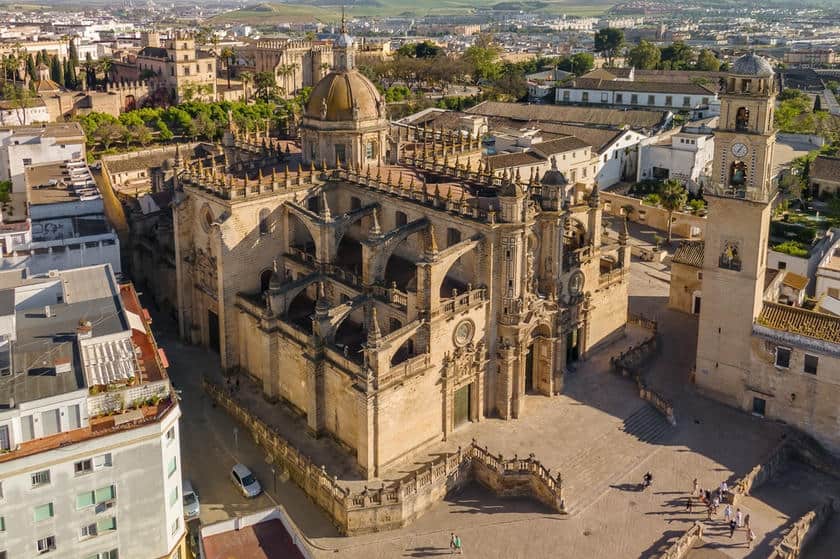
Although it requires a short detour inland, a visit to Jerez de la Frontera is almost essential, as this is the symbolic capital of sherry. Alongside wine, two other pillars of local identity come into play here: flamenco and the Andalusian horse. The compact but rewarding centre deserves some time: highlights include the Alcázar, the Catedral de Jerez, the small squares of the casco antiguo and, above all, the historic bodegas, which are genuine city institutions. If you only have time for one town in the triangle, this is the one I would choose.
Finally, as the last major stop before reaching the province of Huelva, there is Sanlúcar de Barrameda, a town with a character all its own. Wine production here specialises in manzanilla, the style of sherry most closely associated with the sea, while its position facing the marshes and the Parque Nacional de Doñana gives it a very different atmosphere from both Jerez and El Puerto. Exploring the historic centre involves a bit of uphill walking towards the Barrio Alto, where you will find the large and panoramic Castillo de Santiago, the Iglesia de Nuestra Señora de la O and the richly decorated Palacio de Orleans-Borbón. Down by the water, meanwhile, is the fishing district of Bajo de Guía, famous for its fish restaurants and views towards Doñana.
And the beaches? You will of course find them in both El Puerto and Sanlúcar, although they are not among the most beautiful on this stretch of coast. Here are a few:
- Playa de La Puntilla, in El Puerto, is the beach closest to the town centre.
- Playa de Valdelagrana, also in El Puerto but on the other side of the river, is wider and has more facilities.
- Playa de Bajo de Guía, in Sanlúcar, lies directly on the Guadalquivir estuary, facing the Parque Nacional de Doñana. It is the most scenic of the group.
- Playa de la Calzada / Las Piletas, close to the centre of Sanlúcar, is a good option for families.
The Costa de la Luz in the province of Huelva
As mentioned above, although the coast of Huelva is geographically continuous with that of Cádiz, the coastal route comes to an end at Sanlúcar de Barrameda: ahead lies the mouth of the Guadalquivir and, beyond the river, the protected area of Doñana. To reach the province of Huelva by car, you therefore cannot simply continue along the coast; instead, you need to make a long detour inland towards Seville before heading back down to the coast.
For this reason, a tour of the Costa de la Luz in the province of Huelva is almost best treated as a separate trip. This is also why the area is often overlooked by travellers who focus on the Cádiz coast: it takes more time, the logistics are less straightforward and it is a less obvious tourist choice.
Parque Nacional de Doñana
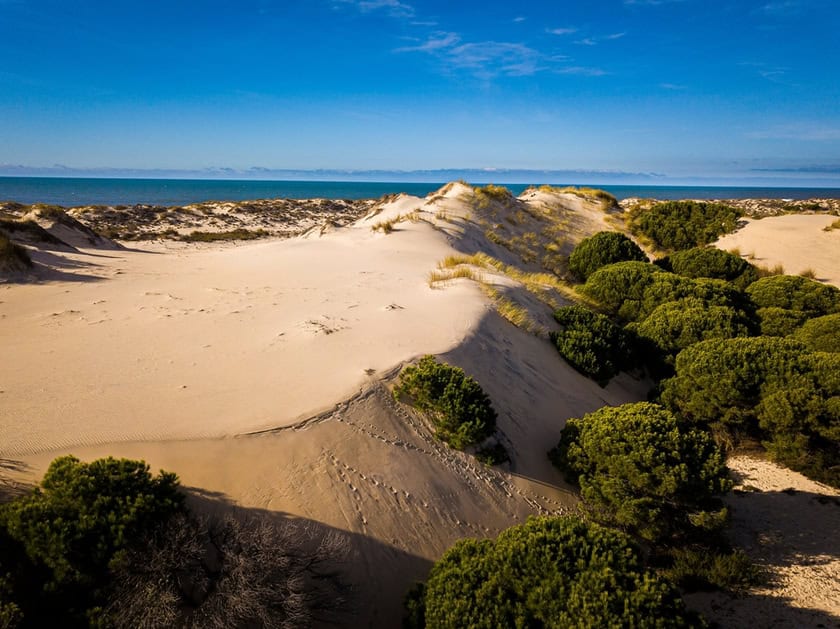
I have already mentioned this remarkable national park several times. It is one of the most visited in Spain, and its sheer size makes a quick visit difficult to organise, so Doñana should not be treated as a simple stopover between Cádiz and Huelva. In my article dedicated to the Parque Nacional de Doñana, I explain in detail not only the variety of natural environments you can explore — marshes, wetlands, shifting dunes, pine forests and beaches — but also the location of the visitor centres and, above all, the different ways to visit the park, often on guided 4×4 tours.
The quickest and easiest way to get a first impression of the park is to reach it by boat from Sanlúcar de Barrameda, where the Centro de Visitantes Fábrica de Hielo is located. River excursions depart from Bajo de Guía, crossing the mouth of the Guadalquivir and offering scenic views of Doñana from the estuary. This experience alone, however, is not enough to appreciate the park’s full natural diversity: for that, you need to plan a visit with several stops and, ideally, have a car at your disposal.
Among the places worth marking on the map are:
- the impressive and inhospitable dunes of Matalascañas, which show Doñana at its most coastal and sandy;
- the village of El Rocío and the marismas of Charco de la Boca, where the landscape gives way to wetlands rich in birdlife and horses;
- the Centro de Visitantes La Rocina, with boardwalks and observation points that make it easier to explore the park;
- the Palacio del Acebrón, set in a more wooded environment near the habitat of the extremely rare Iberian lynx;
- El Acebuche, one of the most convenient access points for short trails and guided excursions.
Bear in mind that visiting even just two or three of these places can take a full day, especially if you want to combine a visitor centre, a walk along the boardwalks, a stop at the dunes, some time in El Rocío and perhaps a guided excursion to observe the local wildlife and vegetation. Doñana requires time and careful planning.
Mazagón and its beaches
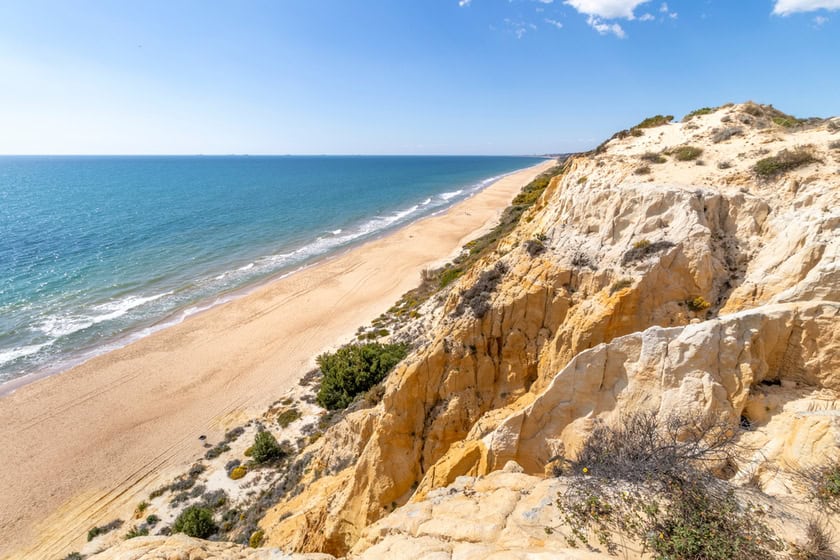
After leaving the protected area of Doñana behind, along with the dunes and beautiful beaches of Matalascañas, you reach Mazagón, a seaside resort divided between the municipalities of Moguer and Palos de la Frontera. Here you will find holiday villages, campsites and houses overlooking the long sandy stretch of Playa de Mazagón: the most convenient beach and the closest to the built-up area, though not necessarily the most beautiful.
The beaches most worth seeing lie mainly east of the centre, towards Matalascañas. Dunes, pine forests and, above all, the Acantilado del Asperillo — a striking wall of compact sand in ochre and orange tones — line the coast and give this area a distinctive appearance. The easiest to reach are Playa del Parador and Playa de Rompeculos, two more natural and scenic stretches of coast than Mazagón’s urban beach.
The Lugares Colombinos
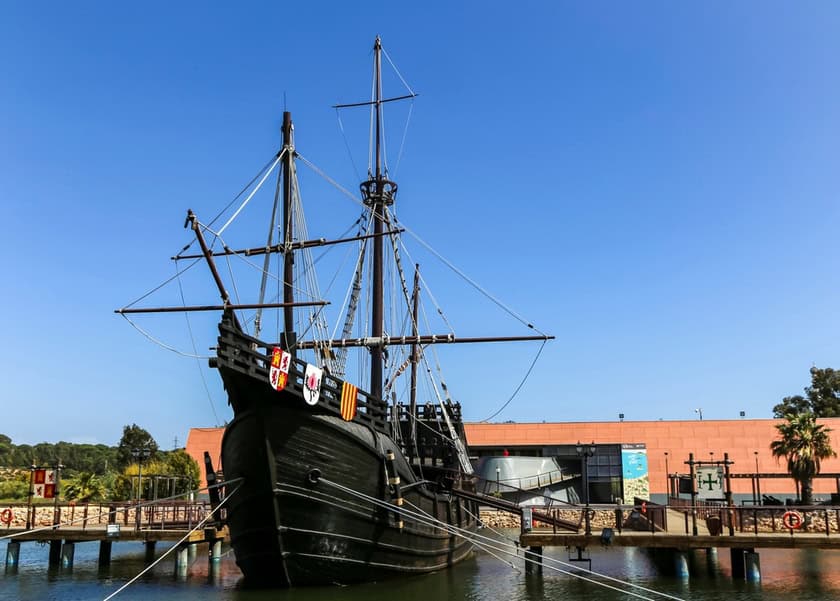
As you may already have gathered, this is the area where Christopher Columbus’s voyage first took shape. As you approach Huelva, you therefore have the opportunity to visit the Lugares Colombinos, the places associated with the preparations for and departure of Columbus’s first voyage to the Americas. The essential stop is the Monasterio de Santa María de La Rábida, where Columbus stayed before the expedition and received crucial support for his Atlantic project from the Franciscan friars. Today it can be visited from Tuesday to Sunday, from 10:00 to 18:00, with individual admission costing €4.
A short distance away, for the modest price of €3.60, is the Muelle de las Carabelas, a museum featuring full-size reconstructions of the Niña, the Pinta and the Santa María, which can also be explored inside. It may feel slightly educational in style, but it is very effective in conveying the practical scale of the voyage. To complete the route, you can also visit the centre of Palos de la Frontera, where you will find the Iglesia de San Jorge Mártir, from which Columbus and the Pinzón brothers departed after receiving a blessing, the Fontanilla, used to supply water for the expedition, and the Casa Museo Martín Alonso Pinzón.
The city of Huelva
I won’t pretend otherwise: Huelva does not have the immediate impact of Cádiz or the monumental appeal of other major Andalusian cities. Its character is more industrial, historically linked to the exploitation of the Riotinto mines by the Rio Tinto Company Limited, the British company whose presence left a lasting mark on the city and surrounding area. If you are a football fan, it is worth knowing that Recreativo de Huelva was founded here in 1889 and is traditionally regarded as the oldest football club in Spain. This history is closely tied to Huelva’s British community: workers linked to the Riotinto mines helped introduce organised football to the area, making the city an unexpectedly important chapter in the early history of Spanish football. The stadium is on the riverfront, if you fancy taking a look.
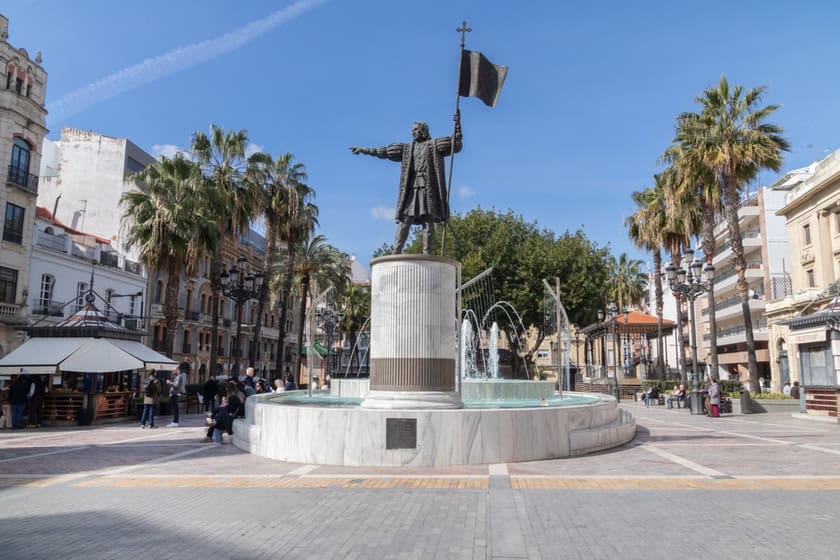
In general, half a day is enough to get a good first impression of Huelva. Start with the striking riverside walkway of the Muelle del Tinto, a 19th-century mineral-loading pier once used to transfer ore onto ships. Not far away is the Barrio Reina Victoria, built for company workers, with houses showing clear British and Victorian influences mixed with Andalusian and colonial details. In the centre, it is worth stopping by the colourful Plaza de las Monjas, where you will also find a statue of Christopher Columbus. You can find more details in my article on what to see in Huelva.
Punta Umbría beaches and the Marismas del Odiel
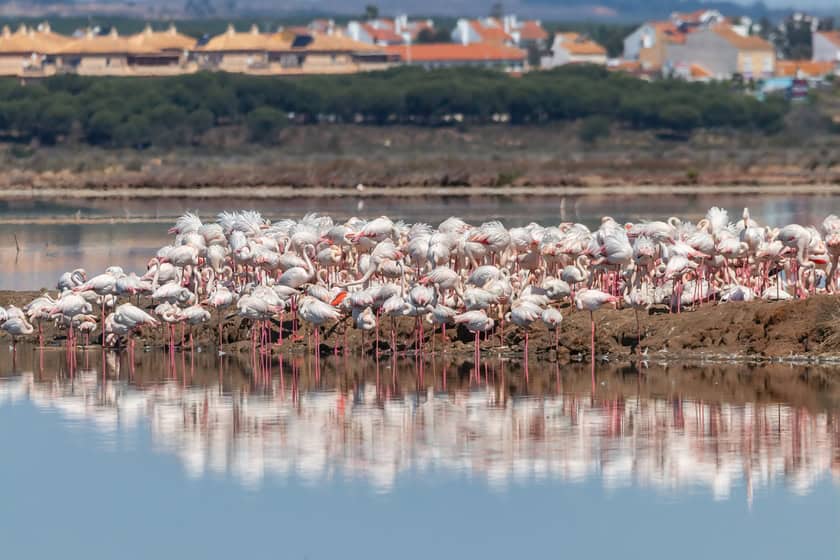
One seaside resort worth considering near Huelva is Punta Umbría, a lively coastal town set on a narrow strip of land between the Atlantic Ocean and the Odiel estuary. In summer it is especially popular with visitors from Seville, who have been coming to this part of the Huelva coast for generations. It is not, however, purely a tourist resort: Punta Umbría has a genuine year-round community and a strong identity rooted in fishing. In town you can see the Torre Almenara, an old coastal watchtower, and the Casa Museo de los Ingleses, a colonial-style house that reflects the historic British presence in the Huelva area. From the harbour, the traditional canoas passenger boats cross the estuary between Punta Umbría and Huelva.
The most convenient beach is Playa de Punta Umbría, easily accessible from the town, while visitors looking for a quieter setting tend to head towards Playa Los Enebrales and Playa La Bota, where the landscape is less developed, with the area’s characteristic dunes and shady pine forests. The real highlight, however, is the nearby Paraje Natural Marismas del Odiel, which is easy to reach when heading towards Huelva. From the Centro de Visitantes Anastasio Senra, short trails and boardwalks lead to observation points and viewpoints over the salt marshes and tidal channels.
La Flecha del Rompido
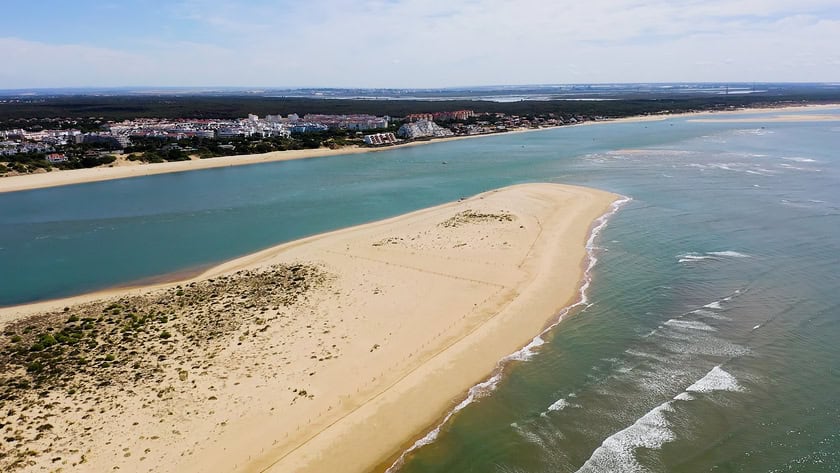
El Rompido is somewhere you need to make a deliberate detour to visit, as it does not lie directly along the coastal road towards Portugal. After Huelva and Punta Umbría, the coastline becomes fragmented by estuaries, marshes and river mouths, so the village is reached via more inland roads around Cartaya.
If you are simply looking for a beach, you can carry on or settle for Punta Umbría; but if you want a more unusual experience, head to this tiny settlement and take a boat across to the Flecha del Rompido, a long sand spit separating the Atlantic from the waters of the Río Piedras. Once you disembark, you can stay on the more sheltered river side or walk across to the more open and wild Atlantic side. The landscape here feels genuinely unspoilt.
Ayamonte and its beaches
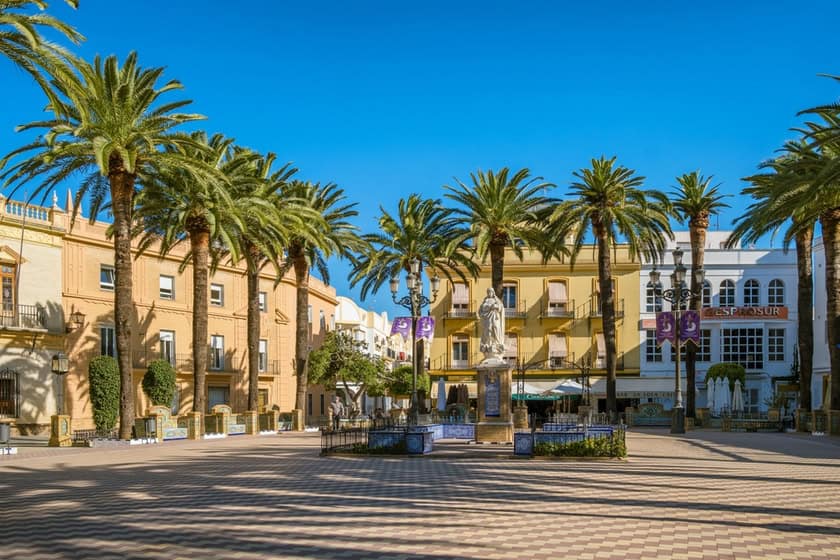
To round off the route along the Costa de la Luz, you can visit Ayamonte, the last Andalusian town before Portugal. It stands at the mouth of the Guadiana, directly opposite the Algarve, and has a border-town atmosphere that feels rather different from the seaside resorts encountered so far. A stroll through the historic centre and along the riverfront will bring you to several very attractive squares, including Plaza de la Coronación and Plaza de la Laguna.
And what about the beaches? From here, you need to head towards Isla Canela and Punta del Moral, the main seaside areas. Once again, you can expect long sandy beaches where you can relax and, when conditions are right, go for a swim.
Best Places to Stay on the Costa de la Luz
It is not easy to recommend a single strategic base for such a long and varied stretch of coast: where you stay will depend largely on the route you have in mind and how many days you have available. Some towns are better equipped for tourism and work particularly well as bases for exploring the surrounding area — especially Cádiz, Tarifa and Huelva — but there are plenty of seaside resorts and pueblos worth visiting, and no shortage of accommodation options.
As a general rule, Tarifa is ideal if you want to focus on the southernmost stretch of the coast, around Bolonia, Zahara, Barbate and the windswept beaches of the Strait; Cádiz is perfect for combining the city with the Sherry Triangle; Huelva works well if you want to explore Doñana, Mazagón, Punta Umbría and the westernmost part of the coast towards Portugal. For a touring holiday, though, the best option is usually to change base several times, avoiding unnecessarily long journeys back and forth.
- Where to stay in Cádiz
- Where to stay in Tarifa
- Where to stay in Huelva
- All accommodation in Barbate
- All accommodation in Conil de la Frontera
- All accommodation in El Puerto de Santa María
- All accommodation in Sanlúcar de Barrameda
- All accommodation in Punta Umbría
- All accommodation in Ayamonte
Recommended activities and excursions

Here are some of the most interesting activities and excursions to consider during a holiday on the Costa de la Luz.
- Guided tour of Cádiz: a good way to discover the city without having to plan everything yourself
- 4×4 tour of Doñana National Park: to explore parts of the park that would otherwise be inaccessible
- Visit to the Tio Pepe winery in Jerez de la Frontera: to get a taste of the world of sherry where it is actually produced
- Equestrian show in Jerez de la Frontera: to see the Andalusian horse in action
- Flamenco show in Jerez de la Frontera: to experience flamenco in one of the places most closely associated with the art form
- Sunset boat trip through the Odiel marshes in Punta Umbría: to admire the wild beauty of Huelva’s wetlands
- Dolphin-watching tour in Tarifa: to sail beyond the Pillars of Hercules in search of cetaceans
Best time to visit the Costa de la Luz
When deciding when to visit the Costa de la Luz, it is worth remembering that this is the Atlantic coast. The beaches are vast, bright and often spectacular from a natural point of view, but the sea is cooler than on the Costa del Sol and the Levante wind can have a significant impact on beach conditions. If your main aim is a beach holiday, the best months are from June to September, when resorts and beach services are fully operational. June and September are even better if you want warm weather with fewer crowds than in August.
Spring and autumn can still be excellent times to visit, especially if you are planning a more varied itinerary combining Cádiz, Tarifa, the Sherry towns and the pueblos blancos. At these times of year, temperatures are generally pleasant, crowds are lighter and the softer light is ideal for exploring towns, beaches and natural parks.
