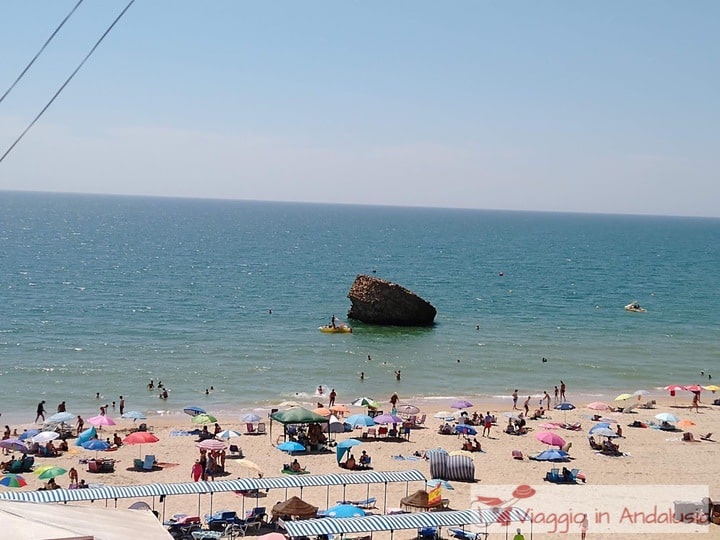
Almost on the border between Spain and Portugal, close to a wild and unspoilt natural area, lies Huelva, the westernmost province in the whole Andalusian region. It is not a tourist destination like the other great cities of Andalusia and there are not many visitors yet, but this province is also rich in historical and artistic places to visit, beautiful beaches and vast natural oases.
Moreover, this area is renowned for its gastronomic specialities that make it famous among gourmets all over Spain: the D.O.C. wines of the Contado de Huelva, white prawns and Huelva D.O.P. Iberian ham are just a few examples of this capital of flavour.
Contents
A bit of history…
The area has a millennia-old history: it was first a Phoenician colony, Onuba, and then a Roman colony. Thanks to its location between the Rio Odiel and Rio Tinto rivers, the city of Huelva soon became an important commercial port. From the port of Palos de la Frontera, some 10 kilometres (6,2 miles) from Huelva, Christopher Columbus set sail on 3 August 1492 with the Niña, the Pinta and the Santa Maria. With the discovery of the Americas, Huelva became the main port for the trade in silver and gold.
However, its prestige did not last long: from the 16th century onwards, in fact, Seville became an important political and commercial centre, causing Huelva to lose importance and wealth. In 1755 the terrible Lisbon earthquake flattened Huelva, which today, while still retaining a fantastic, typically Andalusian atmosphere in the city centre, is for the most part an industrial centre with new and modern buildings.
Huelva: what to see? The sights in the city
Here is a map of Huelva’s main places of interest. Don’t worry: if you have half a day, you can still visit them all.
Plaza de las Monjas
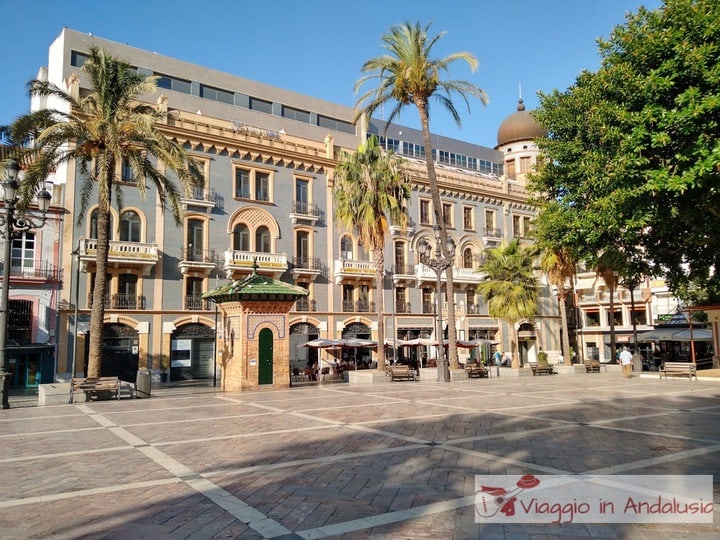
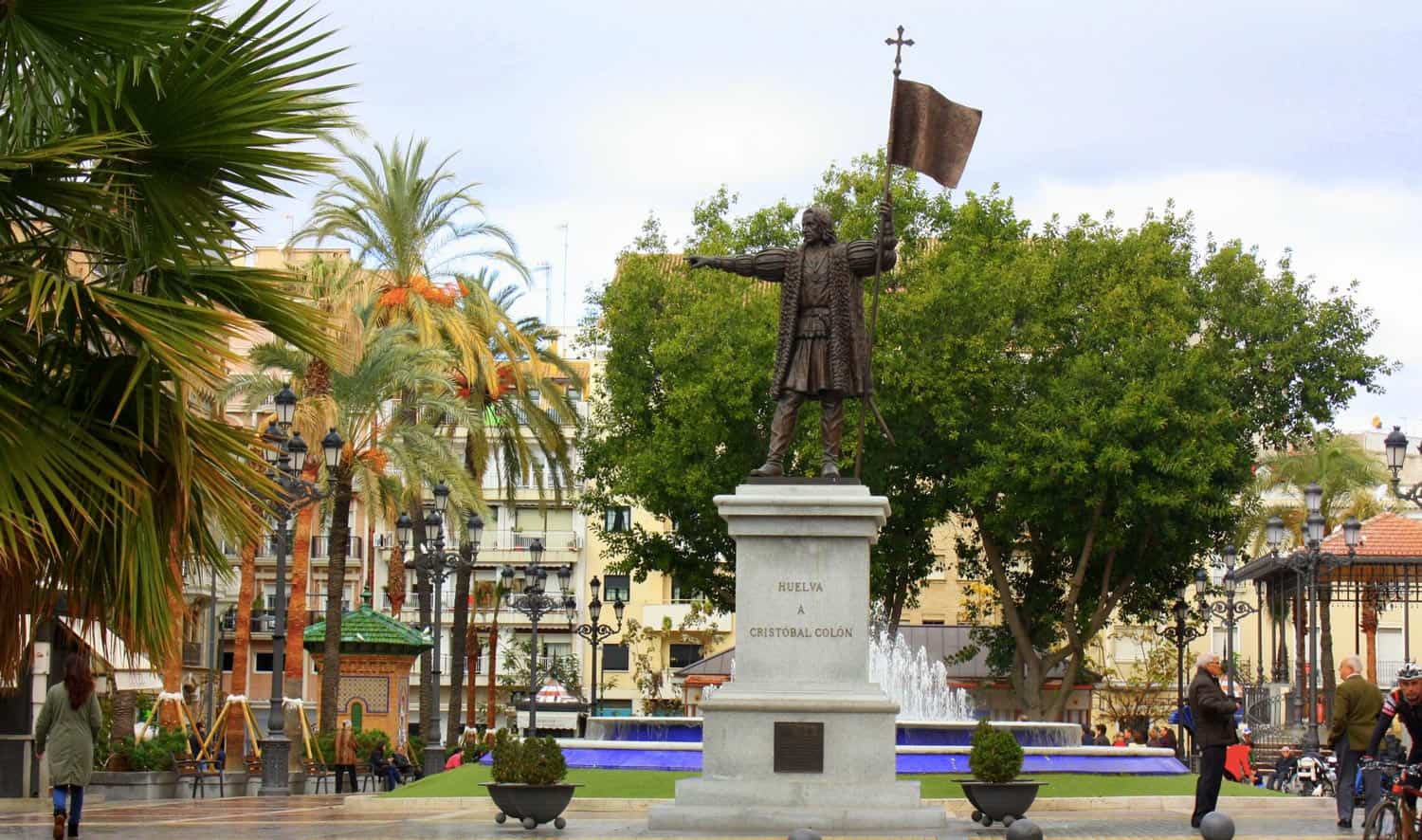
Plaza de las Monjas is Huelva’s main square. Colourful and full of life, this square is rectangular in shape and looks out onto the city’s main streets, which are well worth a leisurely stroll. Today, at the centre of the square stands a bronze statue of Christopher Columbus: installed in 2011, the statue depicts the Italian navigator looking out and pointing towards the ocean before him. Around the square rise various important buildings: the Convento de las Madres Agustinas (hence the square’s name, which means “nun’s square”), the Ayuntamiento and the Edificio París Hotel.
Cathedral of Our Lady of Mercy
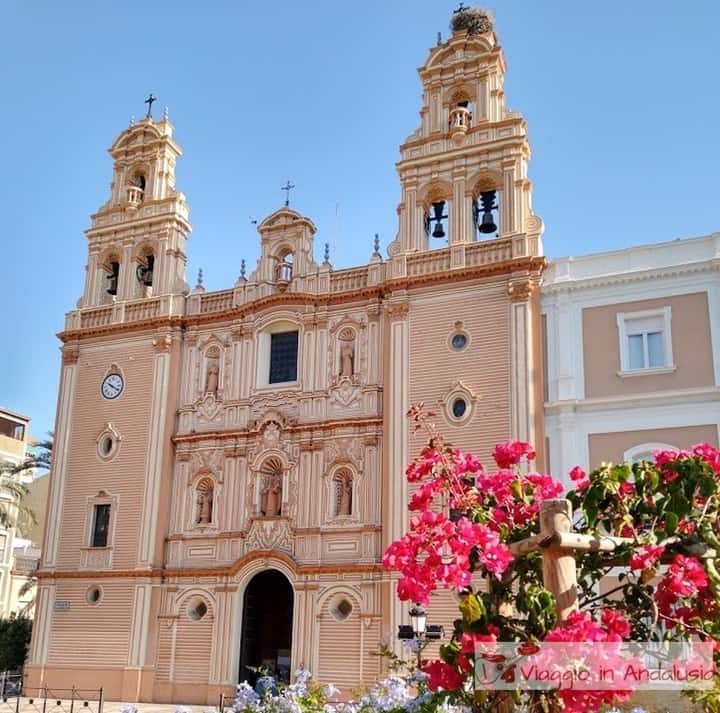
The Huelva Cathedral, located in Plaza de la Merced near the city university and a little outside the centre, is certainly not among the most beautiful in the region. The façade is in Renaissance style, with some statues by León Ortega. It was built in the early seventeenth century and was declared a cathedral in 1953. Particularly interesting is the image of the Virgin by Martínez Montañés.
Entry is free. The opening hours for visitors are as follows:
- Summer:
- Monday to Saturday: 11:00 am–1:00 pm and 7:00 pm–8:00 pm
- Sunday: 10:00 am–1:00 pm and 7:00 pm–8:00 pm
- Winter:
- Monday to Saturday: 11:00 am–1:00 pm and 6:00 pm–7:00 pm
- Sunday: 10:00 am–1:00 pm and 6:00 pm–8:00 pm
Huelva Provincial Museum
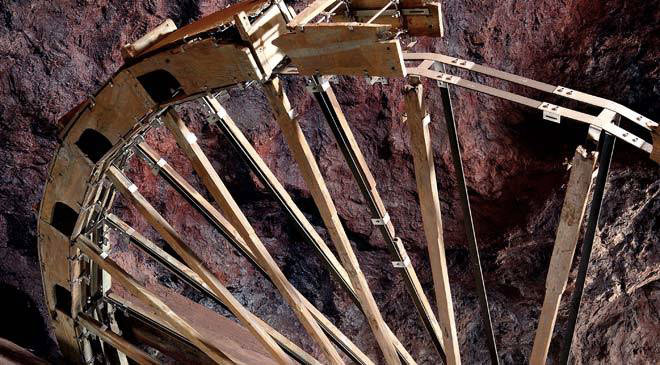
Opened in 1973, the museum is not very large but houses important archaeological finds relating to the history of the city from its origins (which date back more than 3,000 years) to the modern era. The water wheel of a Roman-era mill is impressive for its size and functionality. The museum is located at Avenida Alameda Sundheim 13 and is free for citizens of the European Union. Opening hours are as follows:
- Monday: closed
- From Tuesday to Saturday: from 9 am to 9 pm
- Sunday, public holidays and Mondays before public holidays: from 9 to 15
- Public holidays when the museum is open: 28 February, 28 and 29 March, 15 August, 12 October, 1 November, 6 and 8 December.
- Days when the museum remains closed: 1 and 6 January, 1 May, 24, 25 and 31 December.
Church of San Pedro
Plaza San Pedro is home to the city’s oldest church. It was built in the 14th century on top of a mosque and is in the typical Seville Mudejar style. Inside are works by the sculptor León Ortega. The high altar is by Antonio de Carvajal and José Fernández del Hierro.
The church is open from Monday to Sunday, from 10 am to 12 noon and from 6 pm to 7:30 pm.
Barrio Reina Victoria
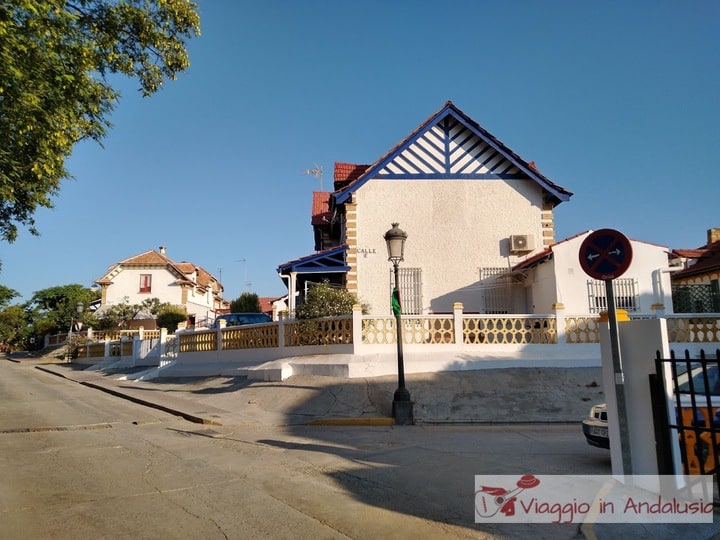
The city’s workers’ quarter is well worth a visit, also known by the Spanish term Barrio Obrero. The entire district was built at the start of the twentieth century by the Rio Tinto Mining Company to house the miners and labourers who worked in the Minas de Riotinto.
The houses are built in an eclectic style, with colonial and neo-Mudéjar influences, to the extent that for a moment you may wonder whether you are in Andalusia or in an English village: if you decide to drive around, you will realise that it is a small, inextricable labyrinth! To get there, enter Calle Roque Barcia into your satnav and, as soon as you turn into it, follow the signs for the Barrio Reina Victoria to enter its narrow grid of streets.
Mineral quay of the Riotinto company
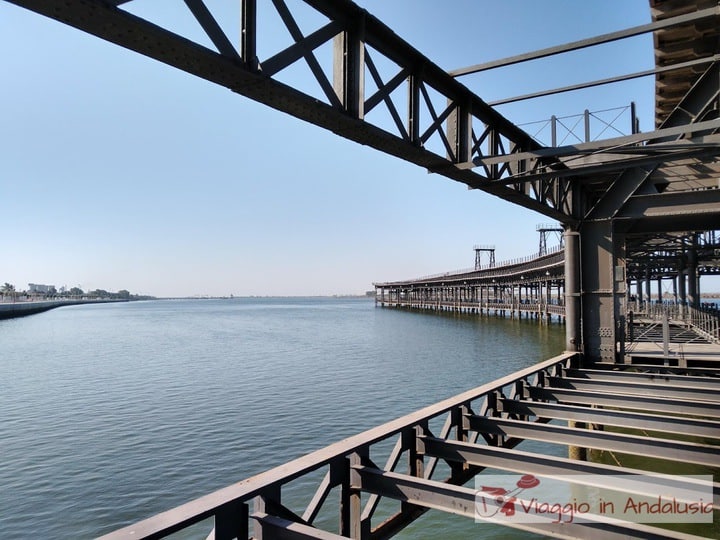
The pier, also known as the Muelle del Tinto, is a spectacular industrial redevelopment and is 1,165 metres long (see cover photo): if you want to see it and take a short walk along one of its various levels, head to the Muelle Levante promenade (Avenida Francisco Montenegro), just a stone’s throw from the Recreativo Huelva stadium, the oldest football club in Spain and for this reason known as “El Decano”. The railway links the port with the inland part of the province, allowing loads of precious mineral cargo to be transported from the mines to the ships or into the city.
Where to stay in Huelva?
Tourism in Huelva is growing, but at the moment the range of hotels in the city is not very extensive. You can find some accommodation in the city centre and in Barrio Reína Victoria, but there is greater availability by the sea, in the area of Punta Umbria.
All hotels and accommodation in Huelva
Available options in Punta Umbría
Another interesting option is to find accommodation in Palos de la Frontera, an interesting place next to Huelva, which I’ll talk about in the next paragraph.
Find accommodation in Palos de la Frontera
The surroundings of Huelva: the most beautiful excursions
In the case of Palos de la Frontera, the excursions are really very easy to include in a tour: the distance from Huelva is just 15 km (9,3 miles), which also makes it a good strategic base for visiting Huelva and the surrounding beaches. The other places mentioned in this section, on the other hand, require a little more planning.
Monastery of La Rábida (Palos de la Frontera)
This is one of the main stops on the Lugares Colombinos tour, the places associated with Christopher Columbus. The old Franciscan monastery is located in calle Diseminado de la Rábida, in the town of Palos de la Frontera. The monastery is famous because it housed Christopher Columbus for several years before his departure from here, from the port of Palos de la Frontera. It is said that the explorer was very devoted to the Virgen de los Milagros: the church houses a chapel with a 14th-century alabaster statue depicting her.
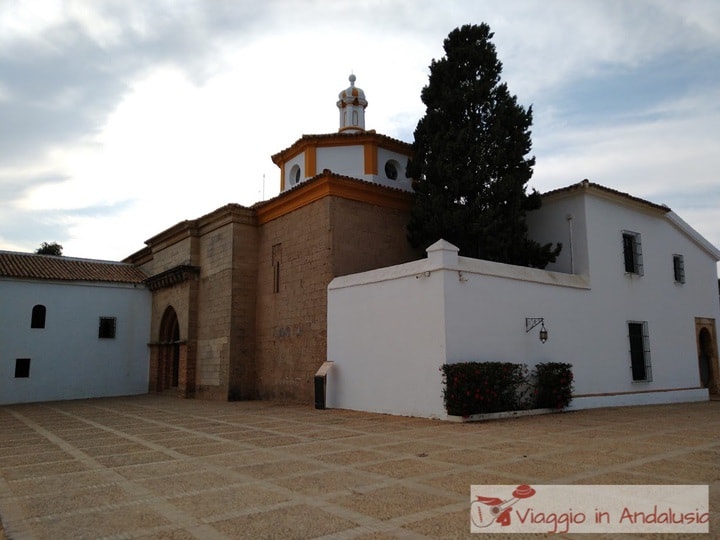
As anticipated, it was destroyed in 1755 by the earthquake that struck Portugal and part of Spain. It was rebuilt in the following years and has been a national monument since 1856.
The monastery is open from Tuesday to Sunday, from 10 am to 6 pm. It remains closed on Mondays and on the following days: 1, 5 and 6 January, 24, 25 and 31 December. On Sundays there is Mass at 10 am, so the monastery opens to visitors at 10:45 instead of 10:00.
The price is 3.50 euros, and children under 5 go free.
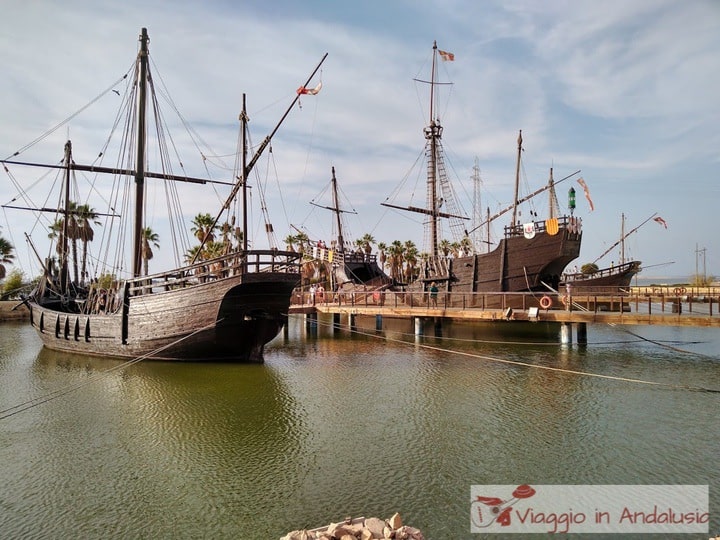
Next to the monastery stands the large Monumento a la Fe Descubridora and the reconstruction of the three famous caravels, anchored on the banks of the Rio Tinto, at the Muelle de las Carabelas. The price is low (€3.60 for adults, with reductions for families, pensioners, groups and students) and the museum very pleasant: I recommend popping in to see both the caravels and the exhibitions housed in the complex.
Here are the opening hours:
- 16 June – 15 September
- Tuesday to Sunday: 10:00 am–8:30 pm
- 16 September-15 June
- Tuesday to Sunday: 9:30 am–7:30 pm
In Palos de la Frontera, it is also worth visiting the Iglesia de San Jorge (Calle Fray Juan Pérez, 19) and, not far away, the Fontanilla (Calle Cristóbal Colón), a fountain of Arabic origin from which the crew of the Caravels drew water before departure.
Sanctuary of Our Lady of Rocío
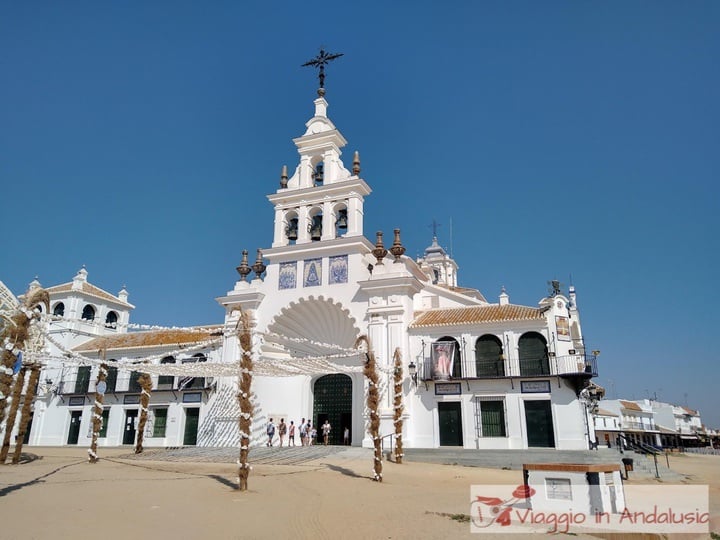
The characteristic village of El Rocío – situated about 60 kilometres (37 miles) from Huelva and facing directly onto the Doñana marshes – has only 2,000 inhabitants who live in picturesque little white houses gathered around a lovely pure white sanctuary. Almost all the streets in the village are unpaved: you walk on sand and it feels as though Zorro might appear at any moment!
El Rocío hosts the most famous pilgrimage in all Spain every year, called the Romería de Rocío. With the aim of reaching the sanctuary on the Saturday before Pentecost, thousands of devotees belonging to the brotherhoods that venerate the Virgin of Rocío, known as the Blanca Paloma (‘White Dove’), set off from Seville, Huelva or Sanlúcar in covered carts pulled by oxen, horses, mules or on tractors, and spend days crossing dunes, sand and marshes. When they arrive in the village, there is a big celebration with dancing, music and flamenco.
The actual procession takes place on Whit Monday, when only the faithful from Almonte, the town to which the village of El Rocío belongs, take the statue of the Virgin and carry it out of the church at the first ray of sunlight (we wrote about it here). The procession winds through the village streets, passing in front of the brothers’ houses, to the cry of ‘Viva la Blanca Paloma’.
Doñana National Park
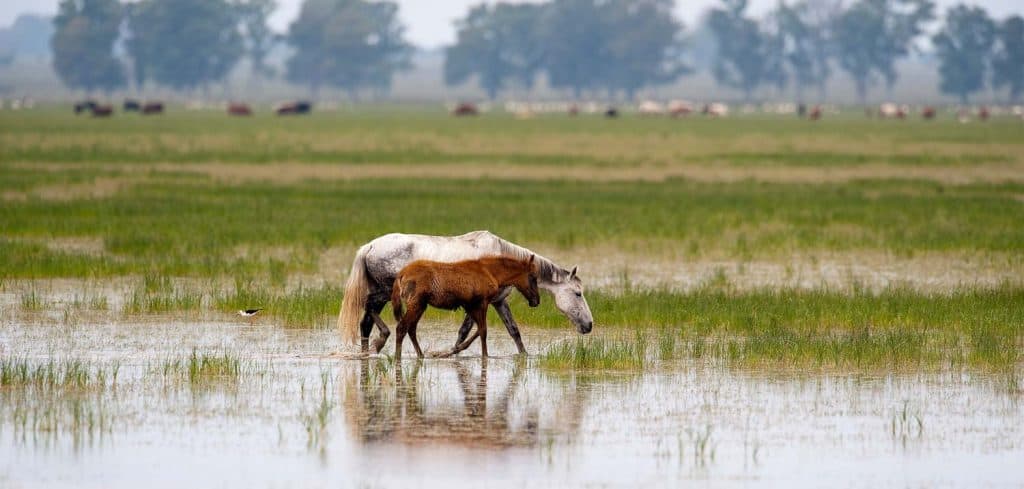
In the province of Huelva you will also find Europe’s largest ecological reserve. The Parque Nacional de la Doñana covers almost 120,000 hectares and each year welcomes numerous species of migratory birds from both Europe and Africa: this richness of flora and fauna has made the park one of the most important natural sites in all Andalusia and among the most significant in the whole of Spain, so much so that in 1994 Unesco declared the site a World Heritage Site.
Guided tours of the park
I should also point out that it is possible to book a guided tour departing from Huelva, Seville or Cádiz (the park is so vast that it occupies a large part of the province of Huelva, as well as a small part of the provinces of Cádiz and Seville). During the visit you can admire various ecosystems: from the Doñana dunes to the woodlands, from the beaches to the marshes, in a succession of landscapes and “animal encounters” that is sure to amaze.
- From Siviglia: 4×4 tour of Doñana National Park: info and prices
Huelva’s beaches
As you can read in our article dedicated to the beaches of Cádiz, the Costa de la Luz is home to some of the most beautiful beaches in all of Andalusia. The coastline of the Costa de la Luz continues into the province of Huelva too: golden sandy beaches overlook the crystal-clear sea and stretch for many miles, alternating between pine forests and the marshy areas typical of this region.
Punta Umbría, El Rompido on the Río Piedras, Isla Cristina, La Antilla, Ayamonte, Mazagón and Matalascañas are some of the most famous seaside resorts in the area. In particular, I recommend the stretch of more than 30 kilometres (18,6 miles) between Ayamonte and Matalascañas, where you can go for walks, sunbathe, swim, practise water sports or sip something in the chiringuitos, the bars and restaurants near the beach. To find out more, also read our article on what to see in the Costa de la Luz.