In the heart of Seville there is a place that seems suspended between dream and memory: the Palacio de las Dueñas. It is not just a historic palace, but a living home, filled with courtyards scented with orange blossom, Mudéjar arches, golden light and elegant silences. Here time really slows down and strolling through its rooms allows you to take a step back in time, feeling somewhat part of the Andalusian aristocracy.
Each patio tells a story, every azulejo reflects colours that change with the sun, every garden invites you to linger a few minutes longer. It’s the kind of place that doesn’t hit you with ostentatious grandeur, but with delicate details that stay with you.
Contents
Where to find it and how to get there
The Palacio de las Dueñas is located in the centre of Seville and more precisely here, a few minutes’ walk from the famous Setas de Sevilla (formerly Metropol Parasol). Being in a central area, it’s easy to reach on foot during a visit to the city, but if you need to get there by public transport, note that the only bus that stops nearby is the C5 (by the way: here’s how to get around Seville!).
History of the Palacio de las Dueñas
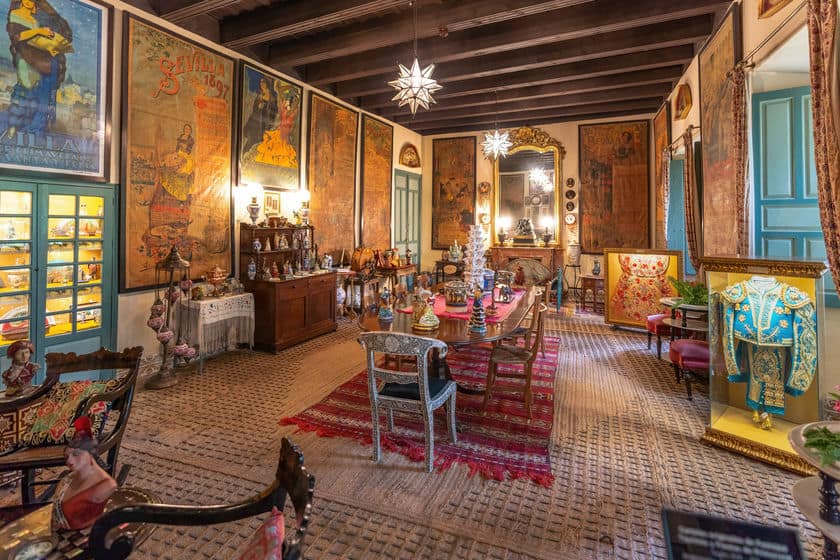
The Palacio de las Dueñas was built between the 15th and 16th centuries and takes its name from the monasterio de Santa María de las Dueñas, which once stood on this very spot and was demolished in 1868. The palace erected in place of the old convent was initially the residence of the Pineda family. However, when a member of the family, Juan de Pineda, was kidnapped by the Moors, his relatives sold the residence to pay his ransom.
Subsequently the palace became the property of Fernando Enríquez de Ribera, Marquis of Villanueva del Río. His daughter, Antonia Enríquez de Ribera, in 1612 married Fernando Álvarez de Toledo, the future Duke of Alba. From that moment the beautiful residence became property of the House of Alba. A couple of centuries later the palace was renovated and converted into a proper residence: during this period partition walls were added, increasing the number of rooms, and false ceilings were installed that covered the coffered ceilings. An interesting fact: at the end of the nineteenth century one of the building’s tenants was Antonio Machado Álvarez, father of the famous poet Antonio Machado, who was actually born in this building in 1875!
In the first half of the twentieth century the XVII Duke of Alba, Jacobo Fitz-James Stuart y Falcó (who was also a member of the Royal Spanish Academy and a Spanish ambassador) transformed the Palacio de las Dueñas into a meeting place for nobles of European dynasties, as well as for international artists and prominent figures in both political and cultural spheres. It was during this period that parts of the building and the large courtyard were beautified and restored to their former splendour. Jacobo’s daughter, Cayetana, continued to tend the place, paying particular attention to the splendid gardens. Even today the Dukes of Alba, owners of the palace, continue to care for and promote the site.
How to organise the visit
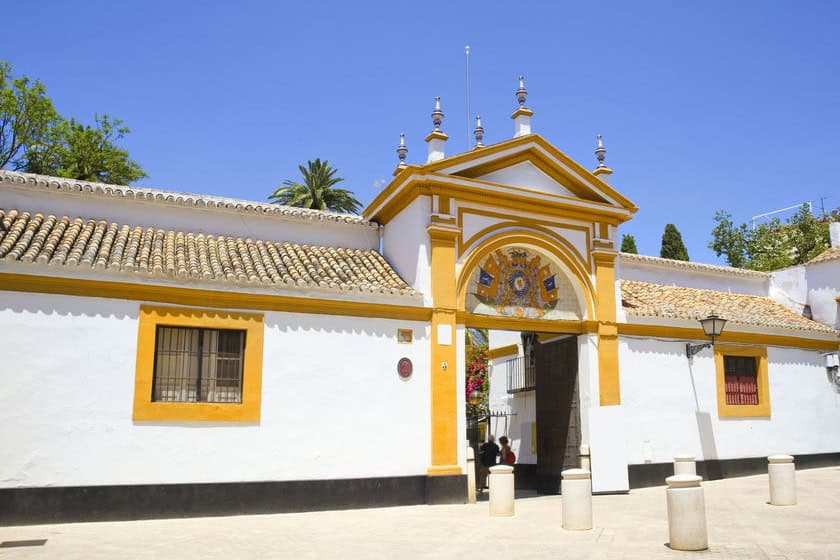
A visit to the Palacio de las Dueñas is easy to organise, but there are a few tips I’d like to suggest to make it more enjoyable. If you’re in Seville in summer, when it gets really hot, the best time to go is early in the morning or in the late afternoon, when, as well as being cooler, the courtyards are even more atmospheric with the soft, unobtrusive light.
Also, if you visit at weekends or during peak season (for example around Easter), I suggest booking your ticket online in advance, because the most popular time slots sell out quickly.
Allow about an hour to an hour and a half for the visit. That’s enough time to see the main rooms without rushing, pause in the gardens and listen to the audio guide included with your ticket. It’s not a huge palace, so you can easily get around in less time, but listening to the audio guide will help you better understand what you’re seeing and reveal a number of interesting details about this particular building.
Tickets for the Palacio de las Dueñas
The tickets for the Palacio de las Dueñas are priced as follows:
- Full ticket with audio guide: €15
- Reduced ticket: €11 for children aged 6–16, students up to 25, over-65s, teachers, journalists and large families
- Children aged 0–6 and disabled visitors: free
- Groups: €13 per person
Additionally, it’s possible to take part in guided tours lasting one hour, which cost €22 and meet every day at 11:55. There are also night-time guided tours costing €25 and lasting an hour and a half.
NB: every Monday afternoon, from 4pm until closing, admission is free for everyone. Only a payment of 1 € is requested to cover administrative costs.
Buy the ticket for Palacio de las Dueñas.
Opening times
Opening times vary depending on the season:
- Summer opening times, from April to September: 10:00 am to 7:00 pm
- Winter opening times, from October to March: 10:00 am to 6:00 pm
- Early closing days at 3:00 pm: 5 January, 24 and 31 December
- Closed: 1 and 6 January; 25 December
Where to stay in the area
Would you like to stay in this area? Then you should look for a hotel in the Encarnación-Regina neighbourhood, which is part of the Casco Antiguo. To help you decide, we’ve put together an article dedicated to where to stay in Seville, with detailed, neighbourhood-by-neighbourhood advice.
