We Europeans are used to appreciating Renaissance, Gothic and Baroque art; and, being in Andalusia, we are also fascinated by Moorish and mudéjar architecture, which transports us to faraway places and eras. Faced with contemporary art, however, we often feel puzzled: these works aim to surprise and innovation can unsettle us. But the multifaceted soul of Seville is revealed in this as well: the chance to admire, within a short distance of one another, monuments and works of art from different periods and styles.
Tickets for the Setas in Seville
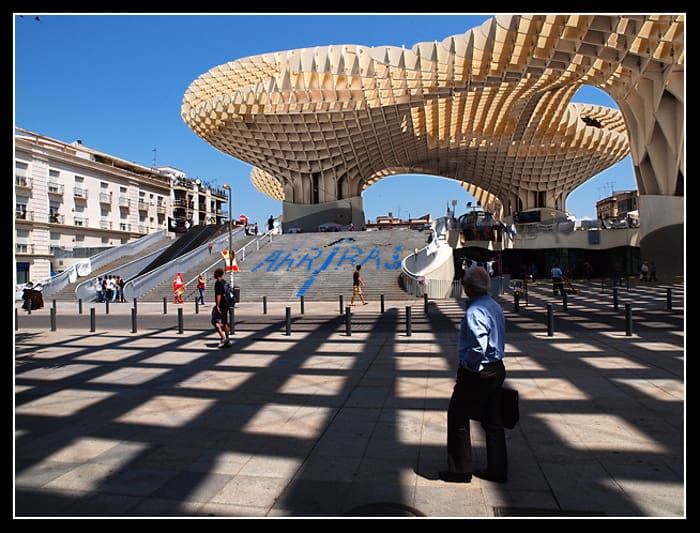
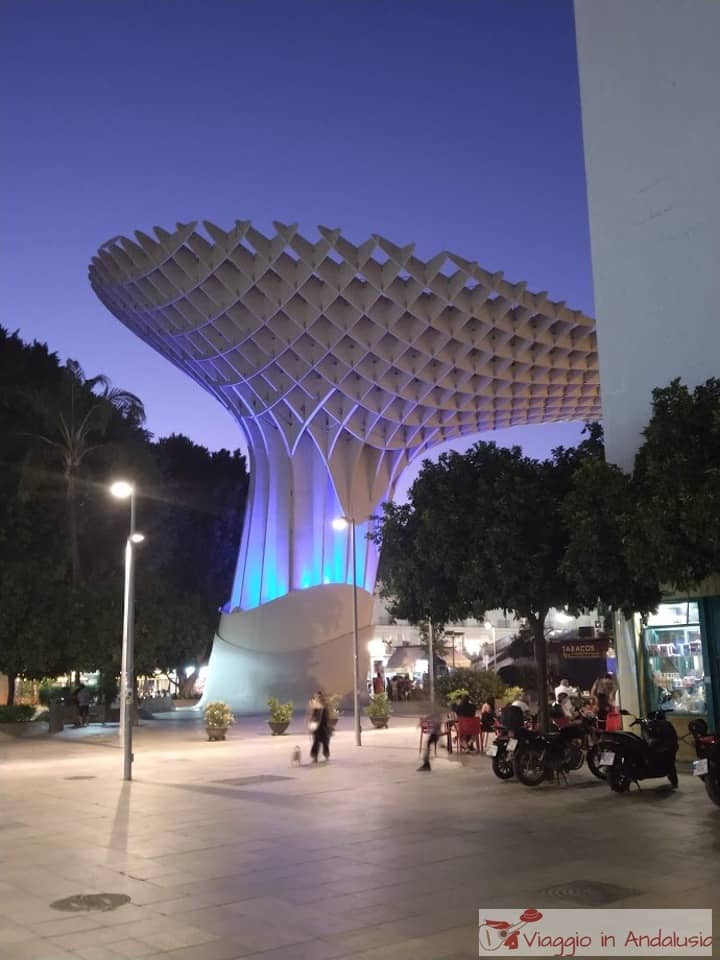
Las Setas de Sevilla are the city’s most imposing example of contemporary architecture, and one of the few attractions of this kind in Seville. Not only that: Seville’s Metropol is the largest wooden structure in the world, and to date is among the most important examples of sustainable architecture.
Contents
How the Metropol Parasol project came about
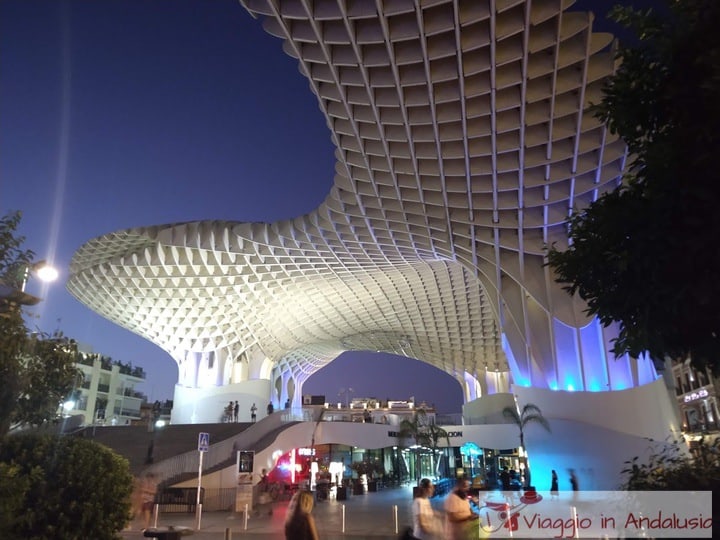
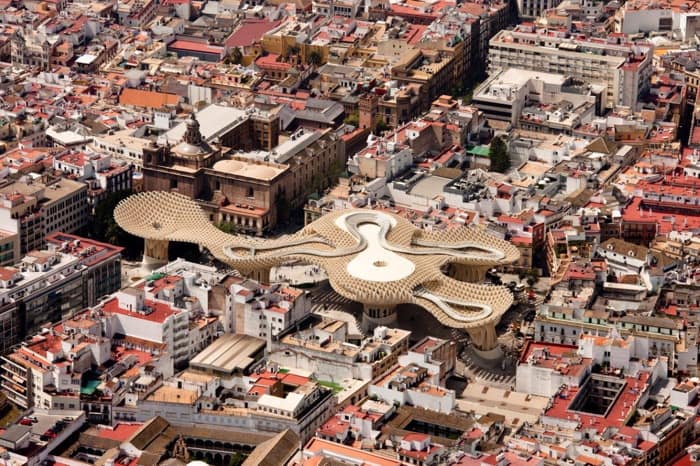
In 2004 the Seville City Council launched a competition to redesign Plaza de la Encarnación and, among the various proposals submitted, the one by the German architect Jürgen Mayer won. Six large wooden “parasol mushrooms” manage to cast shade over the square with their irregular shape: a lattice-like design of rounded forms, in which straight and curved lines interplay over hundreds of metres, creating an extraordinary and harmonious overall effect. The figures that characterise it are impressive: 28.5 metres in height at the highest points, 150 metres in length and 70 metres in width for a total of more than 800 square metres.
Construction work on the Metropol Parasol began on 6 March 2006. In 2010 the market area was opened, in March 2011 the Plaza Mayor and the Antiquarium Museum, and in May 2011 the walkways and the Mirador. Since its inauguration, the monument’s official name has become Setas de Sevilla.
The delays to the opening and the enormous discrepancy with the initial budget drew considerable criticism from the residents of Seville. Nonetheless, today Plaza de la Encarnación has become an important tourist destination and the Metropol Parasol of Seville has, in just a few years, become one of the modern symbols of the city and of all Andalusia.
A museum, a square, a market, a viewpoint: all of this in a single monument!
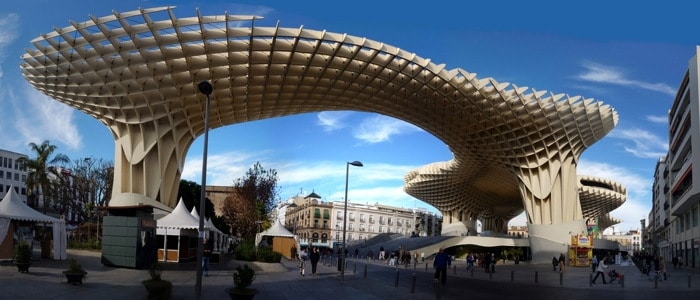
The imposing artistic structure that characterises Plaza de la Encarnación is divided into five levels.
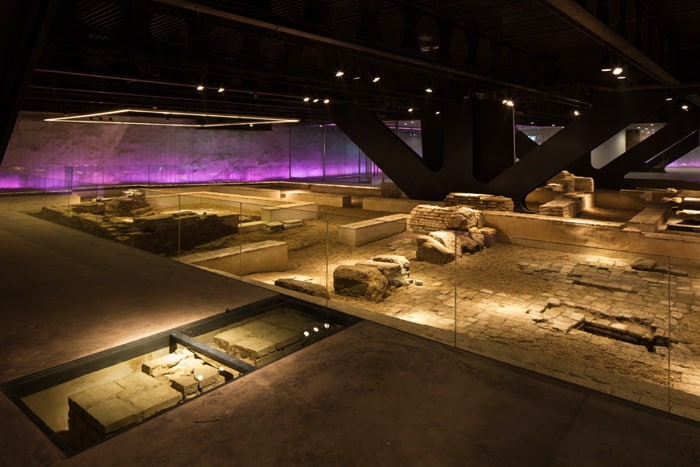
- Around 5 metres below street level lies the Antiquarium, or Archaeological Museum, together with a tourist information point, a shop and access to the lifts. The Antiquarium of Seville houses archaeological remains discovered during the excavations carried out for the construction of the Metropol Parasol. In a space covering almost 5,000 square metres, you can admire the remains of Roman houses and streets dating from 30 AD to the 6th century AD, the 12th/13th-century Almohad House of the Waterwheel (Casa Almohade de la Noria), as well as various ancient artefacts such as mosaics, fountains and ovens. The maze of underground walkways that characterises this museum will allow you to step quite literally into another world.
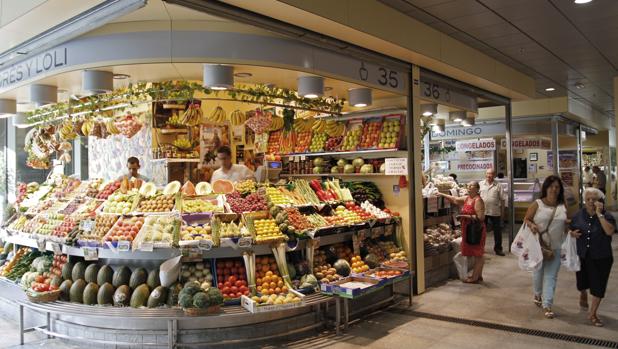
- On the ground floor you will find the Mercado de la Encarnación and several food and drink outlets. For more than a century, from 1842 to 1973, the square was home to a food market of great importance to Seville and was therefore one of the city’s key commercial hubs. The closure of the market in the 1970s led to the decline of the square, and it is precisely thanks to the Setas de Sevilla project that the market was brought back to life.
- On the third level lies Plaza Mayor, the square designed to welcome residents and visitors beneath the shade of the giant parasol-shaped structures created by Jürgen Mayer. The square is open to everyone.
- On the fourth level you will find access to the walkways, a bar and an events space, while the fifth level is home to the famous viewpoint (Mirador): at a height of 28.5 metres, it offers a 360-degree panoramic view over the city. The walkway stretches for 250 metres above the wooden structure, allowing visitors to enjoy a stroll with the whole of Seville at their feet.
Info on the Metropol Parasol in Seville
Getting there
The Metropol Parasol is located, as mentioned earlier, in Plaza de la Encarnación. As with other attractions in the historic centre, I suggest you stroll through Seville and reach the square on foot. From the Cathedral to the square it’s only a 10-minute walk heading north along Calle Franco.
The nearest bus stop is Laraña (Plaza de la Encarnación) for lines 27, 32 and A7.
Opening times and prices for the various attractions
To admire Jürgen Mayer’s work you do not need to buy a ticket, nor do you need one to access the square and the market.
To see the Antiquarium or go up to the Mirador you will instead need to buy a ticket and observe the opening hours. The cost is fairly low and I would definitely recommend visiting both the route laid out among the archaeological treasures on display in the Antiquarium and taking the lifts up to the Mirador to admire Seville and stroll along the walkway built on the Setas de Sevilla.
The Antiquarium
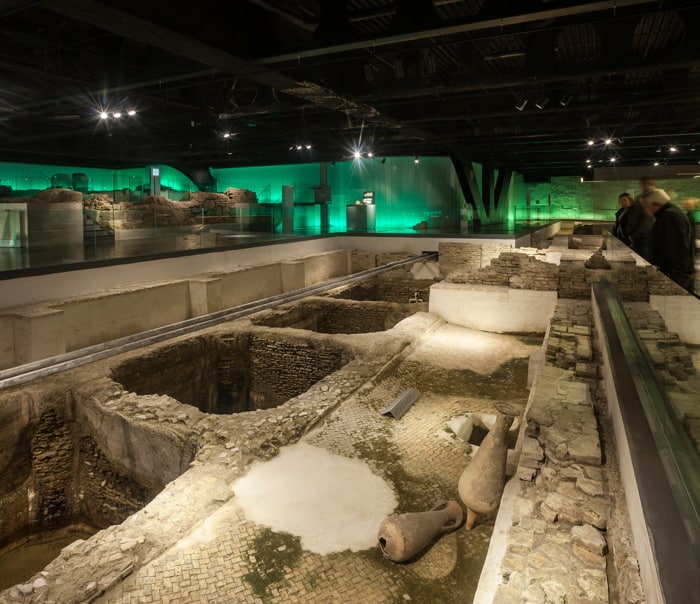
The opening hours for access to the Antiquarium are:
- Tuesday to Saturday: from 10 am to 8 pm (last admission: 7.30 pm)
- Sundays and public holidays: from 10 am to 2 pm (last admission: 1.30 pm)
- Closed: 25 December, 1 and 6 January
The ticket costs €2 per person. A reduced ticket (€1.60) is available for students, those aged over 65 and groups of at least 10 people. Children under 16 and people with disabilities are admitted free of charge. The ticket office closes around 30 minutes before closing time.
The Mirador
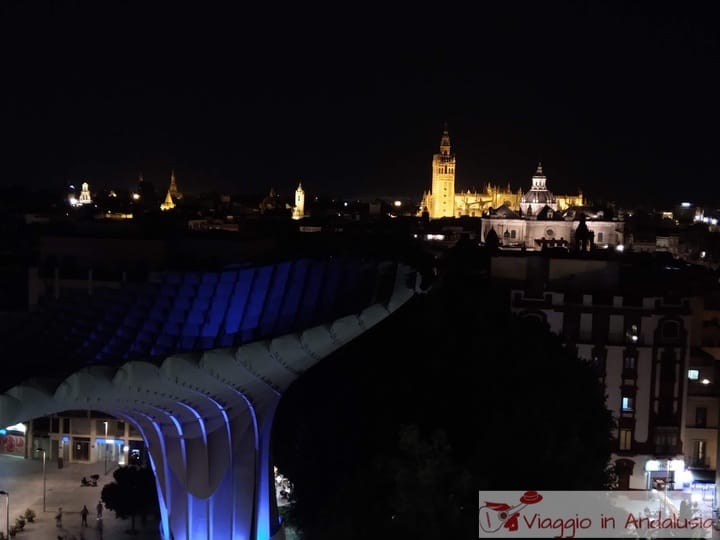
The access point to the Mirador is on the underground level, near the entrance to the Museo Antiquarium.
The Mirador is accessible every day from 9.30 to 00:30 (last admission at 23:45). The ticket price is €16 per person. Children under 5 and people with disabilities do not pay. Reductions are available for families, groups, those over 65 and students.
I recommend going to the viewpoint at sunset to see Seville slowly light up and become even more atmospheric. You will also be able to enjoy the “Aurora show” light display.
Where to stay?
If you’re still organising your stay in Seville, remember that the best way to see the city is to stay in one of the central neighbourhoods. Here are some tips on where to stay in Seville.
