From the top of Seville’s Giralda you can see a large building with an unmistakable oval shape, enriched by warm-coloured wooden arches: it is the Plaza de Toros de la Real Maestranza de Caballería de Sevilla. It is located in the El Arenal neighbourhood, a short distance from the Guadalquivir River, near the Teatro de la Maestranza and the Torre del Oro, both situated along the adjacent Paseo de Cristóbal Cólon.
Book a guided tour of the arena
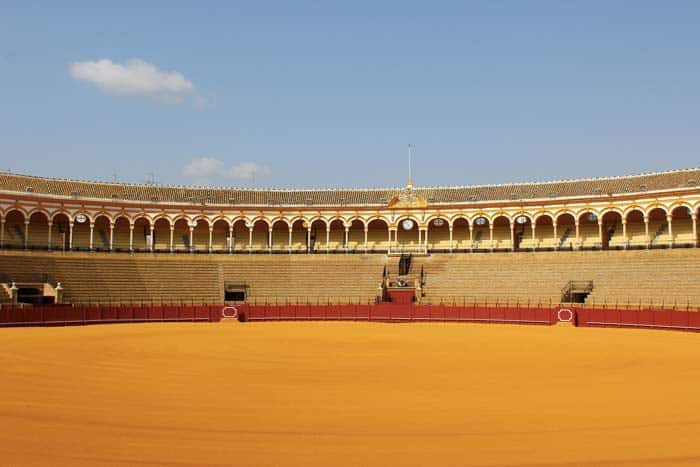
Also known by the name Maestranza or Real Maestranza, it is the oldest plaza de toros in Spain and one of the most impo1rtant in the world. It has a Baroque-style white-and-ochre façade and can accommodate more than 12,000 people. During the Feria de Abril and the bullfighting season, the streets, bars and venues around the Plaza de Toros are packed with men and women who love the corrida or are even simply lovers of Seville’s life and traditions.
Contents
The history of the Plaza de Toros: metamorphosis of an arena
1730 is the year in which King Philip V granted permission to hold bullfights. It was on this occasion that La Real Maestranza — an organisation made up of the city’s most distinguished and powerful families — decided to build a Plaza de Toros in Seville, rectangular in shape and with wooden steps and balconies.
After several performances, however, it became clear that the rectangular form was too dangerous for structural reasons, and so, in 1733, the construction of a round arena began that retained the structure with balconies and stepped seating. The tiers were increased to three and, in addition to the gate of the toril – the area that houses the bulls before the fight – four more gates were installed. In the following years the arena was enriched with various other adjoining buildings and a fourth tier.
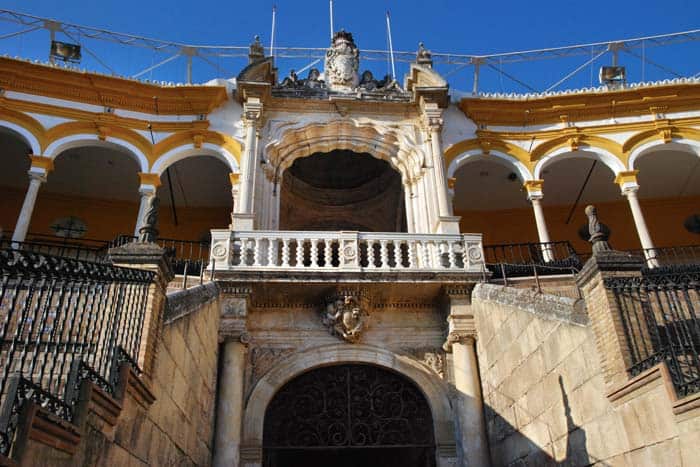
In 1761 the stone construction began, divided into 30 ochavas: each ochava comprised four arches. The Prince’s Box was completed in 1765: it was a splendid architectural work designed to accommodate the royal family. Things changed when King Carlos III decided to ban bullfighting: this led to the suspension of work by the architects Francisco Sánchez de Aragón and Vicente de San Martín, who left part of the plaza in wood and the other in masonry.
In the mid-19th century work resumed on the tasks necessary to complete this great undertaking: among the artists involved, I also mention the Italian sculptor Augusto Franchi, who in 1868 refurbished the Palco de la Diputación adding a marble balustrade and the emblem of the Real Maestranza de Caballería.
Under the direction of Juan Talavera, a completion date was finally set: the year 1881. In fact, after that date there was a further intervention: before the Ibero-American Exhibition of 1929, held in the area of the María Luisa Park, the architect Anibal Gonzáles decided to rebuild the stone stands (reducing the slope) and had more seating added in the shaded section.
The Plaza de Toros today: the contradictions of a great tradition
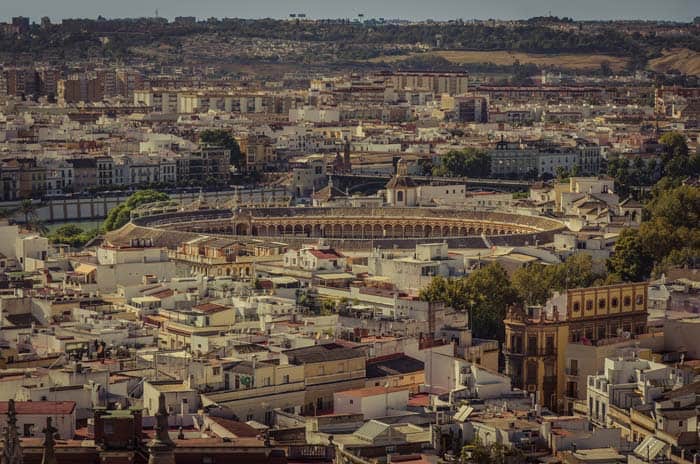
Today Plaza de Toros de la Maestranza is one of the Seville’s most famous attractions and, together with Las Ventas in Madrid, is among the most important bullrings in the world. The corrida has raised and continues to raise much criticism, and the performances held each year in this arena are not to everyone’s taste.
If you’re among those who disapprove of this spectacle, I would still recommend visiting the Plaza de Toros and the Museum when there are no performances. History, art, architecture and traditions are part of a people’s culture, and I think it’s important to get to know them and cherish them, even if we do not share their customs and practices.
If, on the other hand, you want to see a corrida in Seville, you can buy tickets directly at the arena or online. The season generally starts on Easter Sunday and ends in October. Although in the height of summer the heat is often too intense and there are no performances, remember when buying tickets that – even if more expensive – a seat in the shade is certainly advisable.
Visiting the Bullfighting Museum
The main entrance is on Paseo Colón, where the white-and-ochre baroque façade welcomes visitors and is “overseen” by a statue of the bullfighter Pepe Luis Lopez Vazquez. From the Puerta del Principe the best bullfighters enter, cheered on by the crowd. During the visit you can see both the enfermeria, intended to provide first aid to the injured, and the capilla, where the bullfighter prays before facing the bull. You will also visit the stables where the picadores keep their horses.
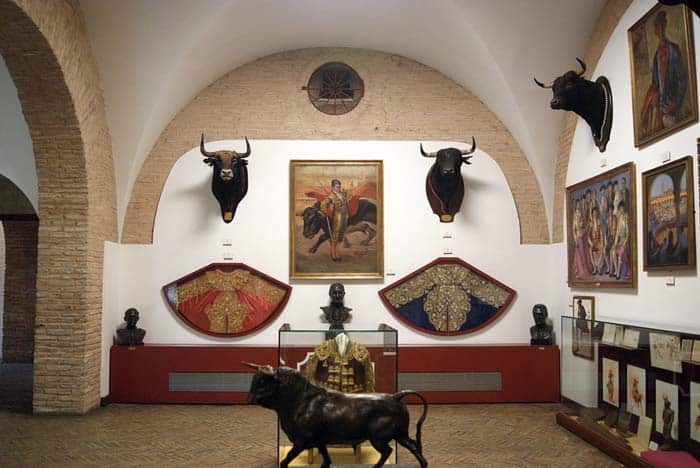
In the exhibition rooms there are prints and lithographs on bullfighting themes and paintings from the eighteenth, nineteenth and twentieth centuries by important Spanish and other artists. Among these works are the 12 prints of ‘Tauromaquia’ by Francisco de Goya and the ‘Cogida de muerte de Pepe Hillo’ di Eugenio Lucas Velázquez. There are also objects and images commemorating the bulls and bullfighters who have shaped the history of bullfighting over the centuries, making it one of the most famous and debated popular traditions in Spain and around the world.
Useful information
Here you will find useful information for organising your visit, whether you want to see the arena and museum of the Plaza de Toros de la Maestranza, or whether you plan to attend a corrida in Seville.
Opening times of the Plaza de Toros in Seville
Visits to the Plaza de Toros de la Maestranza and its Bullfighting Museum are possible at the following opening times:
- From 9:30 am to 7:00 pm from November to March
- From 9:30 am to 9:00 pm from April to October
- From 9:30 am to 3:00 pm on Good Friday and on Días de festejos taurinos — bullfighting event days.
Ticket prices
The entrance ticket costs 10 euros. People over 65 and students pay 6 euros. Children under 6 accompanied by an adult are admitted free of charge, while children aged 7 to 11 pay 3.50 euros.
On Wednesdays from 3pm to 7pm admission to the Plaza de Toros de la Maestranza is free.
Book a guided tour of the arena
How to get there?
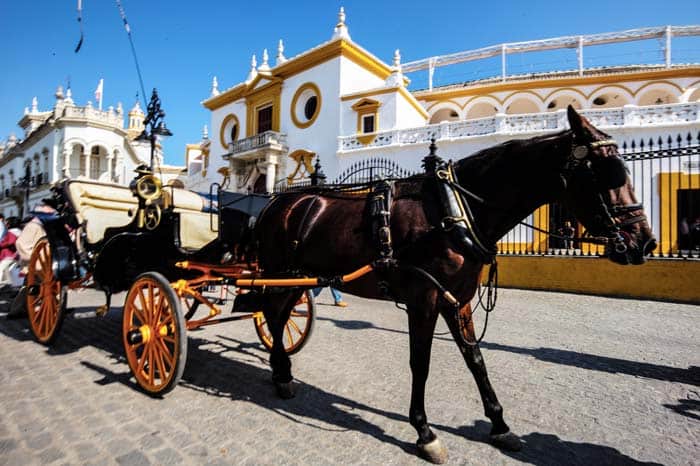
A walk through the historic centre of Seville is ideal for getting to know the city and soaking up its atmosphere. From the Cathedral of Seville to the Maestranza bullring, for example, it’s less than an eight-minute walk. Nevertheless, the Plaza de Toros is also easily accessible by public transport.
- The nearest bus stop is called Paseo de Cristóbal Colón and is located right in front of the Plaza de Toros. The bus lines that stop here are 3, 21, 40, 41, A2 and C4. With bus C5, you can get off at the Adriano Arenal stop, about 100 metres away.
- The nearest Seville metro station to the Maestranza is Puerta de Jerez, on line L1.
- With tram T1, you can get off at Plaza Nueva and walk for about 5 minutes.
Where to stay?
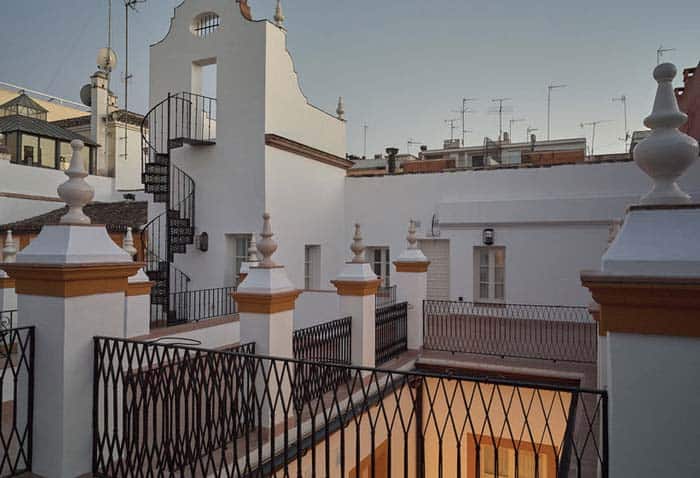
The neighbourhood where Seville’s Plaza de Toros is located is El Arenal, one of the most traditional areas of the Old Town: here you can find high-end accommodation as well as good-quality budget hotels that are strategically located for visiting the city centre. If you enjoy Spanish art, you are very close to the Museo de Bellas Artes of Seville, one of the most important museums in the country.
