We are pleased to publish the travel diary of Martina Sansoni, who spent her honeymoon between Valencia and Andalusia, taking in almost all of the must-see stops in this region. Enjoy the read!
Contents
- Day 1: arrival and journey to Cordoba
- Day 2: visit to the city of Cordoba
- Day 3: Travelling to Seville
- Day 4: visit to Seville
- Day 5: Italica and Cádiz
- Day 6: visit to Cádiz
- Day 7: on the way to Marbella
- Day 8: surroundings of Marbella
- Day 9: visit to Ronda
- Day 10: transfer to Malaga
- Day 11: visit to Malaga
- Day 12: arrival in Granada
- Day 13: visit to Granada
- Day 14: visit to Tabernas
- Day 15: towards Valencia
- Day 16: visit to Valencia
- Day 17: return
Day 1: arrival and journey to Cordoba
We hired a car from Hertz at Valencia airport and set off straight away for Andalusia. The first stop on our trip was Cordoba (310 miles from Valencia) and before getting there we made a couple of stops. We stopped in Baeza and Ubeda, the first for lunch and a stroll, the second for a quick look round. They are two little UNESCO-listed towns and well worth a visit. They are very close to one another, around 8 miles apart, and are respectively about 93 miles from Cordoba.
We arrived in Cordoba in the evening, right in the middle of the Semana Santa processions, and ended up stuck in the car on the city’s inner streets. We reached the hotel, which was right in the historic centre, at around 23. It taught us a lesson… we learnt that during Semana Santa it is essential to plan your arrival time carefully and pay much closer attention to the hotel’s location.
During this week, in all Andalusian cities (the most famous being the Semana Santa in Seville), various processions are organised and every church has its own. So, essentially every hour, and sometimes even more frequently, a procession sets off and when it ends another one begins. Needless to say, this means traffic is halted and even interrupted for long periods of time.
Day 2: visit to the city of Cordoba
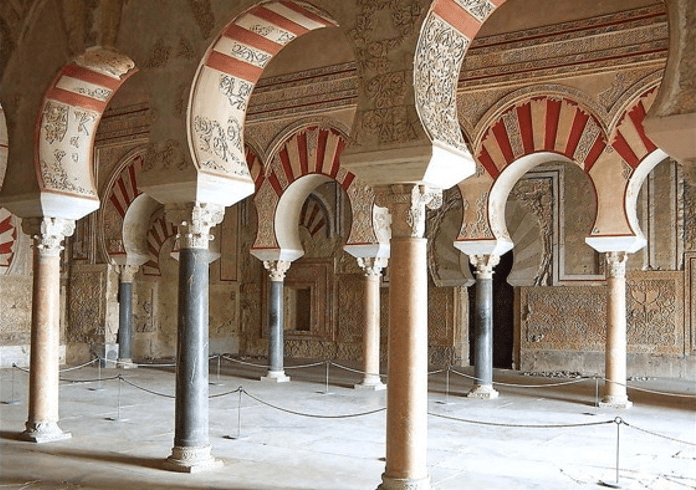
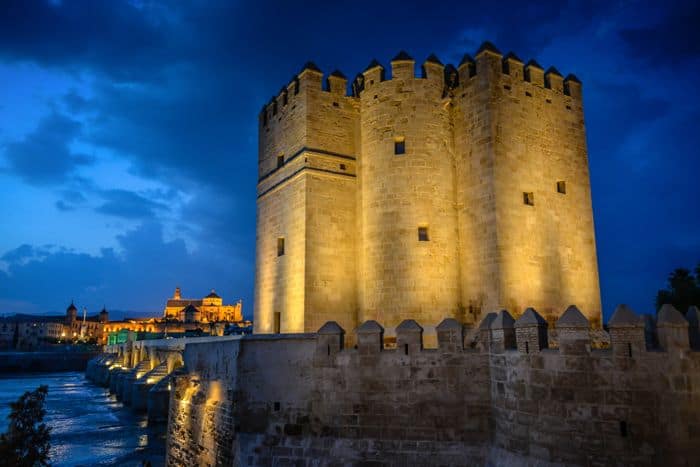
We went to the wonderful Mezquita, the Palacio de Viana and the Roman Bridge. The Mezquita, that is, the Great Mosque of Cordoba, now the Cathedral of the Immaculate Conception of Mary Most Holy, is certainly the monument that struck us the most. It brings together the character of Arab-Islamic art and the Gothic and Renaissance architecture of Andalusia.
After visiting these monuments we began to wander, “getting lost” in the streets of the city, with no particular destination in mind. Cordoba seemed to us to be a very human-scale city and delightful to explore on foot. We were struck by the scent of flowers drifting through the streets of the city. There are many fruit trees in blossom in spring, which was the time of year we travelled.
Day 3: Travelling to Seville
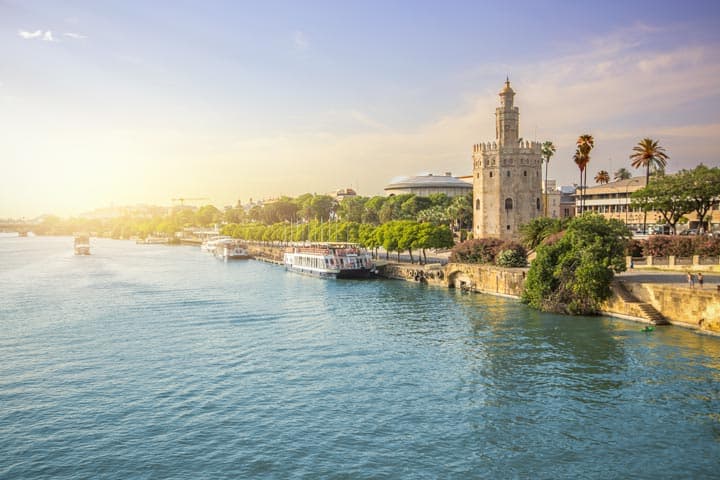
Seville is about 90 miles from Cordoba. On the first day we decided to spend it walking around the city with no particular destination in mind.
Seville is crossed by the Guadalquivir and in the evening we decided to take the San Telmo Bridge to go to the opposite side from the hotel (which was on the cathedral side). Along the river there are loads of places to drink and eat.
Day 4: visit to Seville
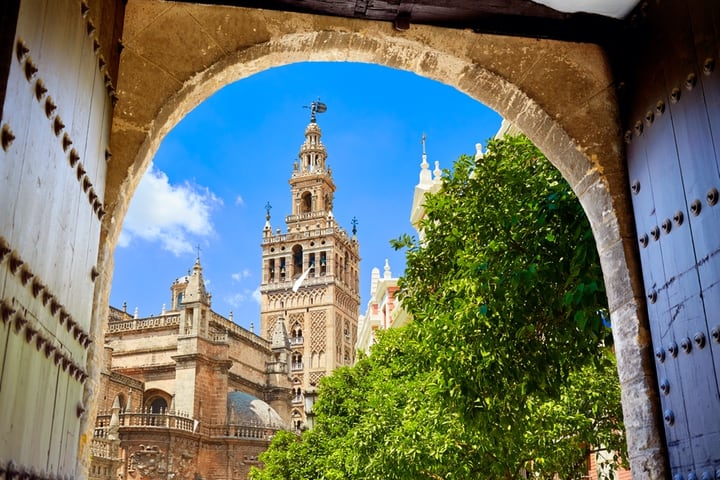
The first place we went to visit was the magnificent Seville Cathedral, which honestly left us speechless: an imposing Gothic building in a beautiful square. Visiting the cathedral took us a little time, and it was well worth it.
Afterwards, we decided to stroll through the Casco Antiguo, the true historic centre of the city. It boasts medieval and Renaissance buildings, and here you will also find the Alcázar, a Moorish royal fort converted into a sumptuous Christian palace.
In the Barrio Santa Cruz, and especially in the Barrio Santa Cruz, you’ll find lively places for tapas lunches and dinners and flamenco shows. In this part of the city you’ll also find craft workshops selling, amongst other things, the distinctive ceramics from the La Cartuja area. One regret we have is not having visited Plaza de España. To those reading, I say: don’t make the same mistake!
Day 5: Italica and Cádiz

For our Andalusia trip, we had decided to start inland and then gradually make our way towards the coast.
Our next stop was Cadiz (about 74.6 miles away), which is on the western coast. Before setting off to get there, we decided to visit Italica, an ancient Roman city about a quarter of an hour from Seville. It is now a free archaeological site for European citizens and is very interesting, rich in history and Roman architectural features. Even if we had been expected to pay for a ticket, we would have gone anyway.
Once we had finished our visit to Italica, we set off for Cadiz, a beautiful seaside city with a thousand-year-old history. We arrived in the afternoon but, alas, we hardly did anything other than check into a hotel room: unfortunately, probably because of food poisoning, I was very unwell and it was not possible to visit the city.
Day 6: visit to Cádiz
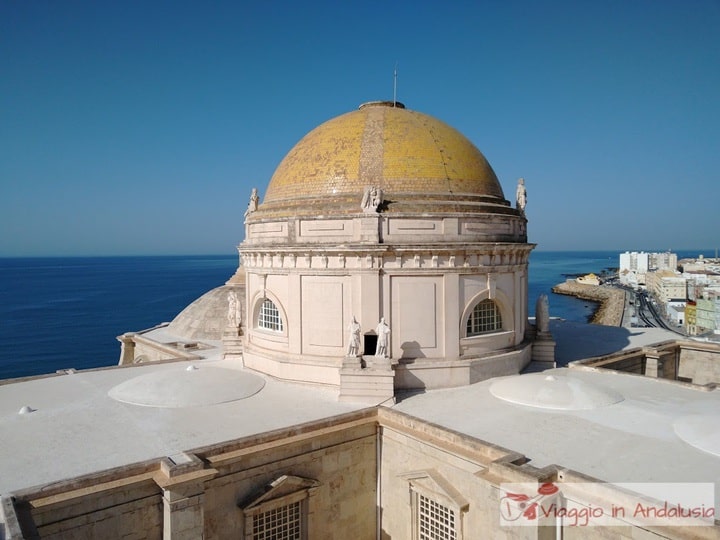
As I was not yet fully recovered, we did not do very much. We took a walk around the centre of Cadiz and along the seafront. We were very struck by the presence of so many cats on the rocks of the quay. We also managed to visit the beautiful 18th-century cathedral, which was built facing the sea.
Day 7: on the way to Marbella
We left Cádiz and headed to Tarifa, famous for being the southernmost municipality in Europe. It is not a long journey, considering that the two destinations are about 62 miles apart. Tarifa is a melting pot of different cultures and colourful characters; it is also very popular with surfers, who love its windswept coastline. A good idea if you come here is to organise a trip to Tangeri, on the African coast, as the two towns are only 14 miles apart! On clear days, which are very common in Tarifa, the African coast is very clearly visible.
The second stop of the day was Gibraltar, about an hour from Tarifa. In my opinion, it is well worth a visit: crossing the border feels like entering a place with a very different identity from the rest of Andalusia. Gibraltar is a British Overseas Territory, and after the usual border checks you find yourself in a town where British influences are immediately visible, from the language and pubs to the red post boxes and street signs. At the same time, Gibraltar has a character all its own, shaped by its location at the entrance to the Mediterranean and its long connections with both Britain and Spain.
The town is dominated by the magnificent Rock of Gibraltar, which we reached by cable car. The views from the top are spectacular, stretching across the Strait towards North Africa. Another memorable feature is the population of Barbary macaques that roam freely on the Upper Rock: they are the only wild monkeys in Europe. They are accustomed to visitors, but they are still wild animals, so keep your distance, avoid feeding them and follow the local rules.
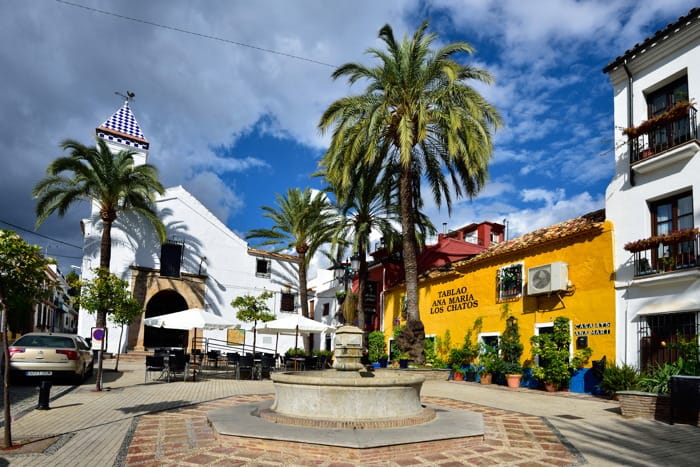
Once we had left Gibraltar, in about an hour we arrived in Marbella, a city on the Costa del Sol by the sea. It is a fairly well-known seaside resort and, besides its lovely beaches, it also has a pleasant town centre. We decided to stay here for three nights.
Day 8: surroundings of Marbella
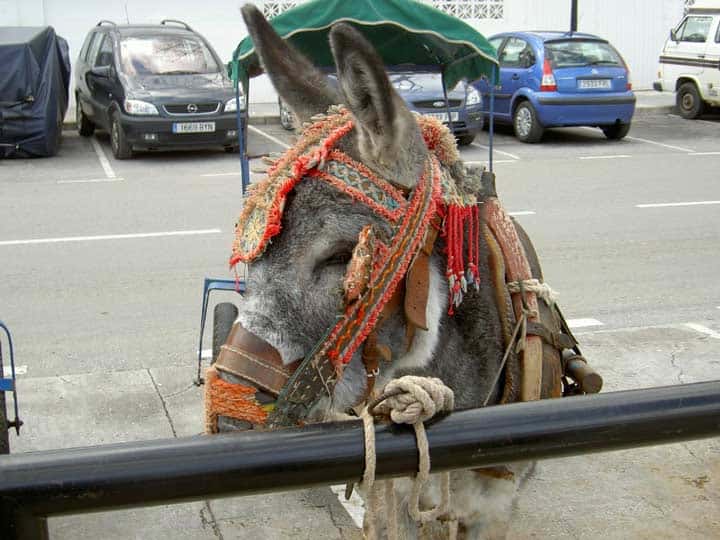
At the suggestion of the lady at the hotel, we went to visit some villages in the interior. The first village we visited is Mijas. It is an enchanting village with whitewashed houses, narrow winding streets and breathtaking views. Mijas is a hill village and it is clear that the local people are used to tourists: there are little donkeys used as a “taxi” service for the lazier visitors and small craft shops, which sell, for example, ceramics.
The second village we visited was Ojen, another beautiful village with white houses and narrow streets. Perhaps less touristy than Mijas, but in any case it too has lovely little shops selling colourful local ceramics. For lunch we stopped in the main square and had tapas sat opposite the fountain where the locals had put watermelons to keep them cool. From Ojen you can see the sea. We fell in love with this hilltop village.
Towards evening we headed back to Marbella.
Day 9: visit to Ronda
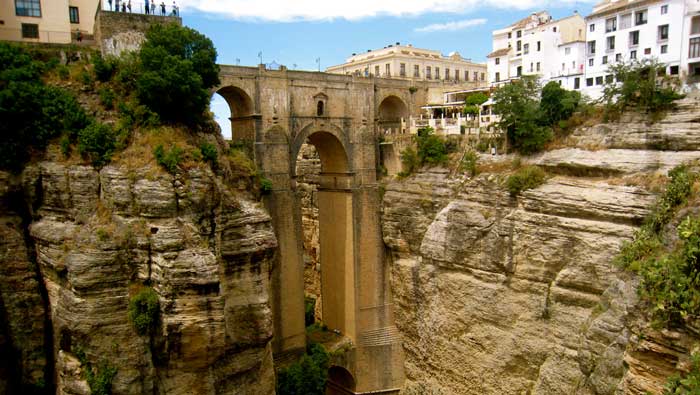
We went to Ronda, which is not far from Marbella, about 37.3 miles away. However, it took us a while to get there: the road is very scenic and picturesque, but it is quite narrow and full of bends. In addition, it is lined on one side by jutting rocks and a sheer drop on the other. So the passenger can enjoy striking scenery, but the driver has to be careful.
Ronda is visually incredible; it is perched on a deep gorge, called El Tajo, which divides the city in two: on one side is the new part, on the other the old town. The two areas are linked by the Puente Nuevo, a stone bridge that spans the gorge and has a viewpoint with a breathtaking view.
There is also the possibility of descending into the gorge via a path, and we did it. The walk is well worth it; we found ourselves immersed in fields of yellow flowers, with a view from below of the city “split” in two and of the bridge’s majesty. We stayed in Ronda for most of the day and then, at a leisurely pace, returned to Marbella and enjoyed a bit of the beach.
Day 10: transfer to Malaga
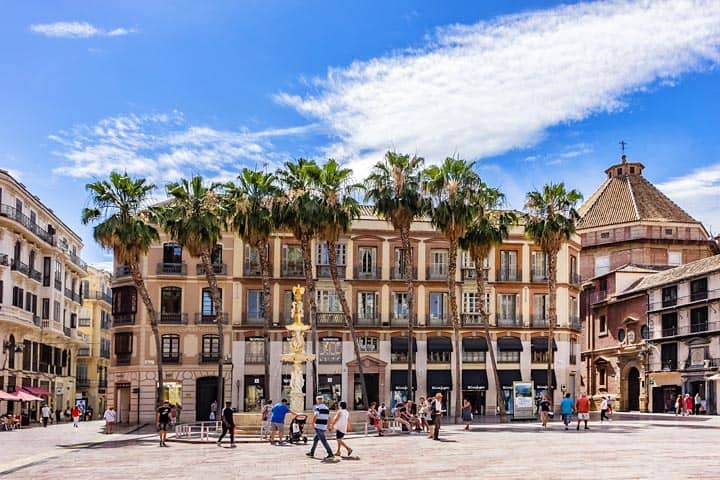
We set off from Marbella and, driving along the AP7, which is the coastal road, we arrived in Malaga in about an hour. The city is in a strategic position, as it lies at the heart of the Andalusian coast. Malaga is elegant, has a beautiful historic centre and wide tree-lined avenues. On the first day we simply strolled through the streets of the centre and rested a little.
Day 11: visit to Malaga
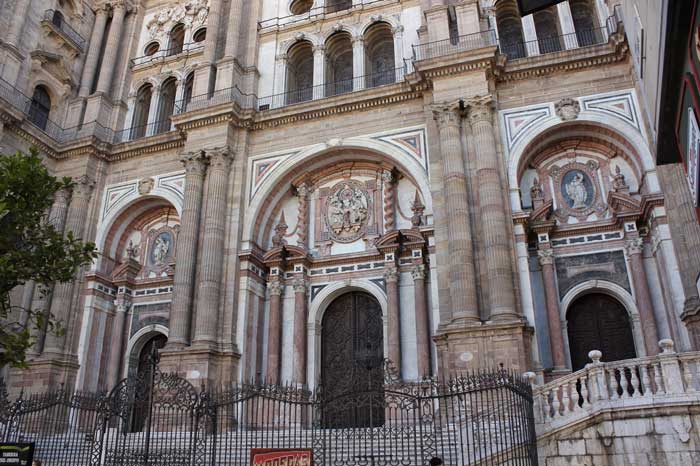
We visited Malaga: the first stop was the magnificent cathedral, which is located right in the historic centre and is one of the most famous Andalusian Renaissance monuments. The cathedral stands on the site of an ancient mosque and is not far from the port and the Gibralfaro hill. We also went to the Roman theatre, which is located below the walls of the Moorish castle. We also took a lovely walk along the walls of the fortification of the Alcazaba. We spent the evening in the historic centre, dining on typical tapas.
Day 12: arrival in Granada
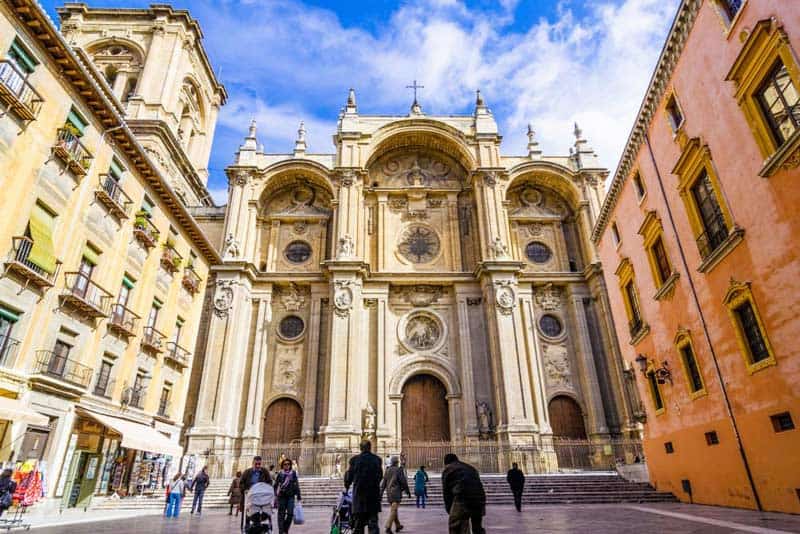
We left the coast and, after about two hours, we arrived in Granada. This city is one of those that impressed us the most. We got there late in the morning, left our suitcases and had lunch. As we only had the afternoon for sightseeing, we went only to the cathedral. It is a Gothic-Renaissance building and is considered the most important Christian monument in the city. The day ended with a lovely dinner of tapas and an after-dinner stop at a place that served special teas and offered the chance to smoke a hookah with tobaccos in different flavours (we tried the strawberry one).
Day 13: visit to Granada
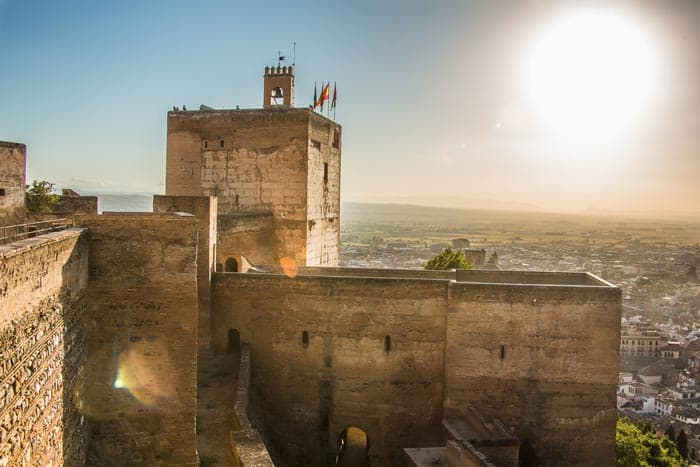
Using the bus service, which is for the daring given the driver’s driving and the condition of the vehicle, we got as far as the Alhambra. Don’t make the same mistake we did! In other words, we didn’t know that visiting the interior of the complex had to be booked in advance, so we were not able to go in. Unfortunately, we could not stay for any more days and as a result we were only able to see the fortress from the outside. To get back into the city (the Alhambra is on a hill) we decided not to take the bus again, but to walk.
From the Alhambra, a easy path winds its way straight to the medieval part of the city: the Moorish Albaicín district. Here you can admire the craft market, with the arcades of the Arab souq. We were greatly impressed by the spice sellers, with the scents and colours of their produce. The spices were in open jute sacks and were sold in bags according to the weight requested by the customer. We also bought a little box of saffron threads.
We loved this part of the city very much. We had dinner in an Arab restaurant, and we liked the place a great deal, for the cuisine on offer, for the atmosphere, for the interior architecture (with the typical Arab arches) and for the decor itself. We ate extremely well: a selection of little tasting dishes for starters, an excellent couscous and a selection of Arab sweets that absolutely blew our minds.
Day 14: visit to Tabernas
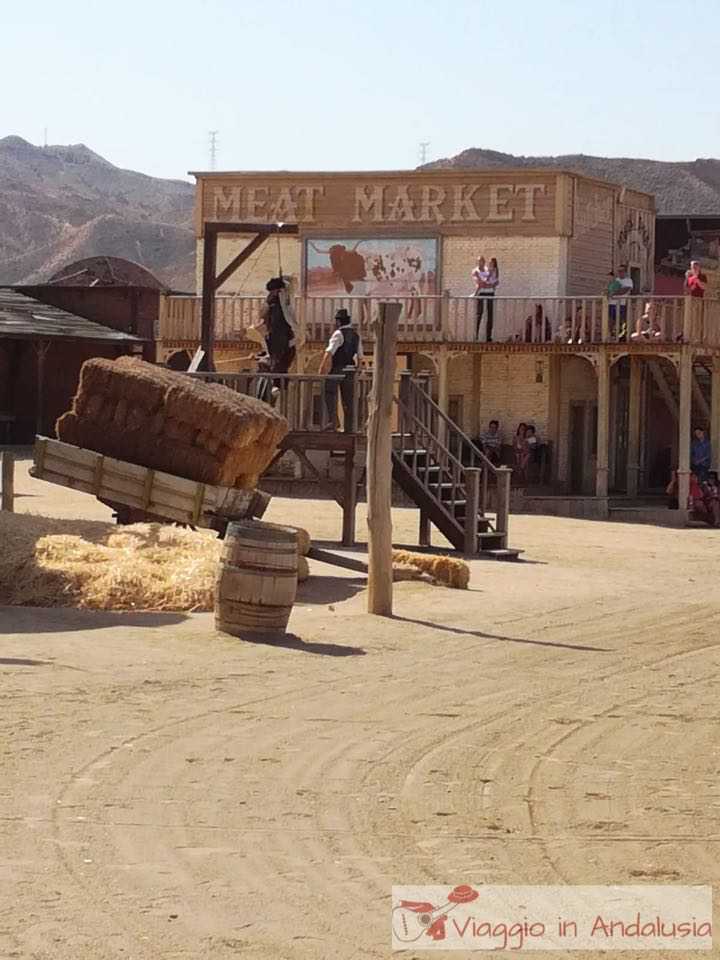
We left Granada and headed towards Tabernas, which is about an hour and a half away. Tabernas is a small town that also gives its name to the desert in that area, the only one in Europe.
We came here because we wanted to visit the Oasys – Mini Hollywood theme park. The park is divided into two parts: the western-themed area and a zoo. We really enjoyed the western part of the park: it originally began as a film set (for example, it was used for “For a Few Dollars More” by Sergio Leone) and later became a theme park. It is great fun: you can go into the saloons, stroll through the reconstructed western town, and you can even have photos taken in costume. My husband and I had ours taken dressed as a can-can dancer and a cowboy. The park is still used for smaller productions and, in fact, we were also able to watch some filming. Honestly, I absolutely did not like the zoo section. The animals are kept in very small cages and are clearly distressed. The visit upset me greatly and, from comments I have read even recently, I fear the situation for the animals has not improved.
Before heading back into town we decided to take a drive through the desert areas around the park. We recommend doing so, as they are very atmospheric places. The town of Tabernas is not especially touristy; in the evening we had dinner in a local bar and we were the only tourists in the whole place. We had tapas and beer and watched a football match with the locals: it was great fun.
Day 15: towards Valencia
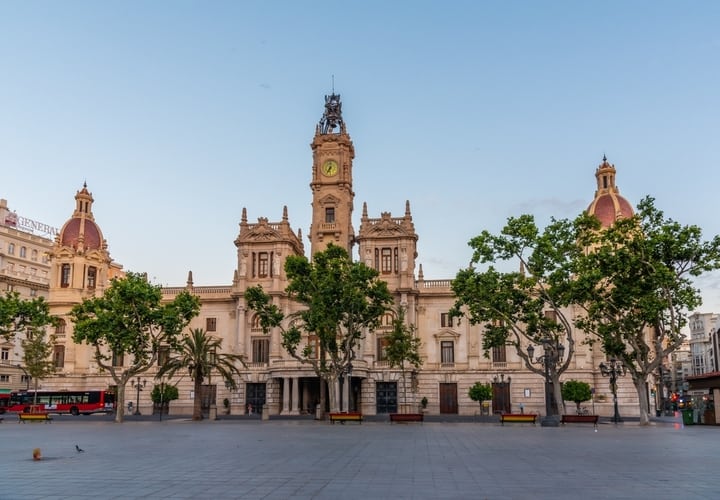
Alas, it was now time to leave Andalusia, as for the last two days of the trip we had decided to stay in Valencia.
So we set off from Tabernas and made our way to Valencia at a leisurely pace. It is a journey of around 4/5 hours, but we took longer, allowing ourselves plenty of time to admire the scenery and make various stops.
We arrived in Valencia in the afternoon, and the thing that struck us straight away was the city’s very wide streets. Our hotel was right in the centre, opposite the Ayuntamiento (the town hall). Clearly we did not do much; we went to visit the cathedral and took a walk through the streets of the centre.
Day 16: visit to Valencia
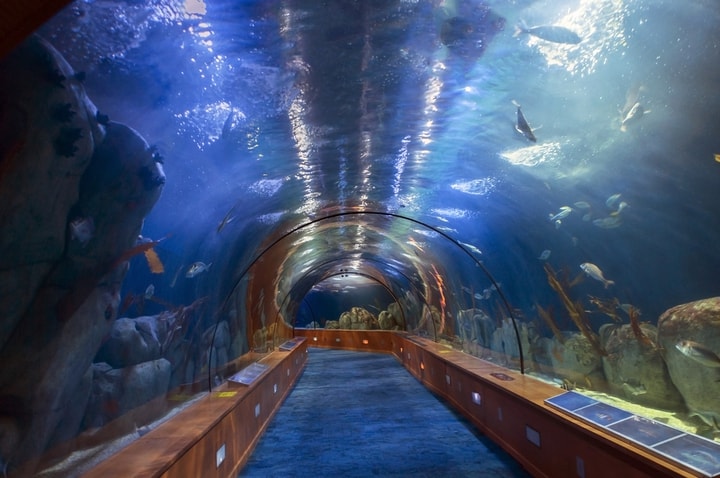
We went to Oceanogràfic, the city’s oceanographic park, which is, among other things, the largest in Europe. I do not like seeing animals in captivity, but I must admit that the visit is very atmospheric. The architecture of the place itself, and the bridge leading to it, immediately catch the eye. The park is divided into several buildings and they are truly futuristic structures, so much so that they were used as a location in the science-fiction TV series Westworld. It takes quite a while if you want to visit it all, and if you like the idea I have to say it is well worth it.
For this final day we didn’t do anything else; we ended the day with dinner in the city centre and mentally preparing ourselves for the journey home (no, you’re never ready!).
Day 17: return
We got to Valencia Airport in time to return the car to Hertz and catch our flight.
Travel diary by Martina Sansoni
