If you find yourself on the south-western side of the Andalusian coast – passing between the Costa del Sol in the province of Málaga and the windy southern Costa de la Luz towards the beautiful beaches of Cádiz – it’s hard to resist the peculiar, disorientating charm of Gibraltar. There are many reasons why this tiny corner of Andalusia is so well-known and sought-after by tourists.
Gibraltar:
- is the city overshadowed by the proverbial Rock
- represents the symbolic limit of the lands known in the ancient world, marked by the Pillars of Hercules
- it is the British outpost in Spain
- it is the nature reserve of the only monkeys in Europe
- is the perfect vantage point from which to see how the Mediterranean becomes the Atlantic Ocean.
In short, there would seem to be many points of interest that make it worth visiting Gibraltar. What to see then at the top of the Rock and among the streets of the town? Which attractions should you focus your visit to Gibraltar on? In this article we want to tell you how to spend a lovely day on this narrow strip of Andalusian land, so little Spanish, just a stone’s throw from Morocco.
Contents
Getting around Gibraltar
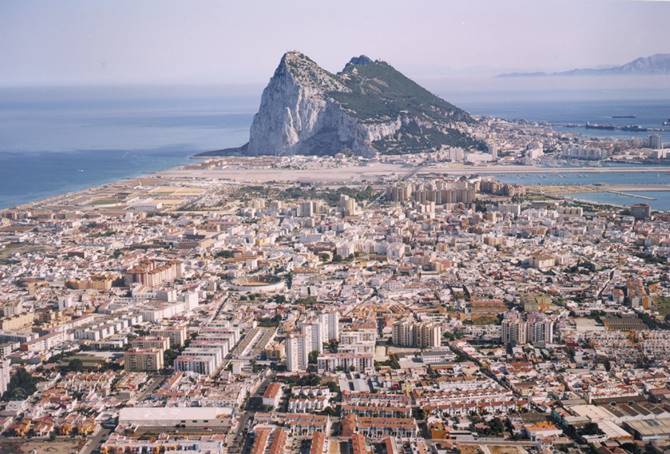
Before telling you everything about this small town, it’s worth giving a couple of general tips on how to get around in Gibraltar. You might say: can’t you drive around? And we’d reply that yes, it’s possible, but strongly discouraged.
This is for two reasons: the first is linked to the long waits you have to endure at the border at La Linea de la Concepción, the last Spanish stronghold before the British territory; the second concerns parking and traffic: it’s by no means easy to drive through Gibraltar’s narrow streets, and finding a space could prove to be a nightmare.
One solution might be to park the car near the border (there are some underground car parks in La Linea) and make a walk of about 20 minutes along the airport to Gibraltar’s town centre; alternatively, a bus service runs right at the border. Here are some convenient car parks:
Where to stay in Gibraltar
There aren’t many hotels in Gibraltar, and they’re not necessarily cheap. The very best are:
- The Rock Hotel, an elegant hotel with colonial-style furnishings that has even hosted Winston Churchill. It is located near the Alameda Gardens (3 Europa Road).
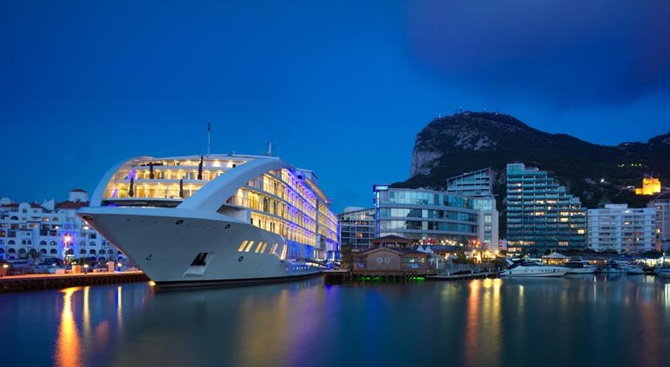
 Sunborn Gibraltar, a cruise ship moored in Gibraltar’s harbour. This luxurious yacht-casino offers upmarket accommodation, an infinity pool, a spa, a gym, a restaurant and free WiFi. Not to mention the superb view, of course!
The most affordable accommodation options for tourism in Gibraltar are located in La Linea de la Concepción: given the proximity, they’re worth considering:
- Ohtels Campo De Gibraltar: situated in Avenida Príncipe de Asturias, this hotel has the advantage of being close to the beach and half a kilometre (0.3 miles) from Gibraltar. It is a pleasant four-star hotel with a swimming pool and panoramic views of the Rock.
- Hostal La Campana: a slightly more spartan and budget-friendly option, but still very well located and good value for money. In a few minutes you can reach the border and the plaza de toros of La Linea.
Apart from the relatively un‑touristy port city of Algeciras, another strategic base for visiting the town could be San Roque, a modest little village founded in 1704 by the inhabitants of Gibraltar who fled the English: in particular, we recommend the Hostal Rio Grande, a guest house 25 minutes from Gibraltar, offering Andalusian‑style accommodation.
All available accommodation in and around Gibraltar
The Rock of Gibraltar: what to see and how to visit it
The silhouette of the Rock of Gibraltar rises imperiously, dominating the entire landscape: you can set your sights on reaching its summit once you arrive on Gibraltar’s Main Street. But first, a bit of history!
The Rock of Gibraltar: a brief history
The name Gibraltar (Gibraltar) alone testifies to the historical importance of this strategically placed town: although the Phoenicians had already taken the Rock, calling it Calpe (“cavity”, perhaps because of its many caves), it was in the eighth century that Tariq ibn Ziryab, a Berber governor, wrested it from Visigothic rule, naming it precisely Jabal Tariq (“the mountain of Tariq”) from which the present name derives. The Rock was under Arab rule for at least six centuries, and only briefly returned to Spanish control in 1462.
The well-known English rule over this strip of land began in 1704, as a result of the Anglo-Spanish alliance against the French during the War of the Spanish Succession. In 1713, under the Treaty of Utrecht, England finally secured Gibraltar once and for all, and that rule still endures — who knows for how long.
How to visit the Rock of Gibraltar
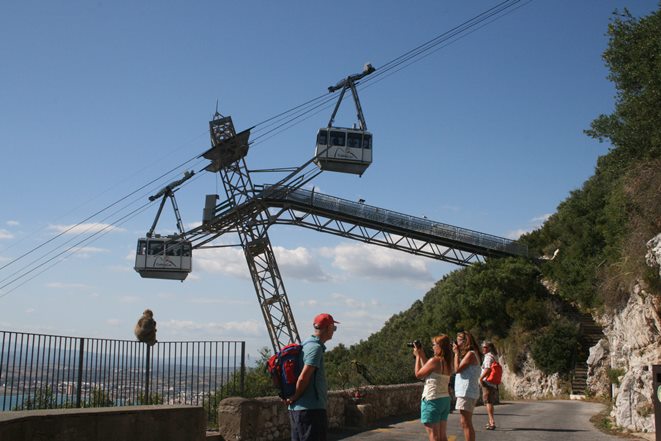
Postpone your visit to the town and make straight for the funicular to the Rock, at the end of Main Street, by a car park: in 6 minutes you will reach the top of the Rock, and the view from up there alone is worth the price of the ticket: you can see the Strait of Gibraltar, Morocco and the whole bay dominated by the port of Algeciras, with its teeming merchant vessels. At certain times of year, if you look up to the sky, you can even see the bird migrations from Europe to Africa.
From here you can then set off to explore the Upper Rock Nature Reserve and all the attractions located at the top of the Rock: admission to the main attractions is included in the cable car ticket, while a walk on the Rock without visiting anything costs just £0.50, in addition to any base cable car fare.
Gibraltar’s monkeys: where to see them?
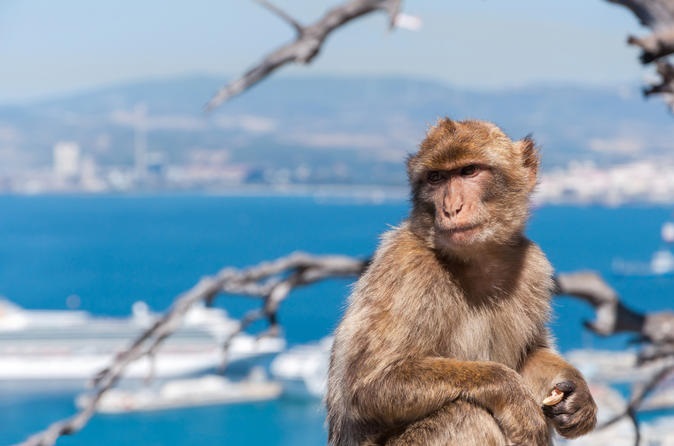
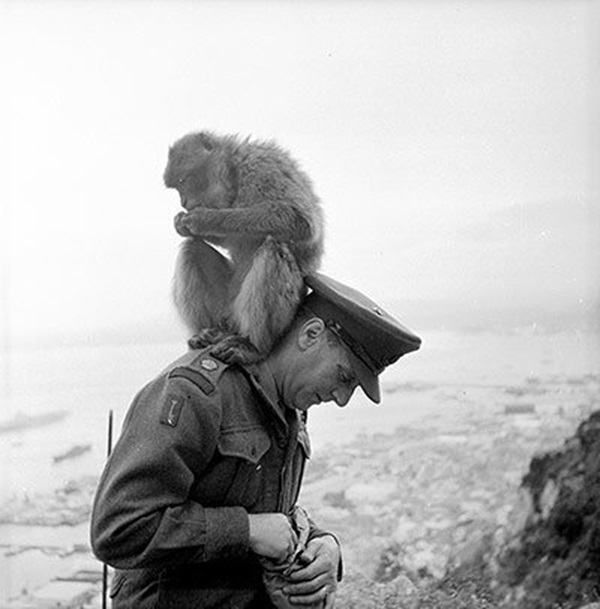
Friendly and sociable – not always, mind you! – the Gibraltar monkeys (or rather, Barbary macaques) are found all over the Rock, but mainly in the so‑called Ape’s Den, near the Charles V Wall, what remains of the old fortification ordered by Charles V to defend the Rock from attacks by Barbarossa. There is an intermediate stop on the funicular, but it is out of service from April to October.
It is said that these curious and mischievous little monkeys (the only European species!) are the guarantee of British rule over Gibraltar: as long as they keep quiet on the Rock, the town will remain British. There are about 200 of them, it’s impossible not to come across at least one; in any case, our advice is to make your way to the top of the Rock, enjoy the view and then try to get up close to the primates on the walk down.
Saint Michael’s Cave, the hollow heart of Gibraltar
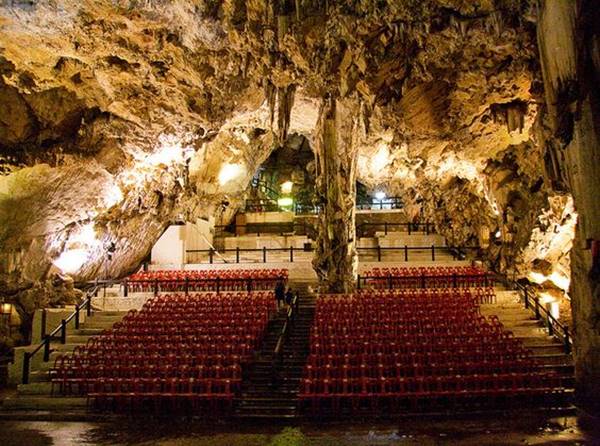
From the summit of the Rock a path leads to Saint Michael’s Cave, a splendid natural cavern now used for concerts and events: this vast cave led the Phoenicians to believe the Rock was hollow. On a guided tour it is possible to visit the lower part of the cave in about three hours, which, chamber by chamber, leads to a beautiful underground lake.
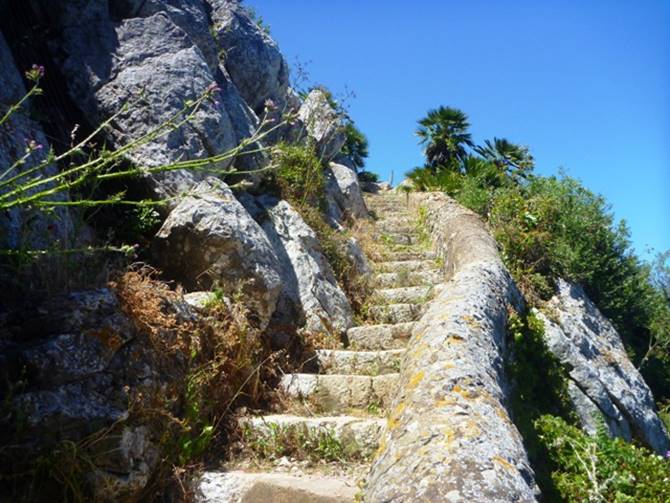
At the exit of the cave, after a short walk, you will find the Mediterranean Steps, a splendid stairway that will allow you to return on foot to the base of the Rock: the walk takes about an hour and takes place in a magnificent panoramic setting, among flowers and wild plants, with a few sections rather steep.
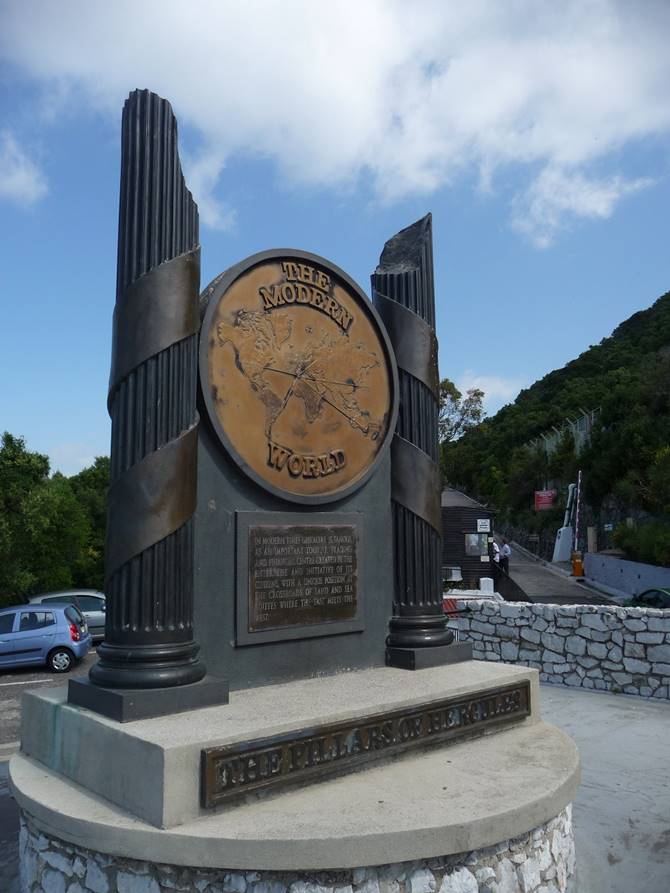
You will also pass the Jews’ Cemetery Battery, the old Jewish cemetery of Gibraltar: this is where you can park your car if you want to tackle the climb up the steps, saving on the cost of the funicular. Near the cemetery is the monument dedicated to the Pillars of Hercules of Gibraltar.
Great Siege Tunnels, a lesson in military defence by the British
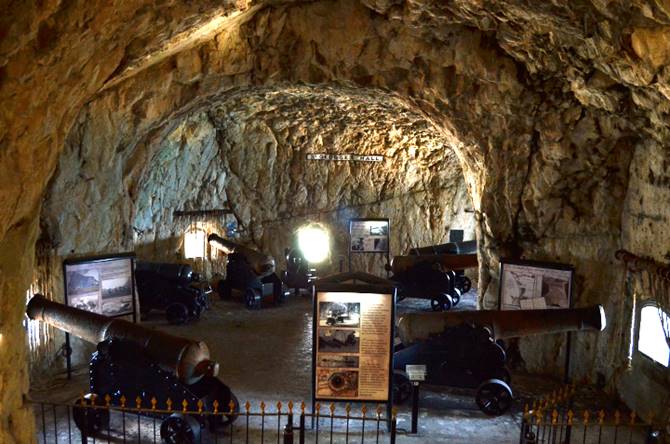
We’ve told you about the Mediterranean Steps, but it’s not yet time to descend the Rock: there’s the whole northern side of the park to explore, and in particular the Great Siege Tunnels, a series of man-made galleries for defensive purposes, excavated between 1779 and 1782 to protect the city from attacks by Spanish and French troops intent on retaking the Rock.
You can admire the ingenious strategy with which these tunnels were constructed, from the loopholes through which British soldiers kept watch on the besieging forces. Not recommended for claustrophobics!
Moorish Castle
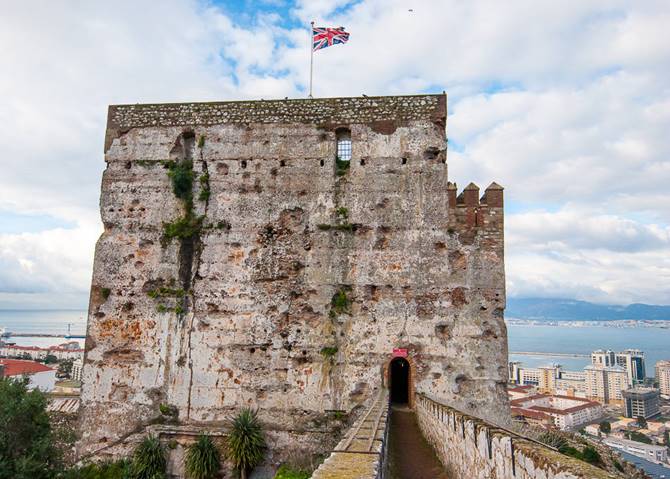
Even this British enclave has its own Moorish castle, as befits any self-respecting Andalusian town. In Gibraltar’s case, however, the fortress is a little disappointing, aside from the Tower of Homage, recently rebuilt and flying the Union Jack.
The interior of the castle is nevertheless open to visitors, and is reached by a 700 mt walk after leaving the Great Siege Tunnels: the stroll along the battlements, despite the rather depressing close-up view of Gibraltar, is still worth it.
Gibraltar: what to see? The city centre and the beaches
After you’ve wandered the Rock up and down, there isn’t much else to do in town, but it can be fun to stroll the quirky streets of the centre, starting with Main Street, which tries in every respect to emulate the style, architecture, shops, bars and atmosphere from across the Channel.
Alameda Gardens and Trafalgar Cemetery
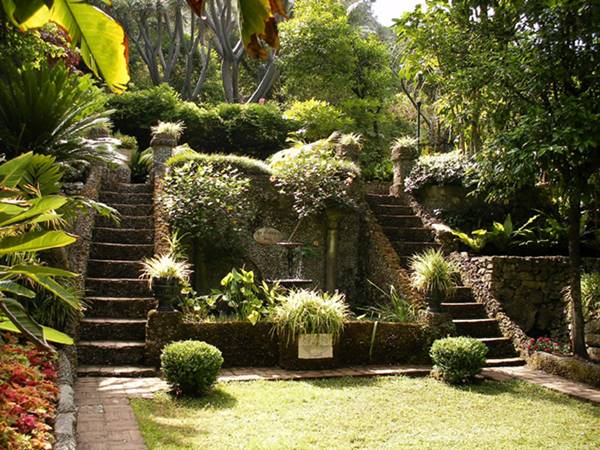
Descending from the aforementioned Mediterranean Steps, you could reach Alameda Gardens, a lush park where you can relax after the exertions of the Rock. Not far from the shady gardens lies the Trafalgar Cemetery, also set in a pleasant natural setting: here are buried those who fell in the eponymous 1805 battle.
Gibraltar Museum, between mummies and Moorish baths
Ten minutes’ walk from the cemetery is the Gibraltar Museum: it houses two splendid Moorish baths and several rooms of eclectic exhibits — you’ll find a mummy recovered from the bay, a section devoted to the Rock’s geology, a range of ancient artefacts, some rooms dedicated to natural history and displays illustrating the English military domination over the centuries.
100‑ton Gun, Gibraltar — Napier of Magdala Battery
Right in front of Rosia Bay stands a huge 100‑ton gun (built in England at the end of the 19th century) that points towards Algeciras. In fact, it is said that the gun is aimed exactly at the spot where the ship Victory came ashore, the vessel that carried the cask of rum in which Admiral Nelson’s body was concealed, returning to England — alas, deceased — after the triumphant Battle of Cape Trafalgar.
Europa Point
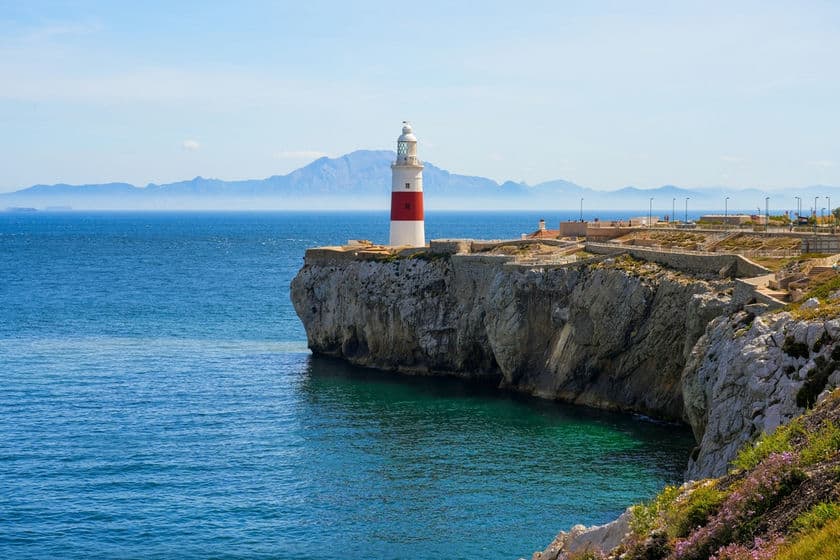
A little way outside the centre, reachable by bus, is Punta Europa: from the name you’ll understand that we are at the tip of the peninsula, in the part that “narrows the strait”. Here there is a mosque, a monument in memory of the Polish General Władysław Sikorski, a lighthouse and some excellent viewpoints from which you can even spot dolphins. Speaking of these charming marine mammals, note that boat tours operate in this area to spot dolphins in the waters of Gibraltar.
More information about the tours
Catalan Bay and the other beaches on the eastern side
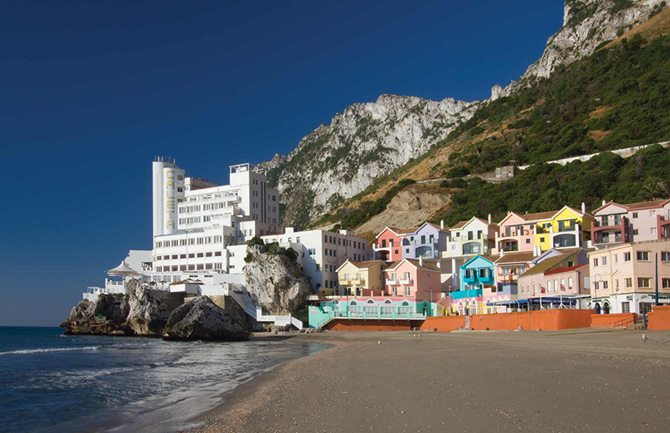
If you stay a couple of days in Gibraltar and fancy a dip in the sea, you’ll have to head to the eastern side of the peninsula, the side opposite the town. In the shadow of the Rock there are a couple of beaches, the last on the Mediterranean, strictly speaking: the best known is Catalan Bay, beside a small fishing village.
The small beach is surrounded by colourful little houses that make it particularly picturesque. A little further south is the Sandy Bay: both beaches can be reached by bus.
Off we go! Bye bye Gibraltar…
So here’s what to see in Gibraltar: for a comprehensive visit to all these sights even a single day can be enough, which after all is more than sufficient. All that remains is to return to La Linea and get back into your car to continue your tour of Andalusia!
