The beauty of Andalusia, the extraordinary autonomous region in southern Spain, knows no seasons or limits: it shows its charm in the sunlight, while at the same time hiding its most intimate secrets from view, revealing itself only to those who choose to let themselves be carried away in search of its deepest soul. This pleasing feeling will captivate you from the very start, as soon as your plane lands on Spanish soil and you are ready to begin your Andalusia Road Trip. What to see, then, in this mysterious and elusive land? In short, which are the cities, places, monuments and nature reserves that must not be missed on a trip to Andalusia? The answer to this question is certainly not an easy one.
We thought of this article when we realised that compiling any top 10 of the places of interest and monuments in Andalusia was all but impossible: with what heart could we have left out a secret beach in Cadiz or a lesser pueblo blanco, simply to respect the steps of an unreliable podium? Following this criterion, though, things become even more difficult: yes, because the things to do in Andalusia are so many that even a themed encyclopaedia would not be enough… and yet we have tried.
Yes, we have tried to answer the question by drawing up a list of points of interest that takes account of the unmissable attractions, the most significant spots and those that are (unjustly) little known or underrated. So, if you still have any doubts about your travel destination, you’ll have no more excuses: here are all the places to visit, the beauties you simply cannot miss, gathered together on a map.
Contents
Map of the main attractions of Andalusia
Before discovering what to see in Andalusia, one important point: the list is not ranked by quality, but by how well known each place is among visitors. This does not mean that the places and attractions towards the bottom are any less beautiful or interesting than those at the top. Think of it as a useful checklist: you can use it to flesh out, for example, your 10-day itinerary of Andalusia, marking the unmissable stops on the map or adding any that, unforgivably, you may have left out!
Things to do in Andalusia: best places to visit
Seville
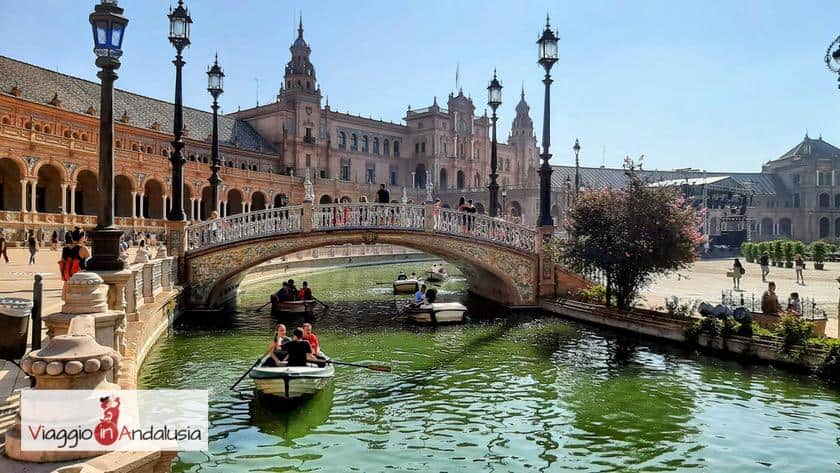
Whoever says Andalusia says Seville. Anyone approaching the discovery of this region will have heard it mentioned time and again: Seville, the princely capital of the region, is the gravitational centre of any proper trip to Andalusia and deserves at least three days.
- Leggi anche: things to do in Seville in 3 days
For the variety that sets it apart, we could describe it as a melting pot, but what am I saying? A “paella” of history and culture: there is the Jewish quarter of the Barrio Santa Cruz, there is the Arab art of the great Moorish palaces, there is the grandeur of Christian architecture, there is the Andalusian spirit dancing to the notes of flamenco in the night spots, there is the liveliness of traditional festivals (Semana Santa, Feria de Abril), the fairy-tale charm of the popular quarters and narrow, flower-filled alleyways, lined with railings opening onto breath-taking private patios…We talked about all this in our article on what to do in Seville, but it is our duty to point out three must-sees in the city:
- Alcazar: the residence of the Seville kings since the time of the ancient Romans. A marvellous example of Moorish architecture, but above all a journey through time and space. Not to be missed are the gardens.
- Seville Cathedral: opposite the Alcázar rises the imposing Catedral de Sevilla, one of the most majestic Gothic churches in all Europe. Climb to the top of the Giralda, the bell tower created from a minaret, which shares with the Torre del Oro the distinction of being the best panoramic viewpoint over the city.
- Plaza de España: this monumental square is one of Seville’s symbols. Stroll under the richly decorated arcades or go along the canal by boat: you will feel as though you are on a film set.
Granada
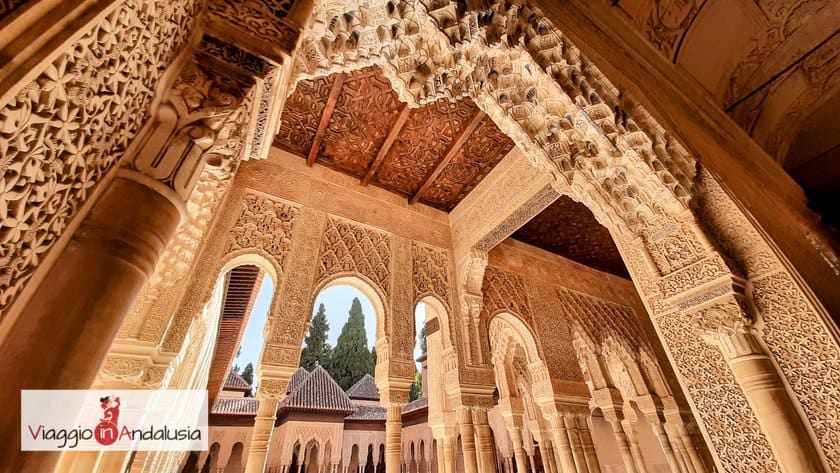
Granada is the city of dreams, the city of the Alhambra: together with Seville, it shares the throne of Andalusia’s queen. What absolutely must you see in this city that it is hard to believe is real? Its working-class neighbourhoods – above all the Albaycin – are threaded with narrow white streets that lead nowhere, giving you the impression of being in a labyrinth from One Thousand and One Nights. Then, all of a sudden, you will see them: they are the pinkish walls of the Alhambra, standing there, proud and immortal, on a hill. In the distance, the mountainous profile of the Sierra Nevada…
Granada is the city where the Moorish heritage is indisputably memorable and unforgettable: the palaces of the Alhambra preserve the visionary and transcendent aesthetic taste of Moorish art intact, while the gardens of the Generalife have love stories and tales of nobility to tell. Visiting this complex requires a certain amount of organisation and plenty of advance ticket booking, which is why I invite you to read our tips on how to organise an Alhambra visit.
But here, there’s not only the Alhambra, treasure of Andalusia: there are many things to see in Granada, so much so that one day is not enough. An example? The cuevas of Sacromonte, the caves where gypsies and flamenco musicians used to live, the Cathedral and the Royal Chapel of Granada or the Madraza, the old university of Granada, a building that is almost unknown but not to be missed…
Cordoba
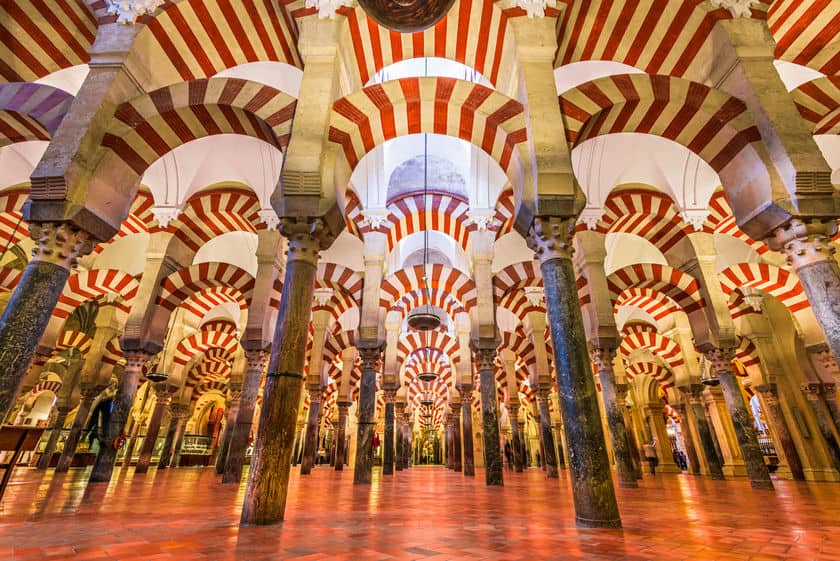
The northernmost provincial capital in the region of Andalusia is also the apex of the Seville-Cordoba-Granada triangle, the classic Andalusia tour. What should you see in Cordoba, a beautiful city that has managed to retain its popular soul and the spirit of the most authentic Andalusia? We have already answered this question at length in our article on what to see in Cordoba, but I cannot help but mention that in this small Andalusian gem lies what, in my view, is one of the top five sights in the whole region: the Mezquita, a huge Christian cathedral that has nevertheless retained most of the architectural elements of the original structure, which was a mosque.
Try absolutely to go inside the Mezquita and lose yourselves in the forest of Moorish arches until you reach the mihrab, the Muslims’ prayer area, just a few steps from a Christian crucifix: the sense of disorientation you will feel is difficult to put into words. Beyond the Mezquita, do not miss the Puente Romano, which stands proudly over the Rio Guadalquivir.
Malaga
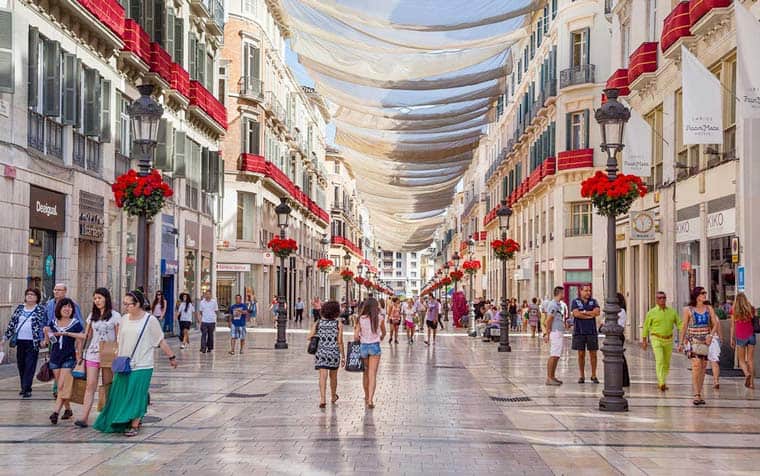
Malaga is the Andalusian city that best manages to maintain a balance between authenticity and innovation, tradition and experimentation, culture and fun, art and tourism. Situated by the sea, a stone’s throw from the Costa del Sol of Marbella, Torremolinos and Fuengirola, Malaga could not escape the role asked of it: that of Andalusia’s capital of seaside tourism and entertainment.
If, from an architectural and artistic point of view, Malaga is a notch below the three cities mentioned so far, what makes it an unmissable stop is its captivating atmosphere, its youthful freshness. It is no coincidence that the most famous of the Andalusian festivals takes place here: the feria de Malaga, a week of sheer madness by the seaside.
Yet when you arrive in the city, you will realise that, behind its mask of a modern, touristy city, among the things to see in Malaga, some truly remarkable treasures are hidden: the Alcazaba (the ancient residence of the Moorish kings), the Manquita, the Christian cathedral famous for being “lopsided” because it is missing a bell tower, and much more… let us not forget that Malaga is Picasso’s city.
Cadiz
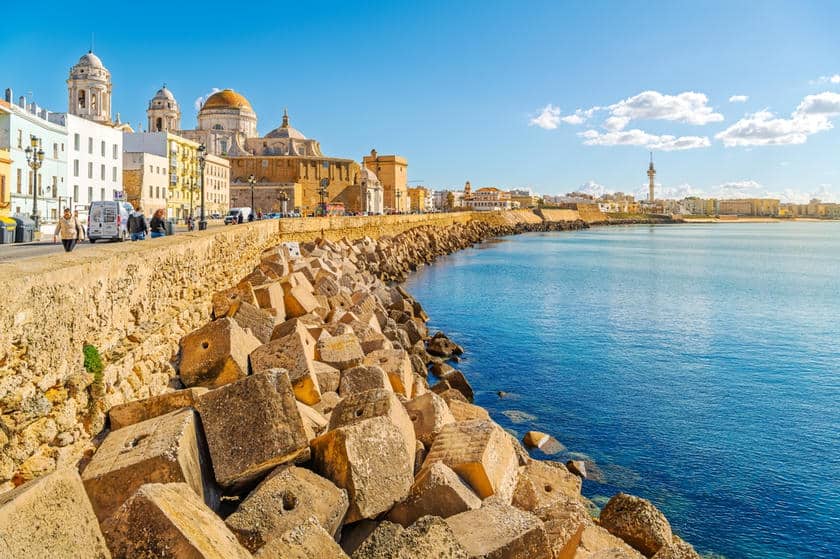
What to see in Andalusia on the ocean side? Let us not forget that this region rests its western flank on the shores of the Atlantic, and one of the most beautiful jewels it boasts is Cádiz, the oldest city in Europe. Together with Tarifa (a town in the province of Cádiz), this luminous city is perhaps more African than European at first glance, but a short walk through the streets of its small historic centre is all it takes to understand that here, right here, lies the most authentic Andalusian style.
Among the things to see in Cádiz, the gravitational centre is undoubtedly the Catedral Nueva, with its yellow dome, but your trip to Andalusia cannot do without the experience of a stroll along the seafront, a stone’s throw from the ocean, to visit Playa de la Caleta and the two Castillos, the peaceful Parque Genovés or the working-class neighbourhoods: Barrio de la Viña, Barrio del Populo, Plaza del Topete…
Ronda
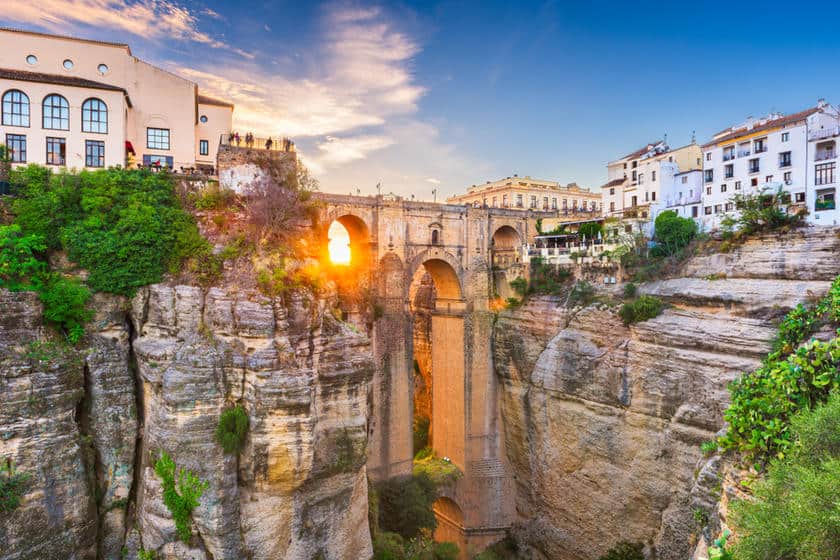
Ronda deserves a category all of its own, that of the most enduring dreams and indelible memories. If you go there, you’ll understand why I began so sentimentally: Ronda is a hill town, but its main feature becomes clear when you look at any photograph of it: a town perched on the edge of a ravine carved out by a river, the so-called Tajo. The old town is a treasure chest full of gems, which I have tried to describe piece by piece in the article What to do in Ronda. One of the best attractions – still according to that old idea of the “top 10 Andalusia things to see” – is precisely the Puente Nuevo, the massive arched bridge that joins the two parts of Ronda, the city that defies the abyss.
But if it were only this, Ronda would be nothing more than an evocative romantic little picture: visit the ancient Plaza de Toros, the eerie and symbolic Mina del Rey Moro, lose yourselves along the streets of the old town in search of the heart of this splendid city, one of the loveliest in all Andalusia. A few miles from Ronda lies another beautiful gem, one of the most curious things to see in Andalusia: Setenil de las Bodegas, a tiny pueblo nestled among the rocks of a cliff.
Jerez de la Frontera
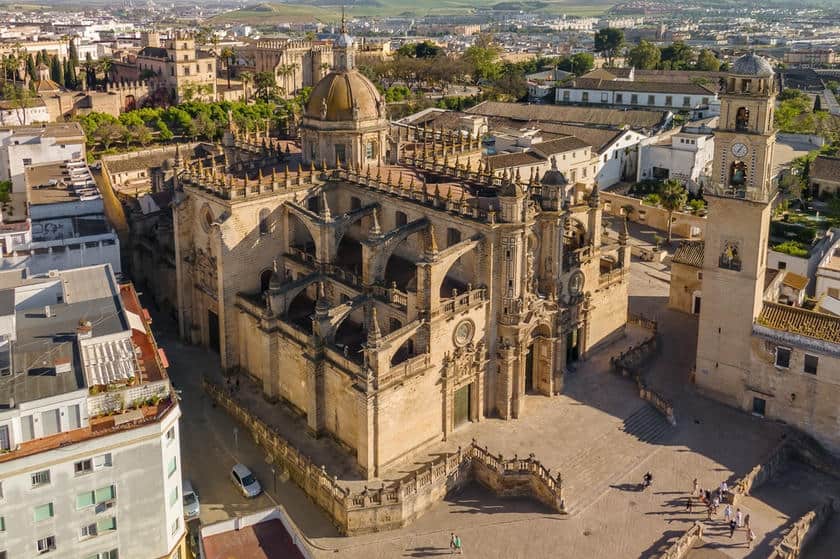
Jerez de la Frontera is without doubt right at the top of the must-sees in Andalusia: you’ll find it halfway between Cádiz and Seville, and you could never have imagined just how authentically Andalusian this city can be. Here the keywords are two: sherry and horses. Yes, because Jerez deserves its place in this special ranking above all for its wine production: in its bodegas – and in those of the so-called sherry triangle formed by Jerez, El Puerto de Santa Maria and Sanlúcar de Barrameda – you can taste the finest fortified wine in the whole region; and the horses? Quite simply: here you’ll find the best equestrian school in Andalusia! These two reasons, however, are not enough to overshadow the charm of this proud, secluded city: the Moorish Alcazar and the Catedral de san Salvador have nothing to envy in the cities listed so far. In our article “Jerez de la Frontera: things to do” we spoke about the city in more depth.
Pueblos Blancos
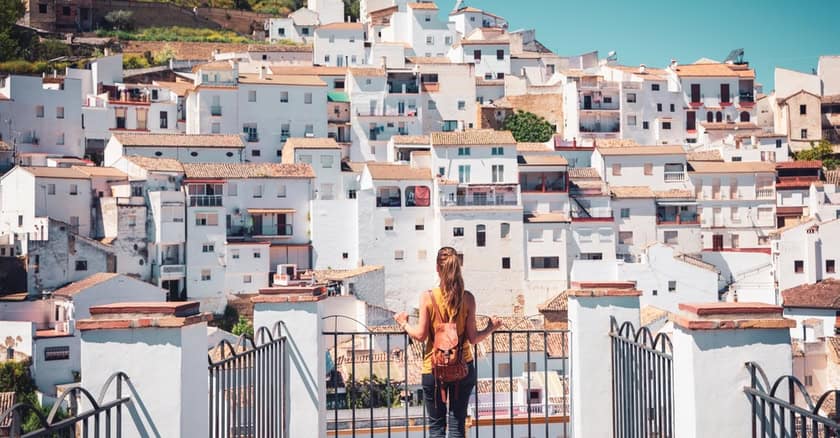
Andalusia is also the land of the pueblos blancos, the tiny hill villages clinging to the mountains of the inland regions. In the articles dedicated to the pueblos blancos of Cádiz and the pueblos blancos of Málaga we suggested a few road-trip itineraries, highlighting some of the most charming. The main feature of these little villages lost in the Andalusian countryside is the white colour of their walls: it is easy to understand that this is a measure taken because of the sun, which beats down strongly here. This should not put you off, though, not least because the streets are narrow precisely to provide people with a little more shade. In short, at least one visit to a pueblo blanco is essential if you want to understand the “rural” side of Andalusia. So what should you visit? In addition to the ones mentioned, we also recall others scattered across the region:
- Olvera
- Carmona
- Arcos de la Frontera
- Mijas
- Zuheros
- Montefrio
- Setenil de las Bodegas
- Vejer de la Frontera
The Andalusian beaches
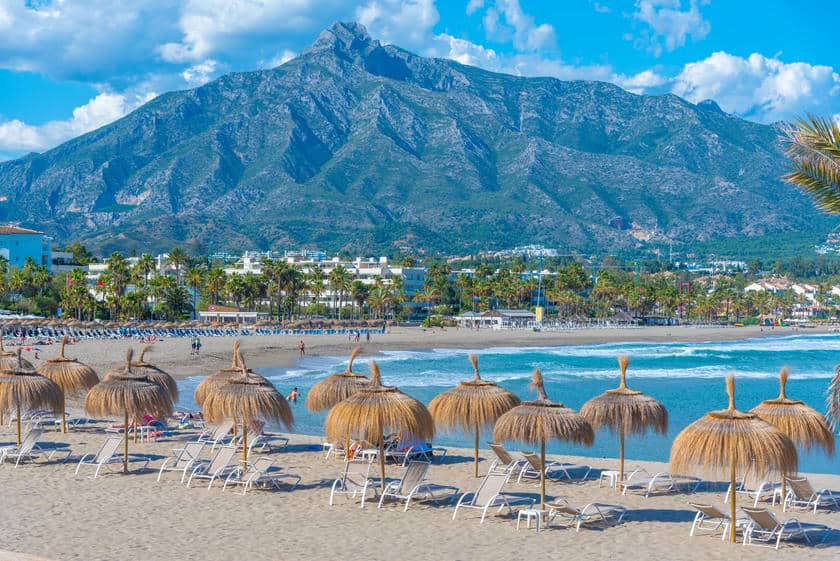
But it is not only cities and villages that make up Andalusia. What to see when we have exhausted our map of cities? Especially in the summer months, the answer is as easy as it gets: the beaches. As we wrote in our section dedicated to the beaches of Andalusia, there is something for every taste. On the eastern and western Costa del Sol, in the province of Malaga, you will find the areas most frequented by tourists, given the abundance of holiday resorts and equipped beaches on offer.
Marbella and Nerja are the two classy resorts you need to reach if you want a top-class holiday. The Costa de la Luz offers the wild, windswept beaches of Cadiz and Huelva, ideal for sports enthusiasts passionate about windsurfing and kitesurfing: besides the famous beaches of Tarifa, the prettiest are Bolonia, Conil de la Frontera and Matalascañas, though these are just personal opinions… finally, the Costa de Almería, where the beaches are still lonely and unspoilt: with a little adventurous spirit, you can reach some natural masterpieces such as Playa de los Muertos or Playa de Mónsul.
The castles
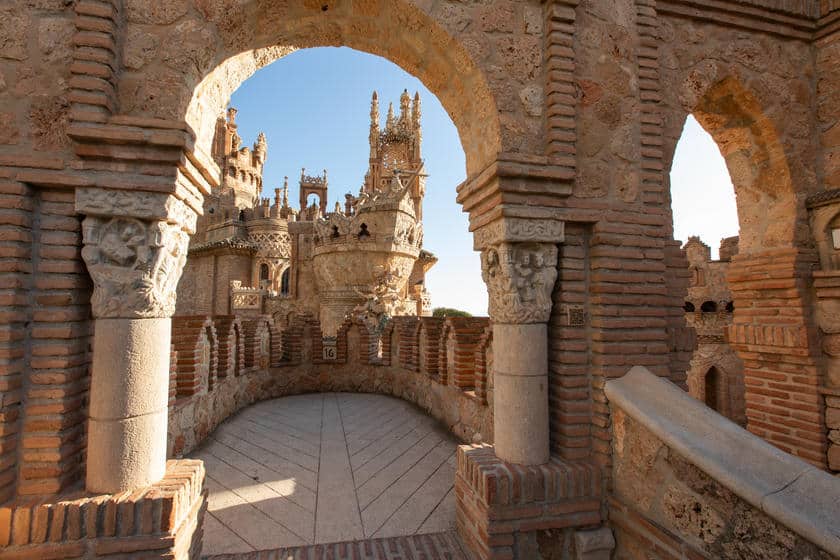
There are certainly castle lovers among you, aren’t there? Well, Andalusia is the right place for that too! Not only alcazabas and alcazars, but also an endless string of castles and fortresses, both in the cities and in the smaller pueblos! There are unusual ones (the Castillo de Colomares in Benalmádena, a bizarre monument to Christopher Columbus), majestic ones (Belalcázar Castle, in the province of Cordoba), but above all there is an entire route dedicated to the castles of the province of Jaén, the so-called Ruta de los Castillos y las Batallas, a route with a very high level of historical and aesthetic interest.
One of our favourite castles is the impressive Fortaleza de la Mota (Alcalá la Real), which we recommend visiting if you are travelling from Granada to Cordoba or Jaén.
Gibraltar

The Strait of Gibraltar reminds us of the outermost frontier of the known world, the Pillars of Hercules… Andalusia draws much of its charm from its position as a borderland with Africa and with the mystery of exotic lands. In a sense, the city itself is keen to preserve this transnational spirit: as you will know, it is still a British Overseas Territory, and it is said that it will remain so as long as the famous Rock that divides the tiny town in two is home to the monkeys, a colony of friendly little rogues that steal food from tourists’ hands. Gibraltar is not the first thing to see in Andalusia, but it remains a much sought-after destination for all those who arrive in the south of Spain: we discussed it in the article on Gibraltar.
The Tabernas Desert
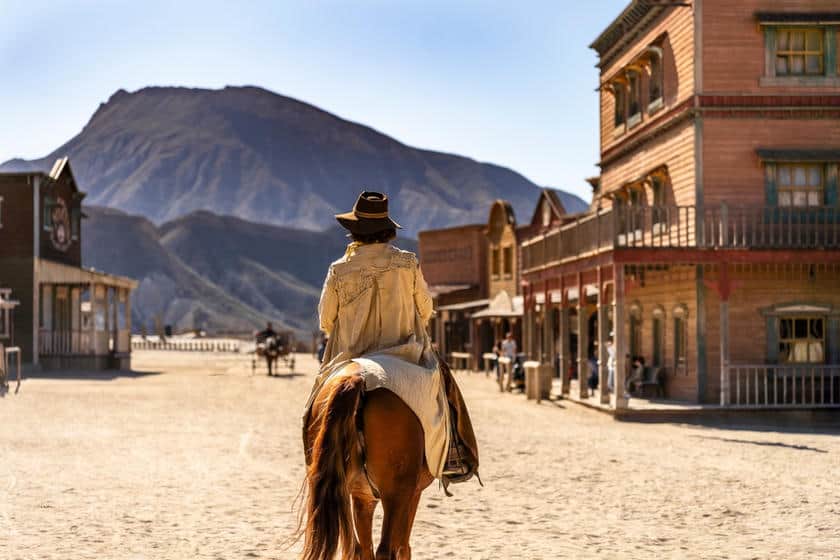
Bud Spencer passed away in 2016. You may be wondering what the much-loved brawler has to do with this article about what to see in Andalusia… well, he does, because not many people know that many of the western films he made with his inseparable partner Terence Hill were shot in the Tabernas Desert, a desolate area north of the coastal city of Almería. It is one of the very few deserts in Europe, and for that reason it was used for many western films, including cult classics such as Once Upon a Time in the West. For anyone heading to Andalusia, it is a once-in-a-lifetime chance to soak up some unforgettable atmosphere, especially as this is where Mini Hollywood is located, a western theme park developed on an actual 1960s film set.
