If it is the large cities of Andalusia with their Arab-influenced atmosphere that have made this region of Spain famous, the rural hinterland – with its hilltop towns and natural landscapes – is no less impressive.
A growing number of tourists choose to dedicate part of their Andalusia itinerary to discovering the less touristy but equally spectacular areas. The pueblos blancos, small villages characterised by steep, narrow, picturesque streets and dazzling white buildings, have become a popular alternative tourist destination for those visiting the provinces of Málaga and Cádiz. Over the years, full road trip itineraries have been created to discover the most characteristic pueblos blancos and among these two itineraries stand out in particular: the ruta de Pueblos Blancos de Malaga (from Ronda to Algeciras, passing through villages such as Júzcar, Benarrabá, Gaucín and Casares) and the ruta de Pueblos Blancos de Cadiz (from Arcos de la Frontera to Ronda). While we have covered the first ruta in detail in a dedicated article, in this article you will find information and tips on the second ruta, the one that reveals the most hidden beauties of the villages perched on the Sierra de Grazalema in the province of Cádiz.
In this itinerary of around 80.8 miles, you will have the opportunity to visit 6/7 small towns of inimitable charm, two archaeological sites, cross the Parque natural de la Sierra de Grazalema and alternate between hilly, lakeside and urban landscapes in a unique mix where history, nature and cultural and culinary traditions combine to give you an unparalleled experience. Below, you will find an itinerary to be done in 1, 2 or more days depending on the time available and the attention you want to devote to the individual towns. I recommend spending at least one night in one of the various pueblos to better immerse yourself in the atmosphere.
Contents
Map of the road trip
Arcos de la Frontera
The route of the white villages of Cádiz starts in Arcos de la Frontera. Located about 37.3 miles from Cádiz, Arcos de la Frontera is among the most famous pueblos blancos, thanks to its viewpoints over the surrounding landscape and its historic monuments. From the top of the promontory on which it stands, you will be welcomed by the castle with its square base and four battlemented towers: it stands in Plaza del Cabildo and dominates the town. Among the narrow streets, don’t miss a visit to the Gothic-Baroque basilica Iglesia Santa Maria de la Asunción with its Renaissance façade, the wonderful high altar and choir, and the 18th-century Iglesia de San Pedro in Calle San Pedro. Among the historic palaces, Palacio del Mayorazgo in Calle Nuñez de Prado stands out, with its unmistakeable Mudéjar style.
- From Arcos de la Frontera, continue to Grazalema, which you will reach in about 1 hour and 30 minutes via the A-372.
Tips on where to stay in Arcos de la Frontera
Grazalema
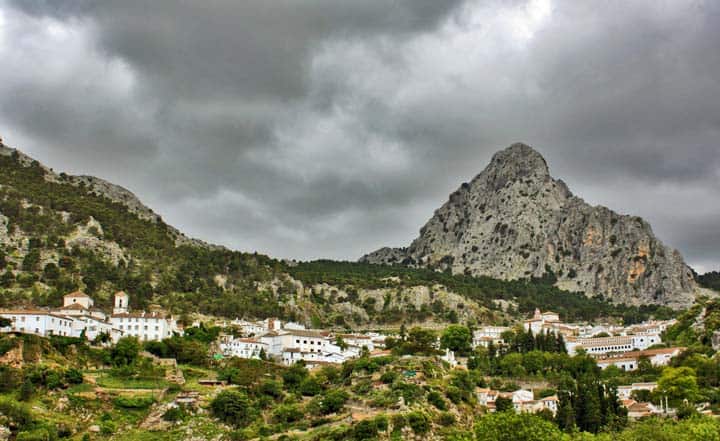
Along with Arcos de la Frontera, Grazalema is one of the most visited pueblos blancos and an essential stop on the Andalusian ruta de los pueblos blancos. The whole of its municipality lies within the Sierra de Grazalema Natural Park, and the tourist offer for outdoor sports activities is varied and well organised. As well as the enchanting landscape surrounding the town, the historic centre offers charming little streets and squares where the imprint of a Moorish town can clearly be seen. To appreciate the local history and traditions, I suggest visiting the Museo Textil de Grazalema, as well as the lovely old churches such as the Baroque Iglesia de Nuestra Señora de la Aurora, the Iglesia de Nuestra Señora de la Encarnación and those of San José and San Juan.
- From Grazalema head north through the Sierra de Grazalema natural area and reach Zahara de la Sierra in about 30 minutes. It is only 9.3 miles, but the road through the mountains is a little winding and does not allow for high speeds. On the plus side, it is extremely scenic, winding its way between rocks and vegetation.
All accommodation available in Grazalema
Zahara de la Sierra
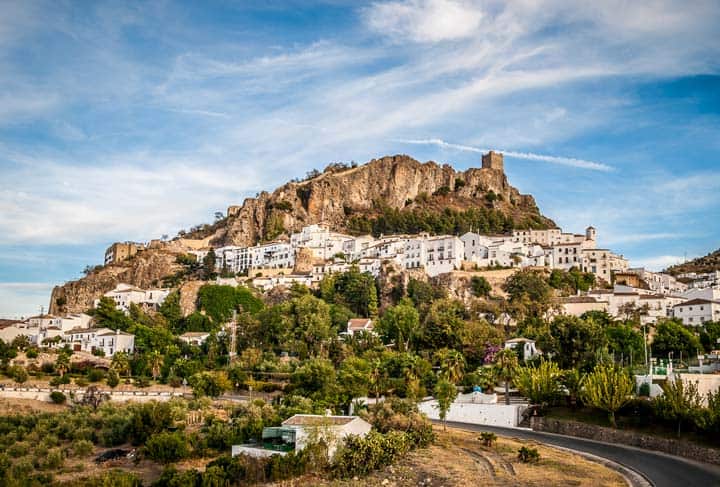
Among the pueblos blancos of Cádiz, in terms of charm and importance, Zahara de la Sierra stands out, with its medieval castle of Arab origins and its large artificial lake. If you love water sports, this is the place for you: on the lake, in fact, you’ll have the chance to enjoy activities such as kayaking or boating, or simply treat yourself to a lovely swim. Although the town would deserve an overnight stop so you can linger by the lake or take long walks along the Sierra’s trails, a short visit will still allow you to appreciate its historic centre. In addition to Zahara de la Sierra Castle – set in a strategic position that lets you take in the whole valley at a glance – I also suggest visiting the 18th-century Baroque church, called Iglesia de Santa Maria de la Mesa.
- From Zahara de la Sierra to Olvera, it is around 18.6 miles, which can be covered in about 30 minutes.
All available accommodation in Zahara
Olvera
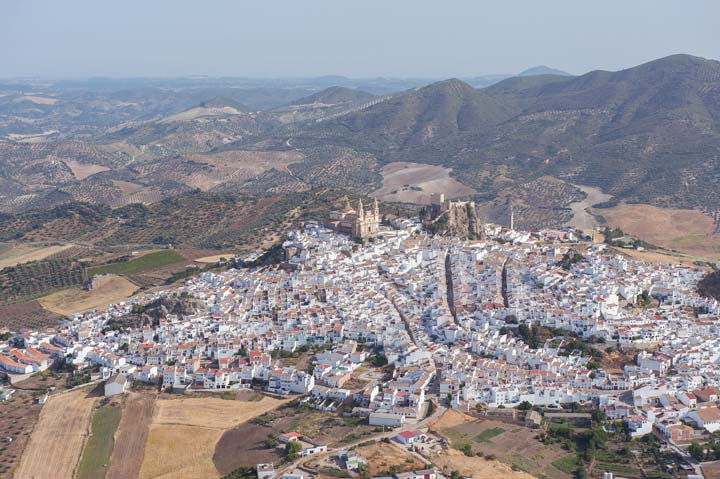
The exceptional profile of the town of Olvera has become one of the symbols of rural Andalusia: this splendid landscape is made up by the ancient Arab-origin castle, with its Torre del Homenaje (the castle keep) and the beautiful 19th-century neoclassical church Iglesia de Nuestra Señora de la Encarnación. The castle is literally perched on a rocky spur and rises imposingly above the town. During your visit to Olvera’s historic centre, known as La Villa, I suggest you try the local ham and the olive oil produced in this area. The town is, in fact, surrounded by olive groves. Also worth noting is the Via Verde de la Sierra, a road around 23.6 miles long that links Olvera with Puerto Serrano, built on a railway line in the valley bottom and now used as a cycle path.
- Alcalá del Valle is about 30 minutes from Olvera and 15 from Setenil de las Bodegas, so it could be an additional stop on the tour before reaching Setenil itself. If, on the other hand, you decide to go directly from Olvera to Setenil de las Bodegas, it will take about 25 minutes.
All available accommodation in Olvera
Setenil de las Bodegas
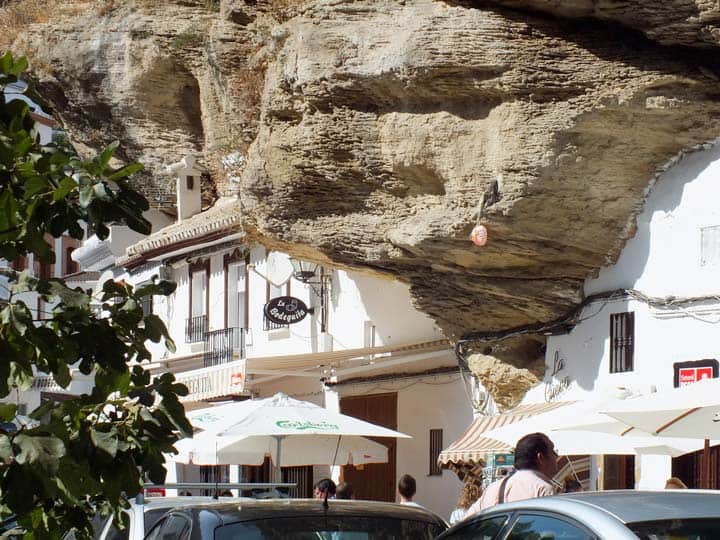
The wild beauty of Setenil de las Bodegas, “the town in the mountain”, will leave you speechless: nature and the hand of man blend together in a unique combination. The houses built in this town are embedded in the rock, which often acts as the wall or roof of the building itself. Between the Sierra de Grazalema and Ronda, this was one of the last Arab strongholds: to prove it, the Tower of Setenil and a sixteenth-century church stand on a rocky outcrop. From here you will enjoy a spectacular view which on clear days will even let you see Olvera. Setenil is also famous because, according to tradition, the custom of eating tapas was invented here… so all that remains is for you to sit down in one of the town’s many local spots and enjoy a few treats in a bar, perhaps sheltered from the sun under a “rock gazebo”!
All available accommodation in Setenil
Ronda
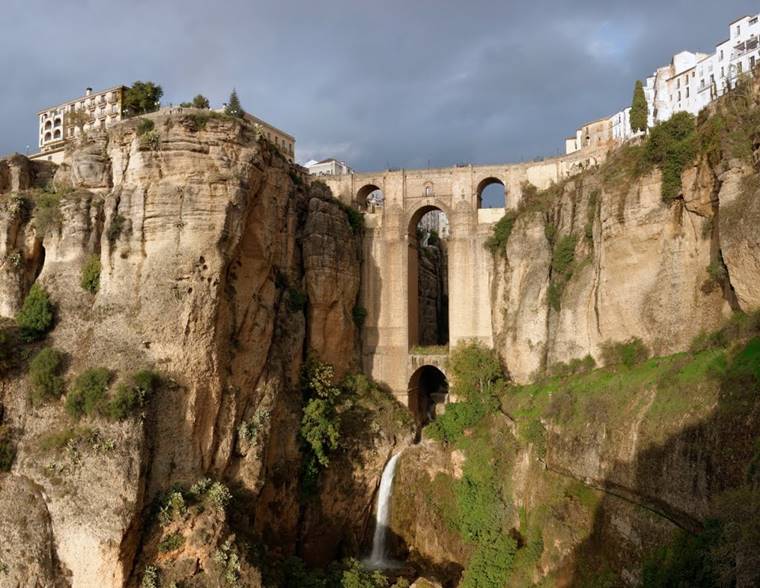
Although it is located in the province of Malaga, Ronda is such a fascinating little town that we simply have to include it as the final stop on an itinerary discovering the most picturesque villages of the Sierra de Grazalema.
Ronda is perched on a rocky spur, joined by the famous Puente Nuevo. If the bird’s-eye view over the valley from its miradors makes your head spin, take the opportunity to see the town from below, from the mini-canyon at the foot of the Mina del Rey Moro, an artificial gallery carved into the rock. Don’t miss a stroll through the historic centre with its old bridges, the Plaza de Toros, Plaza del Socorro, the Arab Baths and the magnificent patios of the most important historic palaces, such as the Palacio de Mondragón.
