According to you, what is the fundamental feature, symbol or perhaps the archetype of Andalusia? Where does the mysterious and elusive spirit of this rich, sumptuous Spanish region, which fascinates and wins people over with its many different faces, lie hidden? One thing is certain: Andalusia cannot be “reduced” to its splendid Arabesque cities or to the beaches of the long and varied Andalusian coastline. In short, one must not overlook one of the dominant and most fascinating aspects of this region: the rural character of the pueblos blancos, the tiny white villages perched on hills and mountains, scattered throughout the provinces of Málaga and Cádiz.
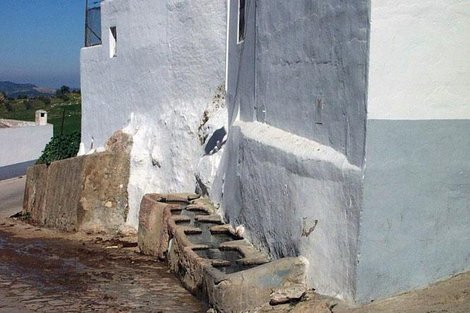
But what’s the best way to get to and visit the pueblos blancos? The answer is simple: do it on a road trip, which is the way of travelling I, personally, stubbornly continue to prefer. After all, I can’t conceive of a trip to Andalusia as the classic standard holiday, that is, a stay as static as possible in one city – at most two – or in a beach resort, without ever stepping beyond the boundaries set by the shadow… of the sunshade.
Exactly as in America a road trip takes place along a route, in Andalusia we have the rutas, and we are talking about itineraries so loved and well travelled that they have become a cult feature of tours in Andalusia. The best-known rutas de los pueblos blancos are essentially two: one winds along the Sierra de Grazalema from Ronda as far as Arcos de la Frontera, in the province of Cadiz; the other – the one we are dealing with in this article – is a beautiful road that runs from Ronda to Algeciras, passing through Gaucín and skirting the Sierra, but mainly within the province of Malaga.
But let’s not waste any time: after hiring a car in Malaga (or Seville!), let’s head to the city of Ronda to begin our ruta de los pueblos blancos of Malaga.
Contents
- Ronda, set off, go!
- The caves of Montejaque and Benaoján
- Jimera de Libár, Moorish village in the heart of the Serranía de Ronda
- Atajate and Júzcar: between Arab towers and… Smurfs!
- Benadalid, the tiny village with the castle-cemetery
- Algatocín and Jubrique
- Benarrabá, a pearl nestled among the mountains
- Gaucín and the Moorish castle overlooking Morocco
- Casares, a wonderful white village clinging to the hillside
- The route arrives in the province of Cadiz: Jimena de la Frontera
- Castellar de la Frontera and its forgotten little village
- The Route of the White Villages in Malaga: summary and top five
Ronda, set off, go!
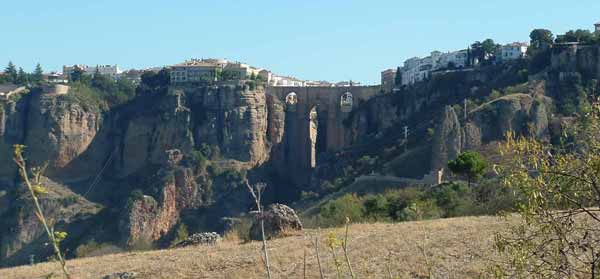
Our road trip begins in Ronda, one of the most emblematic smaller towns in the province of Malaga and throughout the Andalusian region, already featured in our 5-day Andalusia tour. What strikes you most about Ronda – perched on the rims of a very deep gorge – is the Ciudad, the ancient Moorish old town, rich in palaces and arabesque buildings, separated from the modern city by the imposing Puente Nuevo, which stands just a stone’s throw from one of the most famous and oldest plaza de toros in all Spain: in our article on things to do in Ronda we covered all these attractions, and the others to be found in this Andalusian jewel.
What do Ronda and all the pueblos blancos that follow on our itinerary to Algeciras have in common? We are sure of it: the charm of a small town, gathered together and clinging to the rock, a civilisation that proudly defies the harshest nature and blends with it.
The caves of Montejaque and Benaoján
Leaving Ronda, take the MA-7401 heading south-west and, after following first the holm oak woodland known as the dehesa del Mercadillo and then the Río Guadiaro, after about 20 minutes you will arrive at the Cueva de Hundidero, a vast cavern excavated in the limestone mountains of the Sierra de Grazalema, which opens out into the Cueva del Gato, where it is also possible to take a dip in the river, which reappears here at the surface.
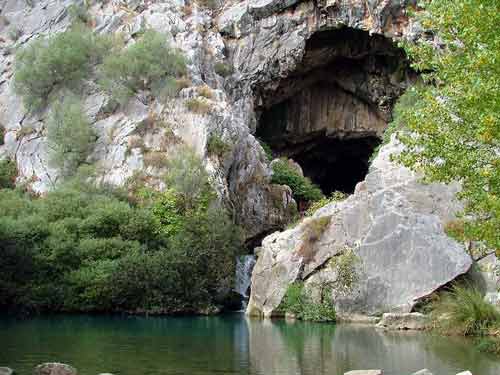
You can also reach the nearby villages of Montejaque and Benajoán, nestled among the limestone mountains of the area. Continuing south towards Algeciras, we come to another famous cave, the Cueva de Pileta, known for the impressive prehistoric rock paintings, well preserved on its walls.
Find accommodation near the caves
Jimera de Libár, Moorish village in the heart of the Serranía de Ronda
Decidedly more modest in size is Jimera de Libár, a white village reached by way of a short and pleasant drive along a road running through cultivated fields, after passing the small settlement of Barriada de la Estación, where the train also stops. The village lies 540 m above sea level and, as you stroll through the streets of the centre – especially opposite the iglesia parroquial – its Moorish origins are clearly perceptible.
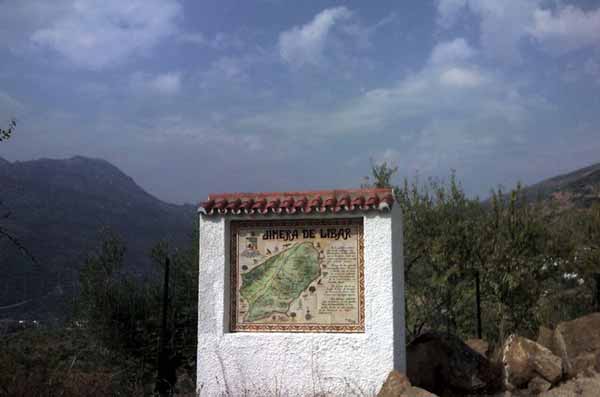
We are in the heart of the Serranía: from Jimera there are several walking trails that lead into the valley of the río Guadiaro, but if you have an afternoon to spare and do not mind the bends, before continuing on the road to Algeciras, you can make your way as far as Atajate and, indeed, as far as Júzcar.
Find accommodation in Jimera de Libar
Atajate and Júzcar: between Arab towers and… Smurfs!
Atajate is the smallest and least populated white village in the whole province of Malaga: it can be reached by turning off the MA-8307, and heading back for a few miles towards Ronda on the A-369. As well as enjoying a fortunate position among the olive groves and cereal fields framed by the mountains, Atajate boasts the remains of an ancient Arab defensive tower, at the so-called alto de Santa Cruz.
If you have a bit of time, our advice is to make an extra detour to Júzcar, one of the most bizarre of the province’s pueblos ehm… blancos. Why bizarre? Because the pueblo is not blanco, but… blue! Since June 2011, this tiny village in the Genal Valley has been entirely painted blue – church and town hall included! – to serve as a film set for the Smurfs 3D movie.
Scenting a tourist success, the villagers decided to leave the town’s buildings blue, and they were right to do so, given that Júzcar quickly became one of the most popular destinations for travellers in the area.
Benadalid, the tiny village with the castle-cemetery
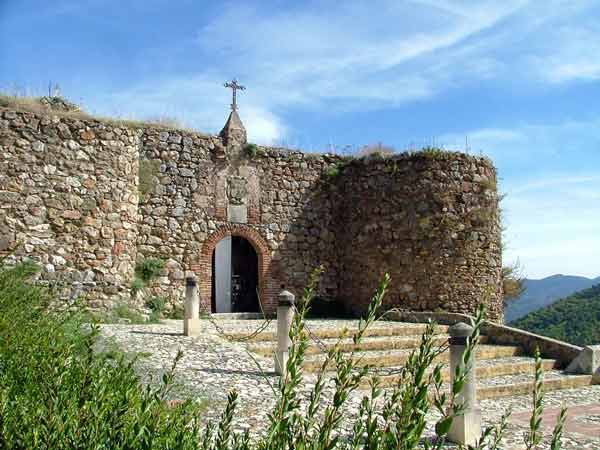
After the Smurf detour, we turn back on the winding roads around the village of Atajate, and continue southwards. 5 km (3,1 miles) from Atajate lies Benadalid, a tiny pueblo blanco of Roman/Moorish origin: proof of this is the presence of the remains of the oldest Moorish castle in the area, which today houses the village cemetery inside it. Wander along the centre’s narrow uphill lanes in search of the delightful Plaza Nueva and the parish church of San Isidro.
Find accommodation in Benadalid
Algatocín and Jubrique
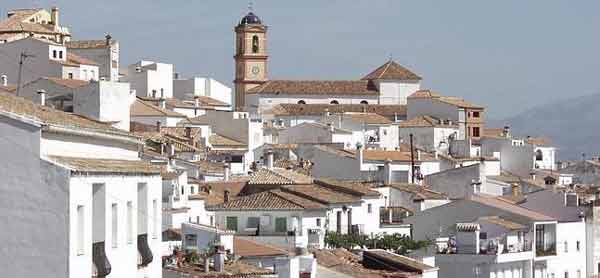
Leaving the delightful Benadalid behind us, another 6 km (3,7 miles) of road await before we reach Algatocín, a little village where, as usual, you can wander aimlessly through the winding maze of Moorish lanes, between the white, crumbling walls of the houses. As well as visiting the 17th-century parish church of Nuestra Señora del Rosario and Plaza de la Alameda, make your way to the Roman ruins outside the centre and, above all, the ermita del Santo Cristo, in the upper part of the village, from where there is a fine view.
If you are not satisfied with Algatocín, you can head off for a dozen kilometres (7,4 miles) along the bends of the MA-8305, from which several possible walking routes set off along a little river, the Arrojo Hondo: you will reach Jubrique, a white village in the middle of the Genal Valley. Make your way to the Ermita del Castañuel, which is on the road linking Jubrique to Estepona – on the Costa del Sol: as you walk back from the Ermita to the centre of the village, you will also notice an old washhouse, the Río Lavar.
Find accommodation in Algatocín
Benarrabá, a pearl nestled among the mountains
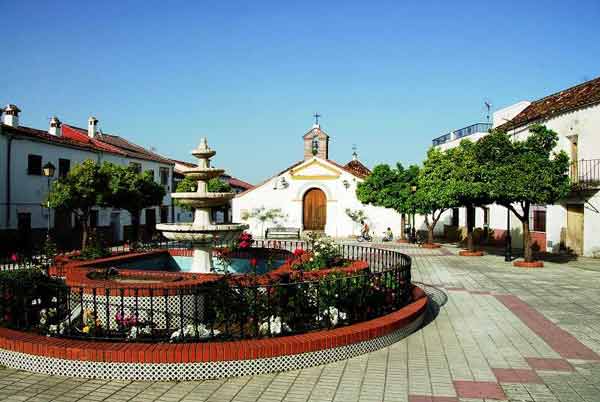
Nestled in the green setting of the Genal Valley, Benarrabá is another possible destination on the ruta de los pueblos blancos Malaga: I find plaza Veracruz, a charming little square surrounded by orange trees, where there is also a small church and a fountain. The village is tucked away among the hills and little mountains, and exudes an authentic rural atmosphere.
Gaucín and the Moorish castle overlooking Morocco
We return to the main road in the direction of Algeciras: the ruta de los pueblos blancos now wends its way in the shade of the vegetation, until the landscape opens up and offers the traveller the profile of Gaucín, a pueblo blanco perched on a hill that dominates the valley with a Moorish castle, the Castillo del Aguila. Gaucín is the most developed urban centre in the area, also in terms of population, and is an excellent option for an intermediate stop along the ruta.
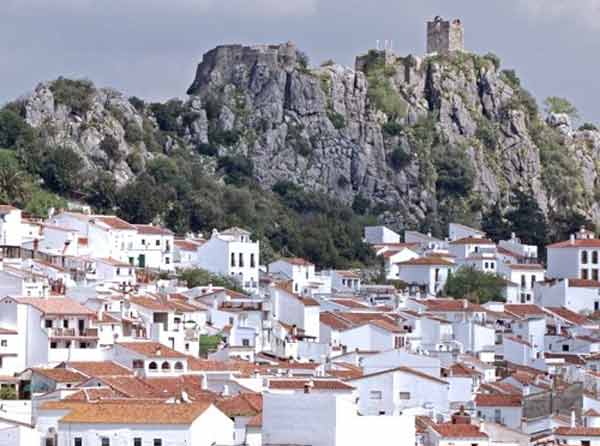
Beyond the castle, from whose ramparts there are impressive views, you can visit the cemetery and make your way to the mirador, from which, if you are lucky, you can even see Morocco.
Casares, a wonderful white village clinging to the hillside
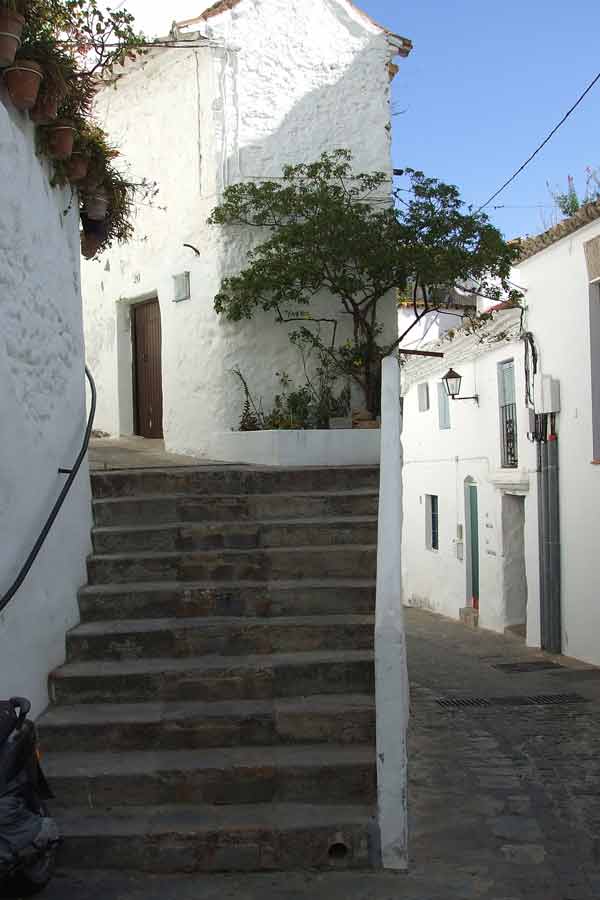
A little off the main route, some twenty kilometres (12,4 miles) from Gaucín and the same distance from Estepona, lies Casares, one of the most beautiful and famous of all the pueblos blancos in the whole area. Framed by the mountains of the Sierra Crestellina, Casares’ whitewashed houses rest, almost piled up, on a steep hill dominated by a Moorish alcázar, from which you can see the sea at Gibraltar.
Don’t grow tired of walking its uphill little streets, as far as the main square or the museum dedicated to the socialist hero Blas Infante, a key figure in Andalusian nationalism during the Franco dictatorship.
The route arrives in the province of Cadiz: Jimena de la Frontera
After climbing the mountain roads between Gaucín and Casares by car, we return to the A-405, the main road, and find ourselves in the province of Cádiz, ever closer to Algeciras and Gibraltar. We could decide to carry on directly to the final stage of the journey, namely Castellar de la Frontera, but it may be worth turning back to Jimena de la Frontera, which we would otherwise have reached easily from Gaucín, without the (optional) detour to Casares.
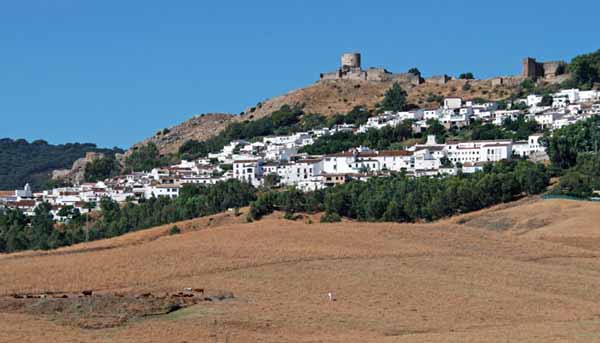
An excellent starting point for routes and day trips in the heart of the Parque Natural de Los Alcornocales, Jimena lies in an area that is a little less rugged than the pueblos seen so far. It may not have Casares’ compact charm, but it more than holds its own with its imposing Moorish castle (currently being restored), which proudly dominates the town. Also of interest are the Arab baths in the immediate vicinity of the castle.
Find accommodation in Jimena de la Frontera
Castellar de la Frontera and its forgotten little village
The last stop on the Ruta de los Pueblos Blancos from Ronda to Algeciras – by now we are close to the Gulf of Gibraltar – is Castellar de la Frontera. As soon as you arrive, you will be rather disappointed by the lower town, an anonymous, moderately urbanised tourist centre.
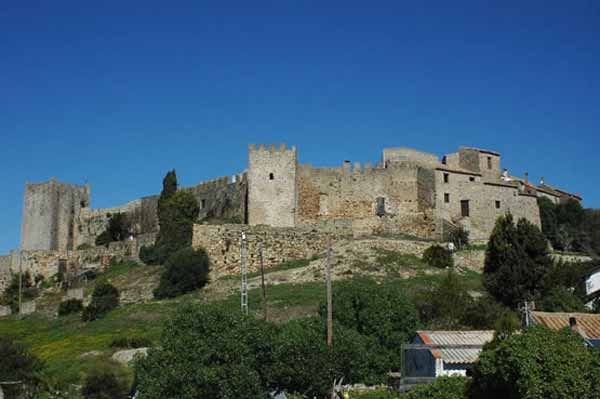
To enjoy the last stunning rural landscape, you will have to drive your car up the 10 km (6,2 miles) that separate the new ciudad from Castillo de Castellar, an ancient hilltop village that gathers in the shadow of a massive restored Moorish castle, from which the whole valley and the lake below can be seen. The pueblo is a little isolated, but offers visitors its proud identity as a village that refuses to give in to urbanisation.
Find accommodation in Castellar de la Frontera
The Route of the White Villages in Malaga: summary and top five
Here we are in Algeciras, an anonymous port city where the grace of the pueblos blancos is just a memory. However, from here begins the Costa de la Luz, on the Bay of Cádiz and, if on the one hand you will no longer see the sweet little white houses on the hills, on the other hand you can look forward to miles of white beaches on the Atlantic Ocean. But if we wanted to sum up what we have seen? How long does it take to explore the ruta de los pueblos blancos of Malaga in depth? And if we had to draw up a top five among all these small villages?
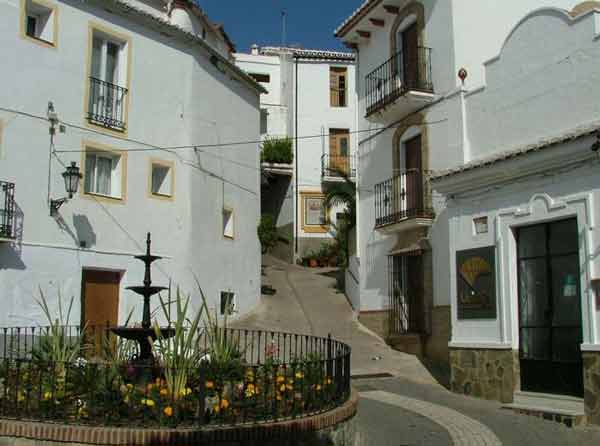
Our advice is to spend at least 2 days visiting this stunning corner of Andalusia: of course, the pueblos blancos tour can also be done in a day or, on the contrary, can last even longer, but only if you feel like (and have the time!) to enjoy as much as possible the whiteness and the ruggedness of these places. Here is our top five, in case you want to sample the best of the pueblos blancos:
- one of the caves in the Montejaque and Benajoán area
- Júzcar
- Benarrabá
- Gaucín
- Casares
- Bonus: Castillo de Castellar
The places we recommend for an overnight stay are Ronda, Juzcár, Casares and Jimena de la Frontera, the larger, more tourist-friendly towns. Enjoy the route!
