The Spanish tradition of the corrida is known throughout the world. There are places in Spain (and particularly in Andalusia, see for example Ronda) where the tradition of the corrida is especially deeply rooted, and this is evident in the staging of the fights between bull and matador, but also in a wide range of artistic, literary and cinematic works.
Although this practice does not appeal to everyone, the plaza de toros is nonetheless one of those attractions that, every year, draws millions of tourists from all over the world. During a tour of Andalusia, whether you like it or not, at some point you will find yourselves face to face with this aspect of Spanish culture, and you may be surprised and perhaps even intrigued by this practice, so important to the Spanish and so deeply rooted in their history.
Plaza de Toros of Malaga is one of the most famous and largest bullrings in Spain, alongside the Maestranza of Seville. Also known as the “Malagueta”, the Plaza de Toros hosts renowned bullfights every year, attracting thousands of spectators, but it is also an important and historic city building full of history, as well as a splendid example of vernacular architecture: undoubtedly one of the attractions in Malaga to visit.
Contents
Architecture of the Plaza de Toros in Malaga
The building displays a set of features typical of Arab architecture set upon a clearly Hispanic structure, giving rise to a style commonly known as “neomudéjar”.
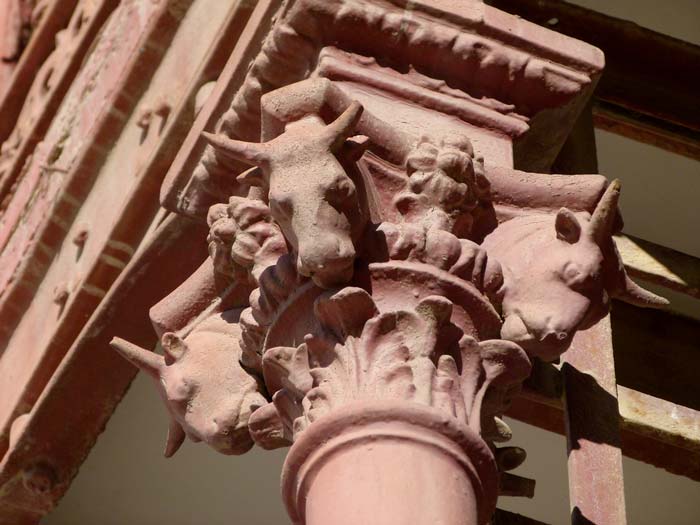
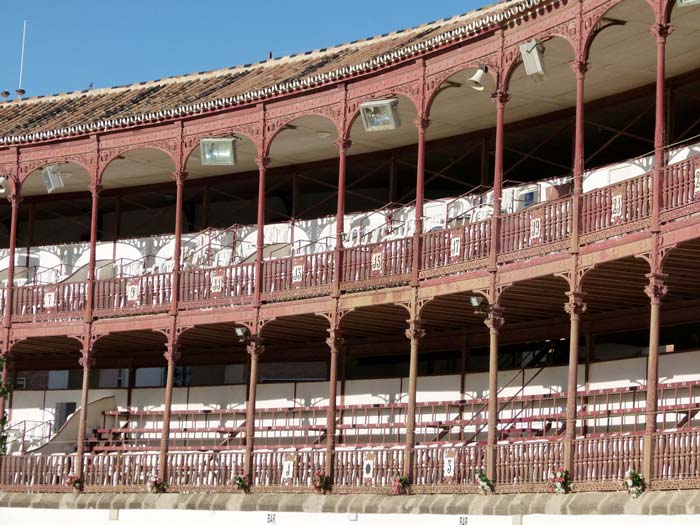
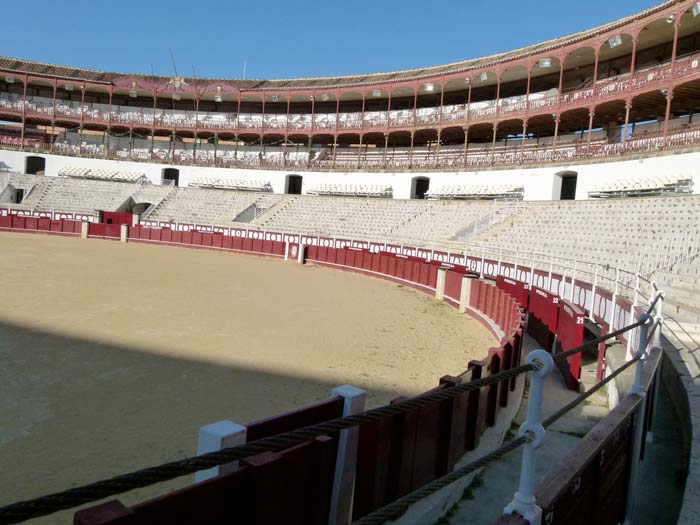
La Malagueta stands on two superimposed rings, the first in masonry (in the typical style of Roman amphitheatres), the second, however, characterised by a wooden structure on a steel frame. The building has a sixteen-sided plan with a maximum diameter of 52 metres; the building includes the stables, the enclosure for testing the horses, the toreros‘ room and the infirmary. Remarkably, it can accommodate up to 9,000 spectators. Overall, the Plaza de Toros of Malaga today remains faithful to the original, retaining all those features typical of the largest Spanish bullrings. Here are some details of the monument.
The Bullfighting Museum
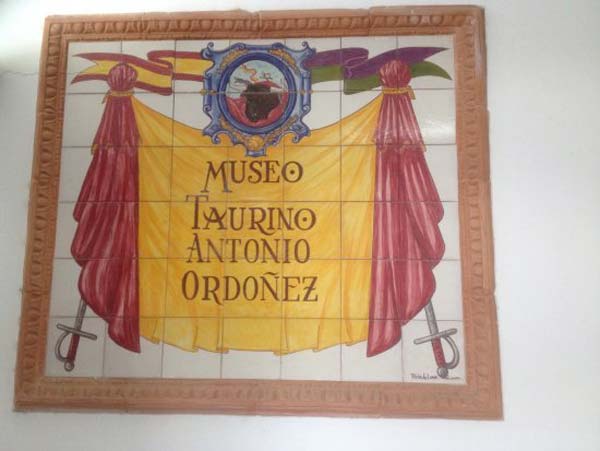
Inside the Plaza de Toros of Malaga is the Museo Taurino, a space entirely dedicated to the practice of bullfighting that displays over 1,400 items including photographs, illustrations, paintings and bullfighting posters.
It also features an exhibition of antique toreador costumes, and displays personal effects of bullfighters who have gone down in history such as Manolete (traces of whom can also be found in Cordoba, for example), José Tomás and Curro Romero, not forgetting Antonio Ordóñez, a matador of the 1950s and 1960s, to whom the museum is dedicated.
History
Built in 1874 by Joaquin Rucoba, the Plaza de Toros in Malaga is today one of the most important examples of Spain’s historical and cultural heritage. The arena was inaugurated on 11 June 1876 with an event that involved bulls from the famous Murube family breeding farm; on that occasion the renowned bullfighters Rafael Molina (known as Lagartijo), Antonio Carmona y Luque, known as El Gordito, and Manuel Rodríguez, nicknamed Desperdicios, fought. In 1976, on the centenary of its opening, the Plaza de Toros in Malaga was declared a historic-artistic complex and, in 1981, a Site of Cultural Interest.
Practical tips for visiting the Plaza de Toros
When to see a bullfight?
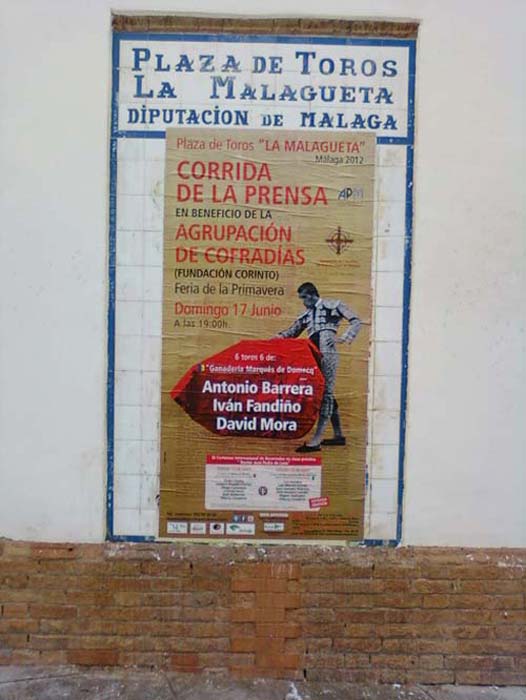
To attend a genuine corrida you need to go to the Plaza de Toros in Malaga in the period between April and September, months in which the main spectacles are concentrated; nevertheless, it is during the city festivals that the arena offers the most important and best-attended corridas. One of these spectacles takes place during Semana Santa, a few days before Easter, while another very popular event is held in June and is the Corrida de la Prensa, dedicated to the patron saints of Malaga.
In August, by contrast, numerous bullfights are staged as part of the Feria de Malaga, a folk festival eagerly awaited by Andalusians (and not only them…), which also draws many visitors who flock from all over to attend performances of traditional music, flamenco dancing and, indeed, bullfights. The final corrida of the year, which closes the season, takes place in September and is dedicated to Santa María de la Victoria, the city’s patron saint.
Opening times and tickets for the Plaza de Toros
The Museo Taurino is open Monday to Friday from 09:00 to 14:00, while on Saturdays, Sundays and public holidays it is closed to the public.
The museum entrance fee is €1.80, but children under 7 enter free; on Mondays admission is free for everyone. By purchasing a ticket you can also visit the arena and the stands, even when there is no performance.
If, on the other hand, you want to attend a bullfight, timings and performances vary from season to season. Ticket prices also range from €30 to €150, depending on the importance of the event, the bullfighter involved and the type of seating in the stands. You can check the current season’s events and buy tickets for the bullfights via the official ticket sales website.
Where it is and how to get there
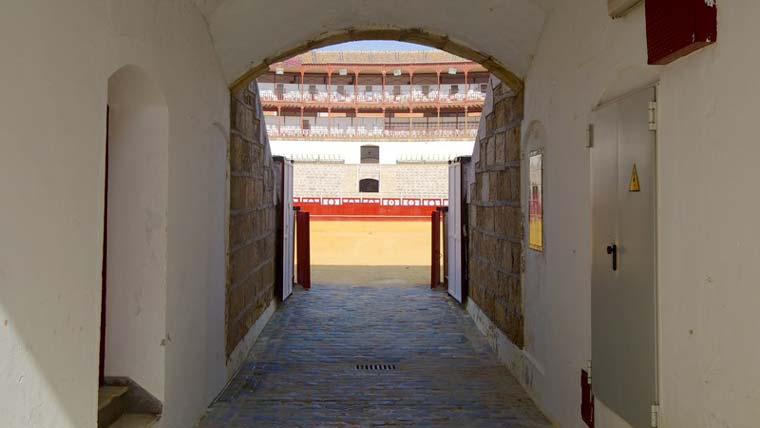
The Plaza de Toros in Malaga is located at Paseo de Reding 8, in the La Malagueta neighbourhood (from which it takes its name) at the end of the Paseo del Parque, in an urban setting a stone’s throw from the eponymous Malagueta, the most famous of Malaga’s beaches, at the foot of the Alcazaba fortress and the Gibralfaro Castle which looms in the distance. Being just a short walk from the historic centre, the ideal is to reach the Plaza de Toros on foot. Otherwise, the buses that serve the Arena are numbers 3, 11 and 34.
If you’d like to stay in this area of Malaga, which is so rich in attractions, here’s a link with some tips on accommodation in the Malagueta neighbourhood.
Our tips on where to stay in La Malagueta
Finally… a sincere piece of advice!
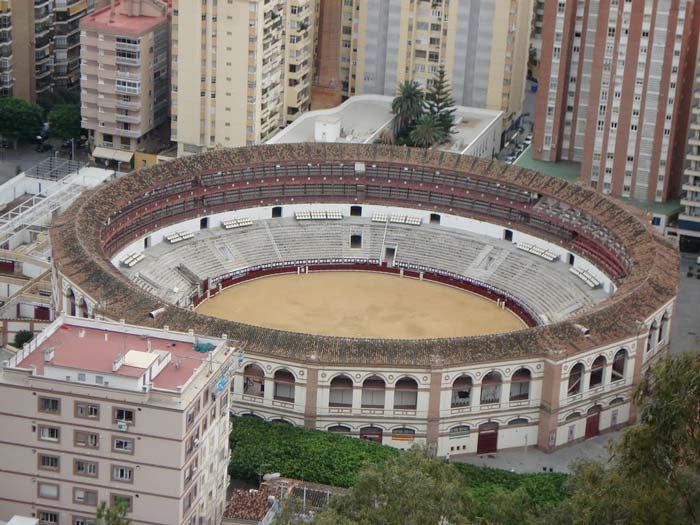
If you don’t want to pay the admission fee to the Arena because you’re not a fan of human–animal fights, or simply because the idea of watching an entire performance doesn’t appeal to you, that doesn’t mean you have to give up the architectural beauty of this place, its history or, indeed, its charm.
How? You can climb up to Gibralfaro Castle, on the hill, where you can enjoy a privileged view of the Plaza de Toros from above. That way your visit will certainly be memorable!
