Approximately 31.1 miles from Málaga, you’ll find Nerja, a pleasant town that holds natural treasures, breathtaking views and wonderful beaches. If you love the sea, in Nerja you’ll find some of the most beautiful beaches in the Costa del Sol: Playa Calahonda is among the most renowned, but Playa Burriana, Playa del Cañuelo, Playa El Salon and Playa de la Alberquilla are not far behind.
But there’s not only the sea around here… in Nerja you’ll find one of Spain’s most visited natural sites: the Cueva de Nerja, an ancient cave whose stalactites and stalagmites create a magnificent underground landscape. The site is easily reached from the centre of Nerja or Malaga by numerous daily buses.
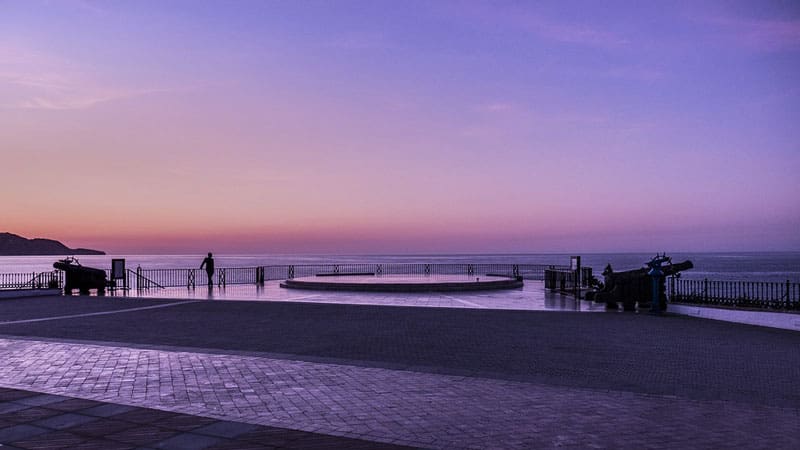
After enjoying the underground nature or the fine sand of Nerja’s beaches, don’t miss a stroll through its pleasant old town. The white houses lined up one beside the other and the narrow streets full of little shops and bars lead you to the heart of the town: the Balcón de Europa, perched high above the sea, from which you can admire a breathtaking view.
Contents
How to get to Nerja
Getting to Nerja from Malaga is straightforward: the distance is just over 31.1 miles, and by car via the A-7 it takes around an hour. What’s more, Nerja is perfect as an intermediate stop to bridge the Malaga-Granada distance: in the article you’ll find all the tips for the itinerary.
From Malaga bus station, on Paseo de los Tilos, you can catch one of the many daily buses, run by Alsa, to Nerja. The journey takes around 45 minutes and you will arrive at Nerja bus station on Avenida de Pescia. Here you can check the available buses and buy your ticket.
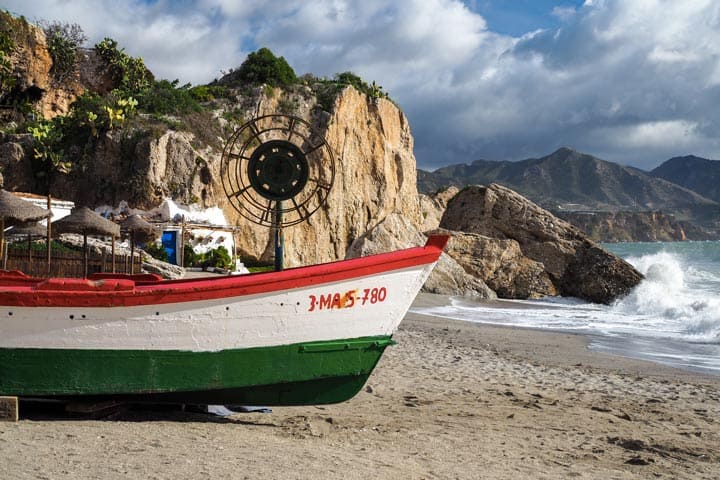
Nerja’s beaches, a treasure of the Costa del Sol
In this part of the Costa del Sol you’ll be spoilt for choice among the many beaches near Nerja.
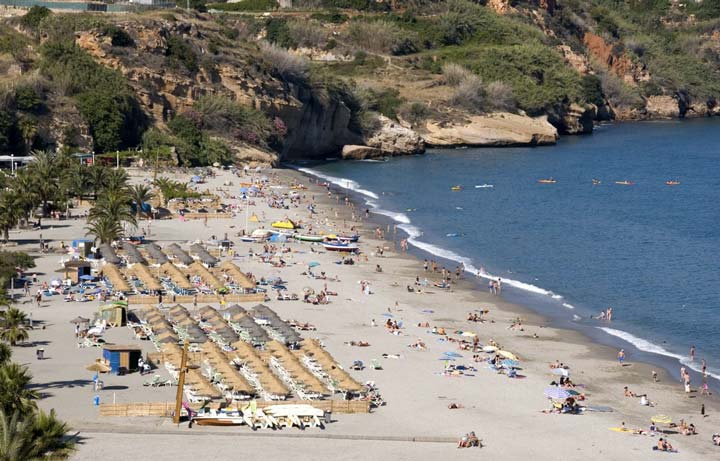
- East of the Balcón de Europa is the beautiful Playa Calahonda. Visible from the panoramic terrace, it is equipped and therefore offers the possibility of hiring a sun lounger and parasol for those who like to be comfortable on the beach. Close to the centre, it is ideal for families with children, although it tends to get crowded quickly in summer.
- Always in the centre of Nerja, near the Balcón de Europa, is Playa El Salón. Surrounded by cliffs, this beach is sheltered from the wind and the location is splendid. The beach is easily reached, even with children. If you are travelling by car, you can leave it in the large free car park in Calle Ingenio or in the car parks at the Balcón de Europa (Plaza de España), and in just a few minutes you can reach the beach. In summer, lifeguards supervise the area, so if you are travelling with children this may reassure you. On the other hand, though, in the summer months finding a spot on this beach is not easy.
- Playa Burriana is Nerja’s longest beach and perhaps one of the best in the area. Numerous beachfront restaurants and bars are perfect for sampling the local cuisine, and a stroll along Carabeo, the white little street that runs alongside this sandy beach just a short distance from the old town, is not to be missed.
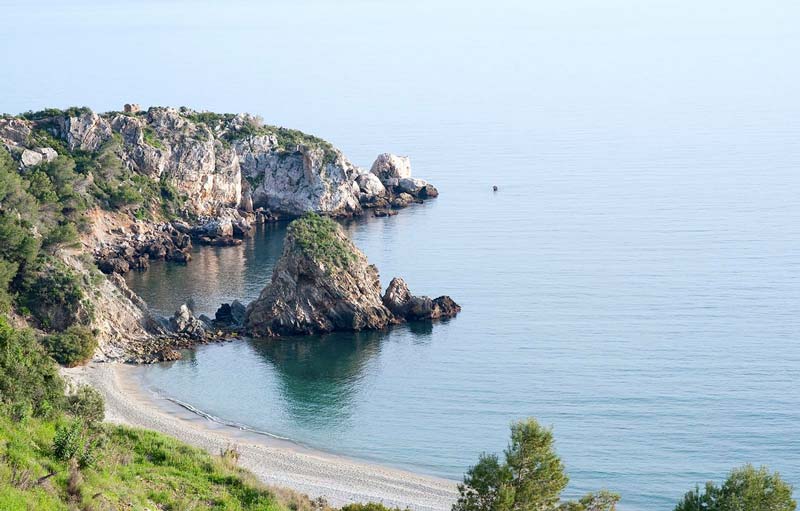
- Playa del Cañuelo is a beautiful little cove with crystal-clear water full of fish. Ideal for anyone who loves snorkelling! Bring flippers and goggles for a unique experience. The parking is at road level and the beach can be reached on foot or by a shuttle bus which, for a very small fee, €2 return, lets you avoid a route that for some might be long and tiring. On the beach there is a chiringuito with good value for money, especially given the location. It is also possible to hire sun loungers and a parasol.
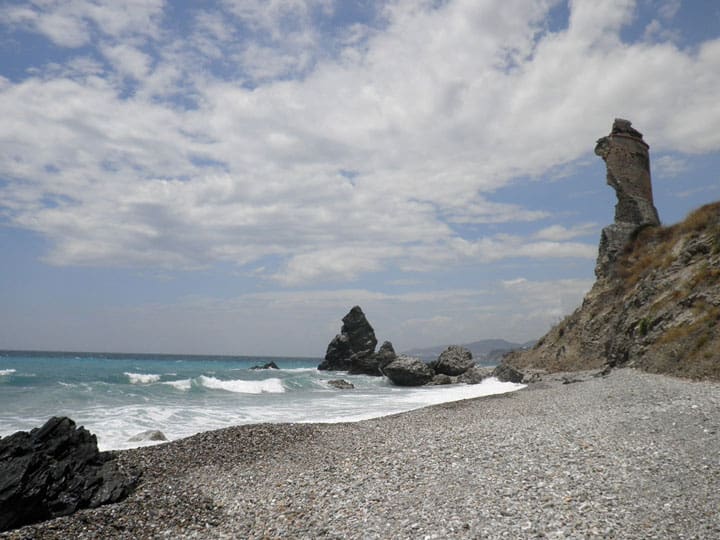
- Playa de las Alberquillas is renowned among those who love wild places with no man-made facilities and not too much of a crowd. The pebble beach is located at Km 299 on the coastal road that connects Malaga and Granada. Be careful, as it is easy to miss the sign and end up missing the descent to the sea and having to turn back. There is parking nearby and then you can walk down to the small cove. There are no facilities, nor restaurants or kiosks, but there is a shower created by a natural fountain in the rock and a rich, crystal-clear blue sea.
Things to do in Nerja besides the beaches
Like most towns in Andalusia, getting lost in the narrow streets of the historic centre is ideal for discovering the true atmosphere of the place and unexpected glimpses. That said, there are a few places you simply must see in Nerja.
Cueva de Nerja
Nature surprises us with its beauty, especially when it is untouched by human presence. Who knows whether the five boys who, in the Sixties, while playing at searching for bats, accidentally discovered the entrance to what can undoubtedly be described as a wonder of nature also thought the same: the Cave of Nerja (Carretera de Maro).
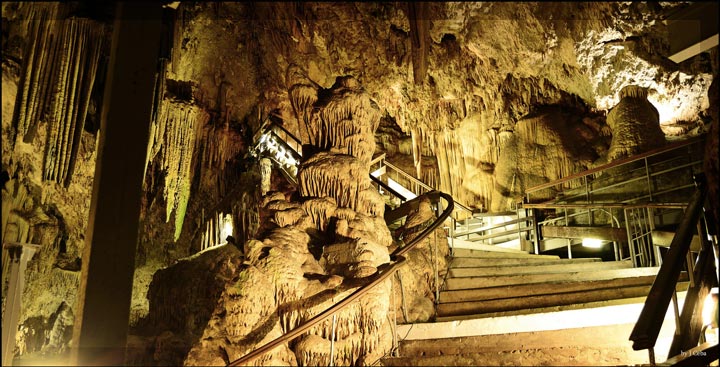
In addition to stalactites and stalagmites with impressive shapes, sizes and colours, in this maze of passages and caves traces of rock paintings dating back 35,000 years have been found. The tour inside the various underground chambers lasts about an hour and the admission ticket includes, in addition to the guide, an audio guide in Italian.
The entrance ticket to the Nerja Caves can be bought online and costs as follows:
Period 1 – January to May and October to December, except Easter, Christmas and selected public-holiday weekends
- Adults (aged 14 and over): 16 euro
- Seniors (aged 65 and over): 14 euro
- Young Europeans (European Youth Card holders): 14 euro
- Children (12–13 years): 13 euro
- Children (6–11 years): 12 euro
- Children (3–5 years): 5 euro
- Infants (0–2 years): free
June to September, plus Easter, Christmas and selected public-holiday weekends
- Adults (aged 14 and over): 18 euro
- Seniors (aged 65 and over): 15 euro
- Young Europeans (European Youth Card holders): 15 euro
- Children (12–13 years): 14 euro
- Children (6–11 years): 13 euro
- Children (3–5 years): 6 euro
- Infants (0–2 years): free
Every day from Monday to Friday (except public holidays) it is possible to visit the cave for free at 9:30 am, with a limited number of entries, which must be booked in advance on this page.
Here are the opening hours for access to the cave:
- Every day from 09:15 to 16:30 (except in summer, 9:15 to 17.30)
- The cave is closed on 1 and 6 January, 15 May and 25 December.
Further useful tips
- I also recommend visiting the Museo de Nerja; admission is included in the cave ticket (or can be bought separately for €4 if you are not visiting the cave). It really helps you understand the history of this area.
- Interessant is also the experience of the tourist train which, in addition to the Cueva de Nerja, also stops at various other important places such as Barco Chanquete, Museo de Nerja and Plaza de Maro. On this page you can buy the combined ticket that includes the cave and the train.
- It can really be worth taking advantage of the free 9:30 entry, but make sure you book in advance! Places are limited, and there’s a risk you won’t find any if you turn up at the last minute.
Balcón de Europa
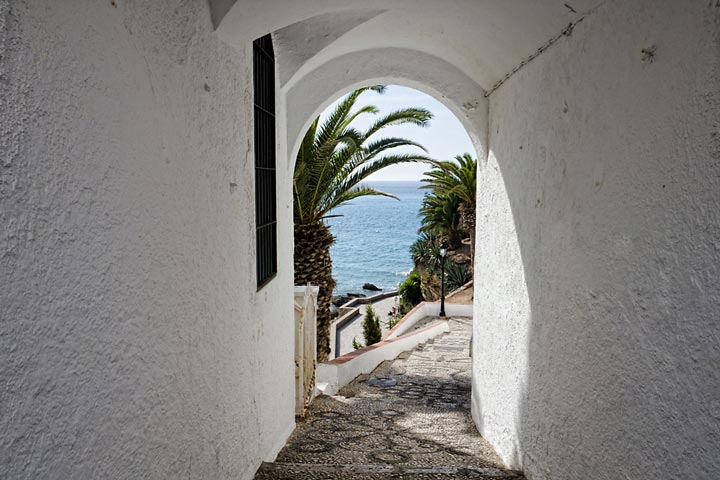
Balcón de Europa is a terrace overlooking the sea, but originally there was a watchtower here belonging to a fortress probably of Arab origin. The statue of King Alfonso XII, to whom the place owes its name, welcomes visitors. Not to be missed is a relaxing stroll among the trees of the Paseo Balcón de Europa and the obligatory photo at the Boquete de Calahonda, a small arch at the top of the promenade of the Balcón (towards the centre, so to speak) which offers an excellent view and provides access to the beach.
If you don’t want to miss the chance to photograph the Balcón from afar, I recommend walking as far as Plaza de los Cangrejos and taking the short promenade that starts from the monument.
Iglesia El Salvador
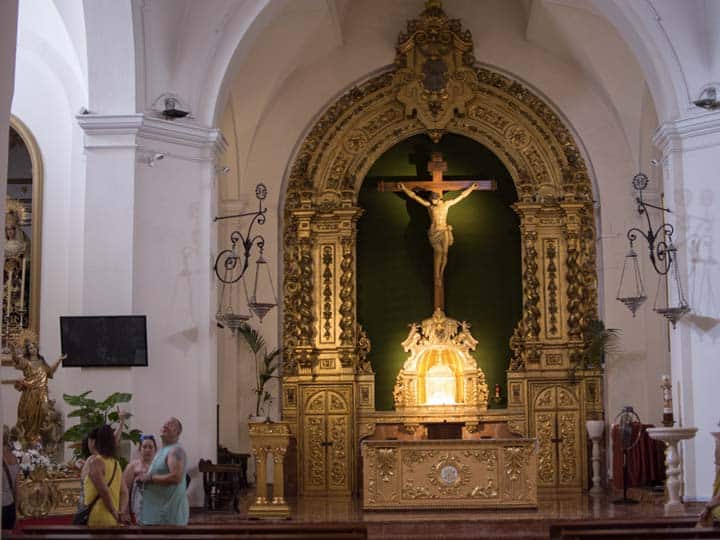
The Church of San Salvador is a seventeenth-century church that combines Baroque and Mudejar styles and is pleasantly striking for its white colour and simplicity. It is located in Plaza de Cavana, along Calle Carmen, two minutes from the sea and the Balcón de Europa.
Museo de Nerja
In Plaza de España is the Museo de Nerja, which is well worth a visit to understand the thousand-year history of this Andalusian town.
- The museum is open from 10 am to 4 pm. From October to May it is open from Tuesday to Sunday and closed on Mondays; from 1 June to 30 September it is open every day. Last admission is 30 minutes before closing.
- Online admission costs 5 euros for adults and 4 euros for children aged 3–13. Children aged 0–2 enter free. A reduced online ticket of 4 euro is available for over-65s, people with disabilities and holders of the European Youth Card. Tickets bought at the museum cost 1 euro more. If you visit the Nerja Cave, admission to the museum is included and can be used within 10 days of the cave visit.
Águila Aqueduct and Fábrica de Maro
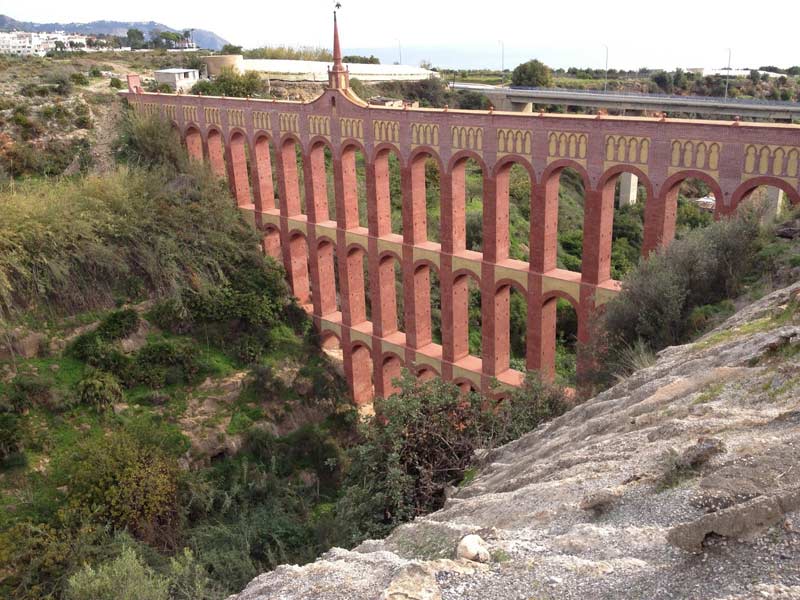
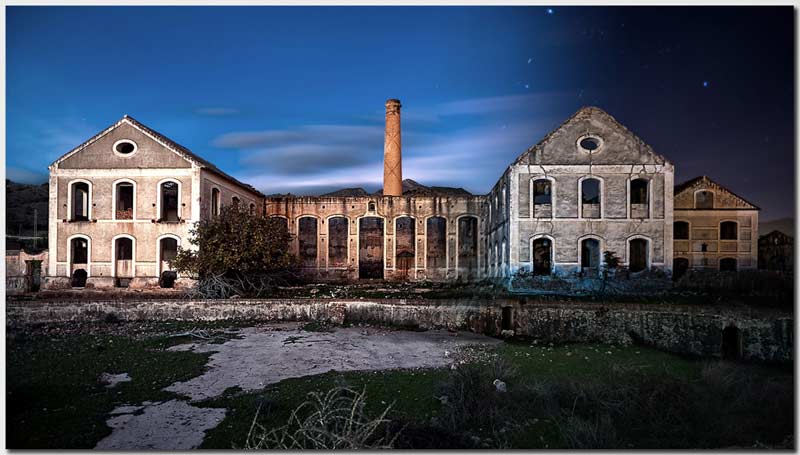
A rather unusual attraction near Nerja: lovers of industrial ruins may be delighted to know that on the eastern outskirts of the town there is Fábrica de Maro, an old ghost sugar factory, which makes for atmospheric photos with a post-industrial aesthetic! It is not easy to find, but I can try to tell you: the Fabrica de azúcar de San Joaquín is reached by taking the N-340 and turning left at the bend you can see at these coordinates. It is a dirt track: follow it for a while to the first crossroads and go right.
After taking a couple of steps among the ruined buildings, return to the car and continue east on the N-340. Go past a roundabout and you will find yourself on an overpass: on the left you will see the picturesque Acueducto del Águila, a masterpiece of 19th-century architecture that was built to bring water to the Fabrica de azúcar de San Joaquín. You can get beneath the aqueduct by taking the path near a lower bridge, reachable via a road that branches off to the right from the N-340 just 200 m after the dirt track mentioned above.
Map of the beaches and attractions
Nerja nightlife and… an Italian restaurant
The nightlife in Nerja is concentrated around Plaza Tutti Frutti, Calle Pintada and Calle Almirante Ferrándiz, but the whole centre is lively and far too full of life: you won’t be disappointed! And if like Italian cuisine, head to La Fuente (Plaza Balcón de Europa, 9). You won’t regret it!
Guided tours
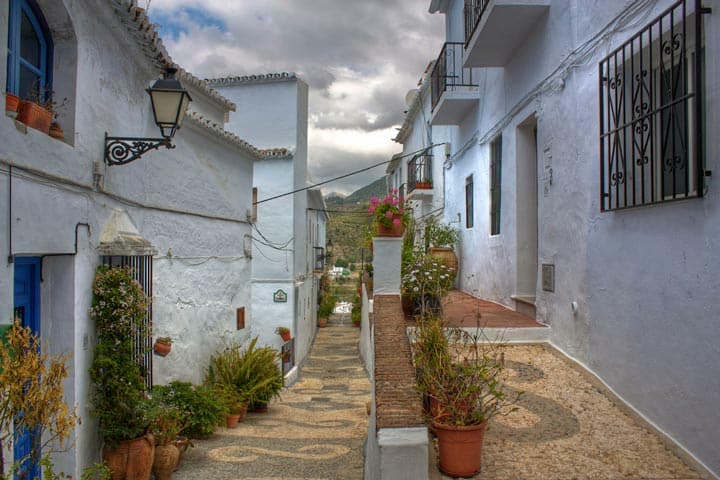
If you are in Málaga or Granada but do not have the option of getting about easily by car or public transport, you can choose to rely on a guided tour to Nerja. These tours have an extra appeal, because the package includes a visit to Frigiliana, one of the most beautiful pueblos blancos in the area.
Here are two interesting options:
Where to stay in Nerja
There are not many areas in which you can stay in Nerja, but on the other hand there are lots of accommodation options and hotels available! For our visit, we chose a lovely apartment in the centre of Nerja (Calle Cruz), a short distance from the beach, but there are also options closer to Playa Burriana and the other coves facing the town.
Hotels and apartments in the centre of Nerja (Balcón de Europa)
