Marbella is undoubtedly one of the most popular towns in Andalusia and one of the most prestigious seaside resorts on the Costa del Sol. Located between Málaga and Gibraltar, the town began to establish itself as a famous tourist destination in the 1960s. Today, actors, directors and celebrities own holiday villas along the Milla de Oro, or, as the British call it, Marbella’s Golden Mile, the coastal road stretching for around five kilometres from the town centre to Puerto Banús, Marbella’s marina.
In Marbella, you will find everything: VIP nightclubs and beaches equipped for children, picturesque marinas where yachts can dock, peaceful seafront promenades perfect for long walks, hotels in tall beachfront buildings and small whitewashed houses with flower-filled balconies, some of the most famous beaches in Andalusia, and an historic old town of Arab origin. And if you are keen on sport, this is the perfect place for you: you can choose to play a round at one of the area’s elegant golf clubs or enjoy the waves by trying one of the many water sports available along the coast.
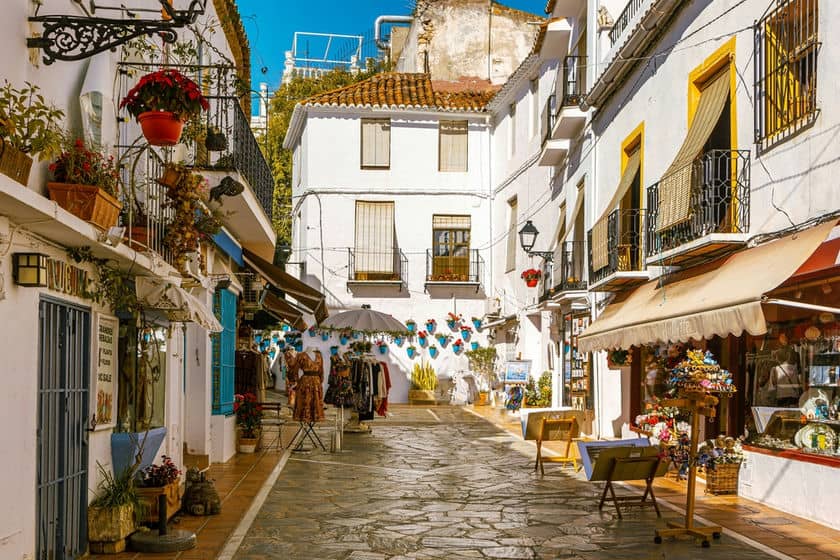

In this article, we will offer some advice on what to see in Marbella and what to do during your holiday in this lively Costa del Sol resort.
Contents
What to see in Marbella
There is no shortage of places to visit in Marbella. Its beaches and nightlife are certainly what made it so popular, but it is the historic old town, nestled between the mountains and the sea, that reveals its authentic character.
Casco Antiguo e Plaza de los Naranjos
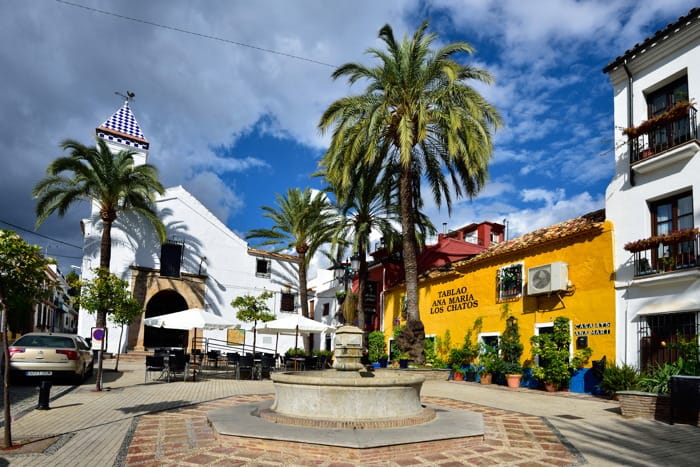
Marbella’s historic centre should definitely be explored on foot. Framed by the remains of the ancient Arab walls, it lies just one kilometre from the beaches and is a walk not to be missed. Narrow streets, whitewashed houses, small shops and restaurants define the Casco Antiguo, the name by which the old town is known, as is often the case elsewhere in Andalusia.
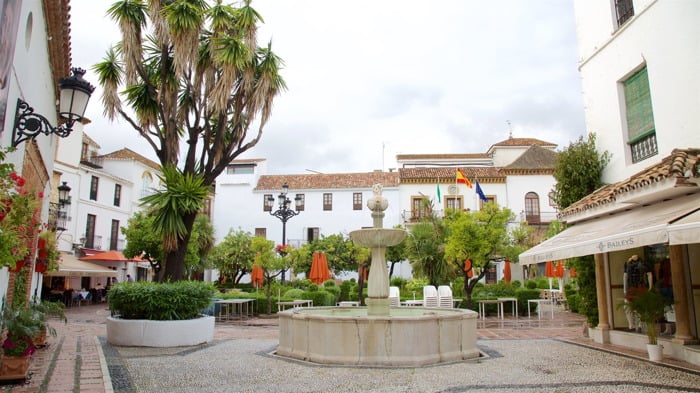
The heart of the old town is undoubtedly Plaza de los Naranjos. This Renaissance square, laid out from 1485 onwards, is surrounded by historic 16th- and 17th-century Spanish buildings such as the Town Hall and the Mayor’s House. The Town Hall, or Ayuntamiento, was originally the Palace of the Catholic Monarchs. At the centre of the square stand the fragrant orange trees from which it takes its name. Here you can also visit the oldest small church in the town, the Ermita de Santiago. Originally a mosque, it was consecrated as a Catholic parish church after the Spanish Reconquista.
Plaza de la Iglesia
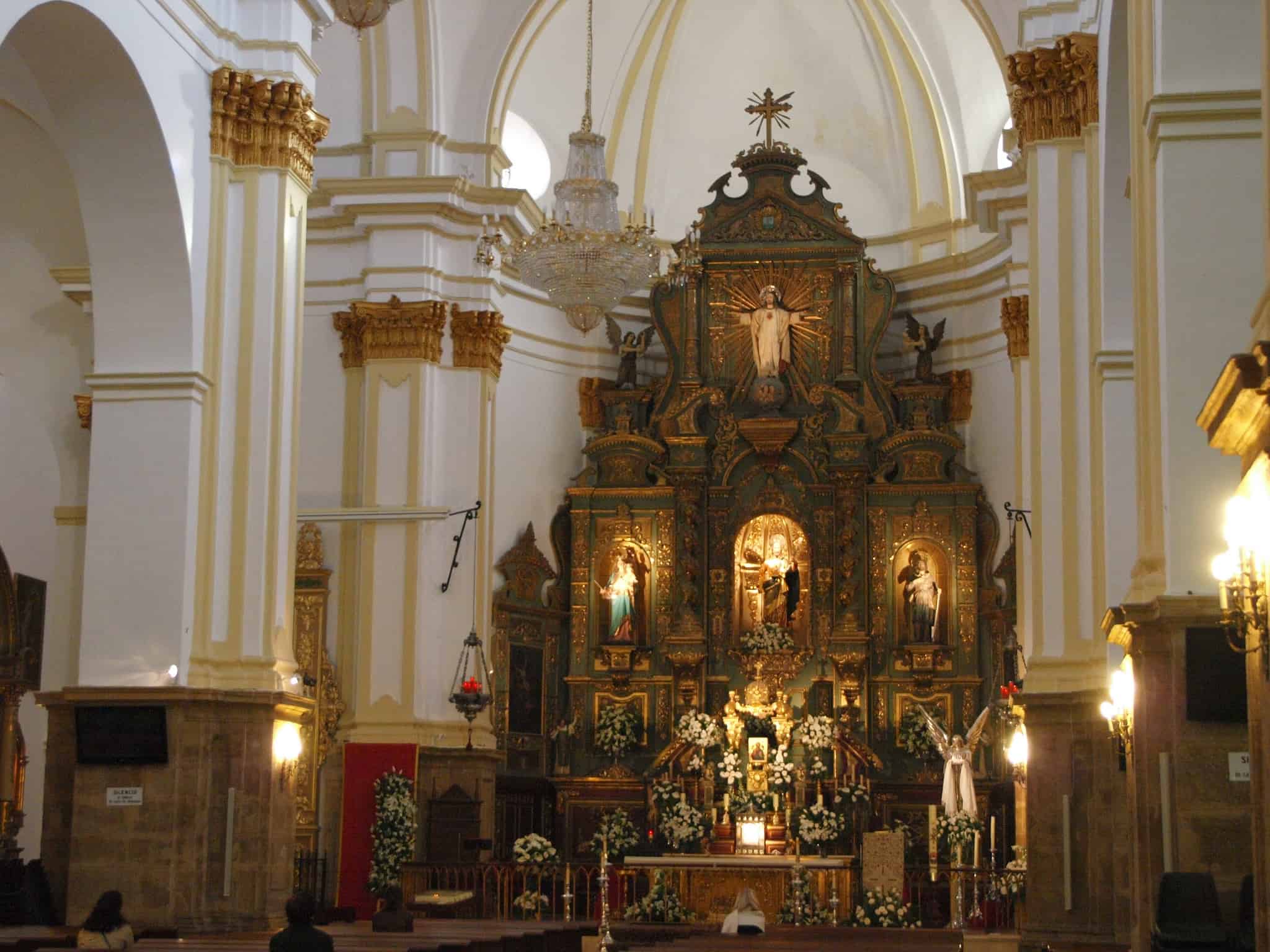
In nearby Plaza de la Iglesia stands Marbella’s most important church: the Iglesia de Nuestra Señora de la Encarnación. Although it is not particularly large, the interior will surprise you with its statues, chapels and majestic wooden altarpiece. The various Baroque chapels contain statues of saints and crucifixes in a profusion of gold, white and vivid colours. What truly leaves visitors speechless, however, is undoubtedly the great Altar Mayor, recently restored and now even more impressive in both size and splendour.
As well as the church, this square is home to the remains of a medieval fortress built by the Moors during their rule. Unfortunately, only one tower is still visible today, but it is still worth stopping to admire it, especially considering that it dates all the way back to the 9th century.
Capilla San Juan de Díos
The chapel is located right in the heart of the old town, at Calle Misericordia 2. Surrounded by whitewashed buildings and distinguished by a solid wooden door, it is small and simple. Dating back to the 16th century, it combines Renaissance style with Gothic and Mudéjar elements. Locals know the church as El Hospitalillo because the building was once the Hospital Real de la Misericordia.
Museo del Grabado Español Contemporaneo
On Calle Hospital Bazán, you will find the Museum of Contemporary Spanish Engravings, which houses works by Picasso, Miró and Dalí.
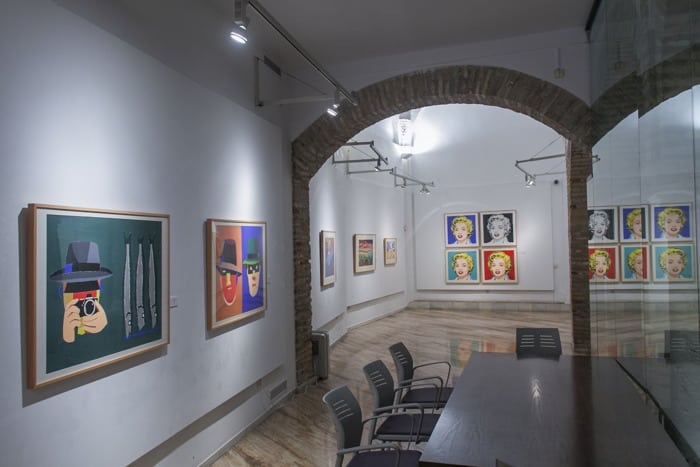
The museum is open Monday to Saturday from 10 am to 8 pm, and on Sundays from 10 am to 2 pm.
Admission is free.
Alcazaba e Muralla Arabe
Unlike in other Andalusian cities, unfortunately few traces of Marbella’s former Arab rule remain. However, part of the wall that once protected the town is still visible. The perimeter of the old castle, the Alcazaba, followed these streets: Calles Solano, Portada, Arte, Salinas, Trinidad, Carmen, Ortiz del Molinillo y Virgen de los Dolores. It is believed that the imposing defensive walls had no fewer than eleven watchtowers.
Parque Arroyo de la Represa e Museo del Bonsai
La Represa Gardens, with their many water features, are located north-east of the old town and are ideal if you would like to take a walk surrounded by greenery or if you are travelling with young children, for whom there is a large equipped play area. One of the park’s most distinctive features is the modern bridge known as the “Suspension Bridge”, although its official name is Puente del Sagrado Corazón (Sacred Heart Bridge).
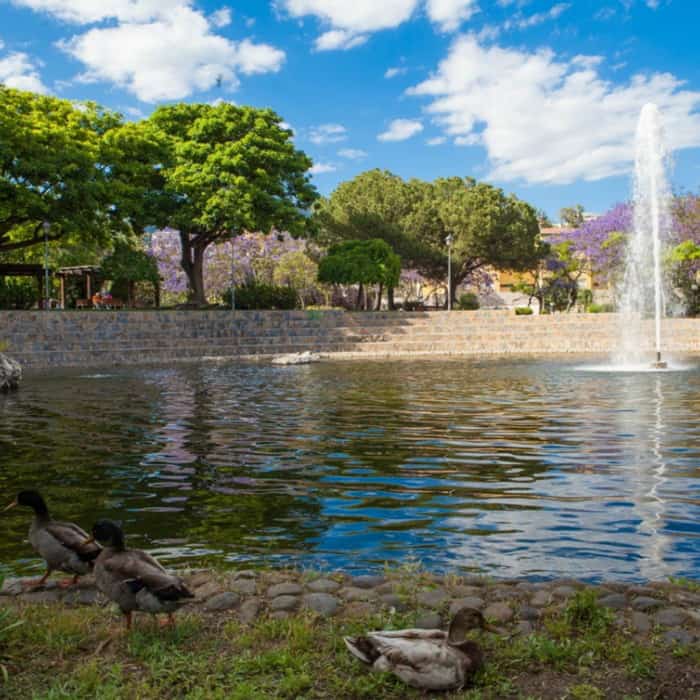
The park is also home to the Bonsai Museum, a museum devoted to one of Japan’s oldest and most picturesque art forms. It may be small, but it is well worth visiting, especially for gardening enthusiasts.
The Bonsai Museum is open Monday to Sunday from 10.30 am to 1.30 pm and from 4.30 pm to 8 pm in summer, while in winter the afternoon opening hours are from 3.15 pm to 7.30 pm.
Admission costs €4.00.
NOTE: Unfortunately, the Bonsai Museum closed in 2018 after more than 25 years in operation.
Marbella’s beaches
Marbella has no fewer than 27 km of coastline, with luxurious marinas, long sandy beaches and a few rare but enchanting coves. The town’s main beaches are Playa del Faro and Playa del Cable: as is often the case along the Costa del Sol, the urban setting can feel somewhat overdeveloped, but the water is still very beautiful.
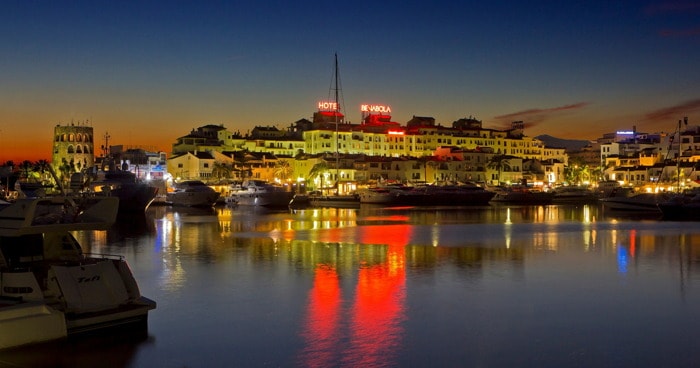
Marbella’s marina is located 4 km from the town centre: this is the elegant and renowned Puerto Banús, where the sailing boats and yachts of celebrities are moored before their owners spend the evening in stylish restaurants and exclusive venues.
Playa Venus and Playa Fontanilla, on the other hand, are closer to the town centre: the former is located near Avenida del Mar, while Playa Fontanilla, which is 800 metres long, lies west of Glorieta de la Fontanilla. Beyond Playa de la Fontanilla is Playa de Casablanca, with a full 2 kilometres of beach: the farther west you go, the less crowded the beaches become.
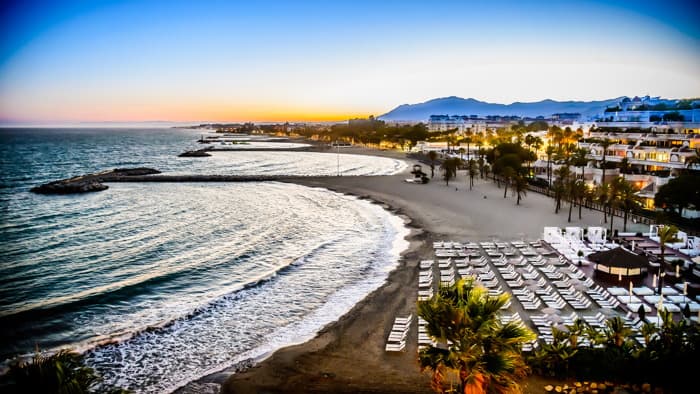
Those looking for a little more peace and quiet will need to head away from the centre of Marbella: as you can read in our article on the beaches of Málaga, Playa Artola and Playa Cabopino are beautiful, unspoilt areas with sand dunes, some of which are protected. Bear in mind, however, that a large section is reserved for naturists.
We have covered these and many other beaches in our article on the beaches of Marbella, providing plenty of useful details to help you choose the best place for a relaxing seaside holiday in this part of the coast.
How to get to Marbella from Málaga
The distance between Málaga and Marbella is around 60 kilometres: if you are travelling by car, take the A-7 and you will reach your destination in approximately 50 minutes.
Tips for hiring a car in Málaga
Buses operated by Portillo are a good alternative for travelling to Marbella from Málaga. Routes L-307 (Directo) and L-312 (Exprés) connect Málaga with Marbella, while route L-324 (Plus) connects Marbella with Málaga. Buses depart from Estación Autobuses Málaga 2111 and arrive at Estación Autobuses Marbella 2124.
The nearest airport to Marbella is Málaga–Costa del Sol Airport. From there, you can hire a car or take a bus. There is a direct service, route L-601, which takes 45 minutes to travel between Málaga Airport and Marbella bus station.
Marbella does not have a railway station. The nearest train station is in Fuengirola, from where you can take the M-220 bus, which takes around one hour to reach Marbella.
Where to stay
If you have chosen to visit the area in July or August (high season), I recommend booking well in advance, as demand is extremely high. However, provided you plan ahead, there is no need to worry: thanks to Marbella’s popularity, there is a wide range of accommodation available, leaving you spoilt for choice!
All available accommodation in Marbella
If, rather than staying in one of the hotels along the seafront, you would prefer to remain in the heart of the Casco Antiguo, you will find several options, some of which are also quite affordable: here is a list of the hotels available in the area.
All accommodation in the Casco Antiguo
West of Marbella, around the exclusive resort of Puerto Banús, you will find some of the most luxurious and prestigious hotels and resorts on the Costa del Sol. The link below provides a list of the accommodation available in the area.
