Malaga is certainly known as a city that is home to monuments and churches of great cultural and historical significance. But the city is not just about tradition: Malaga is also a seaside city, rich in excellent restaurants and venues where you can experience a vibrant nightlife. The most interesting quality of this city is that it manages to offer all of these within its historic centre.
Let’s take a closer look at the historic centre of Malaga, the monuments it offers and the activities you simply must not miss during a visit. Don’t forget to explore each topic in more depth through the specific articles, links to which you’ll find in the various paragraphs.
Contents
Malaga’s historic centre: what not to miss
Whether you have just 24 hours or are staying in the city for several days, here’s what not to miss in Malaga’s historic centre:
Malaga Cathedral
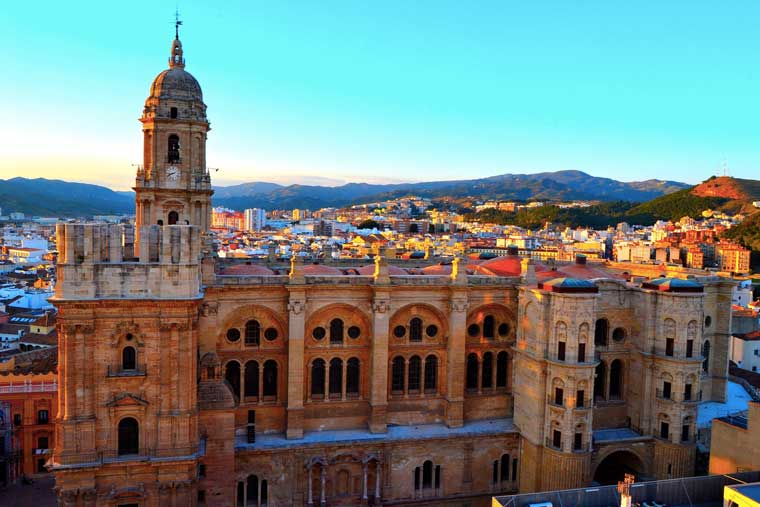
The Malaga Cathedral is certainly among the most significant attractions in Malaga. Combining various architectural styles that harmonise well together, the Cathedral stands on an ancient mosque (the Mezquita Aljama) of which no remains survive.
This place carries with it a peculiar story of incompletion, so much so that it is nicknamed La Manquita (the One‑Armed Lady): the construction of one of its towers, in fact, was never completed and this absence has become a distinctive feature of the monument. The north tower, by contrast, rises to no less than 84 metres, which effectively makes it the second‑tallest church in Andalusia after that of Seville.
Book a tour of the Cathedral (ticket included)
Gibralfaro Castle
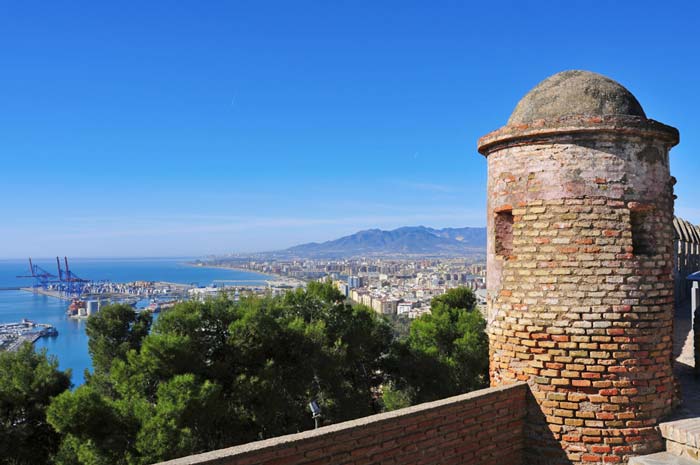
The Castillo de Gibralfaro in Malaga is one of Malaga’s best-known monuments, and probably among the most important given that it appears as a symbol on the city’s coat of arms. Situated on Mount Gibralfaro, 130 metres high and beside the Alcazaba, the castle is the ideal place to enjoy a breathtaking view over the whole city.
Besides the beautiful outer gardens, you can admire the Torre Bianca, the stables, the armoury court and the areas allocated to the troops, as well as the torre Mayor, 15 metres high, the baths and the Pozzo di Airón, over 40 metres deep. In the old powder magazine there is also a Centro de Interpretación, very useful for delving into the history of the site and retracing the features of the castle’s military life through the centuries.
The Alcazaba
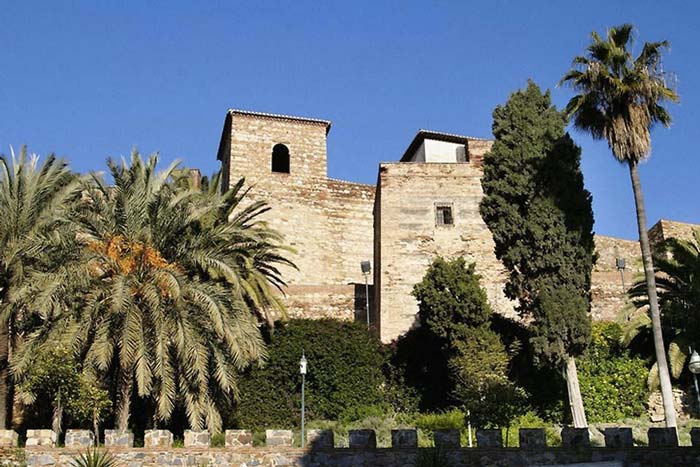
The Alcazaba, a majestic fortress from the Arab era, is another focal point of Malaga’s history. Residence of the Muslim governors, it was truly a small town, in the style of the Alhambra of Granada (Alcazaba literally means “citadel”).
Inside you will find vast and complex architecture, much like a small town, with gates, squares, gardens, towers and courtyards and, although the entire complex has been remodelled many times over the years, its structure has remained faithful to the original.
Book a tour of Malaga city centre
The Picasso Museum
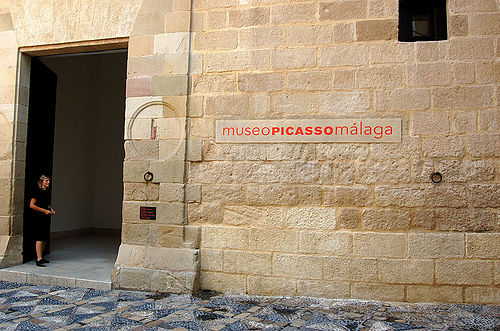
The Picasso Museum represents a pleasant journey through the life and works of the artist from Málaga and, at the same time, offers the opportunity to admire exhibitions by other contemporary artists. The Museum is housed in the Buenavista Palace, a fine example of Andalusian Renaissance architecture, and displays a collection of 204 works by Picasso.
Buy tickets for the Picasso Museum
Bullring
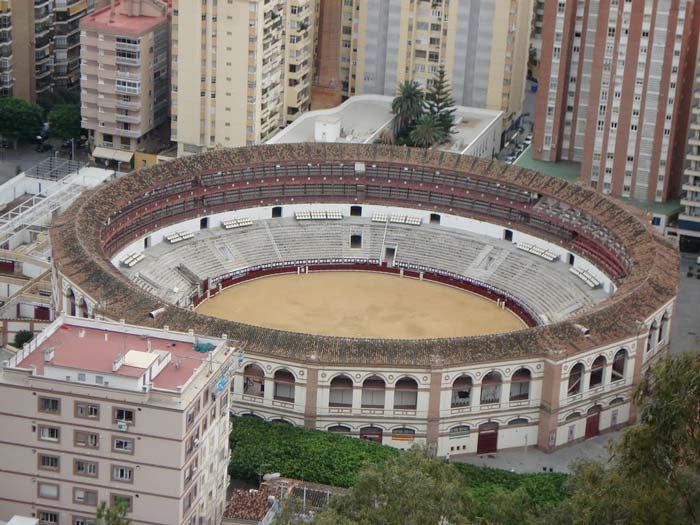
Plaza de Toros in Malaga is one of the most famous and largest bullrings in Andalusia, alongside those in Seville and Ronda. Also known as “La Malagueta”, Plaza de Toros hosts the celebrated bullfights each year, drawing large numbers of spectators, but it is also of interest as a splendid example of vernacular architecture.
Inside is the Museo Taurino, a space entirely dedicated to the practice of bullfighting: the carefully curated exhibition displays 1,400 collector’s items as well as photographs, illustrations, paintings and posters on the subject of bullfighting.
The Roman Theatre
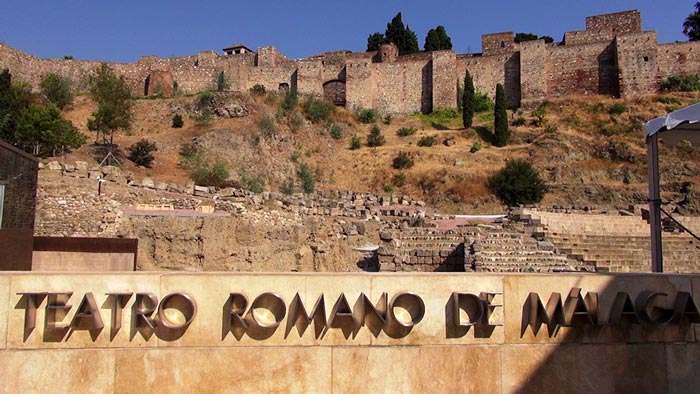
The Roman Theatre of Malaga is the oldest monument in the city, as well as one of the rare Roman ruins in Andalusia. For centuries the theatre lay buried beneath the surface before being discovered in 1951 by some workmen.
After major restoration work, the theatre has been fully rehabilitated and, in addition to being open to visitors during the day, now also fulfils its ancient role as a performance space: during summer evenings it serves as the backdrop for theatrical performances.
Free Tour of the Alcazaba and Roman Theatre
Urban life in the heart of Málaga
After letting yourselves be enchanted by the wonders of the historic centre, you shouldn’t miss a bit of urban life. In this respect, the heart of the city is Plaza de la Constitución and the adjacent Calle Larios. Strolling through this area you will be struck by the sheer number of shops, boutiques and shopping arcades, so much so that you may be distracted from the historic importance and architectural value of this street. In fact Calle Larios and Plaza de la Constitución retain enormous cultural value, often overlooked by tourists. Read the linked article to find out more.
Much of Malaga’s urban life, however, revolves around the movida. The nightlife in Malaga is, in fact, very lively and, in the city centre—especially around Plaza de la Merced and Plaza de Uncibay—you’ll be spoilt for choice when it comes to spending an unforgettable evening.
Playa de la Malagueta, a stone’s throw from Malaga’s historic centre!
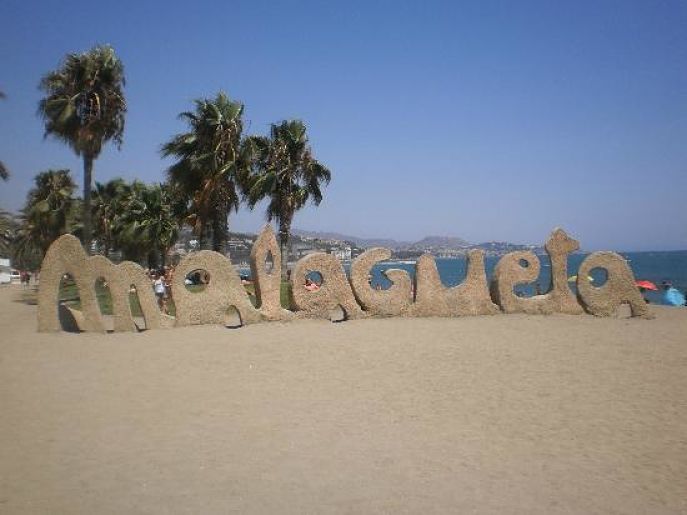
But — as everyone knows — in a city like Malaga you haven’t truly relaxed until you’ve spent a few hours on the beach! The coastline of the Costa del Sol is, in fact, very extensive and benefits from an ideal climate: after all the beaches of Malaga are the most famous and frequented in all Andalusia, although not everyone likes the tourist nature of the beach facilities.
Here, in fact, nothing is missing: beach parties, restaurants, bars and nightclubs just a stone’s throw from the sea, private beaches, swimming pools, water parks. However, reigning queen is the Playa de la Malagueta: with its proximity to the historic centre of the city and the comprehensive range of services it offers, it attracts the highest number of visitors each year.
For a more complete picture of Malaga’s historic centre and to plan your trip as best as possible, don’t miss our tips on where to eat and where to stay in Malaga. If, however, you still have any doubts about the best time to visit, have a look at the article on when to go to Malaga.
