If you say “beaches in Andalusia“, very probably eight out of ten people will answer in chorus: “Málaga and the Costa del Sol” and, after all, we too would find it hard to contradict them. How many of you have not heard at least once of the coastline of Málaga? Beaches of places such as Marbella, Torremolinos, Nerja or Fuengirola are known throughout Spain and beyond.
Whether your friends have been there on holiday, or some celebrity has chosen one of these resorts as a tourist destination for their exclusive holiday, one thing remains certain: the extremely well-equipped beaches of Malaga and the Costa del Sol are by far the most famous and busiest in all Andalusia (much more so than the wonderful beaches of Cadiz, for example). Here, lovers of seaside tourism are spoiled for choice: beach clubs, beach hotels, restaurants, bars and nightclubs just a stone’s throw from the sea, private beaches, swimming pools, water parks… everything you need for a holiday at the height of fun. But at what cost?
Starting from the 1950s, the 56 miles of coastline to the west of Malaga have been subjected to unprecedented urban development for tourism purposes. This phenomenon has not always been viewed favourably, because, quite frankly, the natural setting has in some cases been seriously compromised by mass urbanisation, at times genuinely intrusive. In some stretches, the view of the beautiful crystal-clear sea of the Costa del Sol is obscured by rows of concrete hotels, a sight that makes those seeking solitary, untouched beaches where they can enjoy peaceful days by the sea wince.
However, the situation is not always so dramatic: along the long beaches of Malaga and the Costa del Sol there are some truly beautiful spots, well worth knowing about and making your way to. Let’s discover them together.
Contents
- The city beach of Malaga: La Malagueta
- The beaches of Torremolinos: welcome to the western Costa del Sol!
- Benalmádena’s beaches: Bil Bil Beach and its quirky castle
- Fuengirola beaches: a stretch of golden sand, among bars and chiringuitos
- Marbella’s beaches: picture-postcard sea for the queen of the Costa del Sol
- The beaches of Estepona: adios, Costa del Sol!
- Malaga: the beaches of the eastern Costa del Sol
- The beaches of Nerja: golden sand, balconies and secret coves
NB: there would be many more beaches worth mentioning in the province of Malaga. On the map, we have indicated only some of the best: for a more detailed list, you can read our article on the Costa del Sol and our articles on the beaches of Marbella, the beaches of Nerja, and the beaches of Torremolinos.
The city beach of Malaga: La Malagueta

Let’s start with Malaga, which on its own is able to offer a considerable number of beaches. Many travellers passing through Malaga, after wandering up and down the city centre, have the chance to choose their favourite stretch of coast to cool off in the hottest hours. The most famous beach in Malaga is undoubtedly Playa de la Malagueta, to which we have dedicated a specific feature, precisely because of its importance.
Given its considerable proximity to the centre – whose attractions we described in the article dedicated to what to do in Malaga – La Malagueta is in fact very busy and well equipped. Along the seafront, which runs alongside the beach for 0.8 miles, there are numerous bars and chiringuitos where you can grab a bite before throwing yourself into Malaga’s nightlife.
In short, La Malagueta is a beach that really appeals to everyone: young people and families, locals and foreigners, those who want to relax under the sun and those looking for fun and entertainment. And going to Malaga without bringing home a souvenir photo in front of the famous huge sign is unthinkable!
Tips on where to stay in Malaga
East of Malaga: the beaches of the old fishermen’s quarters
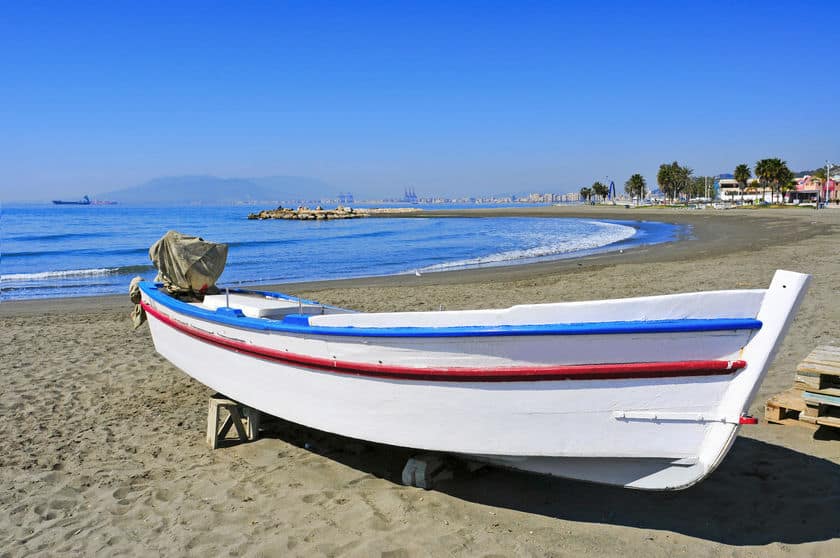

Moving away from the centre, we come to Playa de la Caleta and the Balneario del Carmen, a small stretch of beach with a terrace, much loved by locals. Continuing eastwards, there are some less urbanised beaches than La Malagueta, which may delight those looking for a less chaotic, more authentic setting, without having to move too far away from the city. The first is Playa Pedregalejo, not very large and next to Baños del Carmen park. It is right by the main road and, quite frankly, it is not the best.
A little further on, however, are the beaches facing the Málaga-Este district: Playa de las Acacias and Playa de El Palo. These are not just two beaches, but two stretches, each comprising a very long series of beaches separated by horseshoe-shaped breakwaters. Behind them the area is still very urbanised, but as they are close to residential areas rather than the city centre, there are usually fewer tourists and more local people. What’s more, there are also excellent fish restaurants near these beaches, which we talked about in our article on the “best places to eat in Malaga“.
Moving even further east, you first come to a large beach right on the edge of the city – called Playa El Dedo in the first section and Playa Virginia in the second – and then to two beaches outside the city, which are even better for those seeking peace and quiet. As they are outside the built-up area, you need a car to get there, but they are still very close and only a few minutes away. These are Playa Peñon del Cuervo and Playa de la Araña. The second is really tiny, just a handful of sand by the roadside, so there is not much point in going there. But the first is famous for the large rock that rises out of the sea near the beach, the El Peñón del Cuervo, and is very scenic.
From here on you leave the municipality of Malaga, but it only takes a few minutes by car to reach the nearby beaches of Rincón de la Victoria, where you’ll also find the famous Cueva del Tesoro, and shortly after that the whole vast area of Vélez-Málaga, where there are beaches to suit every taste!
To the west of Málaga: the gateway to the more touristy shores

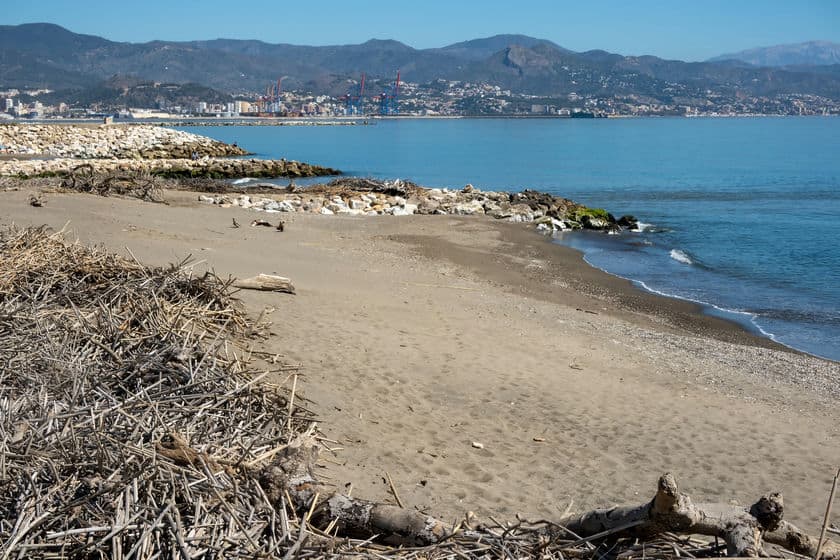
It is likely that, if you head away from Málaga in a south-westerly direction, it will be because you want to explore the most touristy and popular stretch of the Costa del Sol, so you will be passing through on your way to other destinations. However, while remaining in Málaga in practical terms but leaving the city centre, along the stretch of coast adjoining the Carretera de Cádiz district, there are some beaches worth considering.
Just beyond the port, a very long stretch of sand extends, the Playa de Huelin (a section of which is also known as Playa de San Andrés). This beach lies opposite a residential area; the shoreline is particularly wide and the promenade along the seafront is peaceful, even if the view is not among the best, especially because of a large chimney that rather jars with the landscape. The final stretch of the same sandy strip, even more tucked away, is called Playa de la Misericordia and then Playa de Sacaba: between the two sections, the Espigón de la Térmica extends into the sea, a breakwater where it is easy to find anglers.
But Malaga also has a surprising beach, located just to the west of the previous one: Playa Guadalhorce, a pleasant oasis bordered by two branches of the Rio Guadalhorce that flow into the sea. Behind the beach stretch the marshes of the Marismas de Guadalhorce, which form a nature reserve. Even further to the south-west, before Torremolinos, Malaga’s last beaches are Playa Guadalmar (which also has a nudist section) and Playa de San Julián. They are in a fairly secluded area, with the golf course behind them.
The beaches of Torremolinos: welcome to the western Costa del Sol!

As soon as you arrive in Torremolinos, you will understand that this town lives almost exclusively for beach life and unbridled fun: the Paseo Marítimo Antonio Machado (which then becomes Costa de la Carihuela) runs parallel to Torremolinos’ 4.3 miles of beach, and is characterised by a whole row of hotels, disco-pubs, restaurants, chiringuitos, shops and private bathing establishments that will make your head spin.
It will therefore be enough to choose between one of the city’s two best-known beaches: Playa Bajondillo or La Carihuela, separated by a promontory that can be reached with a lovely walk along the seafront. If you need more in-depth information, read our article on the beaches of Torremolinos.
All available accommodation in Torremolinos
Benalmádena’s beaches: Bil Bil Beach and its quirky castle
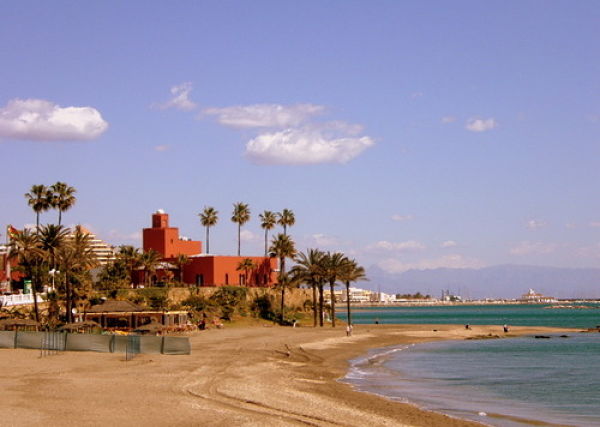
The best-known beach in Benalmádena has a very charming name: Playa Bil Bil. This beach, in perfect Costa del Sol style, besides the various tapas bars and restaurants on the seafront promenade, is marked by the presence of a rather quirky castle in a vaguely Moorish style; there is another one in the town itself, the Castillo de Colomares, a singular construction that eclectically blends various architectural styles from different eras and cultures.
Due to the rugged nature of the coastline, there are many smaller, more sheltered beaches here than in Torremolinos: one of these is Playa Tajo de la Soga, but we really like the atmosphere of Playa Las Viborillas.
All available accommodation in Benalmádena
Fuengirola beaches: a stretch of golden sand, among bars and chiringuitos
A two steps from the village and the beaches of Mijas (Cala de Mijas), you will find Fuengirola. If, on the one hand, the old town, starting from the Moorish Castillo de Sohail, tries to resist the avalanche of holidaymakers in swimwear, the beach remains fairly uniform. The same cannot be said of the sea, which is considered one of the best on the Costa del Sol. Fuengirola is this: 4.3 miles of beaches interrupted by concrete piers and beach restaurants. Among the most popular beaches, it is worth mentioning Playa de Fuengirola and Playa de los Boliches, very close to the port and the pleasant Paseo Marítimo: you can find the others in our article on the beaches of Fuengirola.
All available accommodation in Fuengirola
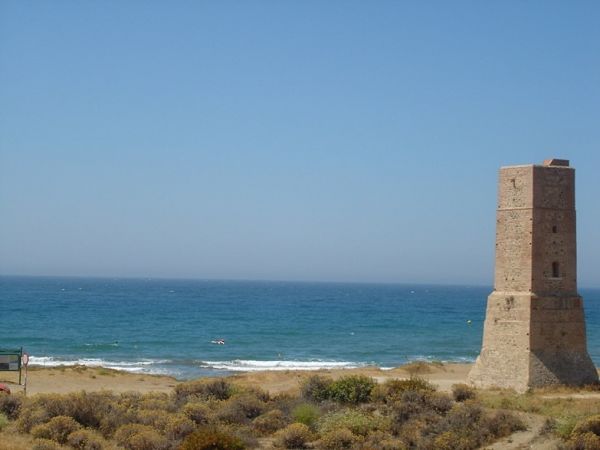
On the stretch of road from Fuengirola to Marbella, we like to highlight the Dunas de Artola, a distinctive and rather unusual stretch of coastline, compared with what we have seen so far: opposite these sand dunes, characterised by low-growing vegetation, lies one of the most unspoilt and little-known beaches on the Costa del Sol, a favourite destination for families looking for peace and quiet: Playa de Artola. Nearby Playa Cabopino, by contrast, is frequented by nudists.
Marbella’s beaches: picture-postcard sea for the queen of the Costa del Sol
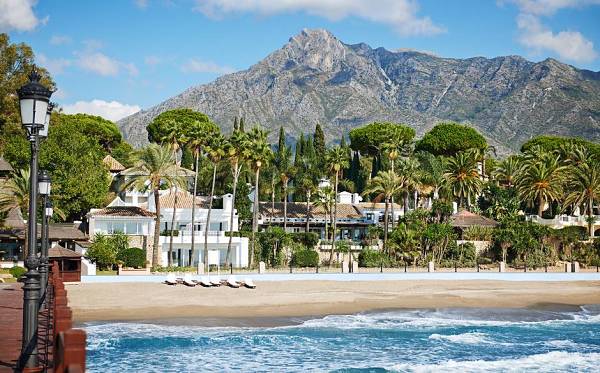
So we have arrived at what is considered the queen of the Costa del Sol alongside Malaga: Marbella. This place is by far the most charming in the area, and not only because of its fortunate geographical position (in the distance, you can see the peaks of the Sierra Blanca), but also because of the elegance of its beaches and seafront promenade: no small factor, if you think that Marbella, together with Puerto Banús, is the classy, high-quality city that celebrities choose for their holidays on the Costa del Sol. This detail may not interest most people, but it is a good clue to the quality of the beaches and the areas dedicated to seaside leisure, not to mention the nightlife: Marbella, in this sense, has no rivals!
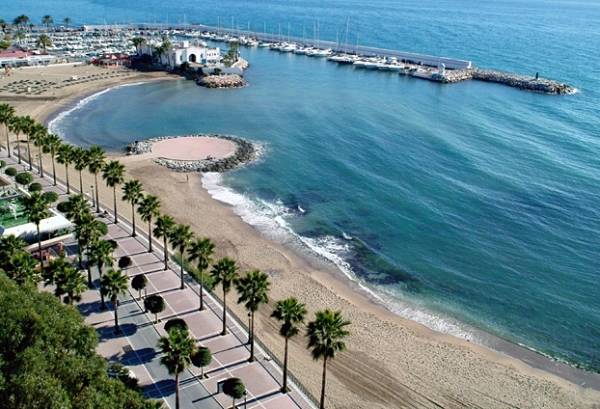
We left the coast opposite the Dunas de Artola: continuing along the shoreline, we find Nikki Beach (a very trendy spot), Playa El Alicate (well equipped and particularly popular). In the centre of Marbella there are a couple of compact beaches close to the two harbours: these are Playa de la Bajadilla and Playa de Venus, but we recommend going as far as Playa de la Fontanilla, because we find it less expensive and, above all, as you move away from the centre, less crowded and still well served by chiringuitos and quality restaurants. The promenade at La Fontanilla, moreover, is rich in vegetation (tropical and otherwise) and is perfect for a post-swim stroll. We included this resort in our 10-day Andalusia itinerary in summer, and perhaps now you will want to do the same!
All available accommodation in Marbella
Puerto Banús to Marbella: beaches and yachts!
If you want to bump into a few celebs on a yacht, or get an idea of what an exclusive holiday on the beaches of Malaga is like, leave Marbella and head to Puerto Banús. In addition to the extreme sport of “celebrity spotting”, you could visit the two classy and exclusive beaches in the area: Playa Nagüeles and Playa de Nueva Andalucía. We have covered all these beaches and many others in this stretch of coastline in our detailed guide to the best beaches in Marbella.
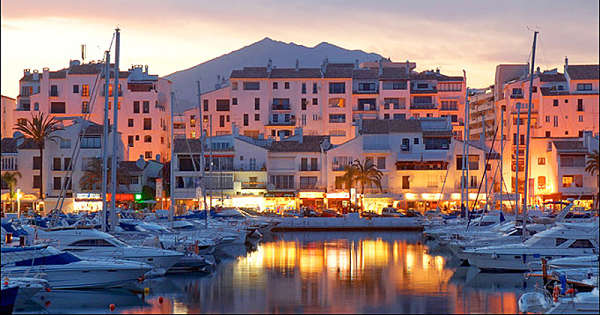
All available accommodation in Puerto Banús
The beaches of Estepona: adios, Costa del Sol!
Before reaching the beaches of Estepona – the last stretch of the Costa del Sol truly worth reaching – you will find the beach and the (relatively) quiet tree-lined seafront promenade of San Pedro de Alcántara, which at the very least makes for a good stop to get away a little from Marbella’s peacock-like display.
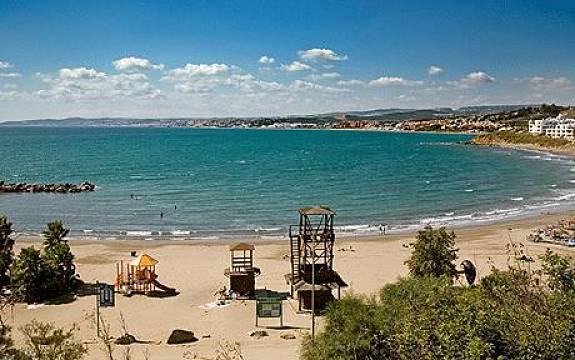
Estepona does not differ greatly from the kind of scene seen before Marbella, with the difference that here you can still breathe a little of that Andalusian authenticity, which elsewhere seems truly lost. In addition to the Playa El Padrón, considered by some to be one of the best beaches in Málaga and the province, we also recommend Playa de la Rada, right in the city centre and, further south, the pleasant and less crowded rocky beach of Playa Bahía Dorada, whose name says it all.
All available accommodation in Estepona
Malaga: the beaches of the eastern Costa del Sol
From a tourist point of view, the stretch of coast that runs as far as Costa Tropical is considered a more anonymous, second-rate version of the western Costa del Sol described so far and, apart from the odd rare exception, there is little reason to stop. We should just mention Cala El Moral in Rincón de la Victoria, an honest little spot with a good beach and a pleasant seafront promenade, and the long beach of Torre del Mar, which tries to attract tourists disappointed by the Costa del Sol, offering at least a greener, slightly less urbanised landscape, yet still unable to rival Nerja.
The beaches of Nerja: golden sand, balconies and secret coves
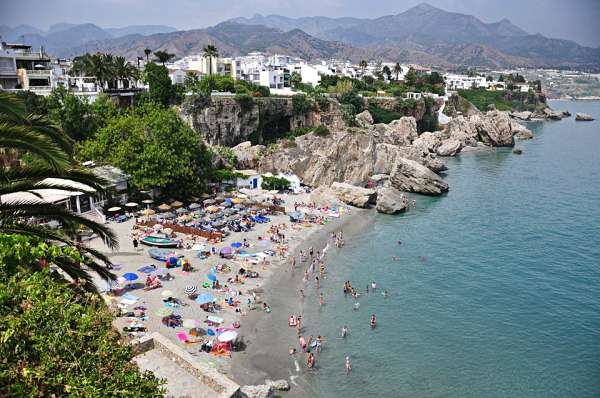
Among the most beautiful beaches in Andalusia are those of Nerja: here we can finally speak of variety in the landscape, thanks to the distinctive presence of some natural balconies carved out of rocky promontories sheer above the crystal-clear sea. After miles and miles of a substantially uniform landscape – sandy beaches with classic tree-lined promenades – here in Nerja, if we look carefully, we will also find a few secret and little-frequented coves as well as, of course, the classic wide, mile-long golden beach, which in this case is called La Burriana.
Before entering the town, you will find Playa del Playazo, a beach served by the La Restinga restaurant, whilst in the residential area it is worth mentioning the lovely Playa de la Torrecilla, from which there are splendid views of a nearby rocky outcrop, although the most famous beach – itself sheltered by the most renowned balcony, the Balcón Europa – is the stunning Calahonda, as you can read in the article entirely devoted to the beaches of Nerja.
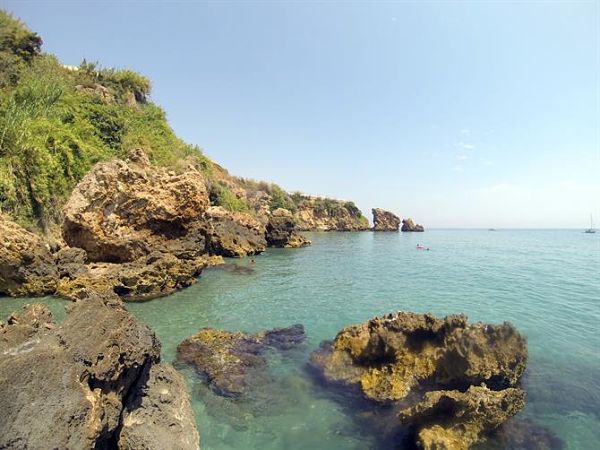
If, finally, you want to reach a truly secret little cove, unlike all the beaches of Malaga and the province encountered so far, look for Playa de Maro and Caleta de Maro, just a little further east of Nerja: in this way you will begin to savour the wild beauty of the Maro-Cerro Gordo Cliffs, which mark the start of the Granada coast.
