What a mystery Jerez de la Frontera is. Perhaps it is because it lies somewhat overshadowed between Seville and Cádiz. Perhaps it is because, for one reason or another, tours of Andalusia tend to be somewhat skewed towards the east, in the direction of Córdoba–Granada, or southwards, towards the coast of Málaga.
Perhaps it is because the local population refuses to give in to the more aggressive forms of tourism and remains committed to preserving an authentically Andalusian identity. There may be many reasons, but one rather puzzling fact remains: Jerez de la Frontera is a hugely charming city, yet it is often inexplicably overlooked and relegated to the background by some Andalusia travel packages.
A city with an extraordinarily ancient history (Xera was its Phoenician name, while Xerez was the Castilian one), rich in evidence of Arab influence, Jerez is famous for many reasons: it is home to remarkable churches and Moorish monuments that rival those found in the region’s larger cities; it proudly claims the title of the “cradle of flamenco”; it is the capital of the so-called Sherry Triangle, the famous fortified Andalusian wine that can be tasted in traditional bodegas; it is home to the renowned circuit where the Jerez MotoGP – Spain is held; and it hosts an important equestrian festival, which we discussed in our article on May festivals in Andalusia, thanks to its celebrated and long-standing tradition of horse breeding… in short, there are many reasons to visit Jerez de la Frontera. So, what is there to see in the city? Which attractions should you explore?
Contents
Map of Jerez
What to do in Jerez de la Frontera: the top five sights for a one-day visit
Just like Ronda – which, in my view, competes with Jerez for the title of the most fascinating lesser-known city in Andalusia – Jerez can be visited in one full day. However, it is easier to tune into the city’s distinctive atmosphere if you stay overnight and explore it again the following day, also setting aside some time to visit the beautiful surrounding area, such as Sanlúcar de Barrameda or the castle in El Puerto de Santa María. Here are the top five things to see in Jerez de la Frontera:
Catedral de San Salvador
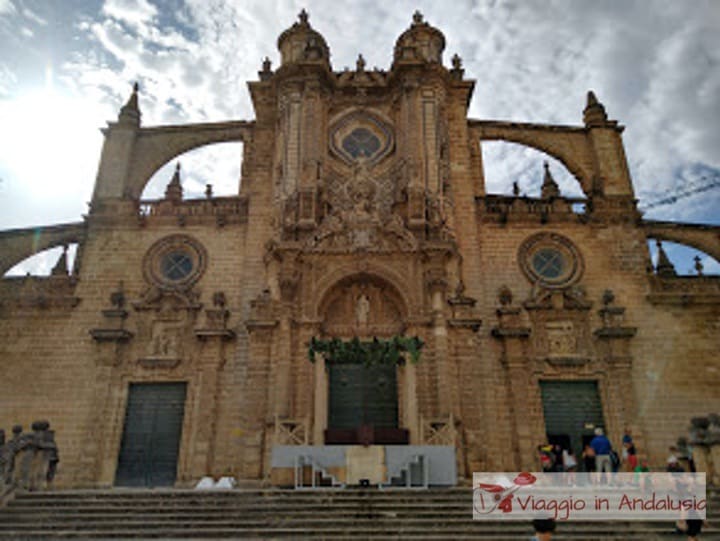
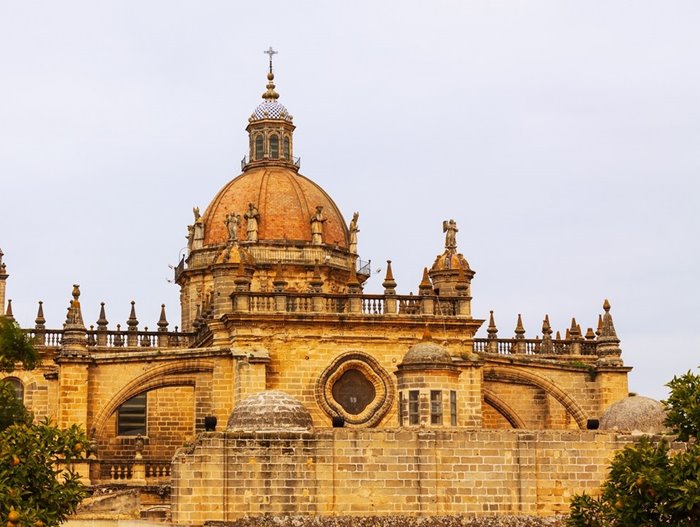
In Plaza Encarnación, beyond a broad flight of steps, stands the imposing Cathedral of San Salvador, a majestic 18th-century building constructed on the ruins of a mosque, in a Gothic style enriched with Baroque and Neoclassical details. Inside, the cathedral is striking for its massive flying buttresses, which give the church the austerity typical of Gothic architecture.
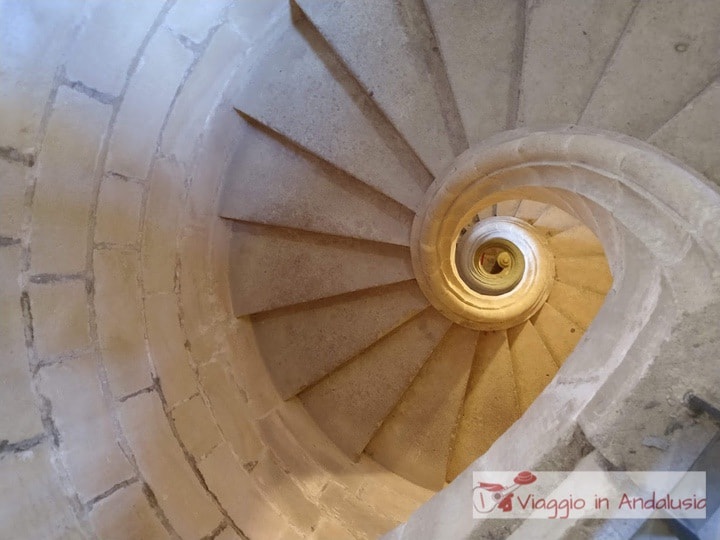
Do not miss the Moorish courtyard, enhanced by orange trees, and a secret staircase (Escalera secreta) resembling Fibonacci’s cosmic spiral, although it leads nowhere. Some important paintings by 17th-century Spanish artists are displayed in the chapels behind the high altar. The same admission ticket also allows you to climb the bell tower (in the same square) to admire the cathedral and take in the whole city from above.
Up-to-date opening times and ticket prices can be found here.
Church of San Miguel
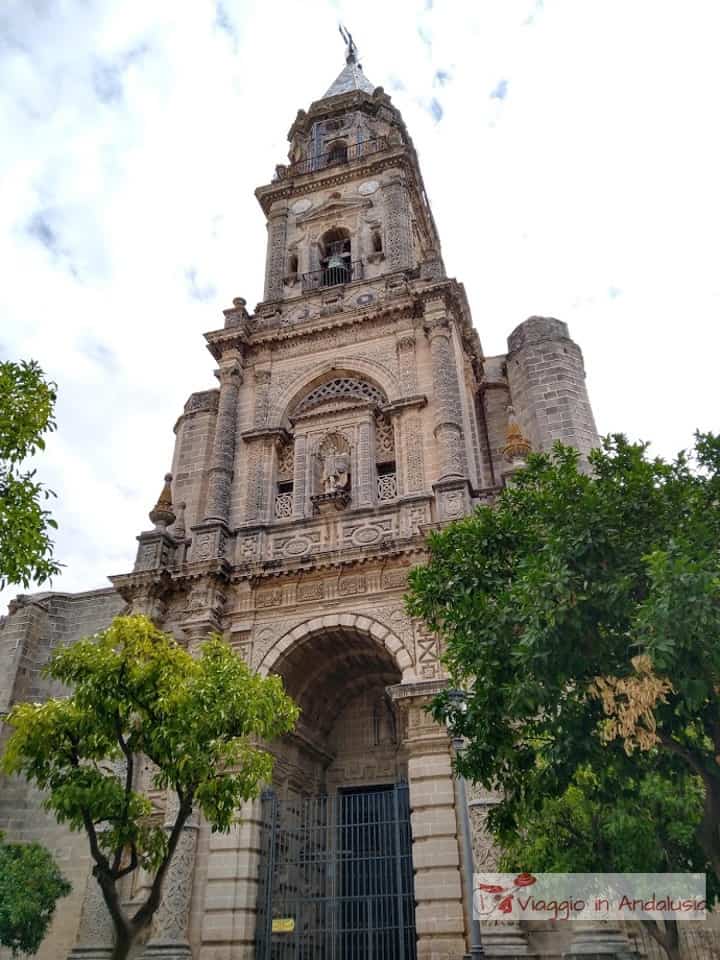
The tiny square of the same name seems to act as a forecourt to the impressive Church of San Miguel, whose 15th-century façade, complete with an integrated bell tower decorated with azulejos, dominates the view. The history of this church is particularly interesting: it was built on the ruins of a mosque and dedicated to the archangel known as the “Prince of the Heavenly Host”, so that he might protect the city during the battles fought by the Catholic Monarchs.
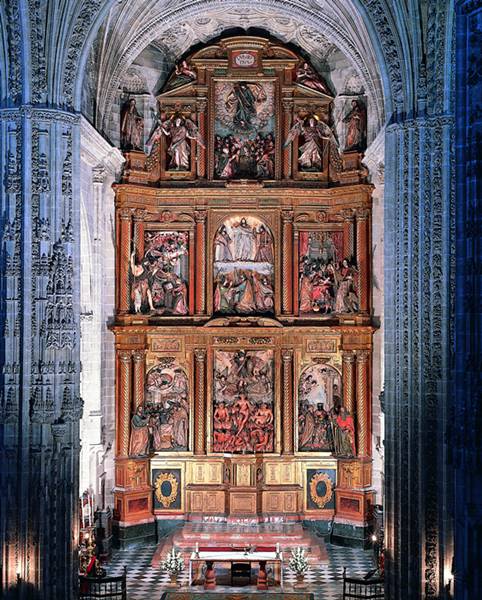
Inside, your eye will immediately be drawn to the imposing gilded altarpiece behind the altar, created by the important Andalusian sculptor Martínez Montañés. This church can be visited free of charge on presentation of the cathedral admission ticket.
Alcazár
As is often the case in Andalusian cities, the Alcázar of Jerez is located very close to the cathedral, just a five-minute walk away, so a visit to one can easily follow or precede the other, leaving you spoilt for choice. The ancient Almohad fortress, dating from the 11th and 12th centuries, is visually striking and deserves to be enjoyed at a leisurely pace, so plan carefully if you want to visit both in half a day without wasting too much time. From the cathedral, follow Calle Manuel María González alongside the pleasant tree-lined avenue of the Alameda Vieja, which is especially welcome in summer. Eventually, you will reach the entrance beneath the Alcázar’s imposing walls.
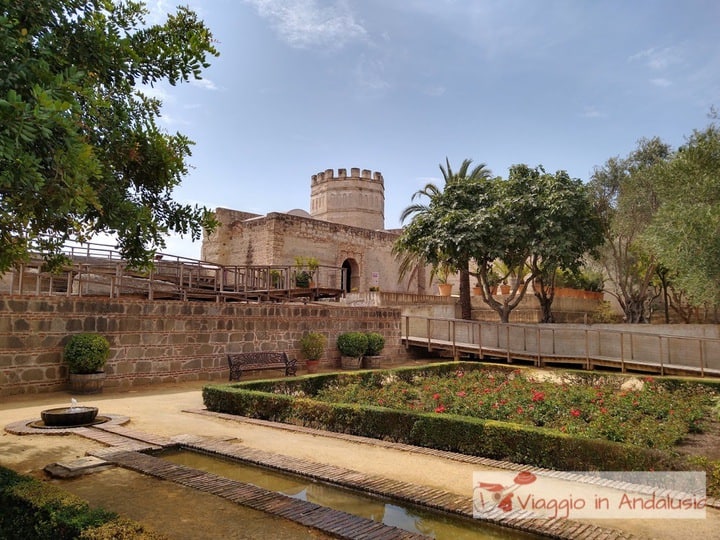
The first area you come to is the Patio de Armas, from which you can enter the ancient and atmospheric mosque, later converted into a Catholic chapel, with its mihrab and splendid vaulted dome. You then reach the beautiful gardens, carefully maintained and reconstructed to reflect what is believed to have been their original layout, including the types of plants used.
Behind the fairytale-like garden stands the Palacio de Villavicencio, a later building that was home to the family of the same name, who were responsible for making several changes to the Alcázar’s original structure. In the palace tower there is a camera obscura, which can be visited for a small additional fee, although it was closed at the time of our visit.
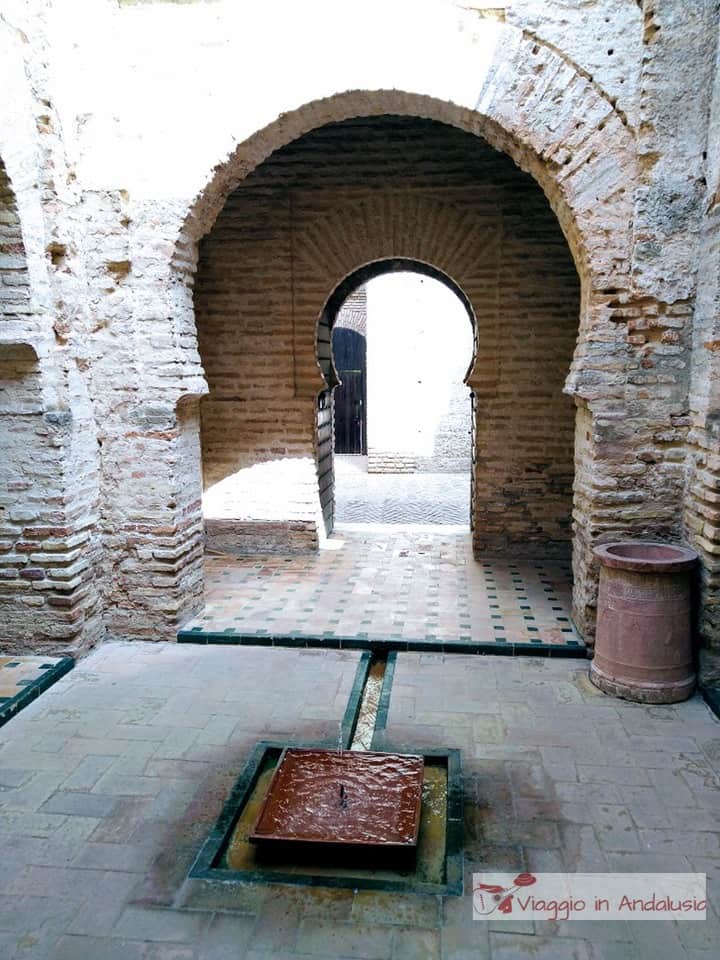
Looking up towards the highest point of the fortress, you will also notice a tower with an unusual shape: this octagonal defensive structure dates back to the monument’s original design and is perhaps its most distinctive feature. Beyond the garden are the very well-preserved Baños (hammam), with the traditional three-part layout divided into separate areas for different types of bathing. The Hammam Andalusí Baños Árabes at Calle Salvador 6 are still in operation.
Casco Antiguo
This is where the city’s daytime and nightlife come alive. The district has been declared a “Monumento Histórico Artístico” and, thanks to the beauty of its monuments and the narrow streets that run through it, it is one of the main places of interest in Jerez de la Frontera. So, what should you see? I recommend strolling from one square to another and soaking up the atmosphere of the neighbourhood.
Start at Plaza del Arenal, a large square lined with restaurants and featuring an equestrian monument, a carousel, fountains and decorative hedges. The tourist office is also located here and can provide all the information you need, as well as a map of the tabancos —the name given to Jerez’s traditional bars—which are well worth visiting. We tried Tabanco Las Banderillas (Calle Caballeros, 12), famous for its tapas and bullfighting-inspired décor.
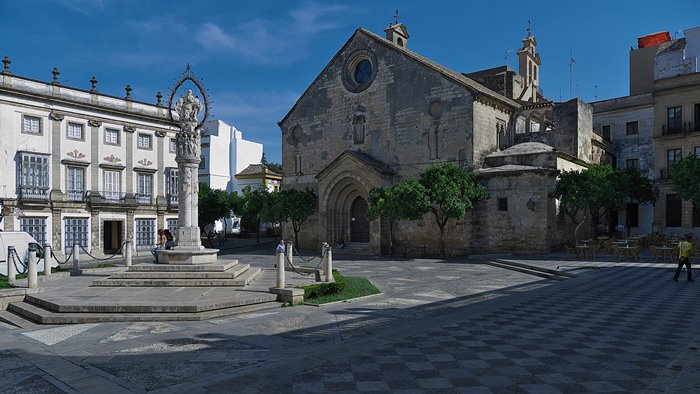
Stroll along the tree-lined Calle Consistorio and make your way to the intimate, historic square of Plaza de la Asunción: it is home to the Town Hall, the beautiful Parroquia de San Dionisio and, at its centre, an obelisk depicting the Assumption of the Virgin Mary into heaven. The square is much loved by the people of Jerez de la Frontera, who prefer to call it Plaza de San Dionisio.
Barrio de Santiago
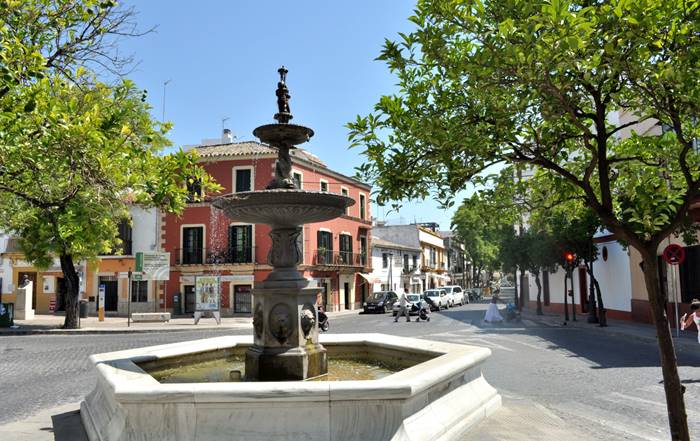
Once again, rather than recommending a single monument, we suggest exploring the entire historic Roma district of Jerez de la Frontera, the Barrio de Santiago. As you wander through the neighbourhood’s narrow streets, you will come across various reminders of its artistic heritage and close ties to flamenco. Particularly noteworthy are the monuments dedicated to the musicians Terremoto and De Paula.
The first statue stands in the small and rather unassuming Plaza de Santiago, home to the Church of Santiago, with its magnificent and exuberant Plateresque façade. The interior is somewhat more restrained and does not compare with some of the city’s other churches. Just a three-minute walk from the church, in Plaza de San Juan, you can visit the Andalusian Flamenco Centre to learn more about the Roma culture of the neighbourhood and the city as a whole, which vies with several other places in the region for the title of birthplace of the flamenco tradition.
Jerez de la Frontera: what to see if you have a little more time
One day may be enough to visit the monuments included in this top five at a relaxed pace, but what else is there to see in Jerez de la Frontera if you have a little more time?
Jerez sherry bodegas: three recommendations for a tour
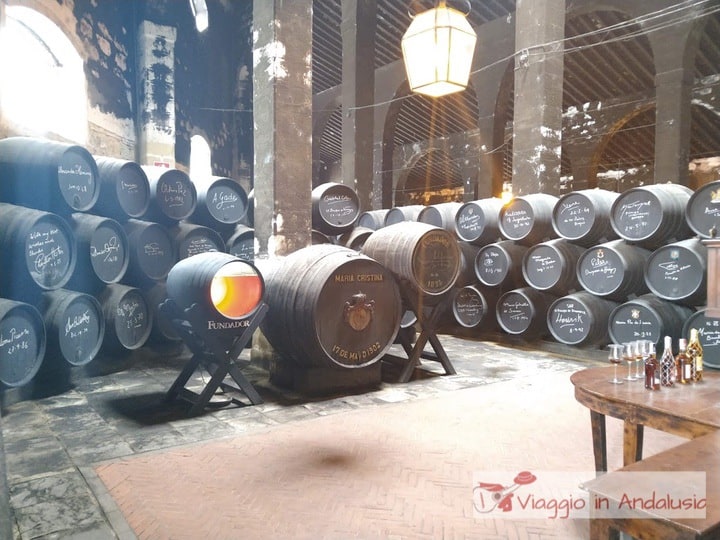
The first thing I would recommend is visiting at least one of the many bodegas dotted around the city. Here you can taste sherry, the local speciality, which was brought to Spain by none other than the Phoenicians and has since become a true institution.
For a tour of the best bodegas in Jerez de la Frontera:
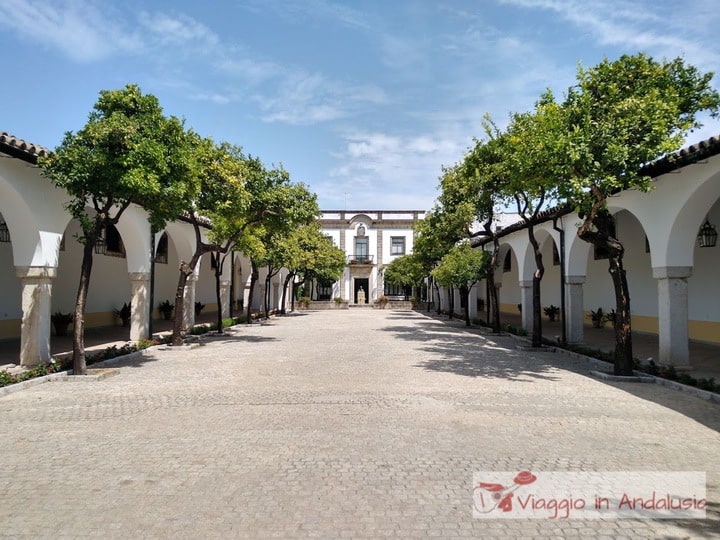
- Fundador Pedro Domecq: a splendid bodega on Calle San Ildefonso, a little outside the city centre. Many consider it the best in Jerez. Founded by a Franco-Irish family—the city is also home to the Domecq Palace, on Alameda Cristina, the most opulent palace in Jerez—the company has been producing renowned sherries and brandies since the 18th century. Harveys, one of the company’s brands, even supplies wine to the British royal household. The guided tour of the beautiful estate includes the usual tastings and lasts around an hour and a half.
- González Byass, right next to the Alcázar, beyond the tree-lined avenue of Calle Manuel María González. Guided tours and tastings are available at what is considered one of the city’s oldest and most prestigious bodegas, although prices are therefore fairly high.
- Sandeman: to many people, the Sandeman logo—with its human figure wrapped in a cloak—is perhaps the best known of all. The Sandeman bodega can be visited at Calle Pizarro 10 and is also famous for its brandy.
Museum of Time
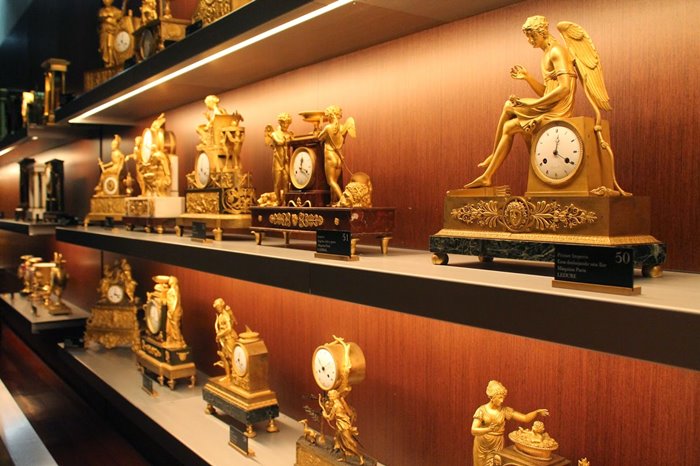
Speaking of time… here is another interesting place to visit in Jerez. If you are passionate about clocks and watches, do not miss this museum, which offers an extensive collection of antique clocks that are still in working order, all at a reasonable admission price. It is located at Calle Cervantes 3.
Archaeological Museum
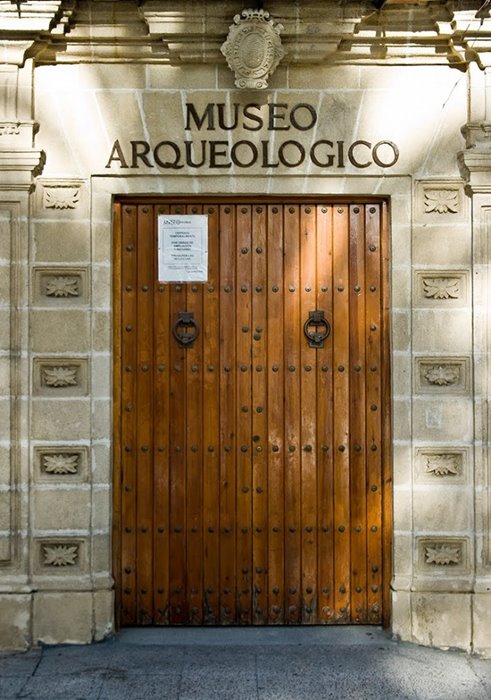
A more traditional museum, located in Plaza del Mercado, displaying a collection of artefacts and archaeological finds of various kinds. The exhibition is housed in an attractive building divided into nine main rooms, covering a period from prehistory to the Middle Ages. Admission is reasonably priced.
Andalusian horses: the Royal Andalusian School of Equestrian Art
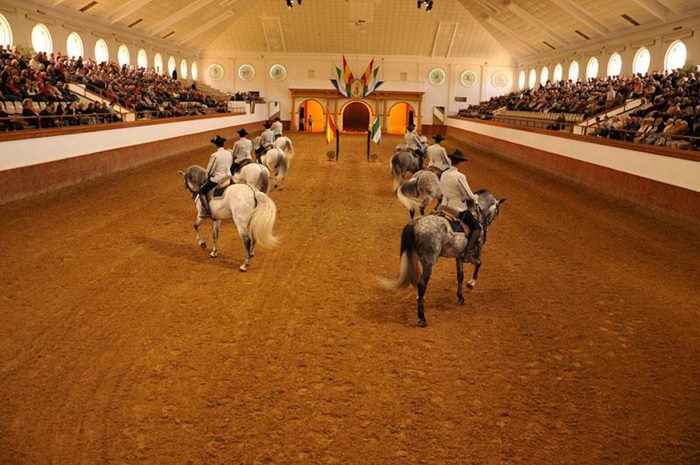
As we have already mentioned, Jerez is the most famous city when it comes to Andalusian horses. Very close to the Museum of Time mentioned above is the Royal Andalusian School of Equestrian Art, the renowned home of Jerez’s equestrian school. As well as visiting the stables and museum, you can attend horse shows in which the animals perform a kind of dance in time with the music.
Where to stay in Jerez
Whenever I have needed to look for a hotel in Jerez, I have never had any difficulty: there are plenty of good-quality places to stay at reasonable prices and in excellent locations, even during the high season. Just make sure you book well in advance if you want to attend Holy Week, the Horse Fair or the Motorcycle Grand Prix.
Personally, I would avoid the outskirts of Jerez and look for a hostal in the city centre instead. Where possible, choose one with parking included in the price, as finding a space in the old town and nearby districts can be rather difficult, while paid car parks are expensive.
All available accommodation in Jerez de la Frontera
How to include Jerez de la Frontera in an Andalusia tour
Jerez can usually be visited as a day trip from Seville or Cádiz, either by car or by train. In fact, it is one of the best stops to include when travelling from Seville to Cádiz.
If you are travelling from Seville, you could join this organised tour to Cádiz and Jerez, which includes a sherry tasting and the equestrian show at the Andalusian School.
I would also like to recommend a few self-guided itineraries I have created that include a stop in Jerez:
- 10-day Andalusia tour
- 5-day Andalusia tour (see the bonus stops)
