Among the white villages of the province of Cádiz there is one that sits in a truly unusual setting, hidden among the mountains of the Sierra de Grazalema. It is the village of Grazalema, which emerges from the woods of these mountains like a white pearl cast into a green sea. Among the typical white houses, historic churches and viewpoints stand out, but getting lost in its narrow lanes is the simplest and most enchanting thing you should do as soon as you arrive.
Contents
Where it is and how to get there
Grazalema is located at the eastern edge of the province of Cadiz, in the mountainous area of the Sierra de Grazalema. There are no public transport links to get there, so it can only be reached by car or by joining a guided tour. The exact location is this one, and the distance from Cadiz is 110 km (68,3 miles) – about 1 hour and 40 minutes – while from Seville it is 120 km (74,5 miles) – about 1 hour and 50 minutes – and from Malaga 130 km (80,7 miles) – about 2 hours. Much closer, however, is Ronda, just 30 km (18,6 miles) away – 40–50 minutes.
What to see in Grazalema
With the rocky summit of Peñón Grande towering over the town, Grazalema is truly enchanting and every view leaves you speechless. Let’s discover how to explore it in every corner.
Among the lanes of Grazalema
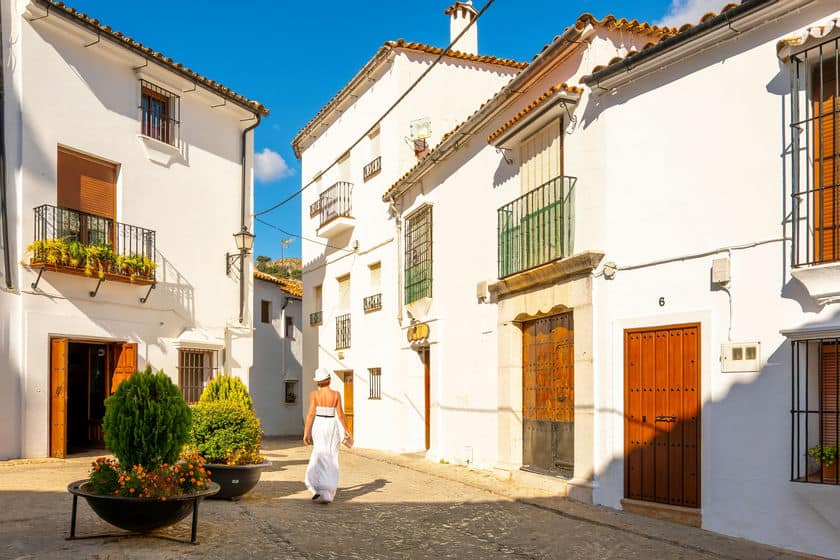
As with most of the Pueblos Blancos, in Grazalema the first thing to do is get lost in its narrow streets, letting yourself be charmed by the picturesque setting you find yourself in. There are also several walls decorated with ceramics dotted around the town, depicting scenes that recall the village’s Arabic past: searching for the various decorations around the town is a treasure hunt you simply have to do. There is then a series of churches and monuments, which I’ll tell you more about in detail shortly.
The town, although very small, is divided into two areas: the upper quarter and the lower quarter. The latter is the oldest core, dating back to the Islamic period. It is a true labyrinth of narrow streets and tiny squares: this is where it is worth getting lost among the alleys. The upper quarter, by contrast, came later and has a more regular layout, so it is less distinctive, although it still retains the charm of the Pueblos Blancos. In truth, there is also a third part of the town: El Arrabal, the area slightly set apart from the main block, made up of the houses closest to the Guadalete river.
Plaza de España and Iglesia de Nuestra Señora de la Aurora
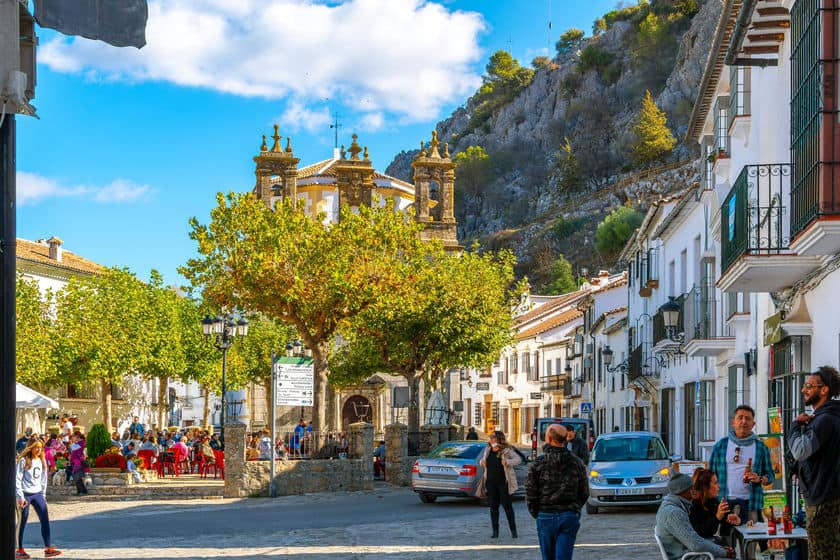
Plaza de España is the town’s main square, where most of the social life is concentrated: every visit to Grazalema should begin right here! As well as being the perfect place to have a drink at one of the little bars on the square, it is also home to the town hall – very distinctive, with its whole white arched façade and clock tower – and, above all, one of the town’s main churches, which rises with its austere façade topped by three bell towers, the Iglesia de Nuestra Señora de la Aurora.
It is interesting that behind this squared façade lies a church of elliptical shape, topped with an octagonal dome. This is due to the fact that it was built on top of an ancient Moorish palace. The church is no longer used for worship, but it is nevertheless still regarded by the inhabitants of Grazalema as the town’s most important church, since it played a crucial role during the War of Independence. In April 1810, in fact, the townspeople barricaded themselves in this square and in the church itself to resist Napoleon’s troops.
In this square there is also a very curious fountain, which appears to have Visigothic origins. The four spouts emerge respectively from the mouths of four faces, each different from the others.
Church of the Incarnation and other churches
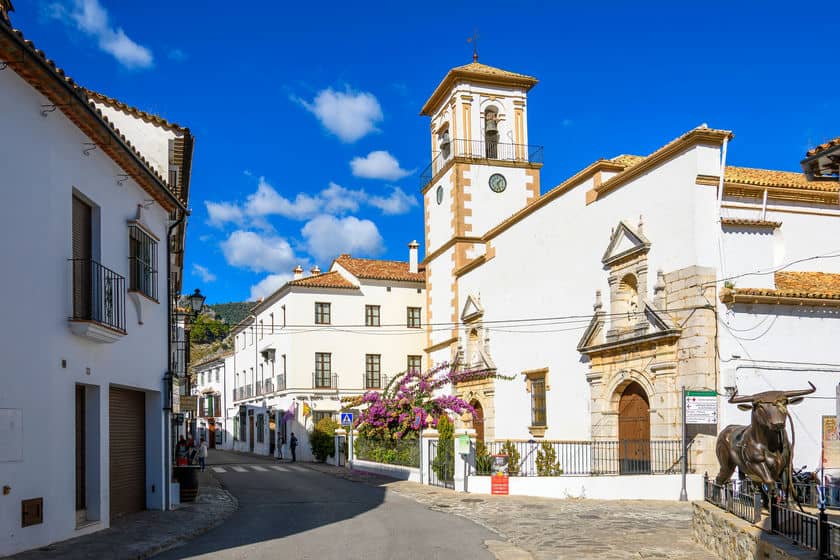
Another important church in Grazalema is the Iglesia de la Encarnación, which was built over a Mudéjar mosque after the Reconquest of 1485. The bell tower is in fact a transformation of the old minaret. White like much of the town, it was completed in 1614, and the two stone portals are topped by niches containing two statues. One represents the mystery of the Incarnation (the moment when the Son of God takes flesh in the womb of the Virgin Mary), while the other is Saint Athanasius, the town’s patron saint.
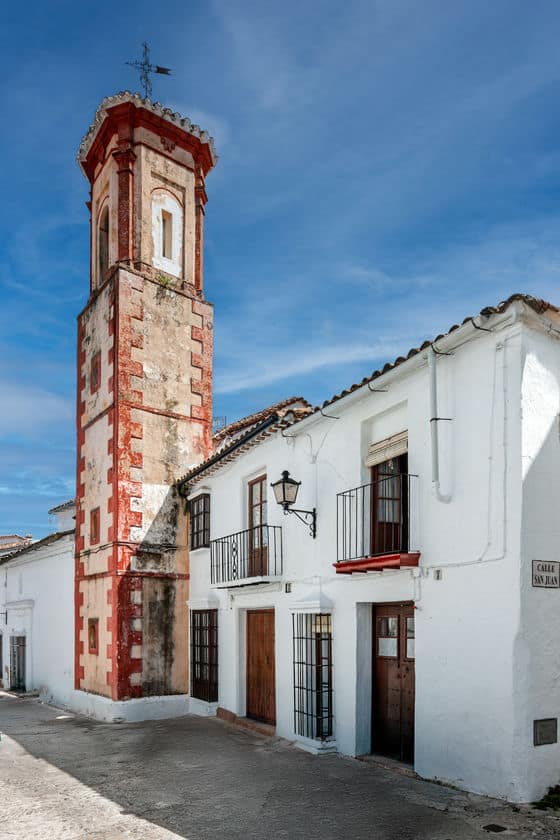
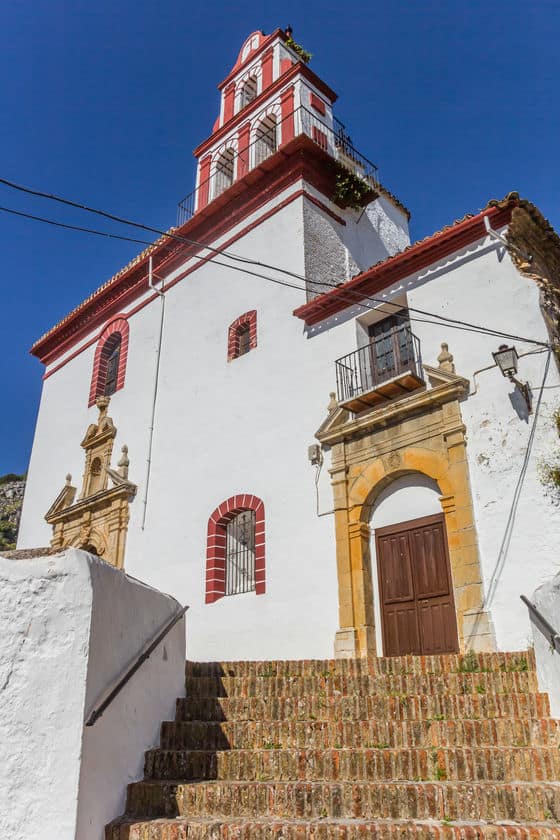
A short distance away we find the Iglesia de San Juan de Letran, which is also easily recognisable for its bell tower in shades of red, built by making use of the structure of the former minaret. If it were not for the tower, the church would hardly be noticeable at all, so well integrated is it into the surrounding group of buildings, blending in perfectly with the houses of the village.
A fourth church not to miss is the Iglesia de San José, which stands on the other side of the village and is a legacy of the historic convent of the Discalced Carmelite nuns that once stood here. The little bell tower with three arches, painted red, which rises above the white façade, is particularly distinctive.
Hermitages of Grazalema
At the edge of the village are the remains of the Ermita del Calvario, a hermitage now abandoned, but one that is closely linked to the faith of the people of Grazalema. It dates back to 1700 and was used until the mid-1900s. It is easy to reach, being just 500 metres from the village, and is the destination of the Stations of the Cross organised every year during Lent.
Slightly further from the town, but still less than a kilometre away, stands the Ermita de Nuestra Señora de los Ángeles. In this case, it is a chapel that is still consecrated and much visited, inside which is kept the image of the Virgin of the Angels, who is particularly venerated.
The viewpoints of Grazalema
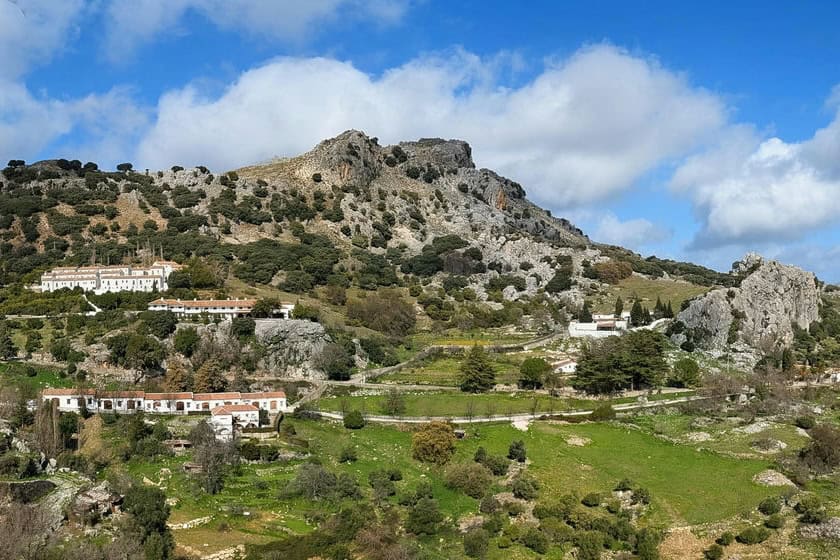
The position of this little village makes it perfect for admiring the beautiful surrounding scenery. But where should you look out from? There are several viewpoints from which to enjoy truly incredible views of the surrounding mountains. The best known is probably the Mirador de los Asomaderos (here), but there are others too, such as the Mirador Los Peñascos (here), the Mirador El Tajo (here), and the Mirador del Santo (here).
Mantas de Grazalema: the textile museum
Once, this small town was famous for its wool production, with the breeding of Grazalema Merino sheep. The local textile industry produced both wool blankets for use on site and fabrics that were then taken to Jerez or Seville to be processed. Today, the former Mantas de Grazalema factory houses the textile museum, where you can see the historic machinery. Admission is free.
Bull-running with a rope
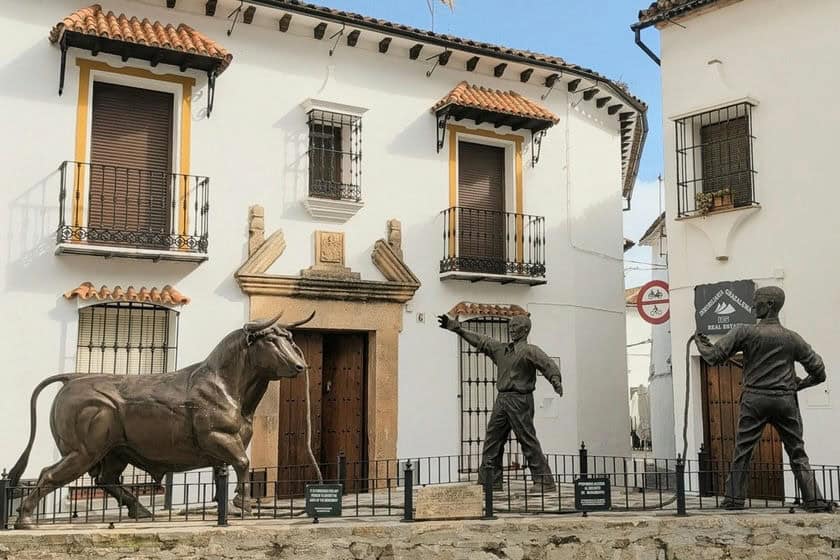
In Grazalema there is a famous traditional festival known as Toro de Cuerda, for which there is also a monument in a small square in the town. It is held every year in mid-July, specifically on the Monday following the feast of the Virgen del Carmen (16 July). In effect, it is a challenge between man and animal, but unlike a bullfight, the bull is not harmed in any way.
The bull is led through the streets of the town in a kind of running procession, during which young men take turns guiding the animal by means of a rope. Throughout the day there are several stages: first, the bulls are let run freely early in the morning from the upper part of the town down to the lower part, and later, at midday and in the evening, they are led through the streets with the rope.
Guided tours including Grazalema
Grazalema is among the little towns often included in guided tours to discover the Pueblos Blancos. If you don’t have a car and want to visit this and other characteristic towns, the best way is to join one of these organised trips. Here are the main ones:
- Tour of the Pueblos Blancos (including Grazalema) from Cádiz / Jerez / San Fernando / El Puerto
- Ronda and Pueblos Blancos Tour (including Grazalema) from Seville
Where to stay in Grazalema and the surrounding area
Often, people who visit Grazalema, like the other Pueblos Blancos, do so as part of a road trip and then stay overnight in the larger towns. But if you can, my advice is to spend a night in this or another of the small villages dotted around these areas, so you can soak up the atmosphere of these little towns even in the evening. Also, if you are interested in hiking the trails of the Sierra de Grazalema, this is the ideal base from which to start. On the map you can see the hotels available, but below I suggest a few places to choose from:
- Hospederia Casa de las Piedras: a very welcoming, traditional place, where you really feel at home. The communal areas are very nice and it also has an on-site restaurant.
- La Mejorana: a property set in an old house, with period furnishings and a lovely swimming pool available to guests. Also perfect for stays of several nights.
- Hotel Fuerte Grazalema: for those looking for a more luxurious stay, here is a large 4-star hotel located outside the village, set in greenery and with a large swimming pool, as well as all the facilities guests could need.
Search for accommodation nearby
Where to eat in Grazalema
Even if you are not staying in Grazalema, you may still need to eat something if you happen to be there around lunchtime. But where to eat? In Plaza de España is the best-known restaurant in the town, Restaurante La cocina del Gaidovar, where you are unlikely to be disappointed by the excellent dishes.
To try something typical, I would also suggest La Merina Brasa Autóctona, a restaurant serving very good local dishes. Another historic place with excellent food, although it has now been much renovated, is Casa Martín 1920. Looking for a tapas bar for something simpler? You can’t go wrong with La Maroma Grazalema.
