We are in southern Spain, on the Costa de la Luz: El Puerto de Santa María is located in the province of Cádiz and has a history stretching back thousands of years. Its beautiful beaches make it a renowned tourist destination for travellers looking to enjoy the sea and relax in Andalusia, but the town, although still developing as a tourist destination, has much more to offer: an interesting historic centre, natural parks, well-equipped marinas and golf courses… not to mention its sherry and brandy bodegas. It can also make an excellent stop on an itinerary from Seville to Cádiz.
Let us now discover what to see in El Puerto de Santa María and which are the most beautiful beaches to enjoy in this town overlooking the Bay of Cádiz.
Contents
The main attractions of El Puerto de Santa María
Castillo de San Marcos
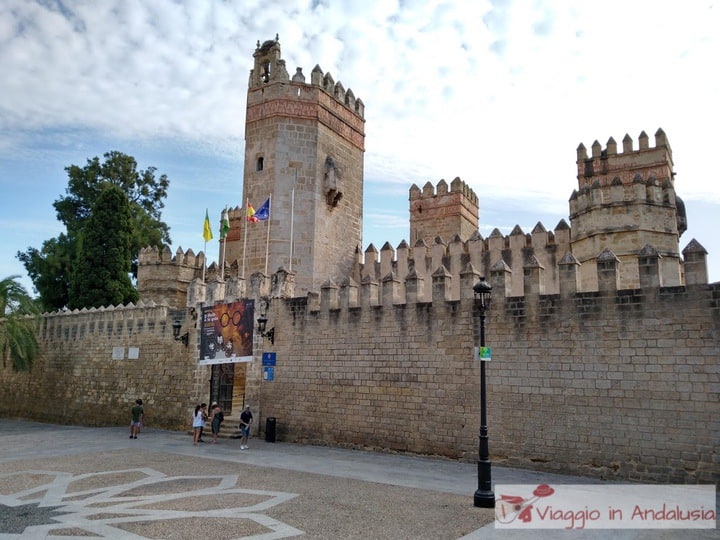
The castle is one of the town’s most important monuments and is an absolute must-see. It was originally an Arab mosque on the banks of the River Guadalete, but in the Middle Ages Alfonso X the Wise decided to build a fortress there to protect the settlement. Not everyone knows that the wealthy Medinaceli family, the former owners of the castle, offered to finance Columbus’s voyage. The Spanish Crown refused, but the family still managed to fund the purchase of one of the ships, which was named Santa María, in honour of the town.
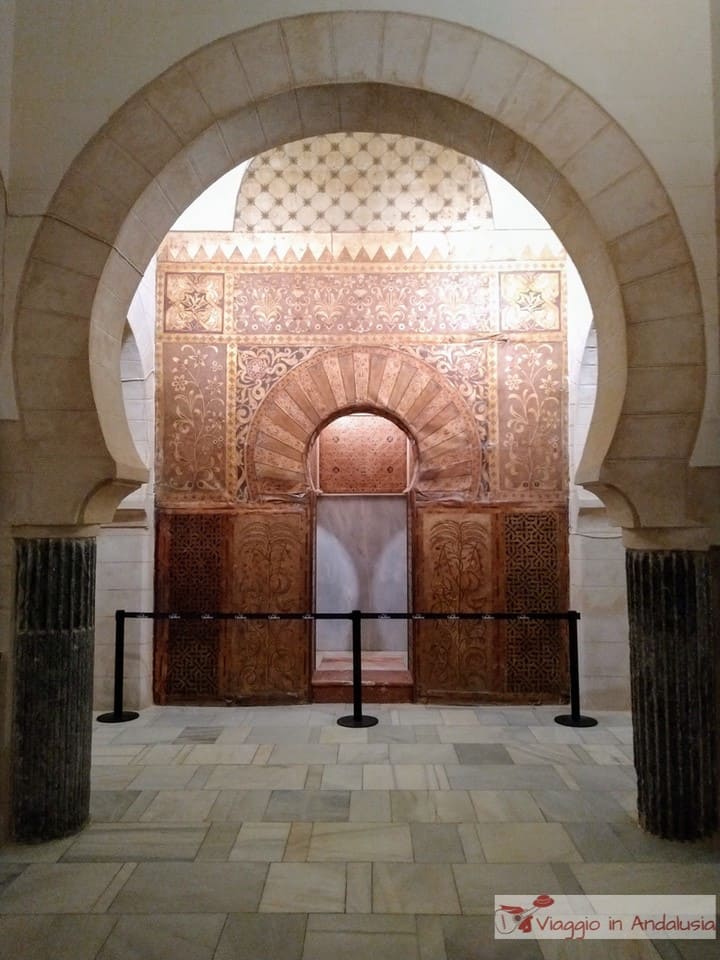
Today, the castle is open for events and guided tours, both inside, where its Moorish atmosphere can still be felt, and outside, where visitors are struck by the beauty of the towers and courtyards, the internal defensive structure and, more generally, its remarkable state of preservation after 800 years. Finely restored, the guided tour also includes a sherry tasting at Bodega Caballero, which is located inside the castle. The address is Plaza Alfonso X el Sabio 3.
- Ticket prices vary depending on the option chosen:
- Admission to the castle with audio guide (1 hour): €10 for adults and €5 for children
- Guided tour of the castle (45 minutes): €12 for adults and €5 for children
- Guided tour of the castle and bodega, including a wine tasting (2 hours): €16 for adults and €5 for children
Iglesia Mayor Prioral
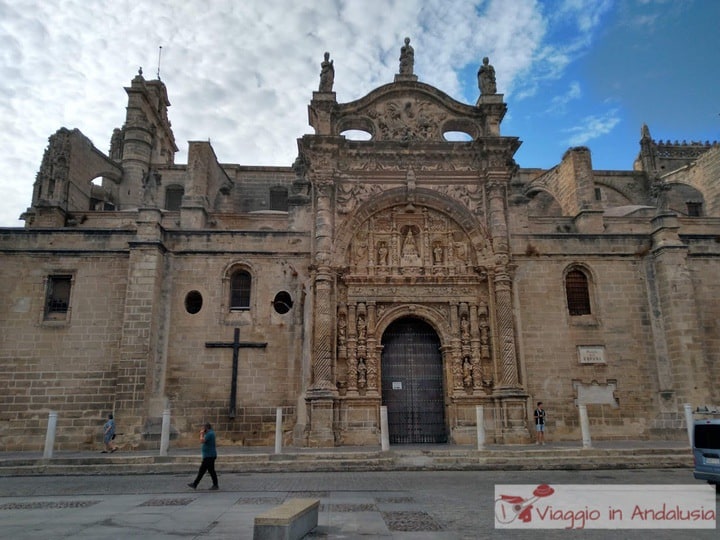
This beautiful church dates back to the 15th century. It was built using sandstone from the Sierra de San Cristóbal, and its first master builder was probably Alonso Rodríguez, who was working at the same time on Seville Cathedral and on various churches in Jerez. Indeed, these churches share several notable features. However, the earthquake of 1636 badly damaged the building, which was subsequently rebuilt in the Baroque style.
The Iglesia Mayor Prioral in El Puerto de Santa María has three naves, a pentagonal apse and two chapels. As well as the chapels, make sure you admire the Puerta del Perdón and the magnificent Puerta del Sol, created by the masters Antón Martín Calafate and Francisco de Guindos. It is located in Plaza de España.
- Admission to the church is free every day.
- Opening hours vary depending on the day:
- Monday to Friday from 8.30 am to 1 pm and from 6 pm to 9 pm
- Saturday from 8.30 am to 12.30 pm and from 6 pm to 9 pm
- Sunday from 8.30 am to 2 pm and from 6.30 pm to 9 pm
Real Plaza de Toros
As in every Spanish town, bullfighting forms part of the local cultural tradition and, although El Puerto de Santa María is not a particularly large town, the Plaza de Toros in Plaza de Elías Ahuja is one of the largest bullrings in Spain—it is said to be the third largest in the country. Dating back to the 19th century, it was officially opened in 1880. It can accommodate as many as 12,000 spectators, and the feria taurina of El Puerto de Santa María is one of the most important and historic bullfighting festivals in Andalusia.
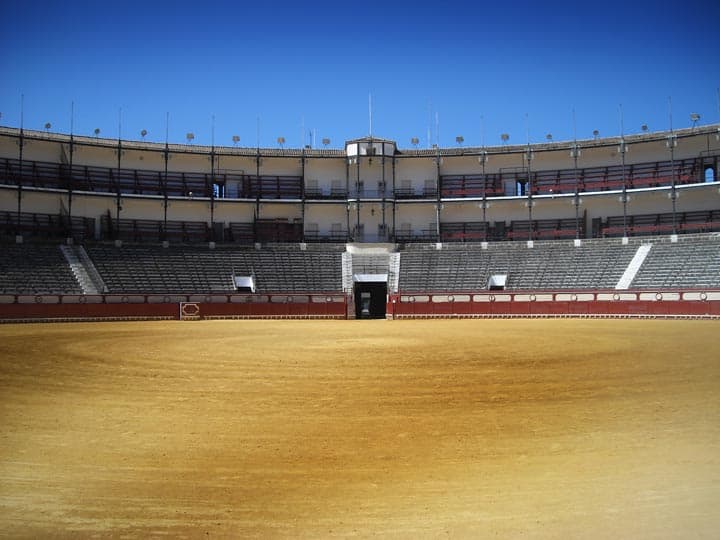
Closed in the days leading up to a bullfight, the Real Plaza de Toros is worth visiting inside, regardless of your opinion on bullfighting.
Monasterio de la Victoria
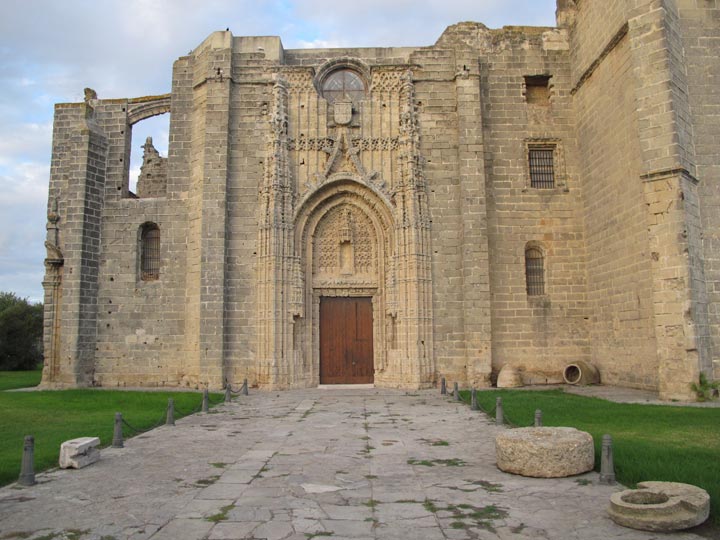
The construction of this monastery began on 7 June 1504, thanks to the Dukes of Medinaceli. Initially entrusted to Franciscan friars, over the centuries it has served a variety of purposes, housing Jesuit orders, becoming a hospital and later a Francoist prison in the 20th century; today, it is a cultural centre. The church has one nave and eight chapels. Its façade, portal and Gothic-style cloister are particularly striking: you can see them by heading to Avenida del Monasterio, where there is a large car park near the railway station.
- Admission is free.
- In winter, it is open only on Friday mornings, from 10 am to 1 pm, thanks to a group of volunteers, while in summer it is open from Monday to Friday.
La Antigua Lonja
Lonja means ‘fish market’. Lonjas began to be built in the 14th century: roofed structures, generally made of wood, with open rectangular spaces divided by Gothic-style columns.

The fish market of El Puerto de Santa María, also known as the Resbaladero, was built in stone, with a main entrance whose façade rises above the rest of the structure, which consists of six side arches. A heraldic motif featuring a fish in relief and the town’s coat of arms can still be seen above the main doorway. You will find it at Avenida Micaela Aramburu de Mora, 24, just a short walk from the Castillo de San Marcos.
Sherry and brandy bodegas
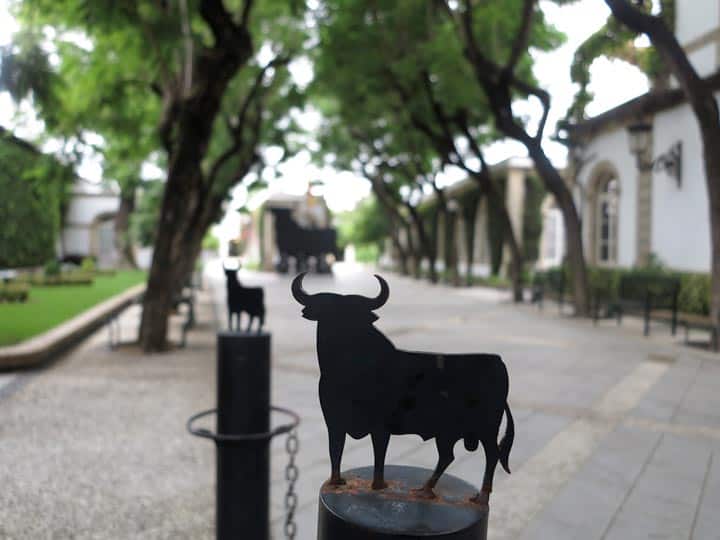
For wine lovers, this part of Andalusia is a true dream. Historic wineries produce some of the finest sherry in Spain, and probably in the world.
Among the most prestigious bodegas is Osborne, at Calle Los Moros 7: the winery’s symbol, the black bull, has over time become an emblem associated with Spain itself… needless to say, stopping here or at one of the other bodegas to taste the famous local wines is an absolute must!
The beaches of El Puerto de Santa María
In El Puerto de Santa María, you will find more than 10 kilometres (6,2 miles) of beautiful golden beaches with fine sand and crystal-clear water. Thanks to their beauty and the services available, including bars, restaurants and entertainment, these beaches are often very crowded, especially in summer.
From east to west, here are the best beaches in El Puerto de Santa María:
Playa de Levante
This is the town’s easternmost beach. It borders and forms part of the Parque Natural de la Bahía de Cádiz, while to the west it becomes Playa de Valdelagrana.
More than 4 kilometres (2,4 miles) long, the beach has fine golden sand and several dunes. One clearly marked area is reserved for naturism. The beach is very long and, as it lies within a protected natural area, it can be reached on foot by leaving your car at the boundary with Playa de Valdelagrana, at the end of the Paseo Marítimo on Avenida del Mar.
This beach is generally not very crowded and offers various facilities, including toilets, showers and a chiringuito.
Playa de Valdelagrana
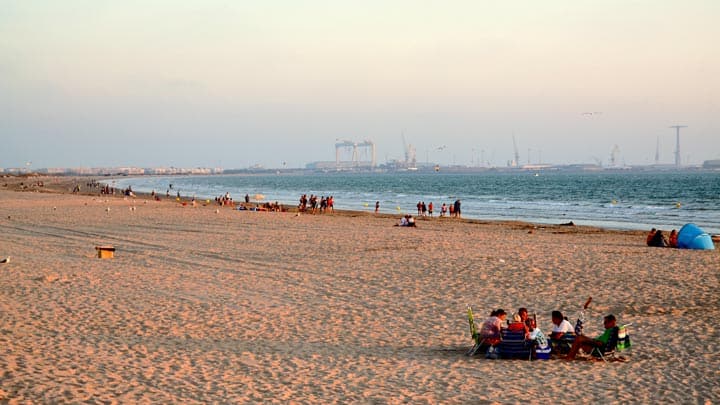
Listed among the most famous beaches in the province of Cádiz, Playa de Valdelagrana stretches for 1.7 kilometres (1 mile) and is 85 metres wide. It can become very crowded, especially during the summer months, and offers every kind of service, as well as a promenade lined with places to eat. Its size and wind conditions make it suitable both for water sports such as windsurfing and for relaxing on the beach when the sea is calm. It has accessible entrances for people with reduced mobility, as well as special chairs allowing them to enter the water safely. Large car parks can be found on Calle del Litoral and Calle de la Luz.
Playa de la Puntilla
Close to the town, Playa de la Puntilla is around 600 metres long and as much as 70 metres wide. It runs alongside the Parque Periurbano Dunas de San Antón. You can reach it by following the River Guadalete along its right bank or by taking the Camino de los Enamorados, through the pine woods, around a 15-minute walk from the town centre. If you are travelling by car, you will find a car park near the port, at the end of Avenida de la Bajamar.
This fine-sand beach is moderately crowded during the high season and offers many services, thanks also to its proximity to the urban area.
Playa de la Muralla
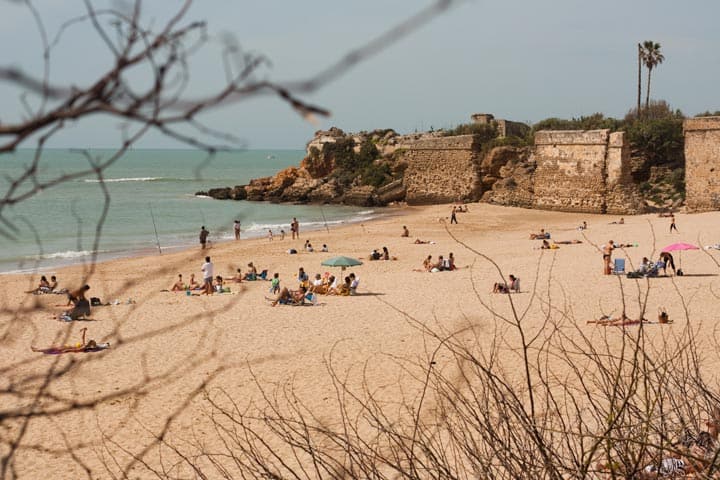
Extremely picturesque, this beach of sand and large rocks is known for its proximity to the remains of the Castillo de Santa Catalina and its defensive walls. Popular with anglers and jet-ski enthusiasts, the beach can be accessed from Puerto Sherry, whose seafront promenade is well worth a stroll for the views and to try the tapas served in its restaurants. The beach has been awarded Blue Flag status.
Playa de la Calita
This small, picturesque cove has a beach around half a kilometre (0,3 miles) long, with fine golden sand and an average width of 15 metres. It lies between Playa de la Muralla and Playa de Santa Catalina. You can reach it from the Carretera de El Puerto a Rota by continuing to the end of Vistahermosa and turning left: the car park is located directly in front of the beach.
Playa Santa Catalina
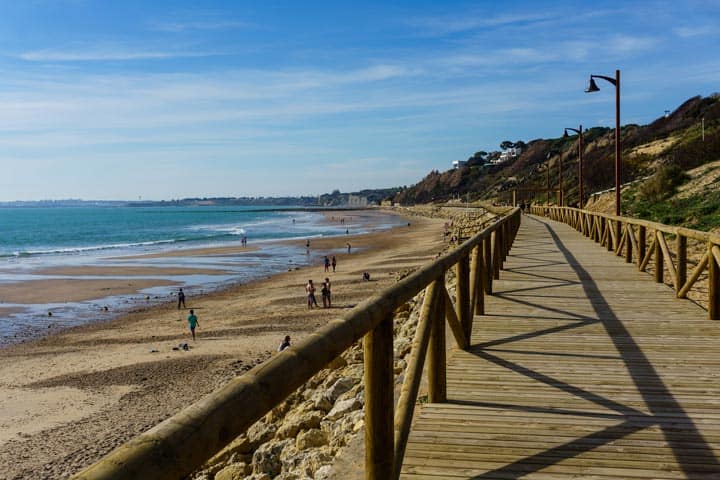
One of the most popular beaches in the area, Playa de Santa Catalina stretches for almost 3 kilometres (1,8 miles) and is around 40 metres wide.
With fine golden sand that has a slightly pinkish hue, this beautiful beach has both equipped areas and free public sections. Sunbeds, deckchairs and pedal boats can be hired, as well as windsurfing equipment. There is a lifeguard service on the beach, along with a restaurant and a chiringuito. There are no public showers, but toilets are available.
Playa Fuenterrabía o de Fuentebravía
This is the northernmost and westernmost beach in the municipality of El Puerto de Santa María. It is located near the residential areas of Fuentebravía and El Manantial, which is why it is known both as Playa Fuenterrabía and by the name of the nearby settlement, Playa de Fuentebravía.
The fine-sand beach stretches for 700 metres and is around 40 metres wide. It offers every kind of service and is generally quite crowded.
Where is the best place to stay? Cádiz or El Puerto de Santa María?
A visit to El Puerto is usually planned as a day trip from Cádiz, which is just 30 minutes away by car, so you will most likely need accommodation in Cádiz. We therefore recommend our article on where to stay in Cádiz, where you will find advice and information on the tourist areas in the city centre and beyond.
Tips on where to stay in Cádiz
If, on the other hand, you would like to spend an evening enjoying the nightlife of El Puerto de Santa María – which is mainly concentrated around Calle Ribera del Marisco and near the town’s main beaches – then I recommend choosing from the accommodation in the historic centre, where you will find hotels and other places to stay for every budget.
I recommend the Bodega Real hotel, housed in a former bodega and featuring a splendid cloister.
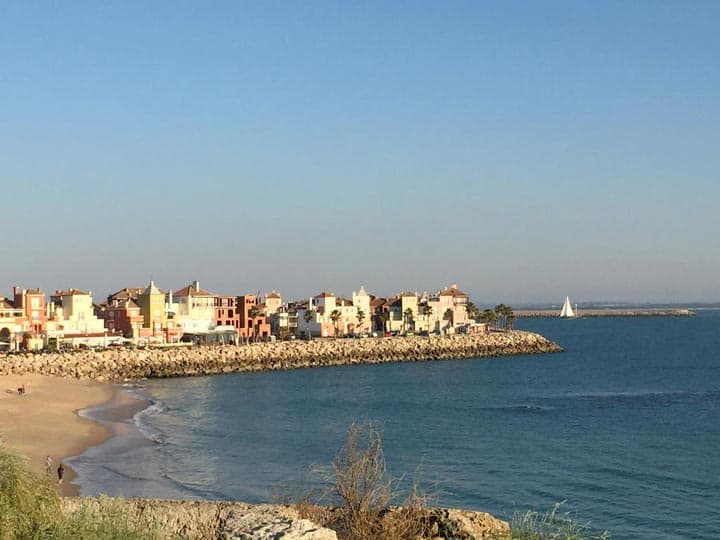
Alternatively, you can choose one of the many hotels or apartments by the beach, either around Vistahermosa/Puerto Sherry or on the other side of the river at Playa de Valdelagrana. I recommend using the Booking.com map to identify the area best suited to your needs and interests, based on what you have read in this article. Below, you will find the available accommodation divided by area or by distance from the main places of interest.
