There is a town just a few kilometres from Seville that welcomes tourists from all over the world every year: Carmona. The town lies just thirty kilometres from the centre of Seville and is easy to reach both by car and by bus, as you will read in this article. It is also a very popular destination for organised day trips from Seville itself.
It is also one of the main stops that can be included in an itinerary from Seville to Córdoba. Its historical importance over the centuries has made it one of the oldest towns in Europe: people have lived here for more than 5,000 years. As you can imagine, Carmona’s historical heritage is therefore invaluable, so much so that the town is known as “El Lucero de Europa”, the “Morning Star of Europe”.
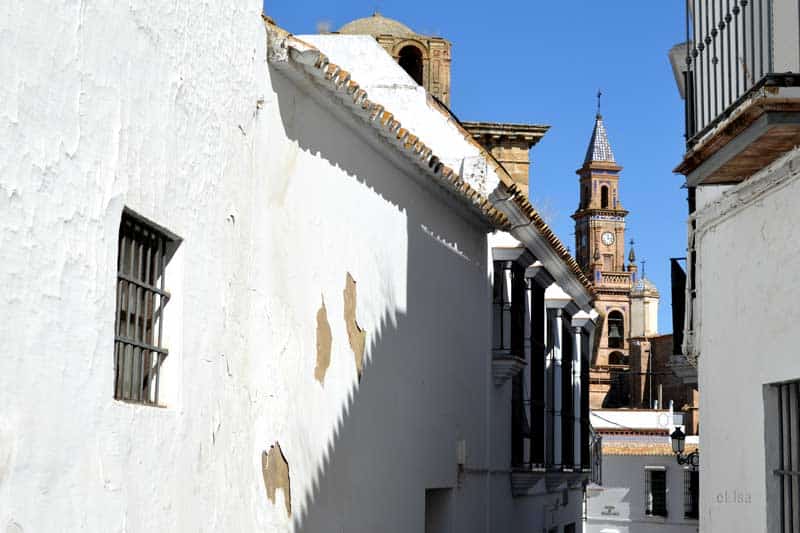
And while the past echoes through its squares, palaces and churches, the present is no less appealing: local festivals, popular traditions and excellent cuisine make Carmona a town worth experiencing all year round.
Contents
- Things to do in Carmona
- Alcázar de la Puerta de Sevilla
- Iglesia de San Pedro
- Iglesia de San Bartolomé
- Plaza del Mercado de Abastos
- Ayuntamiento
- Iglesia del Salvador
- Iglesia Prioral de Santa María de la Asunción
- Museo de la Ciudad e Palacio Marqués de las Torres
- Alcazár del Rey Don Pedro
- Iglesia de Santiago
- Puerta Cordoba
- Necrópolis Romana e Anfiteatro Romano
- How to get to Carmona from Seville
- Where to stay
Things to do in Carmona
Here is an itinerary covering the most important monuments in this ancient town. As you will notice, there are many churches to visit in Carmona, but not all of them will be open: with good planning and a little luck, you may be able to visit them during services.
Alcázar de la Puerta de Sevilla
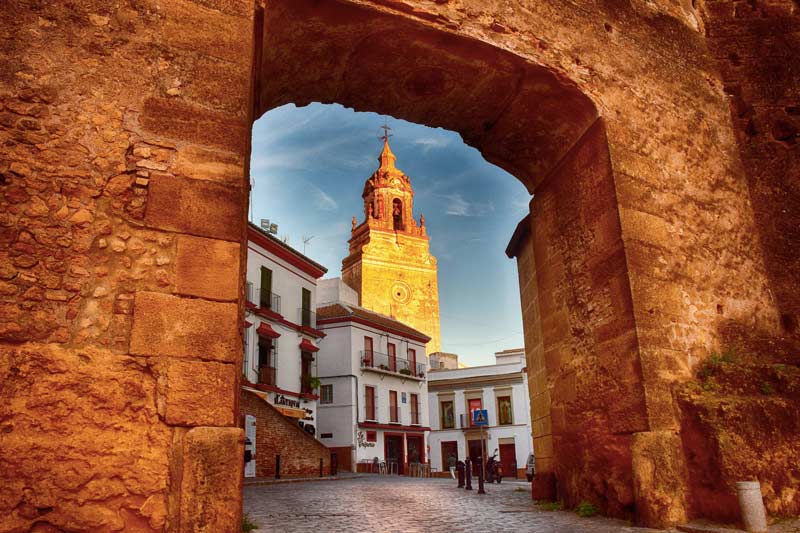
The Alcázar rises above the Puerta de Sevilla, forming an almost impregnable fortress of undeniable charm. With its towers and crenellated walls, this Arab stronghold is one of Carmona’s best-known monuments. Of particular interest are the Torre del Homenaje, the Torre del Oro and the Patio de los Aljibes. The Puerta de Sevilla is one of the most important Roman gateways in Spain and once formed an integral part of the walls surrounding the town.
The admission ticket for the Alcázar de la Puerta de Sevilla costs €2 for adults and €1 for children, students and pensioners. Admission is free on Mondays.
The opening hours are as follows:
- From September to May:
- Monday to Saturday from 10 am to 6 pm
- Sundays and public holidays from 10 am to 3 pm
- From June to August:
- Monday to Friday from 9 am to 3 pm
- Saturdays, Sundays and public holidays from 10 am to 3 pm
- Closed on: 1 January, 25 December and the Friday of the Feria de Abril
Iglesia de San Pedro
The church on Calle San Pedro, east of Puerta de Sevilla, is a large complex characterised by a Baroque dome and a bell tower strongly reminiscent of the Giralda in Seville. The Iglesia de San Pedro was built in the 15th century and underwent numerous changes during the Baroque period. The tower was completed in 1783 and dominates the town’s skyline.
Iglesia de San Bartolomé
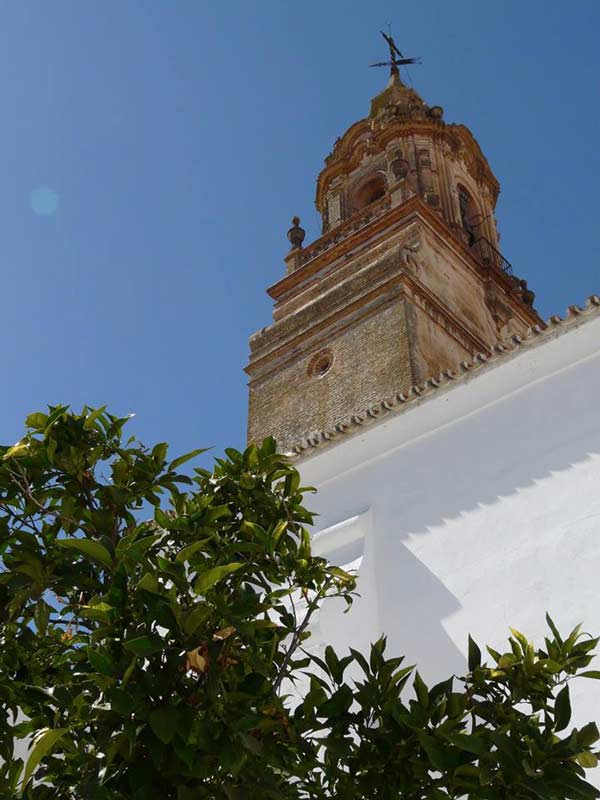
Not far from the Alcázar stands the Iglesia de San Bartolomé, at Calle Prim, 29. The church dates back to the 15th century, although today it is mainly characterised by its Baroque style, with an 18th-century altar and a fine collection of paintings and frescoes.
Plaza del Mercado de Abastos
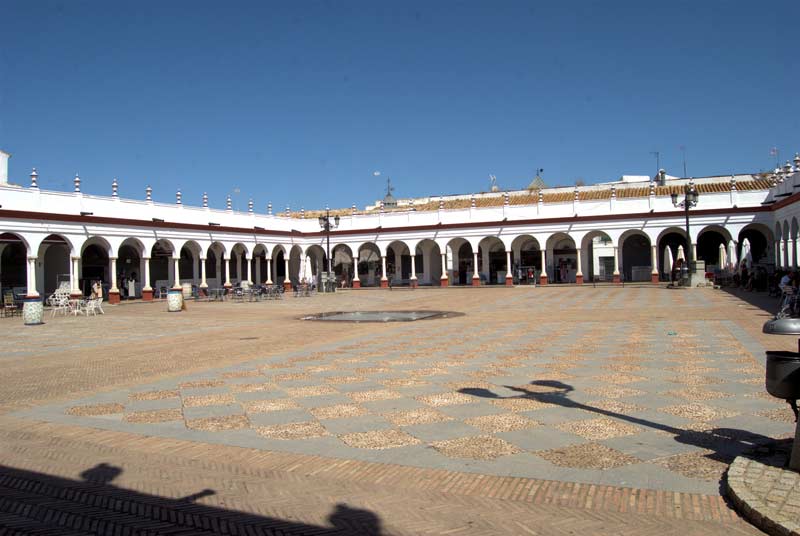
Continuing on, you will reach one of the town’s most famous squares. Plaza del Mercado de Abastos is a splendid rectangular square entirely surrounded by an arcade with arches and galleries. It was designed by the architect Ramón del Toro in the 19th century, following the models used for the main Castilian squares. Originally, this site was occupied by a Dominican monastery dedicated to Saint Catherine.
Ayuntamiento
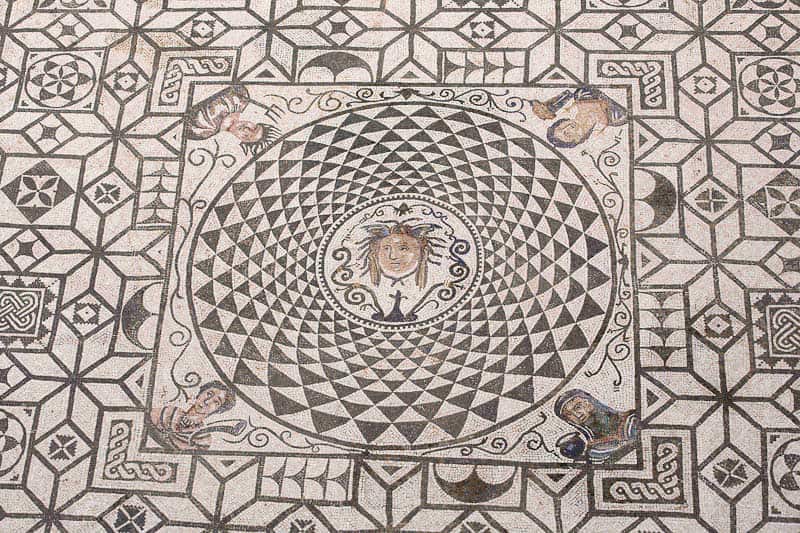
Carmona Town Hall is located at Calle El Salvador, 2. This splendid building was originally a Jesuit convent, completed in 1621. It has housed the Ayuntamiento de Carmona since 1842 and has undergone numerous restoration projects over the years. The building has two storeys, and at its centre is a beautiful courtyard containing a magnificent Roman mosaic known as ‘The Four Seasons’, dating back to the 2nd century. The building also houses numerous ancient historical artefacts, so it is well worth visiting if possible.
- Admission is free.
- The Town Hall is open from 8 am to 3 pm, Monday to Friday.
Iglesia del Salvador
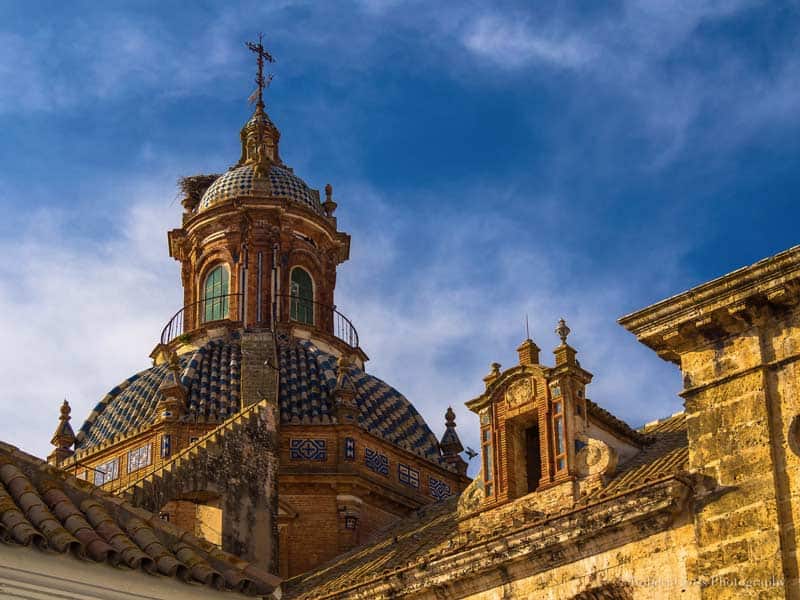
The original Mudéjar-style building was severely damaged during the Lisbon earthquake. The structure you can admire today was built in the 18th century. Of particular interest are the tower on the north-eastern side and the splendid dome, whose interior is finely decorated with frescoes depicting the four Evangelists. The high altar also dates from the 18th century. The Iglesia del Salvador is located in Plaza de Cristo Rey.
Iglesia Prioral de Santa María de la Asunción
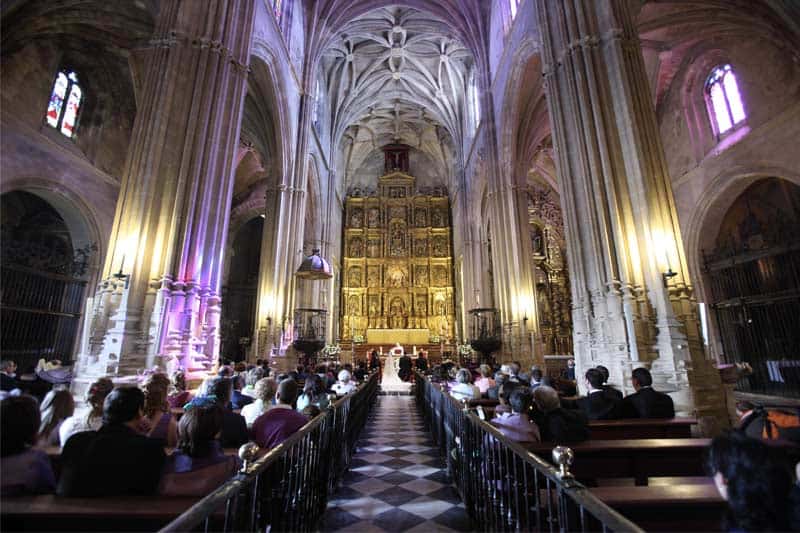
The church, located in Plaza Marqués de las Torres, was built over the town’s former mosque. Even today, you can still see the ablution area in the courtyard and, on one of the columns, a Visigothic liturgical calendar. The church’s layout recalls that of Seville Cathedral, with three central naves of equal height and two side aisles.
The high altar in the central nave is attributed to the artists Juan Bautista Vázquez El Viejo and Nufro de Ortega. Particularly important are the 14th-century image of the Virgen de Gracia, the town’s patron saint, the 14th- and 16th-century jewels and the Sword of Saint Ignatius of Loyola.
I recommend taking a moment to admire the beautiful reflections created by the light filtering through the stained-glass windows into the darkness of the church. Weddings are often celebrated in Carmona’s Iglesia de Santa María: we happened to witness one ourselves!
Admission to the church and museum is subject to a fee, and they can be visited:
- every morning from Tuesday to Saturday, from 10 am to 1.30 pm
- on Tuesday and Wednesday afternoons, from 5 pm to 7 pm
- on Thursday and Friday afternoons, from 5 pm to 6.30 pm
- for worship only on Saturdays from 6 pm to 7.30 pm, and on Sundays from 10 am to 12 noon and from 6 pm to 7.30 pm.
Museo de la Ciudad e Palacio Marqués de las Torres
The town’s most important museum is housed in a fine 16th-century palace that underwent significant alterations in the 18th century. The building is known as the Palacio del Marqués de las Torres and is located at Calle San Ildefonso, 1. Inside the museum, you can learn about the history of the town from its origins to the present day, through artefacts and archaeological remains of great historical and artistic importance, particularly those dating from the Roman period.
Admission to the Museo de la Ciudad costs €2.50 for adults and €1.20 for students. Admission is free every Tuesday and on certain special occasions.
The opening hours are:
- from 1 September to 15 June:
- on Mondays from 11 am to 2 pm
- from Tuesday to Sunday from 11 am to 7 pm
- from 16 June to 31 August:
- every day from 10 am to 2 pm
Alcazár del Rey Don Pedro
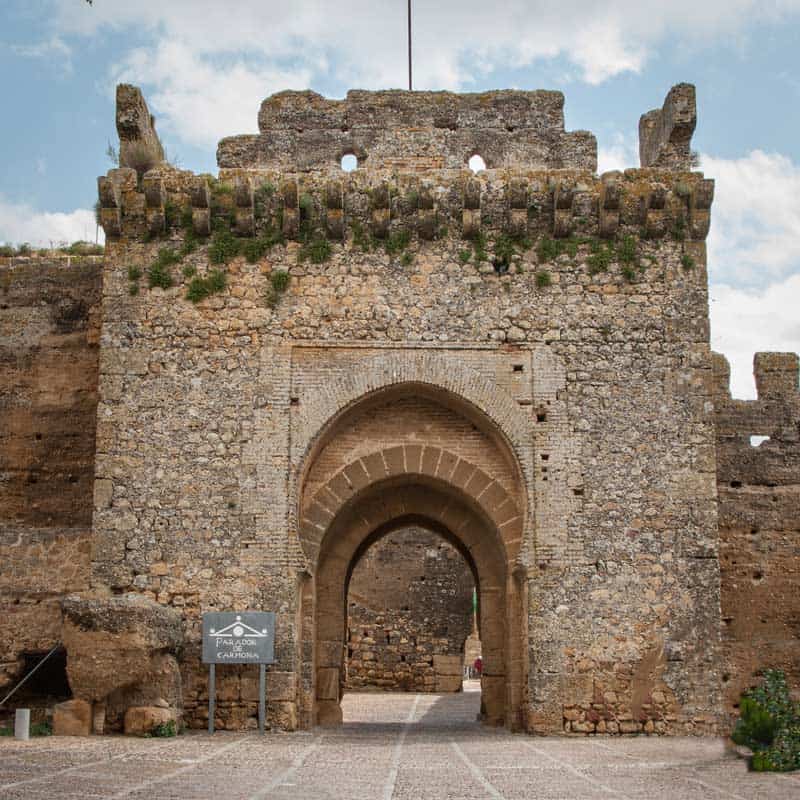
Located on the edge of the town, in the Barrio de San Felipe, this imposing fortress stands at the highest point in Carmona. It was probably built during the Arab period, around 1100, but it was in the 14th century, under King Pedro I, that the stronghold was enhanced with towers and an outer gateway, as well as decorated inside with columns and ornamental details.
Unfortunately, partly because of the many earthquakes, very little remains today of what was once a sumptuous royal palace. A luxury hotel now stands among the palace ruins, the Parador de Carmona.
Iglesia de Santiago
This church, located in Plaza de Santiago, dates back to the 14th century, during the reign of Pedro I. Various alterations were made to the interior in the 15th century, but its most striking feature today is the splendid 18th-century bell tower.
Puerta Cordoba
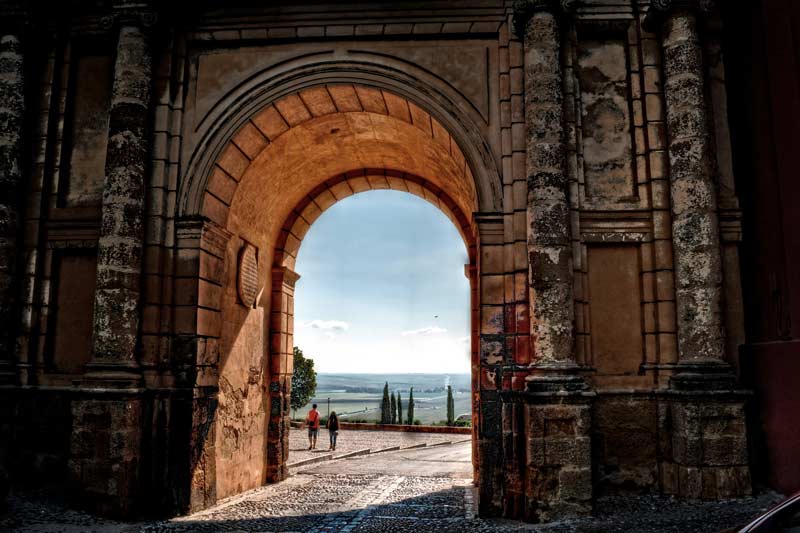
This gateway of Roman origin was built between the 1st century BC and the 1st century AD. It stands on what was once the Via Augusta, which connected the town with Córdoba. It originally had three entrances, allowing both pedestrians and carts to pass through.
The two octagonal towers were built using local stone and decorated in the Roman style. Many changes have been made since then: the two side entrances were sealed, and one of the towers was rebuilt after the earthquake of 1504. Even so, the gateway remains a splendid example of Roman architecture in a town that is already an artistic gem in its own right.
Necrópolis Romana e Anfiteatro Romano
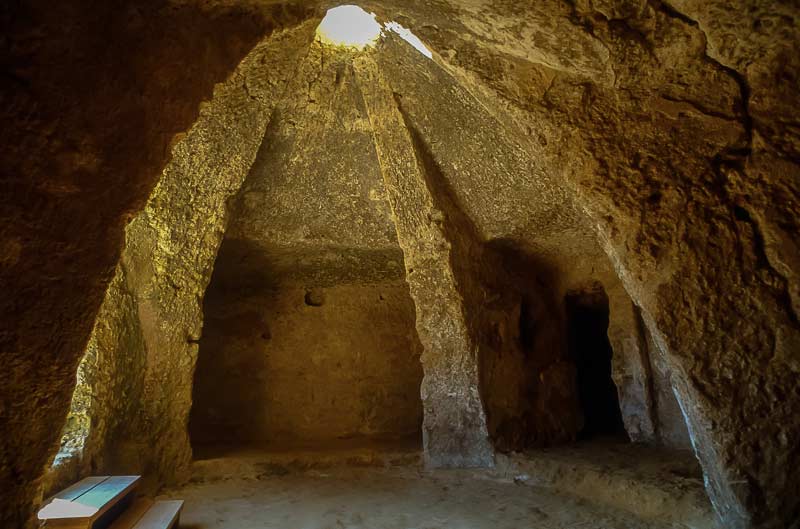
At Avenida Jorge Bonsor, 9, you will find the remains of an important Roman necropolis. An impressive number of tombs and mausoleums characterise this archaeological site, which dates back to the 1st century BC and was discovered in the 19th century by the British archaeologist George Bonsor. The site also includes a museum and visitor centre, which help visitors better understand the role of Roman necropolises.
A short distance away stands the Roman amphitheatre, discovered in 1885. It also dates back to the Roman period, probably to the 1st century BC. The main entrance ramp was located on the eastern side and was originally decorated with stucco work, as well as niches containing statues of emperors and members of Carmona’s nobility and aristocracy.
Admission to the Roman Necropolis is free. The opening hours are as follows.
- From 1 April to 15 June:
- Monday: closed
- Tuesday to Saturday: from 9 am to 9 pm
- Sundays, public holidays and Mondays before public holidays: from 9 am to 3 pm
- From 16 June to 15 September:
- Monday: closed
- Tuesday to Sunday, public holidays and Mondays before public holidays: from 9 am to 3 pm
- From 16 September to 31 March:
- Monday: closed
- Tuesday to Saturday: from 9 am to 6 pm
- Sundays, public holidays and Mondays before public holidays: from 9 am to 3 pm
- Closed on: 1 and 6 January, 1 May, and 9, 24, 25 and 31 December
How to get to Carmona from Seville
The Seville–Carmona journey covers 30 km along the A-4 road towards Córdoba. If you are exploring Andalusia by car, take the A-4 and you will reach Carmona in around 30 minutes. It is a classic stop on many Andalusia itineraries: for example, we recommend including it in our route from Seville to Granada.
To reach Carmona from Seville by public transport, you can take an Alsa bus from Plaza de Armas in Seville towards Gandía or Córdoba and get off in Carmona. The journey takes around 30 minutes and costs approximately €3.
Organised tours
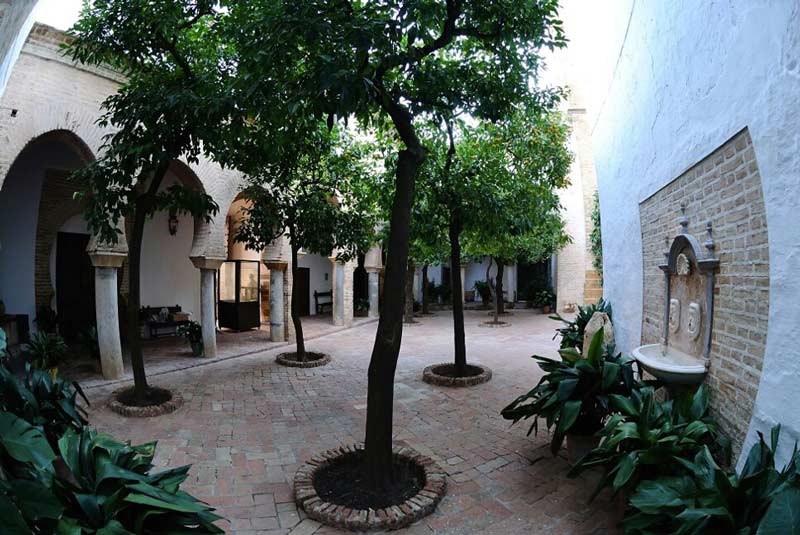
Given its proximity to Seville and the short journey involved, organised tours to Carmona are very common and offer an excellent way to spend a slightly different day. Many tour operators offer combined Carmona–Córdoba packages from Seville, but we recommend taking a look at these options so that you can plan ahead.
- Full-day tour to Carmona and Córdoba from Seville: recommended for those staying in Seville who have limited time to visit these two Andalusian gems;
- Tour from Seville to Carmona: visit the town’s main attractions with the assistance of a guide
Where to stay
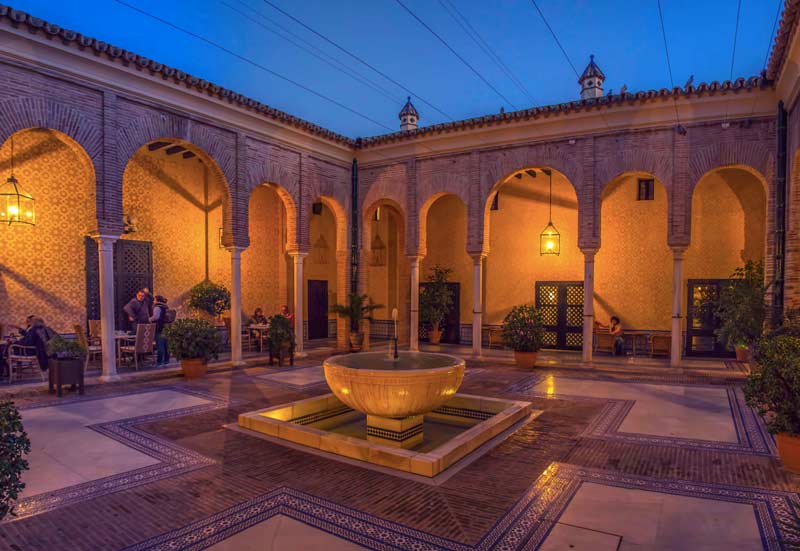
The most charming and regal option is, unsurprisingly, the Parador de Carmona, but there are also more affordable options in Carmona’s historic centre. The most common choice, of course, is to return to your hotel in Seville. Here is a link to our advice on where to stay in Seville. Below, you will find a list of available accommodation in Carmona.
