Malaga is a seaside city and most tourists visit it almost exclusively in summer for the beaches that surround it. If you’ve already read our article on what to see in Malaga, you’ll have realised that there’s more than just the sea and that the city can therefore be visited in other seasons too. Not all seasons are ideal for beach life, but even in winter it’s hard to endure the extreme cold typical of other places.
Contents
The climate in Malaga
Very hot summers and mild winters: in Malaga it’s almost impossible to be shivering with cold and it’s one of the best Spanish destinations for sun-lovers. It’s no coincidence that the stretch of coast where it lies is called the Costa del Sol. In this geographical area, in the summer months it almost never rains and average temperatures are very high, although the proximity to the sea makes them more bearable than in the towns of the Andalusian interior. The coldest months, in turn, are tempered by the influence of the Mediterranean and it’s almost impossible for the thermometer to drop below zero.
The wind is a defining characteristic that sets it apart from other major cities in Andalusia. Throughout the summer the sea breezes bring relief to beachgoers on sultry afternoons and make the evenings ideal for the Malaga nightlife, which is for good reason one of the liveliest in the region. In winter, the area’s windiness often brings weather systems with it, but all year round it generally remains a fairly dry city.
Spring in Malaga

Spring is the best season to visit the city, especially if you include it in an itinerary with stops in other Spanish cities. The months of March and April are quite similar as far as temperatures go, with lows around 10° and highs around 20°: ideal for strolling around the city dressed comfortably and without fainting in the blazing sun. Both months generally have at most seven days of rain, so you may need to take shelter from the occasional shower, but these are often light and manageable and do not prevent visits to the city’s attractions. The month of May is excellent. The chances of rain decrease and the thermometer rises, ushering in summer weather. Night‑time lows are closer to 15° than to 10°, and daytime highs begin to trend towards 25°.
As with the Italian coasts, it is very difficult to go for a swim in the sea during the spring months, but the end of May can already be suitable for a dip for the more adventurous, since outside temperatures can already exceed 30°C. Unlike on our shores, or on Spain’s more northern coast, the waters here tend to be colder throughout the year due to the proximity of the Strait of Gibraltar, where Atlantic waters flow in and lower the temperature. While cool water is a boon in summer, in spring the 15–17°C sea temperatures are still too low to enjoy a pleasant day in the water, even when it’s 30°C outside.
Summer in Malaga
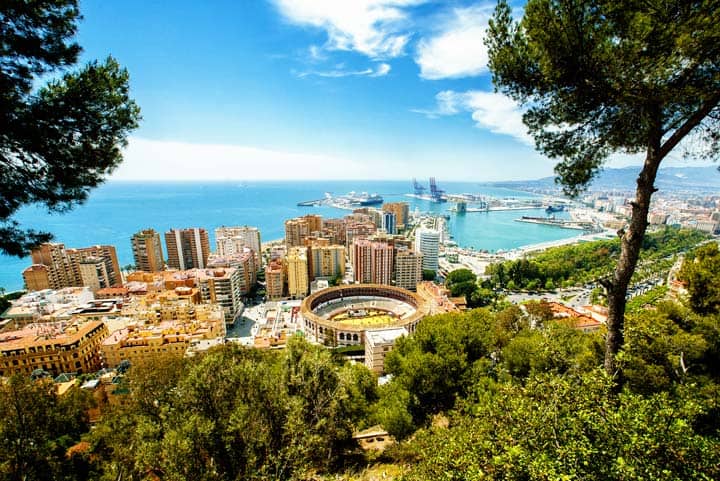
Sunny days in July and August average at least 30 out of 31 and the risk of rain in June and September is only slightly higher. This characteristic brings with it a great advantage but also a few drawbacks. On the positive side, you can say with confidence that there’s no need to rely on weather forecasts when choosing when to travel: there’s a 99% chance it will be sunny every day and it will always be warm enough to make the most of the splendid beaches of the Costa del Sol. However, that relentless sun can spoil a holiday if your aim is to visit the city and the surrounding villages and you don’t set off with the proper preparation: first and foremost a good hat and sun cream, even if you don’t plan to spend days by the sea.
In June summer has already begun and average daytime temperatures are around 27°, with peaks that can frequently exceed 30°. Evenings are pleasant, with night-time lows generally between 15° and 20°. June is an excellent month for sun‑lovers who want to visit the city, perhaps combining it with a few hours on the beach. The sea, however, barely reaches 20°, so it is not yet very warm. September is even better, especially for the sea: the water temperature, having warmed over the summer, is 2–3° higher and the thermometer outside registers only one or two degrees more than in June.
July and August are at once the best and worst months to go to Malaga. For those seeking a perfect tan and lively nightlife, there is no better choice. Scorching sun and sea water around 23°, perfect for a rejuvenating dip before stretching out on the sand in the searing heat, which tends more towards 40° than 30°. After sunset, when the sea breeze cools the coast and the city streets, locals and tourists bring the historic centre to life in a riot of bars and nightspots, while bonfires illuminate the beaches, turning them into venues for parties and dancing. It is no coincidence that it is precisely in the summer months that Malaga celebrates its main festivities: the famous Feria de Malaga in August, the festival of the Virgen del Carmen in July and that of San Juan in June.
If, instead, you are looking exclusively for monuments and historic buildings, the summer months are not the most suitable for you: the excessive heat might prevent you from appreciating this city. In this case, therefore, the advice is to set off in the shoulder seasons or, if you have no other choice, to arrive well-equipped to cope with scorching days.
Autumn in Malaga

Like spring, autumn is a good season for visiting the city and, generally, for a touring trip. Unlike spring, however, the autumn months are rainier and so, for those who can choose, I would recommend it only as a second option. On average there are 6–7 rainy days in October and November, so comparable to those in March and April. The difference lies in the amount of rainfall, which can even double. It is therefore more likely, especially in November, to encounter more intense storms.
From a climatic point of view, we can say that autumn begins in October, sometimes even in the middle of the month, depending on the year. Average temperatures in October are very similar to those in May: it even happens that they are higher. Night-time lows are closer to 15° than to 10° and daytime highs sit comfortably around 25°. Towards the end of the month, the mercury falls gradually and in November we have proper autumn.
In November it’s pleasant to explore the city and its surroundings on fair days, with an average temperature of around twenty degrees. However, an Atlantic disturbance can sometimes arrive to spoil the day, bringing heavy cloud and driving rain. December can still be described as autumn in terms of temperatures, which are on average only 3-4° lower than the previous month. The likelihood of rain gradually increases.
An umbrella or a raincoat are sufficient to cope with the possibility of a grey day in the autumn months, which, however, remain good for strolling among the main attractions of the seaside town.
Winter in Malaga

Leave your gloves and woolly hat at home: the last time the thermometer in Malaga dropped below zero (to be precise, to -3°) was January 1985. In the winter months the sea’s tempering influence is a godsend for the locals: the shape of the land helps give the city milder temperatures than the climate of Granada, even though the two cities are less than 90 km apart as the crow flies.
Assuming the absence of snow and frost, January and February can safely be considered for visiting the city without too much discomfort. The only drawback is the rain, which is quite frequent, especially in January. January is also the coldest month of the year, but as already mentioned we are not talking about extreme temperatures. Average minimums for the month hover around 7° and it is really unlikely they will come close to zero.
During the day it is also easy to exceed 15°, if not 17°, on sunny days, so getting around the city isn’t so bad if you’re dressed appropriately. February differs little from the previous month: temperatures rise slightly (on average 1 or 2 degrees more) and rainfall gradually decreases.
Best time to visit Malaga
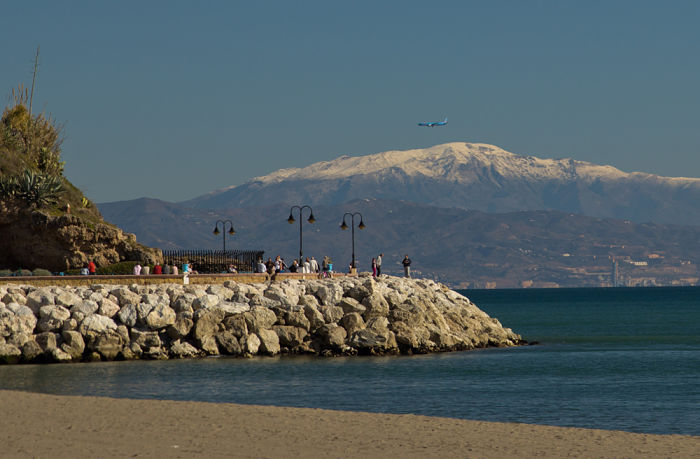
Malaga can be visited all year round, but you should bear in mind what you want to get out of the trip. If you’re after beach life, there’s no doubt that your only option is the warmest months, and you’ll be setting off already intent on spending your stay in the sun. To get the best feel for the local culture, you might time your visit to coincide with one of the big summer festivals that enliven Malaga and the Costa del Sol: in that case, make sure you pack adequate sun protection.
If you’re planning an tour of Andalusia to visit the cities, however, my advice is to opt for the shoulder seasons, particularly spring, when temperatures are warm but not sweltering. That way, both in Malaga and in the other provincial capitals you’ll be able to get around comfortably without the crowds of tourists and, above all, without the searing rays of the Andalusian sun, which can be fatal especially if you are travelling with children.
Many tourists avoid winter: don’t underestimate it, particularly if you are a fan of colder climates. A cheap flight and a car hire in Malaga can prove the winning formula for visiting one of the warmest parts of Europe at the one time of year when you might truly appreciate it. We also cover all this in the article on the climate of Andalusia, which may be useful if you haven’t yet formed an idea of the best time to visit the region.
