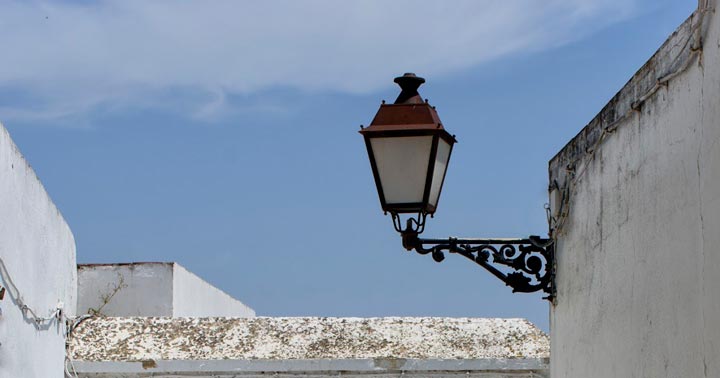
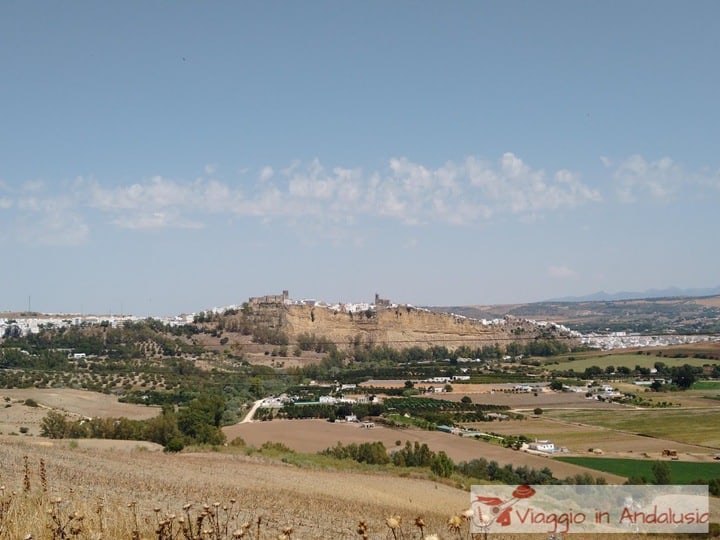
Around 60 kilometres (37,2 miles) from Cádiz and 30 (18,6 miles) from Jerez de la Frontera lies one of the most distinctive and fascinating towns in Andalusia: Arcos de la Frontera. Perched on a rocky outcrop, this medieval town is famous for its whitewashed houses interspersed with historic Mudéjar-style buildings: before you lies a picturesque collection of buildings, squares and narrow streets dramatically overlooking the surrounding countryside.
Arriving by car, it is impossible not to be struck by the sight of the town, yet walking through its narrow streets, climbing and descending its stairways and discovering its panoramic views is even more exciting. It can also make an interesting detour on an itinerary from Seville to Cádiz.
Contents
Things to do in Arcos de la Frontera
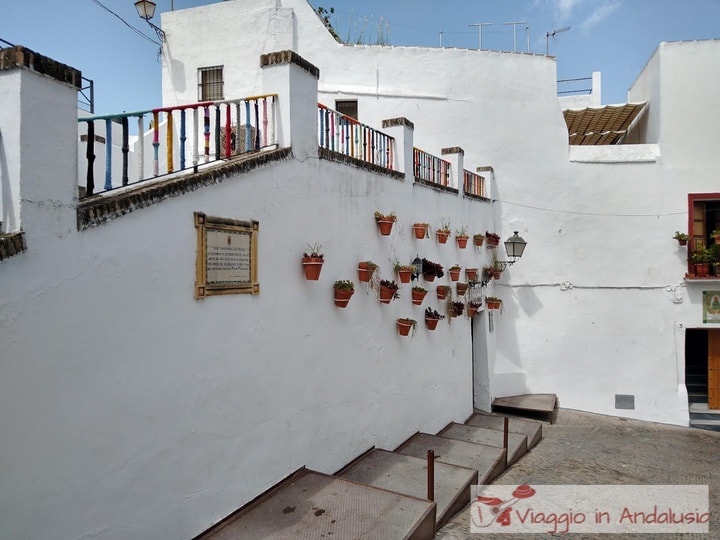
With its historic palaces, castles, sacred sites and panoramic viewpoints, there is no shortage of things to see in Arcos de la Frontera. If you have enough time, you can devote a full day to exploring it, but even half a day is enough to get a sense of the character of this little Andalusian gem.
El Castillo
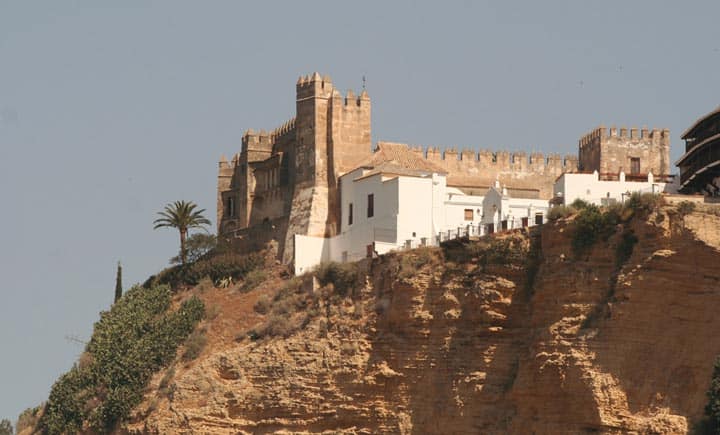
The Castle of Arcos de la Frontera shapes and enhances the town’s skyline. This large fortress, located in Plaza del Cabildo, was built by the Moors, although its present appearance reflects alterations made during the 14th and 15th centuries. It has a quadrangular layout with four imposing crenellated towers, one at each corner. Today, it is privately owned and can only be visited on exceptional occasions, but it remains one of the town’s most important monuments.
Basílica Menor de Santa Maria de la Asunción
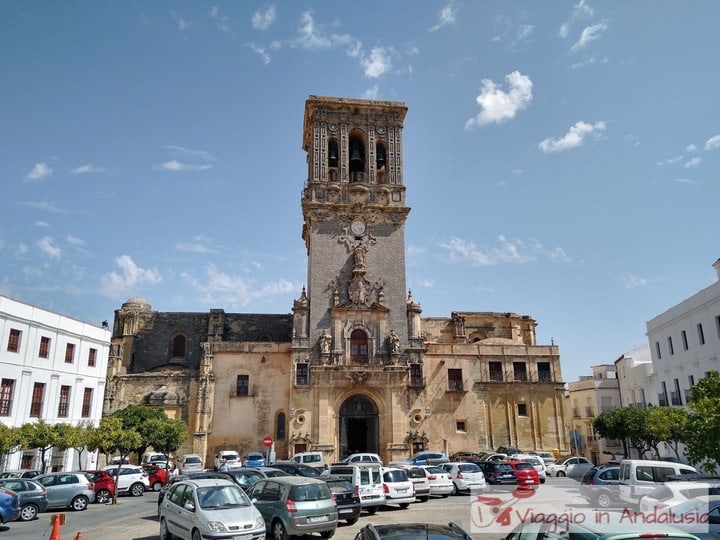
This splendid basilica is one of the most beautiful in Andalusia. A striking blend of Gothic and Baroque styles, it is the oldest and most important church in the town. It was declared a national monument in 1931.
Built over an Arab mosque, its construction continued for more than six centuries, which explains the combination of different styles that makes it even more beautiful in the eyes of visitors. Highlights include the magnificent façade, the high altar, a Renaissance masterpiece, the Gothic wall paintings, the remarkably well-preserved mummy of Saint Felix, the Chapel of Las Nieves, the organ and the choir stalls, among the finest in Andalusia.
The Basilica of Santa María de la Asunción, overlooking Plaza del Cabildo, can be visited on Mondays from 11 am to 1.30 pm, from Tuesday to Saturday from 11 am to 1.30 pm and from 4.30 pm to 6.30 pm, and on Sundays from 9.30 am to 2 pm, except during religious services.
Iglesia de San Pedro
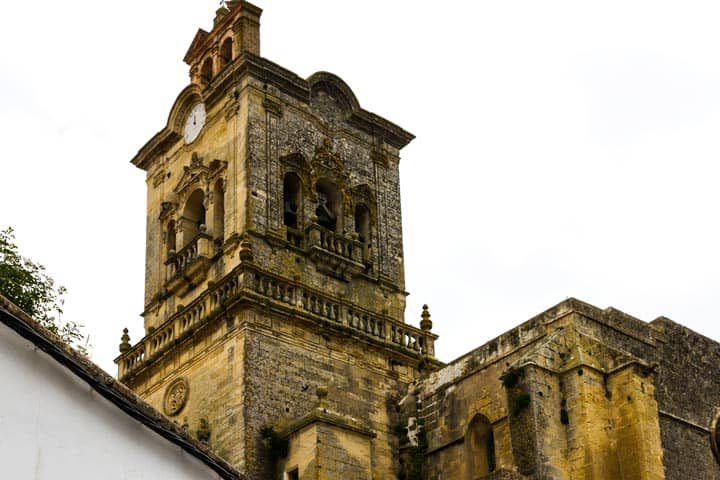
This 17th-century church was built on the remains of an Arab fortress, probably of Almohad origin. Part of a polygonal tower belonging to the original structure is still visible today. Rectangular in plan, the church has a single nave and six chapels, which were added in the 18th century in Baroque and Renaissance styles. The façade also dates from the 18th century and is Baroque in style, with clear influences from the Seville school of art.
The church is located at Calle San Pedro, 4, and the opening hours are as follows:
- Monday, Wednesday and Friday: 10.30 am–1.30 pm and 5 pm–7 pm
- Tuesday: closed
- Thursday: 10.30 am–1.30 pm
- Saturday and Sunday: 11 am–6 pm
The admission fee for the church is €2 per person. The tower is open only on Mondays, Fridays, Saturdays and Sundays; admission to the tower costs €2 per person.
Convento Iglesia de San Augustín
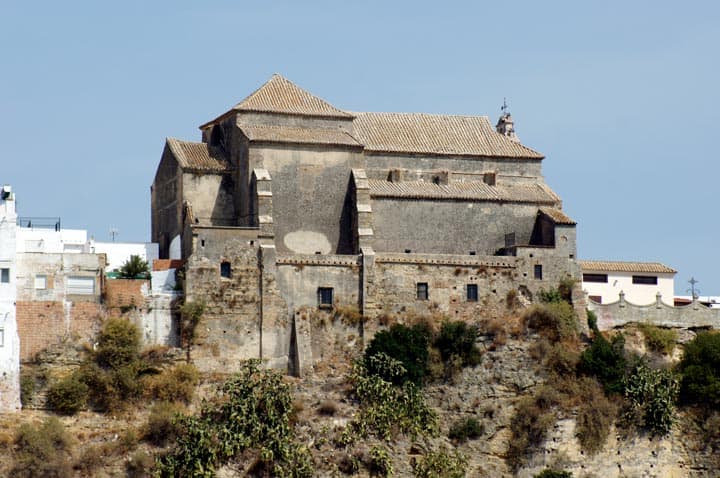
Founded in 1539 as the Convento de San Juan de Letrán, it was home to around twenty members of the religious order, who taught grammar, art and philosophy, and served as an important cultural centre. In the 19th century, however, it began to decline until, with only six Augustinian friars remaining, the convent was closed and only the church continued to function.
Inside the church, take a moment to admire the large statue of Christ, created by Jacome Velardi in 1600. Every Good Friday, the statue is carried in procession through the town’s streets and venerated by many worshippers.
The church is located at Calle San Juan, 11, and is open at the following times:
- Monday to Thursday: 10.30 am–1 pm and 4 pm–6.30 pm
- Friday: 10.30 am–1 pm and 4 pm–8.30 pm
- Saturday: 10.30 am–1 pm
- Sunday: closed
Palacio del Mayorazgo
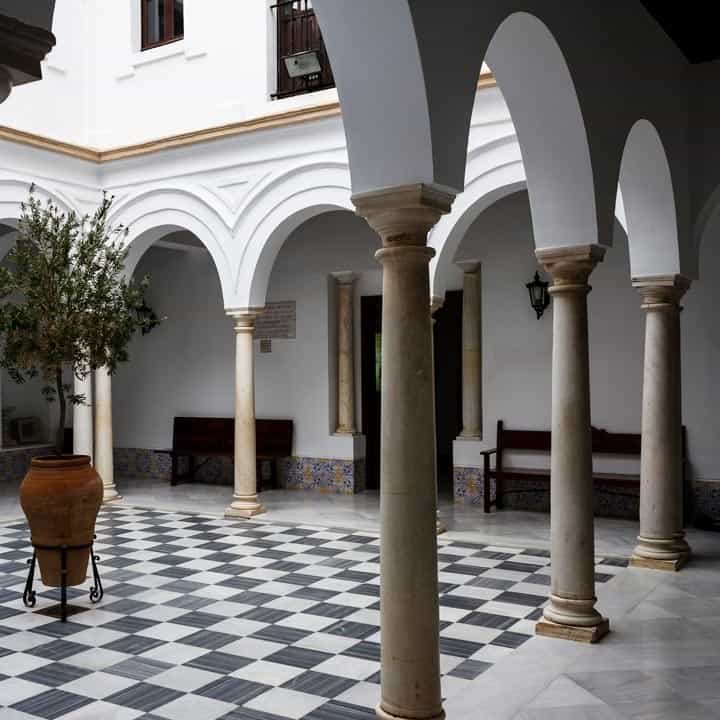
The palace is located on Calle Núñez de Prado, directly opposite the Iglesia de San Pedro. Its sumptuous façade conceals an 18th-century palace with Mudéjar-style elements and two magnificent courtyards with columns and fountains. The palace’s spacious rooms now host art galleries, exhibitions and works by local artists. Admission is free and it is well worth visiting, although the palace is often closed for private events. The palace gardens are also worth seeing.
Puerta de Matrera
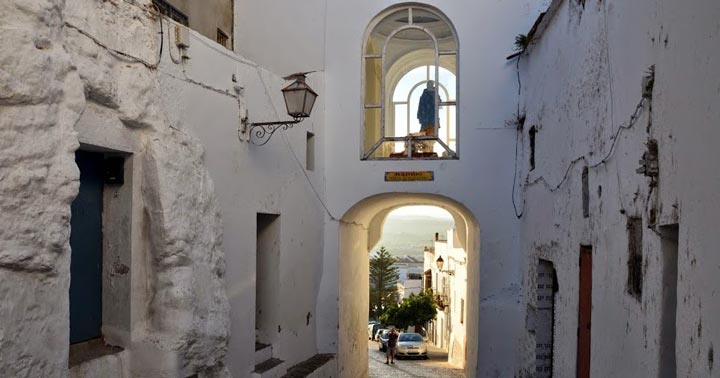
This is the only surviving gateway from Arcos’s ancient walls: today, it is watched over by an image of the Virgen del Pilar, housed in a glass-fronted niche between the buildings. The gateway connects the Casco Antiguo with the lower part of the town and is located on Calle Matrera Abajo.
The viewpoints of Arcos for spectacular views
One of the main attractions of this town perched on a rocky outcrop is undoubtedly its miradores, terraces and viewpoints offering spectacular views over parts of the town or the surrounding countryside.
I recommend visiting:
- the viewpoint in Plaza del Cabildo , known as the Balcón de la Peña Nueva: from here, you can see the basilica and the square, the River Guadalete flowing through the valley, the Sierra de Dos Hermanas and the Sierra de Sal;
- the Mirador de Abades, from which you can admire the River Guadalete, the Barrio Bajo and the Puente de Hierro, also known as Puente de San Miguel;
- the Mirador de San Agustín, one of the highest points in the town, offering a beautiful view over the River Guadalete, the Sierras de Barranco and Bornos, part of the ancient walls with the Torre de San Antón, La Angostura, the Arcos reservoir and the town of Villamartín;
- the Mirador de la Peña Vieja is located lower down than the Mirador de San Agustín, but offers views of the typical buildings of Arcos de la Frontera, with its maze of steep streets, the castle and the churches of San Pedro, San Agustín and Santa María.
Where to stay
The obvious recommendation is to stay in one of the hotels tucked away among the streets and whitewashed squares of the Casco Antiguo: there is no shortage of hostales, guest houses, apartments and holiday homes to suit every budget.
All hotels in Arcos de la Frontera
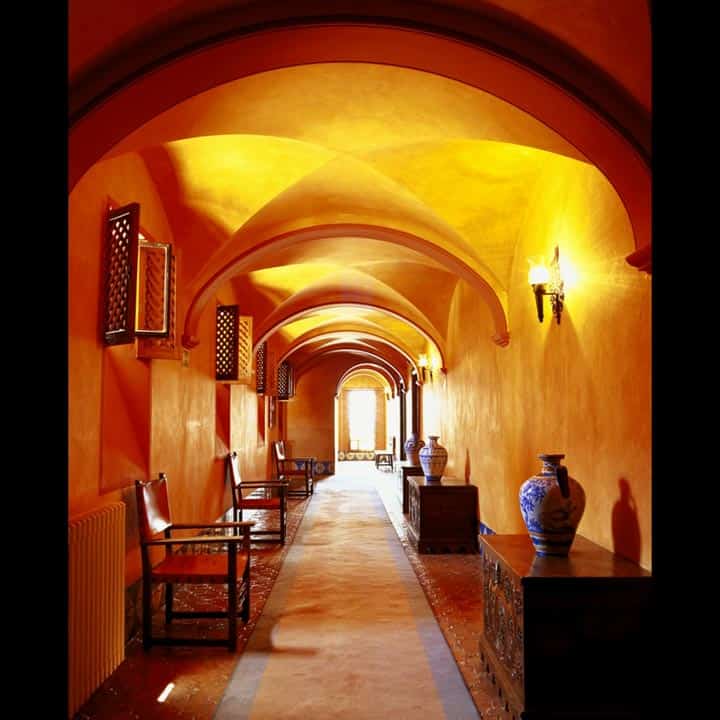
The real highlight, however, is the Parador de Arcos de la Frontera: located just a short walk from the castle in Plaza del Cabildo, the parador occupies a historic palace and offers charming Andalusian-style accommodation. As mentioned, the panoramic view from the parador is truly enviable.
All other available accommodation in Arcos de la Frontera
How to get to Arcos de la Frontera
Arcos de la Frontera is now a popular tourist destination and one of the most significant pueblos blancos in Andalusia. Reaching this beautiful town perched on the mountainside is not difficult:
From Seville
From Seville, the distance is less than 90 km, and the journey by car takes around 1 hour and 15 minutes via the AP-4. Alternatively, you can take the train from Seville San Bernardo to Jerez de la Frontera and then one of the buses connecting Jerez with Arcos de la Frontera, such as routes 712, 723, M-951, M-902, 401, 422 or 423. The train journey takes around 1 hour, while the bus journey takes approximately 30 minutes, so it is important to plan carefully.
From Cádiz
The 65 kilometres (40,3 miles) separating Cádiz from Arcos de la Frontera can be covered by car in around 45 minutes via the AP-4 and A-382. It is also possible to reach Arcos de la Frontera from Cádiz by public transport, either by taking the train to Jerez de la Frontera (A, IR or C-1 services) and then a bus to Arcos, or by taking a direct bus, which reaches the town in around 1 hour and 45 minutes (routes M-902, M-903, M-904, 722, 423, 401 or 422).
From Ronda
From Ronda to Arcos de la Frontera, the journey by car takes around 1 hour and 30 minutes via the A-374 and A-384. There are also two buses a day, with a journey time of approximately 2 hours. The routes connecting the two towns are 401 and 402.