Today I’ll give you a few pointers on how to visit one of Malaga‘s most important monuments, the Alcazaba, a majestic Muslim-era fortress situated near the ancient Roman Theatre, on the slopes of Mount Gibralfaro, atop which the defensive castle (Castillo de Gibralfaro). The Alcazaba is one of the places called upon to tell the ancient history of Andalusia, a tale of conquests and wars fought beneath the walls of fortified castles that conceal within them lush gardens and fountains, and labyrinthine walkways caressed by channels that embroider graceful water features.
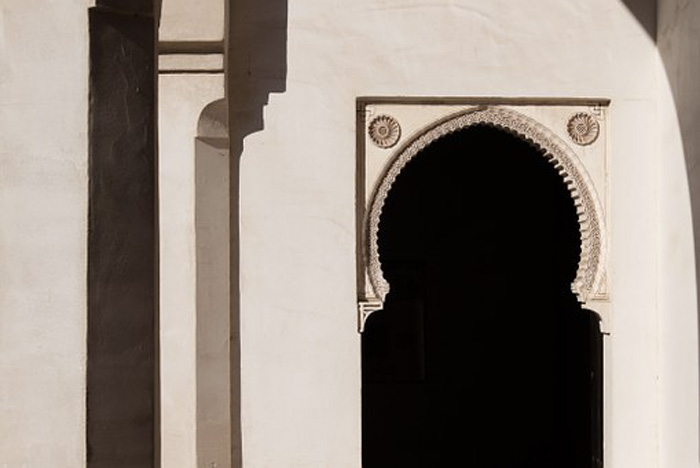
Glancing this way and that, you’ll see fairy‑tale horseshoe‑shaped arches adorning buildings and Moorish patios, finished with details and refinements of outstanding arabesque craftsmanship: you’ll feel as though you are in the heart of a small Alhambra.
The Alcazaba (which in Spanish means “citadel”) was the seat of the Muslim governors in Malaga: the rule of the Arab Emirate established this palace as its headquarters during its thirty-year reign in the 10th century AD. The citadel was once surrounded by the district of the Coracha (now vanished), which had its own system for the disposal of sewage and latrine waste, a testament to the high level of civilisation of the time. Today the Alcazaba is one of the city’s most important monuments and, although the architecture has been reworked several times over the years, the original structure has remained the same.
Contents
Some historical background on the Alcazaba…
The fortress was originally built in the 8th century by Abd al-Rahman, the first emir of Cordoba, on the ruins of an ancient fortification from the Phoenician period. Roman-era materials salvaged from nearby ancient architectural remains were also used, of which the Roman Theatre is an interesting example. The fortress was later rebuilt in a period running from 1057 to 1063 at the behest of the Sultan of Granada, Badis Al-Ziri, who arranged to link the Alcazaba with the Castillo de Gibralfaro by means of a walkway. The interiors of the fortress can be dated to around the 11th century.
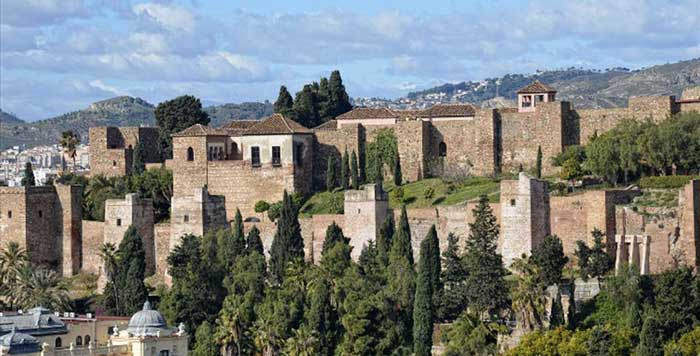
The fortress was the scene of important battles and numerous dynastic successions: after the arrival of the Almoravids in 1092, the Almohads came in 1146. In 1279 it was taken over by the Nasrids of the Sultanate of Granada. But the most important year was precisely 1487, when Malaga was captured by Ferdinand the Catholic. Thus began the period of rule by the Catholic Monarchs.
After a long period of abandonment (the walls were used for the construction of the houses of the neighbouring Coracha quarter), in the 1930s a restoration project partially rebuilt some of the interior spaces. Subsequent conservation-restoration works, however, date from 2009.
How to get to the Alcazaba
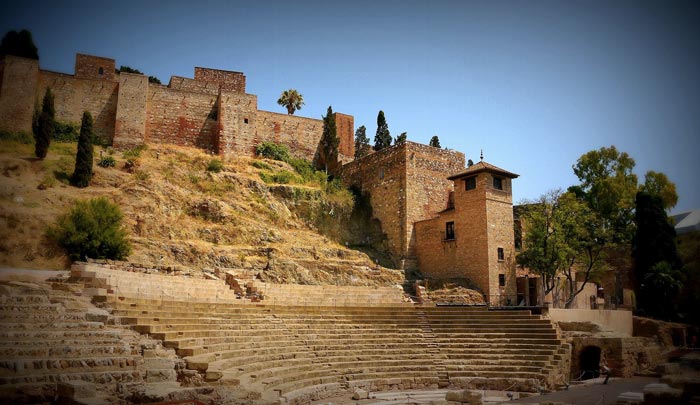
The Alcazaba is located about a 10-minute walk from Málaga city centre, not far from major attractions such as the Picasso Museum and Málaga Cathedral. Before climbing up to the Alcazaba, make for the Roman Theatre on calle Alcazabilla 2: you can admire it from the outside, pausing exactly where the stage scenery once stood.
Looking up above the semi-elliptical arena of the amphitheatre, you will finally see the majestic outer walls of the Alcazaba towering above. In the immediate vicinity of the theatre you will find a path lined with flower beds and cypresses: this is the lush antechamber to the entrance of the Alcazaba. Alternatively, you can reach the ancient citadel by a lift from Calle Guillen Sotelo.
How to visit the Alcazaba
A careful visit to the Alcazaba is an excellent way to give a distinctly cultural flavour to a trip to Malaga which, in my opinion, remains essentially a seaside city given over to the nightlife. Of course, as you can read in our article on what to see in Malaga, Picasso’s city is by no means short of artistic attractions, but a visit to this splendid example of oriental-style architecture is an absolute must for anyone who loves the Andalusia of One Thousand and One Nights palaces.
What to see inside the palace?
In summary
- The entrance gates
- The Nazari Palace
- Patio de los Surtidores, Patio de los Naranjos and Patio de la Alberca.
- The Archaeological Museum
- The view over Malaga
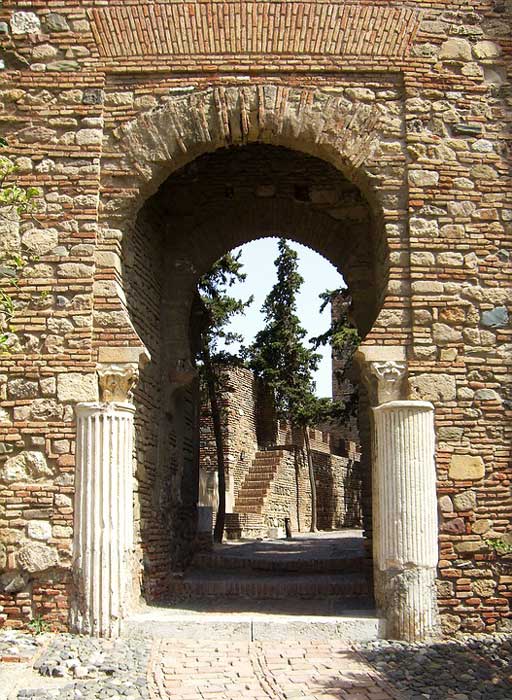
The tour of the Alcazaba begins by passing through the Puerta de la Bóveda, an ancient entrance designed to delay the arrival of enemies: from here you access the outermost part of the Alcazaba. The second gate is the Puerta de la Columnas, which shows how extensive the use of Roman-period marble was in the construction of the fortress; from here, via the Torre di Cristo, you reach the lower quarters of the Alcazaba. Since the first Christian mass after the conquest by the Catholic Monarchs was celebrated here, the tower was used for a long time as a chapel.
The lowest part of the Alcazaba now follows the contours of the hill: the Plaza de Armas (now a garden with fountains and a bastion on the southern side) is a good place to rest weary limbs after the climb (remember that you can reach the citadel by a lift departing from Calle Guillen Sotelo — don’t say I didn’t tell you). Following the cobbled paths bordered by beautiful gardens, you pass through the Puerta de los Cuartos di Granada, and thus arrive at the upper part of the Alcazaba, the actual inner citadel.
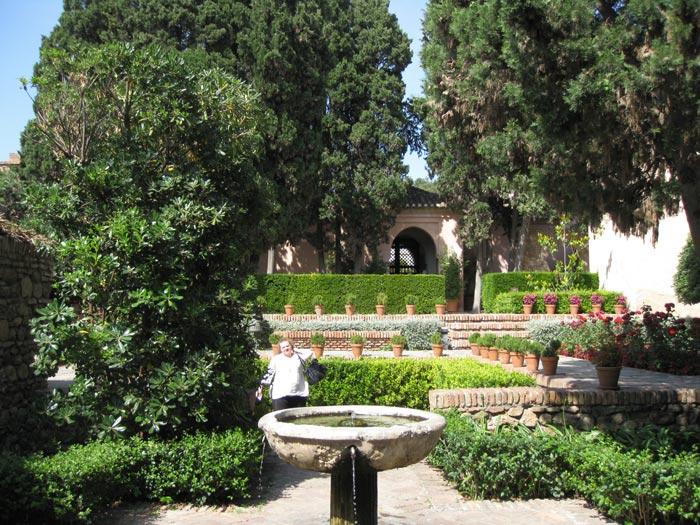
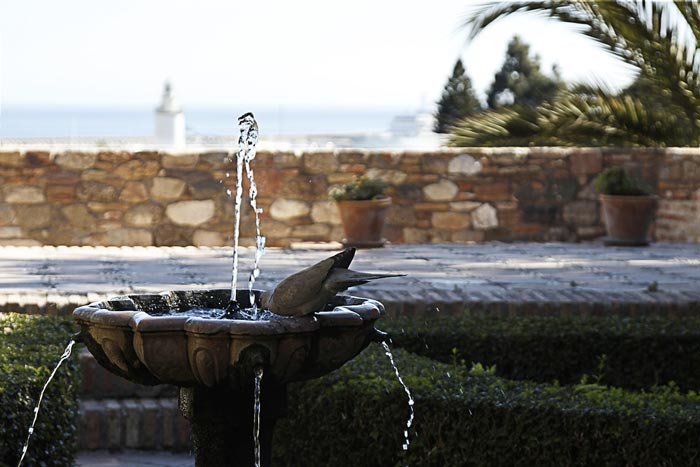
The Nazari Palace opens onto three enchanting courtyards: the first is the Patio de los Surtidores, where a row of arches leads to the Torre de la Mudéjar, which still retains a carved wooden ceiling from the 16th century. The following two courtyards are the Patio de los Naranjos and the Patio de la Alberca: the former features circular basins and channels that carry water towards the far end, the latter hosts a miniature pool with hedges and channels that closely evoke the scenes of the Alhambra (if you don’t know it, read our article on what to see at the Alhambra of Granada).
In the rooms where the servants once lived there is now an Archaeological Museum, in which artefacts from the Greek, Roman and Islamic periods are kept: among other things, there are ceramic artefacts recovered during archaeological excavations and statues from various sites in the area.
To exit you can retrace your steps in the opposite direction or take the lift from the Palazzo Nazari to the entrance on Calle Guillen Sotelo. But after visiting the fortress, I recommend you don’t miss the Castillo de Gibralfaro, dating from the 16th century and originally built to house the troops (the ticket requires a small surcharge). Please note: although there is a direct corridor to the Castillo, to reach it you must leave the Alcazaba and take the uphill path on the left, Calle Juan Temboury, which is about a 20-minute walk.
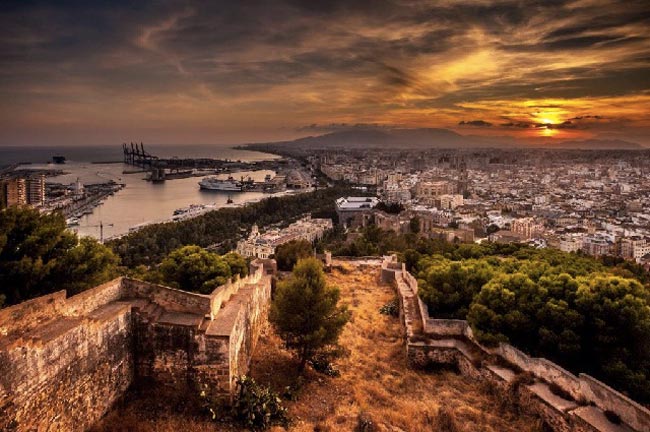
The corridor links the Castle to the Alcazaba via a wall called “coracha”, which winds up the hill in a zigzag and offers breathtaking views over the city and the sea of Malaga: at the top of the hill there are several mirador that you absolutely must not miss. The Alcazaba’s inner wall – which allows you to walk the perimeter of the fortress – offers a captivating view over Malaga.
Useful information for your visit
Ticket prices for the Alcazaba
The ticket to access the Alcazaba in Malaga costs 7 € and it is possible to purchase a combined ticket for the Castillo de Gibralfaro at a total cost of 10 €. Admission is free for children up to 6 years old.
A good time to visit the Alcazaba can be on Sundays after 2pm, when admission is free. Guided tours are also available: one example is this tour.
Opening times
- Summer opening times (from April to October): from 09:00 to 20:00 (last admission at 19:15)
- Winter opening hours (from November to March): from 09:00 to 18:00 (last admission at 17:15). During the Christmas period it is closed on Christmas Eve, Christmas Day, 31 December and New Year’s Day.
The lift on Calle Sotelo is not in operation on Mondays.
How long does a visit to Málaga’s Alcazaba take?
About an hour and a half, but if you want to visit it at a leisurely pace, take a few photos, study the architectural details and admire the views, you’ll need more than twice as long.
Where to stay near the Alcazaba
You will find my recommendations on where to stay in Malaga in the article below: the ideal neighbourhood for getting close to the Alcazaba and Malaga’s other main attractions is the Centro but the Malagueta district is also fine, where the beach and the eponymous Plaza de toros di Malaga,.
