If your idea of a beach holiday involves just a few simple actions, such as walking down from your hotel room in flip-flops, picking up your towel, opening out the deckchair and sleeping under a parasol between dips, then this article probably is not for you. Let me explain better — don’t go away! As we know, while the indescribable beauty of the sea that washes Spain’s southern coast remains unquestionable, the beaches of Andalusia are many and very varied: there are those who cannot wait to dive into the noisy, colourful seafront promenades of the beaches of Málaga, those who want to explore the unspoilt, dazzlingly white beaches of Cadiz or, again, those who love the peaceful atmosphere of certain coves on the Costa Tropical, in the province of Granada.
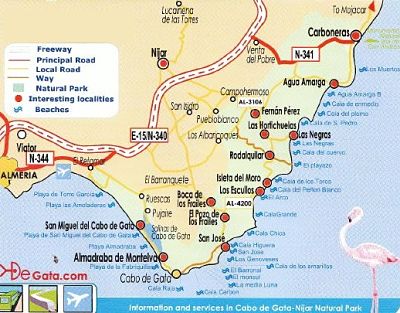
In this article, however, we want to tell you something completely different: namely, the stretch of Andalusian coastline that is perhaps the least well known (along with the enchanting beaches of Huelva) and yet, in our view, the most fascinating and mysterious of all: the Cabo de Gata/Nijar National Park, in the province of Almería. The beaches and landscapes of this province are a true natural masterpiece: we are in a natural reserve formed by a number of volcanic rocky promontories, broken up into an endless series of splendid cliffs dropping sheer to the sea. You can imagine how many little corners of incredible beauty – coves, inlets, caves – may be tucked away among these impregnable natural bastions, which protect the region from tourist urbanisation.
Ok, nice area, but where are the tips? Well, there are so many beautiful beaches in Almería and there is only the embarrassment of choice, but since someone has to do this dirty work, I’ve decided to take on this mission impossible, giving you an overview of the most enchanting beaches in Almería in the Cabo de Gata area and beyond, without forgetting directions on how to get there and where to stay.
Contents
- The western coast and Playa del Zapillo
- A necessary preface…
- Cabo de Gata: the beaches of Almería’s eastern coast
- Cabo de Gata: the beaches of San José
- Los Escullos: beaches and a castle reflected in the crystal-clear water…
- El Playazo of Rodalquilar, one of the largest beaches in Cabo de Gata
- Cabo de Gata: the beaches of Las Negras
- The mysterious coves of Agua Amarga
- Carboneras beach and its fantastic natural surroundings
The western coast and Playa del Zapillo
If you’re planning to drive the Málaga–Almería stretch of road, bear in mind that, once you’ve passed the Granada coast — the Costa Tropical — from Motril onwards your comment will, at best, be: “What the… really??”. In a nutshell, that’s the same astonished reaction I had: the coast west of Almería is an endless, depressing succession of greenhouses and structures devoted to plasticulture, where the sea, against its will, is merely a sad scenic backdrop.
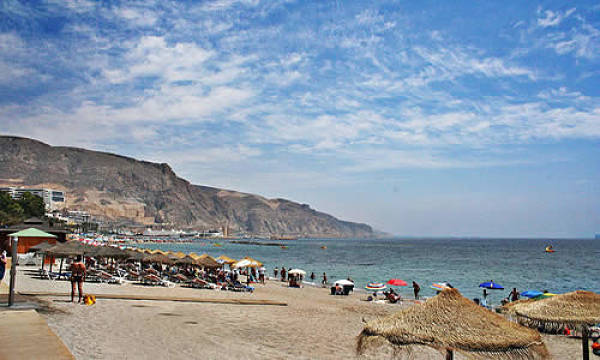
The only places worth mentioning are those overlooking the Gulf of Almería, in the immediate vicinity of the city: Roquetas de Mar, a very well-equipped town with a long beach, and the smaller, quieter resort of Aguadulce, where the vast expanses of plastic are only a memory.
All available accommodation in Roquetas de Mar
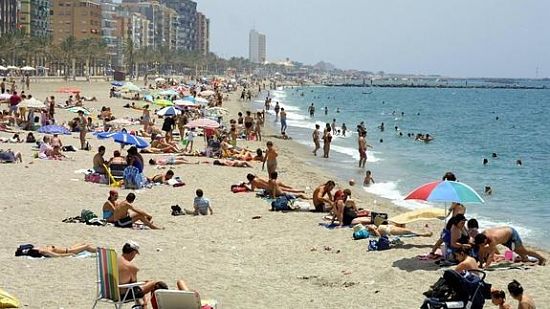
The city of Almería, strictly speaking, does not offer many opportunities for seaside leisure, apart from Playa del Zapillo, a beach that stretches for about 1.9 miles beyond the port and in front of the city centre, even though there is no reason to prefer this unremarkable stretch of sand to the nearby, splendid beaches of Cabo de Gata, which I shall finally tell you about.
All available accommodation in Almería
A necessary preface…
Before going on to bring tears to your eyes, a necessary preamble is in order — indeed, two.
- firstly, a necessary caveat: the places highlighted here are only a tiny fraction of those worth visiting: they are simply the most beautiful and the easiest to reach, in the writer’s opinion.
- second premise: after the Cabo de Gata lighthouse, we enter a truly rural and wild area. The layout of the roads is by no means easy, and some of the beaches listed below cannot be reached by car: you will have to leave your vehicle by the roadside or in the – unattended – parking areas, and make your way to the sea on foot, rucksack on your back. The spectacle is guaranteed, but as with the good part of beautiful things, you have to make a bit of an effort.
If this all isn’t your cup of tea, there’s no need to worry: along the Almería coast, there are plenty of beaches that are easy to reach by public transport.
Cabo de Gata: the beaches of Almería’s eastern coast
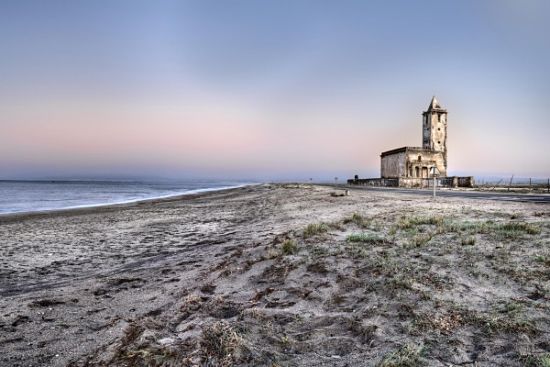
Moving away from Almería, through the desert-like landscape of the eastern outskirts, scarred by endless greenhouses, you would never expect the scenery of Cabo de Gata-Níjar Natural Park. In fact, even the village of Cabo de Gata itself is not particularly interesting, except for birdwatchers hoping to spot the many species found around the nearby Salinas de Cabo de Gata.
But once you reach the beautiful beach in the rather ramshackle fishing village of La Almadraba de Monteleva, with the picturesque Iglesia de Cabo de Gata behind you — difficult to visit except during services — the magnificent outline of the Cabo de Gata headlands finally begins to reveal itself.
Arrecife de Las Sirenas: Cabo de Gata’s emblem
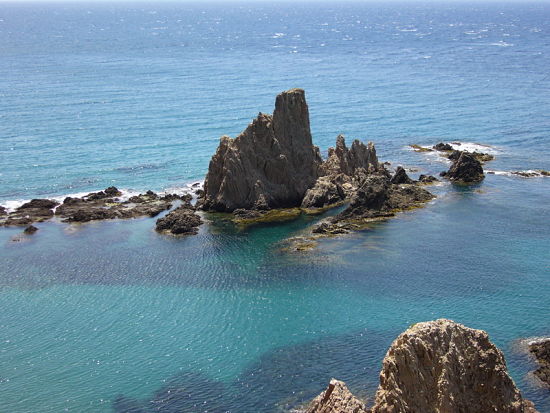
The first true natural attraction we come to after Almadraba is perhaps the most representative symbol of all the beaches of Almería and the province: the Arrecife de las Sirenas, a rocky barrier formed by striking volcanic outcrops, lashed by the waves of the sea. This beautiful view can be seen from above, from the Cabo de Gata lighthouse (reachable by car), but if you have a pair of suitable shoes, you can set off along a very short path that leads to a tiny cove where there are boat ramps giving access to the sea: this is the only way to admire the wonderful landscape at sea level.
Cala Carbón and Cala de la Media Luna
The two coves can only be reached on foot, leaving the car at the start of the ALP-822, which is not passable by car. Coming from the lighthouse, you have a long walk ahead to reach the access to Cala Carbón. The one for Cala de la Media Luna, which is a larger and equally beautiful beach, is about 0.6 miles further on.
Playa de Mónsul: the beach with the “petrified wave”
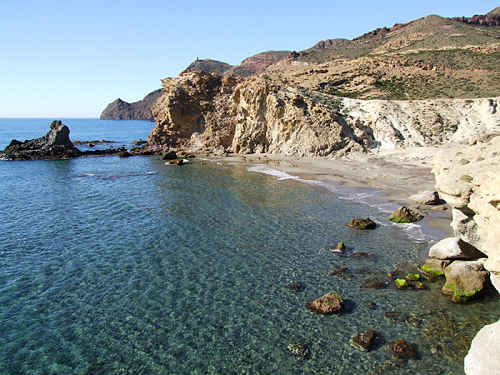
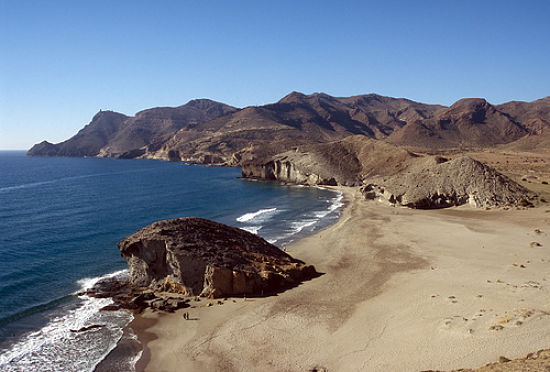
The beaches described just now cannot possibly compete with Playa de Mónsul, considered one of the loveliest in Cabo de Gata, because of the very distinctive rock that dominates the beach, resembling an enormous “ola petrificada” (petrified wave) surrounded by sandy dunes. Make sure you get there: you’ll feel like Indiana Jones! The car park is pay-and-display and is reached by taking an unpaved road of around 3.1 miles starting from San José. If you see a lovely windmill on your left, you’re on the right road! There is also a bus from the town, which in our opinion is an excellent option in high season, as the car park tends to fill up very early and finding a space could prove a real challenge. When the beach is windy, it might be a little difficult to go for a swim.
All accommodation available in Cabo de Gata
Cabo de Gata: the beaches of San José
San José is a fishing village where you can find a few hotels and fish restaurants, as well as two beautiful beaches, ideal for those who do not want to venture among the cliffs:
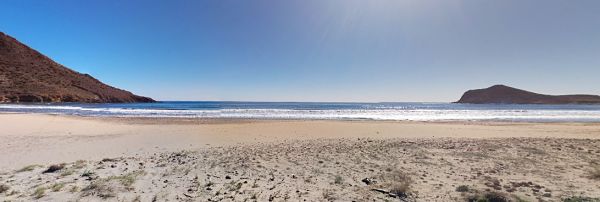
- Playa de los Genoveses, a huge sandy beach washed by crystal-clear waters and separated from San José by a cliff. Truly not to be missed. It is reached by taking the same road that leads to Playa de Monsul. For the locals, this is one of the most beautiful beaches in the entire park.
- Playa de San José: opposite the village, you’ll find this pleasant, equipped beach, ideal for families and for anyone who wants to relax a little.
The village can be reached by way of Rodalquilar and El Pozo de los Frailes along a very easy road, where you can admire windmills and evocative abandoned cortijos.
All available accommodation in San José
Los Escullos: beaches and a castle reflected in the crystal-clear water…
Near La Isleta del Moro, a village famous for preserving the enchanting panorama of the Isleta, lies the locality of Los Escullos. Besides a few coves that are hard to access, we would mention two beaches worth citing: Playa de Embarcadero and Playa del Arco, the latter known for the strange rock formations surrounding it. Behind the cliff, the Castillo de San Felipe dominates the sea; it cannot be visited inside.
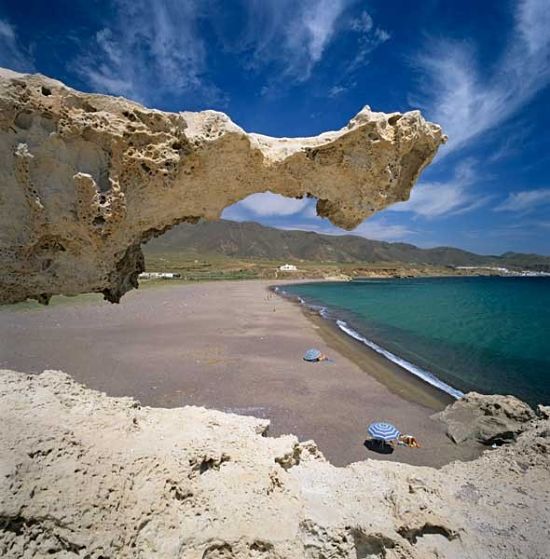
Near the village perched on the cliff, you will find the popular Playa del Peñón Blanco but, to breathe in a wilder atmosphere, you can take the car and drive the short stretch of road to the splendid Mirador de Las Amatistas. Just before that, you will find a lay-by at the roadside: leave the car and, with a short walk, reach Cala de los Toros.
All available accommodation in La Isleta del Moro
El Playazo of Rodalquilar, one of the largest beaches in Cabo de Gata
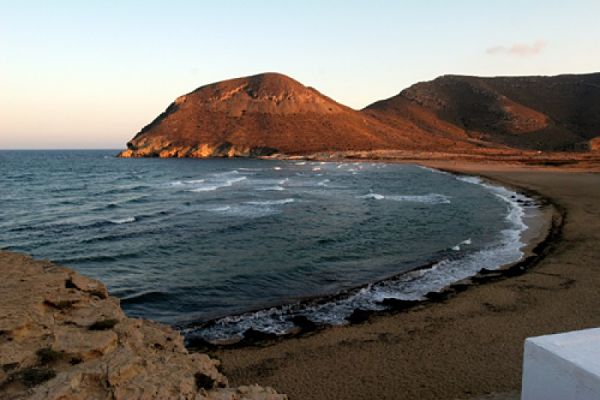
Rodalquilar is located inland in the Parque Natural, in a somewhat flatter area than the coast, and is perfect as a strategic base for a visit to the surrounding area. Rodalquilar’s best-known beach is El Playazo, 2.5 miles from the town centre: we recommend it, as it is a wide sandy beach (by local standards, the largest!) and easy to reach by car. A little more hidden and sheltered behind a rocky ridge stretching out towards the sea, you will find the smaller Calilla del Playazo, in the shade of Castillo de San Ramón, reached via a short path.
If you find yourselves in Rodalquilar, I recommend visiting the old abandoned gold mine at the top of the village: we found it really atmospheric! The village itself, in summer, is an open-air museum: the white houses are adorned with works of art from far and wide. The festival is called Rodalquilarte and helps make a stroll along the village’s main street very pleasant.
All available accommodation in Rodalquilar
Cabo de Gata: the beaches of Las Negras
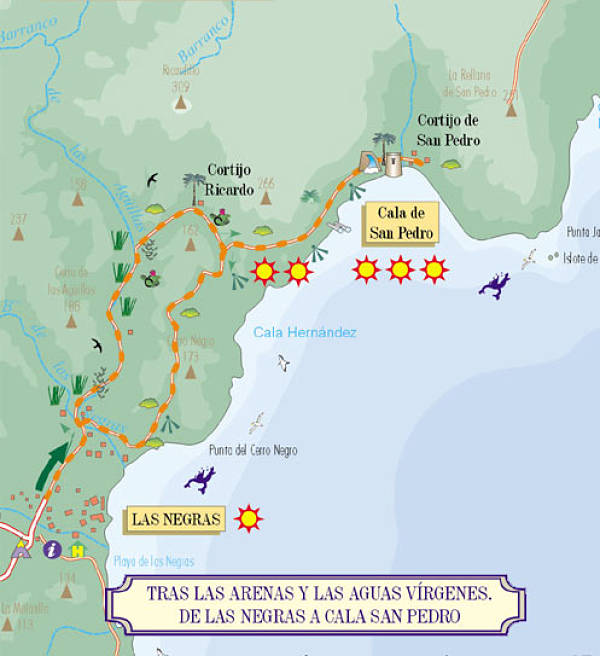
After Rodalquilar, taking a road north through the arid hinterland, you reach Las Negras, a pleasant tourist spot that presents itself as a white village which is at its best on the characteristic seafront promenade, where there are a few fish restaurants. The village beach is pleasant and dotted with fishermen’s boats: there is a slightly more sheltered one – called Cala del Cuervo – opposite a campsite, to the south of the village.
Playa San Pedro: when the effort is rewarded…
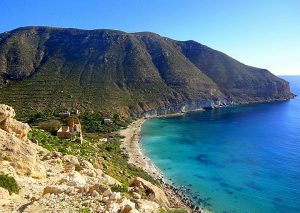
Playa San Pedro is one of the most beautiful beaches in the whole natural park of the municipality of Nijar, as well as one of the most unspoilt and hardest to reach. It can be reached by boat from Las Negras or via a ruta, a strenuous trail about 1.9 miles long, which starts in Calle Bahia de Las Negras, 500 m after the end of the beach. Bring suitable hiking clothing (as well as plenty of sun cream!) and be careful on the path, as it runs along the edge of the cliffs. The beach is much loved by nudists.
All available accommodation in Las Negras
The mysterious coves of Agua Amarga
In the wonderful white little village of Agua Amarga, the beach is broad and well equipped, and the sea is often crystal clear: it is a real pleasure to spend a few hours here, perhaps venturing into the caves carved into the headlands that embrace the beach. At the top of one of them – you will certainly notice it – are the ruins of an Antiguo cargadero de mineral. After a swim, the recommendation is to order an arroz con mariscos at the Agua Amarga 3 restaurant, in the main square (the only one!) of the village.
Anyone who ventures along the Costa de Almería is never satisfied, so here are two more stunning, completely unspoilt beaches hidden among the cliffs south of Agua Amarga: Cala del Plomo and Cala de Enmedio.
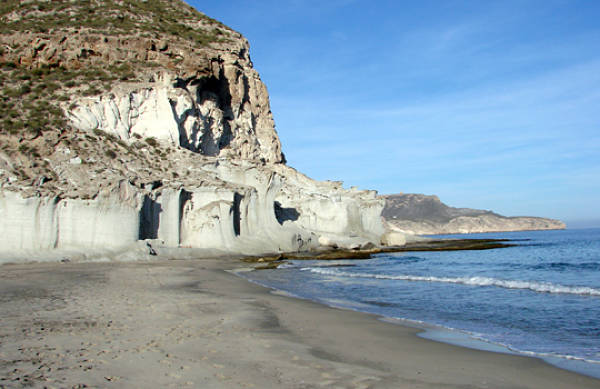
Both can be reached from Agua Amarga, along a path of about 1.2 miles that also runs along the ridge, but you can also get there by car, via a long, rough road, the rambla del Plomo: you will turn off after 3.4 miles on the AL 5106, leaving Agua Amarga in the direction of the village Fernán Pérez.
All accommodation available in Agua Amarga
Carboneras beach and its fantastic natural surroundings
Carboneras is an industrial town that marks the northern boundary of Cabo de Gata. Once you get here, you can already see the difference: although the fishing village has some really pleasant views, you immediately notice that the beaches become wider, the sea stacks and rocks disappear, giving way to the port and the factories. The chiringuitos and beach bars return, and there is nothing to be done to stop your gaze falling on some annoying intrusive block of flats, as is the case with the rather beautiful Playa del Algarrobico. In short, we have arrived in the largest tourist centre east of Almería, or at least the most urbanised and well-equipped one.
All available accommodation in Carboneras
Playa de los Muertos
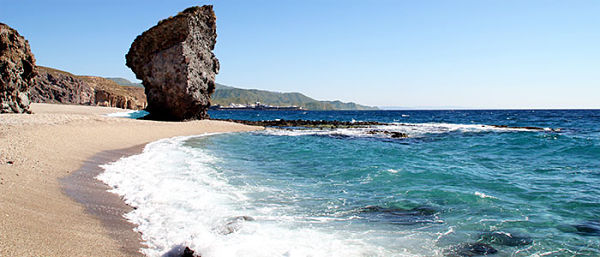
Yet, south of Carboneras, lies one of the most untouched beaches of Almería: Playa de los Muertos. Many of you will have seen at least one photo of this remarkable beach: golden sand, turquoise sea and, on one side of the shore, a couple of enormous rocks standing upright, guarding the splendid natural beauty of this place (the imagination of whoever coined the beach’s name perhaps pictured these upright rocks more as gloomy gravestones, perhaps to discourage mass tourism). If you want to get there, take extra care, both because the sea in this area is often rough and because access to the beach is not easy: you will have to follow a fairly steep path starting from the pay car park on the road.
If you don’t feel up to going all the way down to the sea, you can choose to reach the mirador on the north side of the beach to take a few photos from above: in this case too, the path (short and flat) starts near the car park.
Torre de la Mesa Roldán
There is, however, another thing to do if you find yourself in these parts: from the car park also starts an asphalt road that climbs to the top of Mesa Roldán, the high headland that protects the south side of the beach. At the end of the road, right at the top of the Mesa, in addition to a lighthouse, there is an ancient and imposing watchtower perched above the sea, which Game of Thrones fans may well recognise… If in summer you find the road to the tower blocked by a barrier, ask the people in charge of the car park: they will tell you that you can remove it and continue to the top. It is only a safety measure, so that people do not park their cars along the road in order to go down to the beach without paying.
