The Barrio de Santa Cruz is without doubt the most picturesque and characteristic quarter of Seville, a stop you absolutely must not miss during your visit to the city if you really want to experience an authentic Andalusian atmosphere.
Located in the Casco Antiguo (Seville Old Town), the Barrio de Santa Cruz lies to the east of Plaza del Triunfo: it is here that you can visit, among the many monuments of Seville, the Giralda, the lush gardens and royal chambers of the Alcazar, the Archive of the Indies, the Hospital de los Venerables. What makes this neighbourhood unique, however, is its character: a maze of narrow alleyways, covered lanes, squares with gardens and fountains, white houses with patios adorned with azulejos and flower-filled balconies.
Contents
The history of the Barrio de Santa Cruz, the Andalusian soul of Seville
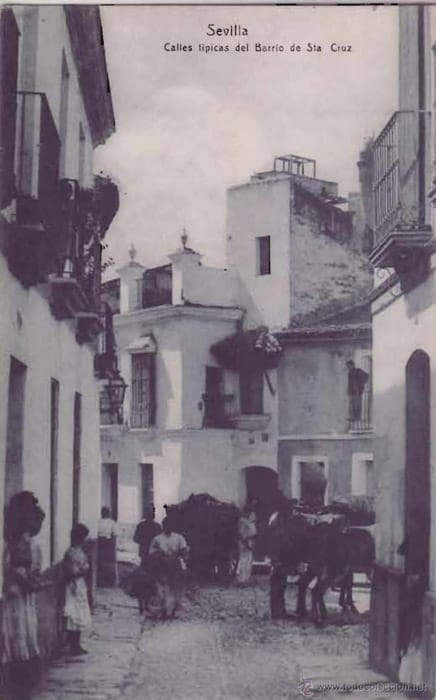
Barrio de Santa Cruz means Quarter of the Holy Cross. Despite the name, however, you are in an ancient Jewish quarter. Jews, who had lived in the city of Seville for centuries, were gathered in this quarter from 1248, the year of Seville’s conquest by Ferdinand III of Castile.
In 1492, unfortunately, the Alhambra Decree sanctioned the expulsion of the Jews from Spain and this part of the city of Seville entered a period of decline. The synagogues were all demolished or converted into churches. An emblematic example is Plaza de Santa Cruz, a square beloved by Cervantes: the paving you see today was part of the Mudéjar-style church built on the old ruined synagogue and later destroyed in the early nineteenth century.
Fortunately it was from the nineteenth century onwards that the neighbourhood began to flourish again. Today it is one of Seville’s most popular areas and attracts the greatest influx of tourists from around the world.
A walk through the Santa Cruz neighbourhood
Getting lost in the Barrio’s little streets is part of its charm: wandering with no set route is the best way to enjoy the area. What may help you, though, is an itinerary to discover the neighbourhood’s most beautiful corners. Below you’ll find the map and the itinerary in detail.
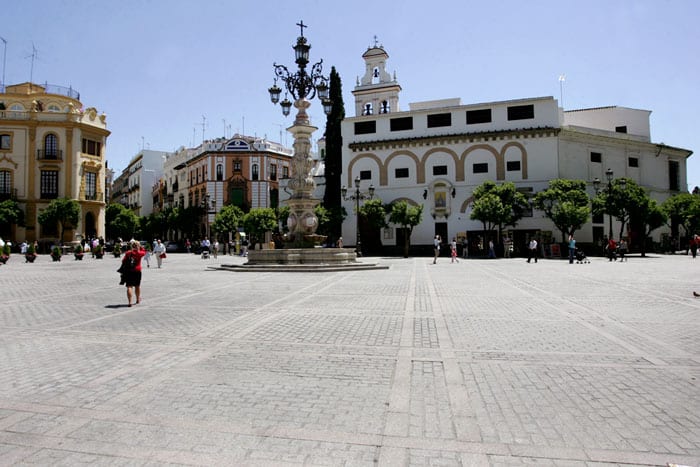
Let’s start at Plaza Virgen de los Reyes, the perfect spot to admire the Giralda, the bell tower of the Cathedral of Seville where Moorish and Renaissance styles coexist. The square has a circular fountain in the centre, a 20th-century work by José Lafita. If you love carriages and fancy a romantic ride through the narrow streets of the city centre, this square can make your wish come true.
Among the streets not to be missed around Plaza Virgen de los Reyes, I also recommend walking along Calle Mateos Gago, the neighbourhood’s main shopping thoroughfare, full of shops, tapas bars and historic houses, such as the prestigious Casa de Salinas. Hidden to one side of the square, down a covered alley, you will find the Barrio’s first treasure: Plaza de Santa Marta.


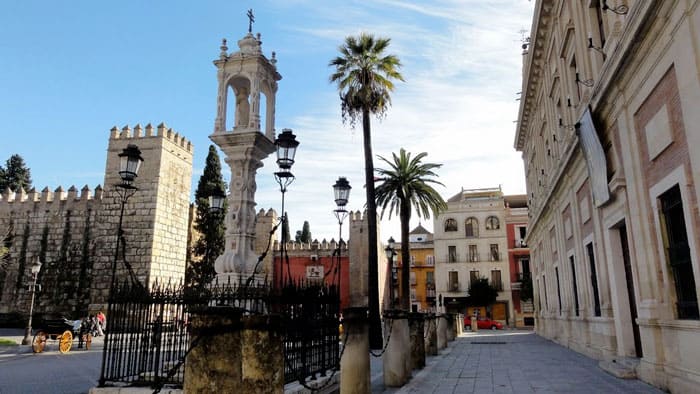
A short distance from Calle Gago you will find Plaza del Triunfo, with its central garden, a Baroque-style column in memory of the earthquake that struck Seville in 1755 and the statue of the Immaculate Conception. Overlooking Plaza del Triunfo is Archivo de Las Indias, a large late-sixteenth-century palace that houses important documents related to the colonisation of the Americas. The museum is open from 9.30 to 17.00 from Tuesday to Saturday and from 10.00 to 14.00 on Sundays. Admission is free.
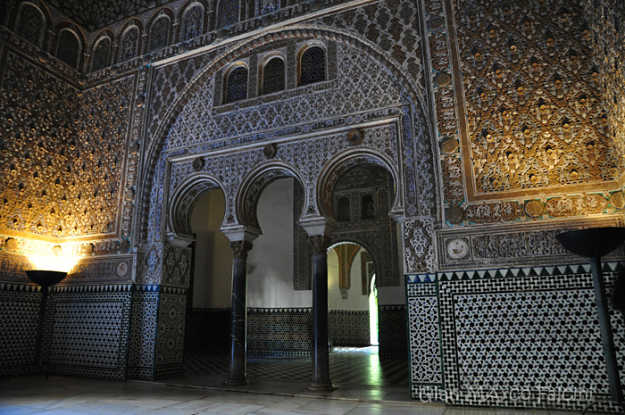
If you are now looking at the Cathedral, the Alcazar: will be behind you; if you haven’t visited it yet, don’t waste any more time — make your way to the Puerta del Leon, where the entrance is located. The Royal Palace is one of the oldest buildings in the world and its architectural style and its precious gardens will leave you speechless.
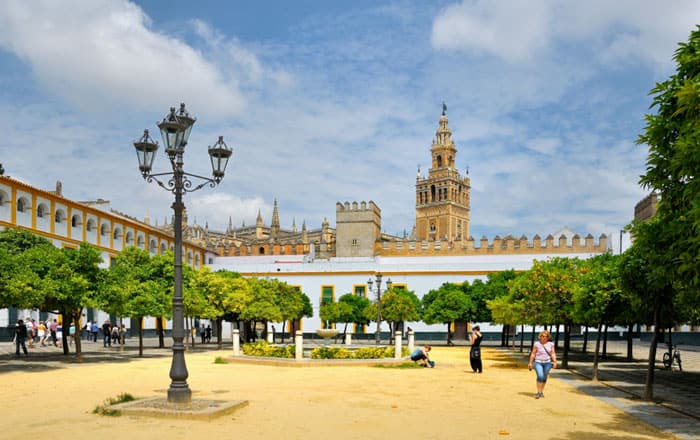
If you’ve already visited the Real Alcazar, continue along Calle Romero Murube and, through the portico, enter in Plaza Patio de Banderas. You’ll be struck by the rectangular shape of this square, whose centre is framed on all four sides by orange trees. If you look up on the northern side of the square, the Giralda will come into view. This square should be considered one of the gateways to the Barrio proper, so take a photo of the Giralda and continue your stroll.
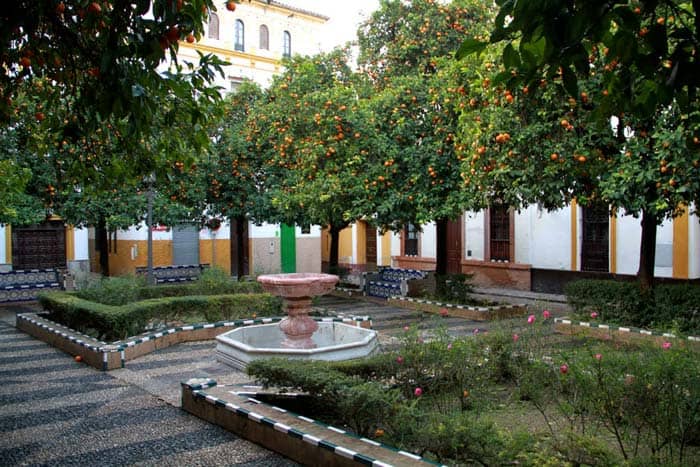
Once you’ve arrived at the pretty Plaza de la Alianza, follow the zigzag of the narrow Calle Rodrigo Caro that will lead you to the enchanting, tiny Plaza Doña Elvira, surrounded by tranquil houses and shaded by the ubiquitous orange trees. Rest on one of the benches decorated with azulejos and savour the atmosphere of this precious corner of Seville.
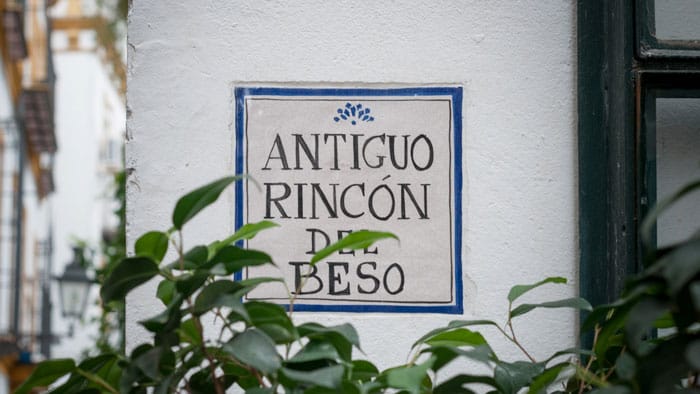
Head down Calle Gloria: this little lane hides a special plaque, much coveted by lovers: it is the Antiguo Rincón del Beso, which remains on the wall as a perpetual reminder of the impossible love story between Don Juan Tenorio and Doña Inés de Ulloa.
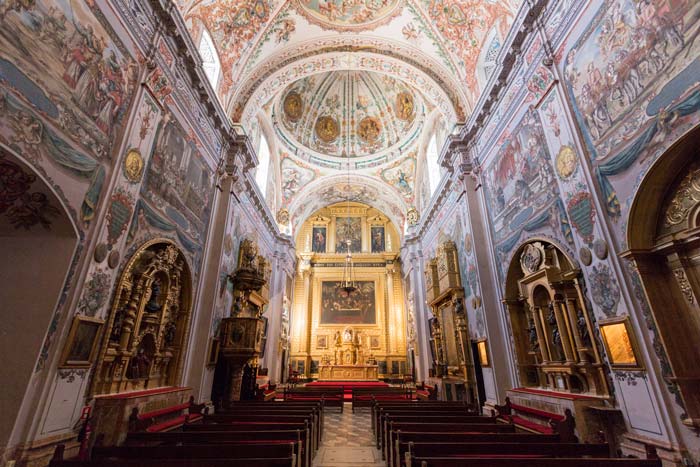
We are in Plaza Venerables, where the Hospital de los Venerables, a key stop on our itinerary. Construction of the palace began in 1675 and it was intended to house elderly priests. A Greek frieze reads “Fear God and Honour the Priest”. Inside this Baroque-style building you can see works by Pedro Roldán, Juan and Lucas de Valdés Leal. It is also home to the Centro Velázquez and if you love the artist you must not miss it. Opening hours are from 10:00 to 19:00, except on Sunday when it is open from 10:00 to 15:00. The ticket costs €12. In summer there are interesting guided night tours.
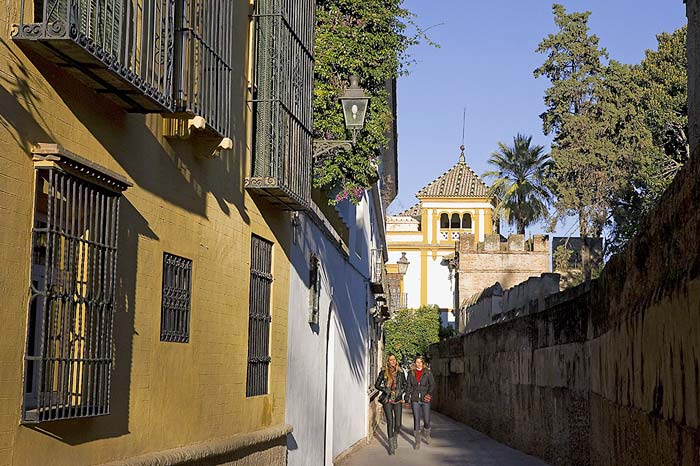
From Plaza Venerables turn into the alley Calle Justino de Neve: you’ll come across Callejón del Agua or Calle Agua, an equally narrow alley that runs alongside the walls of the Alcazar and which in the past carried water from the Caños de Carmona to the royal palace gardens.
Pass Plaza de Alfaro and head straight for Plaza Santa Cruz, the little square where the ancient church that gave the neighbourhood its name once stood. The square is characterised by a beautiful iron cross surrounded by a fairytale garden. Re-enter the intricate maze of the barrio’s lanes along Calle Santa Teresa and Calle Ximénez de Enciso. Turn into Callejón Carlos Alonso Chaparro and reach the enchanting Plaza de la Escuela de Cristo: you’ll be enthralled by its secret beauty.


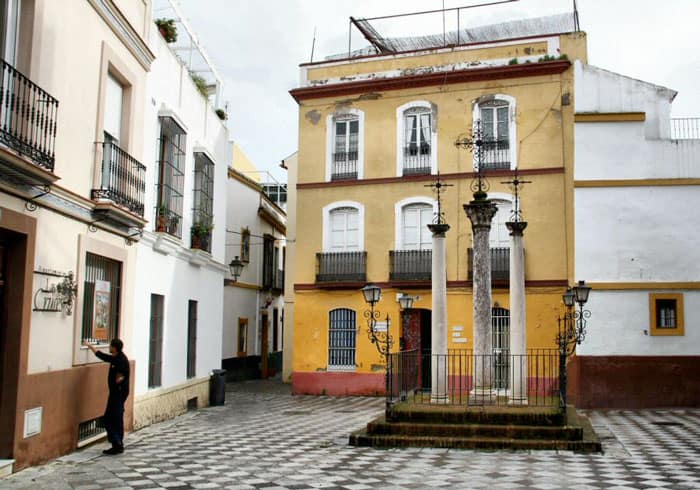
Return to Calle De Enciso and look out for the two crosses that herald Calle Cruces, yet another narrow passage to walk through with your heart in your mouth for the thrill. You will arrive at Plaza de las Cruces, an evocative, tiny triangular space: in the centre you will see three crosses, which immediately bring to mind a calvary.
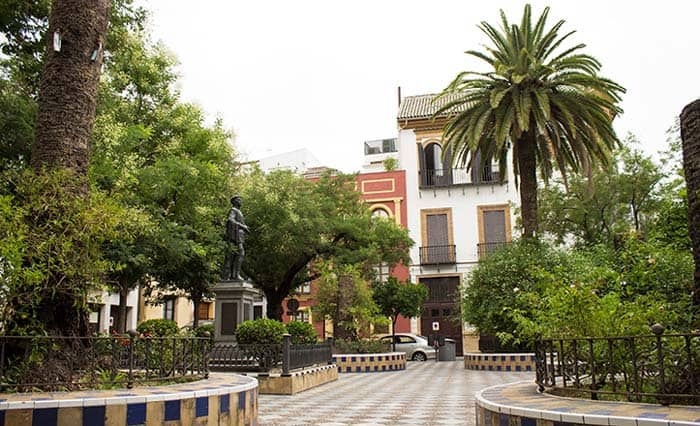
Continue along Calle Mariscal and reach Plaza de los Refinadores, a slightly larger, shadier square, characterised by the presence of a statue of the aforementioned Don Juan Tenorio, surrounded by tall trees ringed at their bases by flowerbeds embellished with brightly coloured azulejos.
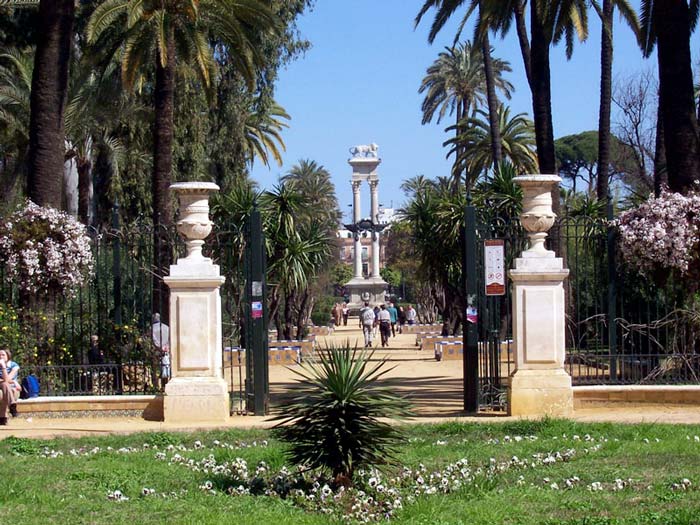
You have arrived at the Jardines de Murillo, on the southern side of the neighbourhood. Bartolomé Murillo is one of Seville’s most important artists and lived in the 17th century. In this park there is a monument to Christopher Columbus and a reproduction of a bronze that belonged to the caravel Santa Maria.
Where to stay?
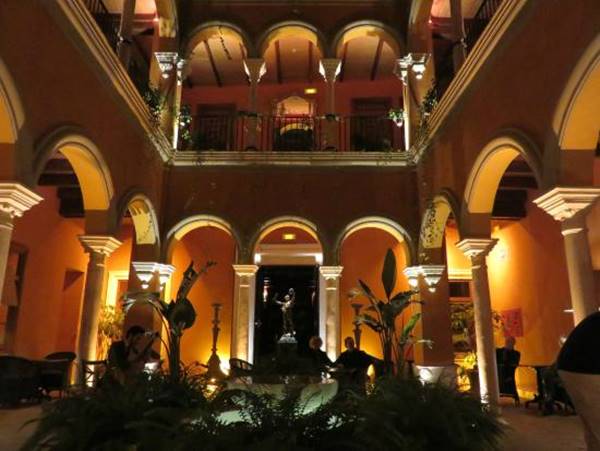
Finding a hotel in the Barrio de Santa Cruz is the best you could ask for from your Seville holiday. Some properties are genuine Andalusian-style palaces, hiding rooms you would never have imagined you could rest in. Here are a few targeted recommendations.
Tips on where to stay in the neighbourhood
Bars and restaurants in the Barrio Santa Cruz
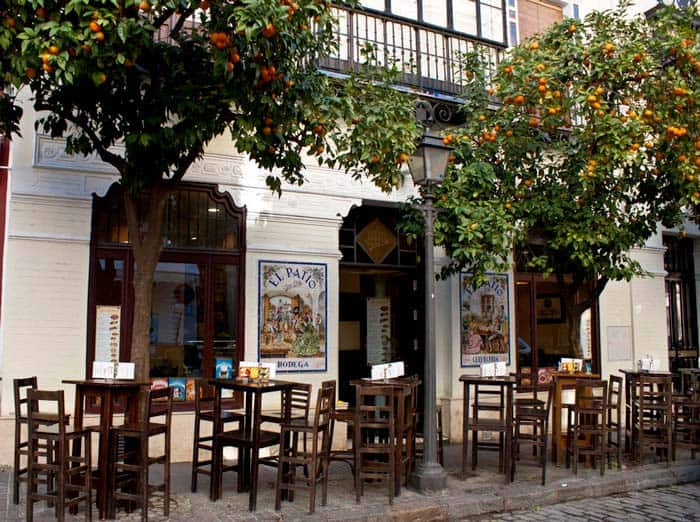
The Barrio de Santa Cruz is one of Seville’s most touristy neighbourhoods, so there’s always the risk of falling into a “tourist trap”. I’d recommend taking a stroll around and stopping to look at the restaurants — some are true little architectural masterpieces — checking how busy they are and the appearance of the dishes before deciding where to eat.
The Barrio de Santa Cruz in Seville really offers an enormous range of options,. Alongside our article on where to eat in Seville, I’d also suggest reading our concise selection of restaurants and bars where you might like to stop for a meal:
- Cerveceria Giralda historic venue on Calle Mateos Gago set in what was once an Arab bath: you’ll dine among the azulejos and Moorish arches;
- La Azotea, also on Calle Mateos Gago at number 8, with excellent cuisine and attractive presentation of the dishes;
- Bodega Santa Cruz – Las Columnas, on Calle Rodrigo Caro, a very spartan place but with good, inexpensive food;
- Vineria San Telmo, in the south-eastern part of the barrio, near the Jardines de Murillo and the house museum dedicated to him.
