We at Andalusia Trip have a great love for this wonderful Spanish region, and we have always enjoyed sharing it with you readers, whether you are on your first trip or have already started exploring it and want to return to deepen your knowledge. In addition to writing numerous guides to the cities, beaches and major monuments, we have already provided specific targeted advice on how to plan a road trip in Andalusia, making the most of the experience without spending an exorbitant amount.
However, we are aware that many people know little or nothing about Andalusia. The question, ultimately, is always the same: what do you need to know? Well, this brief FAQ is dedicated to all those who, before starting to organise a tour in detail, want to get a clear idea of what to expect from this splendid Spanish region. If you have any other questions, please feel free to write them in the comments!
Contents
- Where is Andalusia located?
- What are the main cities of Andalusia?
- What are the main points of interest?
- Which monuments absolutely mustn’t be missed?
- Does Andalusia have beaches?
- Are there mountains in Andalusia?
- Is Andalusia expensive for a tourist?
- Where’s the best nightlife?
- What is the best time to visit?
- How to get around Andalusia?
- Are there direct flights to Andalusia?
- Is health insurance necessary?
- How many days are needed for a tour of Andalusia?
- Useful resources
Where is Andalusia located?
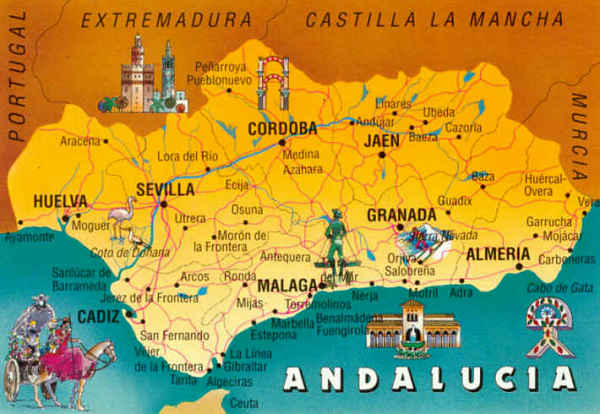
Andalusia is an autonomous region in southern Spain, made up of 8 provinces, with an area of 87,597 km² and a population of around 8,400,000 inhabitants. The province of Huelva, the westernmost in Andalusia, lies on the border with Portugal. The English enclave in Spain, Gibraltar, is located at the southern tip of the Iberian Peninsula, about 19 km in a straight line from Morocco, which can be reached via short cruise tours from Tarifa.
To the north, the provinces of Huelva, Seville and western Córdoba border the region of Extremadura, while the eastern province of Córdoba, Granada and Jaén border the region of Castilla-La Mancha. The province of Almería (at the eastern end of Andalusia) borders the region of Murcia.
What are the main cities of Andalusia?
The cities of Andalusia with the greatest tourist interest are Seville, Malaga, Granada and Cordoba. The other provinces of the region are Huelva, Cadiz, Almería and Jaén. They are less frequented by tourists, but they have many beautiful things to see, especially Cadiz. Among the smaller cities, one should absolutely not overlook (among others) the magnificent and fairy-tale-like Ronda, Carmona, Jerez de la Frontera, Vejer de la Frontera and Arcos de la Frontera.
What are the main points of interest?
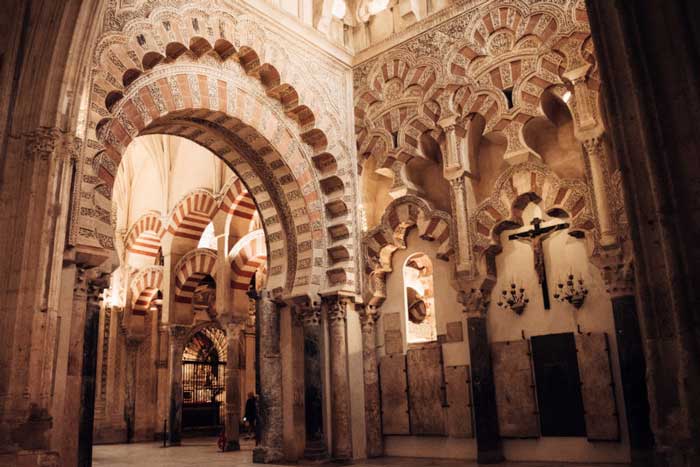
The main reason for interest in visiting Andalusia is its exceptional artistic and architectural heritage, inherited from Arab culture and later enriched by Christian influence. Outstanding examples can be found just about everywhere: in the major cities as well as in the villages and smaller pueblos blancos. There are also many traces of other historical periods: from Phoenician and Roman remains to monuments and churches in Gothic and Baroque styles, through to masterpieces of the modern and contemporary era such as Plaza de España and the Setas de Sevilla.
Andalusia is also exceptional from a naturalistic and landscape point of view: some excursions are truly not to be missed, such as the Caminito del Rey or the Doñana National Park. Finally, let us not forget that this fascinating region owes much of its charm to folklore and its food and wine offer: every city has its own mouth-watering specialities, and the sherries from the area of Jerez de la Frontera, Sanlucar de Barrameda and El Puerto de Santa Maria are loved by wine experts all over the world.
Which monuments absolutely mustn’t be missed?
Never ask an admirer of Andalusia this question: they’ll tell you that you mustn’t miss a thing! Nevertheless, there are some symbolic monuments that are of particular importance and that cannot, under any circumstances, be overlooked on a tour of Andalusia. Here is a Top 5:
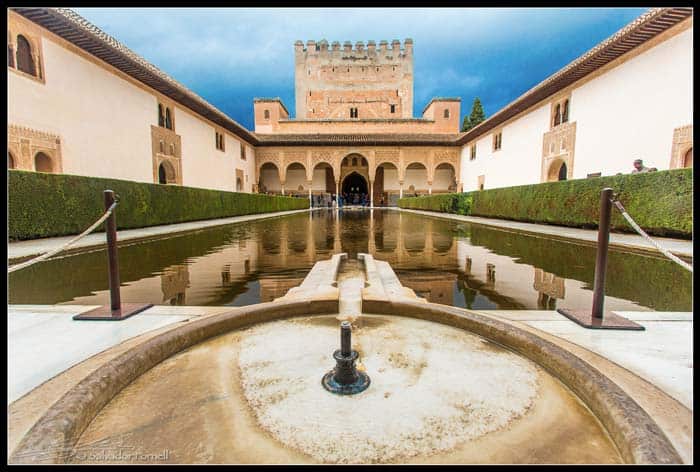
- Alhambra in Granada
- Cathedral of Seville
- Alcázar of Seville
- Plaza de España in Seville
- Mosque–Cathedral of Córdoba
Does Andalusia have beaches?
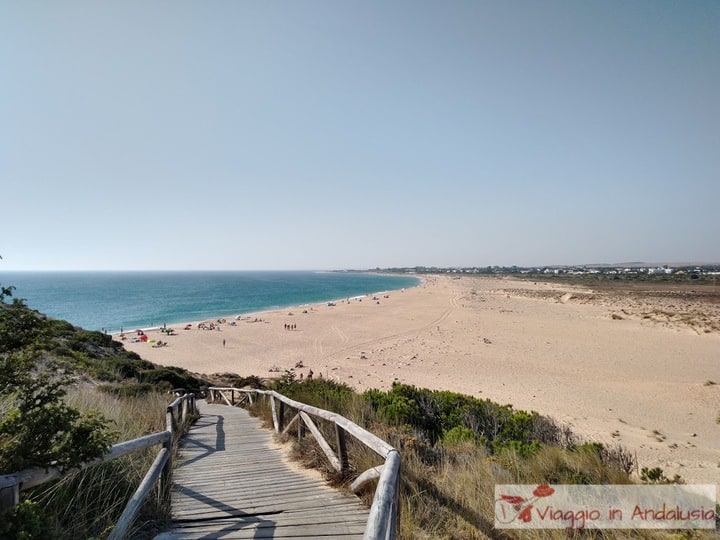
Certainly! The region of Andalusia borders the Mediterranean Sea (the provinces of Almería, Malaga and Granada) and the Atlantic Ocean (Cadiz and Huelva). Without doubt, the most popular and touristy stretch of Andalusia’s coast is in the province of Malaga: the Costa del Sol, suitable for families, couples and groups of friends looking for fun.
However, this is not the only option! There are also more unspoilt and wilder beaches: on our page dedicated to beaches you will find more information on what to expect from the various stretches of the Andalusian coast, province by province, town by town! I know it may seem odd, but given how often we are asked this question, it is worth making clear that in Seville, the most famous city in Andalusia, there is no sea. The nearest beach is about 110 km away, on the northern Costa de la Luz, among the beaches of Huelva province.
Are there mountains in Andalusia?
Much of the inland region of Andalusia consists of hilly and mountainous terrain at not very high altitudes, but perhaps not everyone remembers that in Andalusia – in the provinces of Granada and Almería – there is the Sierra Nevada, home to the highest peak in mainland Spain: the Mulhacén (3,482 m). So those who enjoy skiing or high-altitude hiking can choose Andalusia for their holiday.
Is Andalusia expensive for a tourist?
This question is not easy to answer unambiguously because it depends on many variables, first and foremost the traveller’s target. However, we can say that, unlike many other Spanish and European tourist destinations, Andalusia can be considered a low-cost destination: if you travel wisely and book flights, hotels, cars, services and tourist activities in advance, you will find prices that are more than affordable, especially in the low season. Moreover, in Andalusia you eat plentifully and well, spending very little indeed.
Where’s the best nightlife?

Andalusia is a land of nightlife: we recommend that everyone take part at least once in their life in one of the many religious and folk festivals (the Feria de Malaga, the Feria de Abril in Seville, Semana Santa and many others) that take place throughout the year in Andalusia. However, if we had to recommend destinations where the evening is famously lively, engaging and fun, we would mention the nightlife of Malaga, the towns of the Costa del Sol (Torremolinos, Marbella etc.), the nightlife of Seville and some towns on the Costa de la Luz in the province of Cadiz, such as Conil de la Frontera and Tarifa.
What is the best time to visit?
If you are only interested in visiting the beaches of Andalusia, do not hesitate to book your holiday for the summer. If, on the other hand, you want to explore the inland cities in depth, especially Seville, Córdoba and Granada, it would be better to choose the months of spring and autumn, because the high temperatures drop considerably and make it much easier to visit the cities. The winter months can also be a good option because, with the exception of Granada and the other towns and cities at higher altitude, the climate is fairly mild. To find out more, read our article on when to go to Andalusia.
How to get around Andalusia?

In the main cities, there is absolutely no need to have a car: the city centres can be explored and fully enjoyed on foot. Public transport in the larger cities is generally also good and reliable, should you wish to head to a suburban area to see an attraction.
However, car hire is strongly recommended if you want to explore the region thoroughly, reaching even small towns, cities and natural areas where public transport does not work optimally. If, on the other hand, you want to take a touring trip between the main cities (for example the classic Seville-Cordoba-Granada triangle) and do not intend to make any intermediate stops, you can also get around by train and bus.
Are there direct flights to Andalusia?
Yes! On our page about flights to Andalusia you will find the details, but we can safely mention Seville Airport and Malaga Airport as the main gateways to Andalusia. Recently, direct flights to Granada and Almería. have also been launched.
Is health insurance necessary?
As you are in the European Union, you will be entitled to medical treatment and care. So, apart from exceptional cases, health insurance will not be necessary. However, if you prefer, you can take out travel cancellation insurance and, more simply, protect yourself against a range of annoying unforeseen events that can unfortunately always happen during a trip.
How many days are needed for a tour of Andalusia?
This question also has no single answer, because it depends on the type of trip you want to make, the means of transport you have decided to use and the days you have available. The minimum recommended period is 5 days, but in 7 days you can fully visit the 2-3 main cities and also a few intermediate stops. If you then decide to invest from 10 to 20 days, you will have the opportunity to explore much of Andalusia’s beauty in a satisfying and certainly unforgettable way.
Useful resources
If we’ve convinced you and you want to organise your Andalusian itinerary independently, here are some articles we’ve put together to make the task easier for you!
