Answering the question ‘When should you go to Andalusia?’ is not straightforward: to do so we need to take various factors into consideration. Each season, because of the climatic differences, may be perfect or may be best avoided: it depends on the kind of trip you plan to take.
Meanwhile, if you’re going to focus on one or a few of the main cities, I recommend taking a look at our articles on the climate and the best time to visit accordingly.
If instead you are planning to do a larger do-it-yourself itinerary of Andalusia , perhaps travelling around the region with a rental car and also trying to enjoy the magnificent Andalusian landscapes, the choice becomes more complex. Do you want to include a few days of sunbathing on the beach in your holiday or, why not?, of skiing in the snowy mountains, perhaps on the very same trip? Well, perhaps nothing is impossible, but to ensure the holiday is not ruined by unexpected weather, it is best to start off with the right preparation.
Lastly, you surely won’t want to set off for one of the Spanish regions richest in events and traditional festivals without seeing even one? In this article we try to work out how to organise a trip to Andalusia mainly according to the climate and then according to all the other related aspects.
Contents
Andalusia climate

Andalusia is the second largest region in Spain, and its vast territory is highly varied from a morphological point of view. It is home to the highest mountain peaks on the Iberian Peninsula, as well as some of the best Spanish beaches on two coasts: the Mediterranean and the Atlantic. Between sea and mountains, the flat and hilly areas are by no means uniform: just think of the difference between the lush valley of the Guadalquivir and the arid Tabernas Desert around Almeria. It is precisely the variety of the territory that makes Andalusia the Spanish region with the most varied climate. In general, the climate is Mediterranean, but with significant differences between individual areas.
- Starting from the north, the Andalusian inland is the area with the strongest continental influences, which lead to wide temperature ranges between summer and winter and to a shorter duration of the shoulder seasons. This type of climate is clearly evident in the alluvial plain crossed by the Guadalquivir river and its tributaries, where Cordoba and Seville are located, and even more so in the central-eastern area of the region, east of Cordoba.
- The mountainous areas differ greatly in climate from the plain, due to their high altitude. If you are planning hikes in the Sierra Nevada or in other areas of the Penibetic Cordillera (the mountain range that crosses the whole region and of which the Sierra Nevada is the main massif), it is best to prepare properly, because at any time of year you will encounter a harsher climate than in the nearby city tourist destinations.
- The coast of Andalusia does not have a uniform climate. Although it overlooks the Atlantic Ocean, the Costa de la Luz – to the west – has a distinctly Mediterranean climate, characterised by hot, breezy summers and mild, pleasant winters. The tip of the Gibraltar Strait, despite being the southernmost part of the peninsula, is the coolest part of the coast, because of the strong winds. Moving eastwards, between the Costa del Sol and the Costa Tropical as far as Cabo de Gata (Almeria), the coast facing the Mediterranean gradually changes climate: at first Mediterranean with sub-tropical characteristics, it becomes sub-desert in the easternmost area of the region.
Andalusia in spring

Spring is the best season to visit Andalusian cities. Warm but not scorching temperatures, with some chance of rain but not too much, make this season the ideal time for a trip focused on the main inland provincial capitals, as in the case of the itinerary of Seville, Cordoba and Granada. The spring months are also a great time of year to discover some of the most interesting Andalusian traditional festivals, which are a more than valid reason to visit this region.
We are also talking about an ideal season for a touring trip, in which to admire the striking Tabernas Desert without melting in the sun, to get around the coastal towns without spending hours in the traffic generated by summer holidaymakers, and to admire the natural parks at their most lush and verdant. Spring temperatures average lows of between 10° and 15° and highs of between 18° and 25°, varying not only according to the month (between March and May the average increase is 5°), but also depending on the area in which you are travelling.
Andalusia in summer

Summer in Andalusia is torrid, but that does not make it to be ruled out. The coast is at its very best precisely in the hottest months, both for the chance to enjoy the sea and for the large number of festivals and fairs held at this time of year, especially in the province of Malaga (above all the Feria de Malaga).
Whether you want to surf at Tarifa (though this is not the best time of year for everyone!) or dance in the evening on the lively beaches of the Costa del Sol, the Andalusian sun will be on our side. The same goes for the mountains: a trek at over 3,000 metres is definitely more advisable in summer, when thermal clothing is not necessary and you can enjoy unique views without the risk of annoying rain. Although temperatures are obviously lower on the high peaks, in the nearby hill areas the summer heat is no less scorching than on the plains. Granada or Jaen, for example, are located at 700 m and 500 m above sea level respectively, and in both cities the heat is certainly felt.
The cities in summer can be immersed in a stifling heat that is hard to bear for those who struggle with hot weather: it is therefore very important to set off properly equipped. Daytime temperatures in inland cities such as Cordoba and Seville regularly exceed 35°, with peaks tending towards 45°. Sun cream and a hat must not be left out of your suitcase, even if you are not going to the beach. But above all, it is essential to always have water with you, even just to cope with the queues in the sun to visit the main monuments.
The almost total absence of rain throughout the region means steadily increasing heat during the summer months, but it can be an advantage if you set off with a smart travel plan. How? Well, by using the hottest hours of the day to visit museums and, in general, indoor places, and leaving the streets of the historic centres for early morning or late afternoon, when the heat is more bearable. As you can always count on good weather, travelling by car from one city to another will certainly also be a sound choice.
Travelling in summer also means having a lighter suitcase: a sweatshirt will be enough for any breezy evenings in coastal areas, while T-shirts and shorts will suffice for most of the time. If you are planning mountain excursions, however, pay a little more attention to what you pack: even when the Andalusian plain is simmering in a stifling 40°C, the peaks of the Sierra Nevada can be rather chilly.
Andalusia in autumn

Autumn is a great season for visiting Andalusian cities. The climate in the cities is very similar to that in spring: a 20-25% chance of rain in October and November, with daytime temperatures between 20° and 25°. The autumn climate is more unsettled on the coasts because of the influence of the sea and the more frequent Atlantic weather systems, but it is hard to find cold days in almost the whole region. It is also the only season in which the chance of rain rises slightly in the semi-desert area surrounding Almeria.
The autumn months are recommended for those who love tranquillity. The traditional spring festivals and the big summer events, which enliven the inland cities and the coastal resorts respectively, are now a thing of the past. But it is precisely this that means the number of tourists is sharply lower, with an objective advantage from a logistical and organisational point of view. Lower accommodation prices, less traffic on the roads and, above all, shorter queues for museums and monuments are factors to bear in mind if you are looking to save money and, above all, time. If you cannot stand the imposing crowds of tourists shouting inside every church or museum you visit, autumn is the right season for you.
Tips for budget accommodation in Andalusia
Andalusia in winter

What was said about autumn applies even more so to winter. In the colder months there is a clear advantage when it comes to saving money and time. Far fewer tourists than in the other seasons and much lower accommodation prices in all cities are very good reasons to choose Andalusia in winter.
It should be said, however, that this season has some drawbacks. In the inland areas, the temperature difference compared with summer is very noticeable, especially in hill towns such as Granada, where the cold is felt particularly at night. It is very hard to get close to freezing in almost all Andalusian places, but if we compare it with the scorching heat that grips the whole region in summer, the difference in temperatures is striking. In much of the region, the rainiest months are precisely the winter ones, another factor to bear in mind. We cannot call it the best season for a touring trip, especially if we want to include coastal resorts, but it can be an interesting choice for visiting some cities.
For snow lovers and skiers, the country’s highest peaks make Andalusia an attractive region even in winter, and seeing the Sierra Nevada in the full splendour of its pure white coat is no small thing. Combining one or more cities with the snow-covered mountains can make for a good itinerary. The important thing is to set off with the right equipment. If an umbrella and a coat are enough in the regional capitals, even those who do not ski need thermal clothing to get up to 3,000 metres.
When Is the Best Time to Visit Andalusia? Climate-based advice
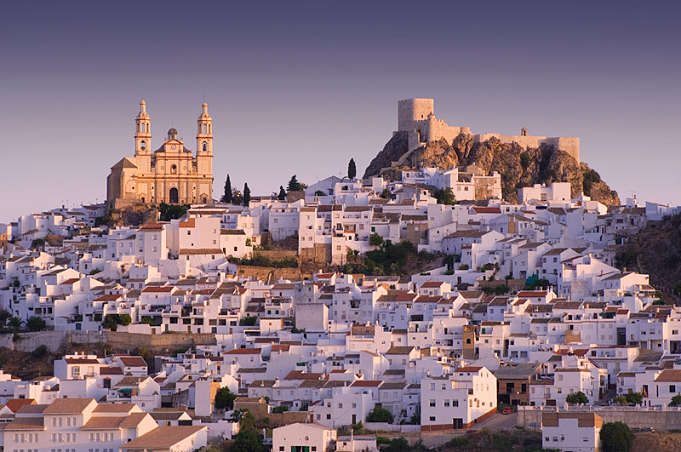
Choosing when to go to Andalusia is no trivial matter: it all depends on what kind of trip you have in mind. This vast region, varied in its attractions, landscapes and events, offers a good reason to be visited in every season of the year.
If you’re planning a whirlwind trip to one or two cities, opt for the shoulder seasons, when the weather is milder and more pleasant. You’ll enjoy ideal temperatures for exploring the historic centres without fainting under the blazing sun and without spending hours queuing at the entrances to the main museums and monuments. In autumn, the cities are quieter and prices are lower: the best time if you want to discover the artistic side of the region. Spring, climatically similar to autumn, is one of the richest periods in terms of festivals and celebrations, which will immerse you in the heart of Andalusian folk traditions. Tourist numbers will certainly be higher, but being part of that crowd has its good reasons.
If you’re looking for the sea and beach life, or want to climb the highest peaks of the mountain range, choose summer. The great variety of beaches in Andalusia offers something for every taste. You will find secluded, peaceful coves, as well as large city beaches full of parties and the hub of nightlife all along the coast. Traditional celebrations on the Andalusian seafront enliven every summer month and are a valid folkloric alternative to the aforementioned spring festivities. The mountains, too, for trekking enthusiasts, are at their most luxuriant.
If you want to plan an itinerary trip, the beginning and end of summer are the ideal times to combine different aspects. There is nothing to stop you travelling in July and August; the important thing is to be aware that the heat, especially in the cities, can be hard to bear. So it is necessary to take the right precautions, planning the various visits intelligently and leaving as little as possible to chance.
