Perhaps you didn’t know it, but Doñana National Park is one of the most important national parks in Spain and is the largest roadless area in western Europe. What can you expect? Vast untouched natural landscapes with a wide variety of ecosystems, endangered animals such as the Iberian lynx and the Spanish imperial eagle, as well as no fewer than 350 species of migratory birds that migrate each year from Europe to nearby Africa and vice versa, choosing this very area to stop over. A delight for the eyes and for the mind!
Contents
Where is Donana National Park Located?
Doñana National Park extends over 543 square kilometres (209,6 sq miles) to the east of the province of Huelva and to the west of Seville. Much of the park lies within the province of Huelva, although it also stretches as far as the provinces of Cádiz and Seville. Within the national park there is a protected area, the Parque Natural de Doñana, which covers no less than 135 square kilometres (52,1 sq miles). It is not possible to visit the protected area independently, only through organised guided tours; the national park, by contrast, offers trails that can also be walked independently.
In 1994, UNESCO declared Doñana National Park a World Heritage Site for its variety of flora and fauna.
How to get from Huelva to Doñana National Park
Depending on the type of itinerary chosen, there are various access points to Doñana National Park. More precisely, there are five visitor centres located on the edge of the park: three are in the province of Huelva, one in the province of Seville and one in the province of Cádiz, in Sanlúcar de Barrameda.
El Acebuche
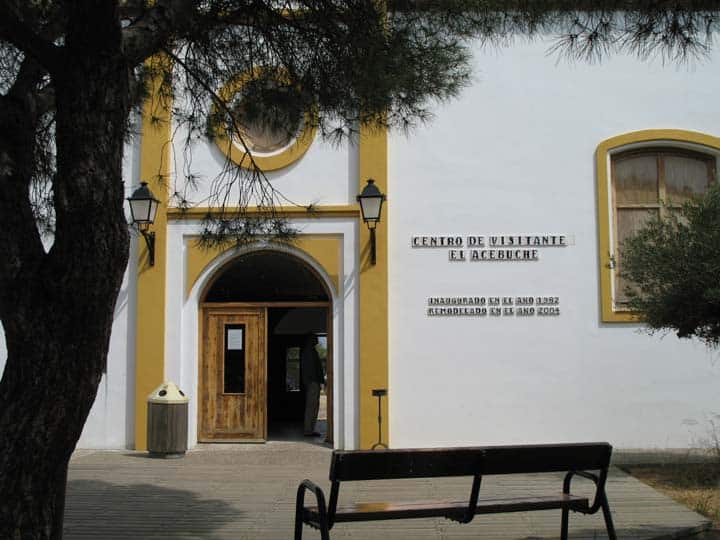
El Acebuche is one of the most important and the oldest of those available. It is located 3 km (1,8 miles) from Matalascañas, one of the most beautiful beaches in Huelva, heading towards El Rocío, another place I suggest you visit and which I told you about in the article on what to see in El Rocío. At El Acebuche you will also be able to admire a permanent exhibition that illustrates and explains the richness of the park. The El Acebuche visitor centre is located on Carretera A-483 El Rocío-Matalascañas, km 12 Almonte. From Huelva there are about 60 kilometres (37,2 miles), which can be covered in 50 minutes via the N-442 and then the A-494. The final short stretch corresponds to the A-483.
The centre is open every day:
- from 8:00 am to 7:00 pm from October to March inclusive
- from 8:00 am to 9:00 pm from April to September inclusive
La Rocina
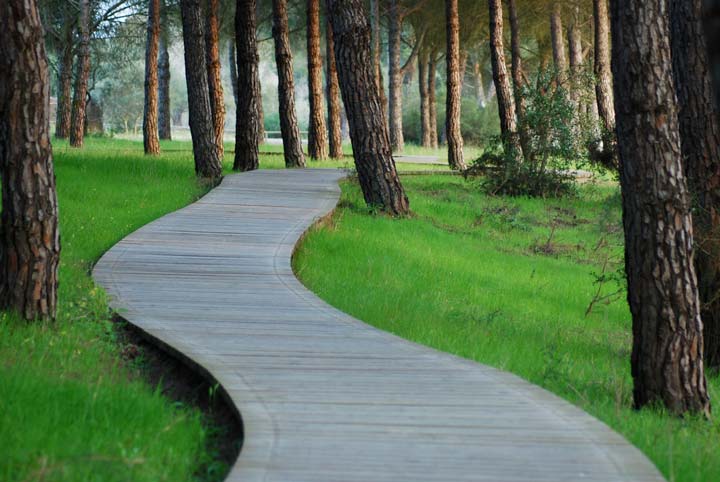
The La Rocina Visitor Centre is located on Carretera A-483, Km 1 in Almonte, in the province of Huelva. From the city of Huelva, there are about 60 kilometres (37,2 miles) to the visitor centre, which can be covered in 45 minutes via the H-31 and A-49 to exit 60, where you will take the A-484. In Almonte, take the A-483. At the centre there is an exhibition dedicated to the famous procession, the Romería de El Rocío, and a video dedicated to the La Rocina river, one of the main watercourses feeding the marshes of Doñana.
The centre is open every day:
- from 9:00 am to 7:00 pm from October to March inclusive
- from 10:00 to 15:00 and from 16:00 to 18:00 from April to September inclusive.
Six kilometres (3,7 miles) from La Rocina is a second centre, the Palazzo Dell’Acebrón, which has wheelchair access.
Los Centenales
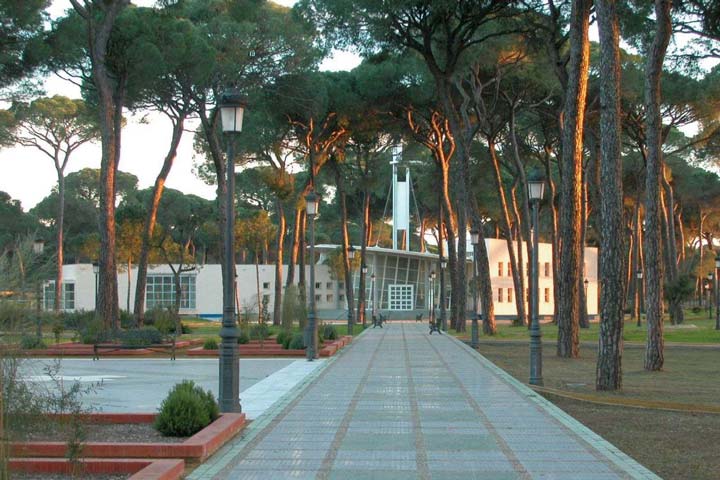
The third access point to the park in the province of Huelva is the Los Centenales Visitor Centre on Carretera A-484 Hinojos – Almonte. It is the easternmost of the three centres and is 62 kilometres (38,5 miles) from Huelva. It takes around 45 minutes to reach; take the H-31 and then the A-49 to exit 34. Continue on the A-481 to Hinojos.
The centre is open every day:
- from 10:00 to 14:00 and from 16:00 to 19:00 from October to March inclusive
- from 10:00 to 14:00 and from 17:00 to 20:00 from April to September inclusive.
How to get to Donana National Park from Seville
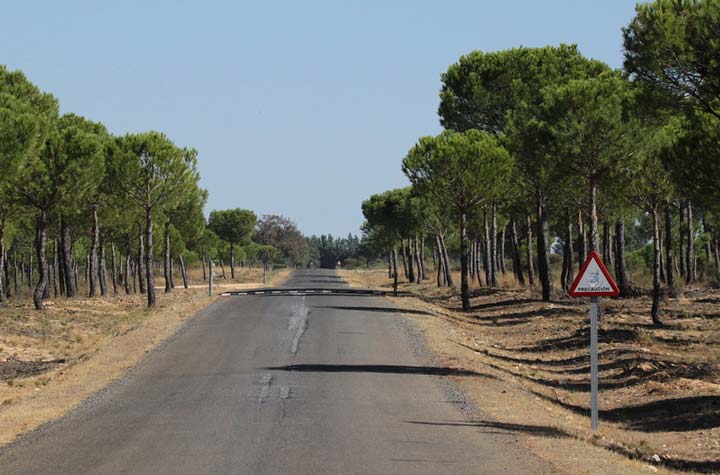
The José Antonio Valverde Visitor Centre is the main access point to Doñana National Park in the province of Seville. The centre is located in Cerrado Garrido, Marismas de Aznalcázar, about 60 kilometres (37,2 miles) south of Seville. It will take you around 1 hour and 30 minutes to get there via the A-8058.
The centre is open every day:
- from 10:00 to 18:00 from October to May inclusive
- from 10:00 am to 8:00 pm from June to September inclusive.
How to get to Donana National Park from Cádiz
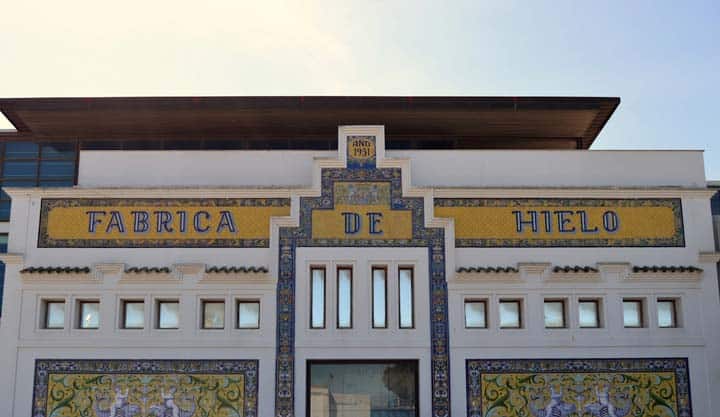
Cadiz province also has a park visitor centre located to the north-east of the city. The Fabbrica di Ghiaccio Visitor Centre (Fabrica de Hielo), is located on Avenida Bajo de Guía, in Sanlúcar de Barrameda. From Cadiz, it will take you about 45 minutes to cover the 50 kilometres (31 miles) to Sanlúcar de Barrameda by taking the A-4 and then the A-480.
The centre is open every day:
- from 9:00 am to 7:00 pm from October to May inclusive
- from 9:00 am to 8:00 pm from June to September inclusive.
Donana National Park Hiking Trails
Some parts of Doñana Park can be visited independently. In the protected area, however, it is not possible to enter on your own, so you will have to book an authorised excursion in advance. There is a wide choice, depending on your starting point and your tastes. If you enjoy walking, the visitor centres are the ideal starting points for exploring the park on foot independently.
- Two routes depart from El Acebuche:
- Laguna de Acebuche: the trail is 1.5 km (0,9 miles) long and is not difficult. It allows you to discover one of the park’s lagoons, which provides a habitat for many species of birds.
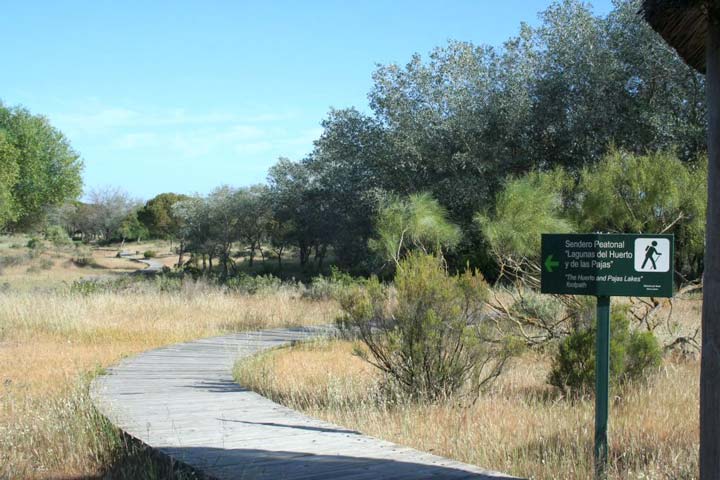
- Lagunas del Huerto y de las Pajas: this trail is longer, at around 3.5 km (2,1 miles), and takes you to another of the park’s lagoons, also home to various bird species, including the booted eagle and the red kite.
- Da La Rocina you can reach el Charco de la Boca, about 3.5 kilometres (2,1 miles) along the La Rocina river with no fewer than five birdwatching hides, while from El Acebrón you can walk the el Charco de Acebrón, for about 1.5 kilometres (0,9 miles).
- From El Rocío: the Raya Real trail is one of the walking routes used by pilgrims during the Romería. The trail can be accessed at the Puente del Ajolí (outside the village, to the north-east): as you walk, you will reach a woodland area, El Coto del Rey, where you may come across wild boar and deer.
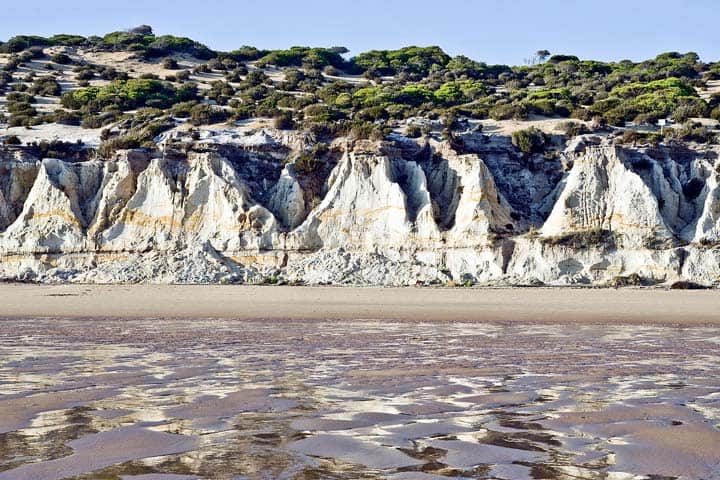
- Da Matalascañas: the Sendero de la duna is a route of around 1.5 kilometres (0,9 miles) through the sand dunes and the ocean. The trail begins in Matalascañas, although the desert landscape with dunes extends all the way to the mouth of the Guadalquivir river, next to Sanlúcar de Barrameda.
Donana National Park Tours
There are various agencies offering group or private tours to discover the park. Here are some that may be ideal for anyone wishing to take a guided visit:
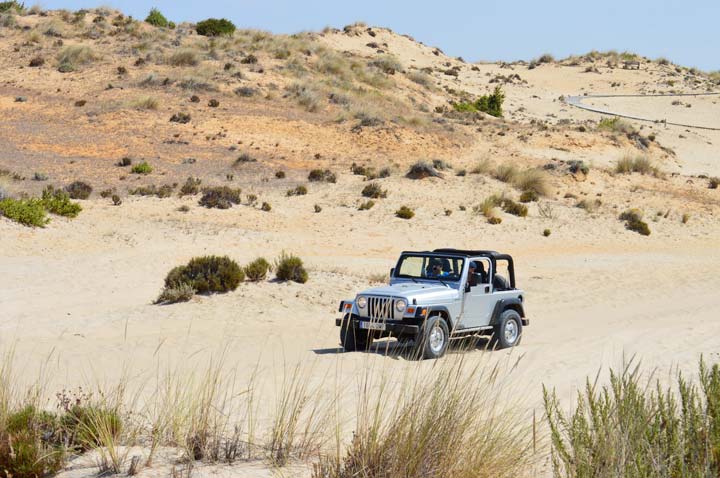
- From El Acebuche, Cooperativa Marismas del Rocío takes groups of around 20 people in distinctive off-road vehicles that can handle a variety of terrain, such as dune sand, heathland and marshes. There are two daily tours lasting around 4 hours, during which you can admire all the ecosystems present in the park (the dunes, the beach, the heath, the woodland and the marshes). In summer, departures are at 8:30 and 17:00, while in winter they are at 8:30 and 15:00. There is the option to pay an extra price for lunch. In addition, for those who prefer smaller groups, it is possible to book half-day or full-day visits in a Land Rover or Toyota with a maximum of 6 seats.
- From El Rocío, Avenida La Canallega, organised tours depart with Doñana Reservas. The classic tour lasts around 4 hours and allows you to visit the northern part of the park, in particular two ecosystems: woodland and marshes. For larger groups or private tours for 3 to 5 people, different prices apply. In addition, this agency allows you to book a combined tour: an excursion in a 4×4 vehicle in the northern area of the park and a two-hour horse ride along the beach and dunes. There is also a half-day photographic tour aimed at birdwatching enthusiasts.
- From Sanlúcar de Barrameda the boat or 4×4 tours of Visitas Doñana depart. The boat tour leaves from Sanlúcar de Barrameda beach at the Bajo de Guia pier. Travelling along the Guadalquivir River, you will reach Poblado de la Plancha, an ancient village in Doñana National Park, where the boat will dock. The one-hour stop allows you to visit not only the village but also Llanos de Velazques and Llanos de la Plancha, lowland areas rich in wildlife. Once back on board, you will visit the marshes and return to the starting point. The tour lasts about 2 hours and 30 minutes.
- The second tour option combines boat + 4×4. You will depart by boat from the Bajo de Guía pier and explore the park while cruising along the Guadalquivir River. You will then disembark and board one of the off-road vehicles to discover the beach, dunes, pine forest, woodland and marshes. After around 30 kilometres (18,6 miles) by 4×4, you will reach La Plancha. The tour ends with a cruise along the Guadalquivir back to the starting point. The total duration is 2 hours and 30 minutes.
- If the real reason you are in Doñana National Park is to observe the great variety of bird species, then I recommend the tours of Doñana Bird Tours, which depart from Villamanrique de la Condesa, in the province of Seville.
Donana national park tour from Seville and Cadiz
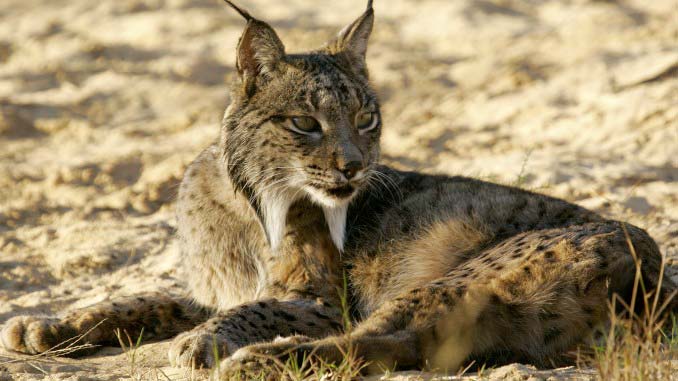
Doñana National Park is one of the most popular and highly regarded excursions from Seville. So, depending on where you are during your stay in Andalusia, whether in Seville, Cádiz or elsewhere, you can decide to visit Doñana National Park by entering through its visitor centres and from there choosing the walking route or the organised tour you prefer. Alternatively, you can choose to take advantage of an organised tour departing from the city you are in.
Here are two tours departing from Seville and Cádiz, offered by two very reliable tour operators:
- From Seville to Doñana Park
- From El Rocío
Where to stay near the park?
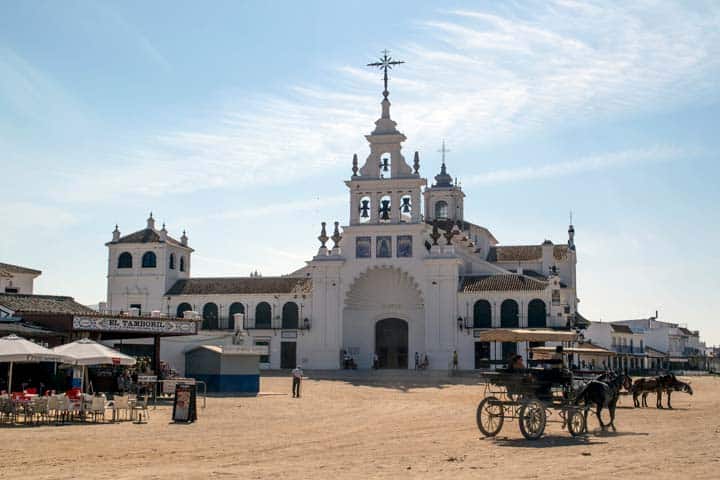
Unless you have chosen to visit Doñana from Huelva, Cádiz or Seville, you can choose from several strategically located towns for visiting the park. Below you will find some articles and tools that may help you make your choice.
If you are visiting the park from the provincial capitals:
If you want to stay in smaller towns in the area around the park:
