Seville and Cordoba are among the Spanish cities richest in history: if you are planning a holiday in Andalusia that is (mainly, or at least partly) a cultural trip in search of the region’s historical and artistic treasures, then both of these cities should be on your list. But how do you cover the distance between the two cities?
Many people use Seville as a base for their holiday and choose to visit Cordoba in a day (or stay there one night), getting around by public transport: this can be an excellent solution, since trains and buses are fast and inexpensive. However, if you are planning a road trip to discover the region, you might also consider making a few stops along the way between Cordoba and Seville. In this article I will try to provide you with all the useful information both for organising travel by public transport and for making the most of any day spent travelling between the two tourist destinations.
Contents
How to get from Seville to Córdoba
From Seville to Cordoba you can take the train, the bus, or travel by car. The best choice depends on your needs. The train is the fastest option, while the bus is often the cheapest. And the car? Well, it is especially worthwhile if this leg is part of a longer trip and you do not want to miss the interesting stops along the way.
Distance from Seville to Cordoba
Let’s start with the basics: how far apart are Seville and Córdoba? The two cities are around 80 miles from each other, so they are fairly close. In addition, they are also well connected by public transport, which is why taking the train or bus is a great idea.
Seville to Córdoba Train
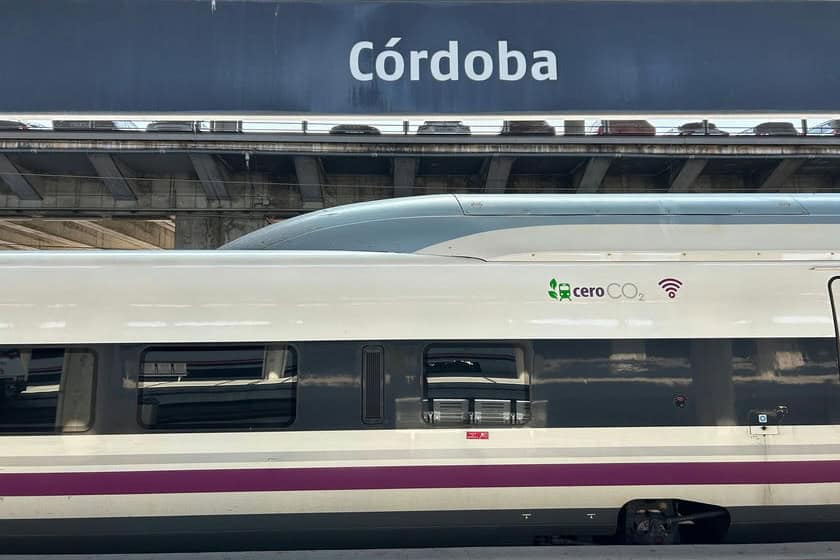
The quickest way to make this journey is by train, but bear in mind: to travel by train from Seville to Córdoba or vice versa, there are several options. The fastest is high-speed, which takes 40–45 minutes and is the best way not to waste time. If you decide to visit Córdoba in a day from Seville, taking a high-speed train considerably shortens the journey time, leaving you more time to visit the city. AV train prices are highly variable: on the same day, this route can cost €10 or €30, depending on the seats available on one train or another.
The alternative is the local train, which costs less, but at the same time takes much longer. It takes around 1 hour and 45 minutes to travel between these two cities on the Renfe Media Distancia. The advantage, though, is that the price is always the same: for €16 you can travel from Seville to Cordoba, even if you buy your ticket on the day.
However, be aware that there are more possible alternatives than you might think. As explained in the article dedicated to Andalusia by train, there are in fact four different types of high-speed trains — two operated by Renfe and two by private companies — so prices vary considerably. So, how do you choose the best train and make sure you spend as little as possible? My advice is to use Omio: this platform compares all trains and therefore lets you instantly see a clear overview of the prices and timetables for each train on the day you are interested in.
Find a train from Seville to Cordoba
Seville to Córdoba Bus
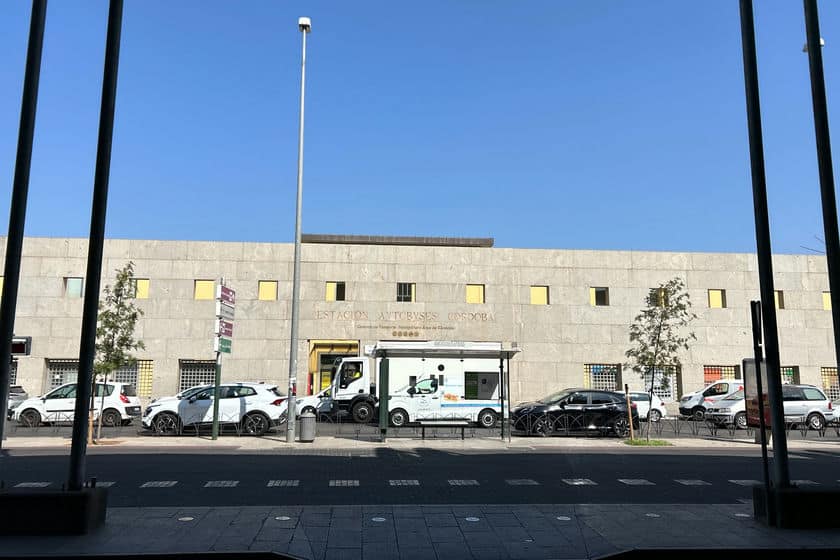
Almost always the bus is cheaper than the train. If your aim is to save as much as possible, you can take a bus from Seville to Cordoba and get there for €8, a truly tiny sum. But be careful: firstly, bus prices are not fixed either; if you leave it until the last minute, you’ll spend more. And also, journey times are much longer: it takes around 2 hours by bus from Seville to Cordoba (in some cases 1 hour and 45 minutes, but sometimes almost 2 and a half hours!). In this case too, my suggestion is to compare the various buses available on Omio.
Rightly you may be wondering: but is it worth saving a few euros (and not even in every case!) to take so much longer? Well, if your only interest is the two cities, because you want to visit Cordoba in a day from Seville, then of course it makes no sense.
But if you have more time available and spend at least one night in Cordoba (or perhaps if you are doing a touring trip around Andalusia using public transport), then it is definitely better to take the bus. Why? You can break up the journey by visiting some of the most interesting towns in the area. In fact, this route stops both in Carmona and in Écija, as well as in other places. You can therefore set off from Seville in the morning for one of these towns, visit it at your leisure, and then take another bus in the afternoon to reach Cordoba.
Find a bus from Seville to Cordoba
Seville to Cordoba by car
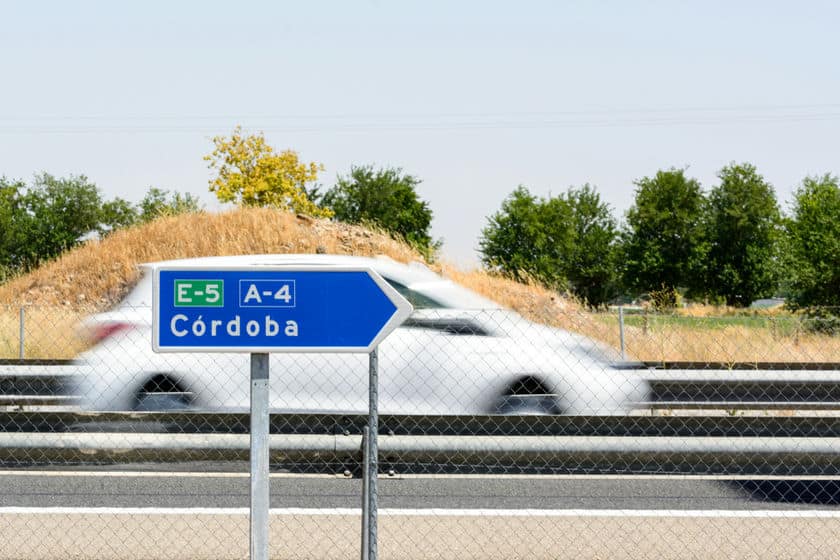
There are at least three possible routes for travelling by car from Seville to Córdoba and vice versa. The most direct and fastest is the A4 motorway, which also passes through two of the most interesting places between these cities, such as Carmona and Écija. It is around 80 miles and takes about 1 hour and 40 minutes to drive.
But depending on the stops you want to make, it may make sense to extend the journey a little in order to visit various other places of interest. For example, the A-92 runs further south and allows you to pass through Osuna, then turning onto the A-318 as far as Puente Genil, then onto the A-304 to Aguilar de la Frontera and finally the A-45 to reach Cordoba. For this route the distance is around 124 miles and the journey time rises to about 2 hours and 40 minutes, but of course the number of possible intermediate stops also increases.
Or you can take the route further north, turning off onto the A-457 after Carmona to stop in Almodóvar del Río: a journey that in practice does not add to the shortest route – it is still around 80 miles – but which takes about 2 hours in total because you spend less time on the motorway and more on main roads. Longer would instead be a detour that includes the Sierra Morena and/or the Parque Natural Sierra de Hornachuelos, but that entails a more complicated itinerary and not just brief intermediate stops.
Recommended stops between Seville and Cordoba
As mentioned, there are several possible stops between Seville and Córdoba, some suitable for a brief stopover, others interesting enough to devote a few hours to. It is up to you to choose which ones to include in your itinerary and therefore which route to take between the two cities. Below we look at the main options.
Carmona and Écija
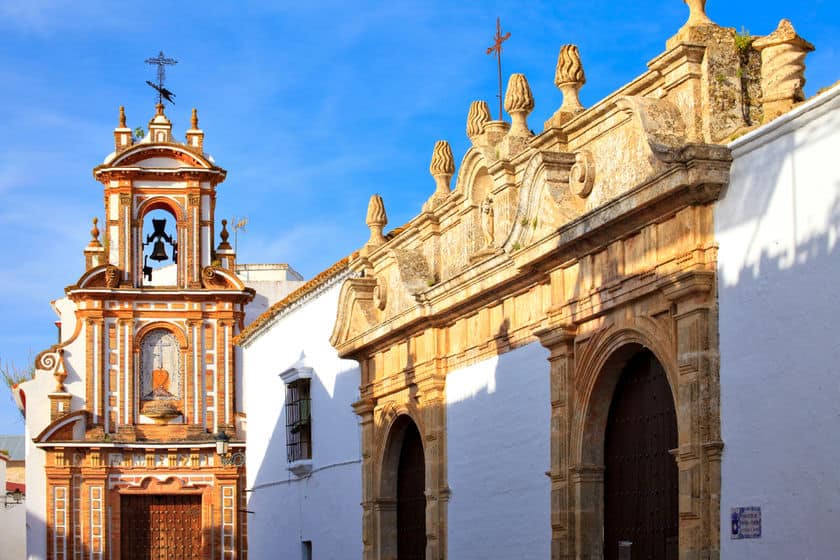
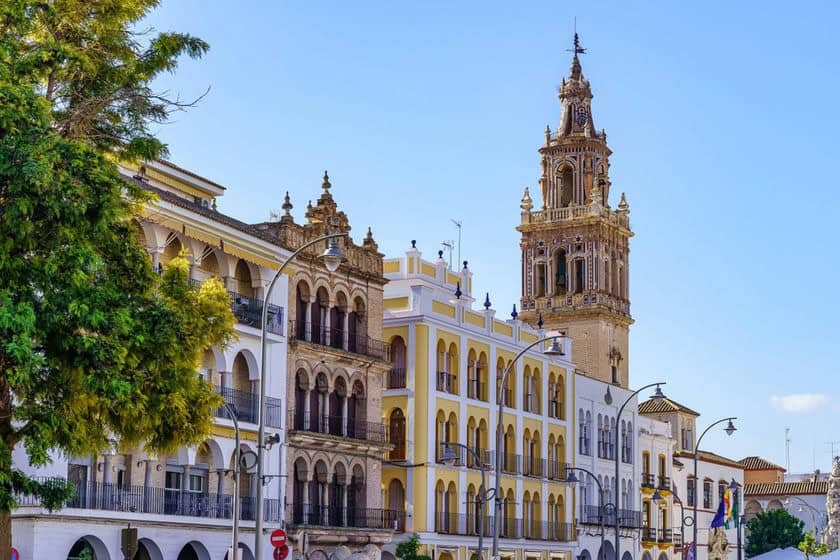
Carmona is among the prettiest towns in the province of Seville and can be either a day trip from Seville itself or an interesting stop on the journey to or from Cordoba. The Alcázar de la Puerta de Sevilla is the imposing fortress that towers over the town centre, but it is not the only attraction. Here you will also find the necropolis and Roman amphitheatre, museums and a long series of historic and fascinating churches. In addition, it is also one of those towns where it is pleasant to wander about, getting lost among the alleyways and admiring the historic palaces.
Along the road to Cordoba, after Carmona we come to another little town that deserves a stop: Écija. Its grand past is now a little faded, but between its 11 towers, the bell towers and the Baroque architecture of its buildings, it certainly does not leave you indifferent. Several historic palaces can be visited, but even here it is worth simply strolling through the centre’s narrow streets. The main route between Seville and Cordoba should include these two intermediate stops.
Osuna, Puente Genil and Aguilar de la Frontera
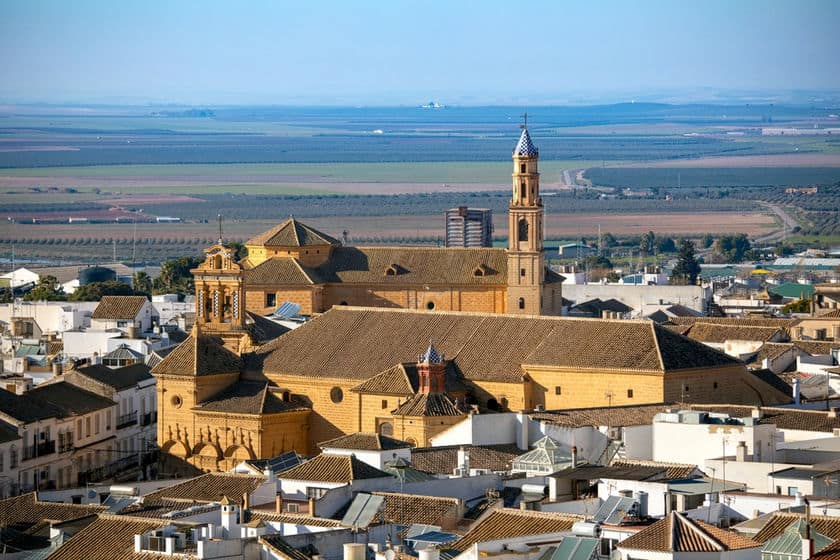
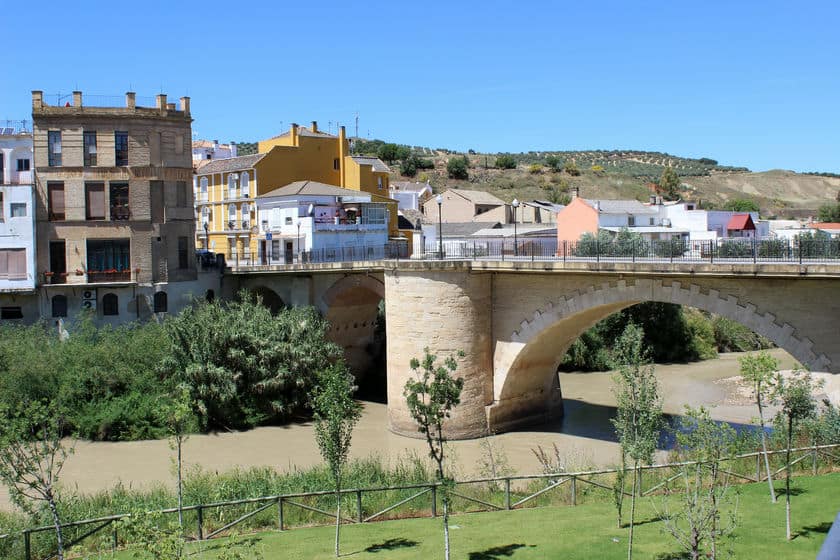
Travelling along the southernmost route, the main stop to make is undoubtedly Osuna. This splendid little town is famous because one of its streets – Calle San Pedro – has been declared one of the most beautiful streets in Europe, but there are many other reasons to visit it too. It is full of historic palaces, churches including the impressive and easily recognisable Colegiata de Nuestra Señora de la Asunción (which dominates the town from its hilltop position) and places that recall its distant past, such as the Roman necropolis of Urso. What is more, Osuna’s Plaza de Toros has become famous because one of the most epic scenes in the TV series “Game of Thrones” was filmed there, while on the outskirts of the town we find the enigmatic Coto de las Canteras, known as the Petra of Andalusia.
There are at least a couple more towns between Osuna and Cordoba where you can stop off: Puente Genil and Aguilar de la Frontera. The first is a historic little town, but quiet and much less touristy than others, where you can linger to soak up the authentic atmosphere of Andalusian villages. Nestled among olive groves, it is also the eastern terminus of the Via verde del aceite (olive greenway), a cycle route that from here runs all the way to Jaén. The second, meanwhile, offers a white-village atmosphere: narrow lanes and panoramic terraces, but without the crowds of the more famous pueblos blancos.
Carmona and Almodóvar del Río
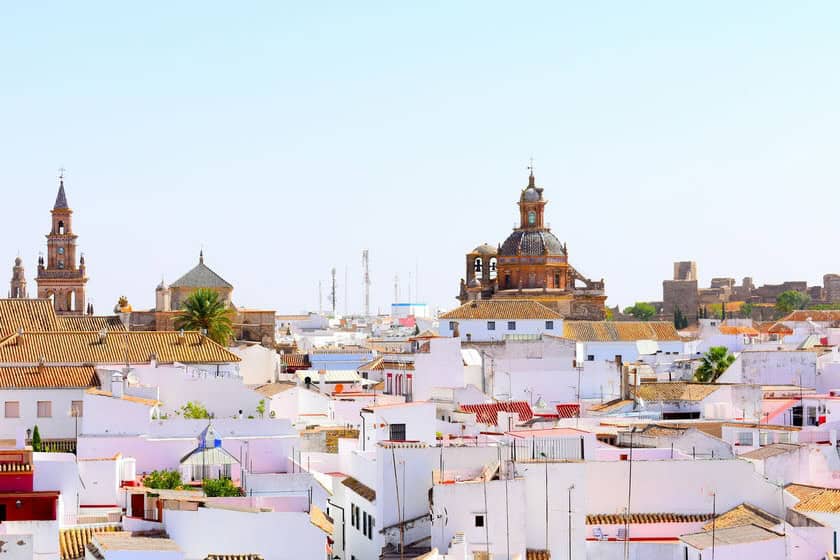
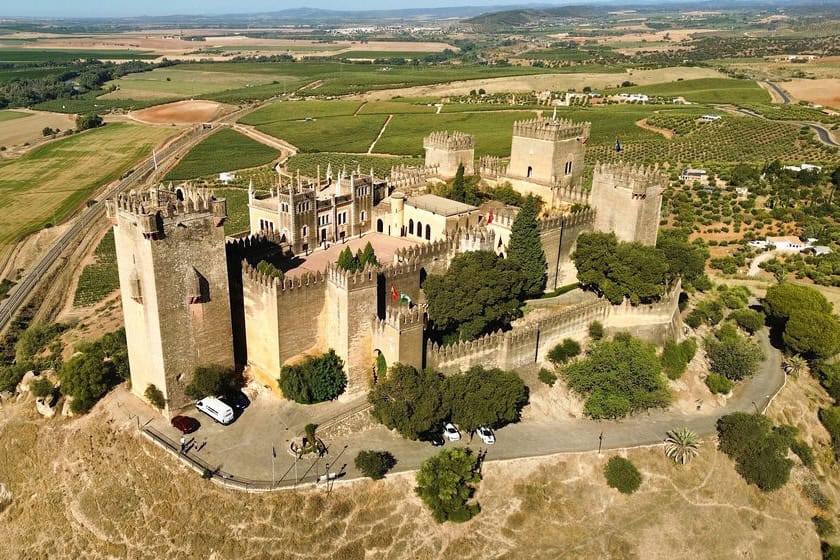
The third option is to go via the north, diverting after visiting Carmona to pass through Almodóvar del Río. This variant of the first itinerary replaces the already mentioned Écija with this little town. It is a stop that is well worth it above all for its spectacular medieval castle, which dominates the whole landscape below. Used as a location for the TV series “Game of Thrones”, it is one of the main attractions near Cordoba. The town itself is also well worth a lovely stroll through the lanes between its white-painted houses.
Where to stay
It is almost certain that you will stay in Seville and possibly one or two nights in Cordoba, but depending on your itinerary, especially if you are travelling by car, it may be handy to stay overnight in one of the smaller towns, where spending the night is certainly a more characterful and less touristy experience. Here is where to stay in the main towns:
