Almería rises from the sea like something out of a fairy tale from “One Thousand and One Nights” and stands majestically almost like a princess, protected by the walls that guard her. The origin of the name is Arabic: “Al-Meriya”, “water mirror” and it was under the Arabs that this little town flourished in elegance and culture, so much so that the scent of the Orient can be breathed in every alley and on the façades of its sumptuous monuments. Visiting Almería is possible in a short time, but even though it is small there are hidden gems, all waiting to be discovered.
Contents
Things to see in Almeria
The Cathedral and the other churches
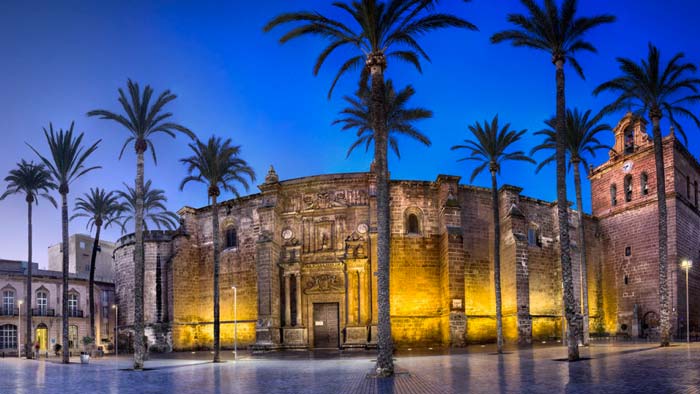
Let’s start from the city centre, where the Cathedral stands, built in 1524 after a powerful earthquake destroyed the former Christianised mosque. The solemn Cathedral rises like a fortress; from the outside it looks more like a stronghold than a place of worship and, in fact, it was built to defend against constant pirate attacks.
The military aspect is softened by the Renaissance style of the façade, designed by Diego de Siloé, the architect of the cathedral in Granada. Besides the Cathedral, also worth visiting are the adjoining Iglesia de la Virgen del Mar, home of the patron saint, and the Iglesia de Santiago.
The Alcazaba
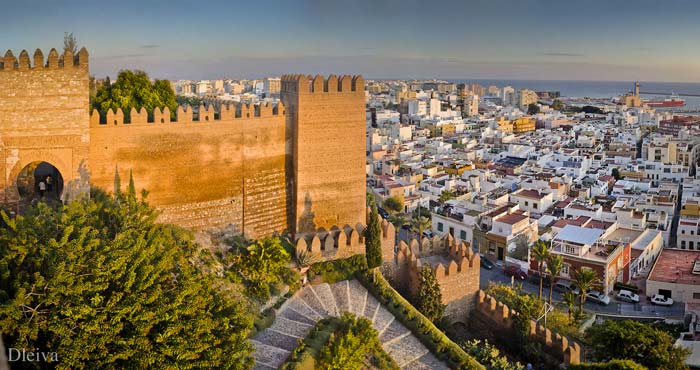
The Alcazaba of Almería is a true gem set in the barren earth; it is the magnificent fortress from which you can enjoy a 360° view over the whole city, perhaps the place most worth visiting in Almería. It is located in Calle Almanzor and can be reached with a short walk from the city centre through the narrow alleyways of the old Barrio La Almedina, with its somewhat run-down houses in bright colours.
Here the Arab influence is felt more than in the other monuments: as you make your way up the gardens in the lower part of the fortress, you will find yourself before the imposing walls of the Alcazaba proper, the citadel. Beyond the access gates, you will be welcomed by more splendid gardens, called Jardines del Agua, so evocative that they made it into the Game of Thrones filming set in the Reino de Dorne.
Admission to the Alcazaba is free.
On the hill next to the Alcazaba you will also see San Cristóbal Castle. From the top of the Moorish castle, you can understand the crucial role of the port of Almería in history: it is one of the main ones on the Mediterranean coast of Spain and recalls the profitable export of minerals, iron and table grapes, one of the area’s typical products.
Barrio de la Chanca
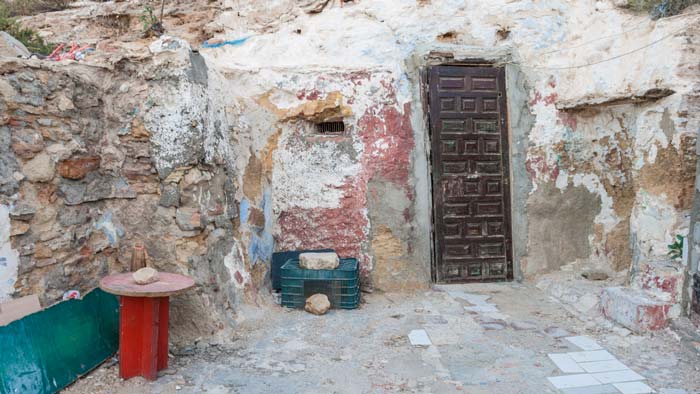
It is the district that rises on the hillside and is very distinctive, with its houses carved into the tufa rock; an area left to its own devices and inhabited by gitanos and other poor people, in which one can recognise the pages of Gerald Brenan’s book, South from Granada, in which the author recounts his own experience of life in the hidden villages of 1920s Spain, the decay, the peasant spirit of a pleasant and still wild reality.
Mini Hollywood (it’s not America, but it might seem like it)
The most important attractions in Almería are all in the city centre and you can get everywhere on foot, crossing cobbled streets or strolling along the seafront. However, given the abundance of vegetation and the enchanting nature of this part of southern Andalusia, an excursion is always a good idea. Just over half an hour from Almería lies the only desert in Europe, the Tabernas Desert.
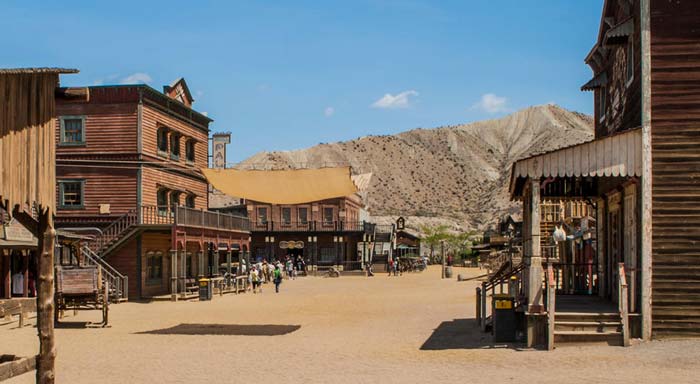
Imagine enjoying a drink on the seafront, with music in the background and the shouts of children playing (hopefully in the distance), then close your eyes. When you open them again, you find yourself right in the middle of a desert. A desert! Perhaps Americans are used to that, but for us, the desert is something we know only from films.
And indeed it has been the setting for cult movies such as “For a Fistful of Dollars”, “For a Few Dollars More”, “The Good, the Bad and the Ugly”. Sergio Leone struck gold in Andalusia, setting his most famous films here. And it wasn’t just him: other westerns were filmed here too, and I’ll let you in on a secret: it was right here that the long partnership between Bud Spencer and Terence Hill began!
Mini Hollywood is an amusement park suitable for the whole family. There are entertainment shows in which the saloons come to life and a gringo shoots another, a real delight for fans of the genre! Children will not be disappointed either: as well as seeing their dad happy like a child for the first time, they can visit a small zoo and take a dip in the pool.
Information on the Mini Hollywood tour
Historical and cultural attractions
The Almería Museum
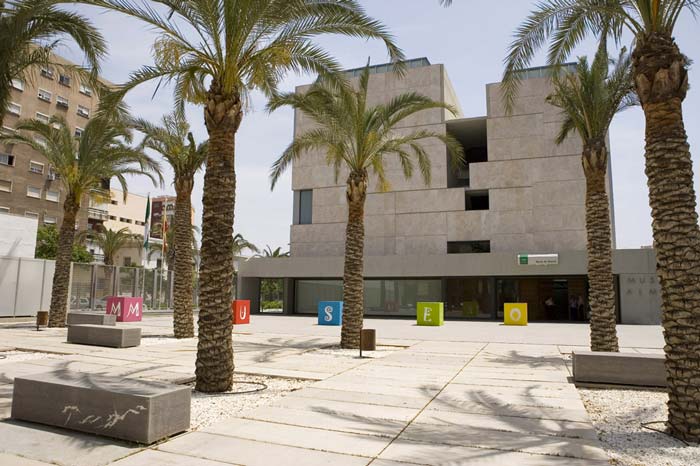
Opened in 2006, the Museum was awarded an honourable mention in the “European Museum of the Year” competition for its modern, futuristic architecture. Despite appearances, this is an archaeological museum spread over three floors, housing prehistoric finds from the Neolithic and Bronze Ages. It also contains a collection of Islamic art, with funerary tombstones on display, of which Almería was a key creative and production centre.
Civil War Shelter Museum
Among the things to see in Almería, this is certainly one of them. A visit to the shelters dug beneath the city during the Spanish Civil War, a short but moving experience that also includes a visit to the small hospital equipped with an operating theatre, set up inside the tunnel. A dip into the past to relive the dramatic, blood-soaked days that Spain lived through between 1936 and 1939. Visit must be booked in advance!
The most beautiful beaches on the coast and Cabo de Gata
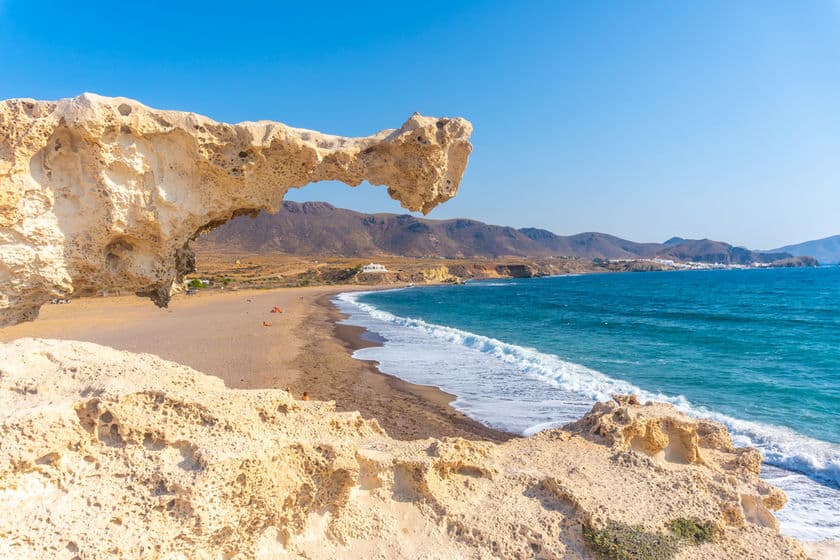
Almería has an endless series of beaches to suit every taste. If you want to stay in the city area, you will find Playa del Zapillo, which has the advantage of being in the centre, but quite honestly it is nothing special. What is special, however, is Cabo de Gata, a nature reserve with unspoilt beaches, sheer cliffs, wild coves and pink flamingos.
The contrast before our eyes is second to none: from the white ground and the silence you will feel as if you are walking on lunar terrain, or as though you are still among the gravel of the Tabernas desert. And in fact the sea is so clear that it can seem like a mirage, but no, it is real and it is right there in front of you as you look at it from the top of the rock you are perched on.
In the natural park, you’ll have the chance to choose the beach that’s right for you (or work out what kind of beachgoers you are): there are the “easy” and relaxing beaches of San José and the more hidden ones that are harder to reach, such as Playa san Pedro and the mysterious coves of Agua Amarga.
For a trip to Cabo de Gata, make sure you have comfortable shoes (you’ll have to walk a bit to get to the beaches), a backpack, sandwiches and, above all: don’t forget your sunscreen! For more on the magnificent beaches of Almería, visit our dedicated page; among the more common ones you’ll also discover the secret beaches, the ones nobody knows about!
Organised tours: the best way to discover Almería
To get an idea of the activities you can enjoy, have a look at the tours in Almería: a range of options varying from kayaking trips, excursions into the Tabernas Desert or along the trails of Cabo de Gata, a romantic horseback ride among the dunes and much more. For the more daring, an unmissable experience: canyoning, an adventure through the rapids of Alpujarra!
Weather
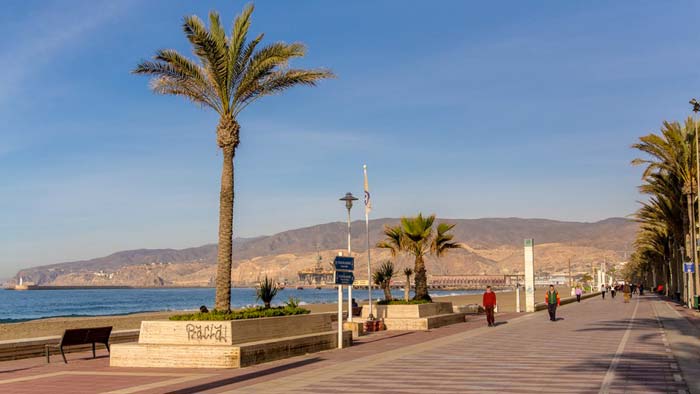
The climate of Almería is ideal for those who cannot stand the cold: it is always warm, but the breeze that comes from the sea does not make the air muggy. Daytime temperatures reach and exceed 20 degrees even in winter, which is why it is a destination that can be visited at any time of year, and why tourism in Almería never goes into crisis: it is like having a little Arizona in Europe and, moreover, with the sea!
On the borders of Europe: Melilla
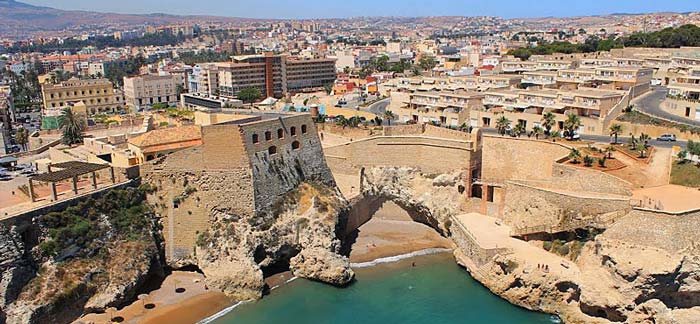
From Almería, it is easy to cross the border and reach North Africa by ferry. From here there are departures for Ghazaouet and Oran (both in Algeria), Nador (Morocco) and, would you believe it, one of the two Spanish cities that remain in Morocco: Melilla. Morocco has tried in every possible way to take Melilla and, in 1774, after a hundred-day siege by Sultan Mohammed ben Abdallah, the city held out and remained Spanish. In 1995 Melilla became an autonomous city, and there is even a “wall” separating it from Morocco (so as to limit immigration).
The other city that lies on Moroccan soil is Ceuta. Taken from the Arabs and conquered by Portugal in 1415, it was definitively ceded to Spain in 1668. The two cities are four hundred kilometres apart, but Melilla is still about three hours from Almería, if you feel like venturing beyond the Pillars of Hercules… take a ferry!
Where to stay in Almería?
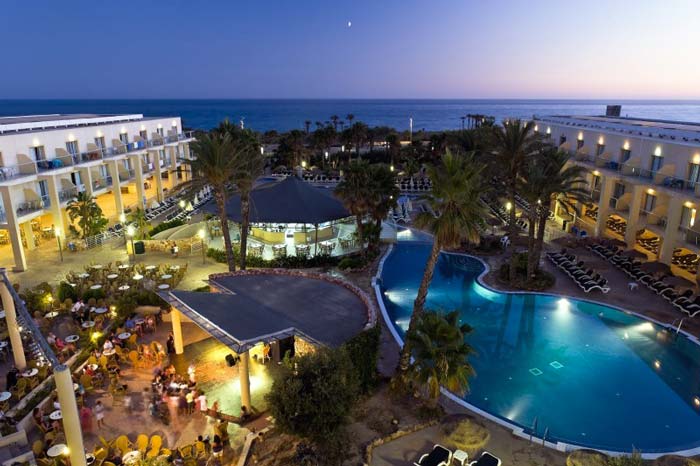
The city offers two alternatives. The first is to stay in the centre, in hostels or hotels just a stone’s throw from Almería’s attractions. Be warned, though: many of the hostels and B&Bs are basic places, some of them a little run-down. If you are thinking of staying just for one night, it could be a good compromise: prices are low and you are in the heart of Almería.
If, on the other hand, you want to stay longer, hotels along the coast are a better alternative: you are close to the sea, will be able to reach the most beautiful beaches in no time, and in the evening you can enjoy the shows organised on the beach.
All available accommodation in Almería
How many days to visit it?
If you’re thinking of spending your holiday in Almería, bear in mind that a couple of days are enough to see it all, given that the city centre is quite compact. It’s not the most charming city in Andalusia, but if you’re on a road trip and you’re near Granada you really can’t let it pass you by, if only for the main sights, such as the Alcazaba and the Tabernas Desert, and for a dreamy swim on one of the beaches of Cabo de Gata.
In short, I really hope I’ve piqued your curiosity, after all, when else in your life will you get the chance to take a stroll in the desert and then dive straight into a sea of crystal-clear water?
