Almuñécar is the most interesting town on the Costa Tropical, the stretch of coastline in the province of Granada. This area is often less frequented than more well-known shores, such as the Costa del Sol, in the province of Málaga, or the Costa de la Luz, looking out over the Atlantic between Cadiz and Huelva. Yet thanks to its position along the coastal route between Malaga and Granada, Almuñécar can be a good option for those who want to enjoy a few days by the sea in between visits.
The town offers a rather varied landscape: urban beaches, with their seafront lined with restaurants, chiringuitos and beach clubs, alternate with rocky headlands and more rugged stretches of coastline, typical of this part of the Costa Tropical. In the main seaside areas of Almuñécar, the coast retains the lively character of a classic seaside resort that is not particularly touristy, while the rock outcrops and the hills behind the town break up the continuity of the seafront and lend the landscape a pleasant variety. The small historic centre, rich in Phoenician, Roman and Arab traces, lies at the foot of the hill on which the Castillo de San Miguel stands out, one of the city’s main viewpoints.
Let’s therefore discover the sights to see in Almuñécar!
Contents
Historical notes
The history of Almuñécar is rooted in ancient Sexi, a settlement founded by the Phoenicians around the 8th century BC and later passed under Roman rule. At this time, the town was a coastal centre connected to maritime trade and fish processing, as shown by the ruins of the Roman aqueduct, dating from the 1st century AD, the Cueva de Siete Palacios and the remains of the salting factory in Parque El Majuelo, where fish preserves and garum were produced.
With the arrival of the Arabs in the 8th century, the town retained and consolidated an important role along the Andalusian coast, taking on the urban character still visible today in the historic centre. This long medieval phase is told not only by the Castillo de San Miguel, developed mainly in the Muslim period and later altered over the centuries, but also by the tangle of lanes in the casco antiguo and the remains of the old walls.
Where it is and how to get there
As mentioned above, Almuñécar is located on the Costa Tropical, in the province of Granada, overlooking the Mediterranean between Málaga and Motril. It is easy to reach by car via the A-7, the major coastal road that links the main places along the Andalusian shoreline, as far as Algeciras. The most convenient airports are Málaga, served by numerous international flights, and Granada, which is more geared towards domestic connections.
From a geographical point of view, Almuñécar occupies an intermediate position between two different coastal landscapes. Towards La Herradura, Nerja and Maro-Cerro Gordo, the shoreline becomes rockier, with captivating cliffs, hidden coves and inlets; heading towards Salobreña and Motril in the direction of Almeria, by contrast, the landscape takes on a more agricultural character, with subtropical crops and greenhouses that are especially typical of the eastern stretch of the Costa Tropical.
What to see in Almuñécar
In the introduction and during the brief account of the origins of Almuñécar, I already mentioned the historical and cultural sights that bear witness to the story of this little town over the past few centuries. Below, I go into more detail, giving you some practical information on the attractions worth visiting. Finally, an overview of the beaches.
Castle of San Miguel
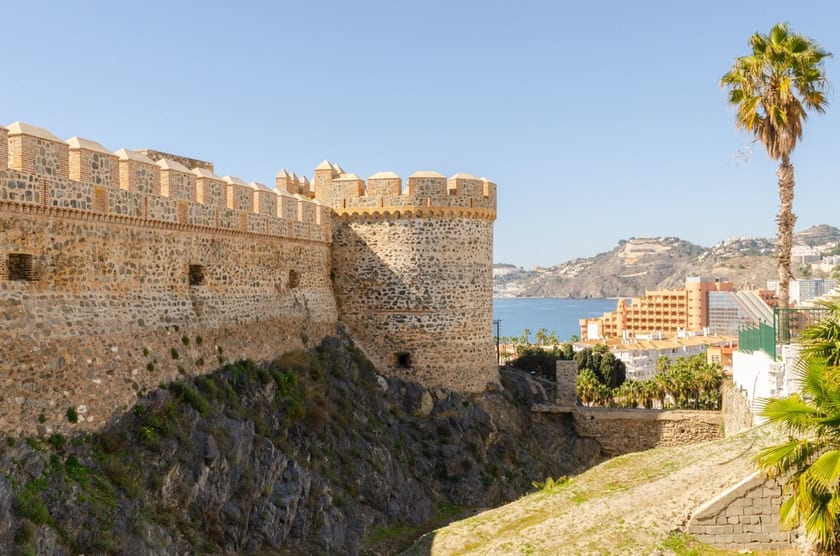
The Castillo de San Miguel dominates Almuñécar from the hill overlooking the historic centre and is one of the town’s main visits, both for the panoramic views it offers and for its historical interest. The fortress occupies an area already used in ancient times, but owes much of its appearance to the period of Muslim rule, with later alterations after the Reconquista.
That said, you should not imagine a richly decorated Moorish palace like those of the Alhambra or the Alcázar in Seville, but rather a defensive fortress preserving traces of different eras. The main appeal of the Castillo de San Miguel therefore lies in wandering through the interior spaces, the walls and the towers, from which some of the finest views open up over the historic centre, the Peñón del Santo and the coastline.
The castle is generally open from Tuesday to Saturday in the morning and late afternoon, while on Sundays it is open only in the morning; it is closed on Mondays. In summer, the afternoon opening is pushed back, until 21:00, while in winter closing time is brought forward.
The ticket also includes the Museo Arqueológico Cueva de Siete Palacios. Admission costs €4 for adults and €2.50 for children and pensioners.
Archaeological Museum of the Cueva de Siete Palacios
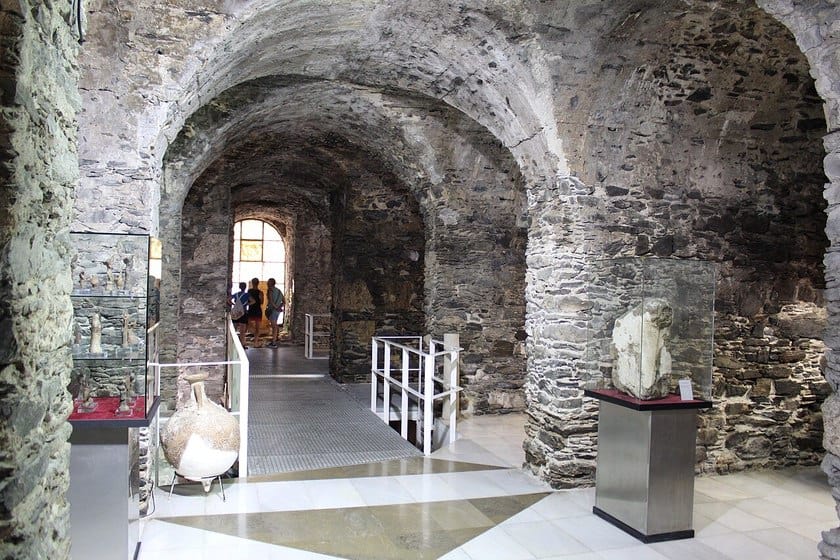
The Museo Arqueológico Cueva de Siete Palacios is housed in the area where the ancient forum of Sexi once stood, in an underground Roman complex made up of a large stone vault flanked by seven smaller vaults (hence the name). It is located in the heart of Almuñécar’s historic centre, in the upper part of the casco antiguo, where several traces of the old city walls are also concentrated: remains of the defensive structures, sometimes incorporated into the fabric of the houses, can be seen around the Castillo de San Miguel, particularly in the area of Plaza Eras del Castillo and Calle San Miguel Alto, and by the old Puerta de Granada, near the Iglesia de la Encarnación.
The museum houses artefacts linked to the city’s various phases, from the Phoenician and Roman periods to the medieval era. The best-known item in the collection is the Egyptian canopic jar attributed to Pharaoh Apophis I, a testament to the ancient city’s Mediterranean connections. The visit is fairly short, but it is well worth combining it with the Castillo de San Miguel, not least because the ticket is combined. Opening hours generally follow those of the castle: open from Tuesday to Saturday in the morning and afternoon, Sunday mornings only, closed on Mondays. The combined admission costs €4 for adults and €2.50 for children and pensioners.
Parque Botánico-Arqueológico El Majuelo
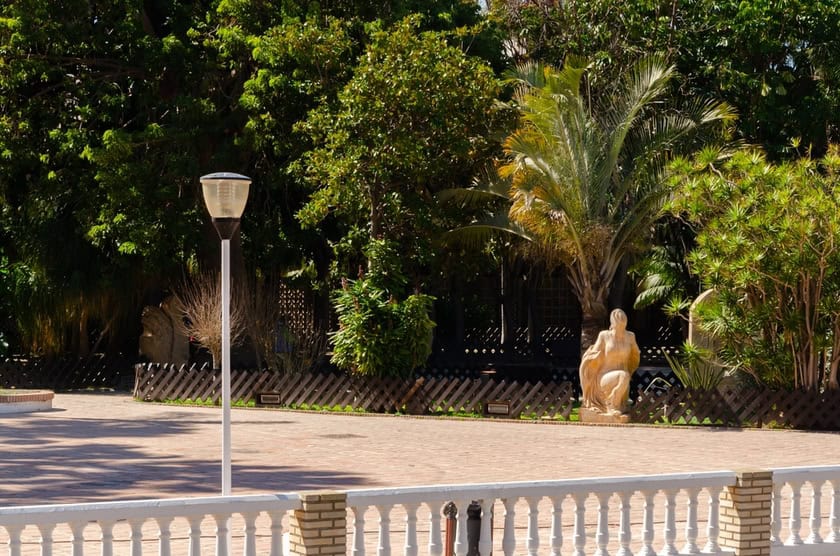
At the foot of the Castillo de San Miguel lies the Parque Botánico-Arqueológico El Majuelo, a pleasant, shady garden with subtropical vegetation, palm trees and plants from various parts of the world. Its main interest, however, is once again historical: in one area of the park you can in fact admire the remains of the ancient salting factory, the archaeological site linked to fish processing and the production of garum.
The area, excavated between the 1970s and 1980s, was already active in Phoenician times, between the late 5th and early 4th century BC, and reached its fullest development in Roman times, in the 1st century AD. Walking around the vats, you can make out the spaces used for cleaning, cutting, soaking and preserving the fish. The visit is free and can easily be combined with the castle, the seafront and the historic centre, all reachable in just a few minutes on foot.
Peñón del Santo
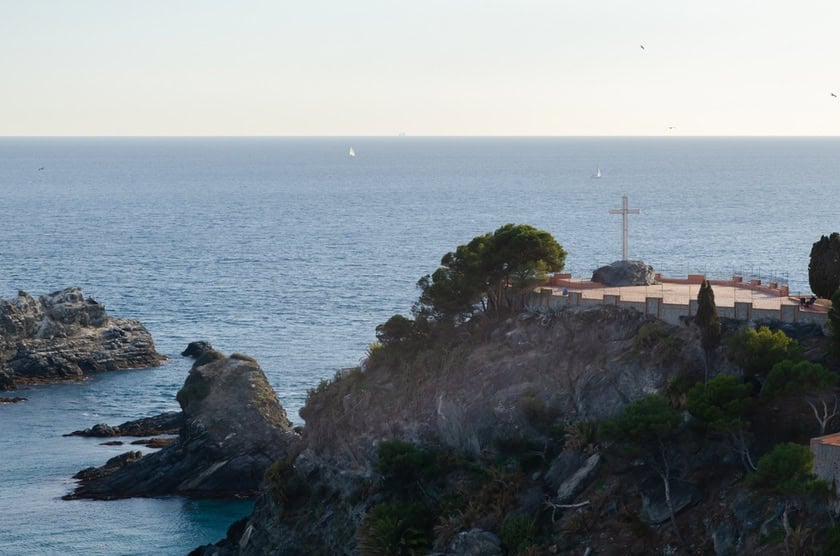
I’m now telling you about one of the most representative features of Almuñécar’s landscape: the Peñón del Santo, the rocky headland that separates the Playa San Cristóbal area from that of Playa Puerta del Mar, situated in one of the most central and photographed spots in Almuñécar. In reality, it is made up of three outcrops, called El Santo, En Medio and Afuera; the main one reaches around 30 metres in height and is accessible via ramps and gardens.
At the top stands the Cruz del Santo, first installed in 1900, together with a viewpoint overlooking the sea, the historic centre and the hills surrounding the city. At the foot of the Peñón is also the Monumento a Abderramán I, which commemorates the landing on the shores of Almuñécar of the future founder of the Umayyad emirate of Córdoba.
Access is free and the site is open every day, generally from 9:00 a.m. to midnight.
Roman Aqueduct and Baths
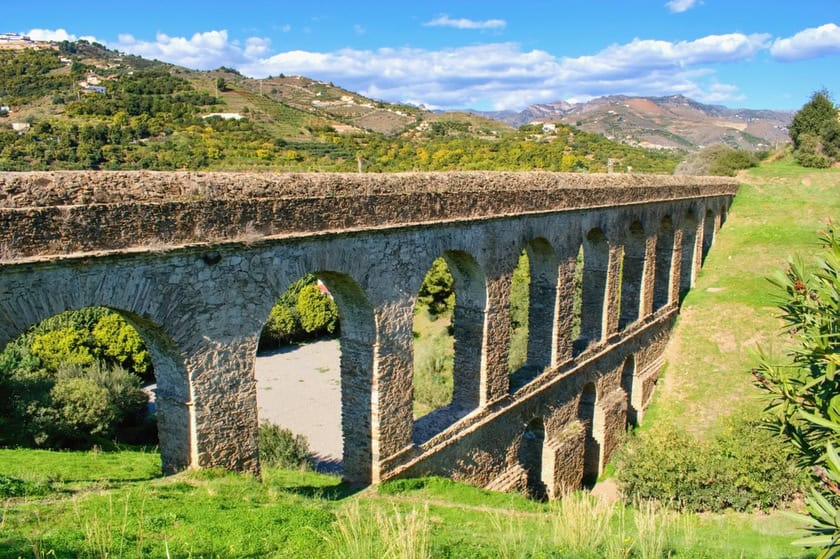
Just outside the historic centre, on Carrera de la Concepción, there is another archaeological site worth visiting: the Acueducto. Dating from the 1st century AD, the aqueduct was used to carry water into the city and to the area of the factoría de salazones, mentioned above.
The best-preserved remains are precisely the so-called Carrera one, the De Torrecuevas one (a ten-minute drive from the centre) and, above all, the one at Santa Cruz (see photo above), set in the beautiful surroundings of the Parque del Acueducto (a 5-minute drive from the centre).
Right in the Carrera de la Concepción area, excavations also uncovered remains of Roman baths, linked to the hydraulic system of the ancient city. The site can be visited free of charge.
Palace of La Najarra
As often happens in Andalusian towns, Almuñécar’s tourist office is also well worth a look. It is housed in the Palacete de La Najarra, an elegant 19th-century building in neo-Arab style, surrounded by a small garden. Outside, you can make out arches, geometric decorations and details inspired by Andalusian-Islamic architecture; inside, in the areas of the tourist office open to the public, you can admire Alhambra-style decorations, with azulejos and decorated wooden ceilings. The visit is brief and, of course, free: make the most of it if you want to pick up some information leaflets.
Church of the Incarnation
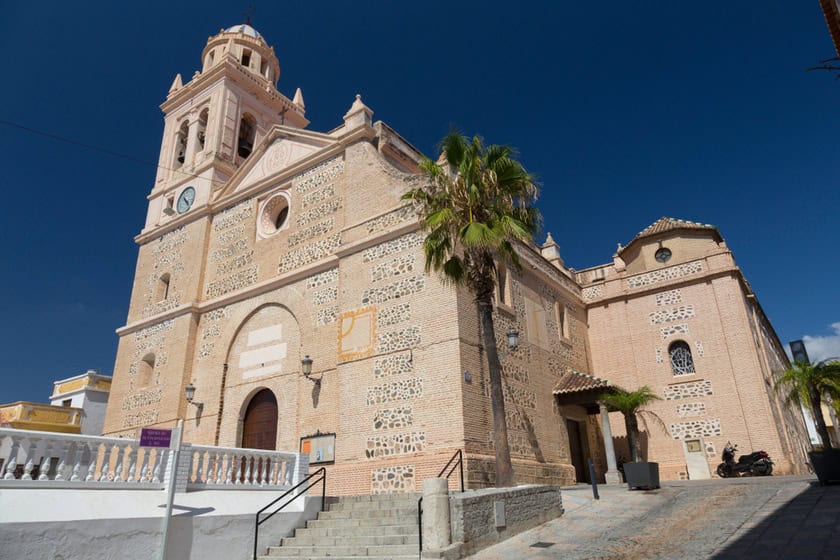
The Church of the Incarnation is located in the historic centre, near Puerta de Granada, and was built between the late 16th and early 17th centuries. It is regarded as a noteworthy building above all from an architectural point of view, as it marks the transition from the Renaissance to the early Baroque in the province of Granada. The interior is spacious and austere, with a Latin cross plan, a central nave and side chapels: it is not a church to visit for grand decoration or works of art, not least because it lost much of its heritage during the Civil War. It preserves the image of the Virgen de la Antigua, the town’s patron saint.
Other things to see in the old quarter
The historic centre of Almuñécar climbs uphill, through narrow alleys, flights of steps and small squares that rise from the lower part of the old walled city towards the Castillo de San Miguel. The most interesting streets are those around Cuesta del Castillo, Cuesta del Carmen and Calle Real: a labyrinth of whitewashed lanes, tight passages and sudden glimpses between the houses.
Among the most pleasant corners are Plaza de los Higuitos, shaded and gathered around a central fountain, and Plaza de la Rosa, lively and colourful. During the stroll, it is also worth stopping at the Pozo de la Calle Nueva, a small square at the end of Calle Nueva, in the old town. The spot is very well cared for, with floral decorations, azulejos and details dedicated to the Virgen de la Antigua, patron saint of Almuñécar. According to popular tradition, it was in this well that the image of the Virgin was found, now venerated in the Iglesia de la Encarnación.
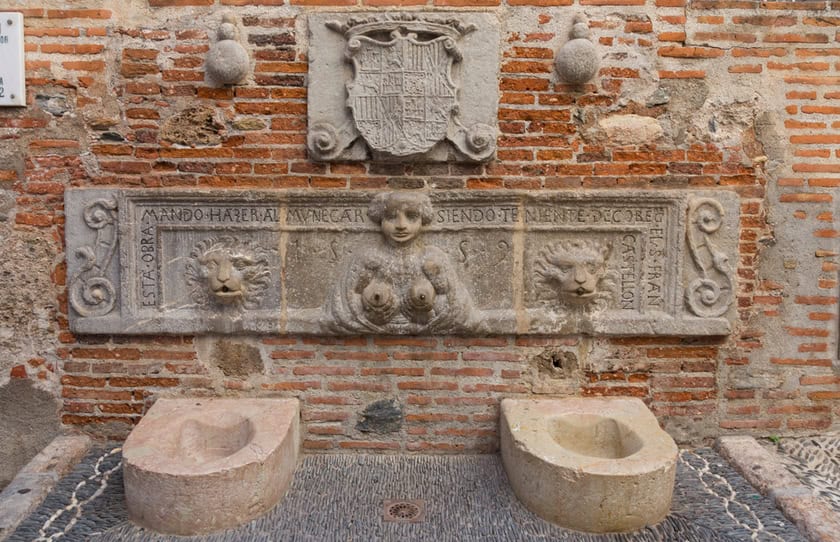
Along Calle Real, you will also find the Pilar de la Calle Real, a Renaissance fountain from 1559 linked to the city’s Christian period. Its marble frontage is decorated with scrolls, lion masks and a female figure associated with fertility, in a style inspired by the classical world.
Finally, a little gem: in Plaza de la Victoria, next to a bar, you can see the old Renaissance brick frontage of the façade of the Convento de los Mínimos, dating from the 16th to the 17th century.
The House Boat of Almuñécar
Enfin, une curiosité architecturale : la Casa Barco se trouve sur l’Avenida del Mediterráneo, à quelques mètres de Playa San Cristóbal, le long d’une montée non loin de la mer. C’est une maison privée construite au début des années 1970 par José María Pérez Ruiz, mécanicien naval de la Marine marchande, en forme de navire à moteur long d’environ 75 mètres. On ne peut pas la visiter à l’intérieur, mais elle mérite un coup d’œil si vous passez par là, surtout pour sa façade pleine de références à l’univers marin. De loin, elle trompe vraiment !
The beaches of Almuñécar
The three main beaches of Almuñécar are Playa Puerta del Mar, Playa San Cristóbal and Playa Velilla. They are the most convenient, well-equipped urban beaches and the easiest to fit into a city break: here you will find services, restaurants and chiringuitos, and their location is perfect for anyone wanting to alternate a seaside holiday with sightseeing in the search of Almuñécar’s casco antiguo.
Playa Puerta del Mar
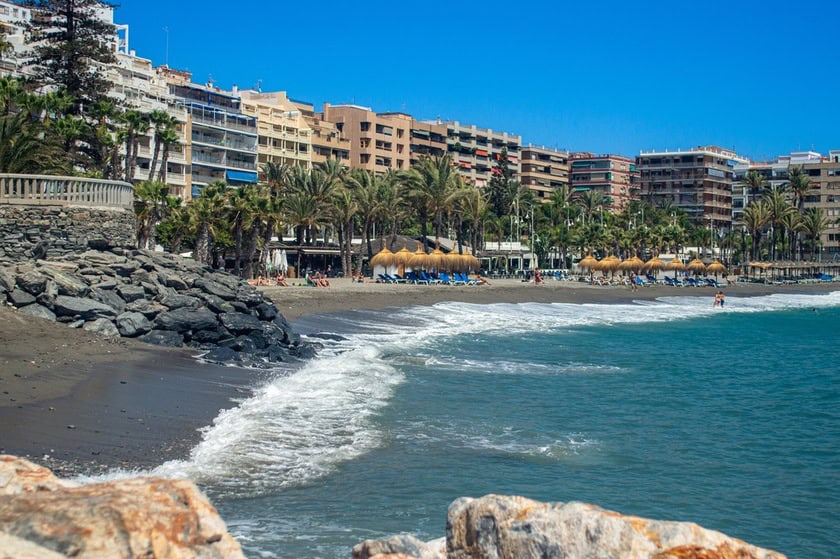
Playa Puerta del Mar is the most central beach in Almuñécar, located in front of the lower part of the town and separated from Playa San Cristóbal by the Peñón del Santo. It is a wide and convenient urban beach, with dark sand and fine pebbles, generally calm waters, and beach clubs with play areas for children and all kinds of services.
The seafront leads towards Paseo del Altillo, a pleasant central square lined with palm trees where bars, churrerías, restaurants and shops are concentrated: while strolling along the Paseo, you come across various sculptures and urban monuments, including the Monument to the Phoenicians and the Monument to Laurie Lee.
Playa San Cristóbal
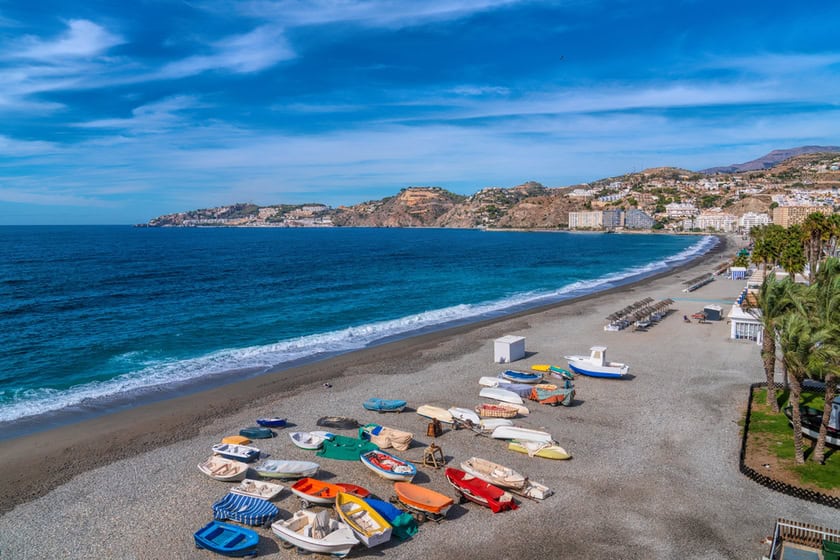
Playa San Cristóbal is to the west of the Peñón del Santo and stretches along the western urban stretch of Almuñécar. It is long, with dark sand and fine pebbles, and alternates free stretches with beach clubs offering showers and sun lounger hire. Along the wide, tidy Paseo de San Cristóbal, there is no shortage of chiringuitos, restaurants and sea-view hotels. Compared with Puerta del Mar, this beach is further from the historic centre and better suited to families and to anyone looking for a well-equipped beach without leaving the urban area.
Playa Velilla
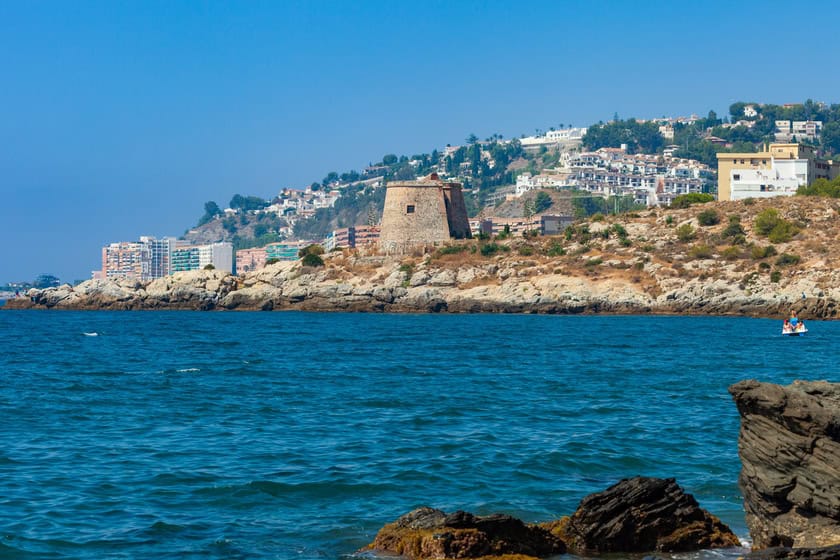
To complete the picture, I’d like to mention Playa Velilla, which occupies the eastern stretch of Almuñécar’s urban coastline. It extends beyond Puerta del Mar and the Fuentepiedra section, the last central stretch of beach before the rocky outcrops of Velilla. This is also a long, well-equipped beach, with dark sand mixed with shingle, beach establishments and several bars and restaurants along the paseo marítimo.
Compared with Playa San Cristóbal, it has a more residential and linear character: the seafront is marked by apartment blocks, holiday flats and hotels with direct access to the beach. Very beautiful is the Moorish watchtower called Torreón de Tamaray, on the eastern side of the beach (see photo above).
The surroundings of Almuñécar
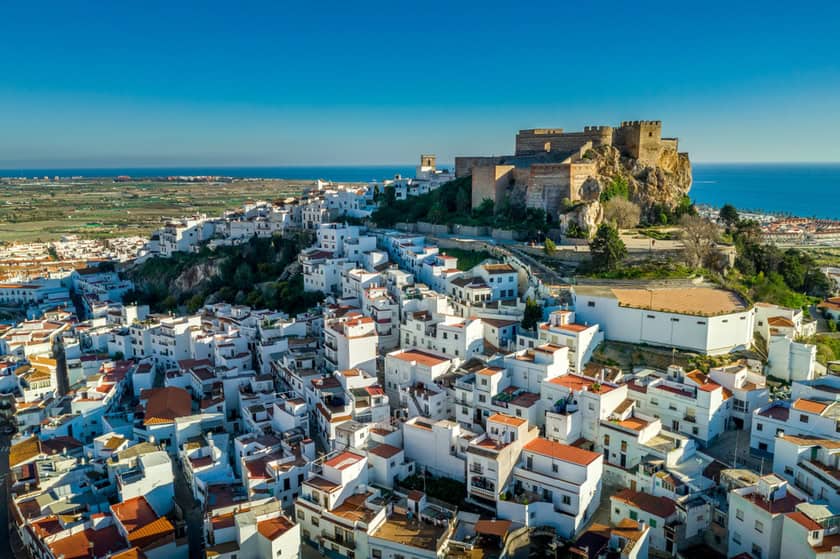
Among the most interesting excursions from Almuñécar is Salobreña, about twenty minutes by car to the east. Beyond the beach, which does not offer any particular points of interest compared with what you’ll find in Almuñécar, it is well worth heading up to the upper historic centre, gathered around the Arab castle: you walk among white houses, narrow lanes and viewpoints all the way to the fortress, from which you can take in the contrast between the village, the agricultural plain and the sea. It is best to drive as far as this car park and then continue on foot, as the upper part has steep streets, narrow passages and very few parking spaces.
For the natural landscapes of the Costa Tropical, however, it is worth driving west, in the direction of La Herradura and Cerro Gordo, where the Acantilados de Maro-Cerro Gordo are located. We are on the border with the Costa del Sol, but the landscape is different from that of the more urbanised resorts on the western coast of Málaga: here the shoreline is rugged, characterised by coves, clear waters and rocky stretches that slope down towards the sea.
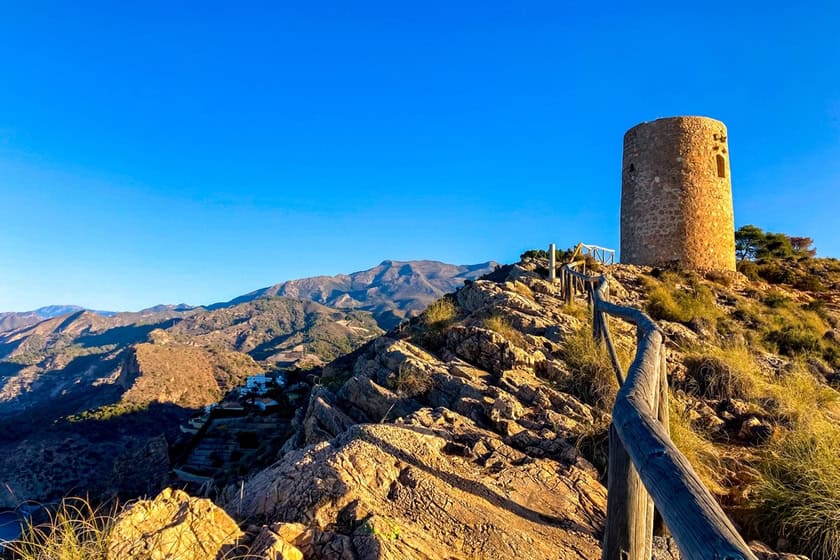
For an impressive panoramic spot that is easy to reach, the reference point is Torre de Cerro Gordo, an ancient watchtower overlooking the cliffs. For the sea, meanwhile, you can choose one of the coves in the area, bearing in mind that these are not urban beaches and access may require a bit of planning. The best-known is Playa de Cantarriján, a bay among the rocks with clear water and a few services in season; the central spur divides the busier part from the naturist area.
Where to stay in Almuñécar
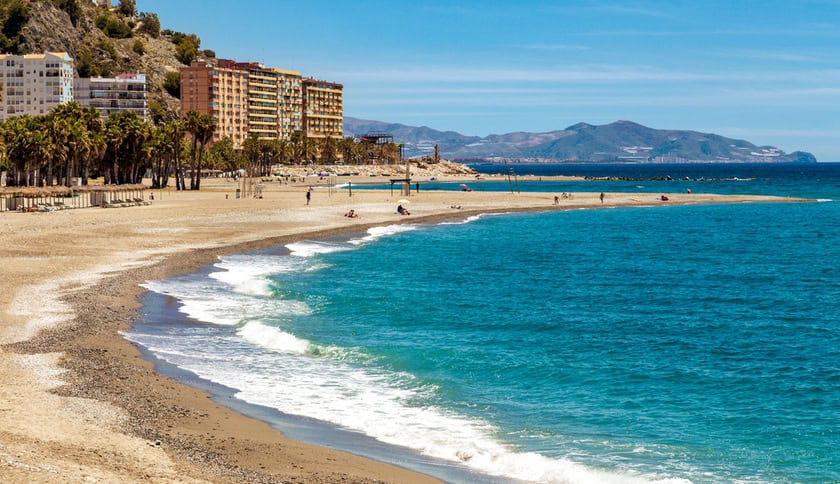
As anticipated, there are essentially three main areas in Almuñécar: San Cristóbal, Puerta del Mar and Velilla, each with its own characteristics.
- If you are looking for a hotel, bear in mind that the highest concentration is along the seafront at San Cristóbal. I recommend Hotel Helios Costa Tropical, located directly on the Paseo and in front of the beach of the same name. The property is extremely convenient for access to the sea, but the historic centre and the Castillo de San Miguel are also within walking distance, so it is ideal for sightseeing in the town too. It offers a heated outdoor swimming pool in winter, a spa and a rooftop bar on the tenth floor with views over the coast.
- In the centre, in the Puerta del Mar area, there are indeed hotels, but above all apartments, among which I would highlight those of El Tranco del Mar: they have a living area, kitchenette, air conditioning and comfortable spaces for stays of a few nights, as a couple, with friends or as a family. They are located right in the centre of Almuñécar, close to shops, bars and restaurants, and allow you to reach both Playa Puerta del Mar and the casco antiguo on foot.
- Velilla is instead a more residential area, where you mainly find flats and holiday homes. I’m pointing you to this apartment, which struck me for its location directly on the Paseo de Velilla, just a few steps from the beach, and for the efficient organisation of the accommodation. It is an option worth considering if you prefer a more residential area than the historic centre, with bars and restaurants practically on the doorstep and the beach just a short walk away.
Where to eat in Almuñécar
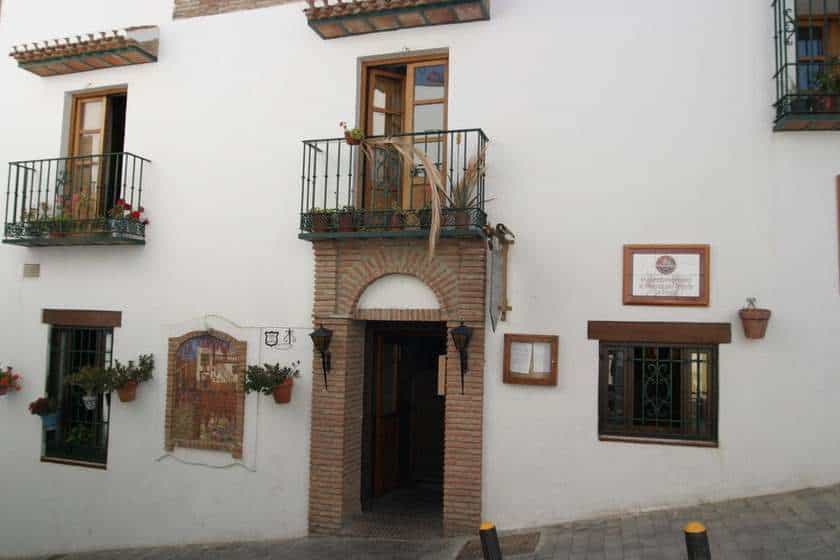
If you’re looking for a hearty, no-nonsense restaurant, I’d recommend La Corrala, tucked away behind an old brick façade in Almuñécar’s historic centre. The menu offers meat and fish dishes such as rabo de toro, revueltos, croquetas, berenjenas con miel and other traditional dishes. The venue is also known for its flamenco evenings, particularly on Wednesday nights: it’s still best to check before going, in case there’s a different programme.
If, on the other hand, you are looking for somewhere less informal, you could try FIRMVM, a contemporary restaurant overlooking a little square near the historic centre. The menu is more elaborate than the classic tapas-and-raciones offering, but is still based on Mediterranean produce and the flavours of the Costa Tropical, with fish, vegetables and meats prepared more carefully.
