Estepona is a town that has chosen to preserve its own identity beyond its tourist appeal, limiting the heavy urban development that characterises most places on the Costa del Sol. Balancing the presence of hotels, equipped beaches and seafront venues, you will find a well-kept and distinctive historic centre, recently restored and ideal for those who want to enjoy the sea without giving up the hospitality and traditional aesthetics of Andalusian towns.
If it has crossed your mind to choose Estepona for part of your Andalusian holiday for precisely these reasons, then all you need to do is read this article and make a note of the main sights to be found in the town and its immediate surroundings.
Contents
How to get to Estepona
Estepona is located 80 km (50 miles) south of Malaga, in the western part of the Costa del Sol. It is one of the last places before the border with the province of Cadiz, halfway between Marbella and Gibraltar. Behind it stretches the Sierra Bermeja, which separates the coast from the inland area.
Reaching it from Malaga is not difficult: just drive for about an hour via AP-7. It is not worth using public transport, however, since it is not possible to get there directly by train and the bus journey is rather long. If you need any advice on how to hire a car, read our article dedicated to car hire in Malaga.
What to see in Estepona
Before I tell you about the atmosphere of Estepona’s lively urban fabric, I’ll start with the main reason it is so famous and so popular: the beaches.
Estepona Beaches
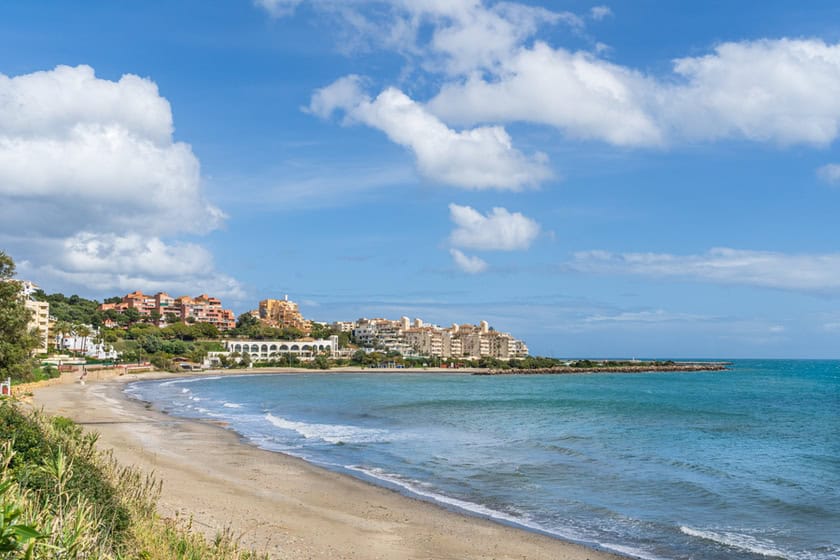
If what you’re looking for is the convenience of having the beach just a stone’s throw from the hotel and the town centre, then you mainly have two options:
- Playa de la Rada: Estepona’s most central beach presents itself as a long, wide stretch of sand, easy to reach from the centre and equipped with all amenities, with large, comfortable areas of public beach, good-quality beach clubs and chiringuitos dotted along the whole coastline. Urban yet not excessively chaotic, it is a good option for those who want a proper beach holiday without having to move the car, while staying close to the central areas.
- Playa del Cristo: south of the port, in a sheltered and protected area just outside Estepona’s centre, lies a small sheltered bay that guarantees calm waters and shallow seabed, suitable for very young children. The beach is certainly more intimate than La Rada, with fine sand and a few well-positioned chiringuitos, but be careful because the equipped areas are expensive. Between the two beach clubs there is a stretch of public beach.
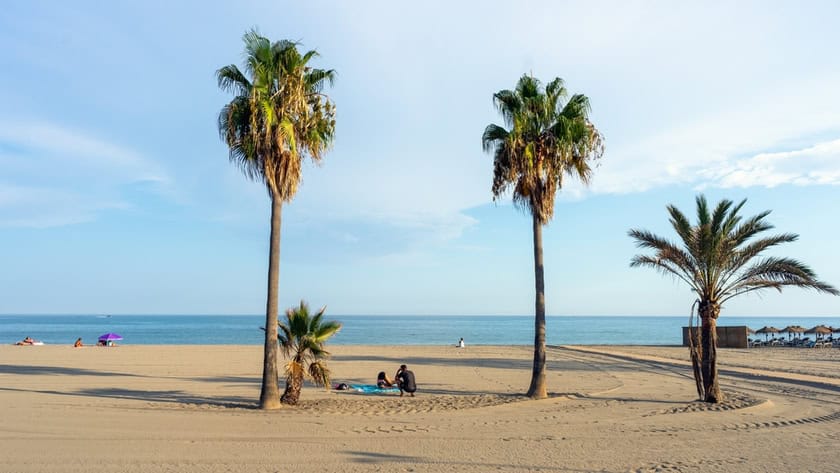
If instead you want to explore some of the less urbanised beaches and don’t mind getting around by car, as well as taking into consideration the beaches indicated in this section, I recommend these two:
- Playa del Saladillo: a long sandy beach located east of the centre, characterised by more open stretches and fewer crowds than Estepona’s urban beaches. Although it lies in an area with luxury resorts, it still retains a certain scenic appeal and a more relaxed atmosphere, without blocks of flats or skyscrapers in the background. It is one of the best options for getting away from the centre without giving up convenience and, above all, the quality of the beach experience.
- Playa Bahia Dorada: on the opposite side of Playa del Saladillo, to the west of Estepona, lies one of the least urbanised coastal areas around, with a broad beach that is generally uncrowded. The beach has a more irregular composition, offering mixed stretches of sand and rock. Around it, there are residential areas without an organised hotel setting. I’d recommend it if you’re not interested in amenities and being close to Estepona, but are looking for a quiet, tucked-away beach.
Attractions in Estepona
Estepona is not just to be considered a seaside destination. As mentioned, unlike towns such as Torremolinos or Fuengirola, the historic core here is more authentic and intact. So here is what to see in Estepona, among little squares, streets, routes and historic monuments.
Plaza de Las Flores
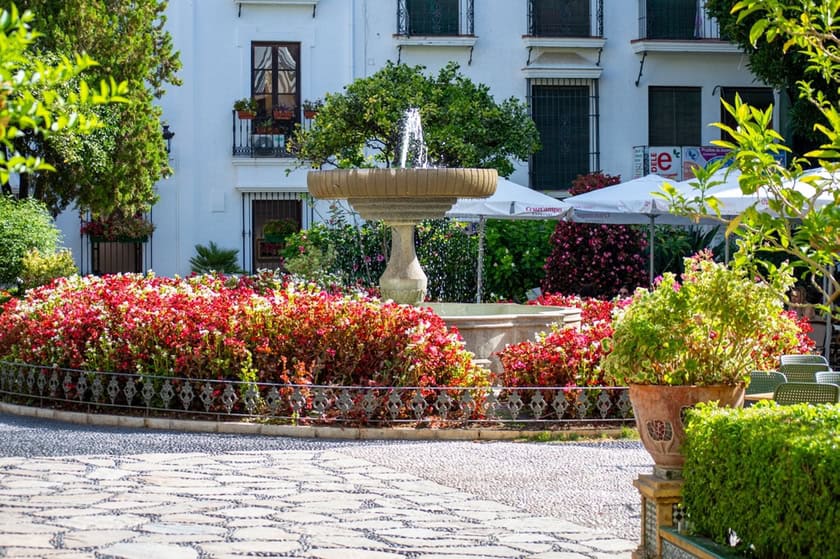
This pretty little square is located in the heart of the historic centre, and is without doubt the most well-kept and recognisable: in the shade of the orange trees, there is a lovely fountain surrounded by flower beds, benches and low walls finished with ceramic tiles. Obviously, you should not expect a monumental square, but rather a lived-in, familiar space, with bars and small restaurants frequented by both tourists and locals.
The tourist office is also located in the square, housed in the Casa de las Tejerinas, a historic building dating back to the 18th century, distinguished by a façade in the typical Andalusian style, with wrought-iron balconies. The house, arranged around a small patio, also houses exhibition spaces for temporary shows, in addition to its public function as an information point.
Clock Tower
The Torre del Reloj is one of the few medieval remains in the city. It is located in the old town, in Plaza del Reloj, a small square slightly set back from the main streets, reached by a flower-lined staircase branching off Calle Santa Ana. The tower is what remains of the former church of Los Remedios, built in the 16th century after the Reconquista, with a square bell tower that is reminiscent of the structure of defensive towers.
If it is particularly hot, you can admire it in the shade of the small pagoda-style pavilion in the centre of the square. Behind it, there is also a pleasant terrace overlooking the street below, from which you can see the wall of the Mercado de Abastos along Calle Villa, decorated with ceramic panels depicting scenes and stories of local life.
Castle of San Luis
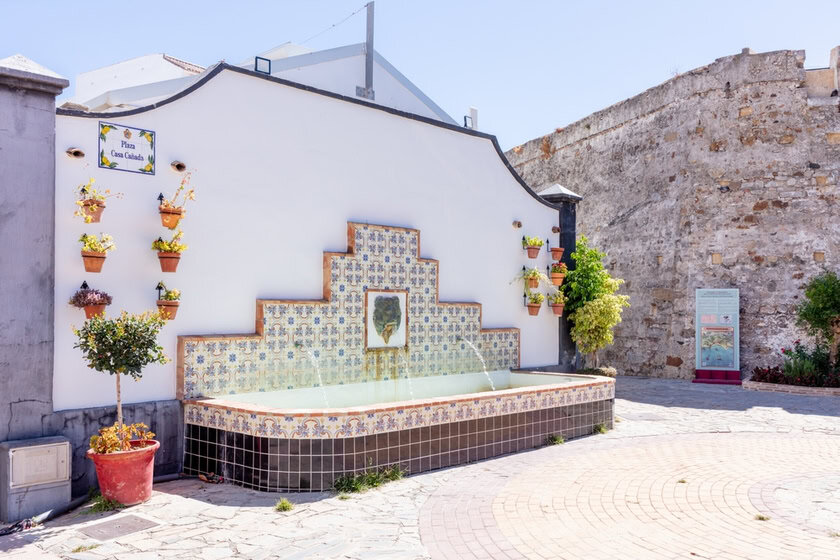
Just round the corner from Calle Villa, another delightful little square opens up before you: Plaza Casa Cañada. You’ll find a lovely fountain decorated with azulejos, the ever-present orange trees and, above all, what remains of the Castillo de San Luis (16th century): you can see sections of the walls and defensive structures, recently restored and made accessible via a small exhibition route. The entrance fee is symbolic (around €1).
Archaeological Museum
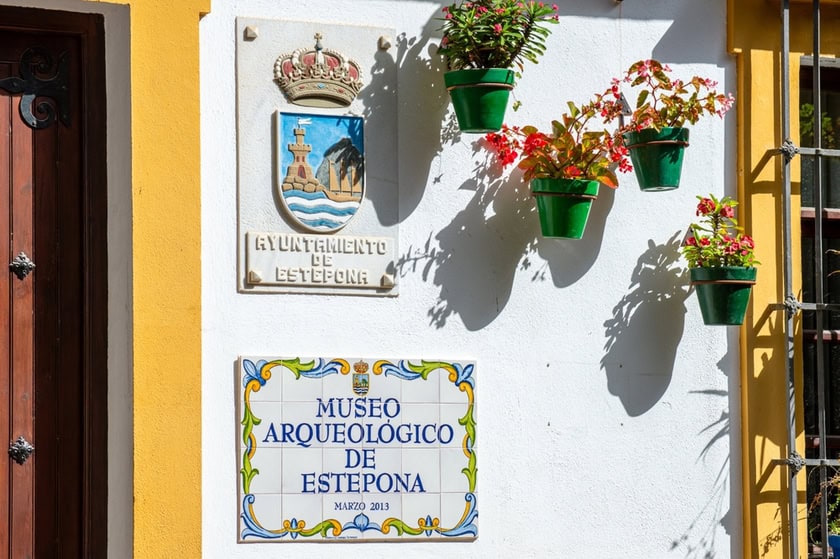
The main archaeological museum of Estepona is just a stone’s throw from the Castillo, in the intimate and lovely Plaza Blas Infante. It is housed in the Casa de los Aljibes, an eighteenth-century building constructed over a cistern of Moorish origin, from which it takes its name. The collection of artefacts discovered thanks to archaeological excavations carried out in the Estepona area is arranged in rooms according to a chronological criterion, ranging from the first prehistoric and Phoenician settlements to the Roman, Byzantine and Islamic periods.
Book a guided tour of Estepona
Other sights to see
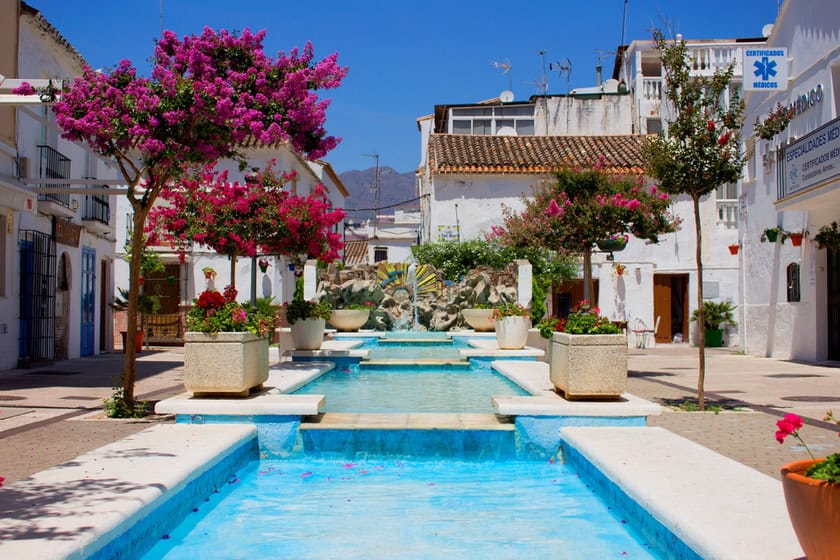
The redevelopment of Estepona’s historic centre has been thorough, with great attention paid to every single detail. For this reason, it is well worth getting lost among the flower-lined alleys in search of little squares, courtyards and enchanting views, such as those I point out below:
- Plaza Manuel Alcantara
- Plaza Amengual (see photo above)
- Felipe Campuzano Passage
- Antonio Ortega Vela Passage
- Manilva Square
- Antonio Gala Square
- Plaza Juan Balan
Poetry Route
As a poetry enthusiast, I also enjoyed following some of the sections of the so-called Ruta de la Poesía, a route of around 40 literary-themed stops that winds its way through the network of streets in the historic centre around Plaza de las Flores, without any particular map to follow slavishly. A few examples? Here are the Spanish poets (and others) I went looking for, and whom I promptly pinpointed for you:
- Cantares by Antonio Machado
- La Saeta by Antonio Machado
- Bare Poetry by Juan Ramón Jiménez
- Nothing happens twice by Wisława Szymborska
- Eighth Duino Elegy by Rainer Maria Rilke
- Raya, golden Sun, decorate and colour by Luis de Góngora: in Plaza Begines
Ruta of the Artistic Murals
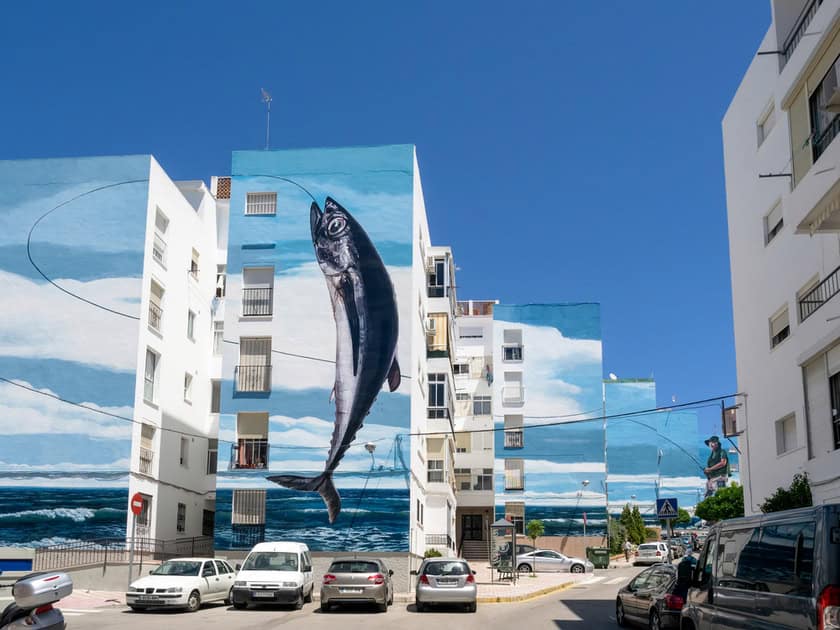
If you like wandering around the city in search of street art, know that Estepona has almost 50 pieces scattered across different neighbourhoods of the city, especially the more outlying ones. To see them, you’ll have to walk along Calle Terraza, Calle Melilla, Calle Lazaga and around Avenida San Lorenzo. Turn a corner, and you might find yourself face to face with a gigantic mural covering the entire façade of a large building on the outskirts. Some examples?
- Estepona Bermeja
- Day of Fishing
- Jump into the blue
- the murals of Calle San Juan Bosco
- Watering the Garden
- Madre Loving
- Fragile Balance
- Atlantis, Women’s Day
Estepona Orchidarium
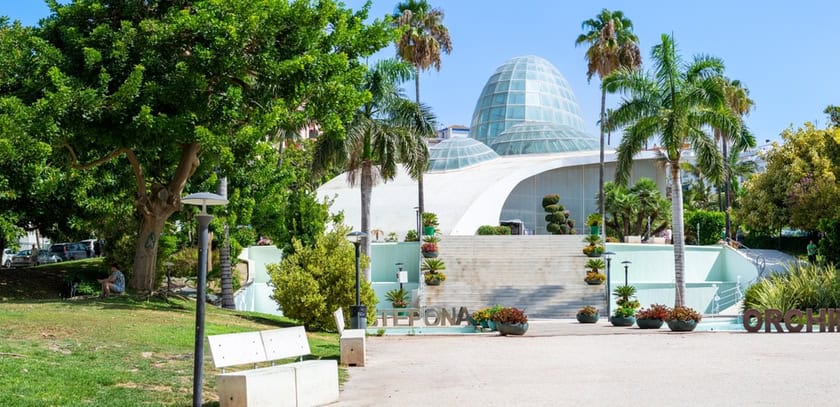
Orchids are among the most beloved flowers for their fascinating complexity, and in Estepona there is a greenhouse entirely dedicated to this magnificent bloom: the Orquidario. A stone’s throw from the historic centre, you will see three large glass domes rising above the surrounding buildings: inside, you can follow a route of around 60 minutes, walking through tropical vegetation, with views of the central waterfall and, above all, admiring over a thousand species of orchids and exotic plants spread along the way.
It is open from Tuesday to Saturday (10:00–13:30 and 15:00–18:00) and on Sunday mornings (10:00–14:00), while it remains closed on Mondays. Admission costs €5 for adults, with reduced rates of €3 for children (6–12 years) and eligible categories; entry is free for under-6s.
Estepona Marina yacht harbour
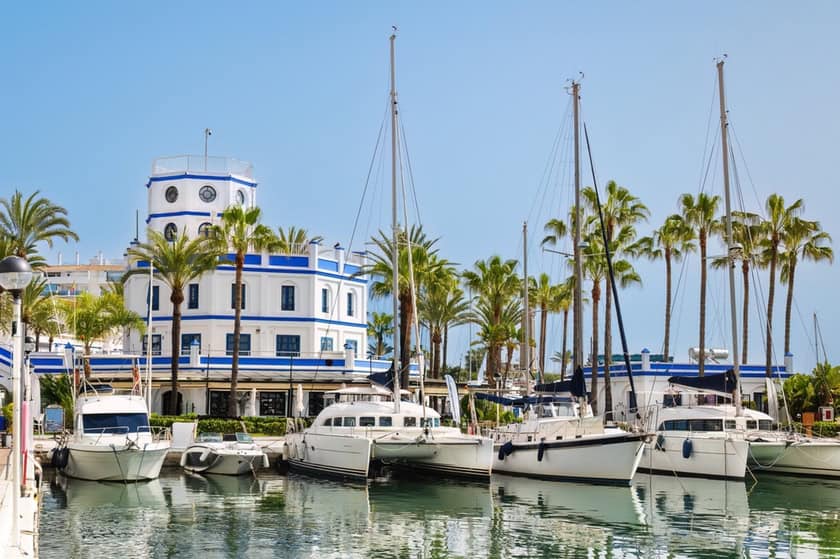
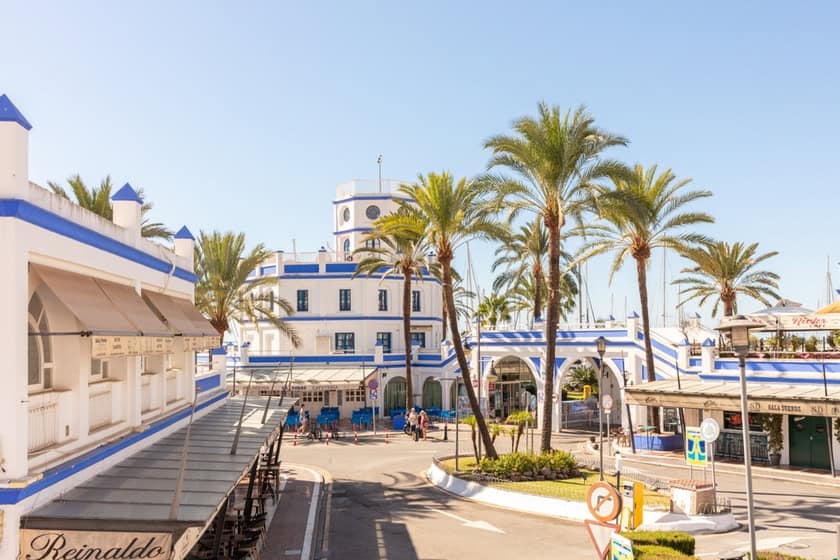
A walk in the port area is ideal if your plan is to stop for an aperitif or dinner in one of the venues on Avenida Virgen Del Puerto, with views of the sea and the boats moored at the quay. Especially in the evening, the atmosphere in the port is truly lively and engaging.
Walking around the harbour area, you come across the bullring, which houses several small municipal museums (archaeological, ethnographic and bullfighting), all free to enter; the Faro de Punta Doncella, still in operation; and, somewhat left to its own devices among the apartment blocks, the Torre de Saladavieja, an ancient coastal defensive bastion.
Book a boat trip in Estepona Bay
Map of attractions
Things to see and do in the surrounding area
The seaside town of Estepona is a good base for hiking… in the mountains! Behind it rises the Sierra Bermeja, a mountain range that dominates the coast with its reddish peaks, a colour typical of peridotite deposits, a volcanic rock rich in iron and platinum, characteristic of the area. The highest peak is Pico de Los Reales, which reaches 1,449 m. Another interesting feature of the Sierra is the presence of the Spanish fir, Abies pinsapo, a tree symbol of Andalusia.
Easy trekking on the Sierra Bermeja
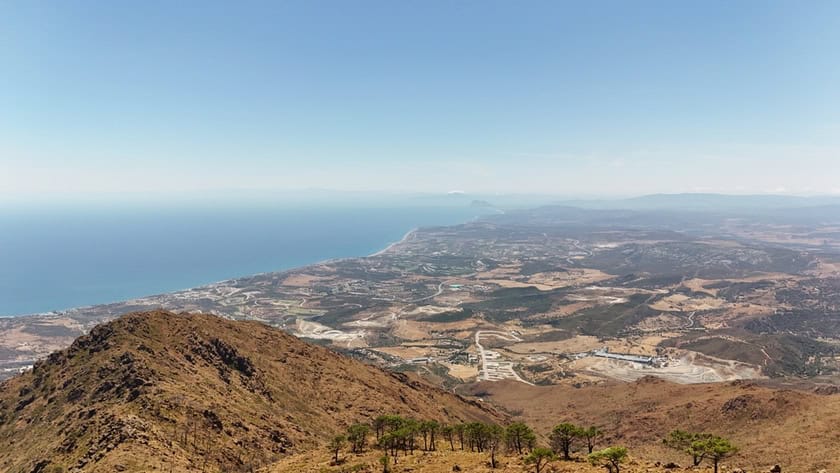
If you’re not an experienced walker, you can drive close to the summit, leaving the car at the car park and limiting the physical effort to the easy path that leads to the Mirador de Estepona (Mirador Salvador Guerrero), where you can see everything: not only Estepona, but also a long stretch of the Costa del Sol and, looking south, Gibraltar and Morocco (if the sky is clear).
If you want to get right to the summit of Picos De Los Reales, you’ll need to walk for another 45 minutes, tackling a 160 m ascent: in this case, you’ll need a good level of fitness, suitable clothing and quite a lot of water to cope with the heat.
Guided trek through the Sierra Bermeja woods
The White Villages
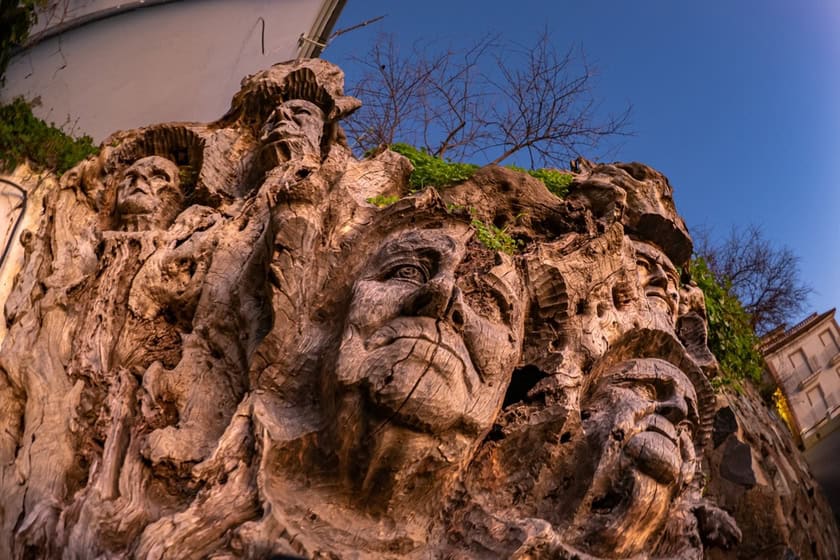
Have you got a soft spot for the spotless little mountain villages of Andalusia? Estepona is close enough to a few pueblos blancos well worth a visit:
- Benahavís: 25 minutes from Estepona lies this peaceful mountain village on the Guadalmina River. Before you get there, you’ll be driving alongside Las Angosturas del Guadalmina, a rocky gorge that can be admired on a walk along the river, or why not, while paddling in the Charca de las Mozas, an easily accessible natural pool. Book a guided canyon trek.
- Genalguacil: decidedly further away (around 1 hour from Estepona on mountain roads), this pueblo blanco in the Genal Valley is about as far removed as you can imagine from mass tourism. It is visited mainly to see the contemporary works of art scattered through its whitewashed little streets.
- Casares and Gaucín: we have spoken more in depth about these and other villages in our article dedicated to the White Villages of Málaga. Taking a tour of these small inland settlements in Andalusia is often an underestimated choice, but Estepona’s strategic location might convince you to consider this adventure!
Corominas Dolmens
The Dolmen de Corominas is a megalithic necropolis dating back around 5,000 years, made up of five dolmens from the Neolithic and Copper Age. After being discovered during modern excavations, they were relocated to Parque de San Isidro (Los Pedregales) to preserve them in a contemporary, partly subterranean structure that recreates the original setting and allows visitors to see the tombs and grave goods up close.
- The visit is guided by prior booking, lasts around an hour and is available at various times from late morning to early afternoon; the site is closed on Mondays. Here are the updated opening times.
- Prices: adults €8, children €5.
Selwo Aventura
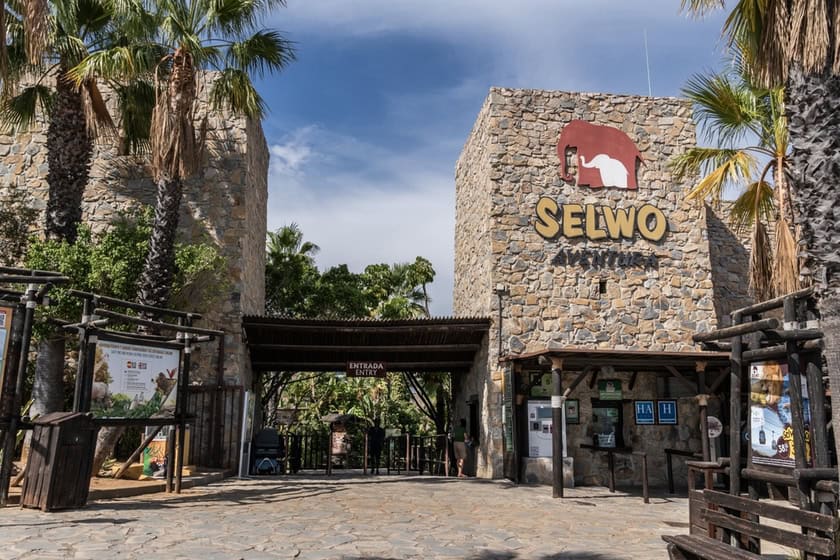
If you are travelling with children, Selwo Aventura can be a pleasant option for spending an afternoon in the open air, in close contact with the animal world. We are talking about a large wildlife park where the animals live in carefully recreated natural habitats. Be sure to book the safari too, so you can comfortably see giraffes, elephants, hippos, big cats and many other animals up close.
- Access is free during opening hours (generally 10:00–18:00, subject to seasonal variation).
- Prices: adults €25-30, children €20
Buy tickets for Selwo Aventura
Where to stay in Estepona
The choice depends on what you’re looking for, but in general I’d recommend staying in the centre, given its proximity to the large town beach and the main attractions. Here are a couple of places I’d recommend:
- Casa del Patio: a property offering very well-kept accommodation in Estepona’s old town, a two-minute walk from the sea. The apartments are modern, but with the classic traditional Andalusian touch, for an… immersive stay!
- Hotel Estepona Plaza: a slightly more classic choice. This reliable hotel is located in Plaza Ortiz, a lively little square just set back from the main streets. Very close to the sea, with various restaurants and bars nearby, it is a modern and well-kept hotel, with comfortable rooms, a rooftop pool and a panoramic terrace.
All available accommodation in Estepona
Where to eat in Estepona
Estepona is certainly not short of restaurants: there are all kinds, from gourmet spots to the more straightforward tapas bars on the seafront. If you like substance, head to Restaurante La Escollera in the harbour area, where you can eat excellent-quality fresh fish at more than fair prices, in an authentic, if not spartan, setting. It is just far enough away from the tourist venues on Avenida Virgen del Puerto, but that does not mean you shouldn’t book… on the contrary!
If instead you want to savour a bit of meat, book a table at Restaurante Asador Ramírez, a place that is not rustic, but still simple and off the tourist trail, where grilled meat is the star. Try the chuletón, a large steak cut from the rib of beef: a “substantial” and demanding dish… but what a treat!
