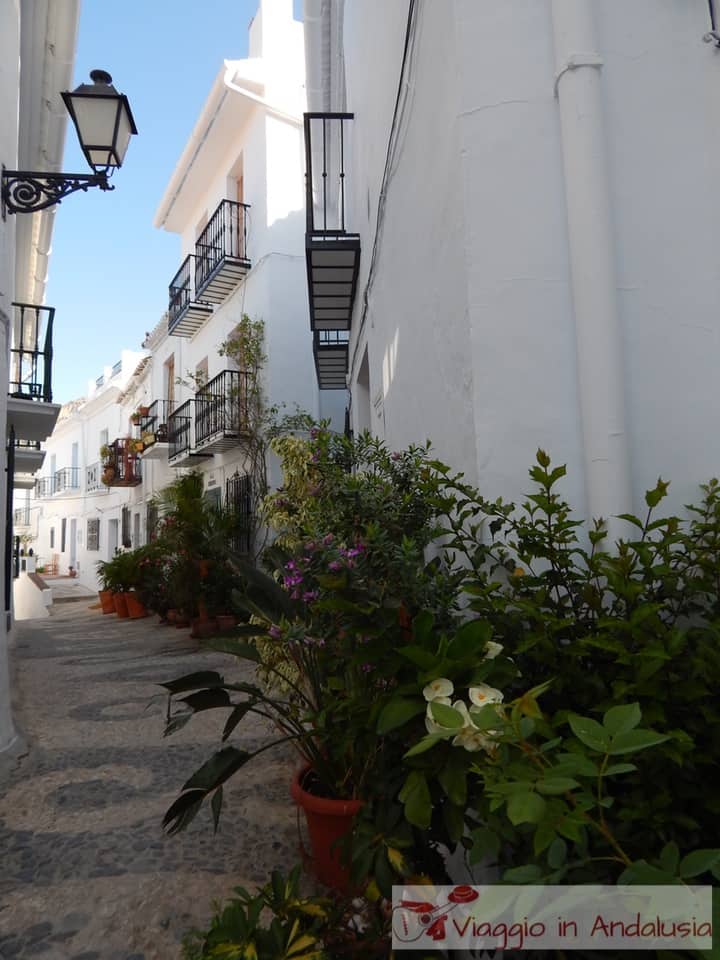
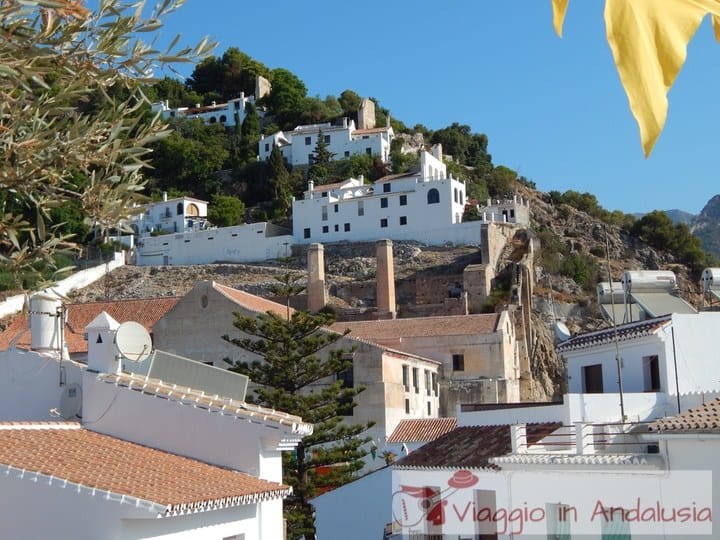
Frigiliana is one of those towns in Andalusia that, for their beauty, remain permanently etched in the memory. Winner of several awards such as Pueblo Más Bonito de España in 2015 and Unas de las 7 maravillas rurales de España in 2016, Frigiliana welcomes visitors with its white houses and enviable setting: just 6 kilometres (3,7 miles) from the beaches of Nerja and surrounded by the greenery of the hilly landscape of the Sierras de Almijara, Tejeda and Alhama Natural Park, in the Axarquía region. If you are in the area, it is practically a crime to miss this town, so make a note of all the useful information for your visit!
Contents
How to get to Frigiliana
- Figiliana is located in the easternmost area of the Axarquía in the province of Malaga, from which it is about 50 kilometres away (31 miles). Granada, on the other hand, can be reached in around 90 minutes. Thanks to the A7 motorway, Frigiliana is easily reachable by car from the city of Malaga or its airport, both of which are about 50 minutes’ drive away.
- There are no buses that run directly from Malaga to Frigiliana, but from Malaga bus station you can take the ALSA service to the nearby towns of Torrox, Nerja and Maro, and then catch a local bus or a taxi. A shuttle service connects Frigiliana to Nerja for those who want to visit the hilltop town from the beaches, or vice versa to travel from Frigiliana to the beaches. Services run daily and depart roughly every hour and a half.
What to see in the historic centre of Frigiliana
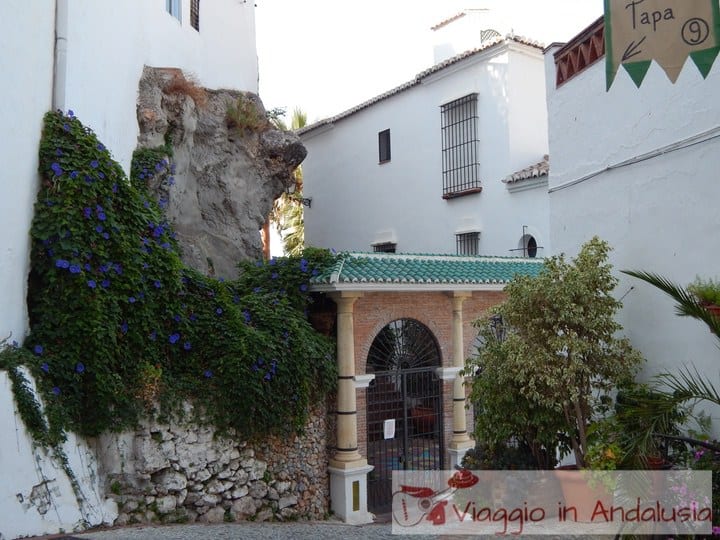
The narrow, winding little streets and the ups and downs remind visitors that this was once an important Moorish village. Its Arab soul is still palpable as you wander through the old town and, according to some, this is, together with Ronda) the most “pure” Arab-origin settlement in the province of Malaga. For this reason, the first piece of advice I can give is to wander aimlessly through the old part of the town, letting the panoramic sea-view terraces, flower-filled alleyways, narrow stairways and courtyard water features make you fall in love completely!
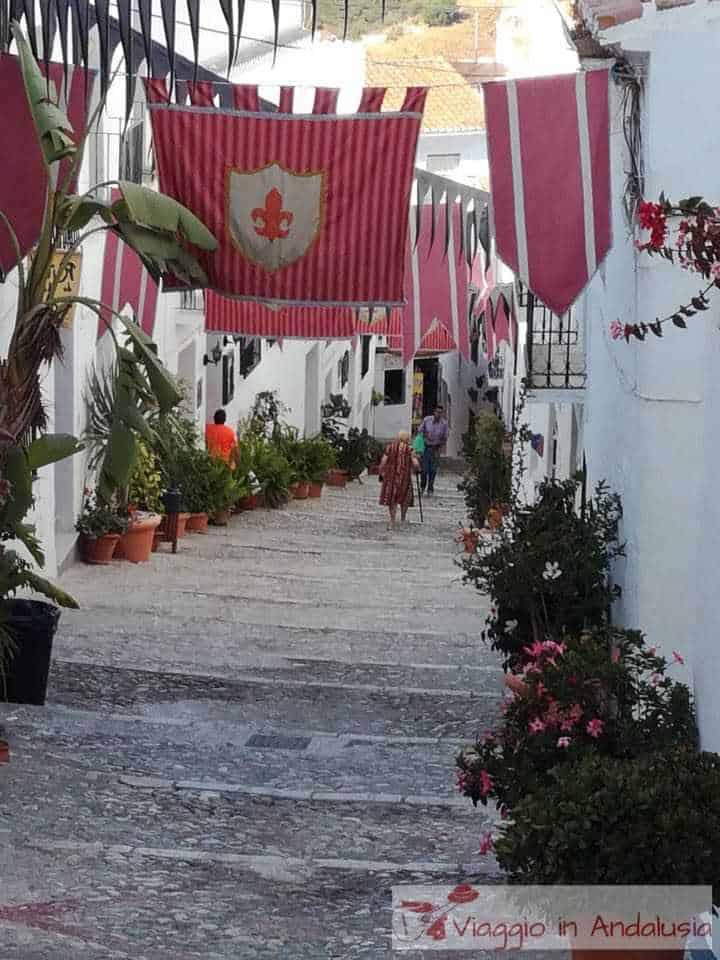
There is no shortage of things to see in Frigiliana. While you will see them all as you wander through the town’s streets, below are my suggestions for what you should not miss in Frigiliana.
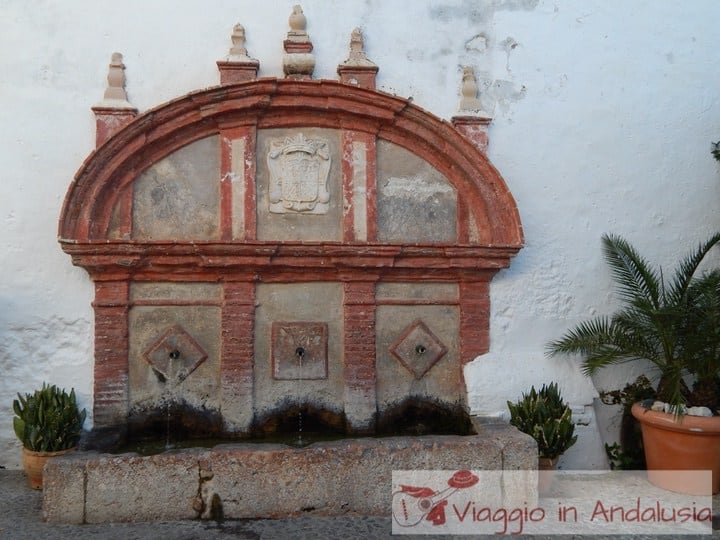
Fuente Vieja
Built by Don Iñigo Manrique de Lara in 1640, this fountain is located in Plaza de la Fuente Vieja, in the old town, down Calle Chorruelo on the left. In the centre is the coat of arms of the counts who wanted it built for the local population and their animals. The setting in which the fountain stands is utterly charming!
El Torreón
Built around the 18th century, this tower stands in Calle Real and was probably a control building facing the coast against pirate attacks. For a long time it was believed to be of Arabic origin, but its unusual shape has no historical evidence to confirm this theory. In this corner of the town stands the vase with the enigmatic design representing the symbols of the Islamic, Christian and Jewish religions. The design has become the icon of the Festival Frigiliana 3 Culturas.
El Ingenio and Casa del Apero
These two buildings are linked to one another despite being built in different periods. El Ingenio dates back to the 16th century and was the home of the lords Manrique de Lara. In Renaissance style, it houses the only existing and working sugar cane honey factory in Europe and is therefore not open to visitors. This honey is therefore one of the area’s typical products and, if you have a sweet tooth, you will not be disappointed by its sweetness and aroma.
The Casa del Apero dates back to the 17th century and houses the House of Culture, the Municipal Library, the Archaeological Museum and the Tourist Office. It is located in Calle Cuesta del Apero, 12 and is a good starting point for visiting the village, having parked the car on the street or in the pay car park in Plaza de las Tres Culturas.
MAF – Frigiliana Archaeological Museum
With an area of 400 square metres, it was the first archaeological museum to be inaugurated, in 2009, in the Axarquía area. It displays no fewer than 125 items from prehistory to the period of Arab rule. Among the ancient remains on display, you can admire the skull of a child dating probably from between 4000 and 5000 BC, as well as very well-preserved Phoenician-era vessels found at the Cerillo de las Sombras archaeological site.
The MAF is located in the Casa del Apero and has the following opening hours:
- from 16 September to 1 July, Monday to Friday from 10:00 to 18:00, Saturday from 10:00 to 14:00 and from 16:00 to 20:00, Sunday from 10:00 to 14:00
- from 1 July to 15 September from Monday to Saturday from 10:00 to 14:30 and from 17:30 to 21:00, Sundays from 10:00 to 14:30.
Entry is completely free.
ATTENTION: at present (July 2026) the museum is temporarily closed. To check whether it has reopened, please consult the official website.
Church of San Antonio de Padua
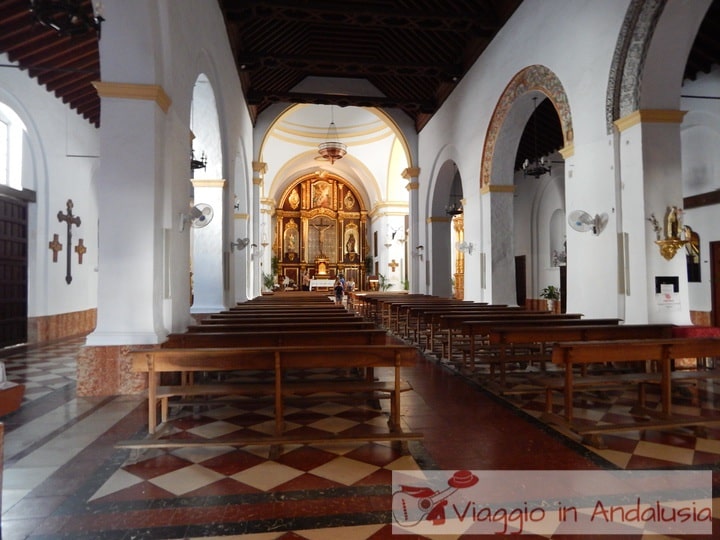
In Renaissance style and with a Latin cross plan, this church was funded by Manrique de Lara and completed in 1676. Above the entrance porch is the Rococo-style choir. Patron saint of the town, on 13 June Frigiliana celebrates San Antonio with the Feria and a procession, the Romeria.
The church is located at Calle Real 100, right in the historic centre, in a lovely little characterful square.
Arab Castle remains
Built at the end of the 9th century by the Arabs and destroyed after the Battle of the Peñon in 1569 by order of Don Luis de Requesens with the approval of King Felipe II, as a demonstration of the Christian annihilation of Moorish power, today only the remains of what must once have been a mighty defensive castle are visible. Brace yourself, because if you’re on foot, it’s a fair old trek!
Santa Fiora Botanical Garden
For plant lovers, the Santa Fiora Botanical Garden will be an interesting stop during a visit to Frigiliana. Although small, this garden showcases native plants that have been useful to the local population over the last few centuries for food, remedies, silk, paper and perfume production: from olive trees to sugar cane, from dwarf palms to native medicinal plants.
Accessible from Avenida Carlos Cano, this lovely green space has been open to visitors since 2010 and was designed by the landscape architect Manuel Morcillo Luna.
Where to stay?
Sleeping in one of the hotels or in an apartment in the historic centre of Frigiliana is an experience with a rural feel that I recommend to everyone. Below you’ll find a link with all the accommodation available in the town. If you can’t find any availability, you can always find somewhere to stay in Nerja, by the sea, just a few miles away.
All available accommodation in Frigiliana